
ART-PRESENTATION: Anthony Caro
 Anthony Caro revolutionized sculpture in the ‘60s when he moved away from making elaborately modelled, figurative works cast in bronze, instead creating large, abstract assemblages out of prefabricated steel and aluminum elements that he installed directly on the ground. In his work art and matter struggle against one other, the drama of artistic creation is made physically present and palpable for the viewer.
By Efi Michalarou
Photo: Van Buuren Museum Archive
Works by Anthony Caro are on presentation in the garden of van Buuren Museum in Brussels, the exhibition is a collaboration of the Museum with the Caro Foundation and the Daniel Templon Gallery. Anthony Caro saw sculpture as a form of art that opens up onto space and he is much acclaimed for his innovative approach of removing the sculpture from its plinth and encouraging direct interaction between viewers and the work. Anthony Caro was born in 1924 in New Malden, Surrey. He studied sculpture at the Royal Academy, London, 1947-52. Following his studies, Caro worked as assistant to Henry Moore. Caro’s first major exhibition was at the Whitechapel Gallery in 1963, where he exhibited large abstract welded steel sculptures, brightly painted and standing directly on the ground. His questioning approach opened up new possibilities, both formally and with regard to subject matter. He is widely regarded as one of the world’s greatest sculptors and renowned for introducing a radical departure from the way sculpture had hitherto been exhibited. Although he abandoned his earlier style which was highly figurative his work still retained a relationship to the figure through its gestural qualities and scale. Over the ensuing decades, Caro has developed and expanded what he called “The language of sculpture”. Caro worked in steel, comprising beams, girders and other industrial materials, which he frequently painted in bright primary colours. He also worked with other materials, including bronze, silver, lead, wood and paper. Caro was obsessed with the immediate, real and physical presence of sculpture in relation to a viewer and making the sculpture more real. He changed the way we look at these materials, changing their symbolic relationship to industry and placing them in an art context. He also pioneered the removal of the plinth in art, by placing his work directly onto the ground, which became a proliferated and adopted aesthetic in contemporary sculpture.
Info: Van Buuren Museum, 41 Avenue Léo Errera, Brussels, Duration: Spring & Summer 2017, Days & Hours: Mon & Wed-Sun 14:00-17:30, www.museumvanbuuren.be
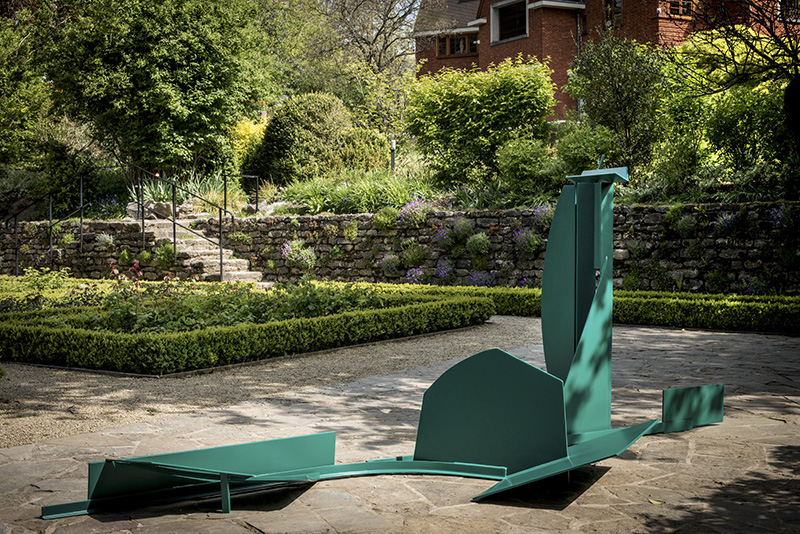
Intérieur musée : © Photo : Michel De Bray
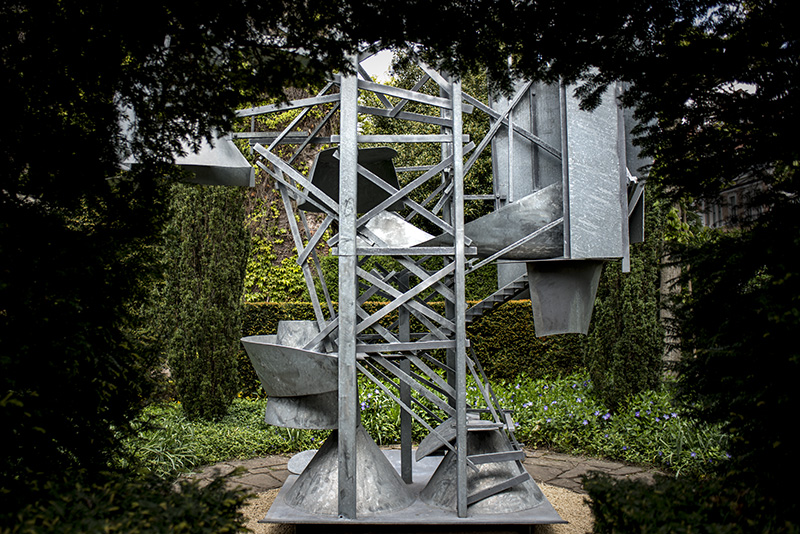
Intérieur musée : © Photo : Michel De Bray