ARCHITECTURE:Temporary. Structures of Necessity
The exhibition “Temporary. Structures of Necessity” highlights structures that form an essential yet often overlooked part of our urban infrastructure. This temporary layer keeps countless processes in the city run- ning: from building and demolition to maintenance and guidance, all the way to protection and security. “Labelled” as temporary, such constructions blend into their surroundings and frequently remain below the threshold of perception. The exhibition makes this necessary background visible and brings it into focus.
By Efi Michalaro
Photo: Architekturzentrum Wien Archive
Temporary structures arise from concrete necessity. They must be readily available, efficient, and adaptable; they must cope with limited resources and be just as quick to erect as they are to dismantle. Their direct connection to a time-limited task gives origin to constructions that are characterised by surprising precision, radicalism, and inventiveness. Beyond conventional aesthetic standards, they develop their own design language—an aesthetic of necessity derived from material, color, construction, and use. What can architecture designed for the permanent learn from structures whose quality lies precisely in their transience?
The members of KOSMOS architects have been fascinated by transient, utilitarian structures since their student days. Over many years, they have collected examples of these ephemeral architectures—built for a fleeting moment, yet imbued with a sense of lightness, precision, and power. This passion has evolved into a body of research that treats the temporary as a distinct and significant architectural category. They refer to these anonymous technical infrastructures as “tectures”—the built environment itself, beyond authorship-based architecture.
Organised into seven categories “Construction, Fake, Climate, Safety, Event, Protection, and Vernacular” the exhibition presents a collection of intelligent, surprising, humorous, pragmatic, and aesthetic examples of temporary structures through photographs and small-scale installations. Drawing on the insights gained, KOSMOS architects issue a call for a reorientation of architecture. For them, temporary structures serve as a laboratory for an architecture that learns to engage with resources, time, and specific conditions in new ways.
A further section of the exhibition, marking the 25th anniversary of the MQ (Museums- Quartier), explores the long history of the site’s transformation, demonstrating that alteration and adaptation are not interruptions to architecture, but rather essential modes of its continued existence.
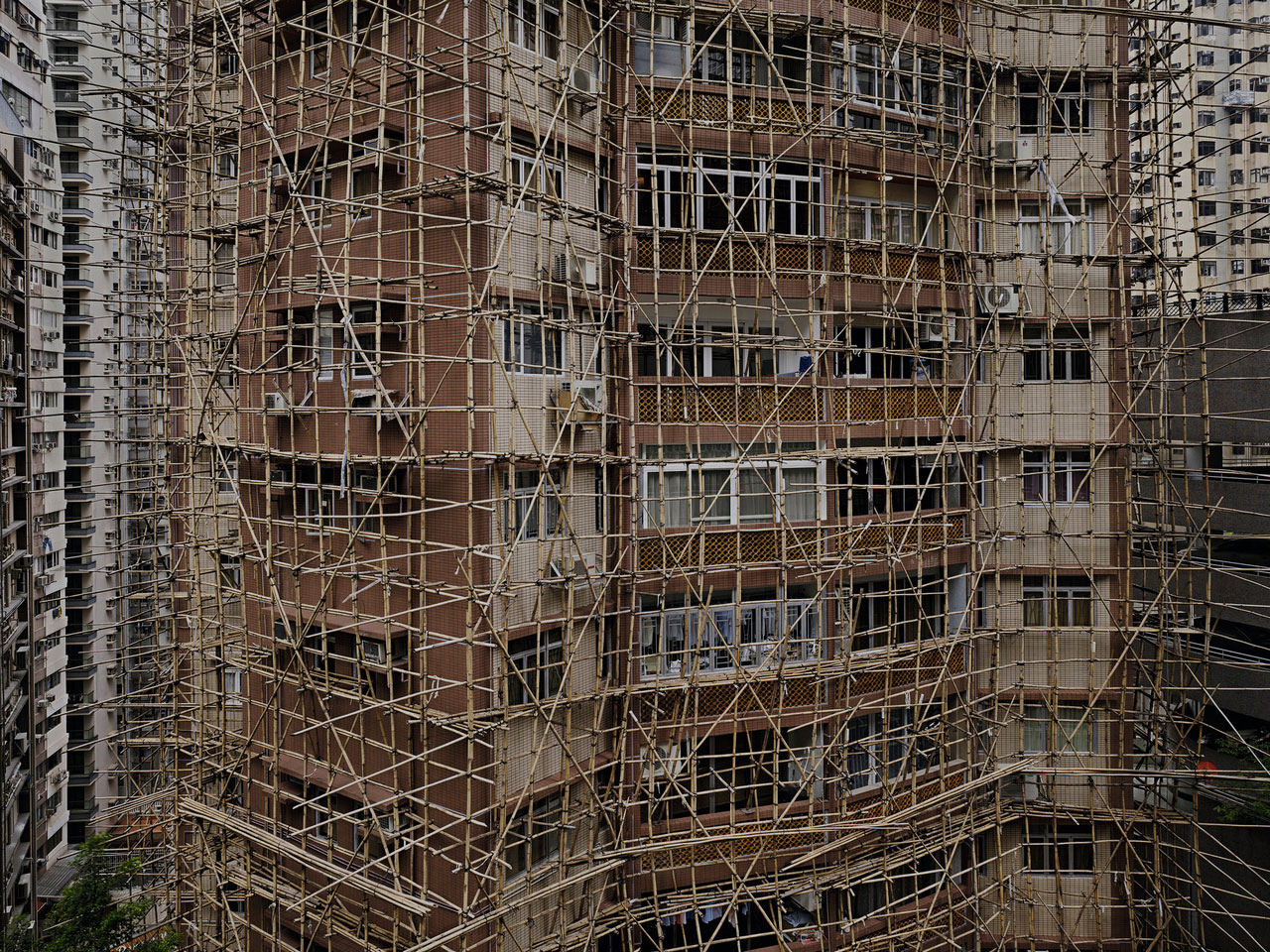
Construction: Building, maintenance, restoration, and adaptation are everyday, necessary processes. The role of temporary structures extends far beyond the construction of new buildings or the restoration of existing ones. They reorganise space, introduce new pat- terns of use, and redefine the visual identity of the city. At the same time, they serve as testing grounds where ideas can be implemented quickly, tested in use, and further developed.
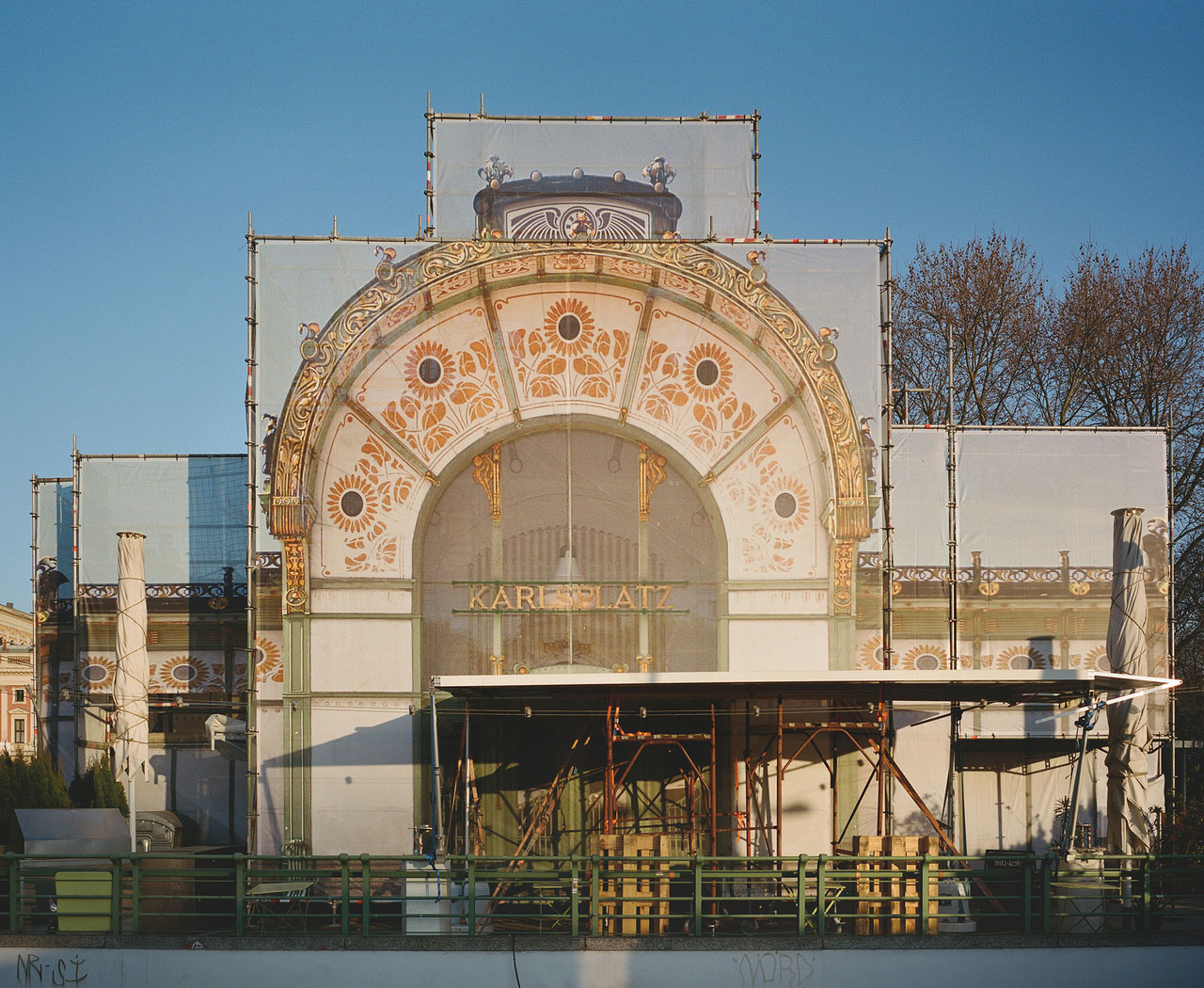
Fake: Representation is one of the most visible aspects of the built environment. Contemporary printing technologies make virtually any visual appearance possible. However, they are primarily used to imitate conventional architecture and traditional building materials.
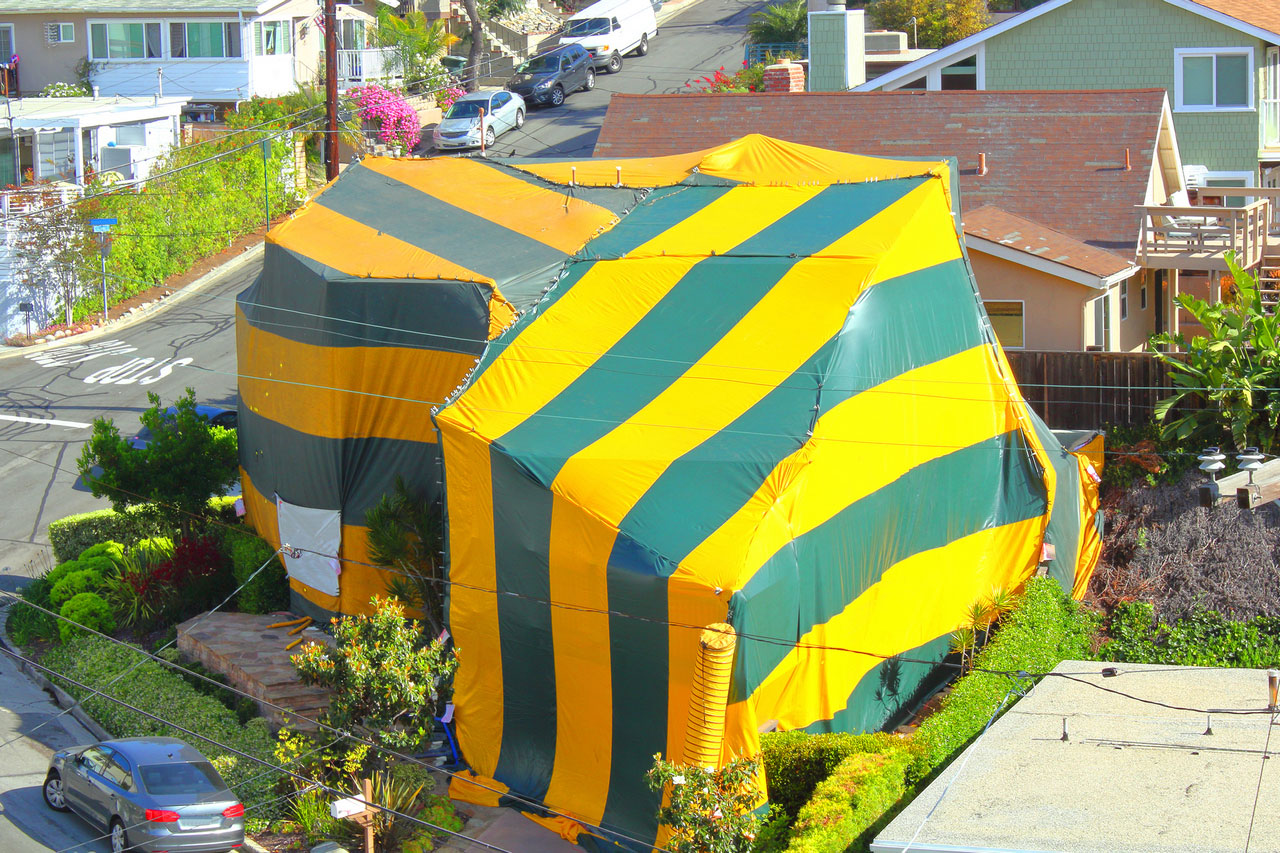
Climate: One of the fundamental purposes of architecture is to protect people from adverse environmental conditions. Conventional architecture is often too slow, costly, and inflexible to react quickly, giving temporary solutions a lasting significance.
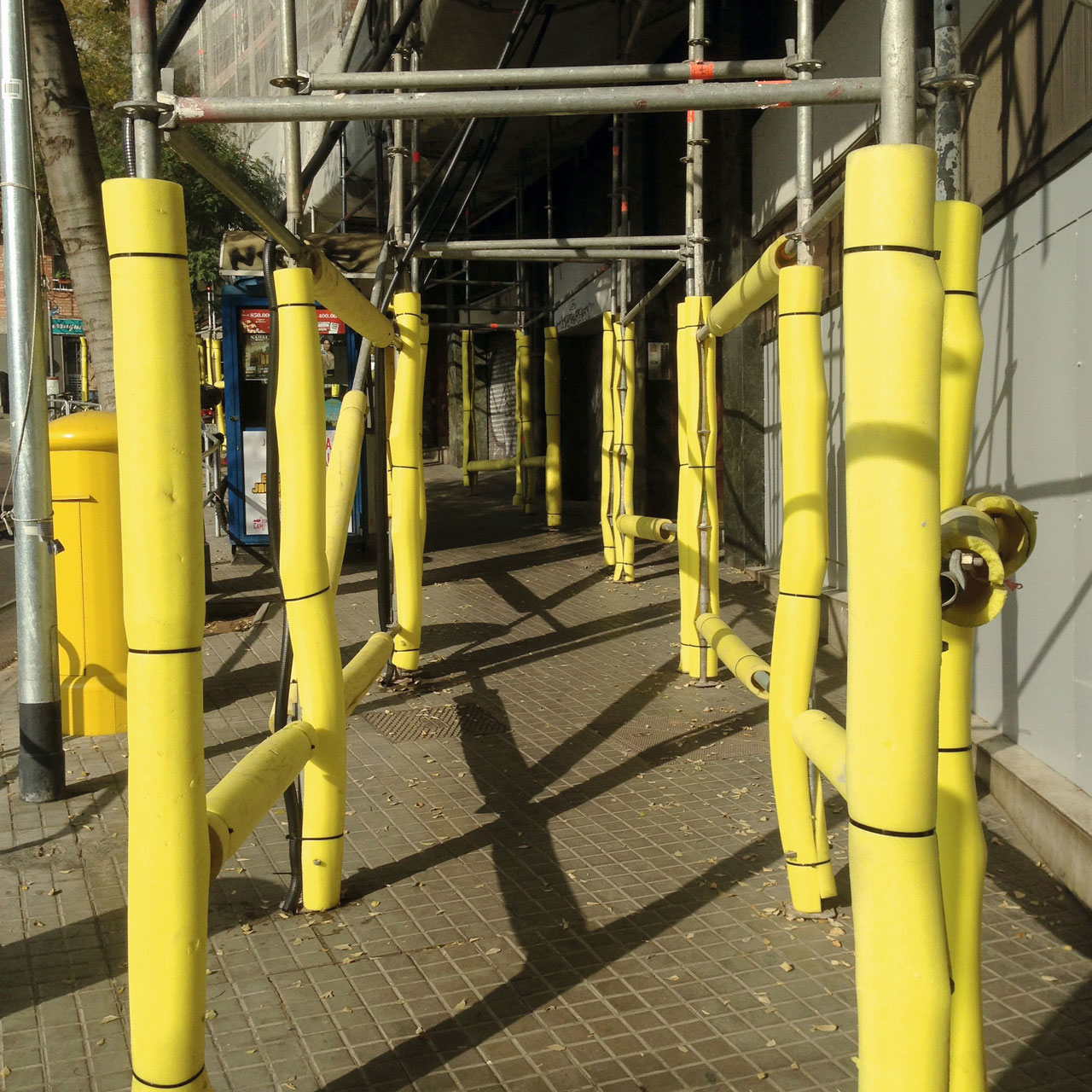
Safety: Safety requirements consistently take precedence over nearly all other architectural considerations. As temporary interventions, they often lead to solutions of remarkable directness and radicality. Their purpose is simple: to protect people from structures and structures from people.
Event: Temporary structures provide efficient solutions for hosting events in virtually any location. Event facilities represent a form of ultra-temporary architecture defined by extreme monofunctionality. Often appearing in symbolic or landmark locations, they add a temporary function and create a new and often iconic presence.
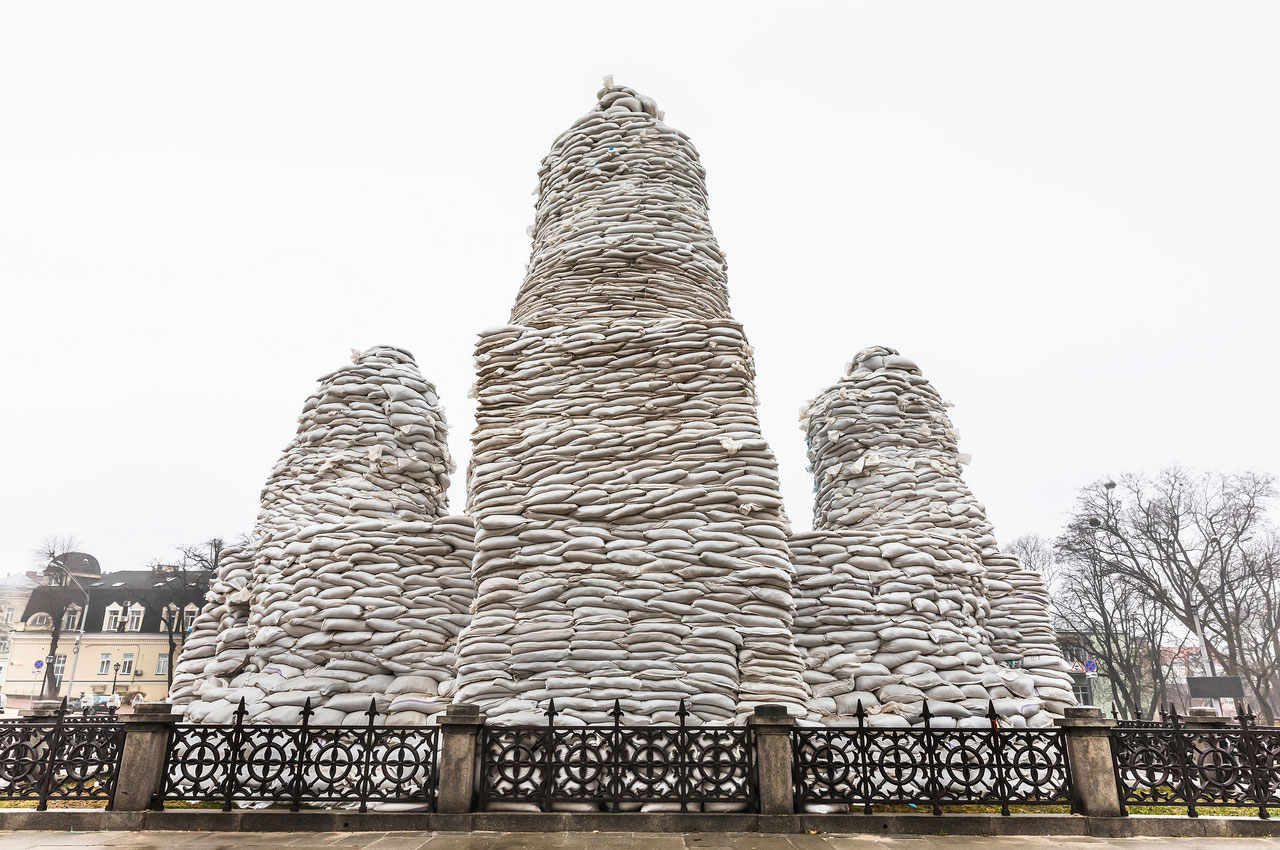
Protection: If time and resources are limited, or if there is no need for permanent protective measures, temporary solutions become indispensable. These examples demonstrate how temporary structures can adapt and transform space with exceptional speed and efficiency.
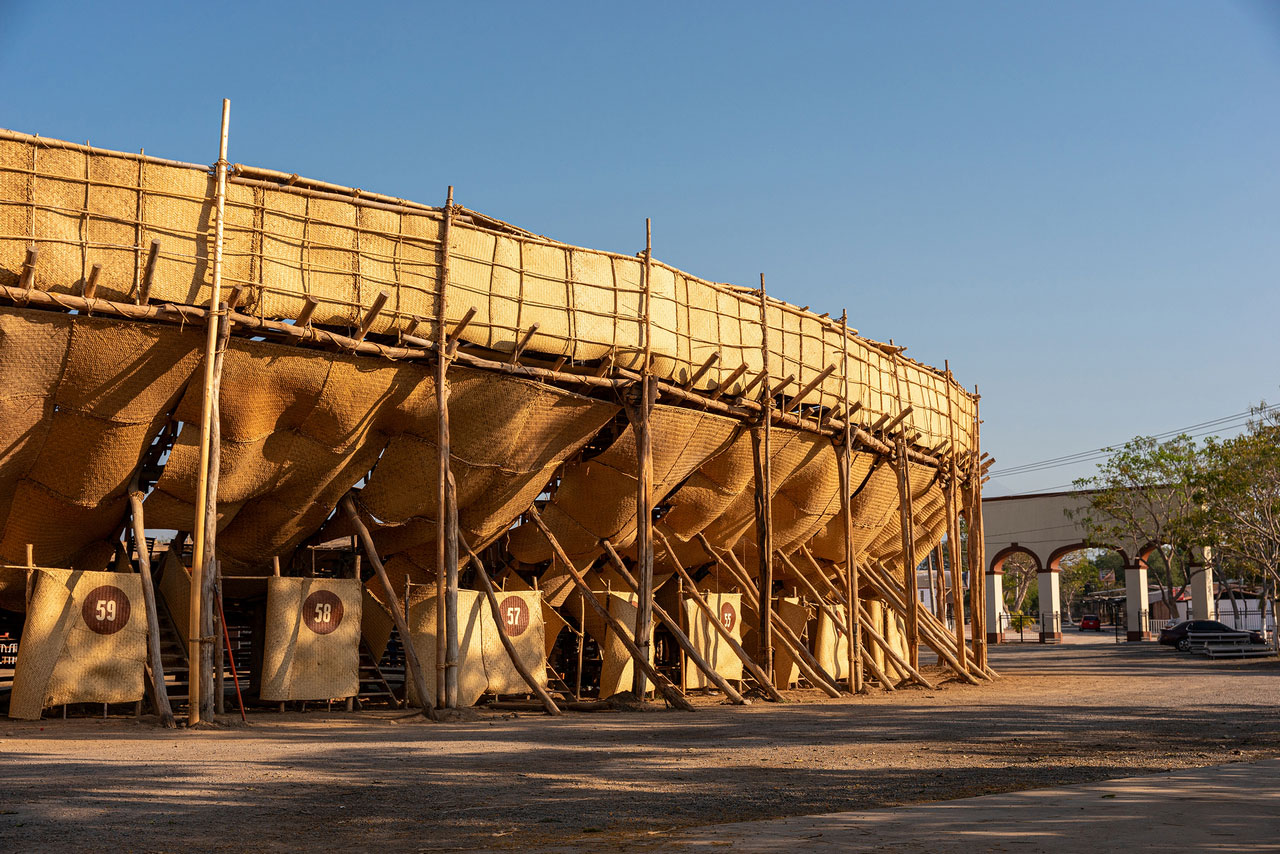
Vernacular: In an era of global architectural uniformity, functional temporary structures are rarely driven by conceptual design intentions. Instead, they serve as practical responses to immediate needs and reflect social norms, climatic conditions, and the availability of local materials, labour, and construction knowledge.
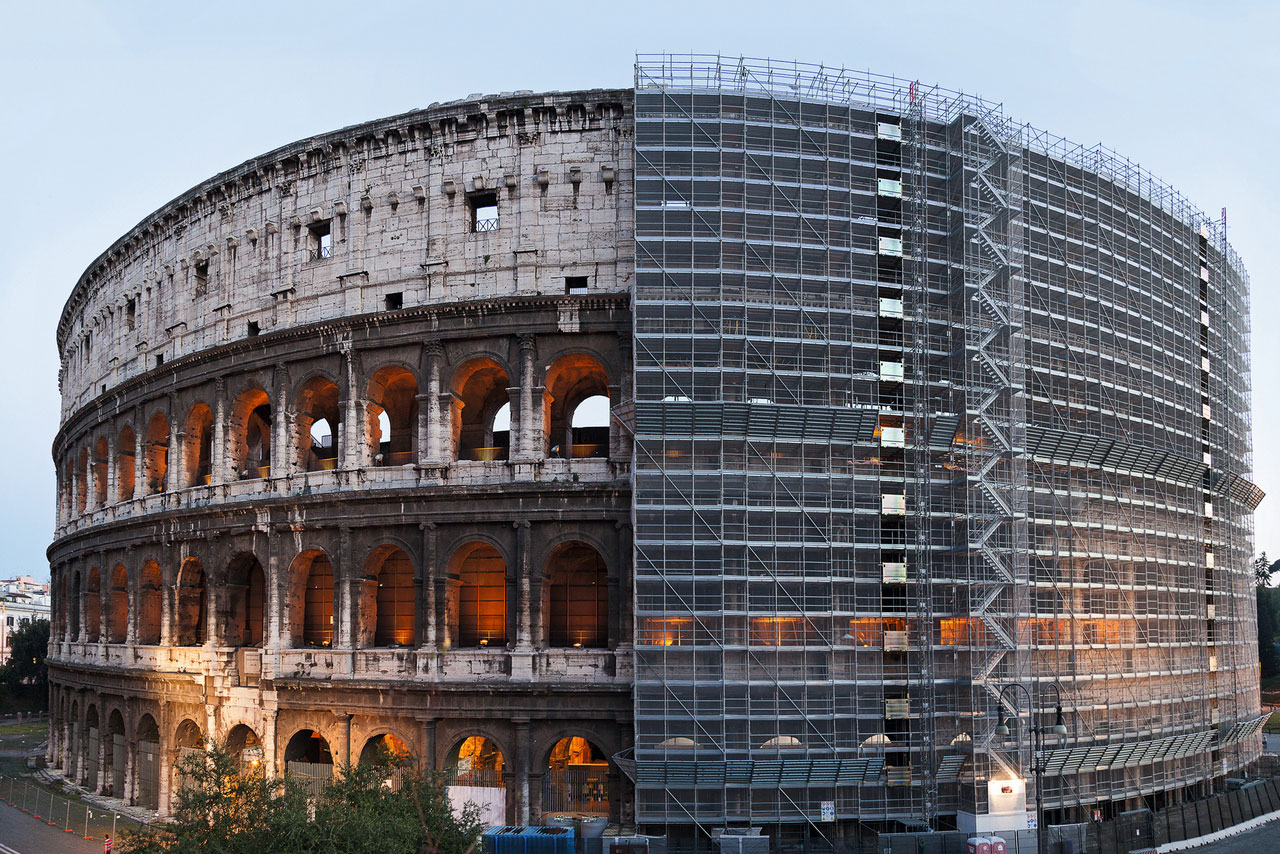
Photo: Restoration of the Colosseum in Rome, Italy. © Photo: New Order: Rinofelino/Dreamstime.com
Info: Architekturzentrum Wien, Museumsplatz 1, Vienna, Austria, Duration: 5/11/2026-5/4/2027, Days & Hours: Mon-Tue & Thu-Sun 10:00-18:00, Wed 10:00-20:00, www.azw.at/en/
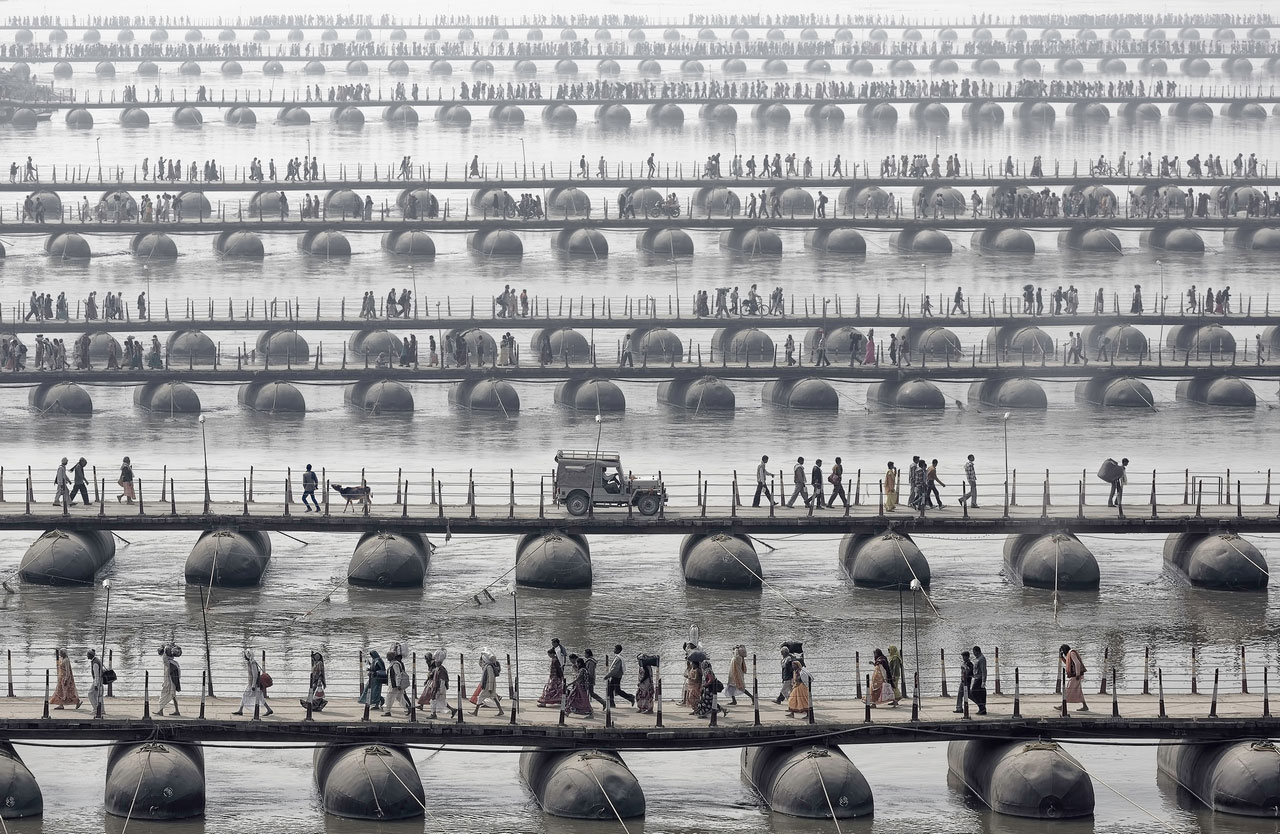
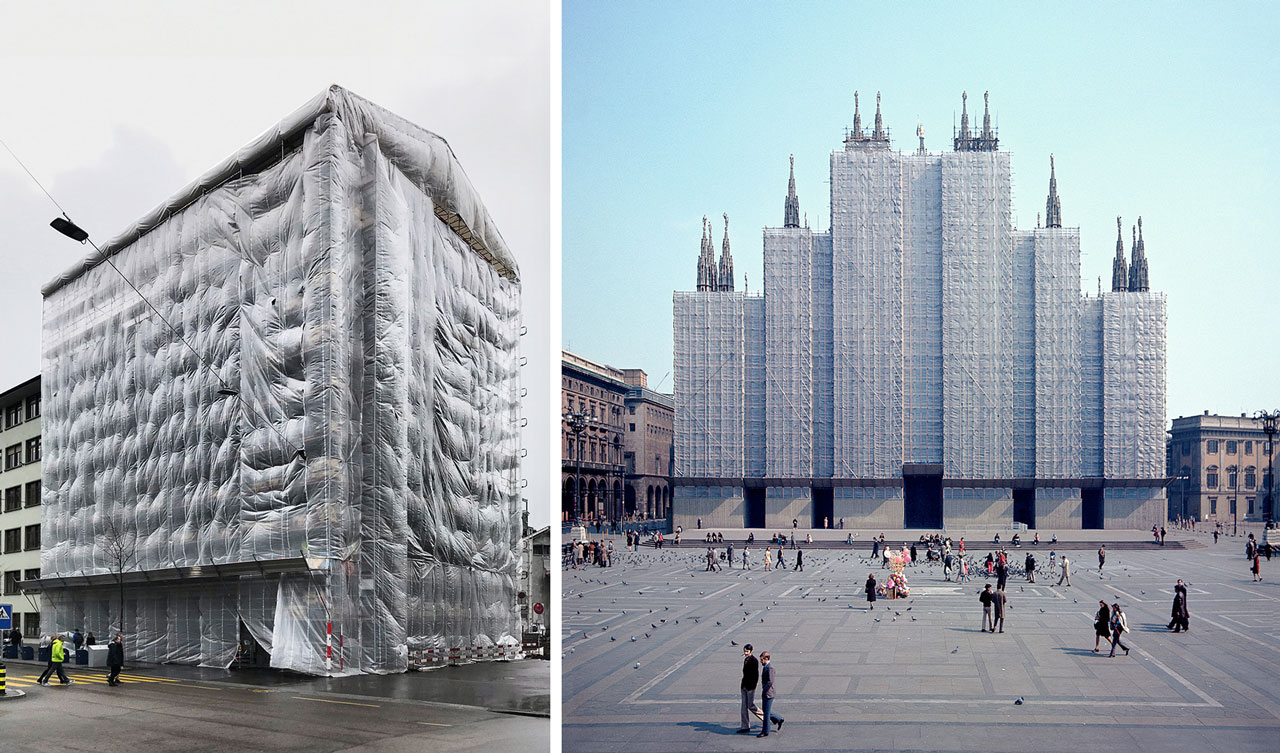
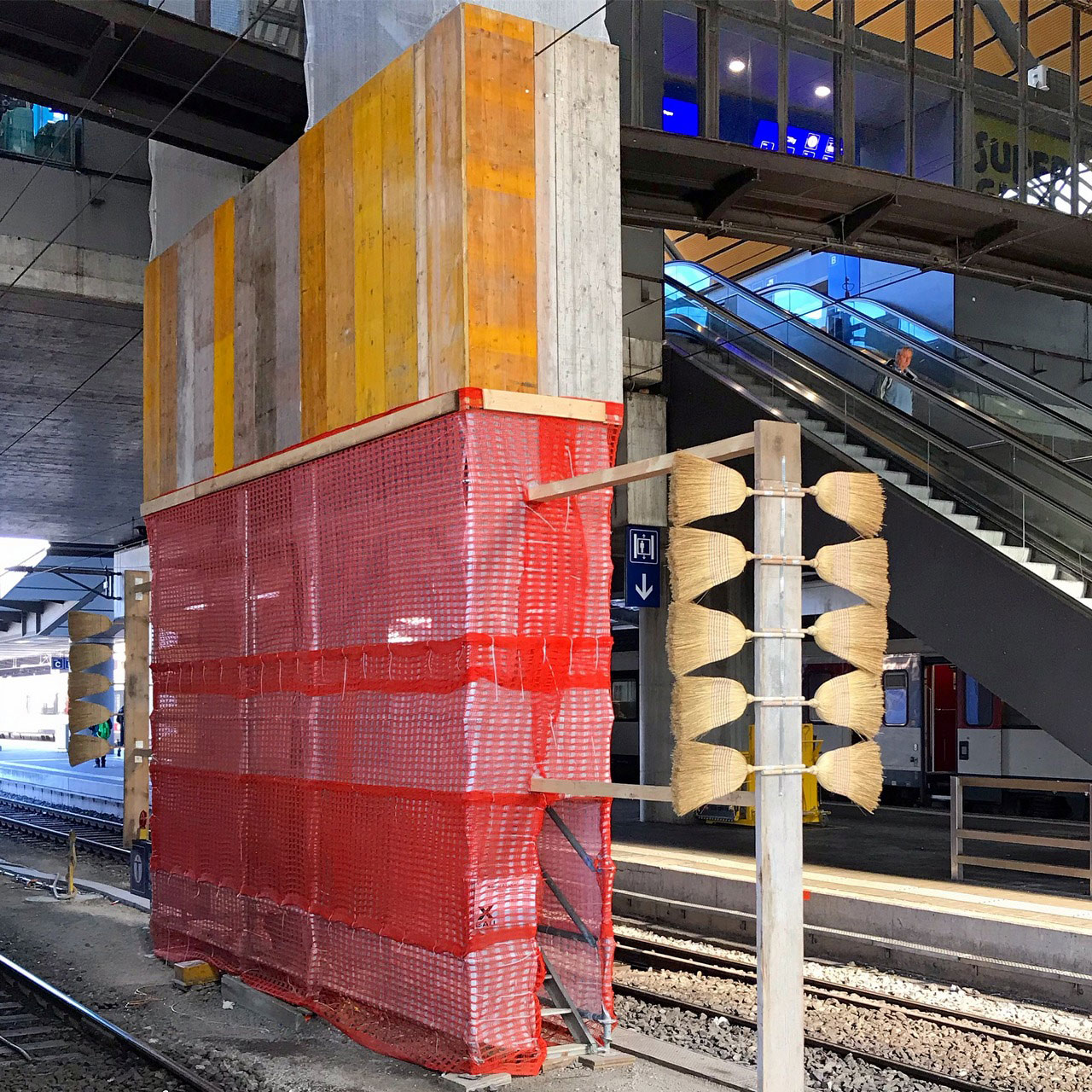
Right: Construction site in Zurich (CH). Temporary structures introduce new materials and forms of expression into the urban context, thereby continually reshaping our understanding of the city. © Photo: KOSMOS Architects, 2018