ART CITIES:Paris-Tracey Emin
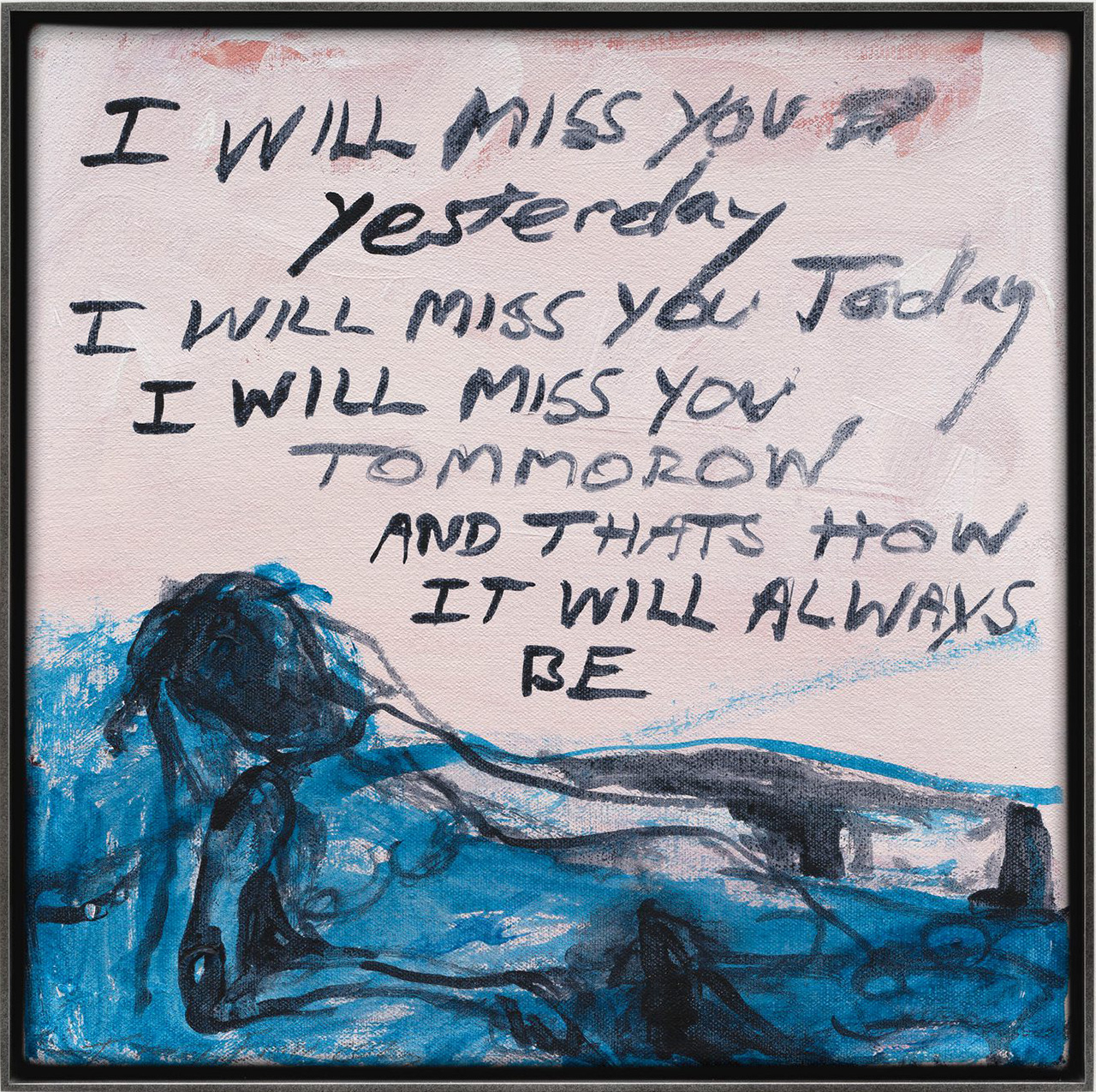
Tracey Emin looks to her life for her primary material. With soul-searching candour, she probes the construct of the self but also the very impulse to create. Unfiltered, irreverent, raw, she draws on the fundamental themes of love, desire, loss and grief in works that are disarmingly and unashamedly emotional. ‘The most beautiful thing is honesty, even if it’s really painful to look at’, she has remarked.
By Efi Michalarou
Photo: White Cube Gallery Archive
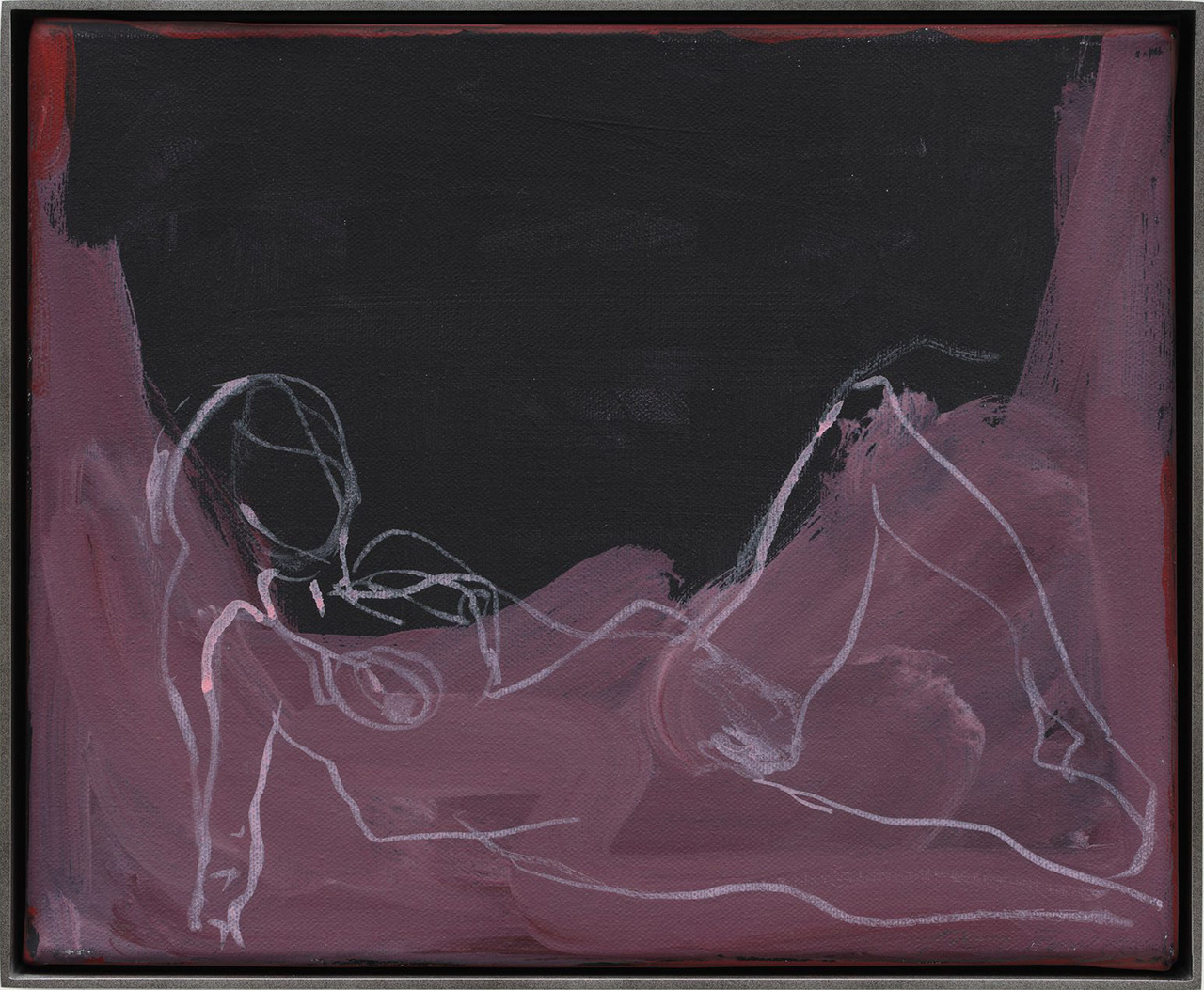
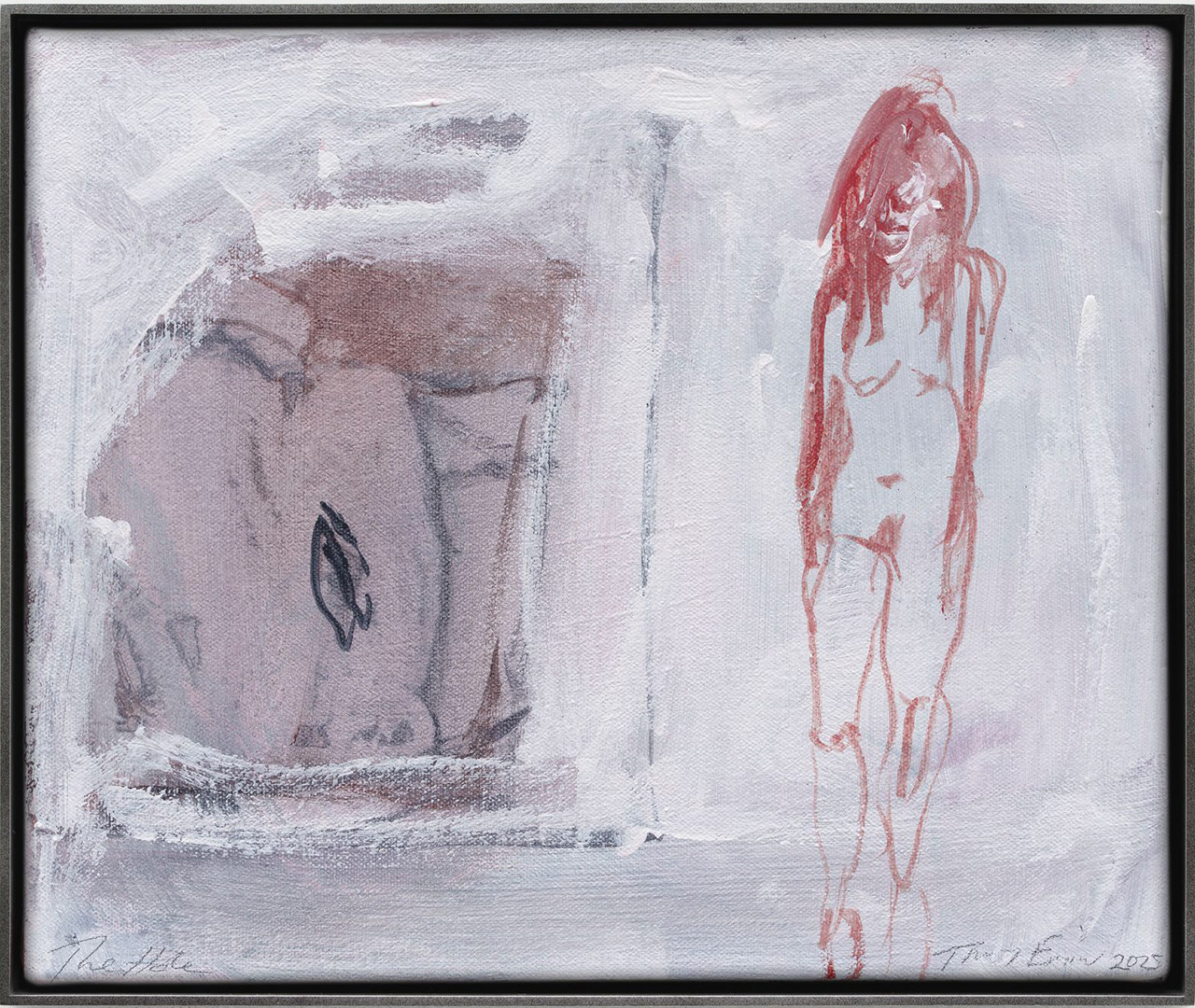
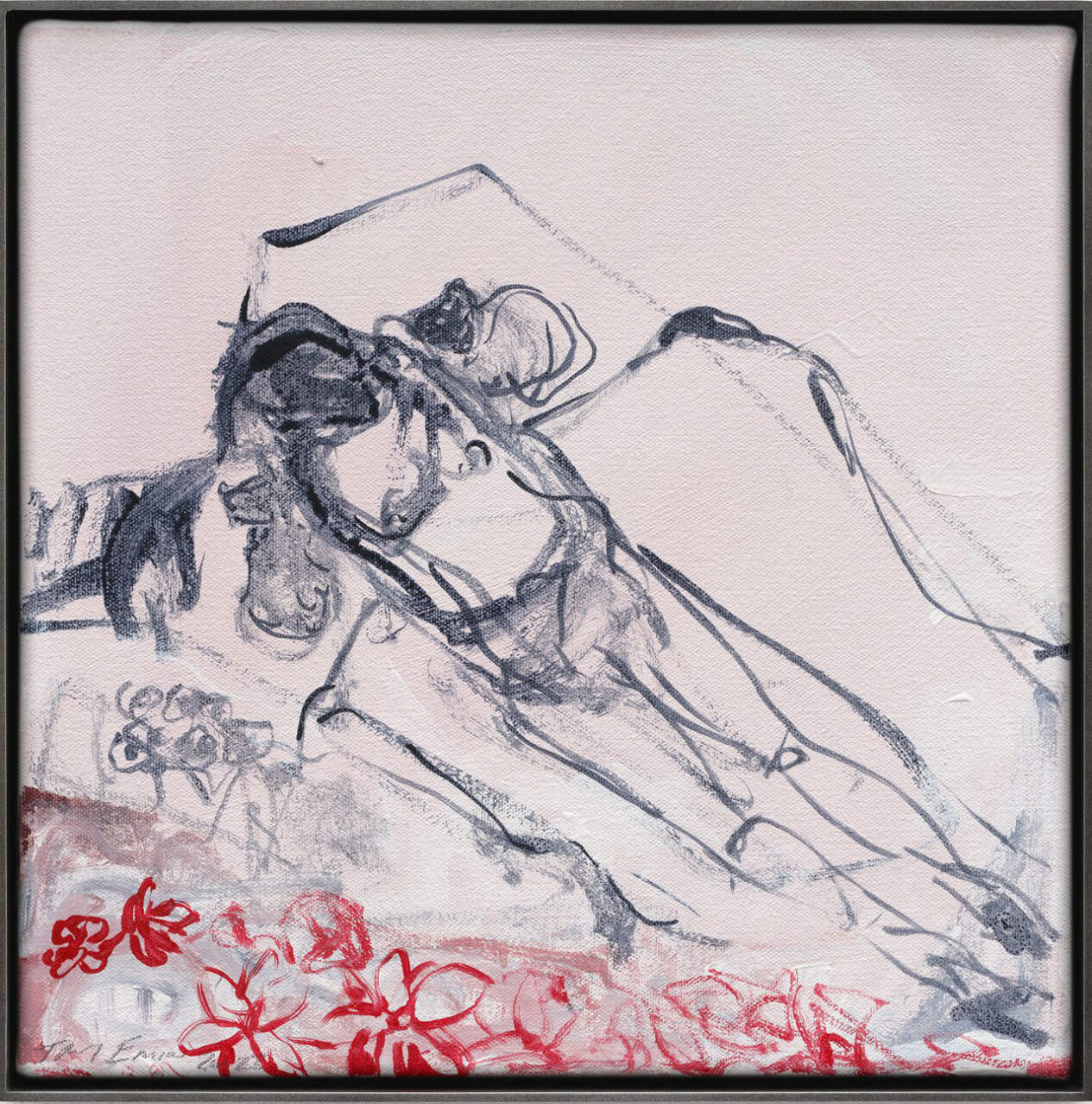
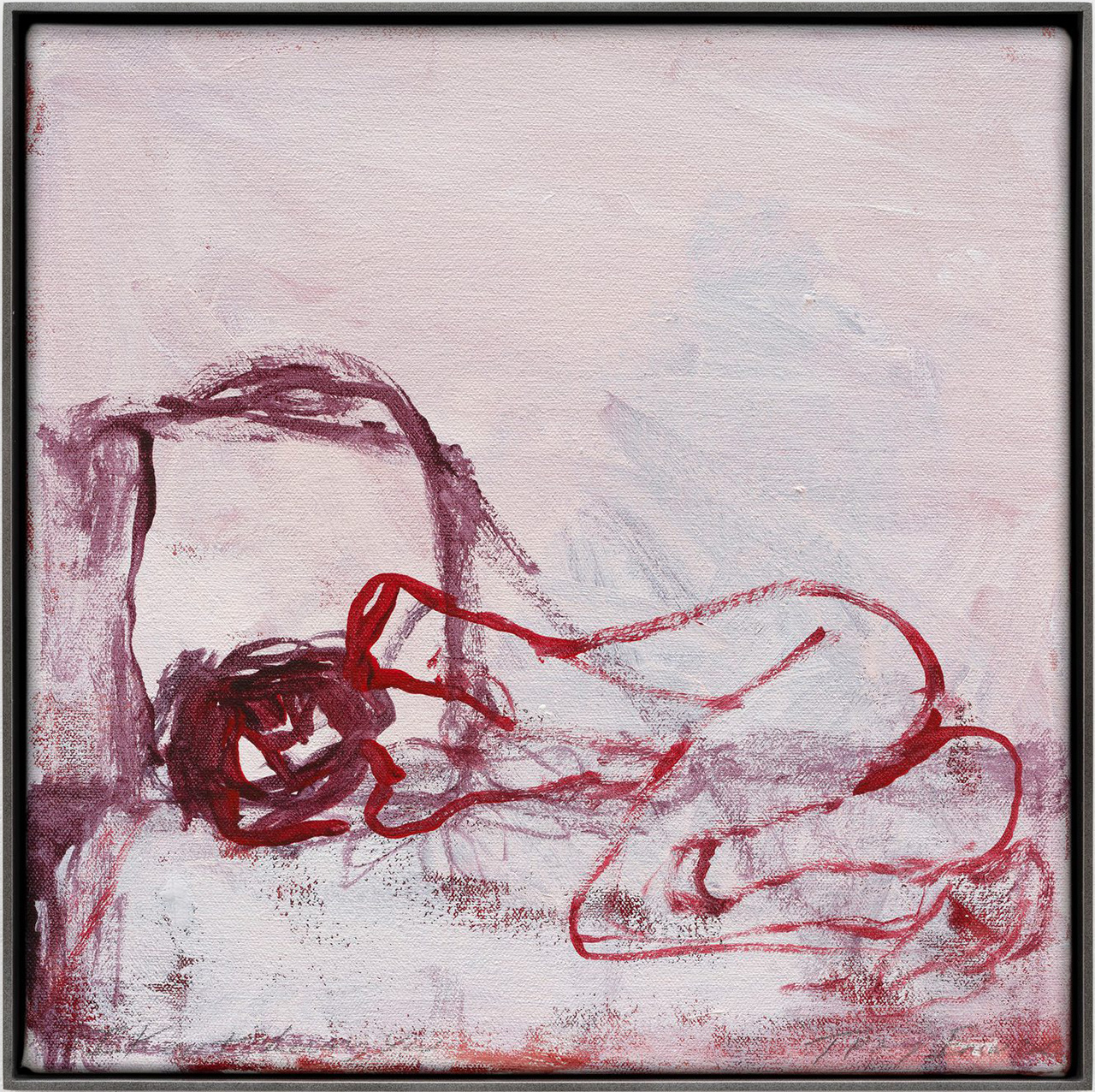
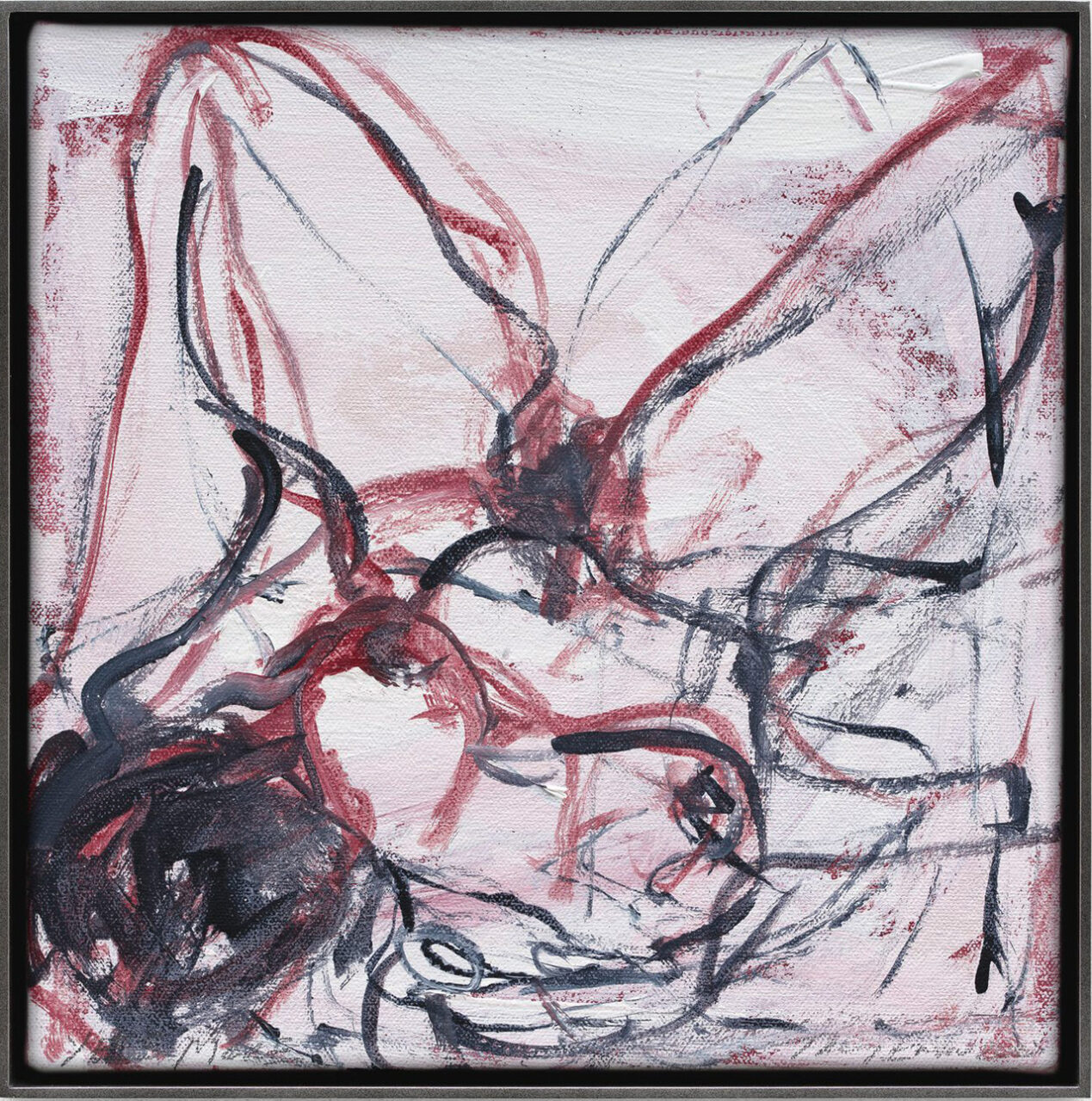
The paintings and small-scale sculptures in Tracey Emin’s exhibition “I will miss you Yesterday – I will miss you Today – I will miss you Tomorrow – And that’s how it will Always be” unfold as a sequence of intimate vignettes that collectively chart the emotional terrain of love through passages of togetherness and estrangement. Invariably autobiographical and rendered in Emin’s recognisably loose, animated mark making, the works return to the private sphere of the bedroom, where the nude subject is encountered amid states of physical vulnerability and psychic unrest. At times enfolded in the arms of a lover, the female figure is more often depicted alone, adrift in fields of nocturnal blue and black.
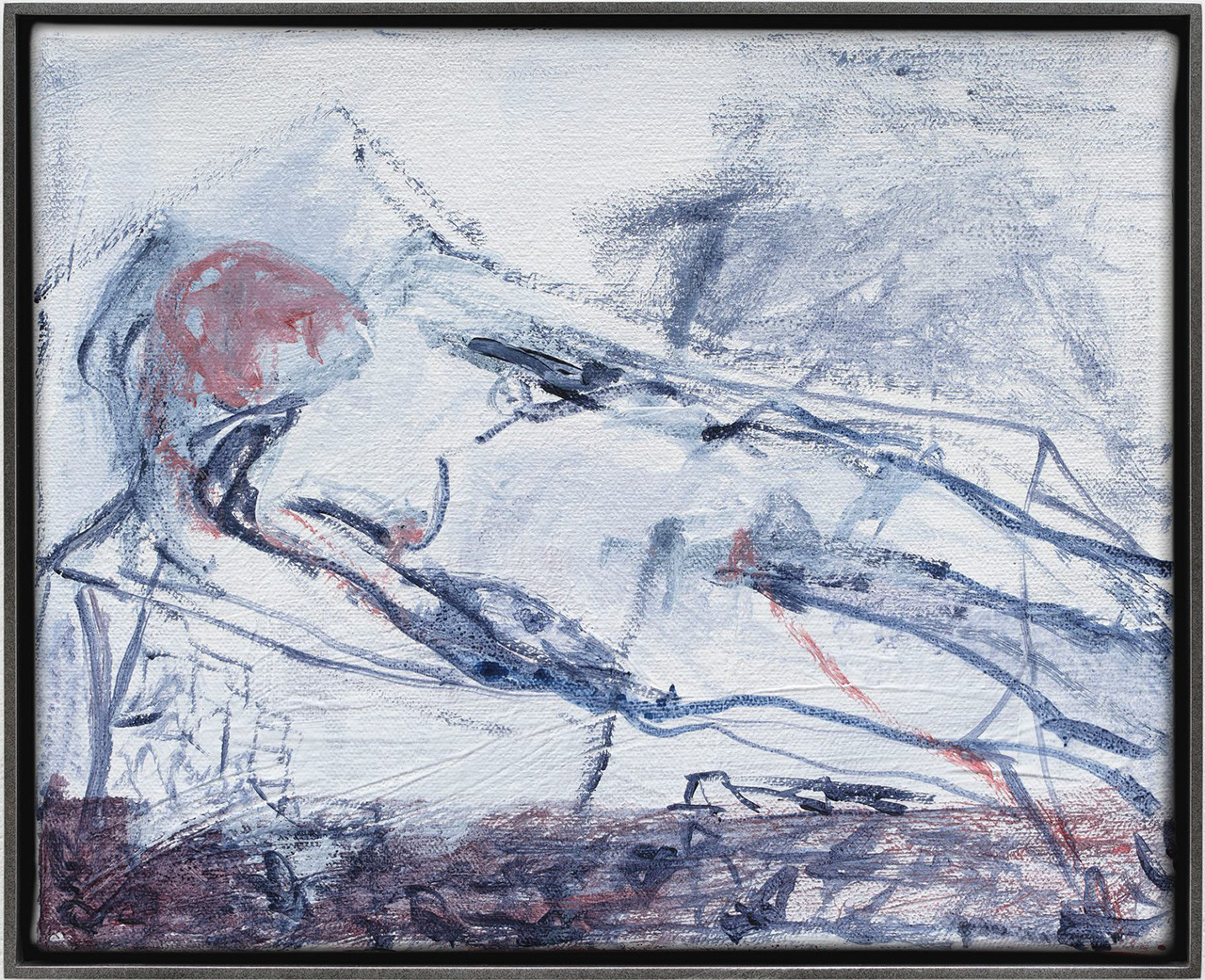
An abiding subject in Emin’s work, the reclining nude is reprised across several paintings, assuming mutable forms and emotional registers: by turns enigmatic, desolate, seductive and exposed; overwhelmed by the gaze of another or protected by it. In the exhibition’s titular painting, the recumbent figure is all but subsumed by a sea of blue, beneath the incantatory refrain that gives both work and exhibition their title: “I will miss you Yesterday – I will miss you Today – I will miss you Tomorrow – And that’s how it will Always be” (2025). Dense, agitated strokes efface the subject’s face and pelvic area, occluding the parts of the body through which identity and sexuality would otherwise be rendered legible. Where this forlorn, desexed figure appears to yield to a submersion, the subject of “Beauty” (2022) is assertively present: head raised, legs parted, her body vividly delineated and buoyed by a low valley of rose pink.
Emin’s recurrent motif inevitably brings a longer pictorial history into play, one that the artist variously invokes and unsettles. The protagonist of the titular work, for instance, invites comparison with John Everett Millais’s “Ophelia” (1851–52), whose supine body likewise yields to the surrounding water, externalising a condition of psychic dissolution. Beauty, by contrast, more readily invokes the canonical reclining nude, recalling Titian’s seductive “Venus of Urbino” (1534), her posture languid and composed, her skin luminescent: herself the very source of light within a darkened interior. In “YES MORE” (2025), Emin unsettles this pictorial grammar more explicitly. The x-shaped splay of the figure’s legs departs radically from the decorous frontal display traditionally associated with the genre, while the steep downwards perspective assumes Emin’s own line of sight, conflating artist and depicted subject. The conventional muse – the desired other – is instead displaced beyond the frame, invoked through the title’s blunt imperative.
Though unequivocally autobiographical, Emin’s self-portraits resist the naturalism and descriptive likeness typically associated with the figurative tradition. Executed in her distinctive, spontaneous brushwork, her figures retain a formal irresolution that registers instead the fluctuations of interior experience. The lover addressed in “YES MORE” recurs across a number of works, visiting the artist under shifting guises. Within the sparsely rendered interior of “YOU EAT ME” (2025), he bears down upon her as an enigmatic, many-limbed creature, pinning her to the bed in an act of erotic domination amid pink-washed walls and patterned carpet. A different encounter is evident in “Continuous LOVE” (2025), a scene in which a similarly elusive presence appears at her bedside at night, holding and consoling her. The diptych “This is How it is” (2025) presents the artist alone in two states: the face on the left darkened by a feverish red, while that on the right is in cool grey. Read together, the self-portraits trace the vicissitudes of love while also constituting a meditation on ageing, in which the fervour of youth has been tempered by the sobering perspective of time.
Just as the figure registers the essential mutability of the artist’s psyche, Emin’s depicted interiors seldom function as neutral settings. The bedroom, and more specifically the bed – another motif to which she repeatedly returns – is freighted with associations of illness and convalescence, intimacy, solitude and suffering. Above all, it functions for the artist as a privileged site where psychic vulnerability is most readily exposed. Much as her lover assumes shifting forms across the paintings, the bed undergoes its own metamorphoses, variously transfigured throughout into vessels, shallow graves and horizons. In “Waiting For A moment of You” (2025), the bed is replaced by a bath, its two upright taps rising like crosses above the figure of the artist. Beneath them, her pallid silhouette emerges against the surrounding black, a sepulchral counterimage to the intimacy once shared in the bath with her lover.
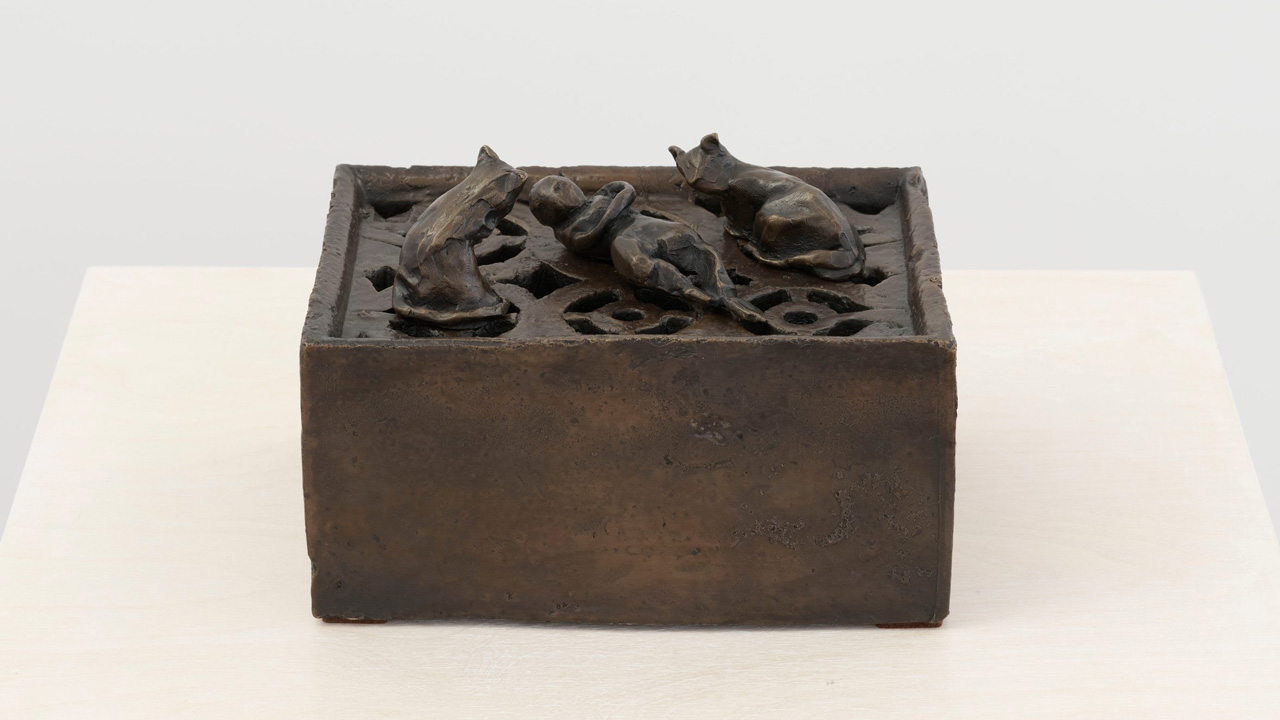
Among a series of diminutive bronzes on display, one reprises this same posture of repose: a figure exploring her body, flanked by two disproportionately large cats – the artist’s constant companions and muses, who appear again at her side in “We Love Each other” (2025). While Emin’s large-scale bronze sculptures have in the past presided over entire rooms and public sites, most prominently the monumental nine-metre “The Mother” (2022), who gazes out to sea from Inger Munch’s pier in Oslo, these small figurines rest upon patinated bronze ventilation grilles, their geometric patterning echoing the Turkish rugs that recur throughout her paintings. Across the exhibition’s scenes of longing, absence and fraught intimacy, these small talismans offer perhaps the most enduring image of companionship. Modest in scale, still bearing the quickened impressions of the artist’s fingers in clay, they give form to a tender devotion that is plainly and unreservedly returned.
Photo: Tracey Emin, I will miss you Yesterday – I will miss you Today – I will miss you Tomorrow – And that’s how it will Always be, 2025, Acrylic on canvas, 30.8 x 30.8 x 2.3 cm | 12 1/4 x 12 1/4 x 1 in. / 31.9 x 31.9 x 3.3 cm | 12 1/2 x 12 1/2 x 1 1/4 in. (framed), © Tracey Emin, Courtesy the artist and White Cube Gallery
Info: White Cube Gallery, 10 avenue Matignon, Paris, France, Duration: 20/10-18/12/2026, Days & Hours: Tue-Sat 10:00-12:30 & 13:30-18:00, www.whitecube.com/