TRIBUTE: Hito Steyerl-Deine Mudda macht Show

Hito Steyerl is a renowned filmmaker, writer, and visual artist whose work blends art, philosophy, and political critique. Combining documentary techniques with fiction, digital animations, memes, and pop-cultural references, she explores how images circulate in the digital age. Her installations critique artificial intelligence, surveillance capitalism, global conflicts, and the art world, offering an insightful and humorous examination of modern power dynamics.
By Efi Michalarou
Photo: Deichtorhallen Hamburg Archive
Like no other contemporary artist, Hito Steyerl combines perspicacious social and technological critique with humor and pop-cultural references in her work. With around 18 video works and spatial installations created between 1997 and 2025, the Deichtorhallen Hamburg presents “Deine Mudda macht Show” (“Your Mom Does Show”), a comprehensive insight into Steyerl’s oeuvre. The works are staged as an entertaining and insightful course that immerses itself across the full scale of the northern Deichtorhalle. The centerpiece is the work “Mechanical Kurds”, shown on a 12 by 6-meter screen within a specially developed installation of floating luminous bodies. Hito Steyerl’s latest video installation, “The Island”, is also being shown in Germany for the first time.
The exhibition “Deine Mudda macht Show” is dedicated to the multi-award-winning work of artist, filmmaker, and author Hito Steyerl. In her artistic and theoretical works, Steyerl engaged early on with the technological, media, and social developments that shape our present today: from digital image circulation and artificial intelligence to the mechanisms of global surveillance capitalism.
At the core of Hito Steyerl’s work are the interactions between the power of images and societal power dynamics: Who produces images, how do they circulate, and what effect do they have? How do they alter our relationship to reality? At the same time, the artist focuses her gaze on the people and infrastructures behind technologies, as well as their material and social conditions.
Starting from investigative research, Hito Steyerl develops complex narratives in which historical events and geopolitical conflicts meet fictional elements and popular culture. With this image-critical fusion of documentarism and fiction, digitally generated visual worlds, and playfully deployed pop-cultural quotes, the artist creates a unique, hybrid aesthetic—an aesthetic that makes visible and gives form to the hopes, obsessions, and anxieties of the present from a wild iconographic mixture of AI images, memes, animations, and videos.
Already in her early video essays, Hito Steyerl weaves documentary and fictional sequences into narratives about historical and societal power structures. While she exposes right-wing extremist violence, antisemitism, racism, and exclusion in German society in “Benhausen” (1997) and “Normality 1–X” (1999–2001), she embarks on a search in »Lovely Andrea« (2007) for a bondage photo series for which she had modeled during her studies in Japan. The personal research evolves into a reflection on the relationship between body and power, as well as the circulation of images. Similarly, “November” (2004) intertwines personal memory and contemporary history to tell the story of her friend Andrea Wolf, who joined the Kurdish resistance and was killed by Kurdish military forces in 1998. Later works like “Abstract” (2012) and “The Leak” (2024) also link political conflicts with questions of media representation.
Another focus of the exhibition is dedicated to the political and economic entanglements of the art world. “Guards” (2012) portrays museum guards with military or police backgrounds. In the lecture performance “Is the Museum a Battlefield?” (2013), Hito Steyerl examines the connections between art institutions, the arms industry, and international conflicts, while in “Duty Free Art” (2015), she sheds light on the role of art in a world shaped by free trade zones, offshore economies, and geopolitical crises.
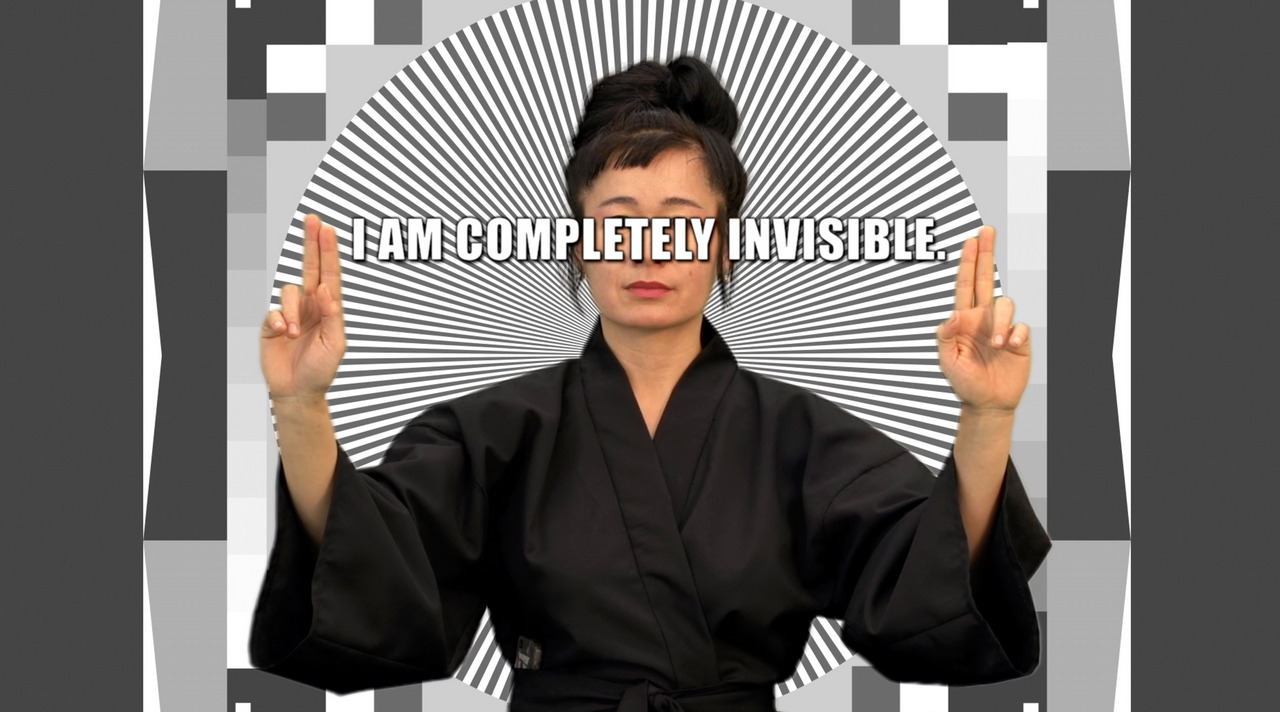
Works such as “Red Alert” (2007) and “Strike” (2010) illustrate how images guide our perception and what opportunities for resistance exist. They demonstrate the power of visual representation, but also how images can disrupt and break up established patterns of perception. One of Hito Steyerl’s most famous works is “How Not to Be Seen: A Fucking Didactic Educational .MOV File” (2013). Based on the sketch of the same name from Monty Python’s “Flying Circus”, the artist demonstrates the art of disappearing in five lessons. Given the latest technological developments, the work has lost none of its relevance. It directs the eye to the conditions and power relations that determine who and what becomes visible at any given time.
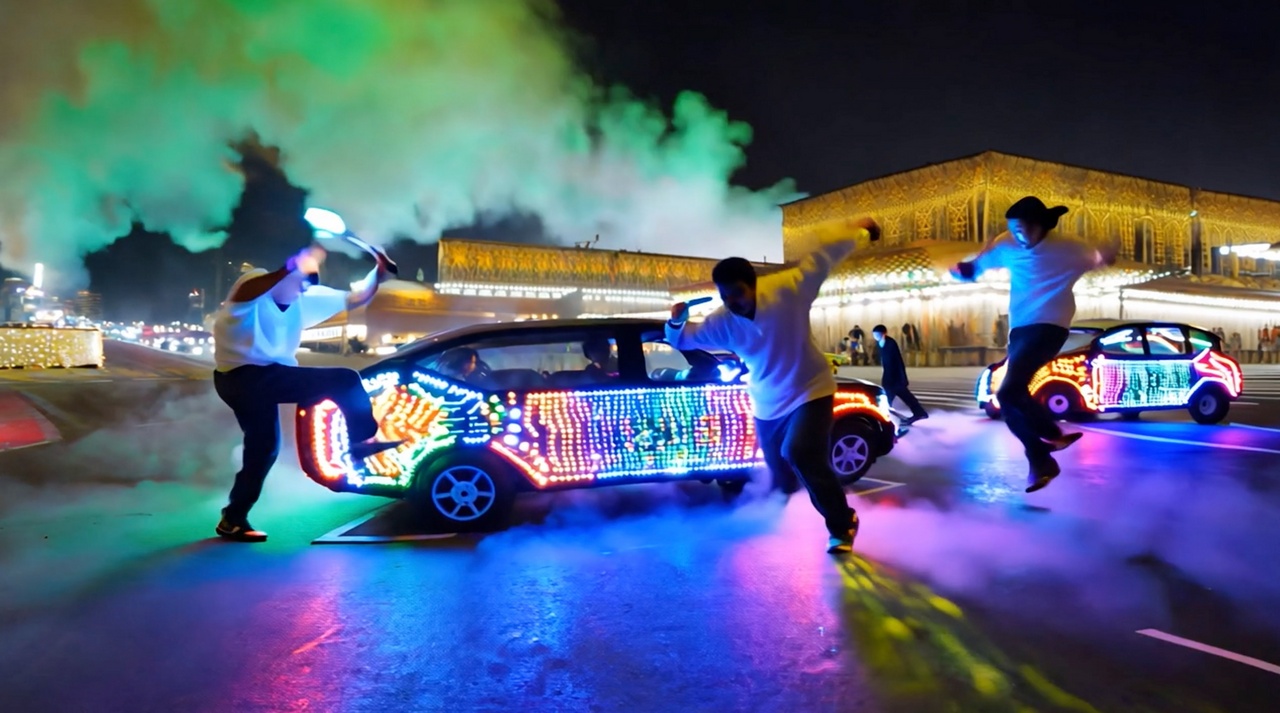
The installation “Hell Yeah We Fuck Die” (2016) as well as “Prototype 2.0” and “Prototype 2.1” (2017) question the promises of robotics and artificial intelligence and expose the power structures underlying them. The lecture performance “Mission Accomplished: Belanciege” (2019) in turn shows how the mechanisms of branding, political propaganda, and the digital attention economy interlock.
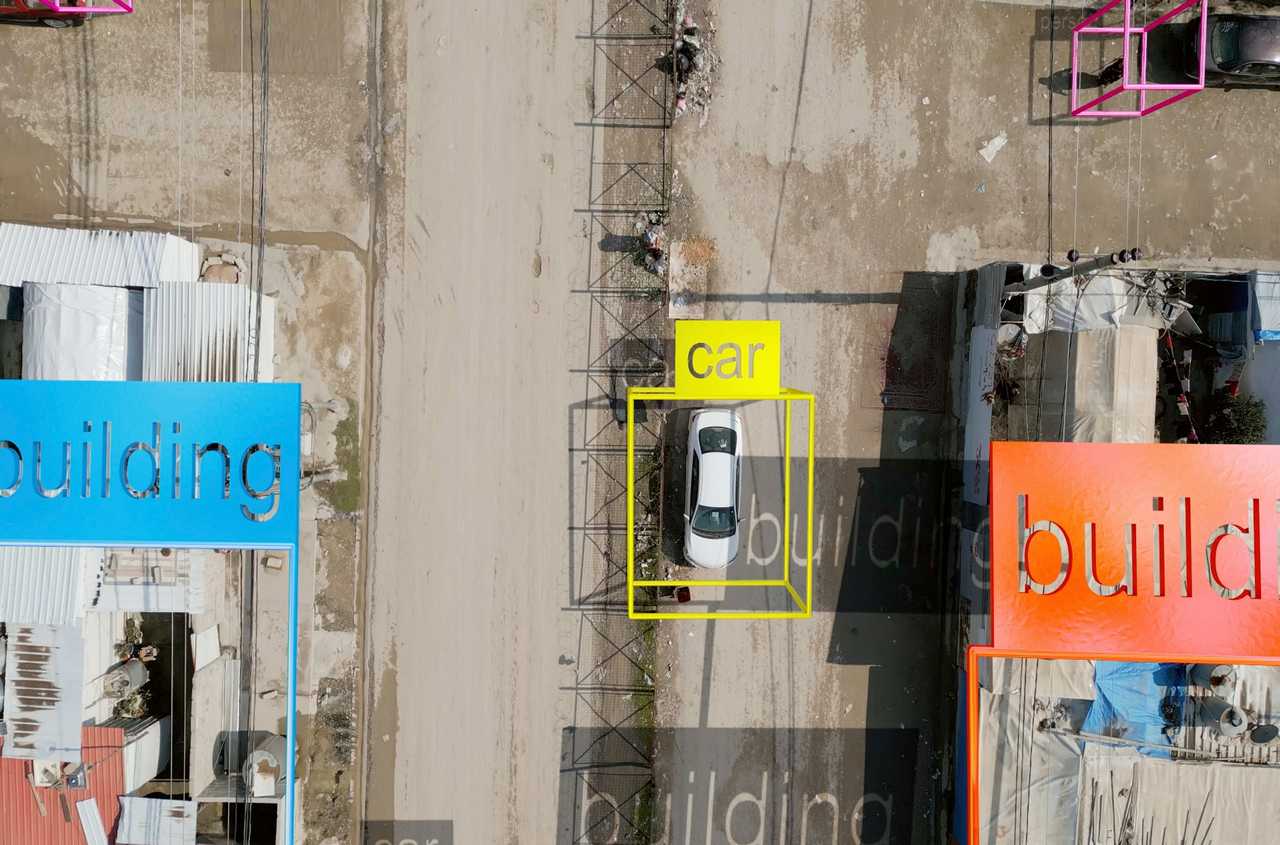
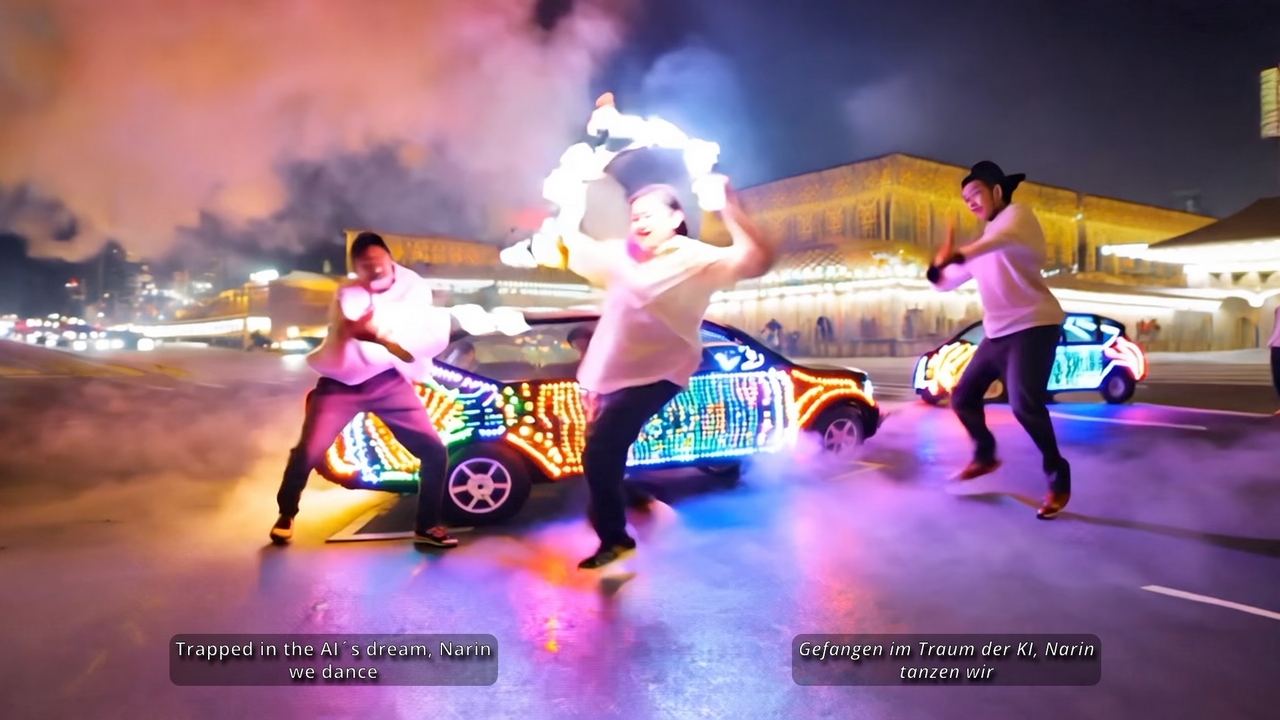
At the center of the exhibition is the AI-based video work “Mechanical Kurds” (2025), presented on a 12 by 6-meter screen in a spectacular installation of floating and standing luminous bodies developed specifically for the Deichtorhallen. Here, Hito Steyerl portrays Syrian refugees living in camps in the autonomous Kurdistan Region in Iraq who analyze images as so-called microworkers to train AI. Operating between documentary reportage and dreamlike sequences, it becomes clear that AI systems by no means function autonomously, but rely on invisible human labor. But that is not all: Because image recognition technologies are used in military conflicts, the very people who have trained these systems under precarious conditions are confronted with their impact—such as in drone strikes.
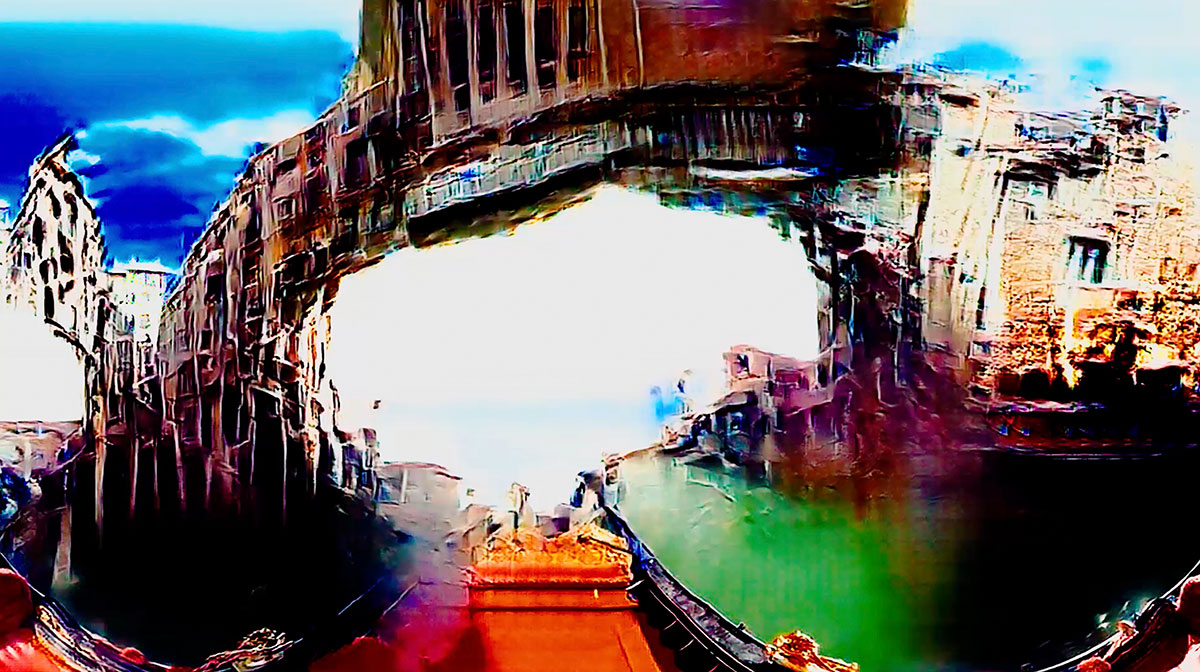
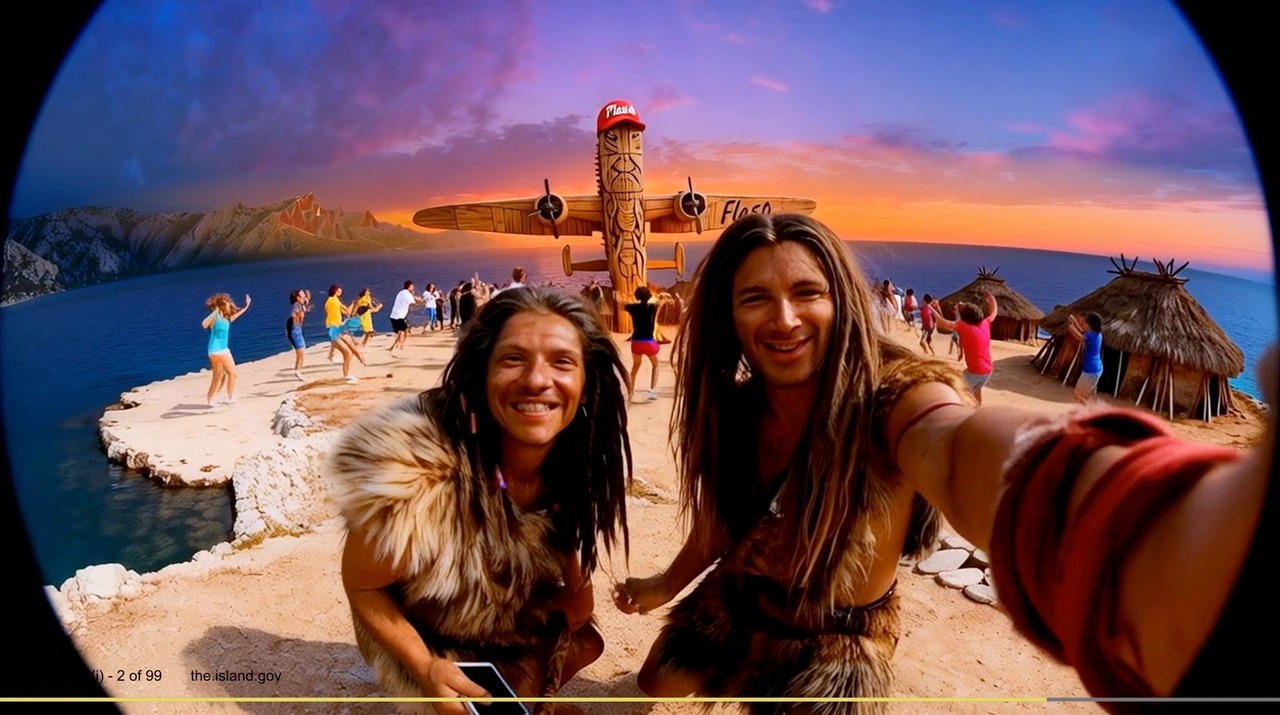
Hito Steyerl’s latest film “The Island” (2025) is being shown in Germany for the first time, also experienceable as a spatial installation. The work intertwines science fiction, archaeology, and artificial intelligence into a multi-layered narrative where—referencing quantum physics—different temporal and spatial dimensions overlap. With rapid leaps between past and future, reality and fiction, “The Island” tackles current AI-driven authoritarian tendencies, the climate crisis, and political pressure on science. Actor Mark Waschke appears in the role of comic hero “Flash Gordon” as an absurd hero or digital Sisyphus trying to “save the Earth.”
Photo: Hito Steyerl, MISSION ACCOMPLISHED: BELANCIEGE, 2019 with Giorgi Gago Gagoshidze and Miloš Trakilović. Courtesy of the artist, Andrew Kreps Gallery, New York, and Esther Schipper, Berlin/Paris/Seoul Stills © Hito Steyerl/VG Bild-Kunst, Bonn 2026
Info: Deichtorhallen Hamburg, Deichtorstr. 1-2, Hamburg, Germany, Duration: 30/10/2026-29/3/2027, Days & Hours: Tue-Sun 11:00-18:00, www.deichtorhallen.de/