ART CITIES:N.York-Hiroshi Sugimoto
Working across photography, sculpture, architecture, and performance, Hiroshi Sugimoto bends time and space to transform fleeting moments and historical milestones into monumental art. Whether rendering museum dioramas and waxworks with natural realism, or dissolving architectural structures into soft focus, Sugimoto seamlessly blurs the line between the artificial and the real. Driven by rigorous concepts, his artistic vision moves carefully from idea to execution, anchored by the deliberate use of a large-format camera.
By Dumutris Lempesis
Photo: Lisson Gallery Archive
In his wide-ranging practice across photography, sculpture, architecture, and performance, Hiroshi Sugimoto has long possessed a rare ability to manipulate the relentless march of time and the vast mysteries of space. By effectively stalling the clock, he creates monumental forms out of both historically significant milestones and fleetingly poetic moments. Sugimoto frequently approaches the artificial with an eye for the natural, transforming museum dioramas and waxworks into strikingly realistic encounters, while simultaneously doing the reverse by softening solid architectural structures until they seem to melt away into pure light and shadow. Proving his mastery as one of the world’s greatest visionaries of lens-based media, his concept-driven methodology begins with the pure ideation of an image and culminates in meticulous physical execution, anchored by the deliberate use of a large-format camera.
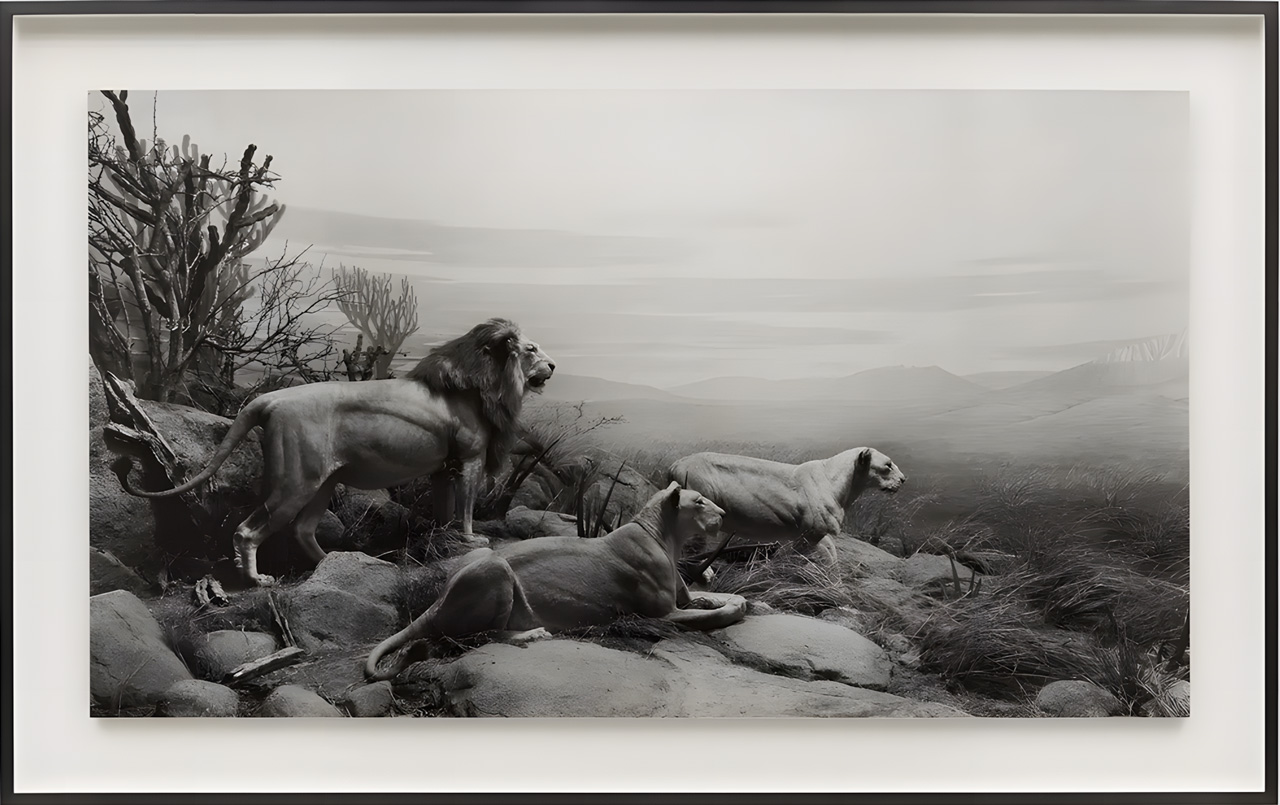
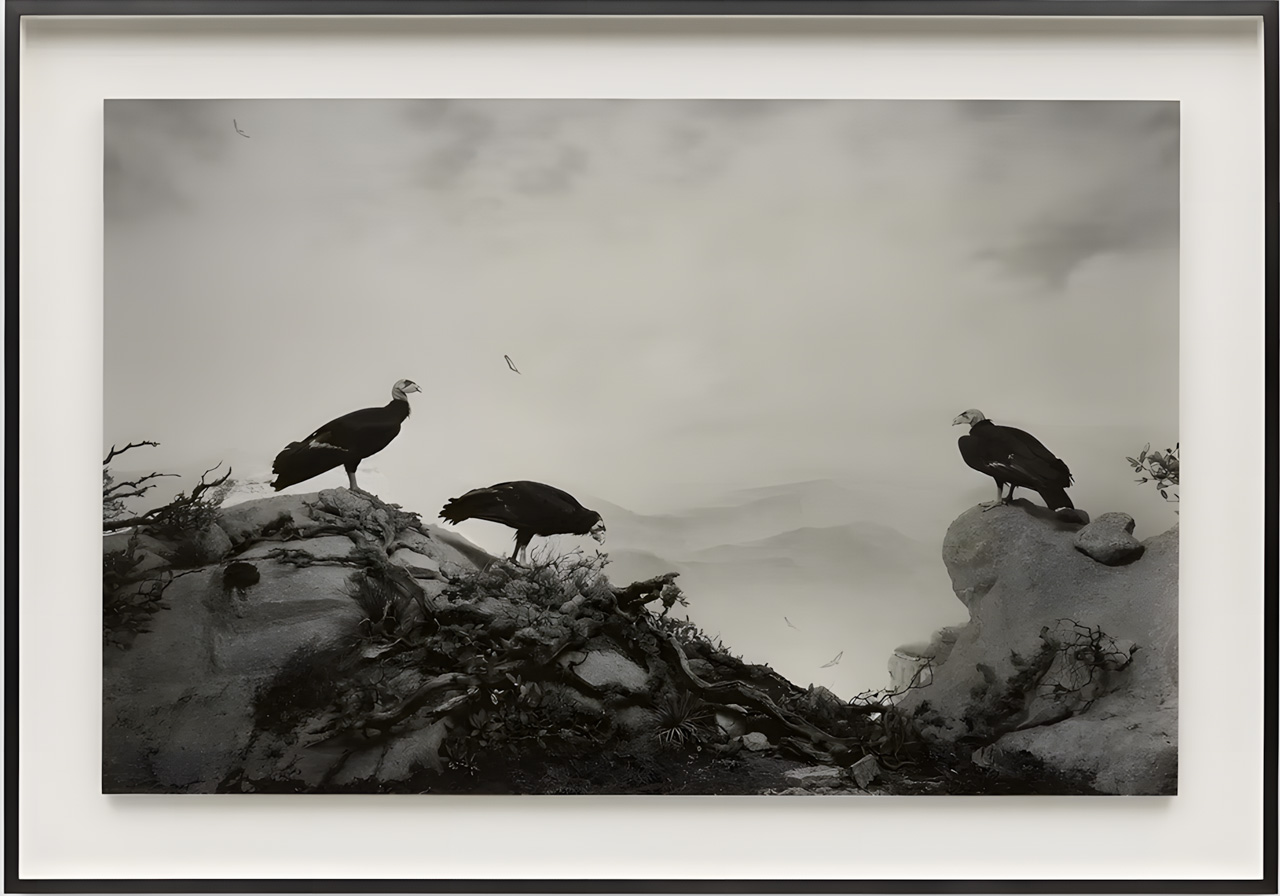
In his solo exhibition “Unnatural Habitat”, presented at Lisson Gallery in New York, Sugimoto revisits and expands upon the seminal body of work that first revealed his capacity to suspend time and reality: his iconic Diorama series. The origins of this lifelong investigation trace back to 1975, two years after the artist moved to New York City. While wandering through the American Museum of Natural History, Sugimoto was struck by the surprisingly lifelike quality of its displays. Combining painted canvas environments with taxidermied animals and artificial flora, these constructed habitats offered a way to represent nature through an inherently theatrical and fabricated form. Upon viewing them through the viewfinder of his large-format camera, Sugimoto realized that the camera lens possessed a unique power to strip away the artificiality of the staging, turning fake scenes into believable, frozen slices of life.
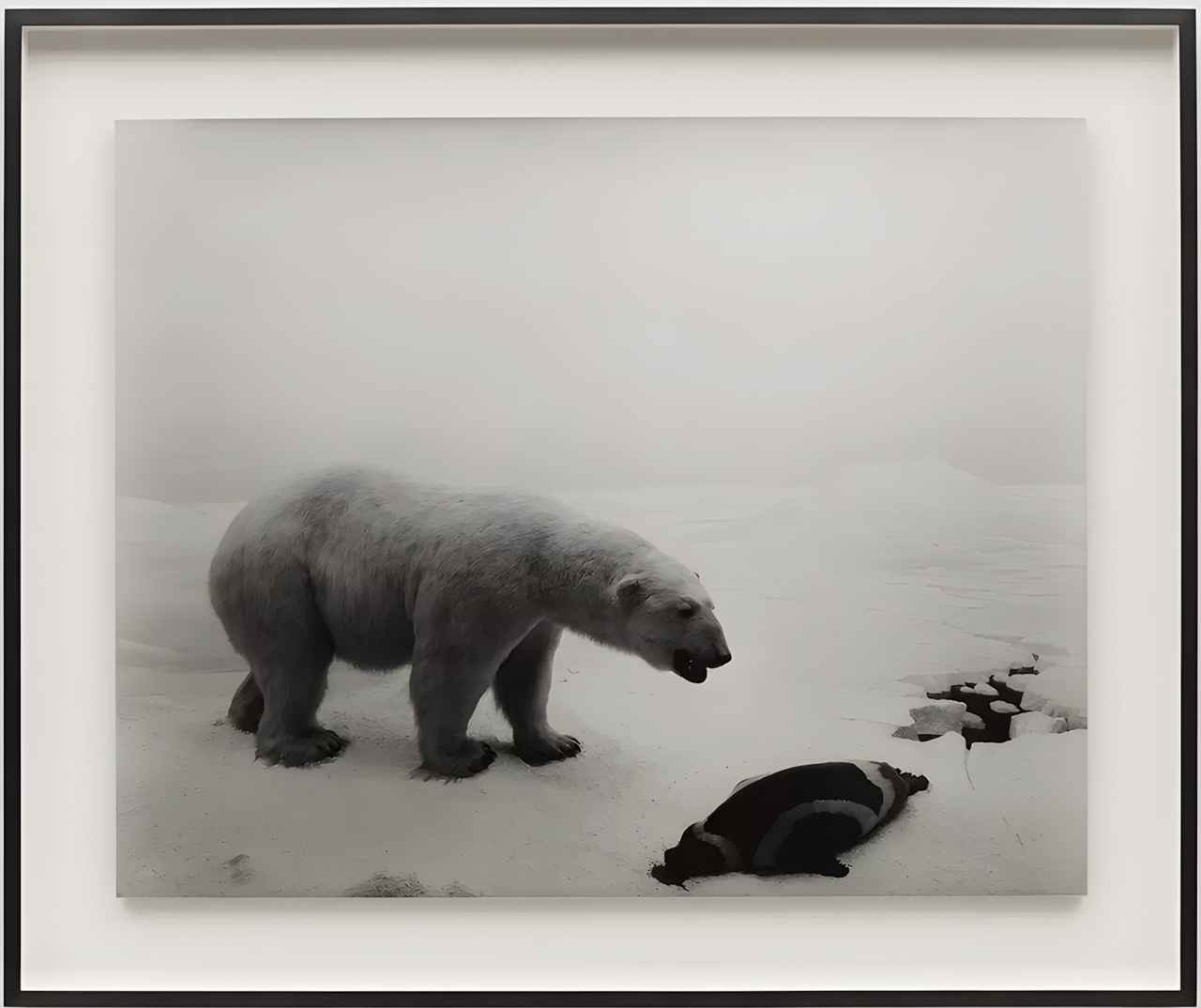
Returning to the American Museum of Natural History fifty years after his initial encounter, Sugimoto’s Unnatural Habitat brings together five decades of artistic dialogue with constructed nature. The exhibition features a wide array of subjects, ranging from regal lions, soaring condors, and stalking jaguars to prehistoric scenes of Homo erectus, alongside expansive North American landscapes such as the Rocky Mountains and a giant cactus forest. The show includes foundational milestones such as “Polar Bear” from 1975, which stands as the very first photograph Sugimoto ever made as an artist, establishing the conceptual foundation for his entire career. Another key piece, “Hunting Dogs”, originally photographed in 1980, was revisited when Sugimoto painstakingly adjusted an uneven patch of sky caused by a burnt-out lightbulb inside the museum’s display case fifty years ago. By incorporating newly enlarged, previously unprinted negatives alongside these classic images, the exhibition underscores the ongoing tension within the Diorama series between preserving a fabricated reality and elevating it into a timeless masterpiece.
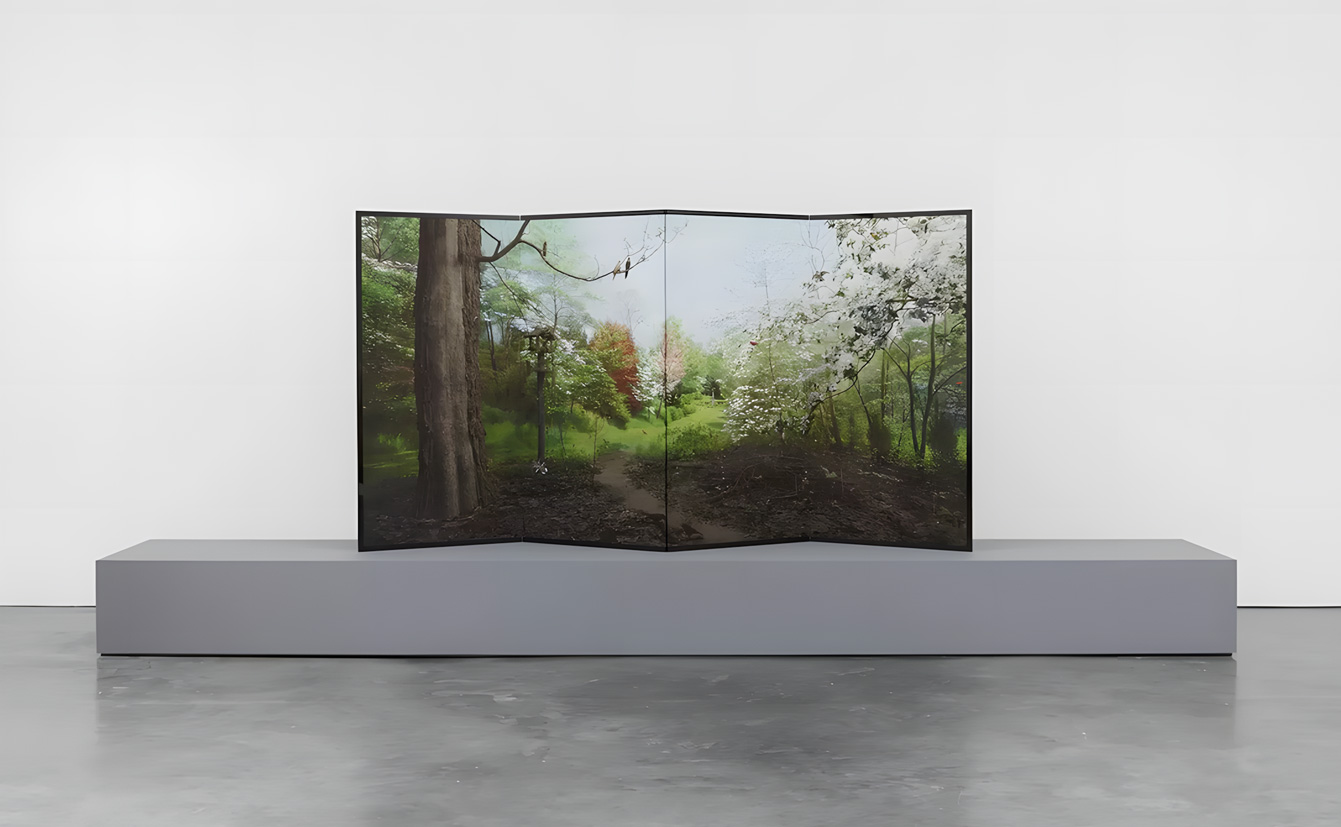
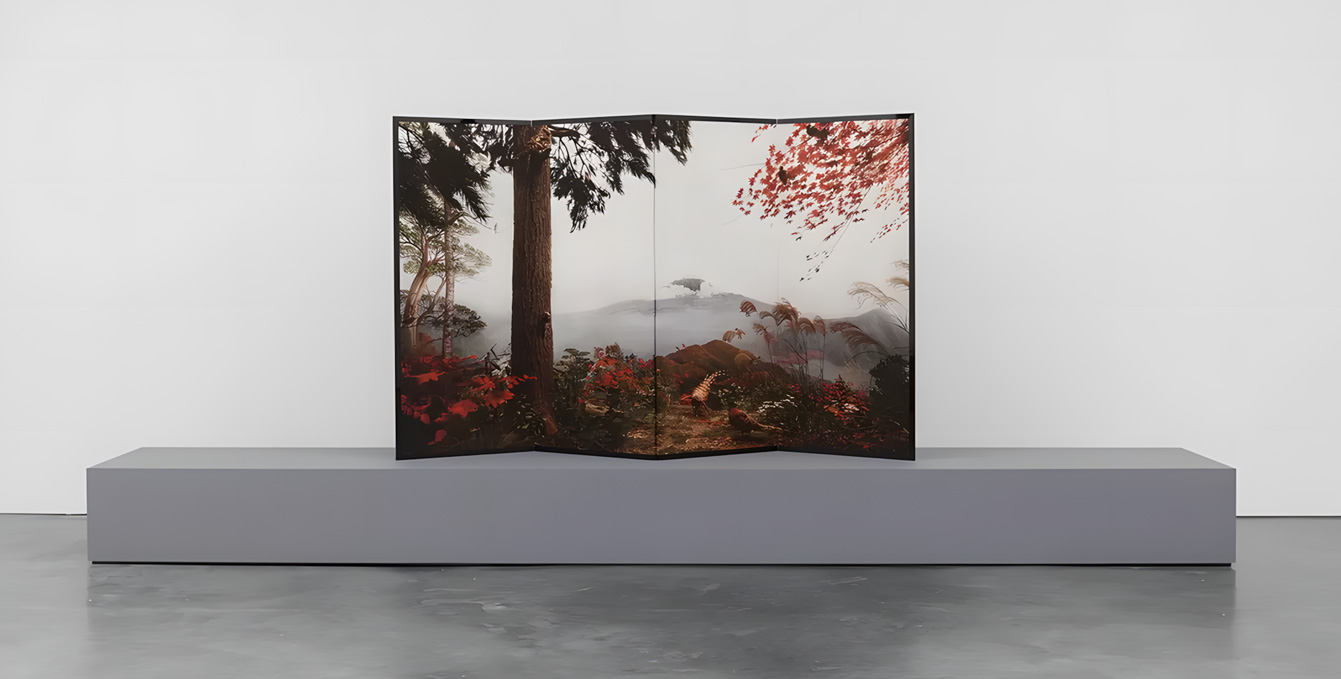
The exhibition also introduces a major structural and visual breakthrough in Sugimoto’s oeuvre through four large-scale color diorama photographs presented as traditional Japanese folding screens, or byōbu. Printed on handmade wash paper produced through centuries-old Kyoto craftsmanship, these luminous screens mark only the second time Sugimoto has incorporated full color into his photographic practice, following his celebrated “Opticks” CIseries. By shedding the conventional glass frame in favor of the folding screen, Sugimoto imparts a distinct sculptural and architectural presence to the photographs. The physical folds of the byōbu extend the imagery into three-dimensional space, mirroring the painted backdrops and engineered perspectives of the physical dioramas that inspired them. In uniting early silver gelatin prints, re-mastered historical exposures, and these vibrant, spatial screens, Sugimoto affirms his enduring commitment to probing the boundaries of perception, demonstrating that photography can be far more than a record of the world—it can be a gateway into the poetic mysteries of time itself.
Photo: Hiroshi Sugimoto, Birds of Japan, 2025, Pigment print, 180 x 320 cm, 70 ⅞ x 126 in, Framed: 186 x 326 cm, Framed: 73 ¼ x 128 ⅜ in, © Hiroshi Sugimoto, Courtesy the artist and Lisson Gallery
Info: Lisson Gallery, 504 West 24th Street, New York, NY, USA, Duration: 15/9-24/10/2026, Days & Hours: Tue-Sat 10:00-18:00, https://lisson.com/