ART CITIES:Paris-Dan Flavin
Through the use of commercially manufactured fluorescent lamps, Dan Flavin created a body of work that radically transformed the experience of color, light, and space. Fluorescent light became the defining medium of his practice. By working within the constraints of his chosen industrial material—using only straight and circular lamps while varying their lengths, configurations, and colors—Flavin developed a remarkably consistent yet expansive visual language, ranging from intimately scaled single-light works to massive installations that extend across architectural sites and public spaces.
By Efi Michalarou
Photo: Gagosian Archive
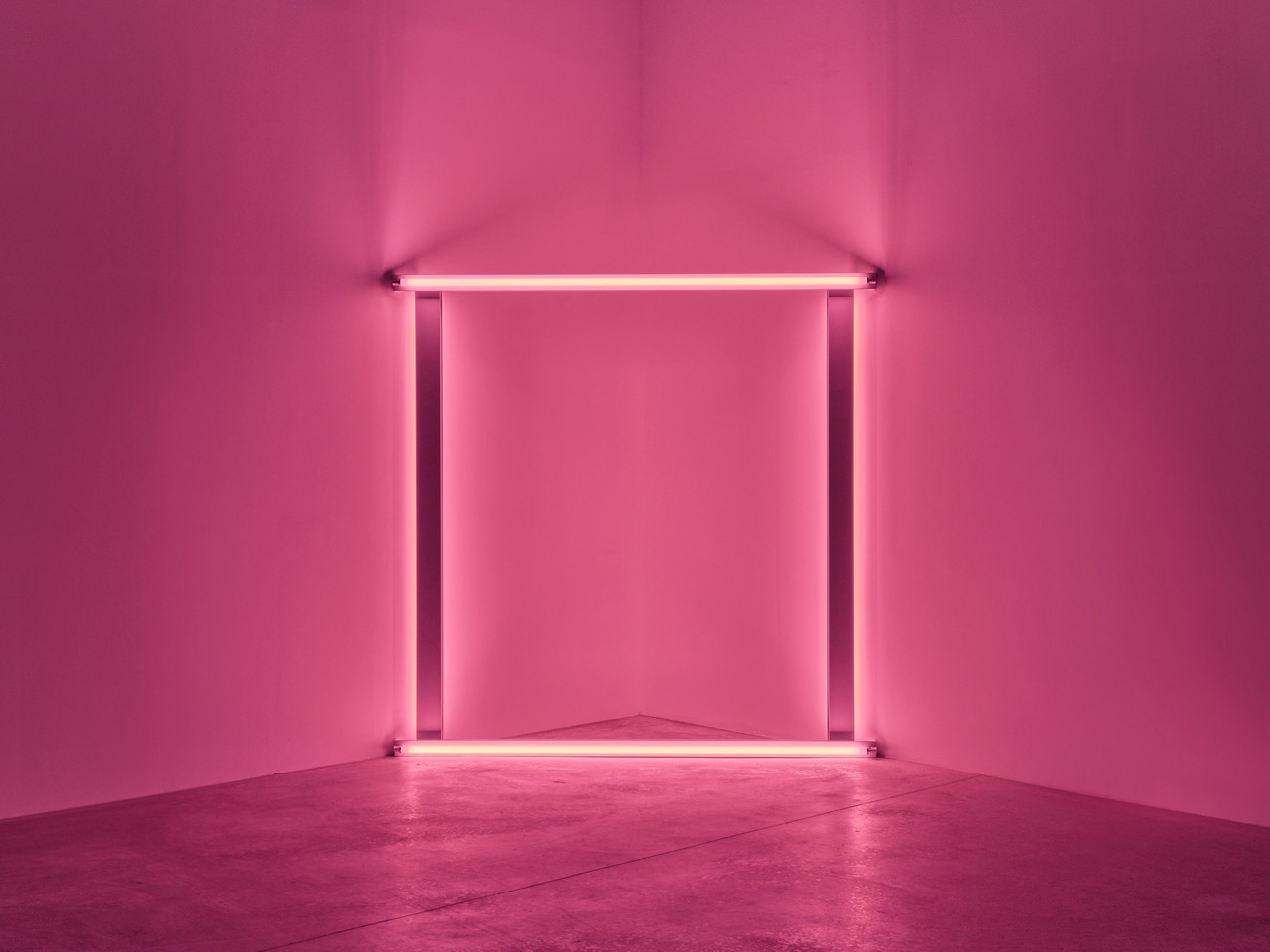
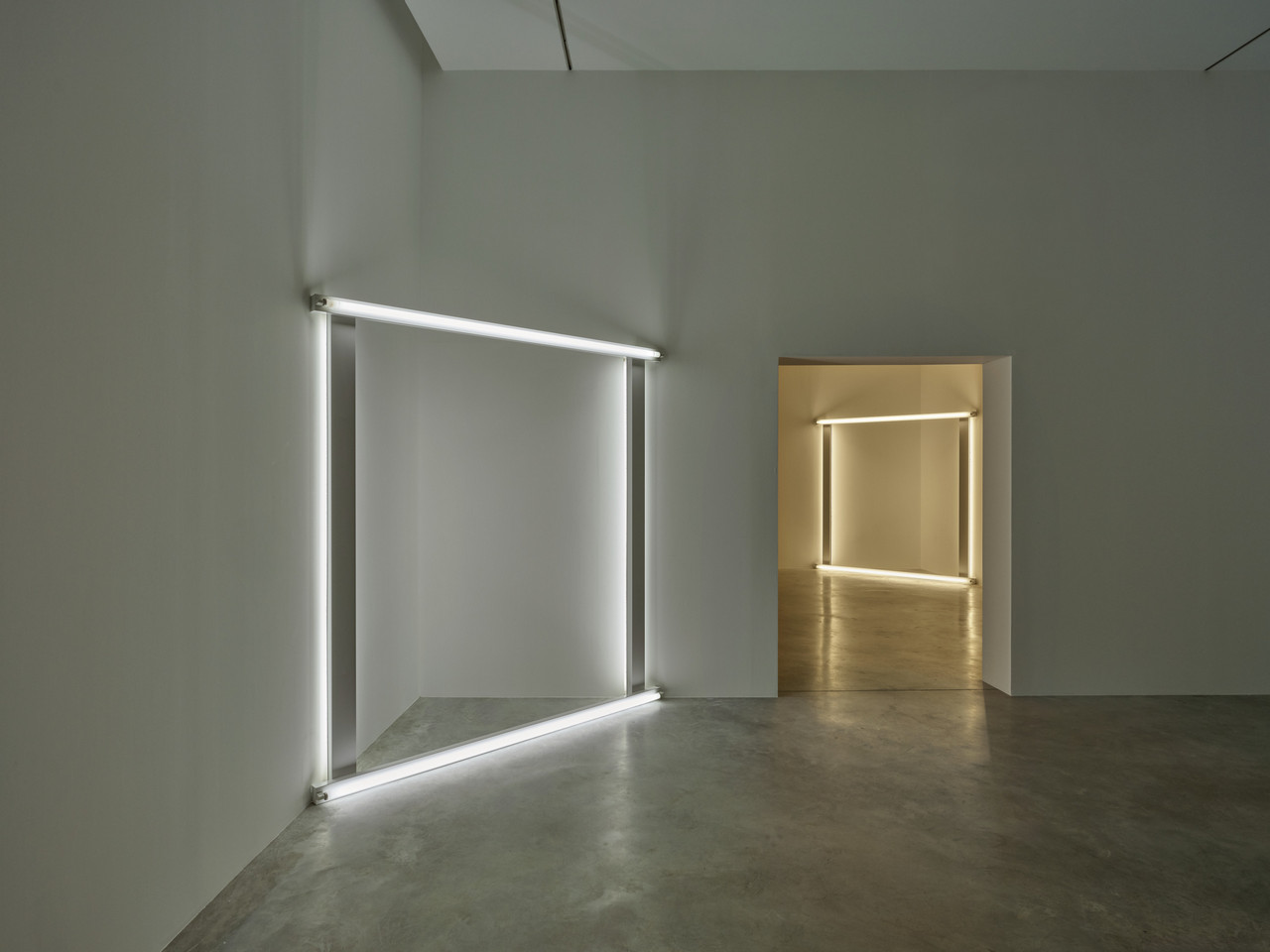
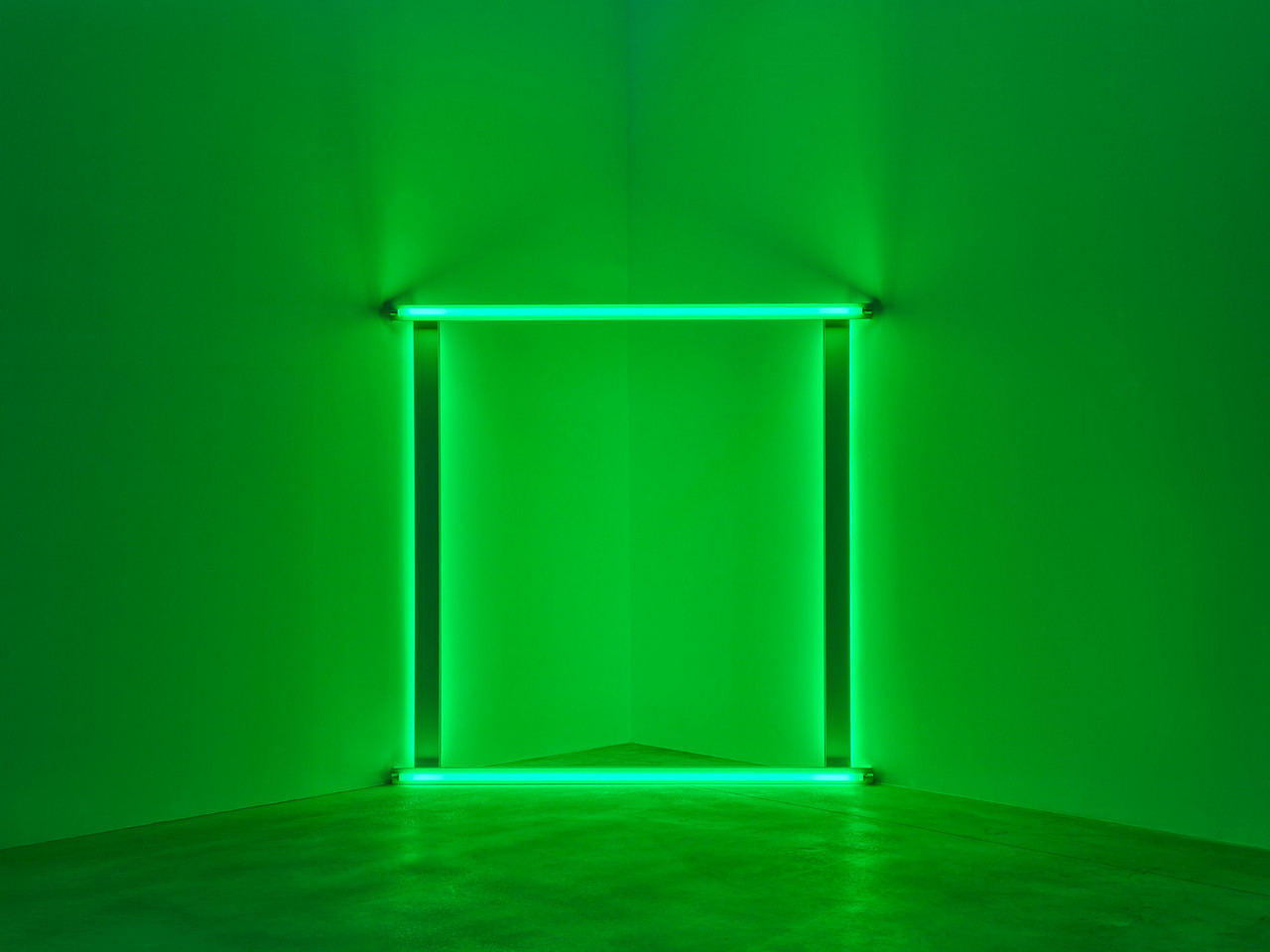
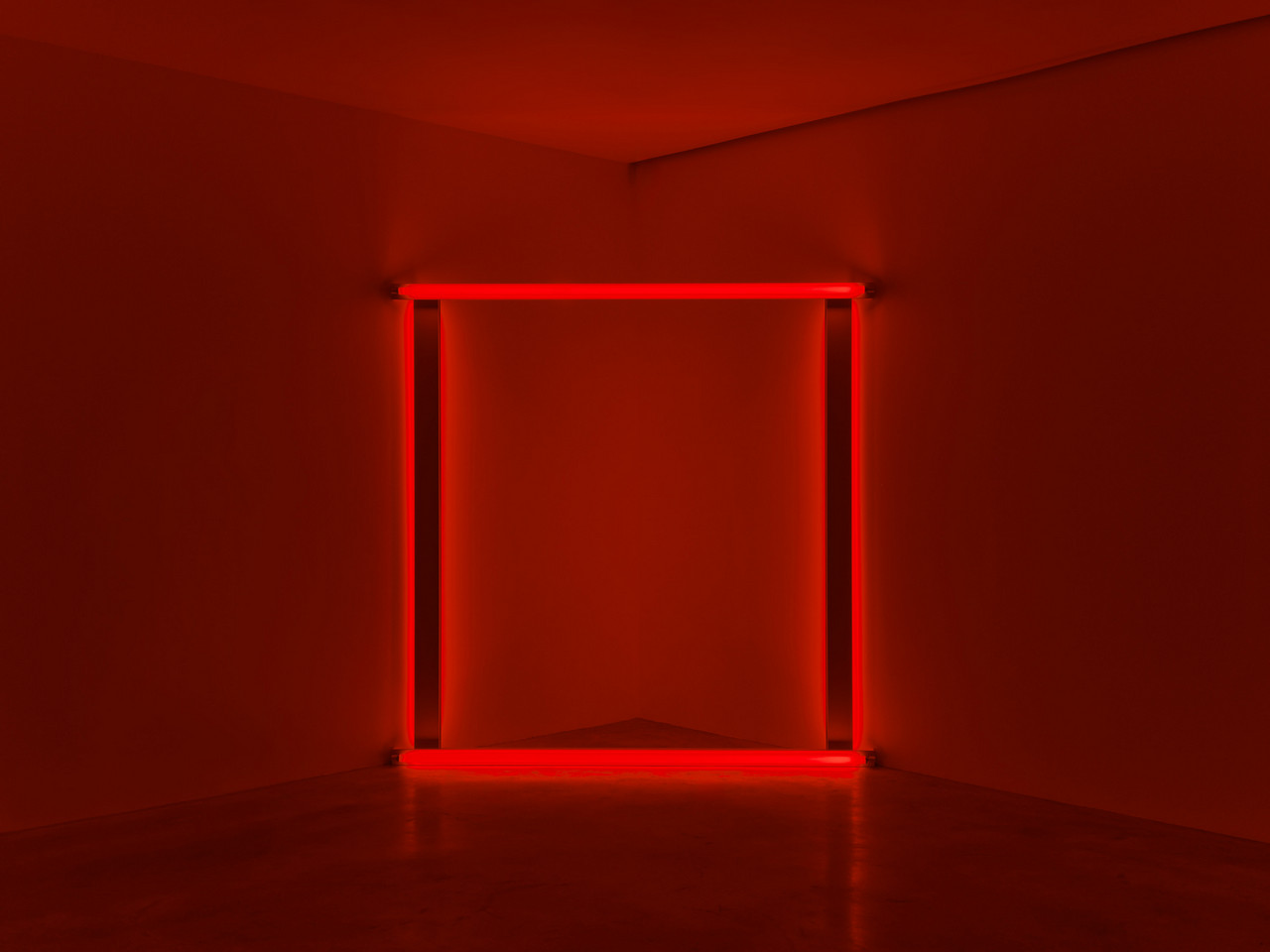
Presented in its entirety for only the third time, and for the first time in France, Dan Flavin’s “European Couples” (1966–71) brings together all nine of the artist’s fluorescent-light corner installations at Gagosian’s Le Bourget gallery. The exhibition offers a rare opportunity to encounter the series as a unified whole, revealing the interplay of color, repetition, architecture, and personal dedication that defines one of Flavin’s most significant bodies of work. Five works on loan from the Estate of Dan Flavin join four from the collection of Heiner Friedrich, reuniting the complete series following its long-term presentation at DASMAXIMUM KunstGegenwart in Traunreut, Germany.
Flavin described these installations as “situations,” emphasizing their relationship to the spaces they inhabit. Rather than treating fluorescent light as a means of illumination, he transformed commercially manufactured lamps and fixtures into sculptural elements, allowing light itself to become the principal artistic medium. Installed across architectural corners, the nine works each form an open square measuring approximately 244 centimeters on each side. Each is illuminated by a single color of fluorescent light—yellow, pink, red, blue, green, warm white, cool white, daylight, or soft white. Although their structures remain consistent, the distinct hues produce different atmospheric effects, washing adjoining walls with color and altering the viewer’s perception of spatial boundaries. Through this restrained vocabulary of industrial materials and geometric forms, Flavin demonstrated how sculpture could extend beyond a physical object to encompass the surrounding environment.
Conceived in 1966, just three years after Flavin abandoned painting and collage in favor of fluorescent-light constructions, “European Couples” reflects his sustained investigation of seriality and the expressive possibilities of repetition. The nine installations share a common structure, yet their individual colors distinguish them from one another, creating a dialogue between uniformity and variation. Their placement also makes architecture an active component of the work: corners become sites of transformation, while light spills across surfaces, dissolving the distinction between the artwork and its surroundings. The installation is therefore experienced not as a collection of separate objects but as an interconnected environment whose appearance shifts with the viewer’s position and movement.
Beneath this formal rigor lies a deeply personal dimension. From the early 1960s onward, Flavin frequently dedicated his works to people who had shaped his life and artistic development, including friends, family members, fellow artists, writers, electricians, and gallery workers. These dedications introduce human relationships into an artistic language often associated with Minimalism’s impersonal geometry. In “European Couples”, each work honors a different pair of individuals close to the artist, linking its specific color and spatial presence to a personal association. Among those commemorated are German art dealer Heiner Friedrich and his then-partner Thordis Moeller, represented by soft white light, and Swiss dealer Bruno Bischofberger and his wife, Christina, associated with yellow light. The series thus combines the apparent neutrality of industrial materials with the intimacy of personal remembrance.
Friedrich’s relationship with Flavin provides a further historical dimension to the exhibition. An influential art dealer and patron during the 1960s and ’70s, Friedrich played an important role in supporting Flavin and other artists whose work helped redefine contemporary art. Beginning in the late 1960s, he presented Flavin’s work through his galleries in Munich, Cologne, and New York, contributing to the artist’s international recognition. In 1974, Friedrich cofounded the Dia Art Foundation, which established the Dan Flavin Art Institute in Bridgehampton, New York, in 1983, now part of Dia Bridgehampton. He later founded DASMAXIMUM, a museum conceived around the extended presentation of significant groups of works by selected artists. Situated in a former industrial complex, the institution offers an alternative to the conventional museum model, allowing works to be experienced over time and in sustained relation to their surroundings. The reunion of the nine European Couples installations in France extends this history of collaboration, collecting, and long-term engagement with Flavin’s art.
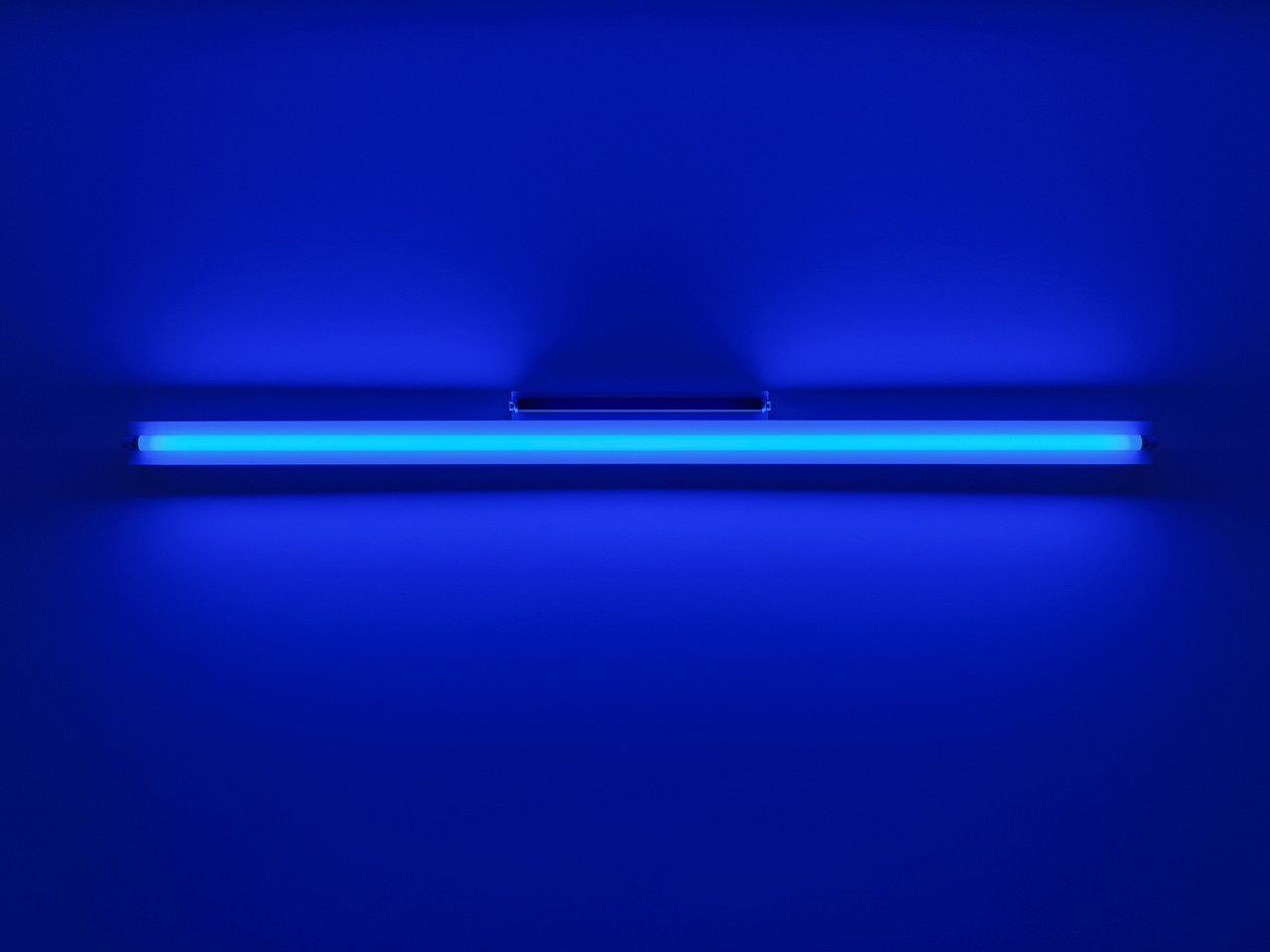
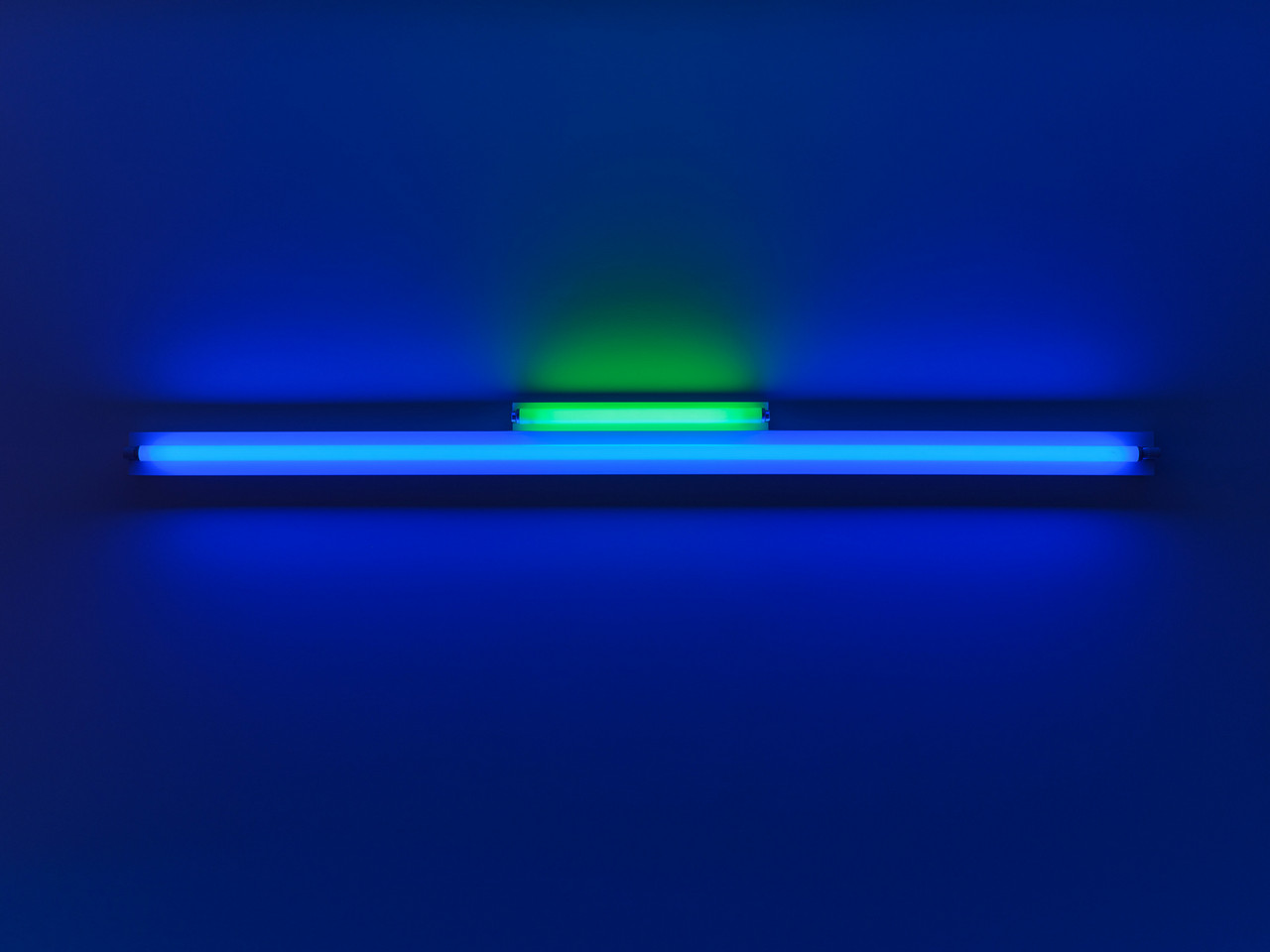
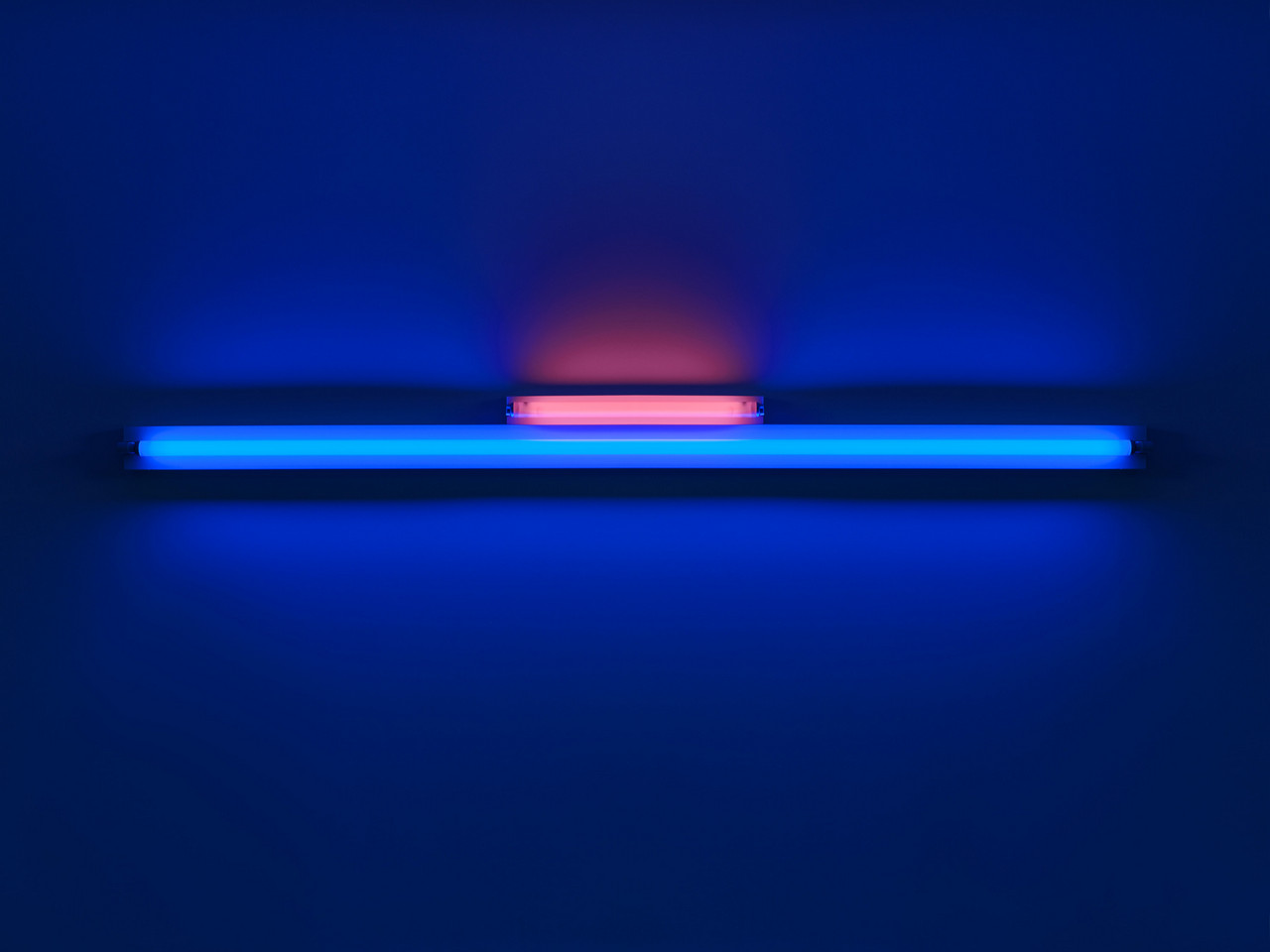
The exhibition also includes six earlier works from 1963–64, titled “untitled (for Charlotte and Jim Brooks) 1–6”. Each combines a 244-centimeter blue fluorescent lamp with a shorter, 61-centimeter lamp in another color, including pink, red, yellow, blue, or ultraviolet. Installed in an adjacent space, the six works form a continuous line extending more than 15 meters. Their horizontal arrangement offers a counterpoint to the corner-based geometry of “European Couples”, demonstrating how Flavin adapted a limited set of industrial components to create different spatial and perceptual experiences. Once again, the dedications acknowledge personal relationships, in this case honoring Charlotte and Jim Brooks, American Abstract Expressionist painters. These works also reveal the development of Flavin’s practice during the period in which fluorescent light became his principal medium.
A further historical counterpoint is provided by two paintings by German Expressionist Ernst Ludwig Kirchner (1880–1938): “Hohe Kiefern vor Hügellandschaft” (Tall Pines in Front of Hills, 1921–23) and “Nachtfrau (Frau geht über nächtliche Straße)| (Night-Woman [Woman Walking on a Night Street], 1928). The first depicts a landscape of tall pines against rolling hills, while the second evokes the nocturnal atmosphere of the modern city, informed by the expanding presence of electric lighting in Berlin. Their inclusion recalls a conversation in which Flavin expressed his admiration for Kirchner, a memory cherished by Friedrich. Although the two artists worked in different periods and media, both explored the expressive potential of color and light to reshape the experience of the visible world.
Bringing these works together, “European Couples” illuminates the connections between Minimalist sculpture, architectural space, personal memory, and the history of modern painting. Flavin’s fluorescent lamps are at once ordinary industrial objects and instruments of perceptual transformation: they define geometric structures while making those structures seem to dissolve into colored atmosphere. In dialogue with Kirchner’s paintings and the additional fluorescent-light works, the nine installations reveal how light and color can exceed the boundaries of a medium, transform the spaces they occupy, and fundamentally alter the way we see.
Photo: Dan Flavin, untitled (for Charlotte and Jim Brooks) 1, 1964, Pink and blue fluorescent light, 6 3/4 x 96 1/8 inches (17 x 244 cm), Edition of 5, © 2026 Stephen Flavin/Artist Rights Society (ARS), New York, Photo: Thomas Lannes, Courtesy Gagosian
Info: Gagosian, 26 avenue de l’Europe, Le Bourget, France, Duration: 18/10/2026-3/4/2027, Days & Hours: Tue-Sat 11:00-18:00, https://gagosian.com/