DESIGN:Walker Art Center Design Triennial-Beyond Materialism
Walker Art Center debuts its inaugural design triennial, titled “Beyond Materialism”. the exhibition explores the importance of spirituality, emotional connectedness, and communal engagement to contemporary design. The presentation builds on the Walker’s longstanding commitment to exploring innovation in design, which can be traced to its earliest days as a public art center when it initiated several groundbreaking projects about modern design. Today, design is an essential part of the Walker’s celebrated multi-disciplinary program.
By Efi Michalarou
Photo: Walker Art Center Athens
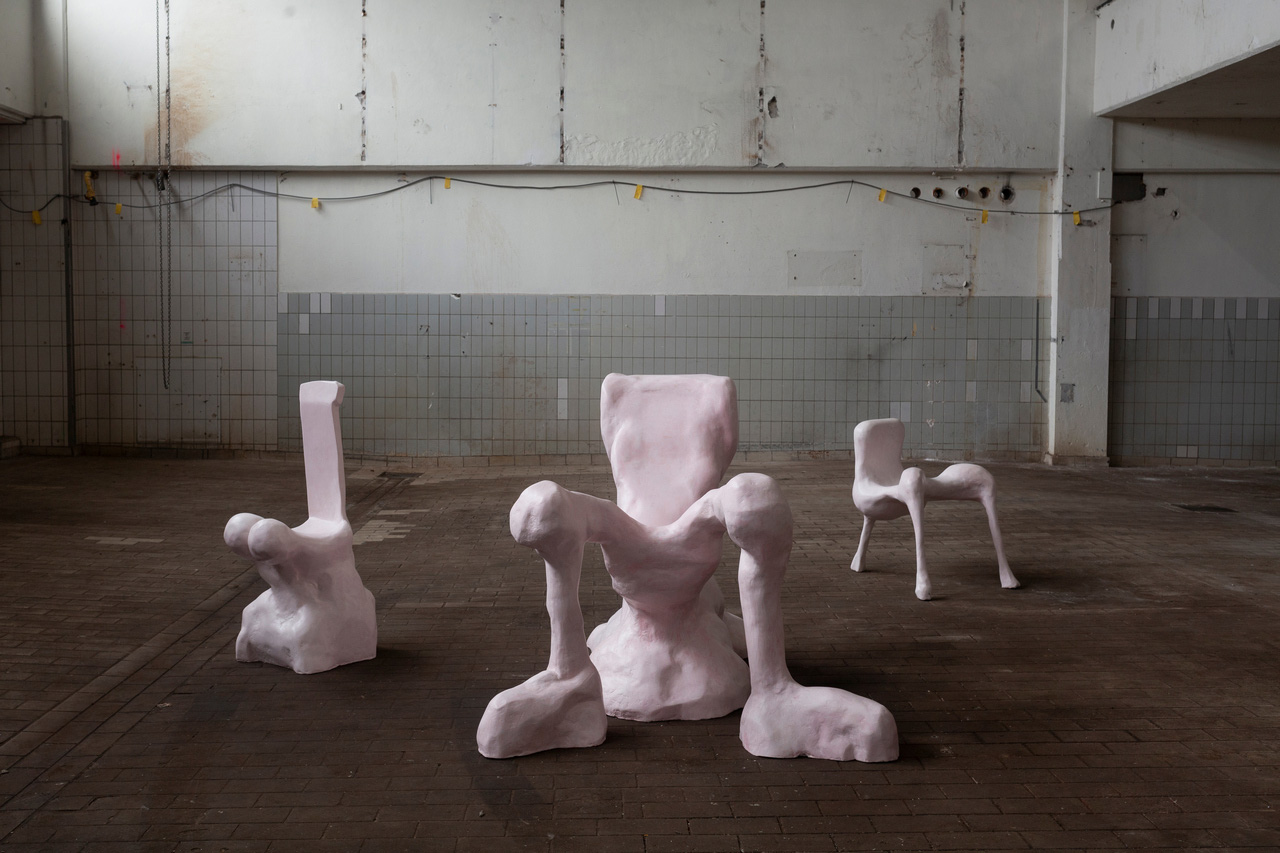
“Beyond Materialism” features approximately 50 new and recent works by 26 designers and collectives representing more than 10 countries, including Austria, Belgium, Denmark, Greece, Italy, Nigeria, South Korea, Spain, Taiwan, the United Kingdom, and the United States. It proposes that contemporary design is moving toward ideals of spiritual cultivation, away from ideals of profit and consumption. Following the industrial revolutions of the 18th and 19th centuries, designers prioritized functionality and utility in pursuit of mass production for the benefit of the many. Today, a new generation of designers is asking a different set of questions: In an increasingly fragmented world, can design facilitate community and agency? Can a culture of materialism give way to something different, more hopeful? “Beyond Materialism is organized around four core themes:
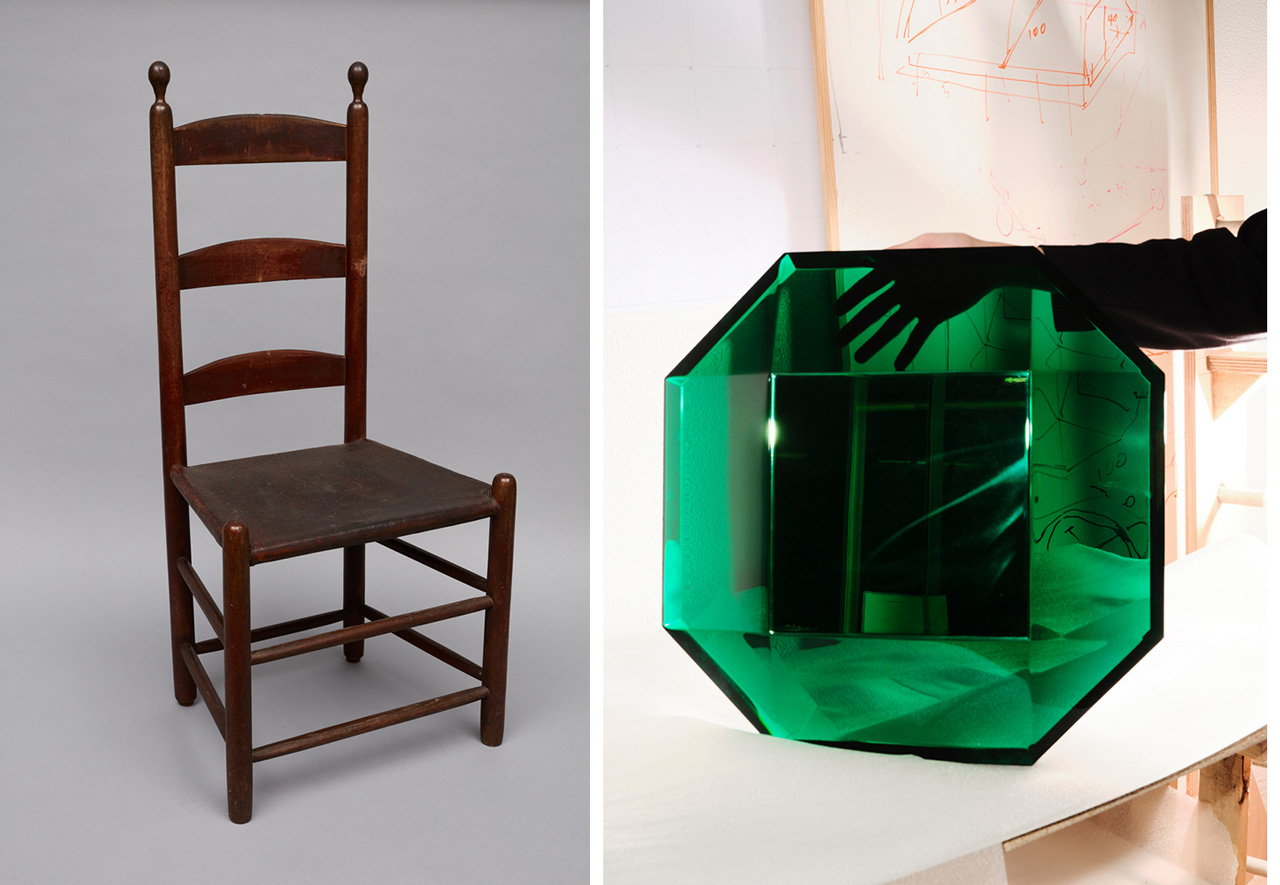
After Materials: Historical Notes: This section opens the presentation and traces several historical precursors to the fundamental shift taking place within design today—away from function and mass production to more existential considerations of the spirit, social and cultural ritual, and the creation of new futures. Among the featured works is “Side Chair” (c. 1820) produced by the Shaker Colony, a religious community established in New England in the 18th century that sought transcendence through the act of making. The Shakers’ incredible craftsmanship and commitment to simplicity served as a physical manifestation of their religious devotion. In Beyond Materialism, the Side Chair stands as an essential example of the early emergence of spirituality and communal engagement within design.
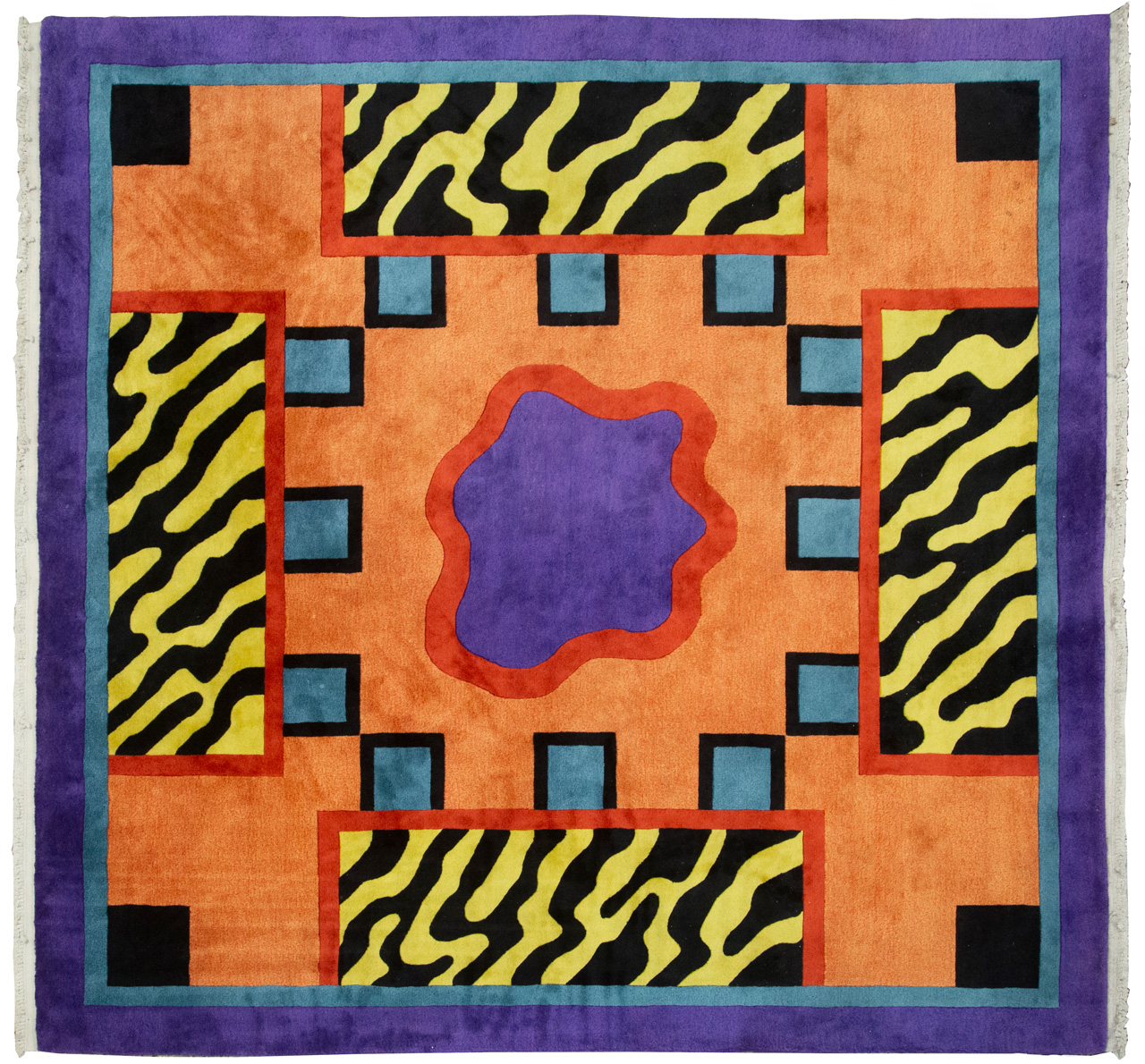
Also featured is documentation of Alessandro Mendini’s 1974 project “Lassù” (Up There). Mendini, an Italian designer recognized for his groundbreaking vision, often leveraged performance and ritual to explore the spiritual and symbolic possibilities of objects. With Lassù (Up There), he burned two identical chairs set atop pyramidal pedestals. The remnants of the chairs and the documentation of the process provided fertile ground to explore the boundaries between art and design, designer and industry, and the functional and conceptual. The section also includes works by key figures like Ettore Sottsass Jr., Buckminster Fuller, Nathalie Du Pasquier, and Theaster Gates. Their works reflect the foundations for a new generation of designers to create meaning, support ideology, and advance frameworks for collective transformation through design.
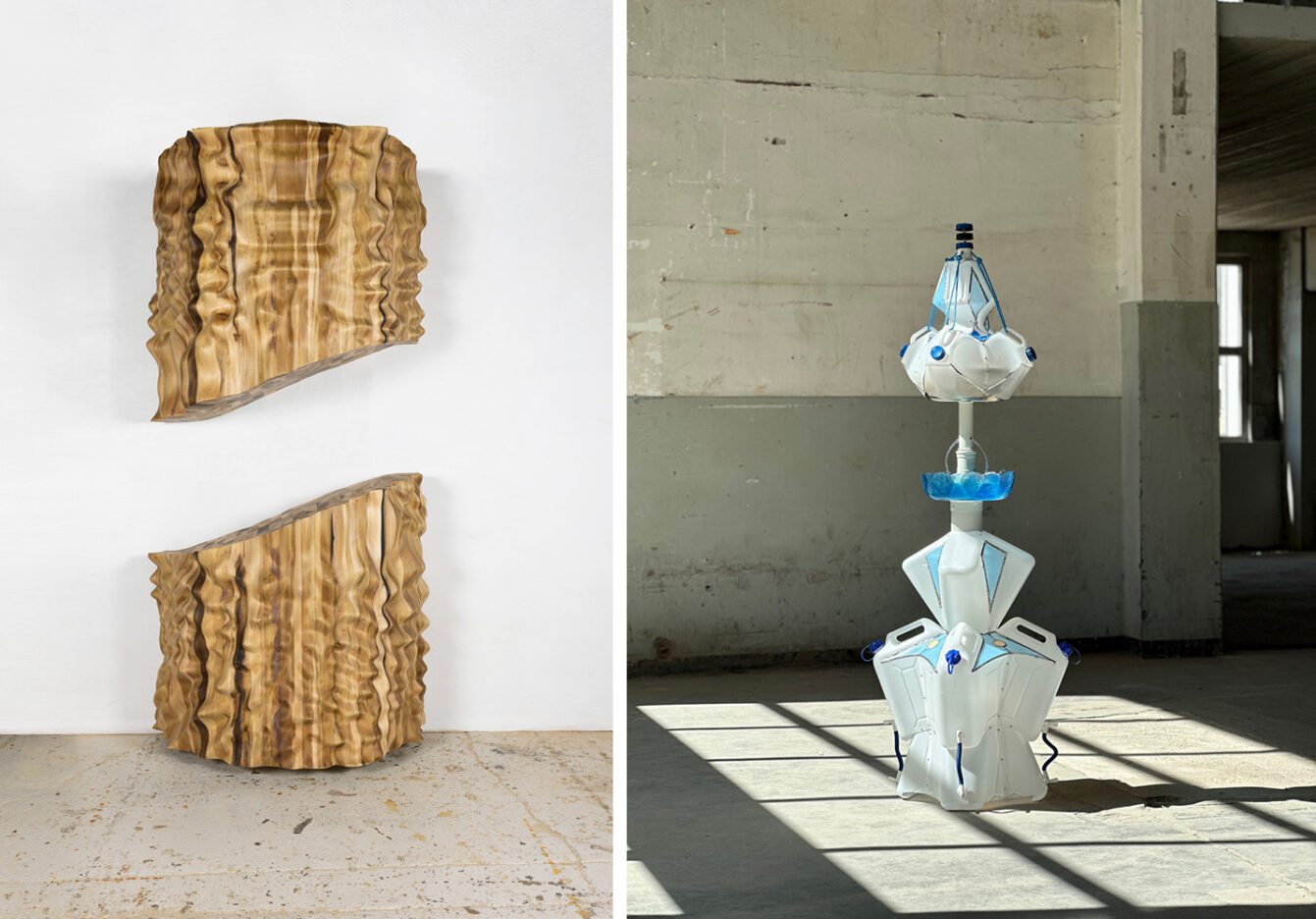
Reclaiming Design: Technology, Environment, Politics: This section explores strategies for living through the turbulence of contemporary society, whether grappling with the pace of technological advancement, environmental degradation, or systems of inequity. Designers are engaging with a depth of materials, techniques, and approaches to offer new visions of speculative environments and gestures of repair and restoration. For example, Korean designer Jonghoo Jeong’s “System of Atonement” (2025) considers his own impact on local ecosystems and the accompanying cycles of guilt, confession, and absolution. Made with plastic jerrycans, the towering fountain recycles the same water in a perpetual loop—a kind of endless atonement for Jeong’s prior practice of dumping toxic liquid byproduct from his projects into the sewer system. The work considers personal guilt, societal pressure, and opportunities for reparation.
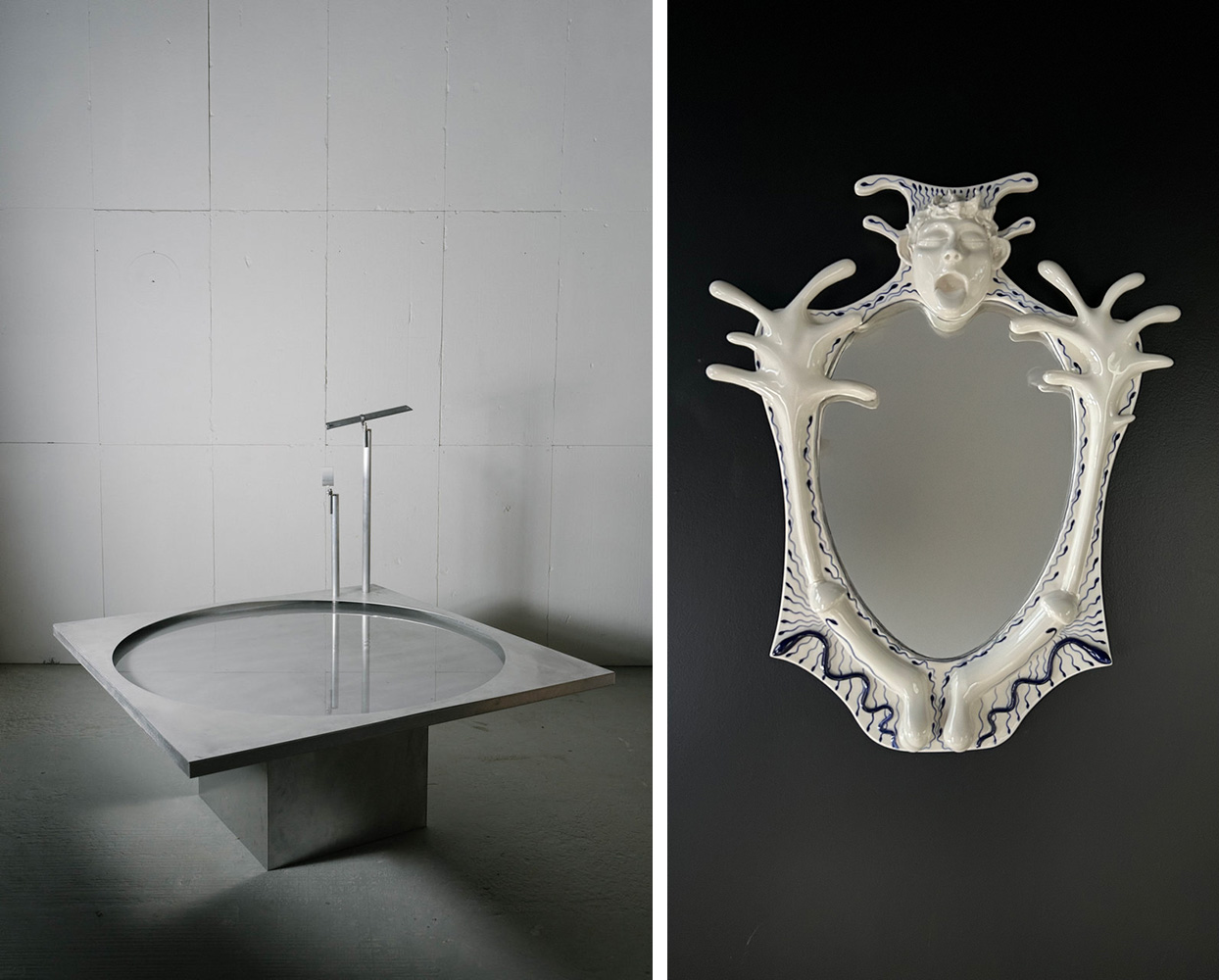
Maximilian Marchesani and Moon Seop Seo also mine the connections between humanity and nature. In his “Famiglia series” (2022-ongoing), Marchesani combines the “corkscrew hazel” plant—cultivated since the mid-1800s for its aesthetic appeal—with thin LED bulbs to create delicate lighting installations that question if technology can ever complement nature. Seo’s works explore the power and contemplative qualities of natural phenomena, from the ripples of water to clouds shifting in the atmosphere. His work Passage to the Lake (2022) highlights the possibilities of finding peace in nature, especially amid the chaos of urban life. The work invites visitors to meditate on the calm offered by the sound and movement of water. Designers in this section also include Ananas Ananas, Nifemi Marcus-Bello, Superflux, Christoph Wimmer-Ruelland, and Kevin Quale, whose ceramic objects bring together the visual vocabularies of 17th century Delftware and contemporary queer expression.
A New Poetics: The Techno-Craftspeople: This section of the exhibition explores the work of contemporary designers who leverage materials to share stories, evoke emotion, and convey the knowledge of the past and the possibilities of the future. Their practices embrace material as something that holds memory, reflects identity, and offers a way to relate to the world through form. This includes Germane Barnes, whose work explores the connections between architecture, design, and Black identity. Among his works featured is “Migration Column” (2024), which reflects on the forced transatlantic passage of enslaved Africans to the Americas. The carved wave patterns in the wood column reference the lives lost at sea and the physical segmentation conveys ruptured family lines. The working of the material imbues it with narrative, which then becomes part of its physicality.
Narrative is also important to Greek designer Kostas Lambridis, whose practice emphasizes material reuse. His works often reimagine historical and found objects through new materials and combinations, revealing compelling juxtapositions of texture, color, and form. For his large dinner table titled “fused before charred” (2023), he joined and transformed a dozen wood varieties with the final work holding both the original stories of the found materials and his own singular vision. For other designers, the storytelling is much more personal. For example, “Diamond Mirror (Green)” (2025) created by Objects of Common Interest is inspired by the memory of a grandmother’s 1970s multifaceted glass ashtray. The section also includes works by Astronauts, Stef Fusani, Michael Bennett/Studio Ker, and WKND Lab.
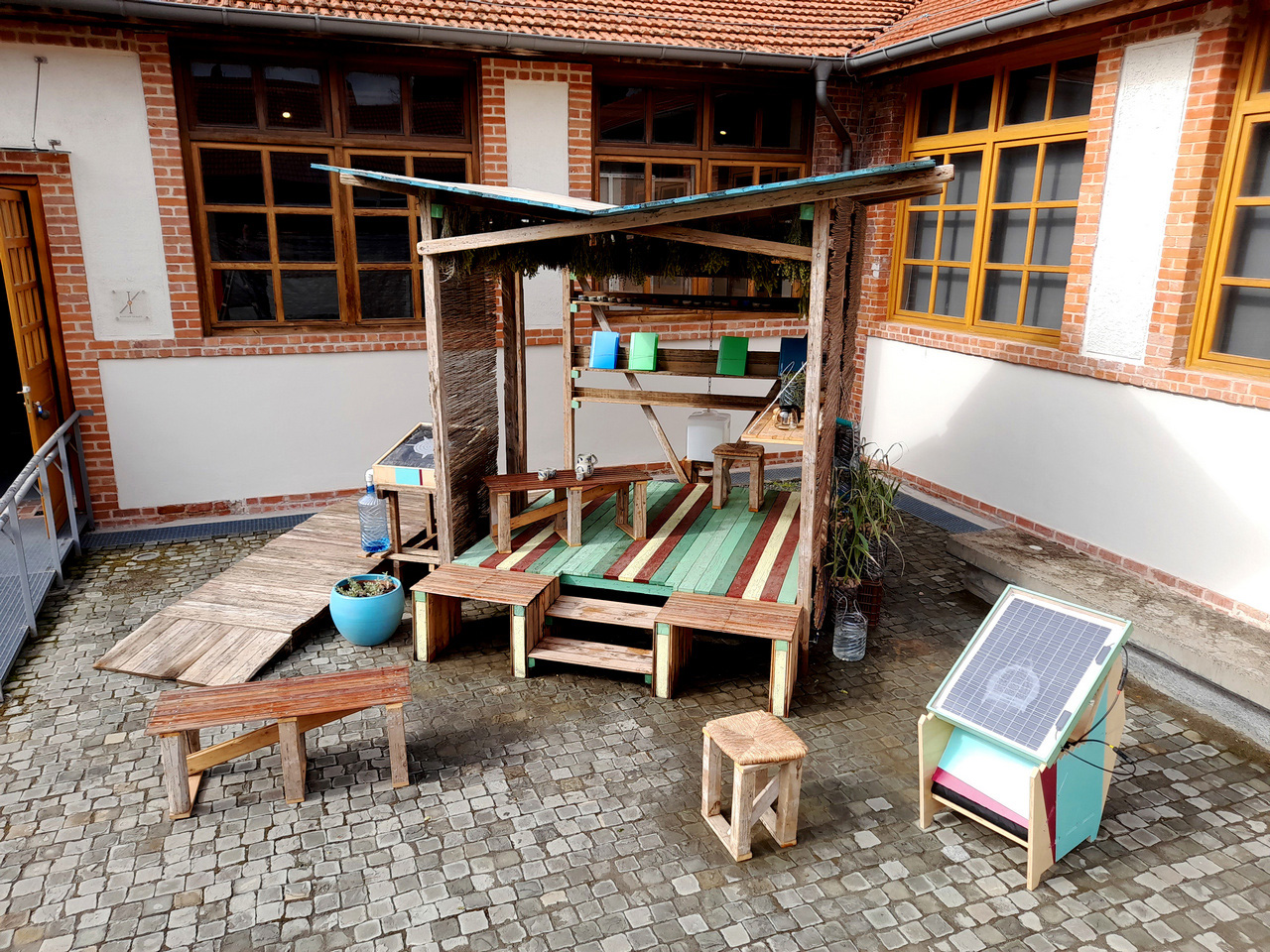
Ritual and Symbolism: New Ideas of Community and Agency: “Beyond Materialism” closes with designers who are exploring design as a space for performance, community-making, and shared connection. Here, design moves beyond the realm of objects to embrace social practice produced through gestures, gatherings, and rituals. The section includes two new commissions, including an immersive installation created by Lucas Muñoz Muñoz. “All Ears” portrays the sonic landscape of Minneapolis in the summer of 2026, capturing the sounds and vibrations of nature, machines, and people. The work invites visitors to pause, come into their bodies, and to be present within the frenzy of the world to both engage with sound and drown out the noise. The second commission is produced by VESSEL (James Bridle & Navine G. Dossos) and continues the duo’s interest in modes of collective making. Here, the designers focus on the possibilities of textiles, sharing small-batch fabric, highlighting no-wasting clothing, and creating opportunities for learning that are intended to inspire active community engagement and creativity.
Participating Designers: Anna Aagaard Jensen, Ananas Ananas, Astronauts, Germane Barnes, Michael Bennett, Nathalie Du Pasquier, Buckminster Fuller, Espace Aygo, Stef Fusani, Theaster Gates, Shao-Chun Hsu, Jonghoo Jeong, Kostas Lambridis, Maximilian Marchesani, Nifemi Marcus-Bello, Alessandro Mendini, Lucas Muñoz Muñoz, Objects of Common Interest, Kevin Quale, Moon Seop Seo, The Shakers, Ettore Sottsass Jr., Superflux, Christoph Wimmer-Ruelland, VESSEL (Navine G. Dossos + James Bridle) and WKND Lab
Photo: Walker Art Cente, Design Triennial-Beyond Materialism, 2026
Info: Curators: Joseph Grima, Asli Altay, Hanna Babyna and Laurel Rand-Lewis, Walker Art Center, 725 Vineland Place, Minneapolis, MN, USA, Duration: 17/10/2026-14/2/2027, Days & HoursL Wed &Fri-Sun 10:00-17:00, Thu 10:00-21:00, www.walkerart.org/