PRESENTATION:Sylvie Fleury & Shamiran Istifan
The works of Sylvie Fleury and Shamiran Istifan take us on different journeys – into the atmosphere of a women-run motoring club and into the ever-changing, imaginary world of the cinema character Irma Vep. The works confront us with questions about social desire, gender and social roles, cultural prejudices and structural power relations. Yet their critique is never dogmatic; rather, it develops at times through seduction, at other times through humour. Their works consistently create space for new perspectives by making visible our own gaze and the attributions at work within it – and by encouraging visitors to take a critical look at their own preconceptions.
By Dimitris Lempesis
Photo: Migros Museum Archive
In the exhibition “She-Devils on Wheels-Angels on Heels”, the headquarters of a motoring club encounters hunting scenes set in a supermarket and a beauty salon. The works concerned are by Sylvie Fleury and Shamiran Istifan respectively, two female artists from different generations and back- grounds who live in Geneva and Zurich. In their practice, both reinterpret spaces, symbols and narratives traditionally associated with masculinity. Whilst Sylvie Fleury’s “She-Devils on Wheels – Headquarters” from 1997 represents the showing of an important work from the collection of the Migros Museum für Gegenwartskunst, Shamiran Istifan presents a series of new works. The works of both artists are characterised by their affinity with the visual worlds of pop culture, everyday life and glamour, as well as by a finely tuned blend of criticism and irony.
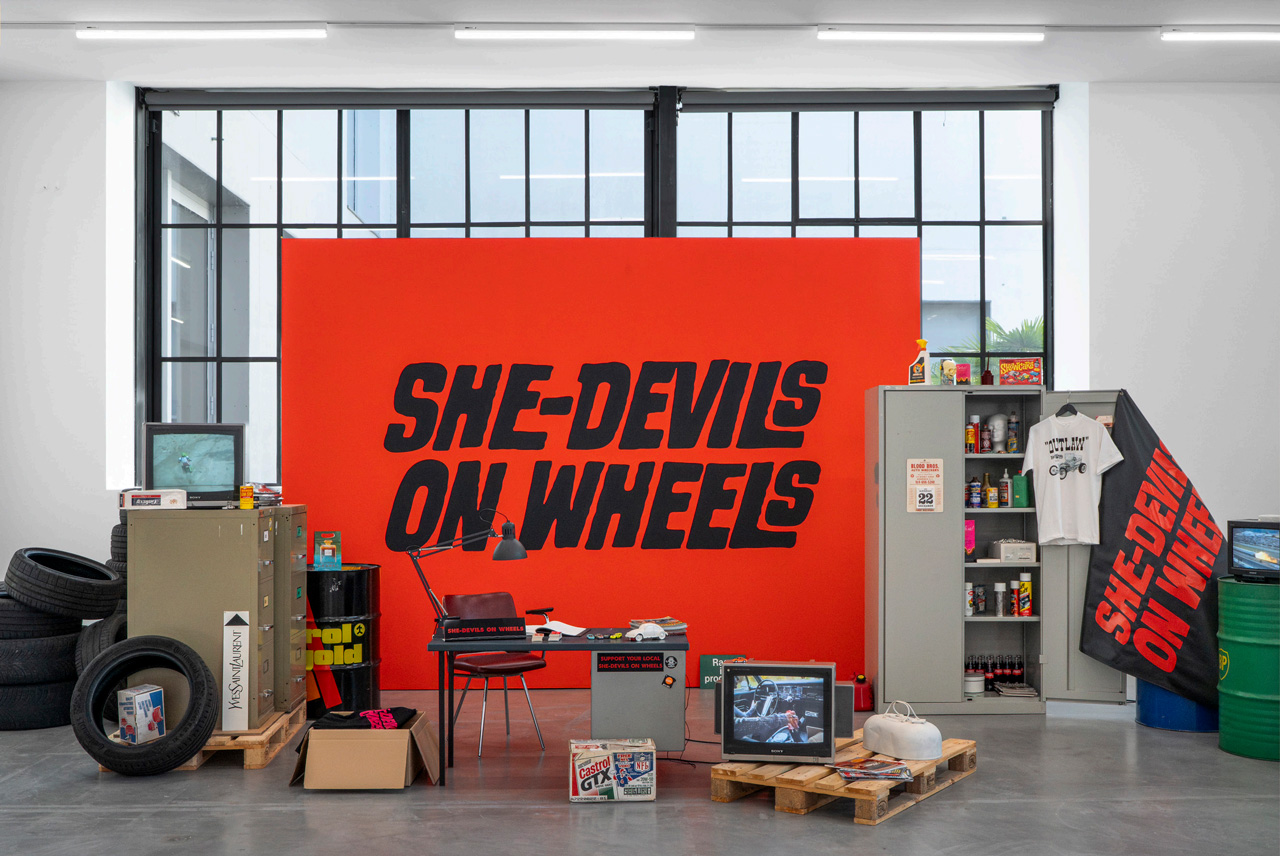
Sylvie Fleury’s “She-Devils on Wheels – Headquarters” (1997) is an installation that was acquired from her first institutional exhibition, “Hot Heels”, held at the Migros Museum für Gegenwartskunst in 1998. It stages the headquarters of a motoring club. The lettering She-Devils on Wheels on the back wall of the club office refers to the 1968 B-movie of the same name, in which a rebellious female motorbike gang called ‘The Man-Eaters’ earns respect in a male-dominated society through wild brawls. Fleury founded her own motoring club, She-Devils on Wheels, in the mid-1990s after being refused membership of a motor racing club. The club was aimed, in particular, at female enthusiasts of customised, high-performance American cars, known as ‘custom cars’ or ‘muscle cars’.
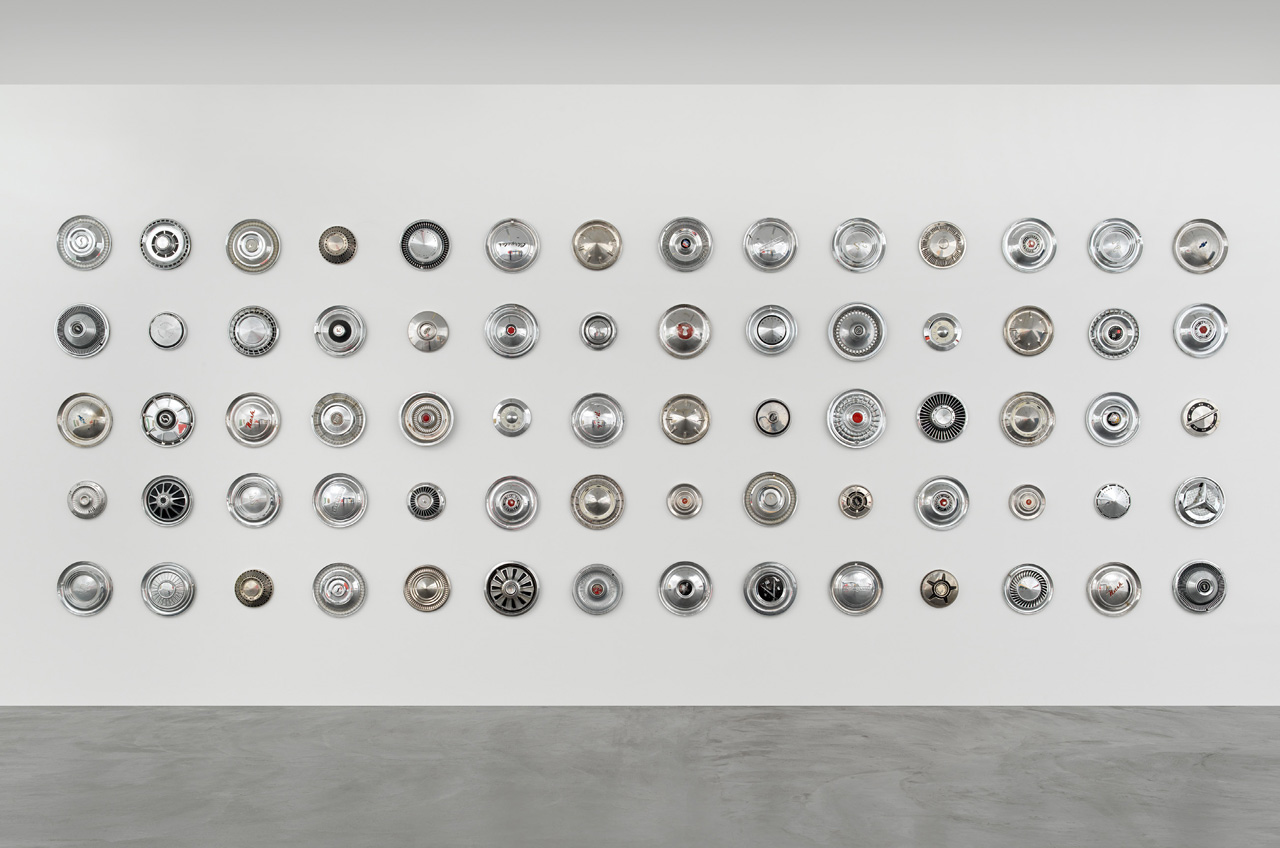
As early as the 1990s, Sylvie Fleury brought the seductive, glamorous world of luxury brands into art institutions through her readymade installations, engaging with the desire-inducing allure of the world of commodities. In doing so, she not only challenged the conventional hierarchy between art and commerce, but also questioned which images and objects find their way into art, and which gender roles prevail within the art system. Shopping for and desiring luxury items designed to optimise the body for the male gaze is regarded as typically feminine in a patriarchal society. Motor racing, the fascination with speed and powerful engines, on the other hand, are traditionally associated with masculinity. Through the motoring club She-Devils on Wheels, Fleury appropriates this putatively masculine world, reinterpreting it by integrating feminine attributes such as nail varnish or false eyelashes amongst workshop equipment, oil drums and stacks of tyres. Flesh, Red, Pink, Rose transports a group of four lipstick tips into a new dimension and materiality, thereby bestowing upon them painterly and sculptural qualities.
With “First Spaceship on Venus” (1995), likewise part of the collection, another cen- tral motif in Sylvie Fleury’s work comes to the fore, the rocket. Similar to the car, it sym- bolises a Western and masculine urge towards expansion and the conquest of new territories. The work forms part of a larger group of works featuring various rockets. The version on display here, whose title references Kurt Maetzig’s 1960 film of the same name, is rendered in metal. Trapped in the rocket, music from American girl groups of the 1960s plays on repeat. Other variations of the rockets are covered in colourful faux fur or sewn from fabric, soft and slumped in on themselves. By alienating the motif, Fleury creates a stark contrast to the classical notion of the rocket as a symbol of pro- gress and technological power. By doing so, she challenges notions of strength, control and conquest.
Shamiran Istifan also works with strategies of appropriation and reinterpretation. Her works are characterised by a diverse range of references that fuse pop culture, everyday life, mythology and art history. The starting point for her new body of work is one of the earliest and most influential ‘vamps’ in European cinema history: Irma Vep, a self-confident jewel thief from Louis Feuillade’s 1915 silent film series Les Vampires. The character, played by the French actress Musidora and dressed in a black vampire costume, is legendary; her name is made up of the letters of the French word ‘vampire’. Istifan reimagines this fictional character in the works featured in the exhibition, weaving her into a narrative in which Irma Vep presents herself as a master of transformation, full of contradictions: seductive, dangerous and vulnerable; sophisticated yet drawn to pop culture. She effortlessly juggles different cultural codes, thereby tracing contemporary areas of tension that Istifan negotiates from a post-migrant perspective. Life in the midst of social roles, expectations and attributions is revealed here as a continuous process of transformation, for which Irma Vep, the master of transformation, becomes a metaphor.
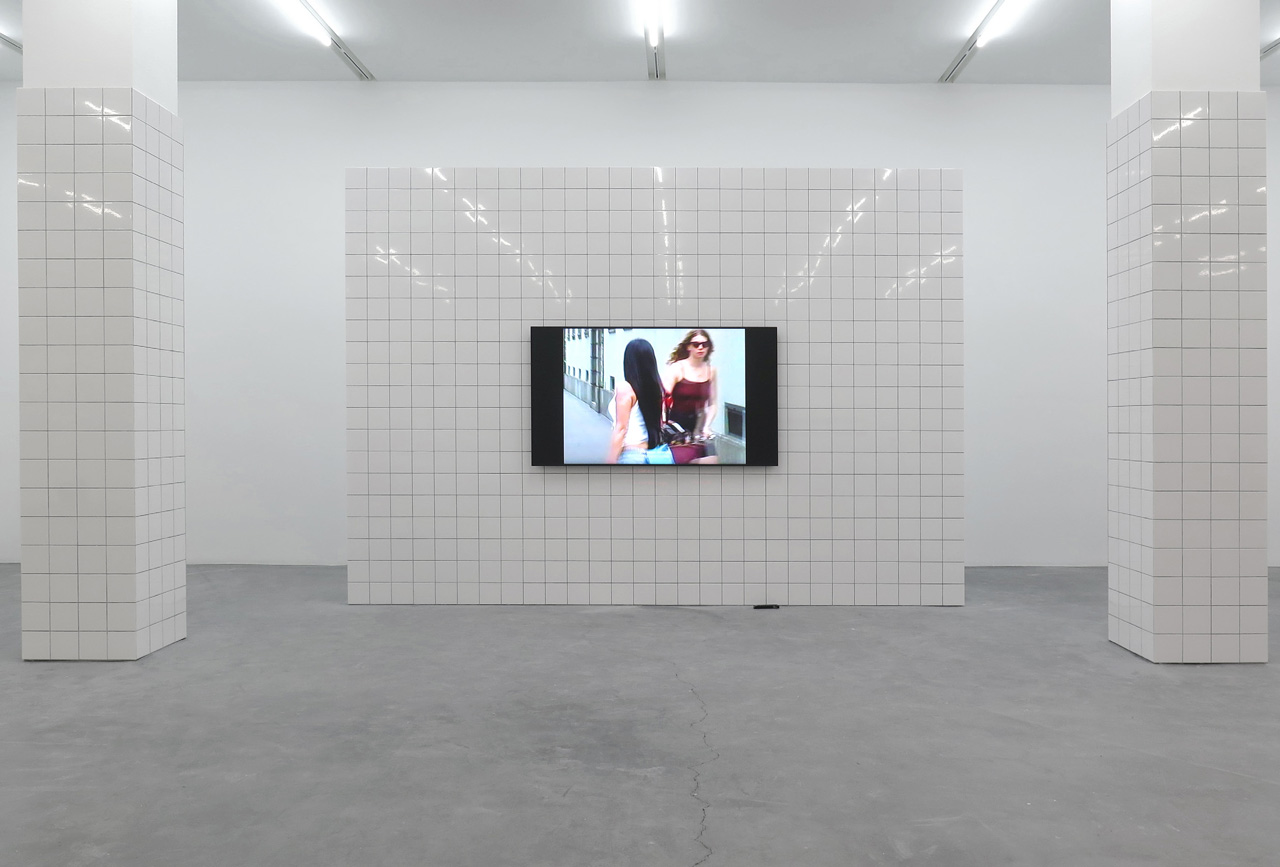
Irma Vep, played by the artist herself, makes her grand entrance in the video work “The Hunted” (2026). In this, she appears as a sort of contemporary version of ancient goddesses of the hunt, armed with bow and arrow. The film is full of references to pop culture, cinema and art history. Among other things, it serves as a commentary on Christian Jankowski’s video work “The Hunt” (1992). In this piece, Jankowski documents how he lives for a week on consumer goods that he ‘slays’ in a supermarket using a bow and arrow. Istifan contrasts Jankowski’s exaggeration of a supposedly archaic, masculine hunting instinct with her interpretation of the figure of Irma Vep. The video concludes in a beauty salon. Surrounded by mirrors, it remains unclear whether Vep actually shoots the arrow at the hairpiece, a symbol of transformation. Hunting and being hunted remain in suspension.
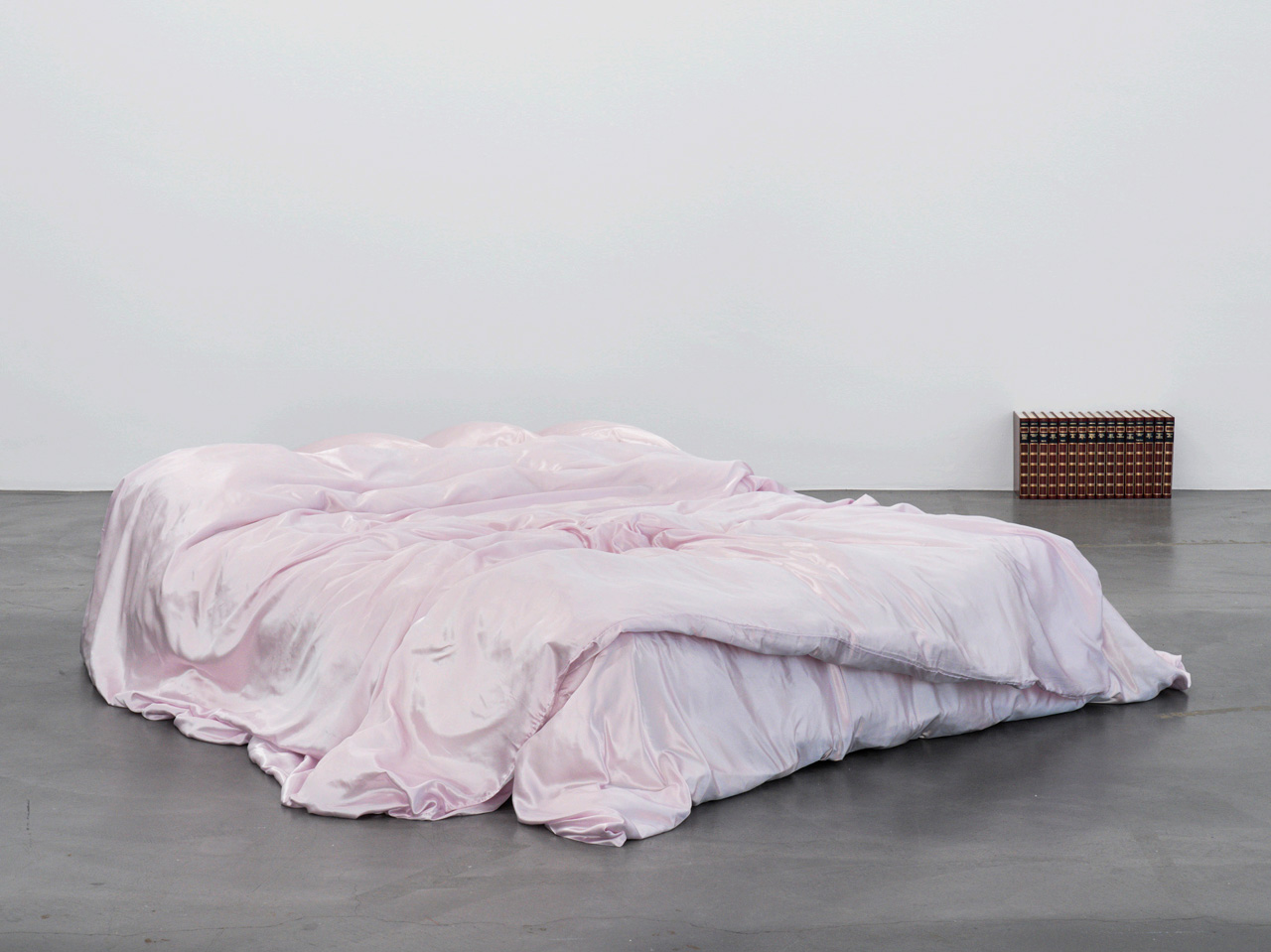
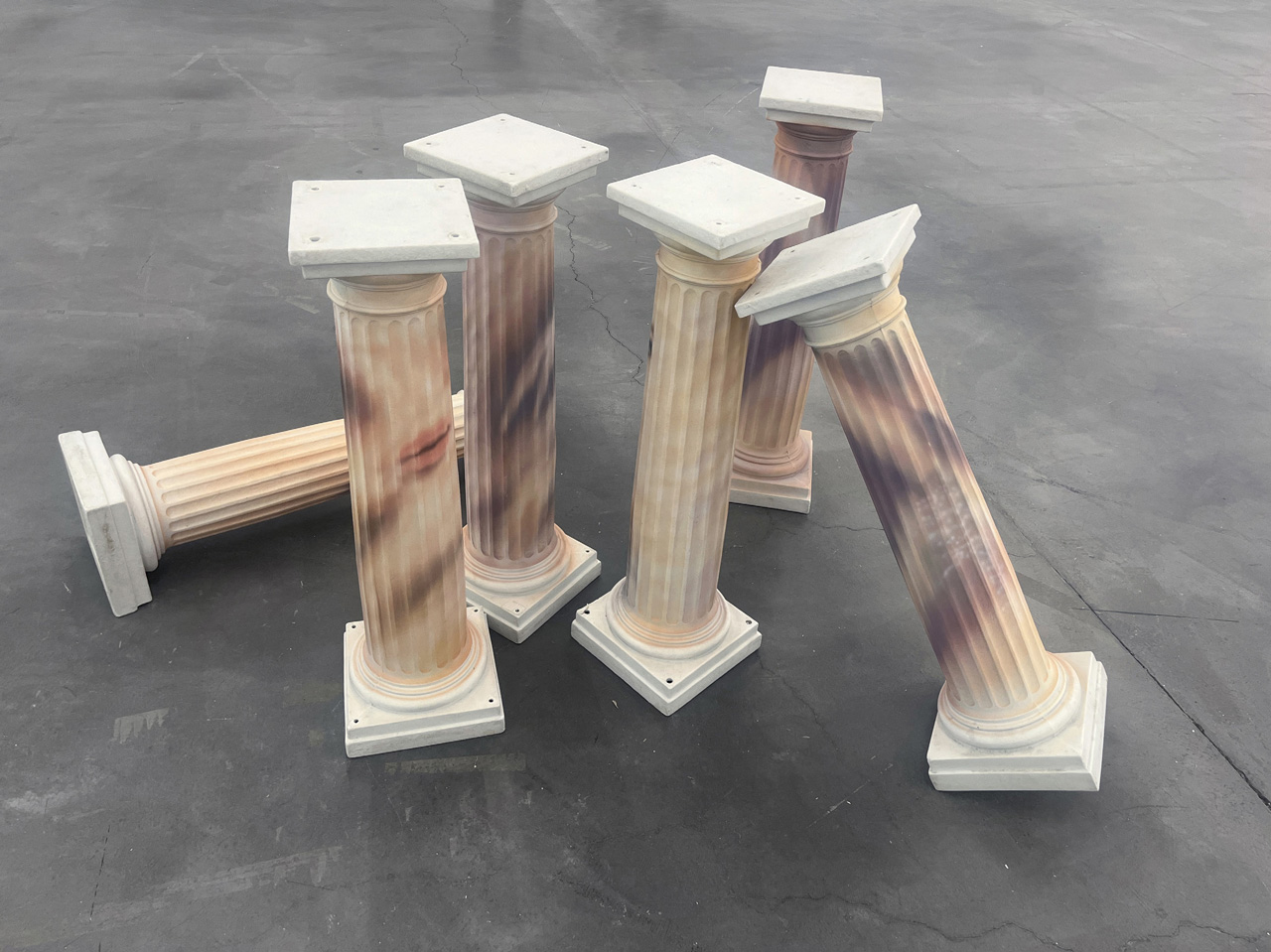
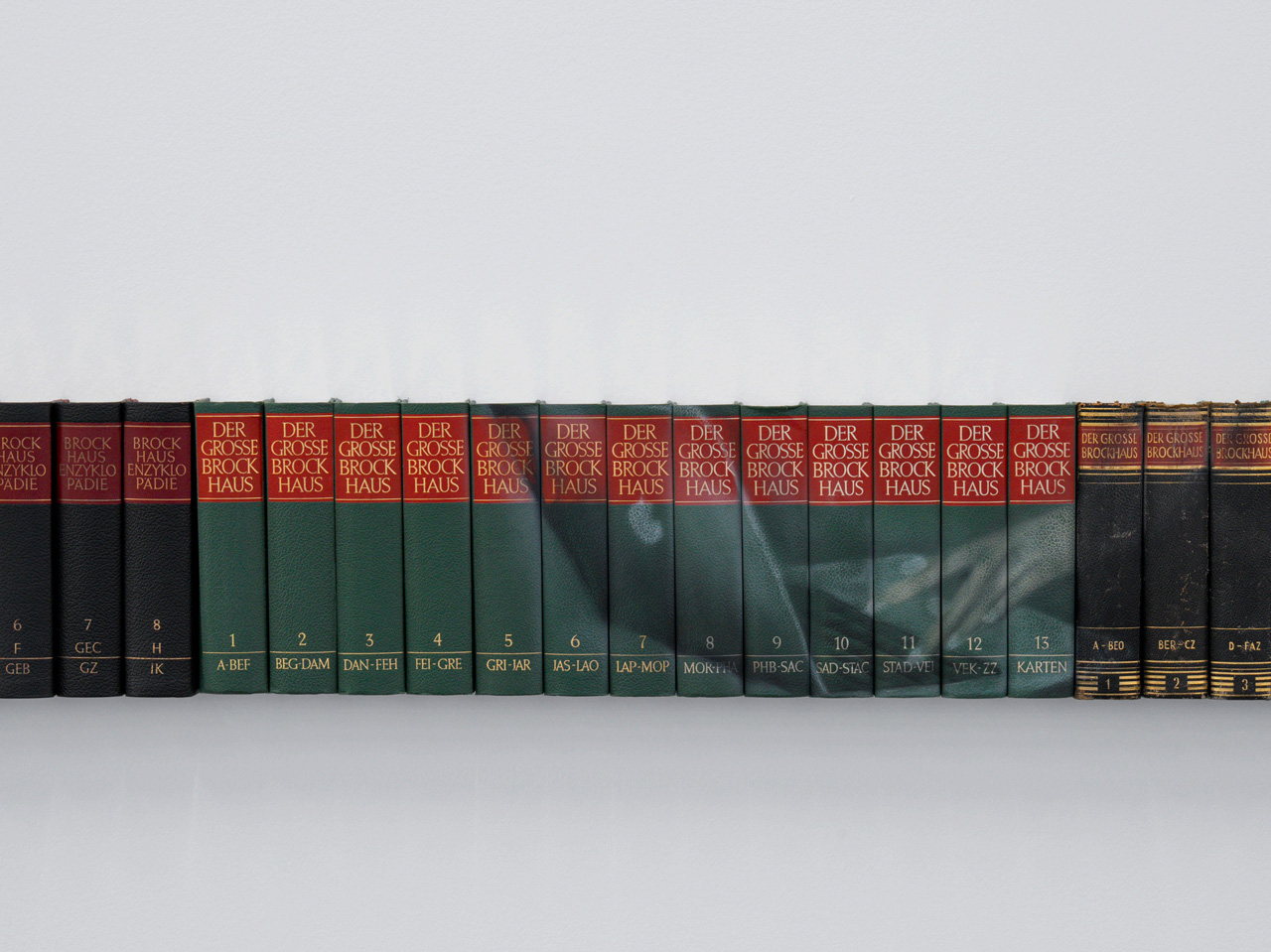
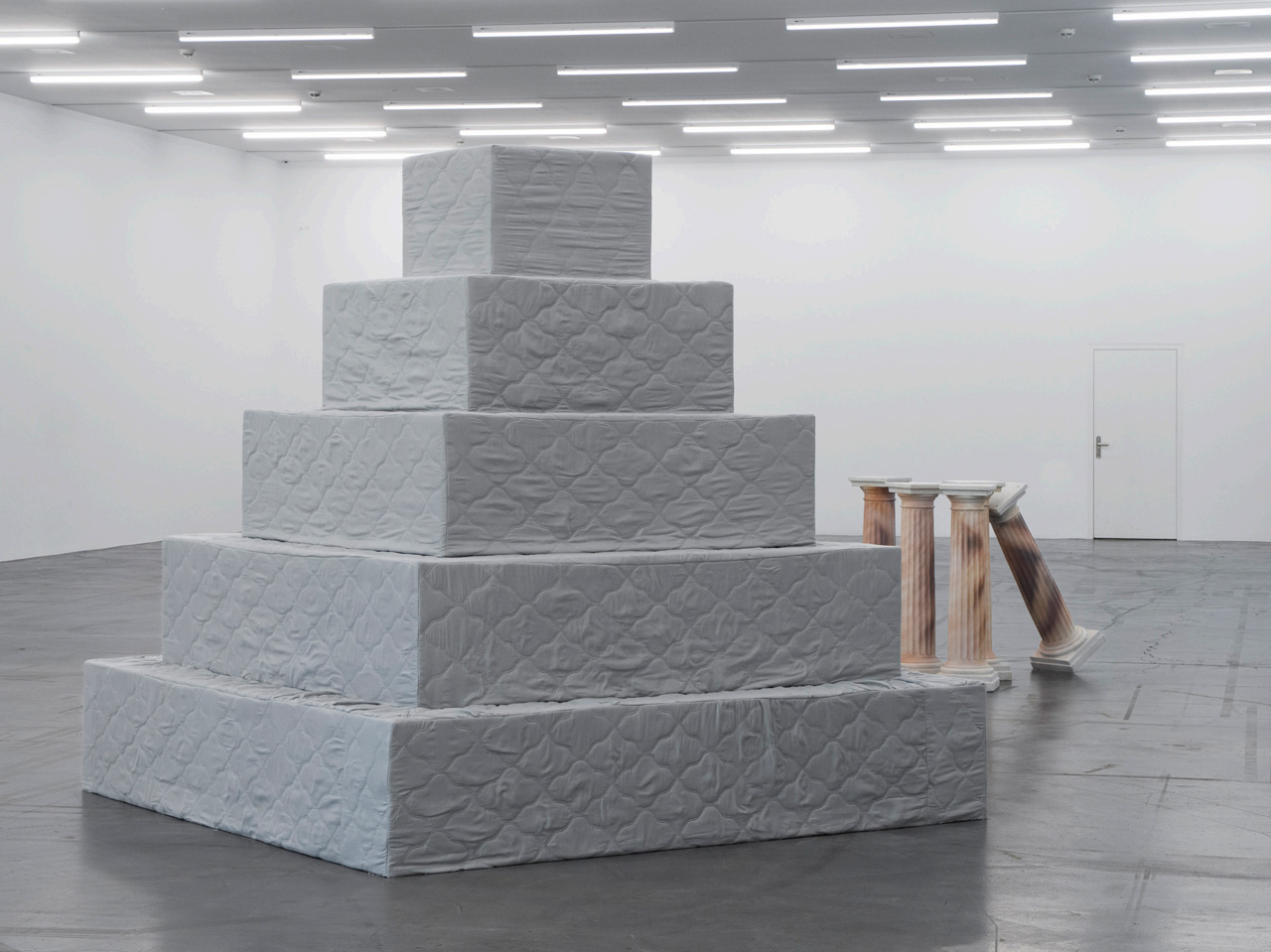
Shifts in meaning also characterise the other works in the exhibition. A bed covered in shiny fabric becomes a substitute for the absent body. The encyclopaedias embedded in the wall in the work “Atlas of a Phantom” I (2026) raise the question of where the knowledge of women is preserved – that of femmes fatales, witches and vamps such as Irma Vep, but also of our grandmothers, mothers and aunts. The miniature temple “Dollhouse” (2026) and the columns of “Atlas of a Phantom II” (2026) shift the dimensions between the domestic and the representational. Istifan is interested in how cultural forms and aesthetics change over time – for example, when the design of a Greek column becomes replicated as wedding décor.
Photo: Sylvie Fleury, She-Devils on Wheels – Headquarters, 1997, Assemblage of various materials, Photo: Studio Stucky, © Sylvie Fleury, Courtesy the artist and Sammlung Migros Museum für Gegenwartskunst
Info: Curators: Yasmin Naderi Afschar, Nadia Schneider Willen, Mirta Gianocca, Olga Popova and Pauline Herrmann, Migros Museum für Gegenwartskunst, Limmatstrasse 270, Zurich, Switzerland, Duration: 26/9/026-17/1/2027, Days & Hours: Tue-Wed & Fri-Sun 11:00-18:00, Thu 11:00-20:00, https://migrosmuseum.ch/
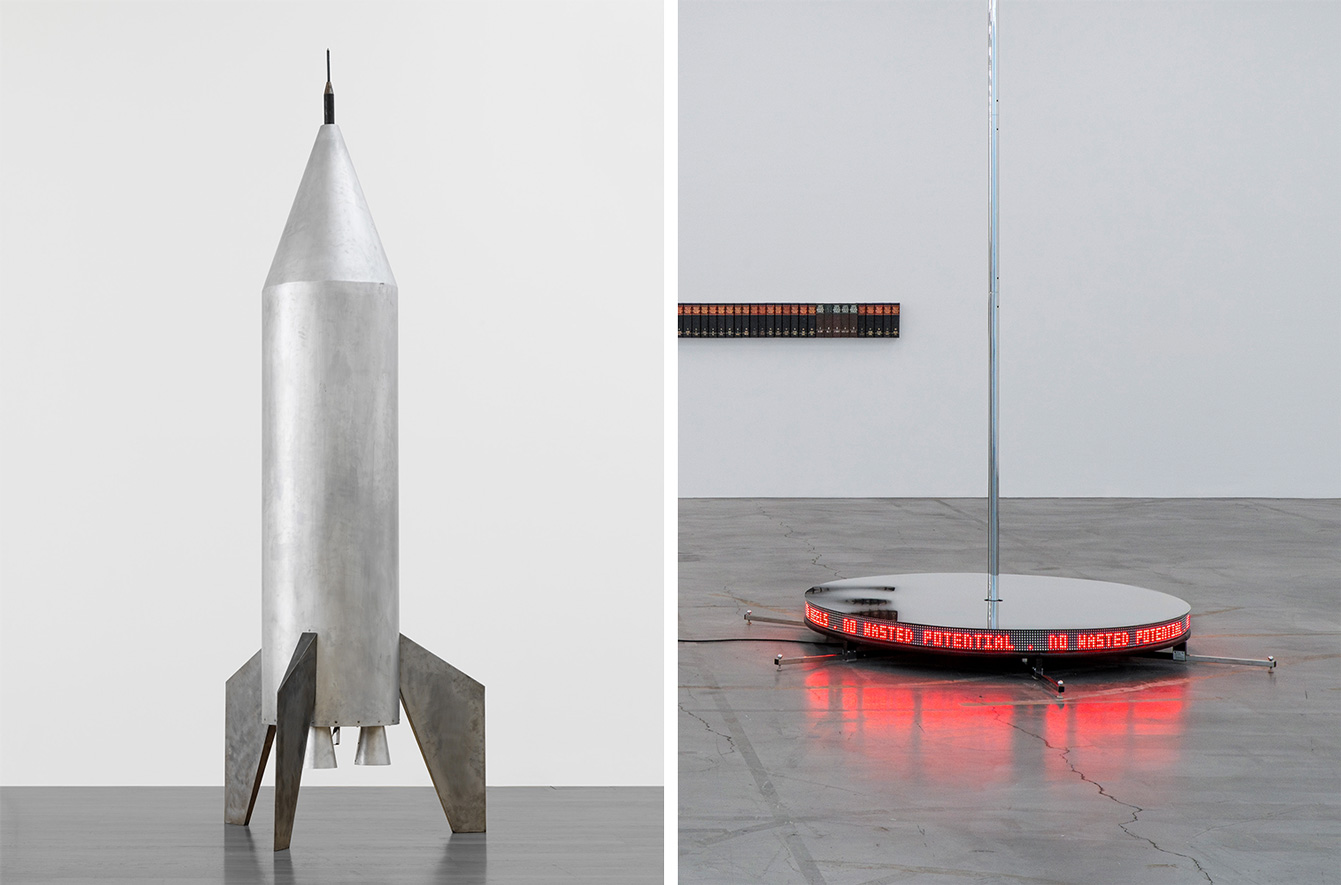
Right: Shamiran Istifan, Public Figure, 2026, Dance pole and platform, programmable LED display, mirrored acrylic glass, © Shamiran Istifan, Courtesy the artist and Sammlung Migros Museum für Gegenwartskunst
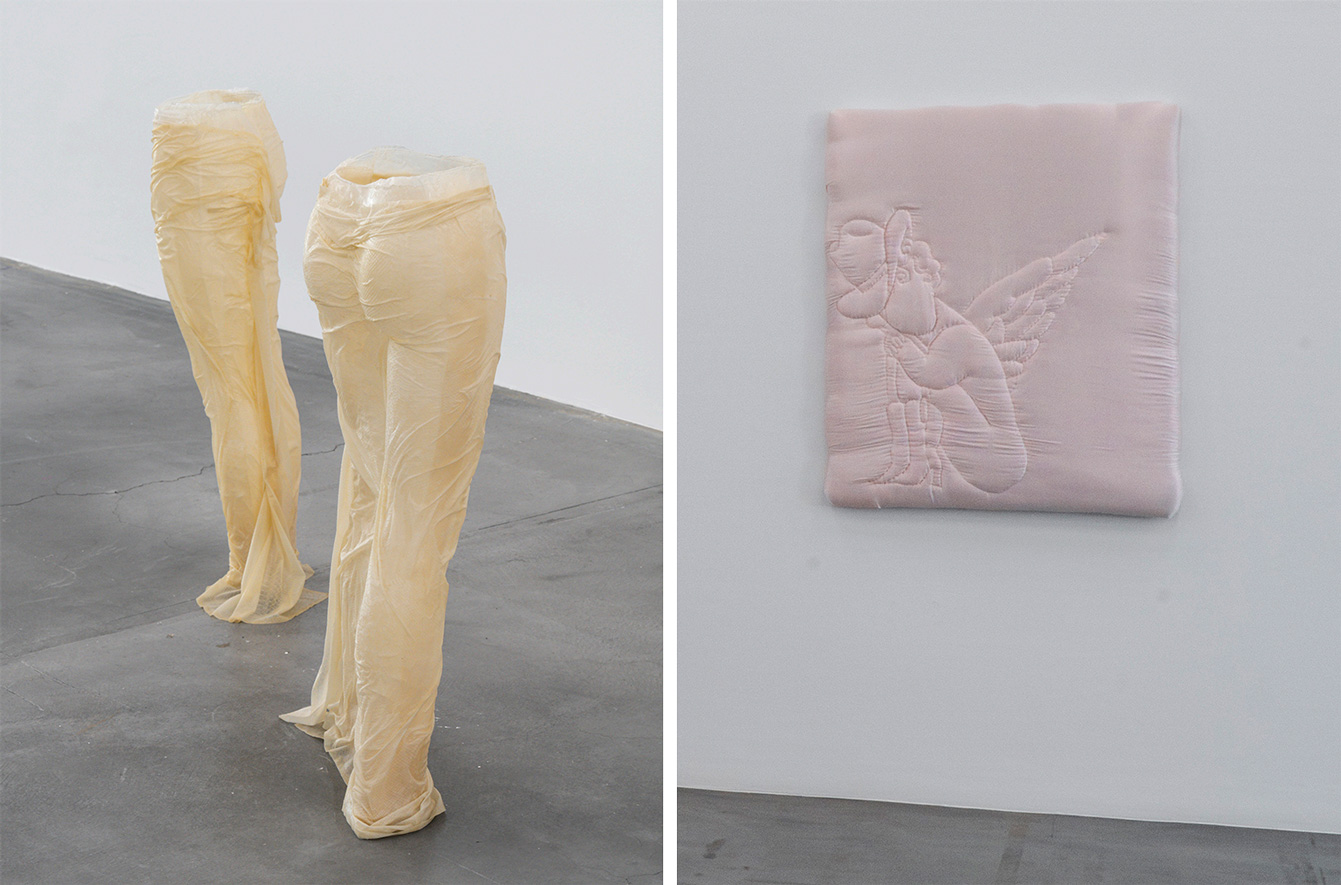
Right: Shamiran Istifan, Guardiana, 2026, Wood, cotton, silk, © Shamiran Istifan, Courtesy the artist and Sammlung Migros Museum für Gegenwartskunst