
ART CITIES:Madrid-Kenny Scharf
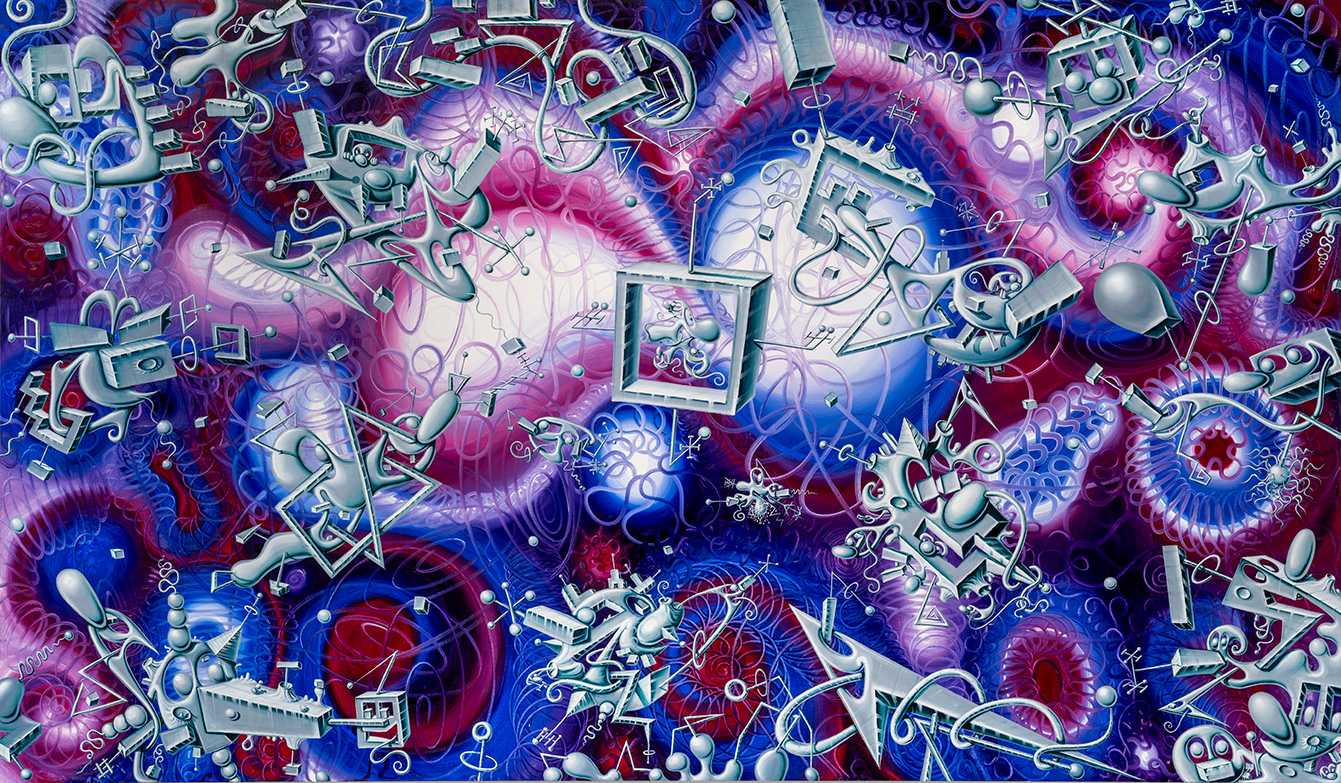
Kenny Scharf is a painter and installation artist associated with the Lowbrow movement* and is best known for work inspired by comic books and pop culture. A self-described “pop surrealist,” Scharf employs a range of techniques, media and allusions to create hallucinatory worlds filled with floating donuts, cartoon characters and bright-colored, often-anthropomorphic blobs. A dynamic and joyous burst of color, form and energy radiate from his works.
By Efi Michalarou
Photo: Museo Nacional Thyssen-Bornemisza Archive
Kenny Scharf’s paintings are always reflective of the artist’s unique, self-generated, visual universe, drawing from ideas and experiences extracted from the surrounding world. He successfully conjoins fine art with popular culture feeding from the traditions of Pop Art, Abstract Expressionism, Surrealism, comic books and Street Art.
The image of Kenny Scharf remains associated with his heyday in the 1980s in New York’s East Village, where he was a friend and fellow-artist of Keith Haring and Jean- Michel Basquiat and, like them, a protégé of Andy Warhol. Scharf, however, outlived those years and his Pop-surreal aesthetic has continued to evolve and reaffirm its connection to the present day. Aspects of that aesthetic have long been overlooked. The present exhibition at the Museo Nacional Thyssen-Bornemisza aims to show how, from the outset, Scharf has also been a painter of nature and one committed to raising awareness of the climate crisis. Those who know him as a radically urban artist, enamoured with plastic and television, will be surprised to discover a hymn to nature in his work. Trees, plants, forests, planets and molecular structures proliferate, creating a dizzying ecosystem that is permanently on the verge of chaos. Scharf’s garden at his Los Angeles home is beautiful, and his studio is filled with plants.
Kenny Scharf grew up in California’s San Fernando Valley in the 1960s, before emissions controls were introduced: “I remember some days I could barely open my eyes and my lungs would hurt.” This motivated an ecological awareness that is always present in his work. The exhibition is structured as four sections, which do not follow a chronological order but rather present four facets of Scharf’s work.
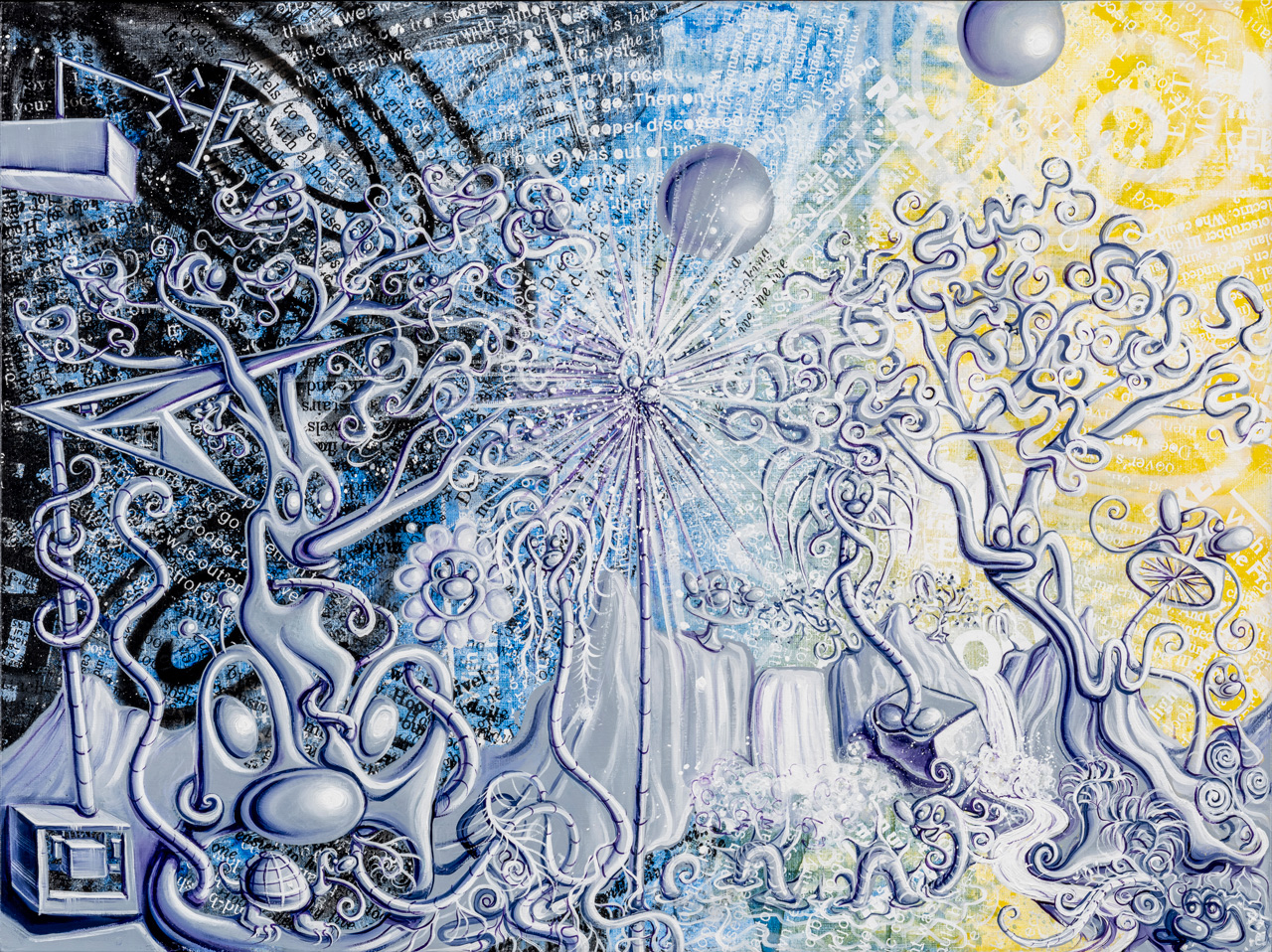
Landscapes: Territories without a horizon, seen from within. Their origin lies in Brazil, where Scharf lived from 1983. The first room locates these forests between two specific disasters: the deforestation of the Amazon, of which Scharf has first-hand knowledge, and the California wildfires, which he watched burn from his bed in January 2025. It reveals a painting technique that mimics the processes of life: Scharf begins his backgrounds on the floor, pouring diluted acrylic paint and letting gravity do its work until the central puddle becomes a swirling vortex. He then applies spray paint, screen printing and oil paint on top. “The decoration comes from nature”, he explains; “we repeat its motifs”. The landscape here is not a background or a view, but an organism of which the viewer is already a part.
The tree as shaman: In the shamanic traditions of various cultures, the tree represents the central pillar of the cosmos, its roots, trunk and branches connecting earth and sky. Like human shamans, Scharf’s trees enter altered states to mediate between everyday reality and the spirit world. The four large paintings in this section feature a great, hyperactive and delirious tree that lives, dreams, sings and dances, sustaining an entire fantastical ecosystem around it, a jungle teeming with tiny creatures.
Cosmic visions: Circular figures proliferate in this section, evoking celestial bodies. There is no up or down in outer space; all things levitate and move ceaselessly. Scharf was born a year after Sputnik and witnessed the moon landing as a child. When that fantasy faded in the 1970s, he decided to continue it for himself: hence the starry backgrounds and vortices. But the room also reveals a shift in this iconography. With respect to the current billionaires’ space race, Scharf protests: “I don’t want to live on Mars. This is a great planet; let’s try to preserve it.” And he adds something that reorders his entire cosmology: “Space is right here. We are in space.” The cosmic vision ceases to be escapism and becomes scale: Earth seen as what it is, a small, unique body in the darkness.
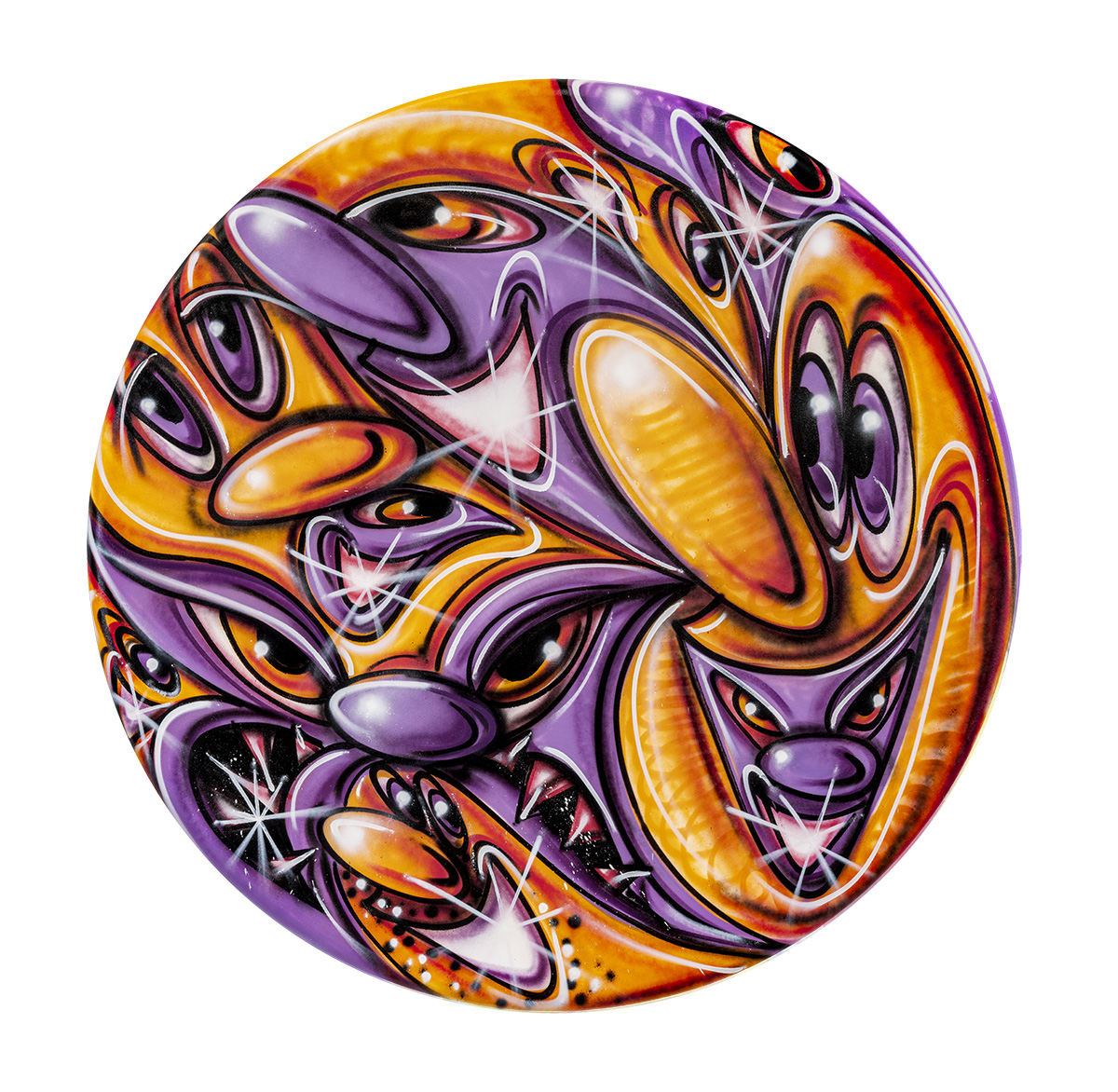
A choir of voices: Blobs or blobz constitute the most characteristic motif in Scharf’s output: flexible, variable, fluid balloons with eyes and mouths that express emotions. Anticipating today’s emoji language by decades, they gave rise to Scharf’s “Moodz”: tondos painted between 2018 and 2022, the years of the pandemic, in which no expression is ever repeated. The blobz form compact collectives; they appear tightly packed together, creating dense and dynamic compositions. “We are all here together, with different colors and shapes, occupying the same space”, in Scharf’s words. “It’s a kind of coexistence.” This is the meaning of the chorus of voices: trees, algae, animals, humans, planets and household appliances, dissolving the boundary between the human, the living and the thrown away. The response to the climate crisis is not despair but active hope: “Sometimes I want to warn that there’s beauty but it’s fucked. And sometimes I just want to say, you know what, I need joy right now. So I decide to celebrate.” Will we be able to save the planet? “Unfortunately, we seemed doomed a long time ago. But I’ve maintained hope in order to keep myself optimistic and alive. It’s becoming harder and harder. I am most worried about the children,” Scharf says.
*Lowbrow, also known as pop surrealism, is a groundbreaking and unconventional art movement that emerged in the late 1960s in Los Angeles and the West Coast. Characterized by its fusion of high and low culture, the movement has produced a wealth of compelling, evocative, and often controversial works. This article offers an in-depth exploration of the history, key artists, and enduring impact of Lowbrow art.
Photo: Kenny Scharf, ORGANIBOTZ, 2025, Oil on linen, 213.4 × 365.8 cm, © Kenny Scharf. Courtesy of the artist and Almine Rech
Info: Curator: Guillermo Solana, Museo Nacional Thyssen-Bornemisza, Paseo del Prado 8, Madrid, Spain, Duration: 29/9/2026-17/1/2027, Days & Hours: Mon 12:00-16:00, Tue-Fri & sun 10:00-19:00, Sat 10:00-21:00, www.museothyssen.org/
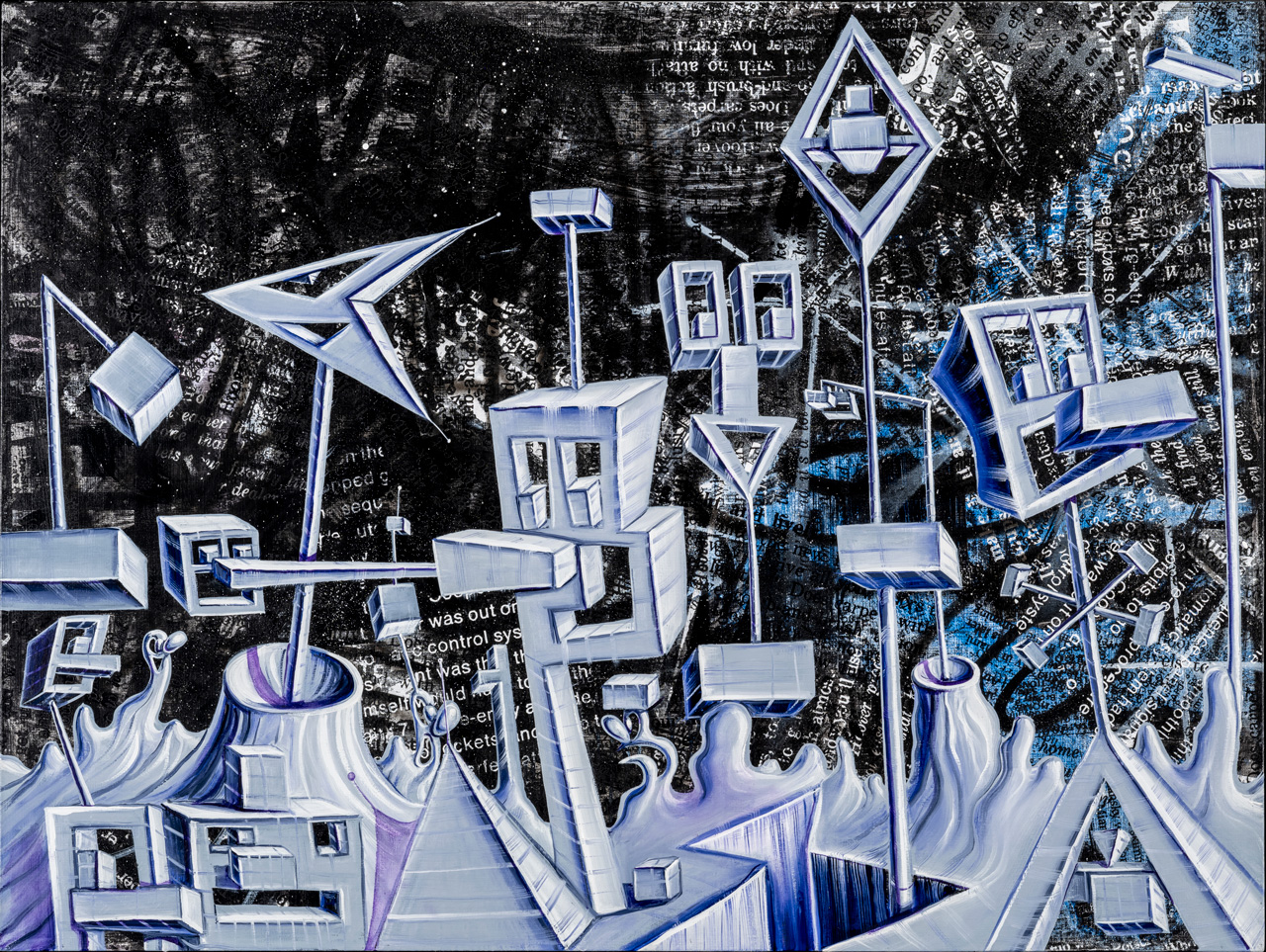
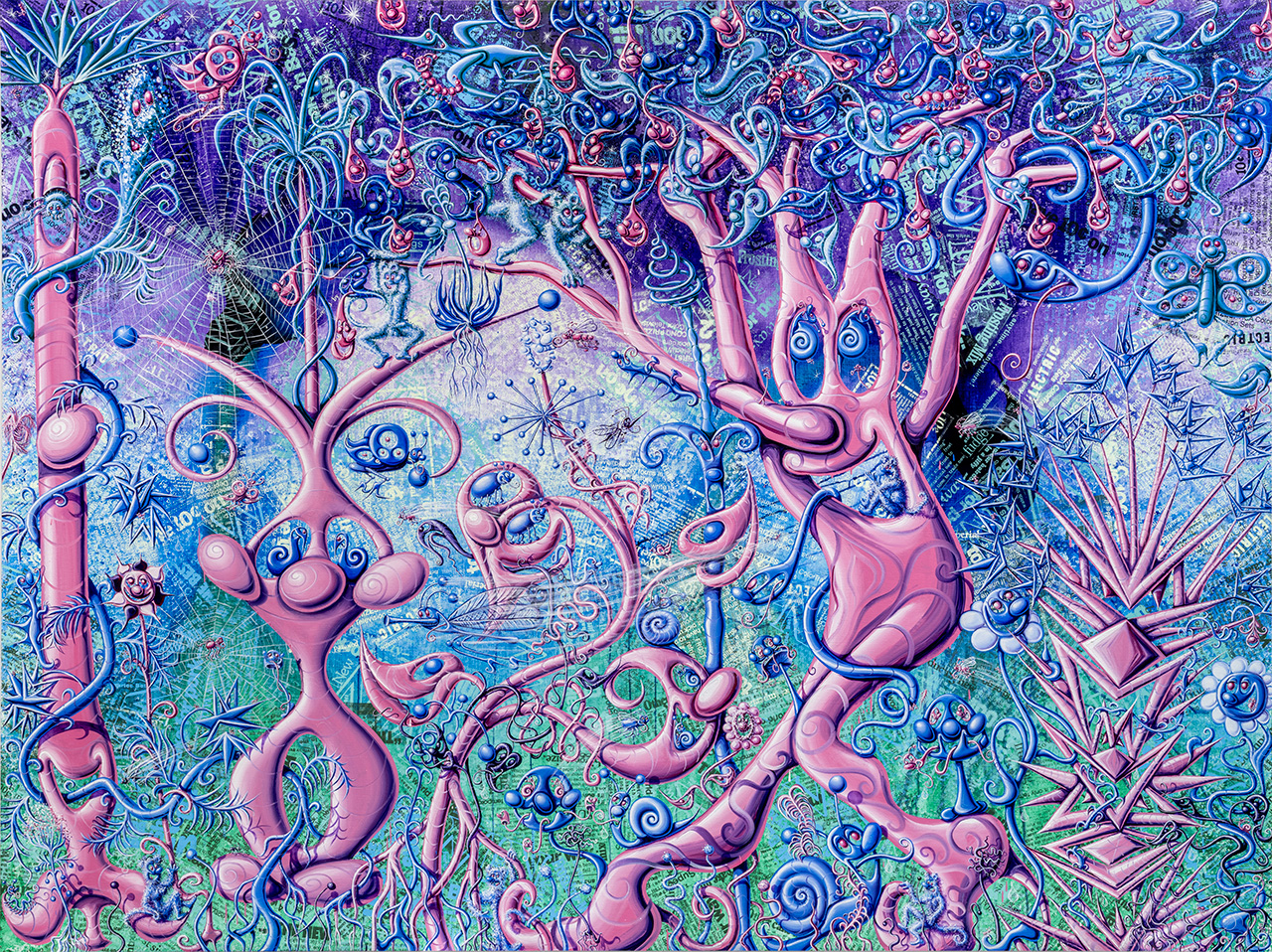
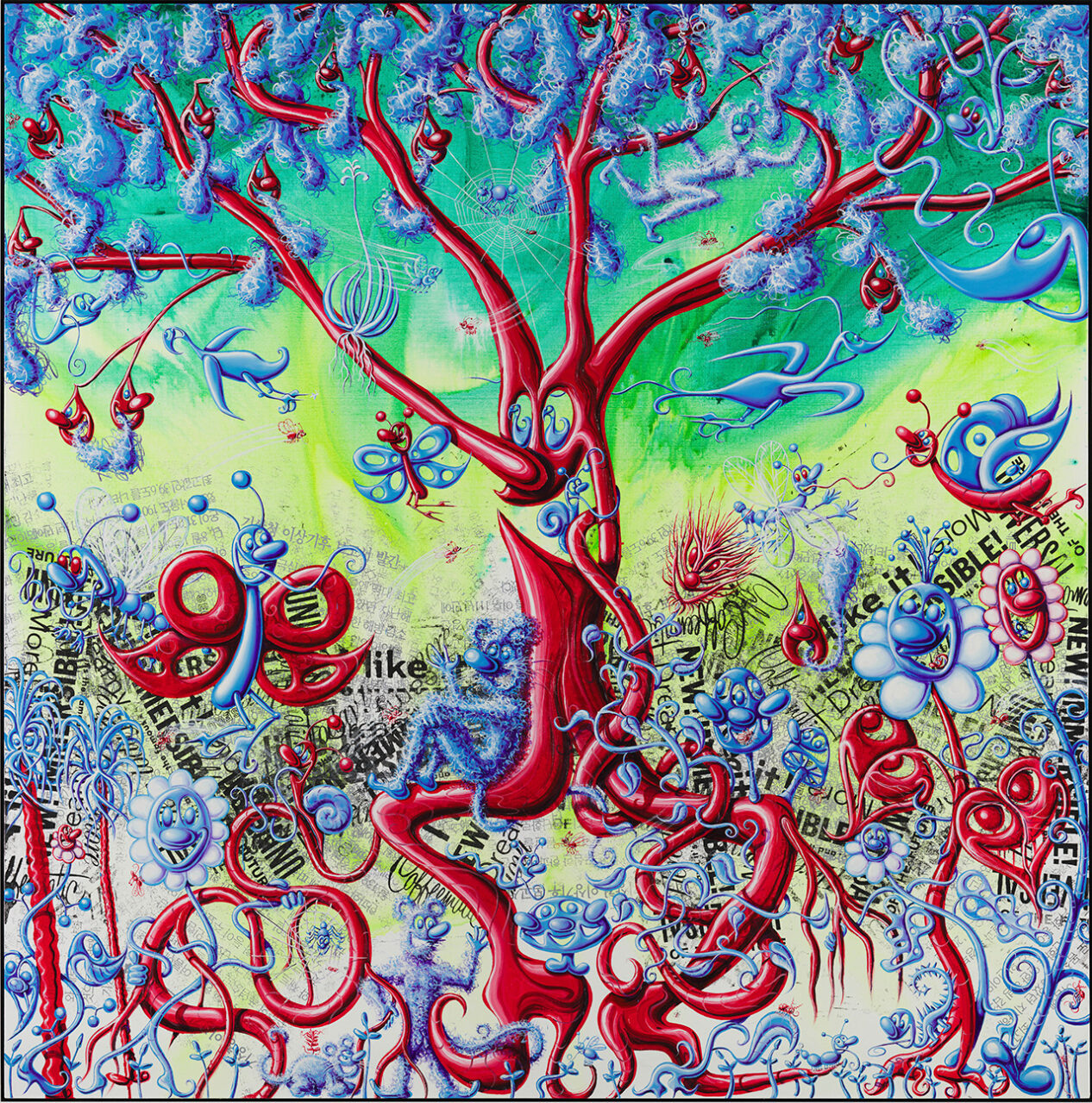
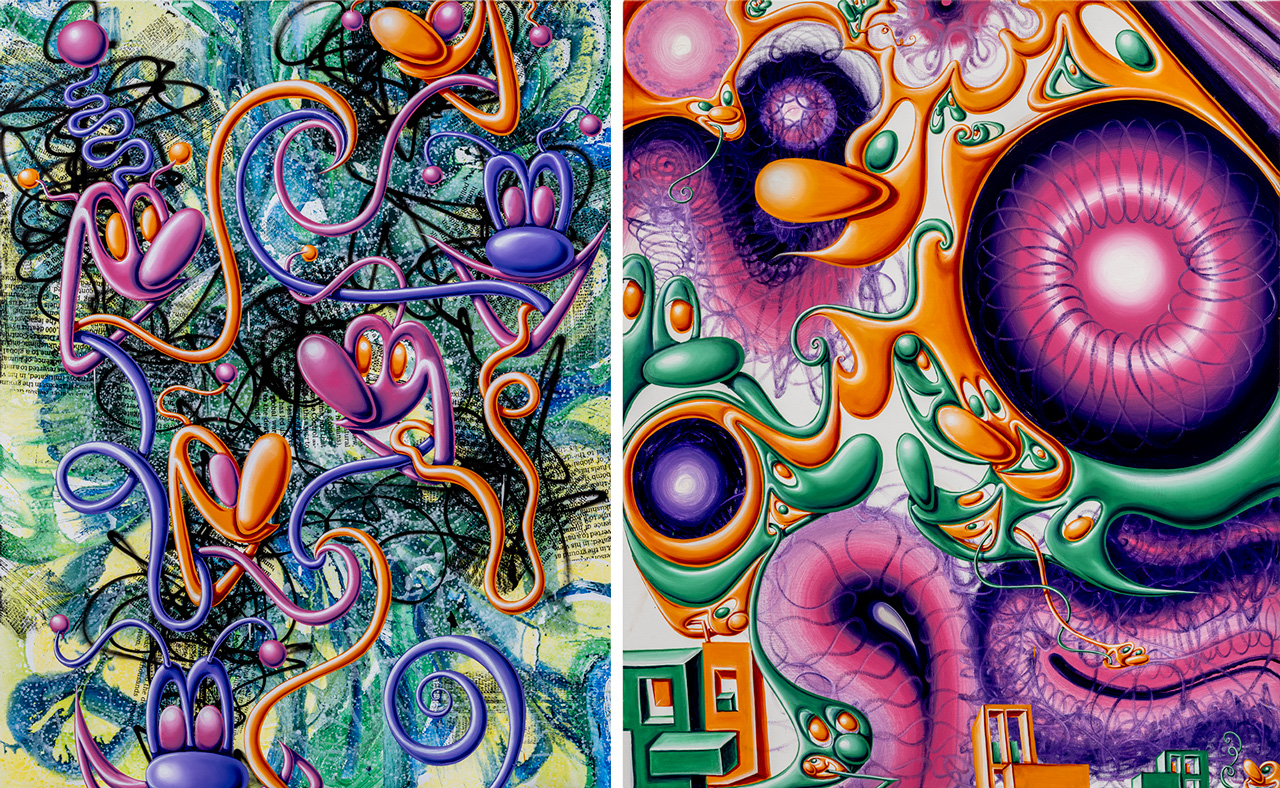
Right: Kenny Scharf, SPHERIKZ, 2025, Oil on linen, 182.9 × 152.4 cm, © Kenny Scharf. Courtesy of the artist and Almine Rech