
ART CITIES:Athens-Stavros Papagiannis
Stavros Papagiannis is a prominent Greek interior designer, creative director, and multidisciplinary artist whose practice moves between architecture, scenography, and contemporary art. Through his distinctive approach to space, material, and visual composition, he creates environments that function as immersive experiences. His work explores the relationship between art, design, and architecture, establishing him as an influential figure in contemporary Greek spatial and experiential design.
By Dimitris Lempesis
Photo: Crux Galerie Archive
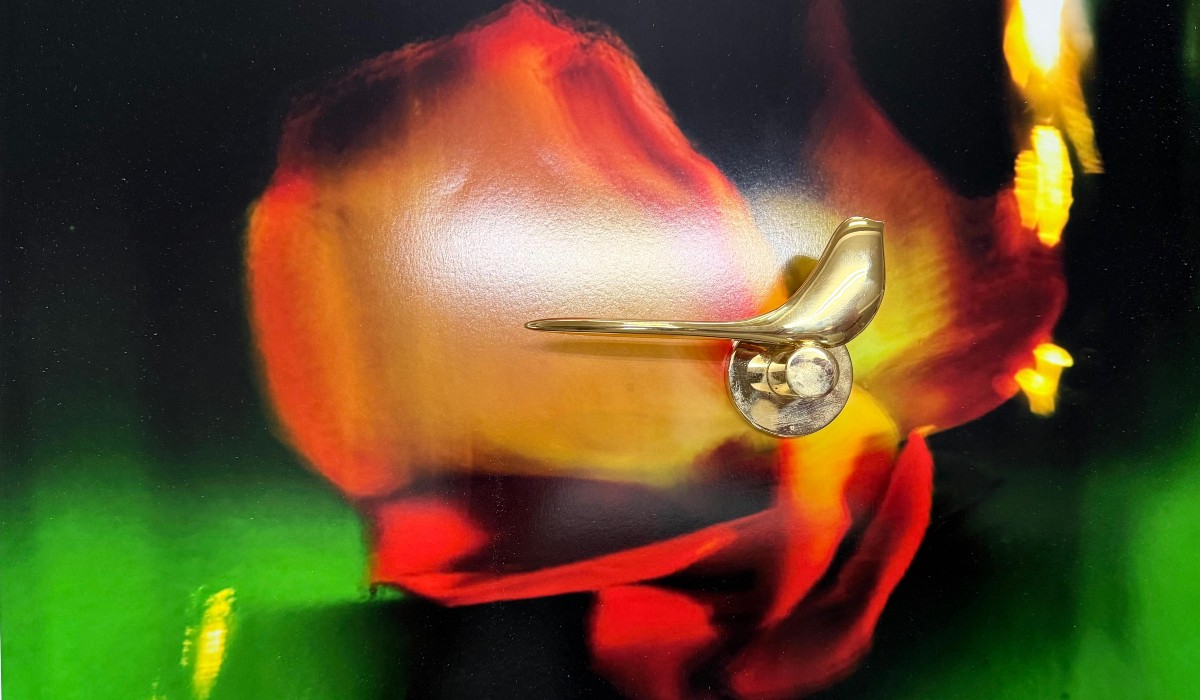
Stavros Papagiannis solo exhibition “Convulsive beauty” brings together a new body of works exploring the unstable relationship between image and text, and the ways in which beauty is constructed, framed and ultimately perceived. Moving between photography, installation and the language of the museum, Papagiannis examines how context can transform an ordinary image into an artwork, while an artwork can be reduced, displaced or even made absent through the systems that traditionally define it.
The title refers directly to André Breton’s notion of “convulsive beauty”, most closely associated with his 1928 book “Nadja”. For Breton, beauty was not necessarily a matter of harmony or permanence, but something capable of producing a shock: an encounter in which attraction and disturbance, familiarity and strangeness, movement and stillness coexist. The concept became closely connected with the Surrealist fascination with chance encounters and unexpected relationships between objects and images. In Papagiannis’ exhibition, this idea is translated into a contemporary visual language in which the ordinary is repeatedly removed from its original context and made strange.
At the centre of the exhibition is a series of diptychs composed of a museum label describing an artwork that is not actually present, placed beside a photograph, an object or a gesture made by Papagiannis. The absence is fundamental. Instead of functioning as a conventional caption that identifies and explains an existing work, the museum text becomes an autonomous visual and conceptual element. It carries the authority of the institution while simultaneously describing something that the viewer cannot see. The photograph on the other side of the diptych therefore becomes caught between evidence and fiction: it is present, but its meaning is conditioned by a text referring to another, absent image.
Papagiannis’ photographs are made with a mobile phone and emerge from a process situated somewhere between automatism, chance and conscious selection. Everyday impressions, fragments and encounters are detached from their original surroundings and brought into new relationships. A detail encountered in daily life can acquire the status of an image; an object can become a sculptural proposition; a simple gesture can appear as a carefully composed artistic act. What matters is less the transformation of the object itself than the transformation of the viewer’s attention.
This method recalls a fundamental Surrealist strategy: allowing unexpected associations to interrupt habitual ways of seeing. Photography was particularly important to Surrealism because it could record fragments of the real while simultaneously disrupting their apparent stability. Rosalind Krauss, in her influential 1981 essay “The Photographic Conditions of Surrealism”, examined photography’s central role within Surrealist practice and its relationship to Breton’s concept of convulsive beauty. Rather than treating photography simply as a transparent record of reality, Krauss considers the medium’s capacity to turn the photographic image into a system of signs, repetitions, displacements and symbolic associations.
Papagiannis takes this possibility further by introducing the museum label into the photographic encounter. The label traditionally operates as a stabilising device. It provides an artist’s name, a title, a date, materials and other information intended to locate the work within an established historical and institutional framework. Here, however, the label loses its explanatory certainty. It survives without the artwork it is supposed to describe. Its authority remains intact, but its referent has disappeared.
This displacement creates a productive tension between institutional language and personal experience. Papagiannis appropriates the memory of artworks and exhibitions encountered previously and transforms that memory into material for new compositions. The museum text, separated from its original object, becomes something close to a readymade. Yet rather than simply appropriating an object, the artist appropriates a fragment of art-historical language and allows it to enter into dialogue with his own photographs and gestures.
The resulting relationship between original and copy, authority and appropriation, art history and personal image is deliberately unstable. An image receives a title that does not belong to it; a text describing one artwork is attached to another; an institutional form of identification becomes a device for producing ambiguity. The viewer is consequently asked to negotiate between what is seen and what is described, between the evidence offered by the photograph and the authority suggested by the museum label.
The installation itself becomes part of this system. Framing, positioning, scale and spatial relationships are not neutral decisions but structural components of the works. Image, object and text are arranged so that meaning emerges through their proximity. The individual elements remain recognisable, yet their combination produces something unfamiliar. The gallery becomes a space in which meanings circulate rather than settle, and where the act of looking is continually interrupted by the act of reading.
This interplay between visibility and absence also recalls the particular role of images in Breton’s “Nadja”. The book combines text with photographs, drawings and other visual material, using images not merely as illustrations but as integral components of its fragmented narrative. Contemporary editions continue to emphasise the importance of these images to Breton’s construction of memory, encounter and the surrealism of everyday life.
In “Convulsive Beauty”, Papagiannis similarly treats the image not as an isolated object but as part of a network of references. The photograph becomes activated by the text beside it, while the text acquires a new and uncertain identity through its association with the photograph. Neither element completely controls the meaning of the other. Instead, their relationship generates a space of ambiguity in which interpretation remains open.
The exhibition consequently moves between the personal snapshot and the institutional image, between the readymade and the constructed, and between an immediate encounter with the everyday and the accumulated authority of art history. Papagiannis’ use of the mobile phone is significant in this respect: the device associated with instantaneous, private and ubiquitous image-making becomes a tool for constructing a more deliberate meditation on how images acquire value and meaning.
Rather than proposing a fixed definition of beauty, Convulsive Beauty examines the conditions through which something becomes beautiful, strange or worthy of attention. Beauty emerges not as a stable quality contained within an object but as an event produced through juxtaposition, memory, framing and perception. Something familiar can suddenly appear uncanny; an insignificant detail can become charged with meaning; an absent artwork can acquire a presence through language.
Photo: Stavros Papagiannis, Courtesy the artist and Crux Galerie
Info: Crux Galerie, Sekeri 4, Athens, Greece, Duration: 2-31/10/2026, Days & Hours: tue-Fri 12:00-20:00, Sat 12:00-16:00, https://cruxgalerie.com/