BOOK:Jennifer Binnie-Forest Visions, Richard Saltoun Gallery
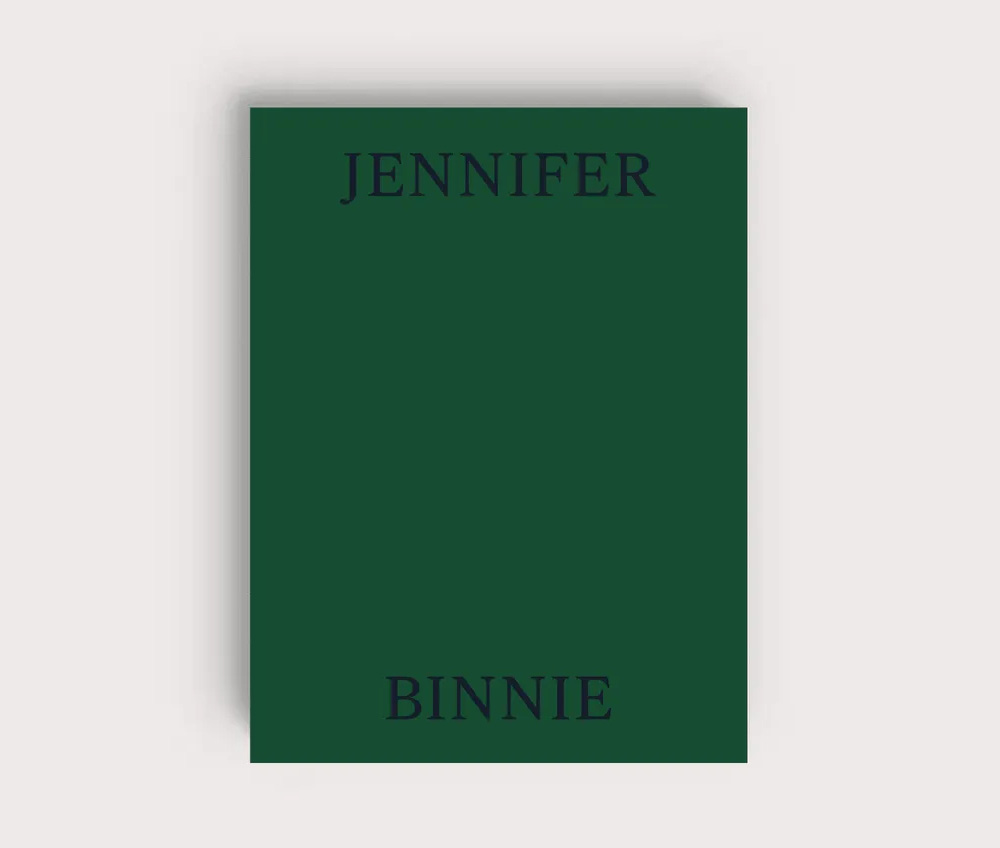
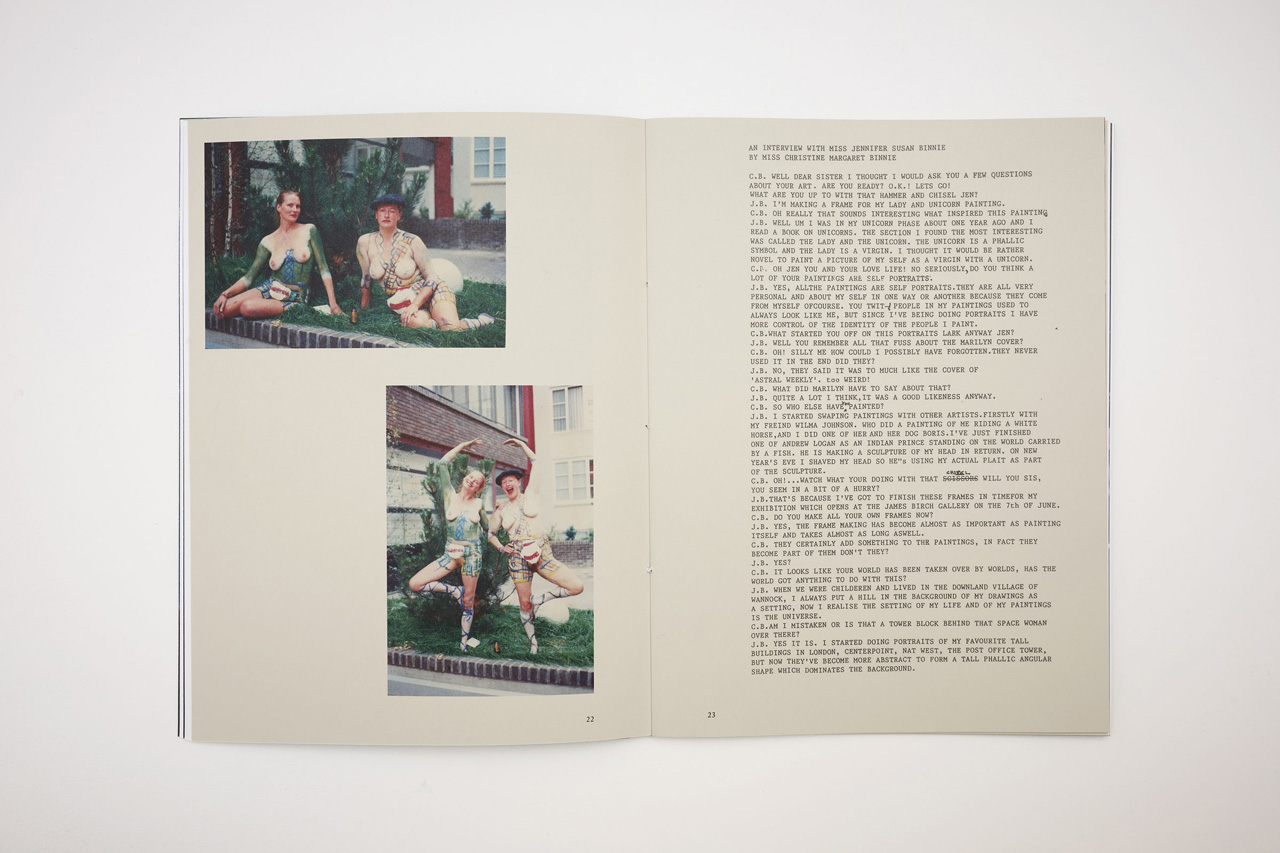
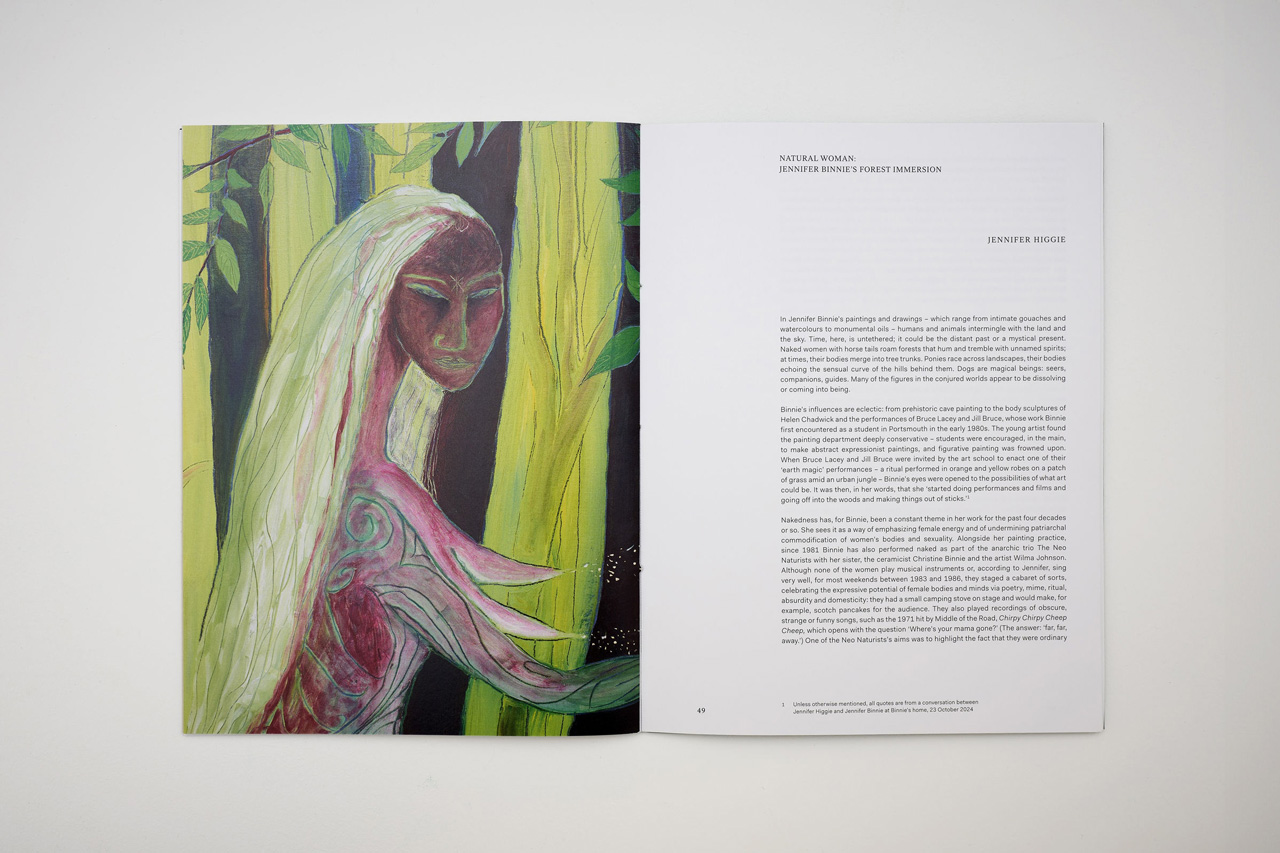
Published on the occasion of her landmark solo exhibition at Richard Saltoun Gallery, “Forest Visions” is the first-ever publication dedicated to the life and work of British artist Jennifer Binnie. Spanning over four decades of paintings and works on paper from the early 1980s to the present day, this volume provides a comprehensive overview of Binnie’s pioneering practice—a body of work where folklore, spirituality, feminism, and ecological thought seamlessly intersect. The publication features an essay by art critic Jennifer Higgie and a special archive section showcasing historical materials from the Neo Naturists Archive.
Binnie emerged as a pivotal figure in British contemporary art in the early 1980s as co-founder of the Neo Naturists, an influential performance art collective formed in 1981 with her sister Christine Binnie and Wilma Johnson. Deeply connected to the subculture of London’s New Romantic club scene, the collective developed its radical performative language against the backdrop of the era’s swift economic, political, and social shifts.In parallel, Binnie forged a distinct solo painting practice, exhibiting with London gallerist James Birch from the 1980s onward and gaining praise from critics like Louisa Buck. Forest Visions traces this dual trajectory, illustrating how her performance roots informed a lifelong commitment to subverting artistic and social norms through paint.
At the heart of Binnie’s work is an effort to dissolve rigid hierarchies between the human and non-human worlds. Her canvases portray mysterious forests humming with unseen energies, where human figures physically merge with trees and terrain to suggest a singular, shared vitality.
Drawing from diverse influences—from prehistoric cave paintings to the performance practices of Helen Chadwick and Bruce Lacey—Binnie operates through intuition, metaphor, and myth. Her work aligns closely with Donna Haraway’s ecofeminist philosophy, which rejects patriarchal dominance in favor of “becoming-with” nature. Key recurring motifs include: Spirit Guides: Wild animals, particularly deer and foxes, acting as companions and guides. Archetypal Figures: Radiant women embodying connection, rebirth, and ecological awareness and The Red Heart Motif: Simple red hearts painted across both human and non-human bodies, symbolizing what Binnie describes as “the connection between the beating heart of life that’s in both.”
Binnie’s paintings weave personal autobiography with symbolic and fictional narratives. Visually, her compositions balance deep, grounding earth tones with dramatic jewel accents, applied in rich, highly textural oil paint that gives the work an immediate, visceral presence. As both a critical monograph and an archival sourcebook, “Forest Visions” documents an enduring artistic legacy that continues to challenge how humanity understands its place within the natural environment. – Dimitris Lempesis
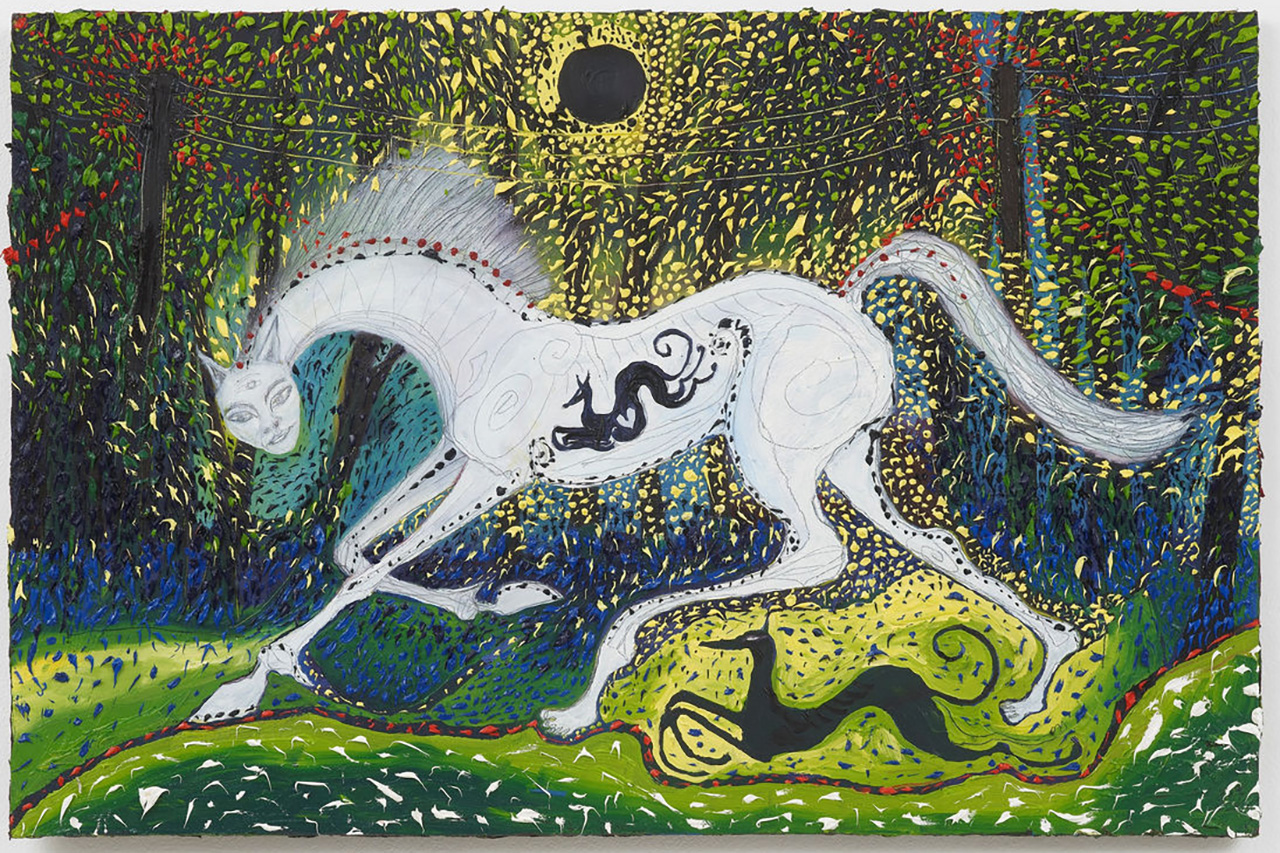
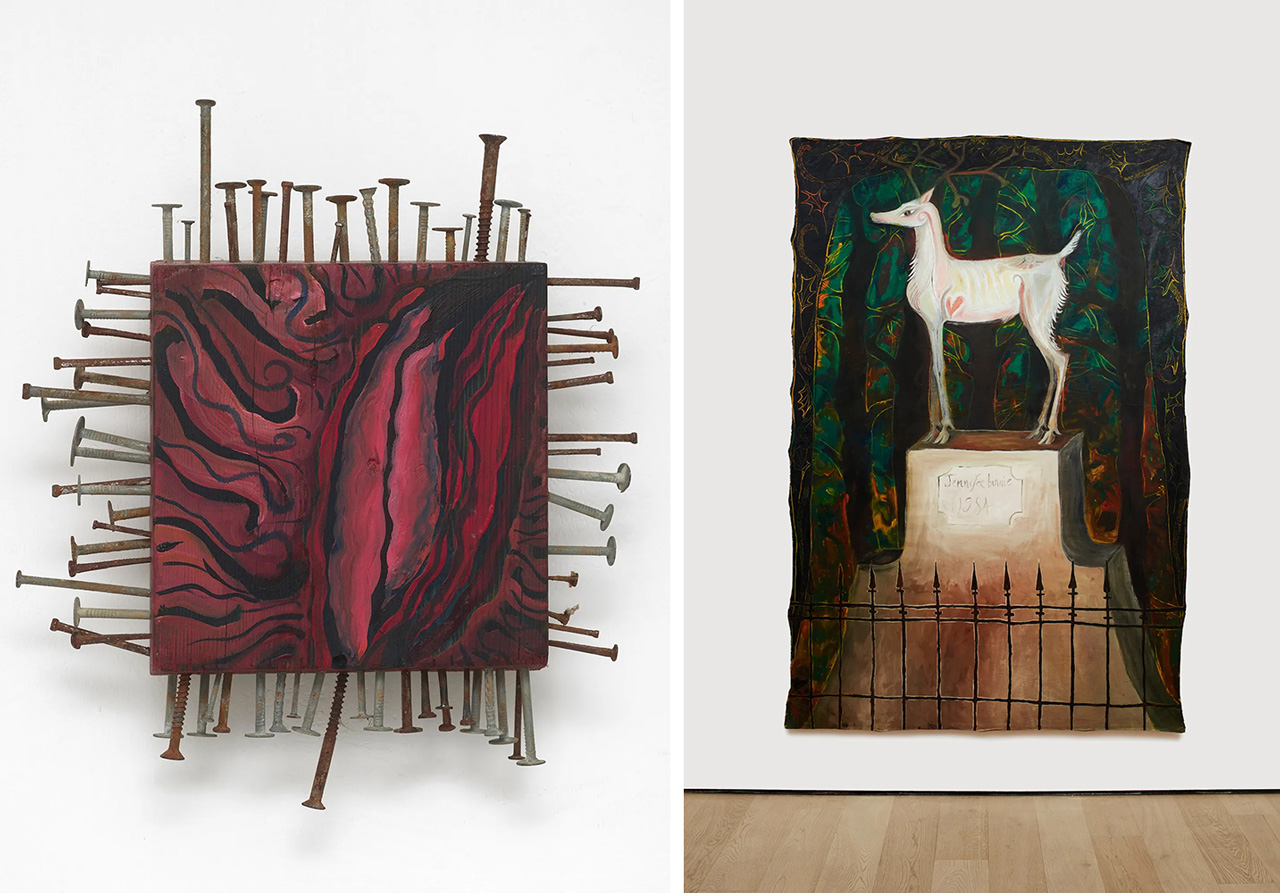
Right: Jennifer Binnie, Deer Statue, 1984, Oil on canvas,242 x 160 cm, © Jennifer Binnie, Courtesy the artist and Richard Saltoun Gallery