PRESENTATION:Michał Budny-Randzone
Michał Budny’s art practice is an ongoing search for simplicity, to alleviate the complexity of the human experience. He creates minimalist forms to capture the fleeting things – emotions, relationships, a state. His objects, installations, and video art register the basic concepts that structure human presence.
Βy Efi Michalarou
Photo: PEAC Museum Archive
How can an emotion, a memory, or a fleeting encounter acquire a physical form? This question lies at the heart of Michał Budny’s artistic practice, in which the intangible is transformed into objects that occupy space while retaining traces of experiences that cannot be fully grasped. Through sculpture, relief, and installation, Budny gives material presence to moments, relationships, and situations that ordinarily resist representation.
At PEAC Museum, “Randzone” (Edge Zone) brings together approximately 40 works, including small-scale objects, monumental sculptures, and site-specific installations. The exhibition explores the thresholds between the visible and the invisible, connection and separation, interior and exterior, establishing a dialogue between Budny’s contemporary practice and the historical holdings of the Paul Ege Art Collection.
Born in 1976 in Leszno, Poland, Budny lives and works between Warsaw and Prague. His work has been presented at institutions including South London Gallery, Kunstmuseum Stuttgart, Kunstmuseum Luzern, and the National Gallery of Art in Vilnius. His practice engages with the formal traditions of Minimal Art and Constructivism while introducing a distinctly personal and narrative dimension.
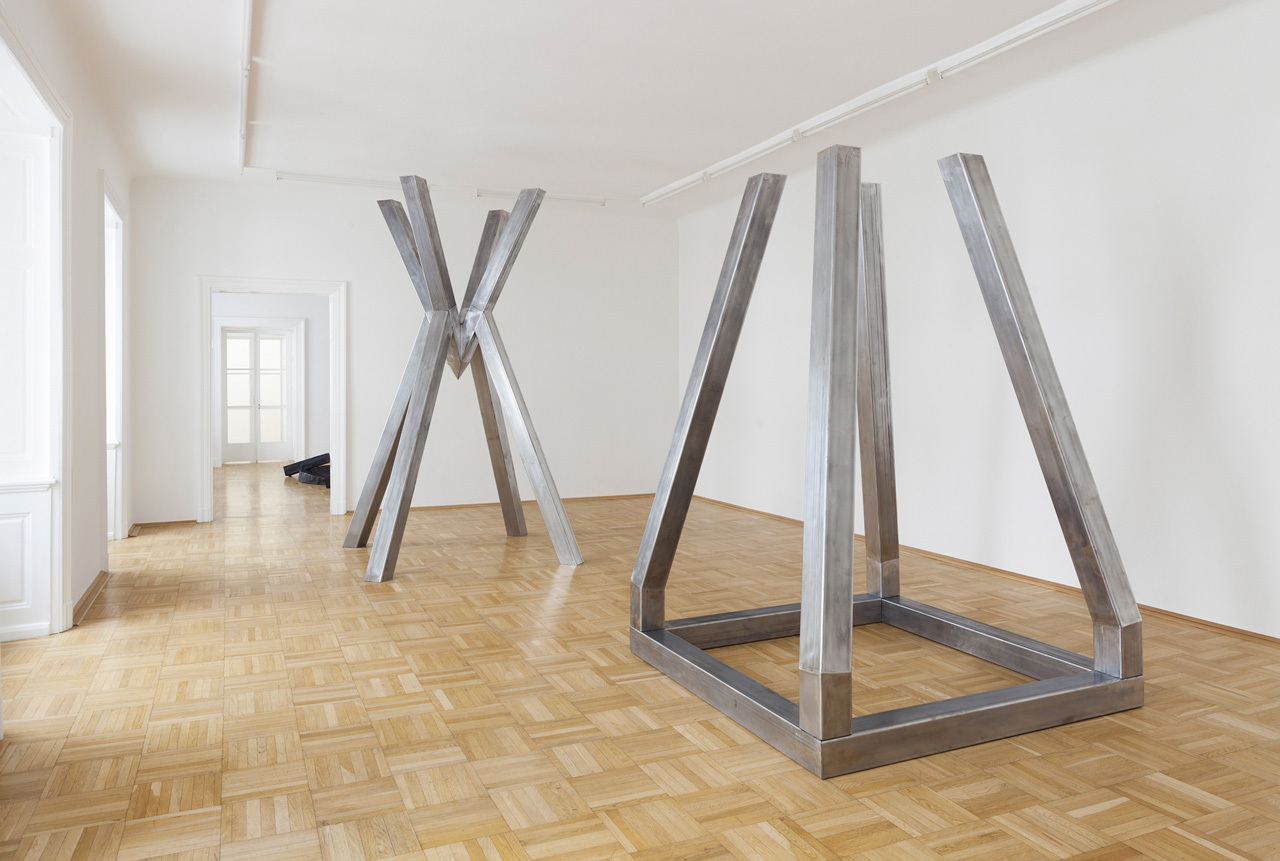
Budny works with a deliberately restricted vocabulary of materials and colors. Black, white, and shades of grey dominate his palette, while metal, wood, textile, cardboard, and rubber provide the physical means through which his ideas take shape. His compositions are characterised by geometric structures, precise proportions, and an economy of form that initially suggests the formal austerity of Minimal Art.
Yet the apparent simplicity of these works conceals a more complex relationship with perception. Rather than presenting autonomous objects whose meaning is exhausted by their physical presence, Budny creates forms that activate individual associations, memories, and emotional responses. The viewer encounters not simply a sculpture in the present, but something that seems to refer to an experience beyond the immediate moment.
This distinction establishes a productive tension with the minimalist proposition that what is seen constitutes the entirety of the work. In Budny’s practice, the visible becomes a point of departure for the invisible. His objects invite the viewer to reconstruct something absent, whether a remembered place, a human relationship, or a sensation that has left no tangible trace.
The exhibition’s title refers precisely to these transitional spaces, where boundaries become unstable and seemingly opposing conditions begin to overlap. Inside and outside, presence and absence, proximity and distance are not treated as fixed oppositions but as interdependent conditions that shape how we experience the world.
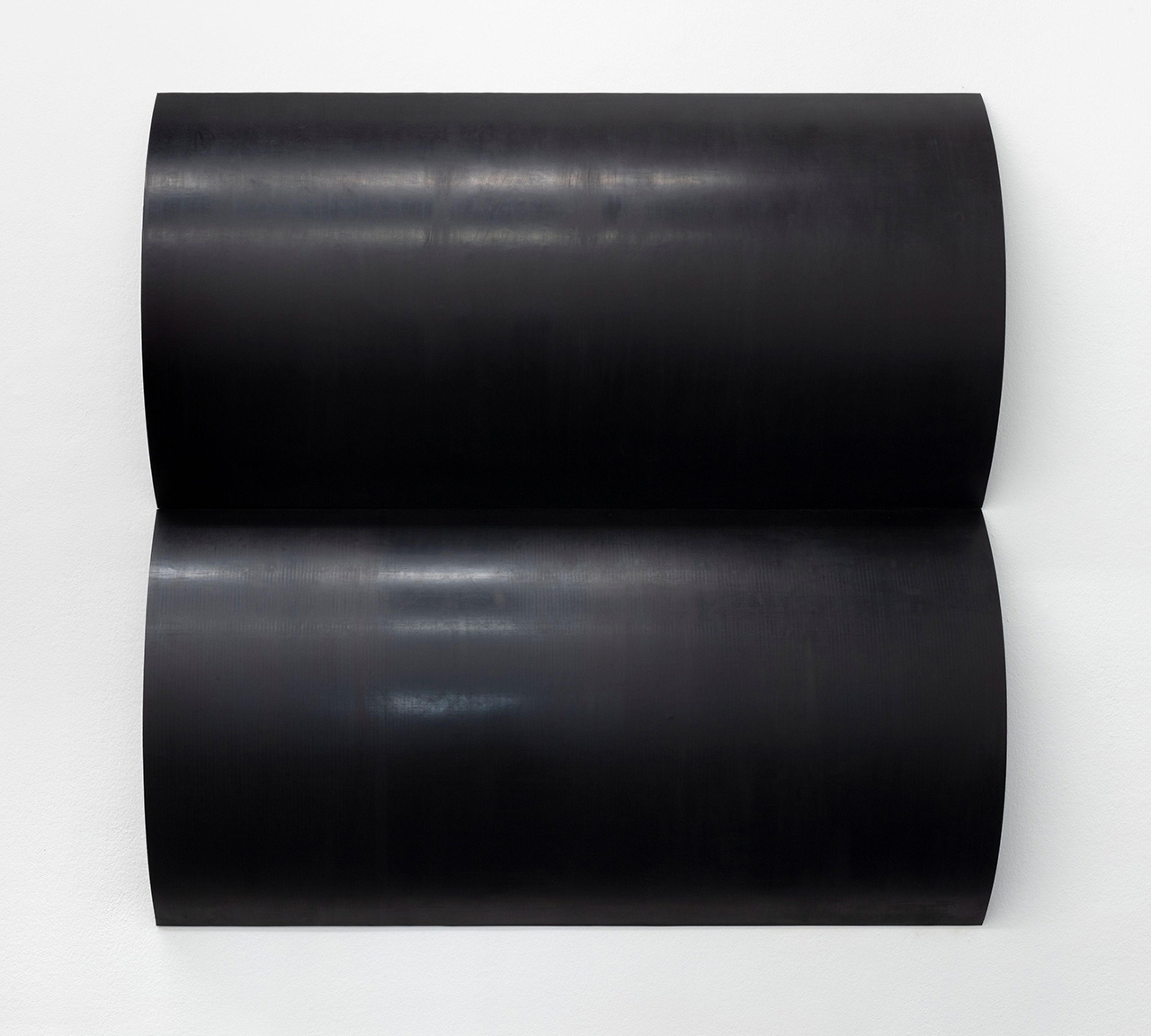
Among the works presented in Randzone are large-format wall reliefs made from black rubber. Their convex and concave surfaces establish an interplay between projection and recession, defining an interior and an exterior through the physical behaviour of the material.
The intense smell of rubber and the depth of its black surface extend the encounter beyond the purely visual. The work occupies the architectural space while simultaneously suggesting an enclosed volume, a boundary, or a space that cannot be directly entered. Through the relationship between material, dimension, and the surrounding environment, Budny transforms an apparently abstract configuration into an experience that is both bodily and psychological.
The sculptures do not illustrate specific narratives. Instead, they reduce complex experiences to their essential structural elements, allowing form to function as a point of access to personal interpretation.
Budny describes the objects he creates as “models for mental use.” The phrase captures the particular character of his work: these are not representations intended to reproduce the external world, but constructions that enable viewers to approach experiences, relationships, and emotions through material means.
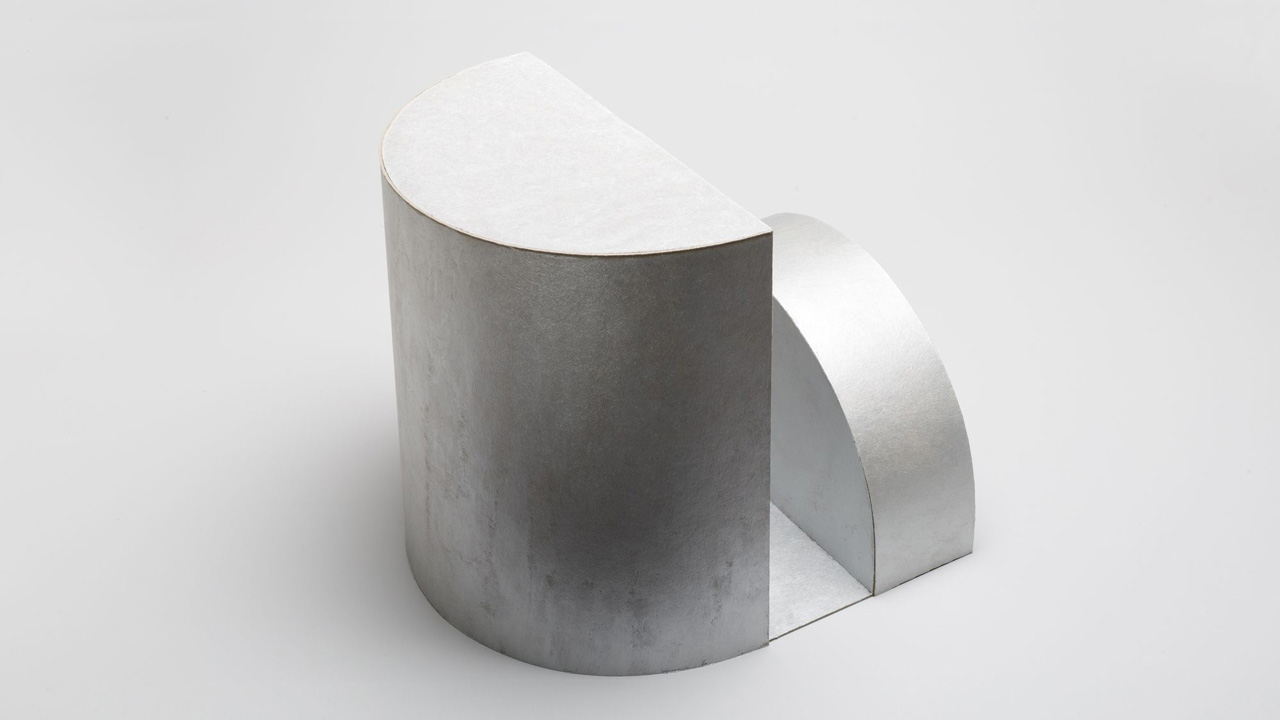
Paper and cardboard occupy an important place in Budny’s practice. Using simple tools and modest materials, he constructs carefully measured objects that evoke buildings, landscapes, everyday things, and situations. The apparent fragility of these materials contrasts with the conceptual precision of the resulting forms.
His sculptures can also give shape to phenomena that have no permanent physical structure. Voice, memory, rain, and a ray of sunlight become starting points for objects that translate fleeting sensations into tangible configurations. Through this process, sculpture moves beyond the conventional understanding of a solid, self-contained object, becoming a means of registering the passage of time and the instability of perception.
Budny’s approach operates across different scales. Small, meticulously assembled constructions coexist with large-scale sculptures and installations that respond to the architecture of their surroundings. Regardless of size, the works retain a consistent attention to proportion, surface, and the relationship between the object and the space it occupies.
The contrast between the intimacy of the smaller works and the physical presence of the monumental pieces reinforces the exhibition’s central concerns. A modest cardboard construction may suggest an entire place or remembered experience, while a large installation can evoke a sense of vulnerability, separation, or loss. In both cases, material reduction becomes a means of opening up rather than restricting meaning.
The presentation at PEAC Museum also establishes a dialogue with the Paul Ege Art Collection, whose holdings focus on Minimal Art, Radical Painting, and Conceptual Art from the 1970s onwards. Budny’s geometric vocabulary and restrained use of materials connect his practice with these historical approaches, while his emphasis on memory, emotion, and subjective experience introduces a different understanding of abstraction.
Photo: Michał Budny, Untitled (Memory), 2024. Cardboard, silver purest pigment acrylic paint, 23,5 x 23,5 x 26 cm. Photo: © Michał Budny. Courtesy of Michał Budny and Annex14, Zurich
Info: Curator: Lea Altner PEAC Museum, Robert-Bunsen-Straße 5, Freiburg im Breisgau, Germany, Duration: 27/9/2026-14/7/2027, Days & Hours: Tue-Sun 11:00-17:00, https://www.peac.digital/
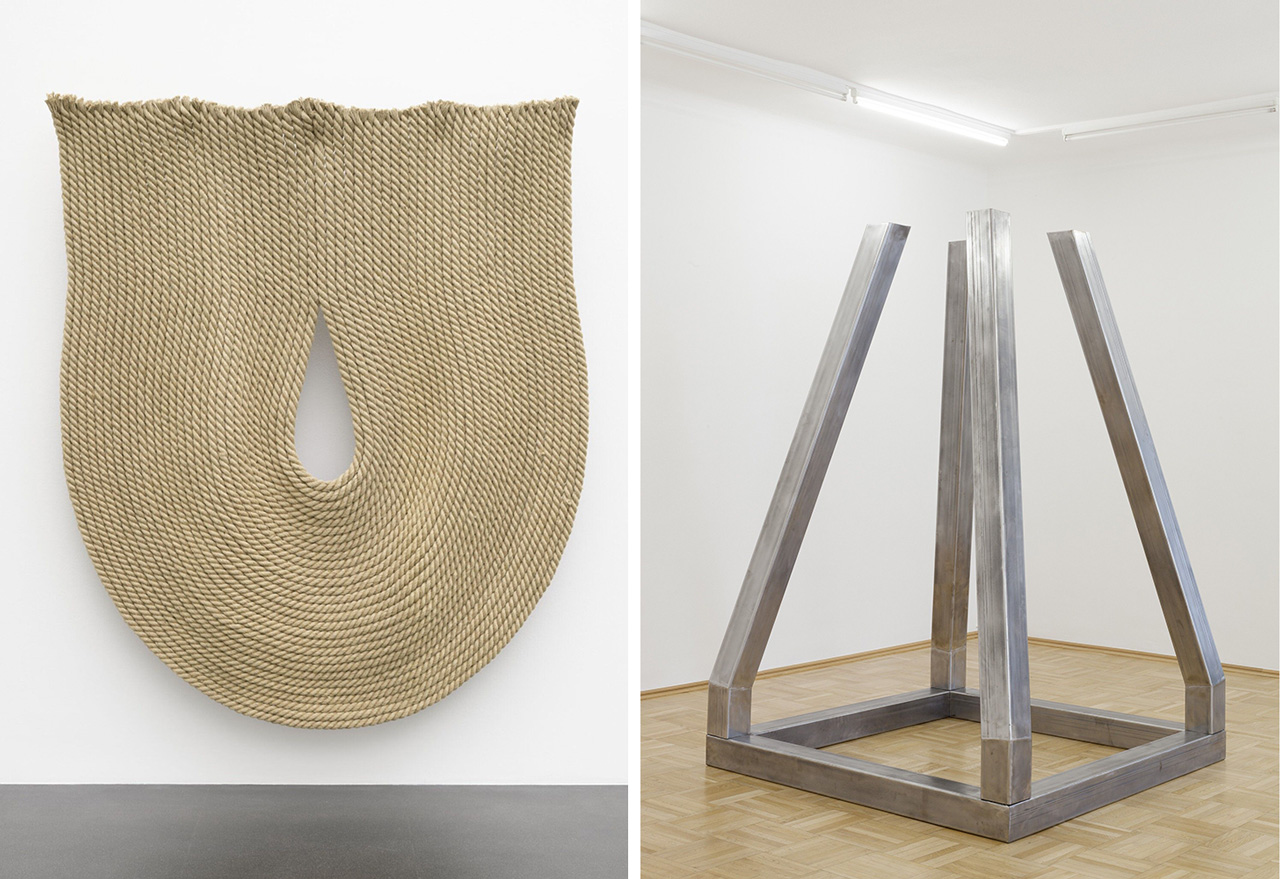
Right: Michał Budny, The Song of Skull I, 2017. Carbon steel, 260 x 180 x 180 cm. Photo: © Markus Wörgötter/Bildrecht, Wien 2026. Courtesy of Michał Budny and Galerie nächst St. Stephan Rosemarie Schwarzwälder, Vienna
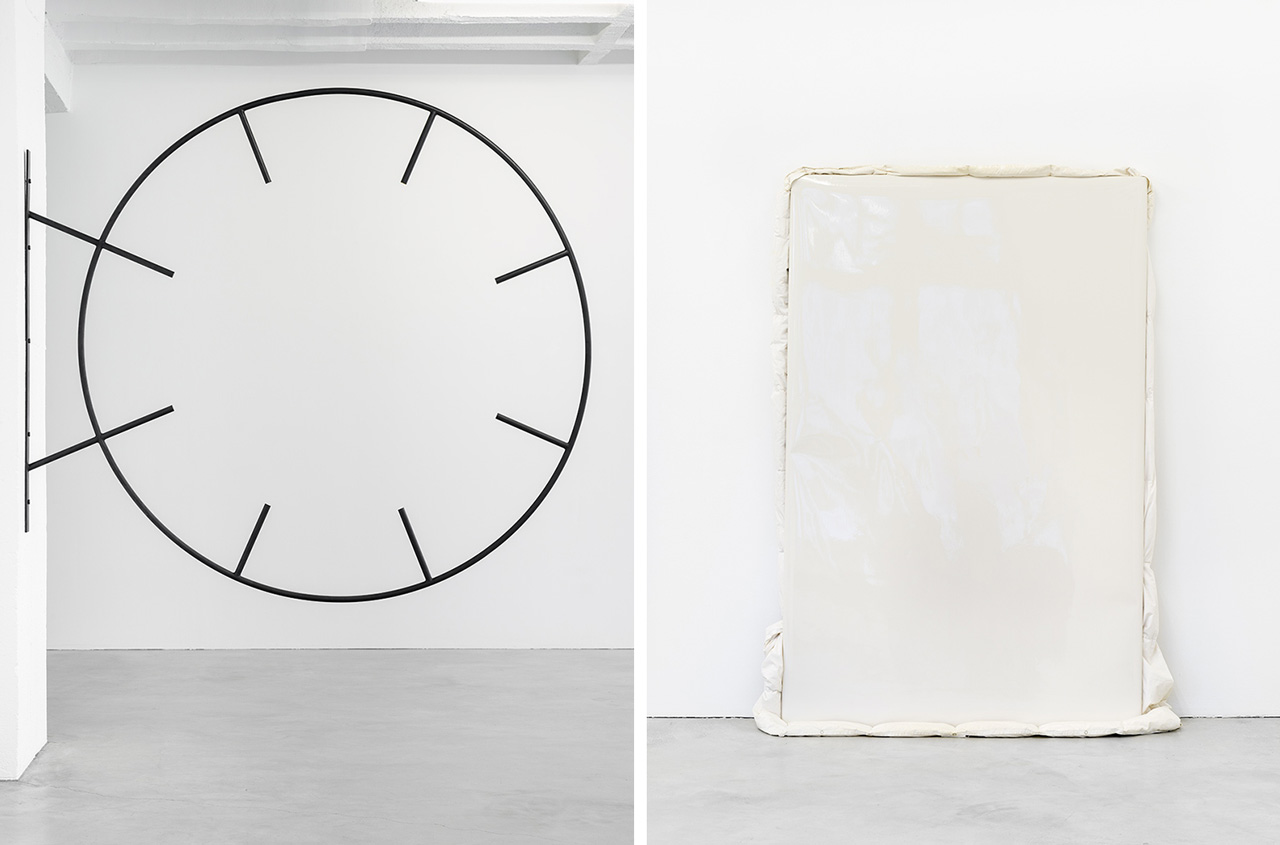
Right: Michał Budny, Only Fear, 2015, Photo: Gerhard Kassner, © Michał Budny, Courtesy of the artist and Galerie Nordenhake Berlin, Stockholm, Mexico City