ART CITIES:N.York-Arlene Shechet
With gravity-defying work that seems to tilt, contort, bend, and melt, Arlene Shechet’s sculptures appear to be set in motion while unearthing the expressive potential of material and forms and forcing us to sit with—and move around—its contradictions. Shechet began working with clay in 2007 and has since developed a unique practice, changing the landscape of ceramic as medium. Highly technical yet entirely intuitive, her practice embraces improvisation and seeks to examine the humor and pathos of the lived human experience.
By Efi Michalarou
Photo: Pace Gallery Archive
Arlene Shechet’s exhibition “She Said She Said” brings together monumental metal sculptures and a new series of ceramic works, exploring how material, colour, light and physical space can be transformed through an open-ended process of making. The exhibition continues the artist’s investigation into the relationship between sculpture, drawing and the body.
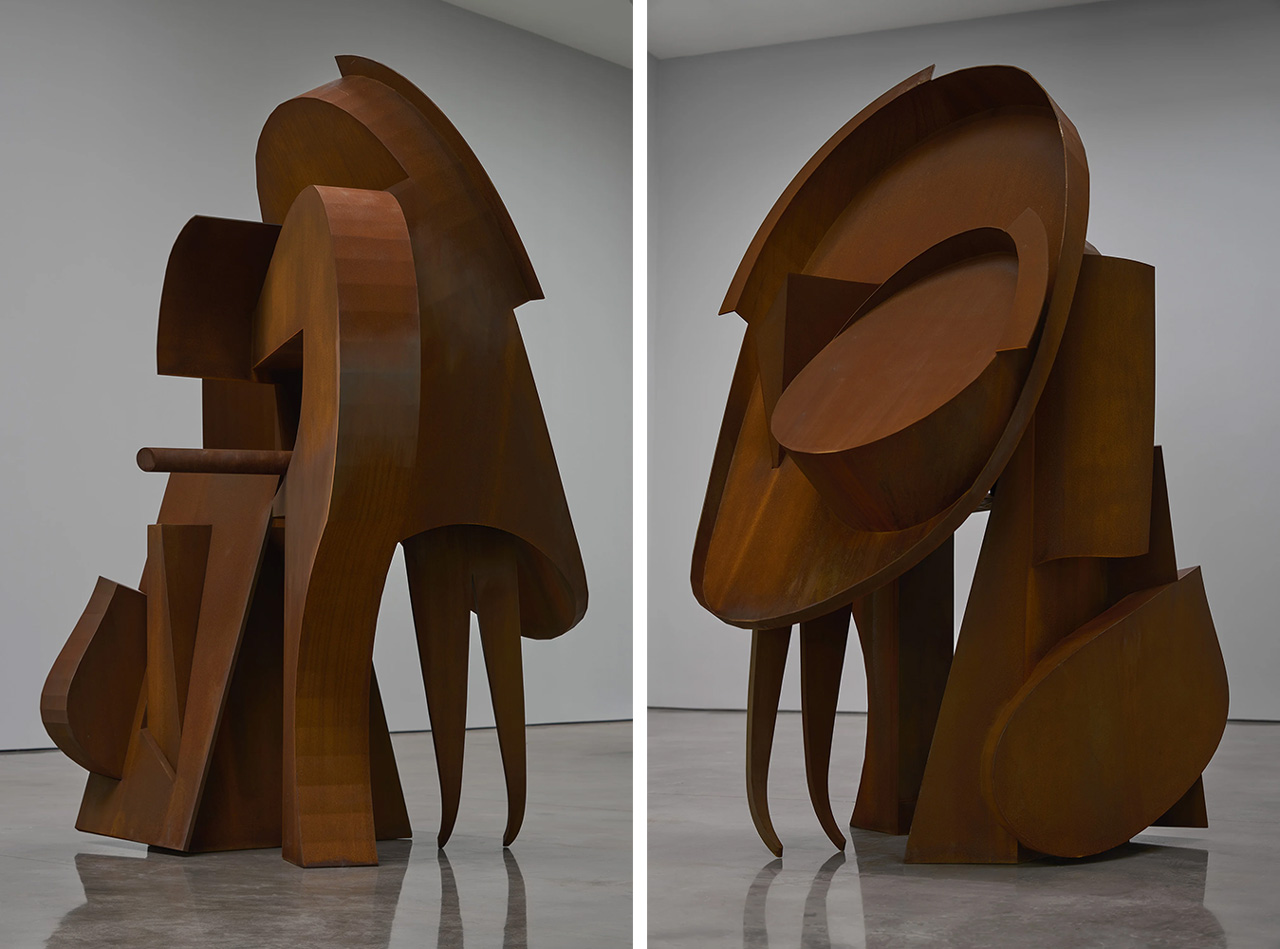
Working with aluminum, Cor-Ten steel and clay, Shechet reconsiders materials traditionally associated with solidity and permanence, giving them a sense of lightness, movement and precarity. Through what she describes as “drawing through sculpture,” she approaches each work as an evolving construction in which intuition, technical experimentation and the visible traces of the handmade remain integral to the final form.
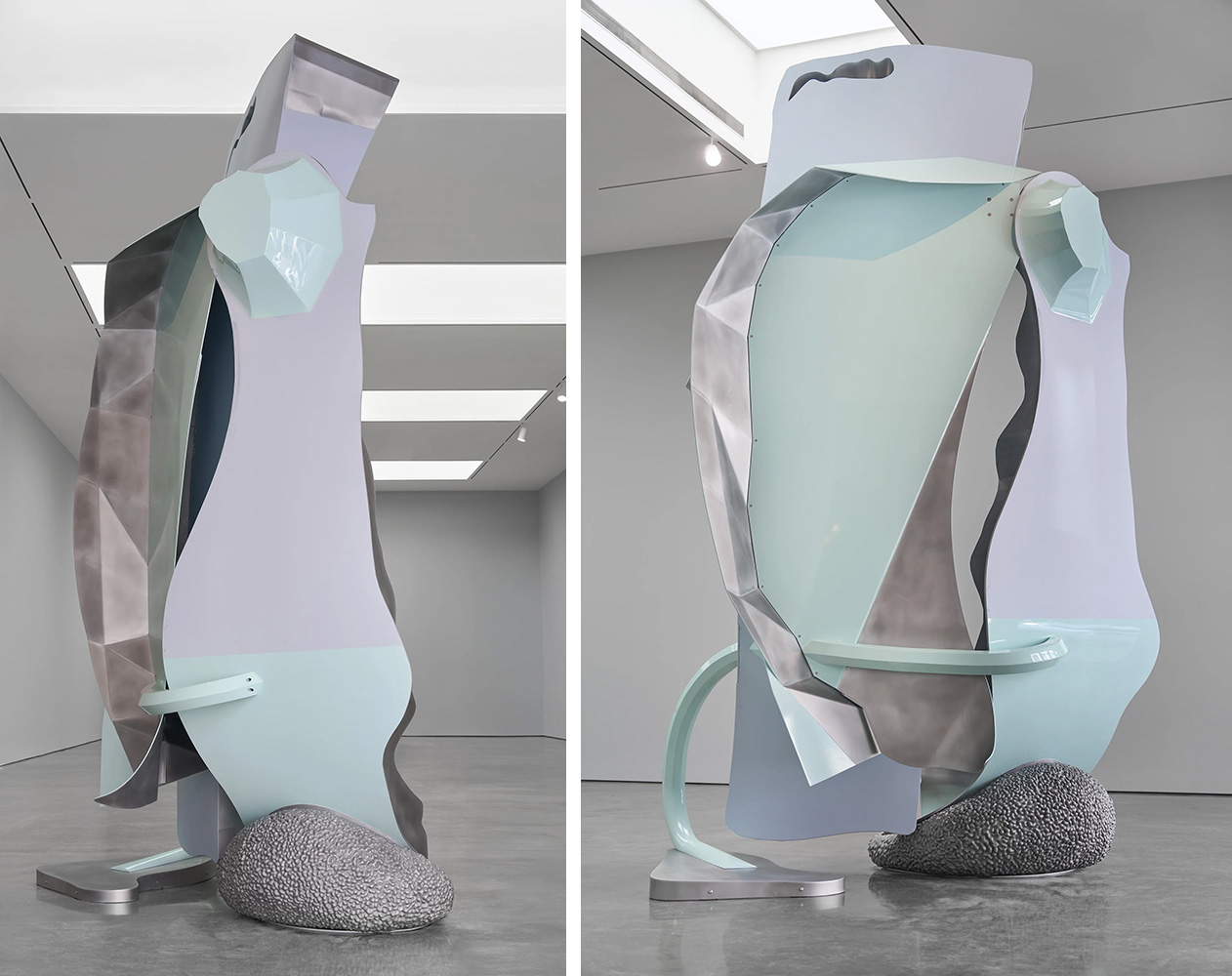
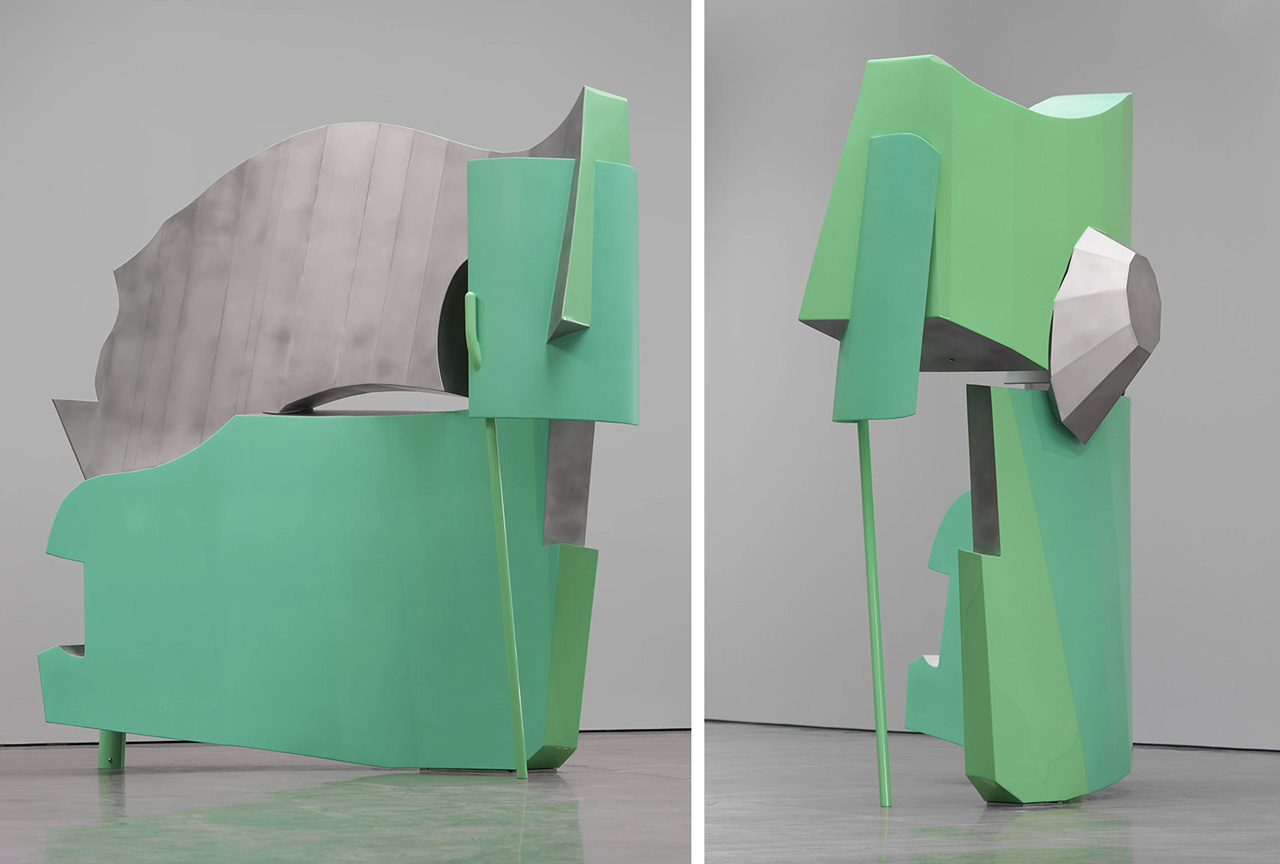
The exhibition’s monumental metal sculptures extend the ideas developed in Girl Group, Shechet’s 2024 presentation at Storm King Art Center. In the new works, planes of aluminum and Cor-Ten steel bend into organic, biomorphic curves, creating shifting volumes and unexpected openings. Rather than appearing as closed, self-contained objects, the sculptures establish a dynamic relationship between solid matter and the space that surrounds and passes through them.
The metal forms suggest movement and instability, challenging conventional expectations of weight and balance. Their construction remains deliberately visible: cuts, folds, seams, welds and joins reveal the successive decisions, revisions and transformations through which each sculpture takes shape. These marks are not concealed in the pursuit of a seamless finish. Instead, they become part of the work’s visual language, connecting its physical construction to the gestures and decisions of the artist.
The resulting sculptures occupy a space between engineering and improvisation. Their technical complexity is accompanied by an intuitive, almost drawing-like quality, as if lines and gestures have been translated into three-dimensional structures. The material appears simultaneously resistant and responsive, retaining evidence of the processes through which it has been manipulated.
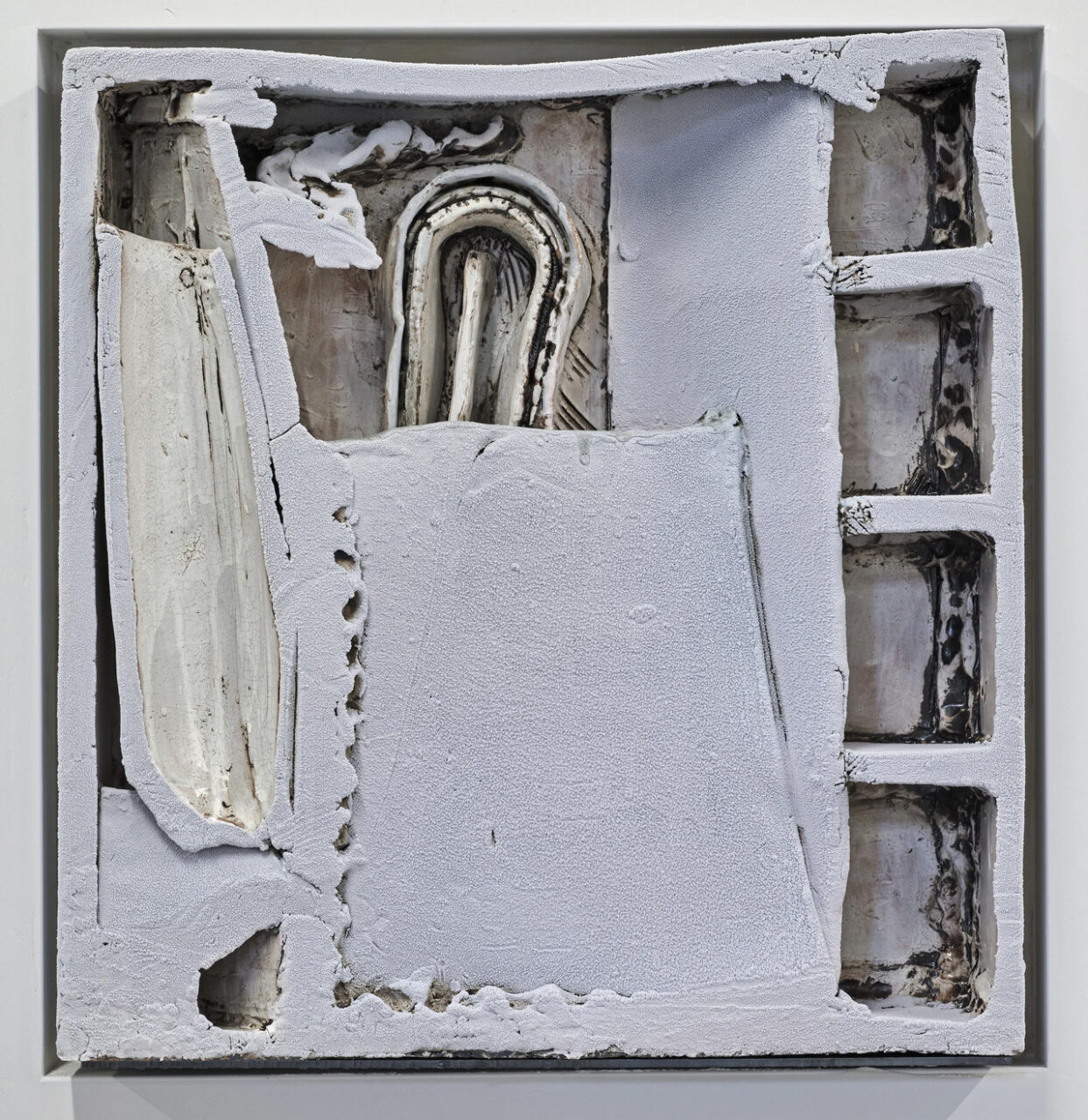
This relationship between construction and openness also informs “Touching Ground”, Shechet’s new series of ceramic sculptures. Through carefully considered installation, the works encourage viewers to move around them, look through their openings and change their perspective. Sculpture becomes an active encounter between object, architecture and body, rather than an experience confined to a single viewpoint.
With “Touching Ground”, Shechet returns to ceramics, a medium that has occupied a central place in her practice and contributed to the renewed visibility of clay within contemporary art. Her approach challenges the historical distinction between craft and fine art, treating clay as a material capable of supporting complex formal, conceptual and spatial investigations.
For this series, the artist revisits terra sigillata, an ancient ceramic technique associated with Greek and Roman tableware. The process involves applying successive layers of highly refined liquid clay particles, which are absorbed into the surface as the material dries. The sculptures are then carefully burnished, producing a luminous, almost polished finish without the use of glaze.
In this process, surface and structure remain inseparable. The finish is not an additional layer applied to conceal the material but an integral part of the clay itself. The resulting surfaces retain a direct relationship with the artist’s physical gestures, connecting the act of making to the object’s final appearance.
Shechet’s interest in this technique also reflects her broader engagement with painting and drawing. Partly inspired by Agnes Martin’s application of thin layers of pigment to canvas, she approaches clay as a medium through which colour, gesture and structure can converge. “Clay is a great drawing material,” Shechet says. “It’s a direct link to my body.”
She describes a process in which clay can be handled, manipulated and assembled into forms that exist somewhere between painting, drawing and sculpture. The pieces are subsequently fired in the kiln, where the material hardens and the provisional becomes permanent. For the artist, this transformation contains an element of wonder: “I think that’s magic.”
The “Touching Ground” works feature rich reds, blacks and oranges, recalling the colours of ancient Greek and Roman ceramics while establishing a contemporary visual language. Their burnished surfaces and open compositions create a sense of meditative calm, yet their formal tensions resist any straightforward reading of serenity.
The relationship between parts, surfaces and structures is central to Shechet’s sculptural language. Her works often develop through a dialogue between contrasting elements, producing compositions that appear provisional, balanced between opposing forces or caught in a moment of transformation.
This approach is reflected in the exhibition’s emphasis on doubling and relational forms. Two-sided compositions, formal pairings and the interplay between different materials establish connections across the exhibition, while the titles introduce additional layers of meaning.
The title “She Said She Said” evokes the circulation of language, the transmission of a rumour and the way an idea changes as it passes from one person to another. A statement is never entirely fixed; it is repeated, interpreted and transformed, acquiring new meanings through each successive encounter.
For Shechet, this process offers a parallel to abstraction itself. Just as words can shift through repetition and reinterpretation, sculptural forms emerge through a continuous process of revision, dismantling and reconstruction. The work is not simply the execution of a predetermined idea but the result of an ongoing exchange between intention and material.
Her titles, frequently marked by wordplay and double meanings, reinforce this openness. Wit and ambiguity become extensions of her visual practice, inviting associations that move beyond the immediate appearance of the objects.
Shechet’s working process combines digital and analogue modelling, technical precision and intuitive experimentation. Her studio in Kingston, New York, contains an extensive collection of paper maquettes, wooden forms, clay slabs and metal components, which serve as references and starting points for new works.
Rather than following a fixed plan, she allows sculptures to develop through successive encounters with materials and forms. Each decision generates new possibilities, and each revision can redirect the work. The final object is therefore not the realisation of a fully predetermined design but the outcome of a sustained dialogue between artist and material.
This approach also connects the metal and ceramic works in the exhibition. Although they differ in scale, weight and technical requirements, both retain the marks of their making. The folds and welds of the metal sculptures find a parallel in the surfaces and assembled forms of the clay works, establishing a continuity between seemingly distinct materials.
The exhibition also includes artist-designed aluminum folding chairs, extending Shechet’s longstanding practice of incorporating seating into her presentations. These functional objects offer visitors the opportunity to pause, observe and spend time with the sculptures.
Photo left & right: Arlene Shechet, Jewel, 2026, welded aluminum and epoxy-urethane paint system, 11′ 1″ × 10′ 1/2″ × 67″ (337.8 cm × 306.1 cm × 170.2 cm), approximately, © Arlene Shechet, Courtesy the artist and Pace Gallery
Info: Pace Galleries, 540 West 25th Street and 508 & 510 West 25th Street, New York, NY, USA, Duration: 11/9-24/10/1026, Days & Hours: Tue-Sat 10:00-18:00, www.pacegallery.com/
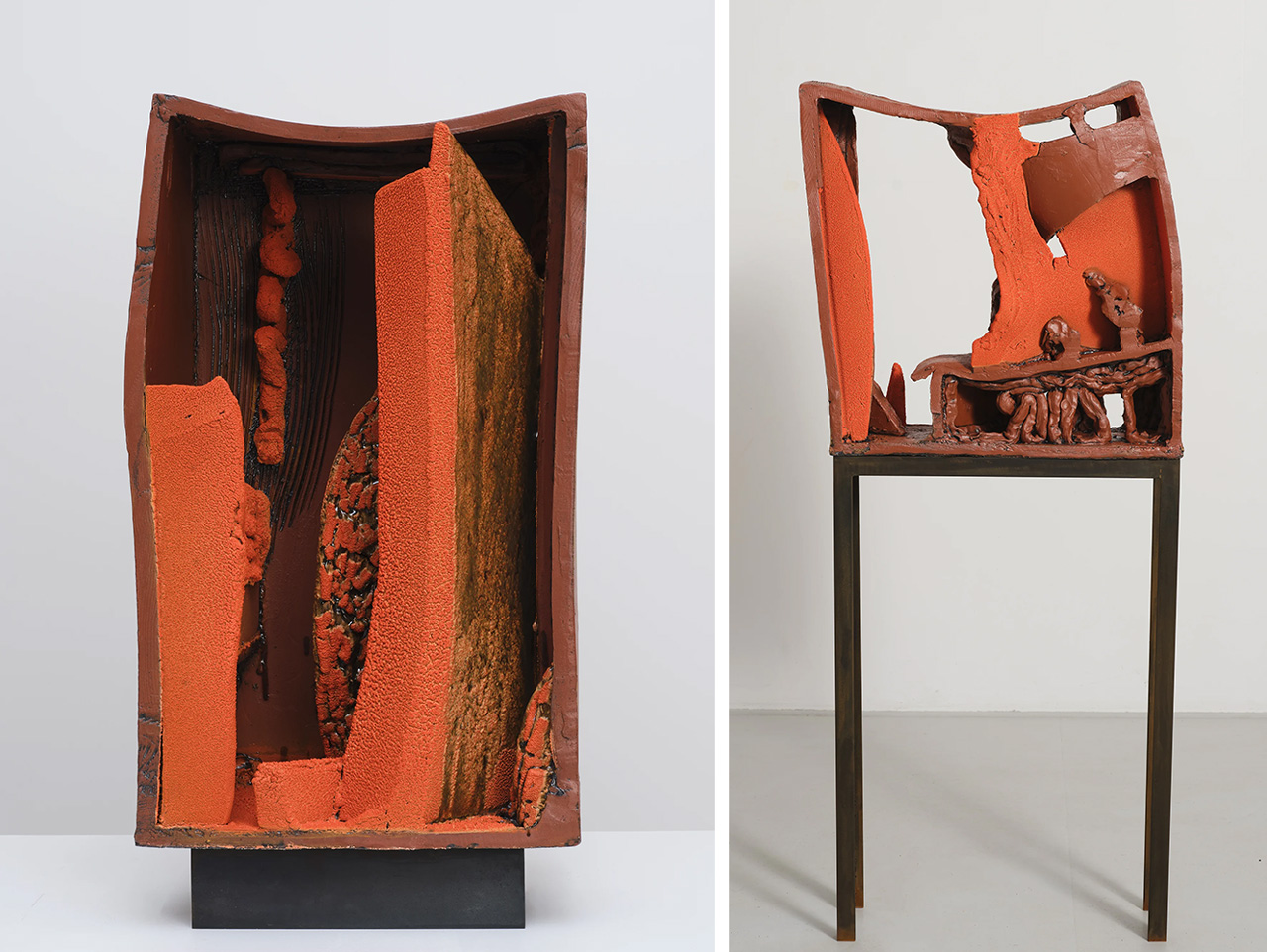
Right: Arlene Shechet,Touching Ground: Statues and Vases , 2026, Terra sigillata, glazed ceramic and steel, Overall: 55-3/16″ × 23-1/2″ × 8-1/2″ (140.2 cm × 59.7 cm × 21.6 cm) Sculpture: 23-3/16″ × 23-1/2″ × 8-1/2″ (58.9 cm × 59.7 cm × 21.6 cm) Stand: 32″ × 21-3/16″ × 6-5/8″ (81.3 cm × 53.8 cm × 16.8 cm) , © Arlene Shechet, Courtesy the artist and Pace Gallery
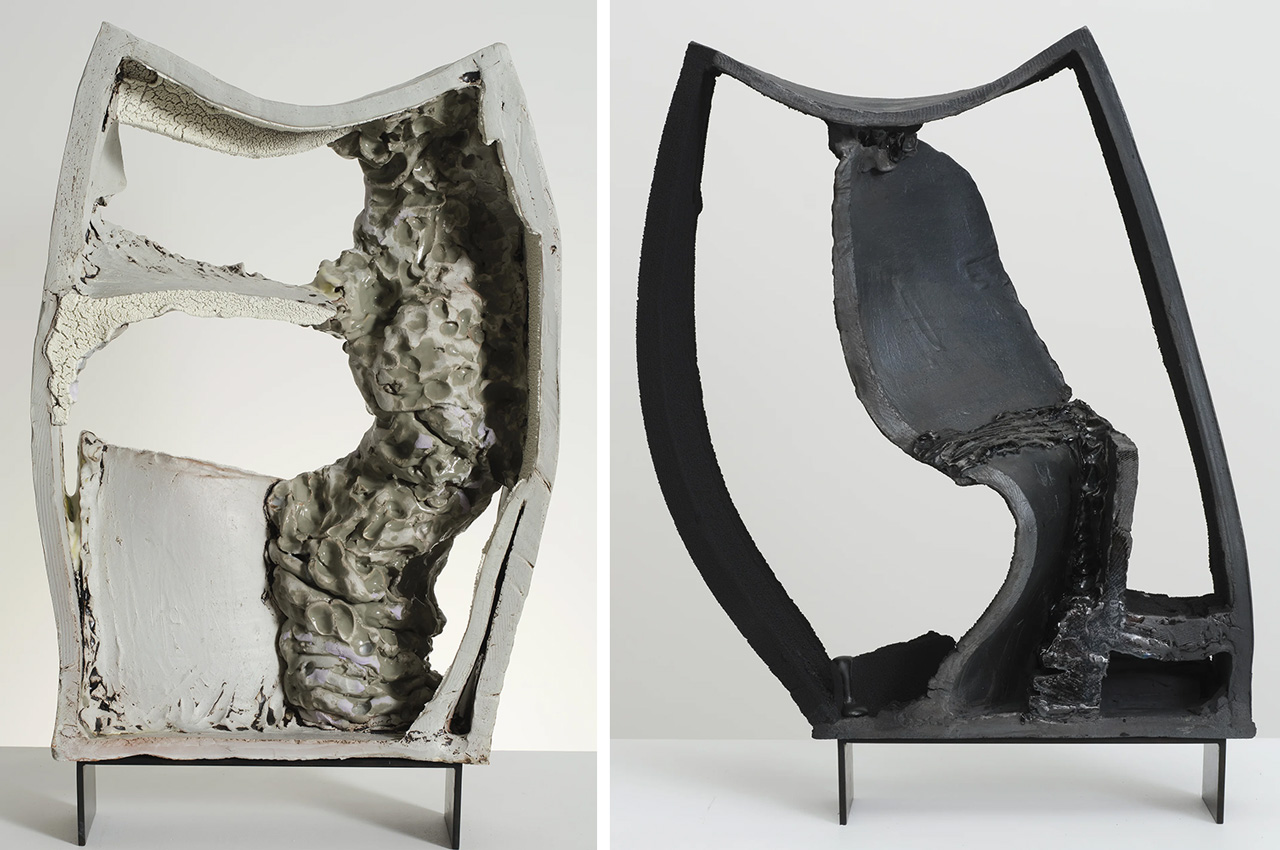
Right: Arlene Shechet, Touching Ground: Statue, 2026, Terra sigillata, glazed ceramic and steel , Overall: 26-5/8″ × 20-1/2″ × 8″ (67.6 cm × 52.1 cm × 20.3 cm) Sculpture: 23-3/8″ × 20-1/2″ × 8″ (59.4 cm × 52.1 cm × 20.3 cm) Stand: 3-1/4″ × 12-13/16″ × 4-1/2″ (8.3 cm × 32.5 cm × 11.4 cm) , © Arlene Shechet, Courtesy the artist and Pace Gallery