PRESENTATION:Ghada Amer Sculpture Since 1991
Ghada Amer’s expansive, ambitious practice is a perpetual pursuit of new forms and methods of expression. Working across painting, sculpture, ceramic, and garden installation, Amer appropriates and reinterprets the predominantly masculine tropes of Western art history. Stridently, straightforwardly political in her approach, Amer reimagines the feminized materials and subjects of such histories in order to insert herself into the canon.
By Efi Michalarou
Photo: Es Baluard Museu Archive
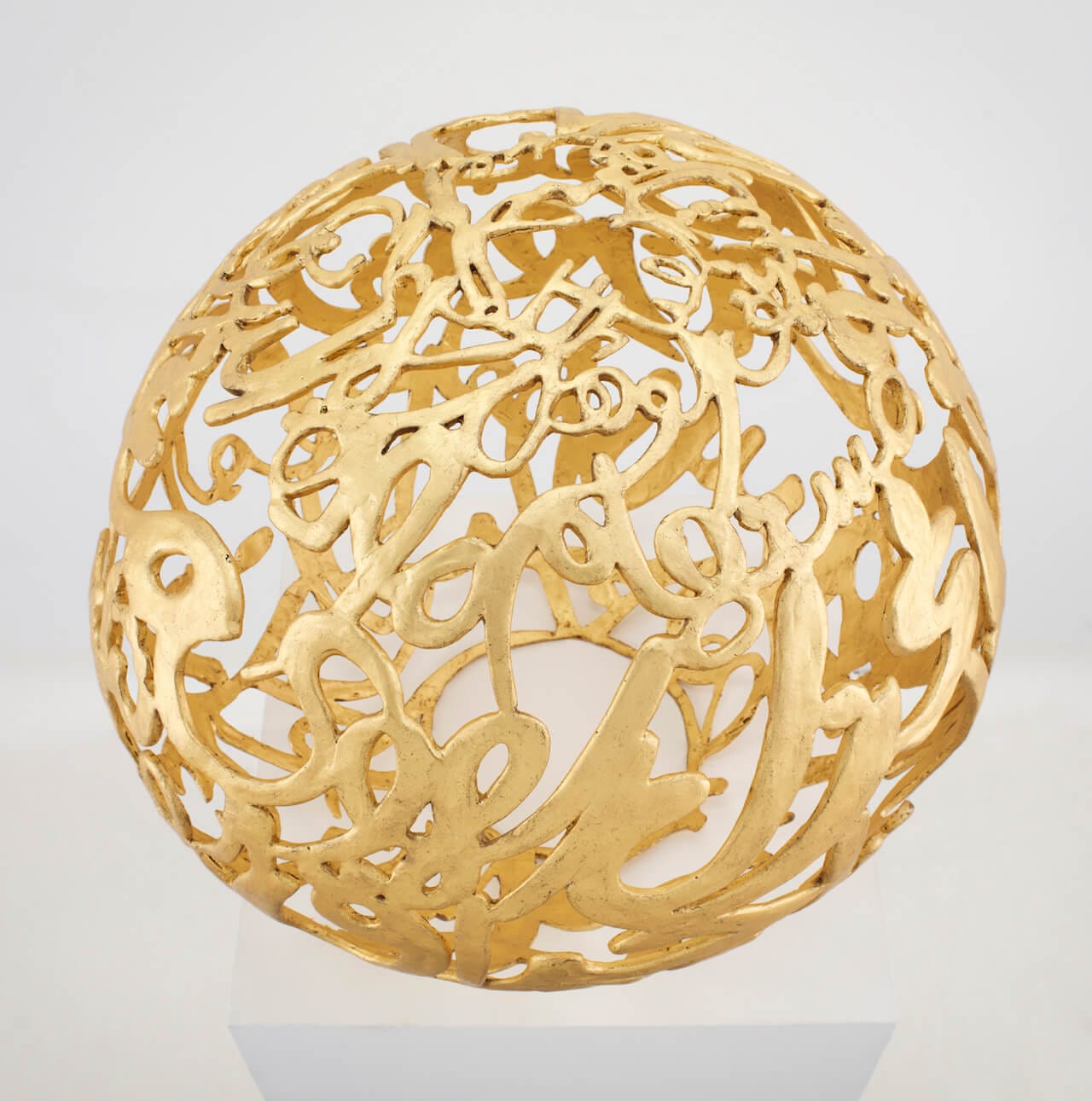
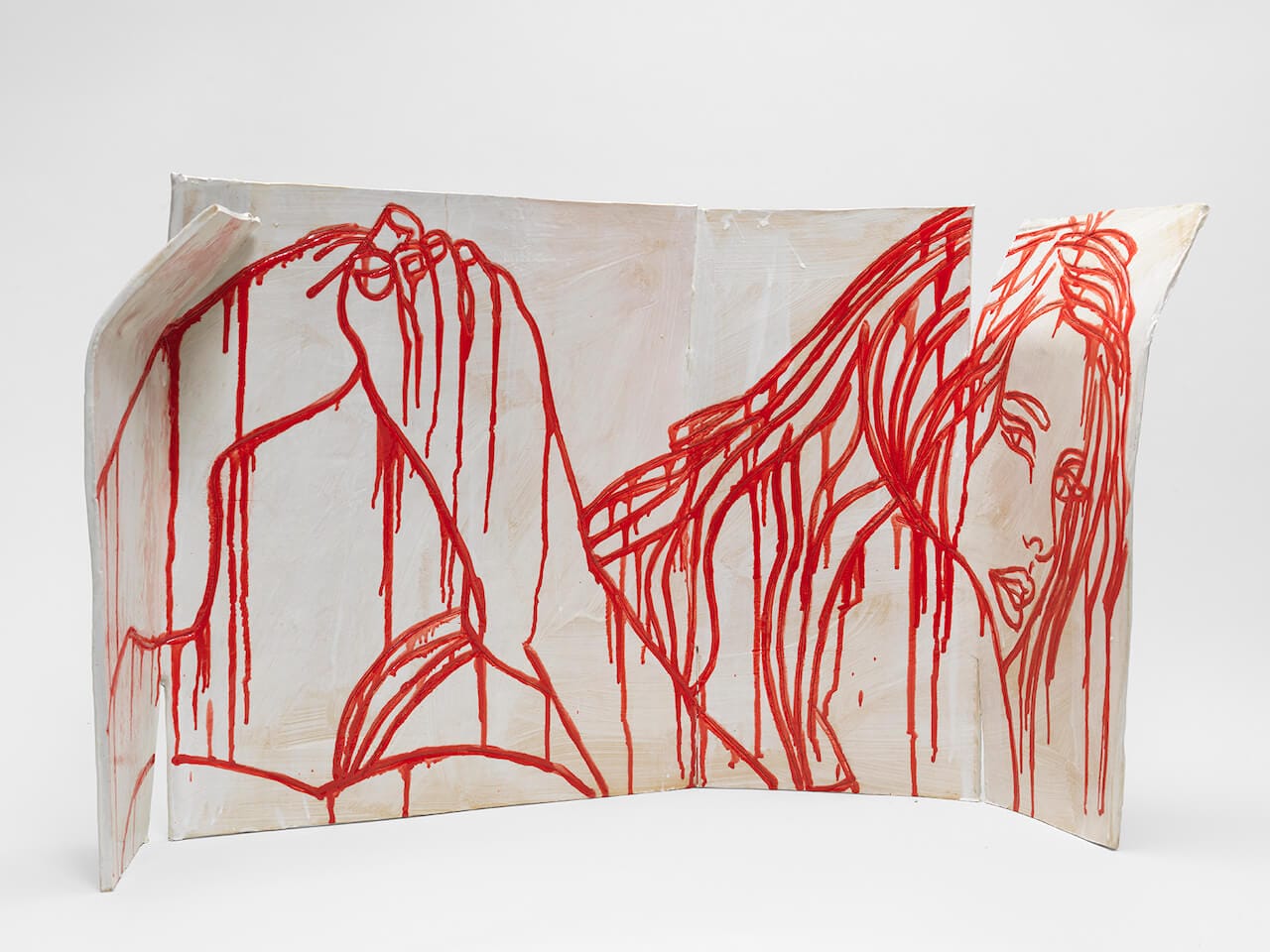
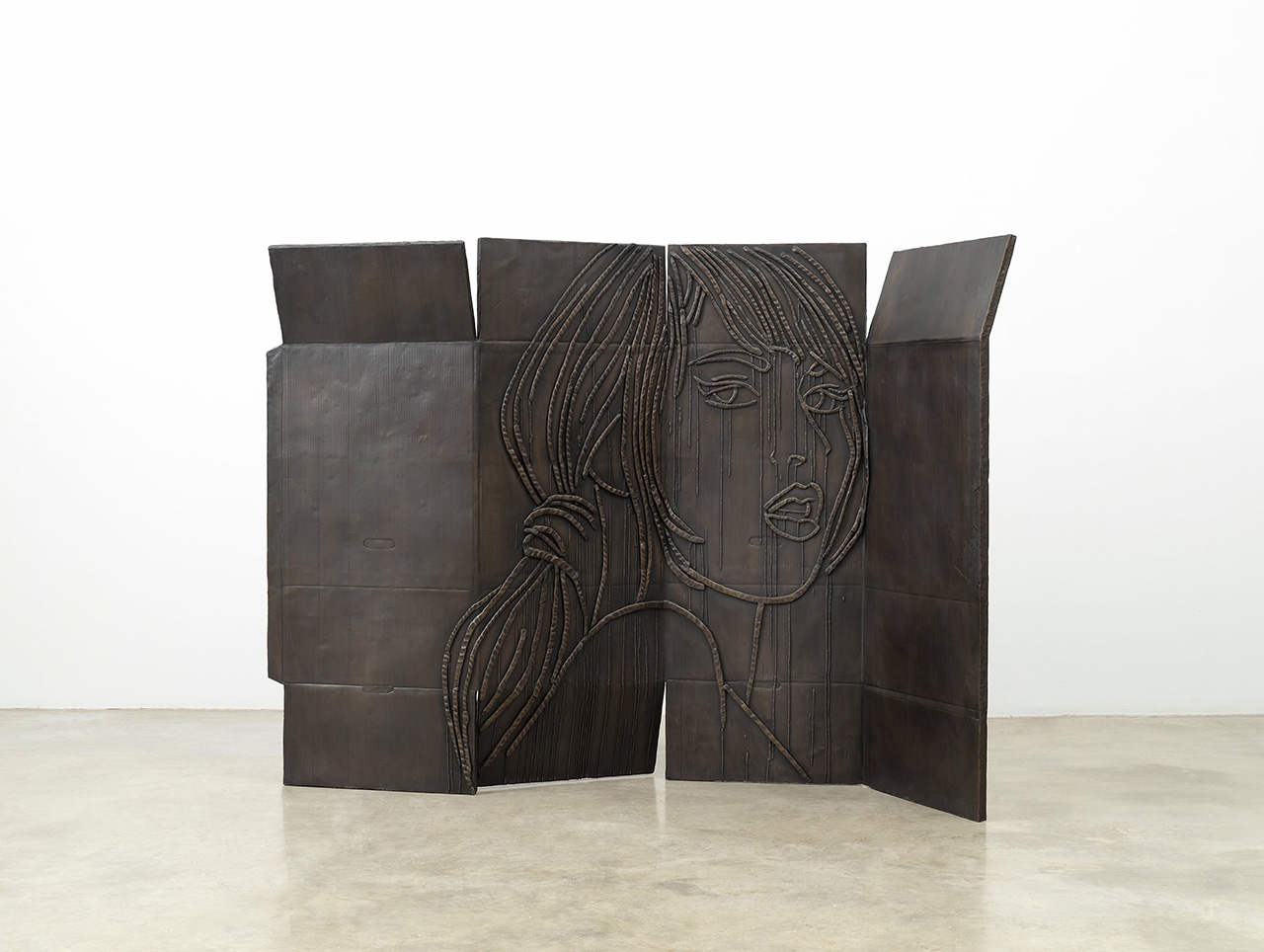
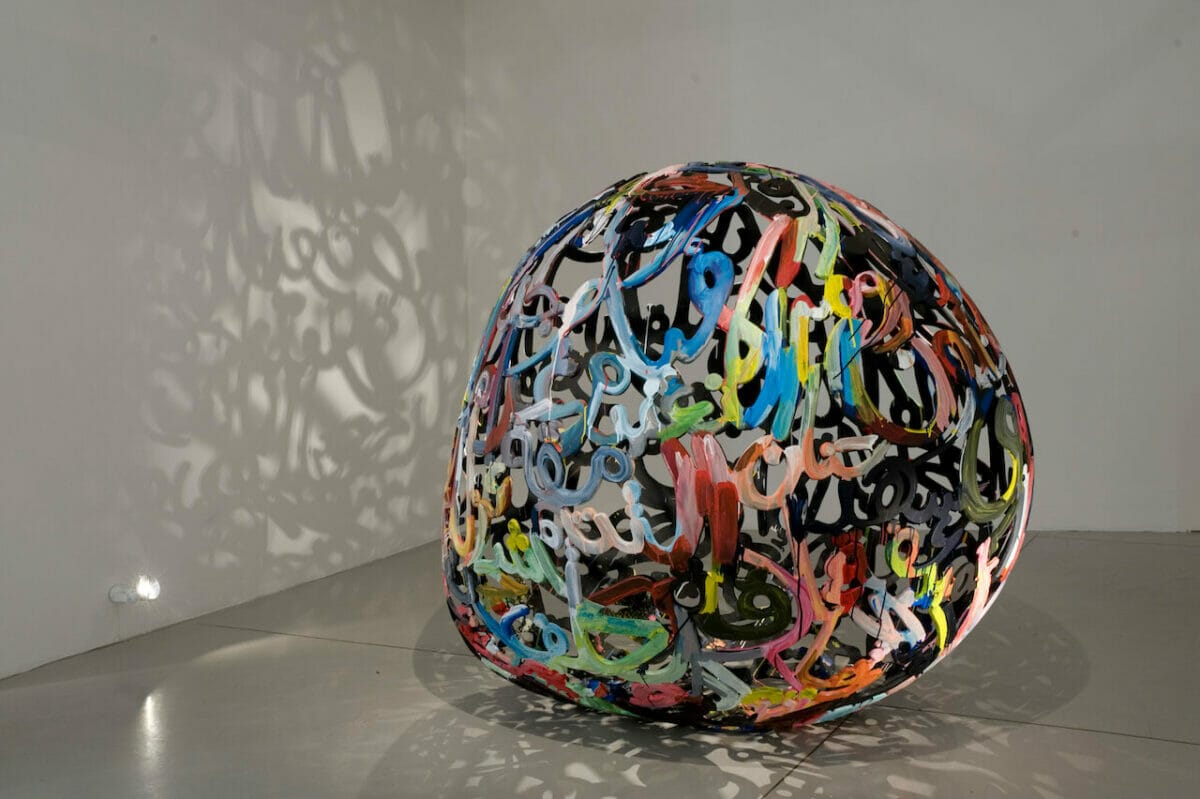
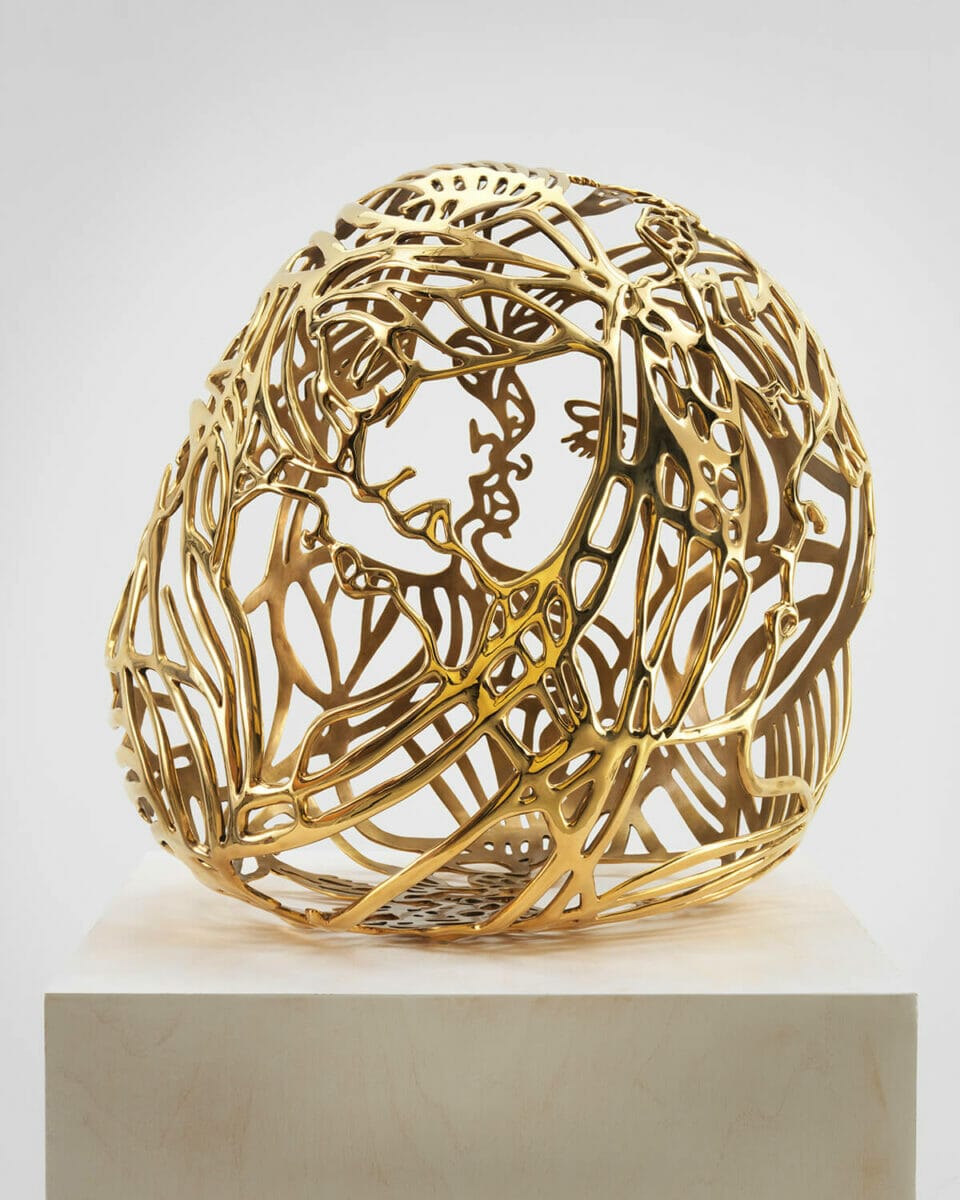
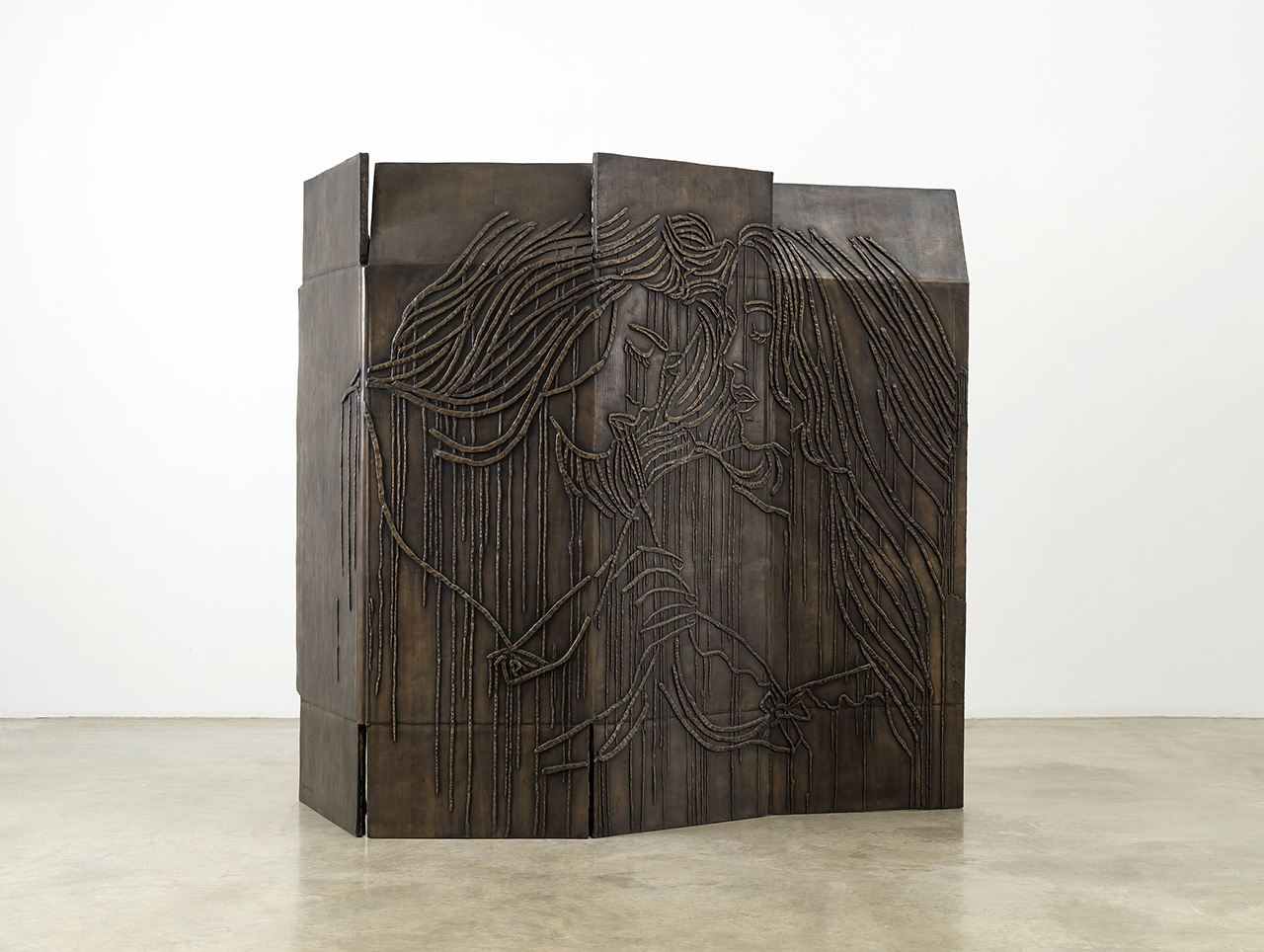
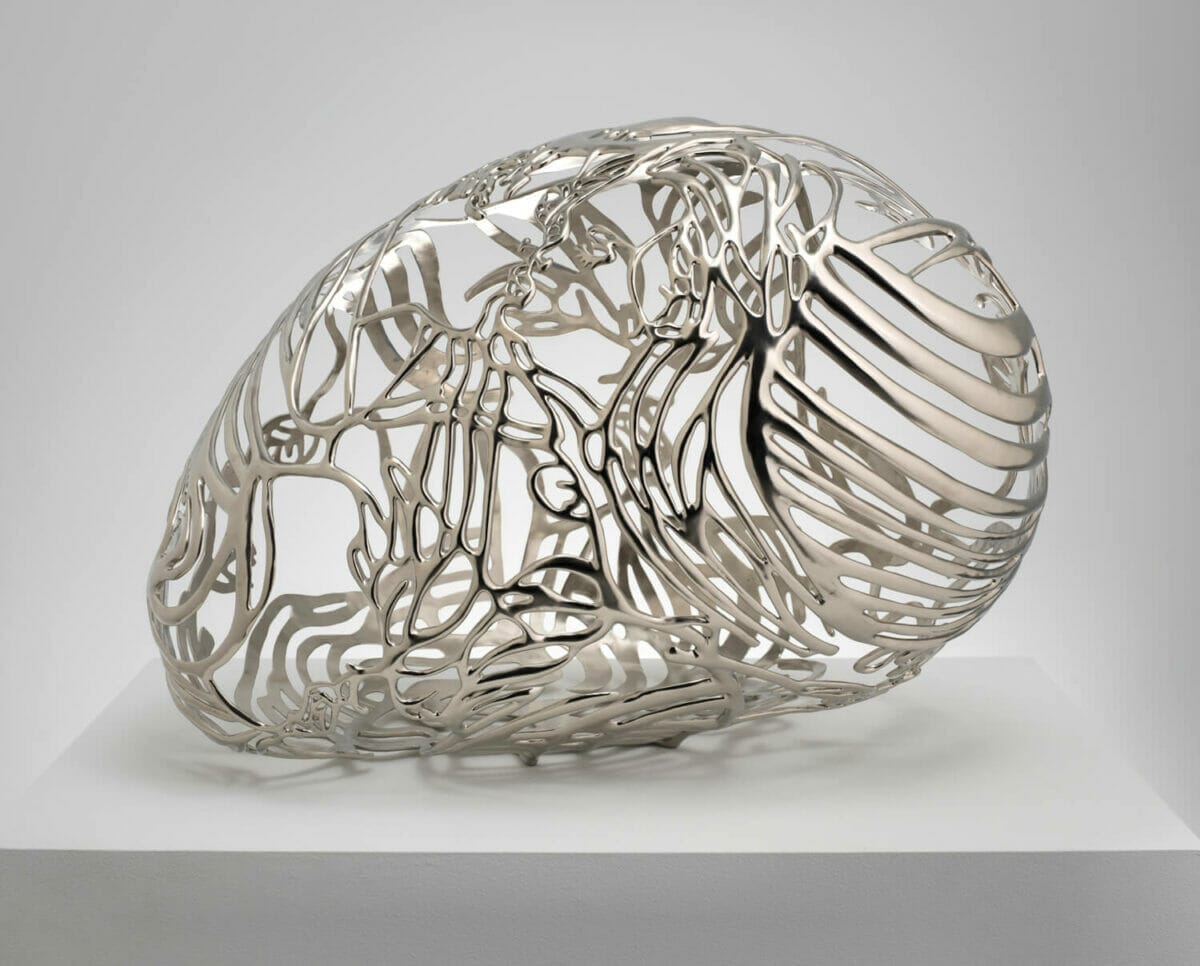
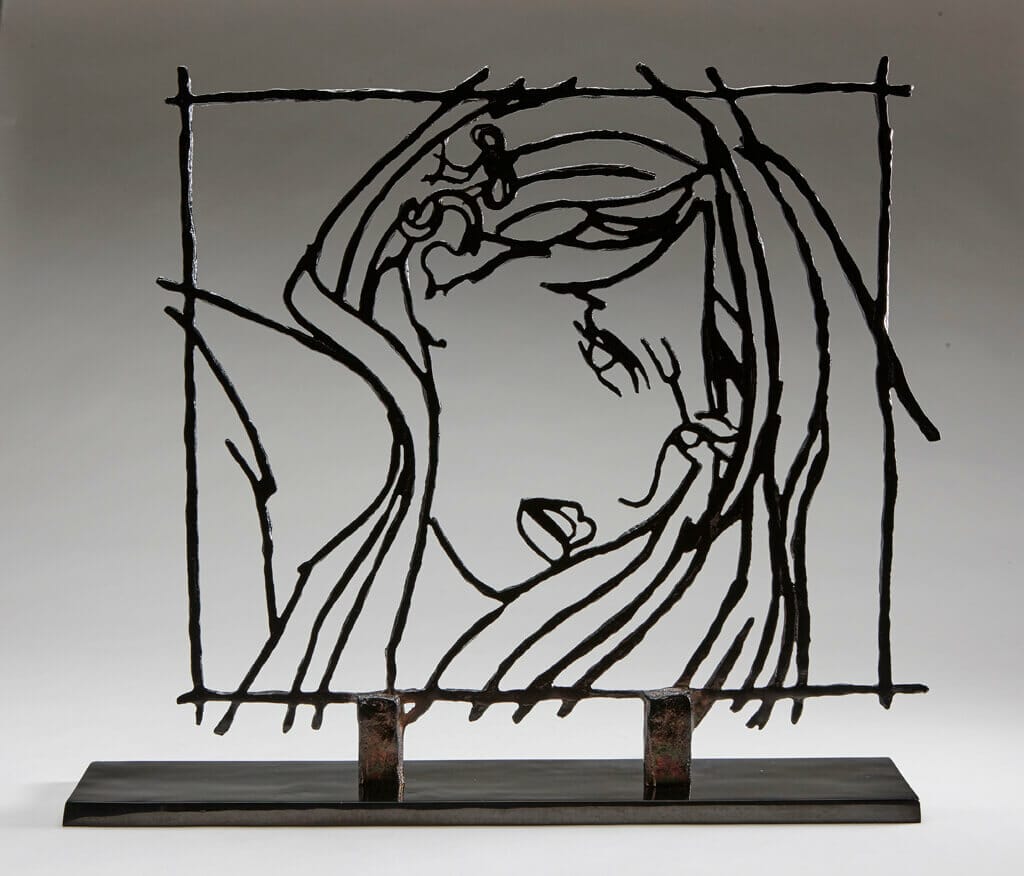
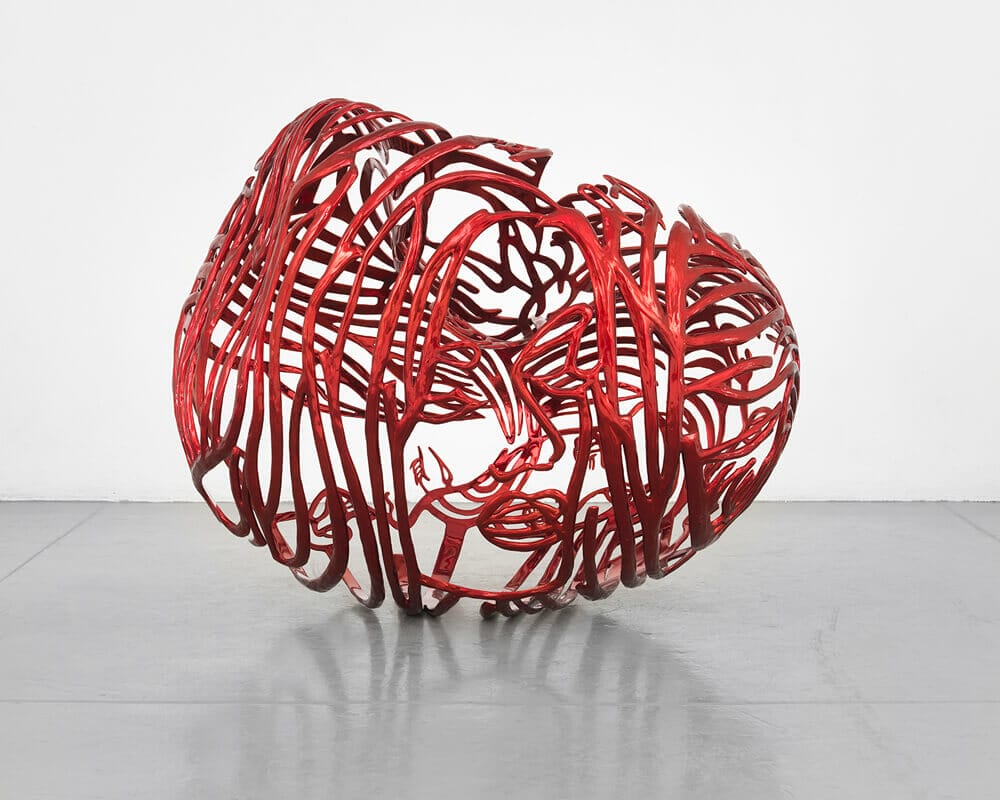
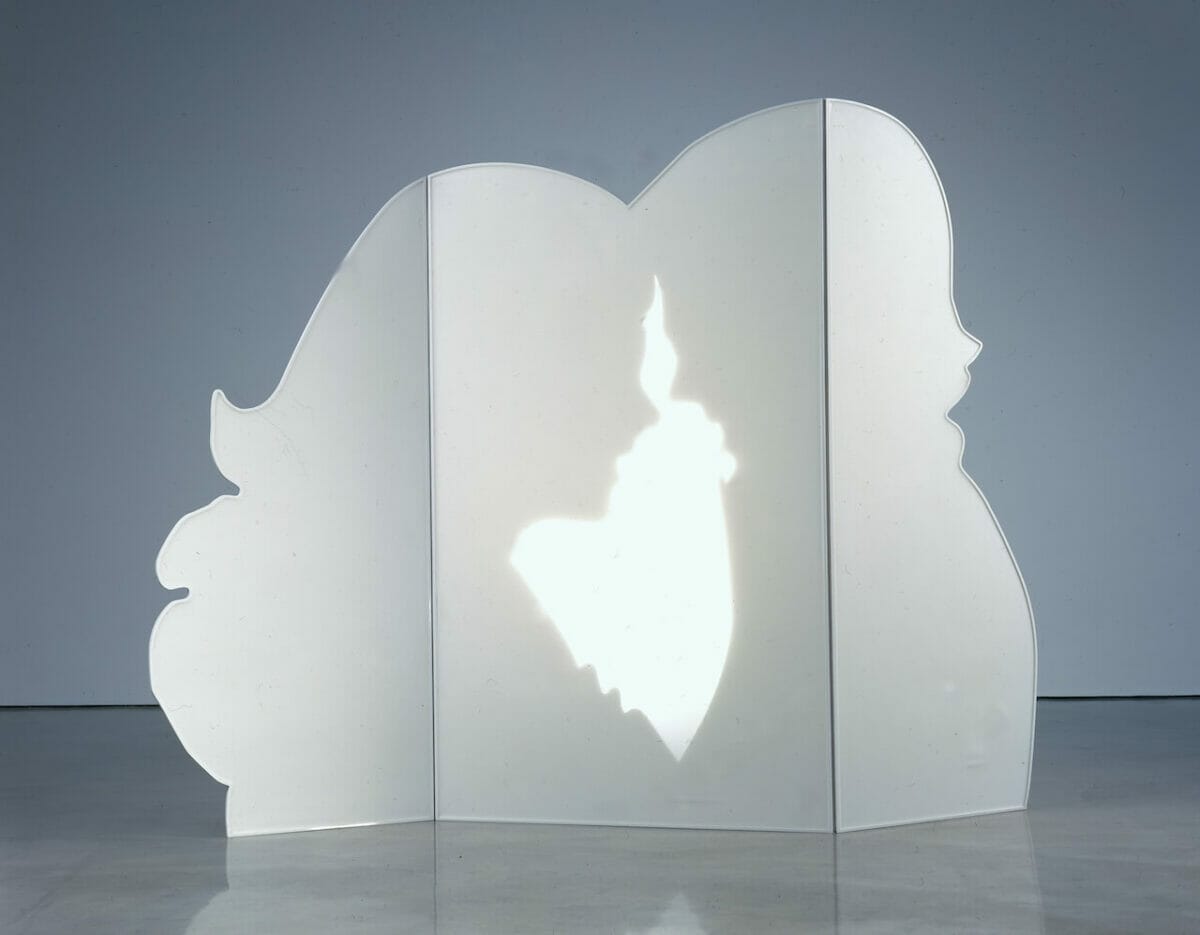
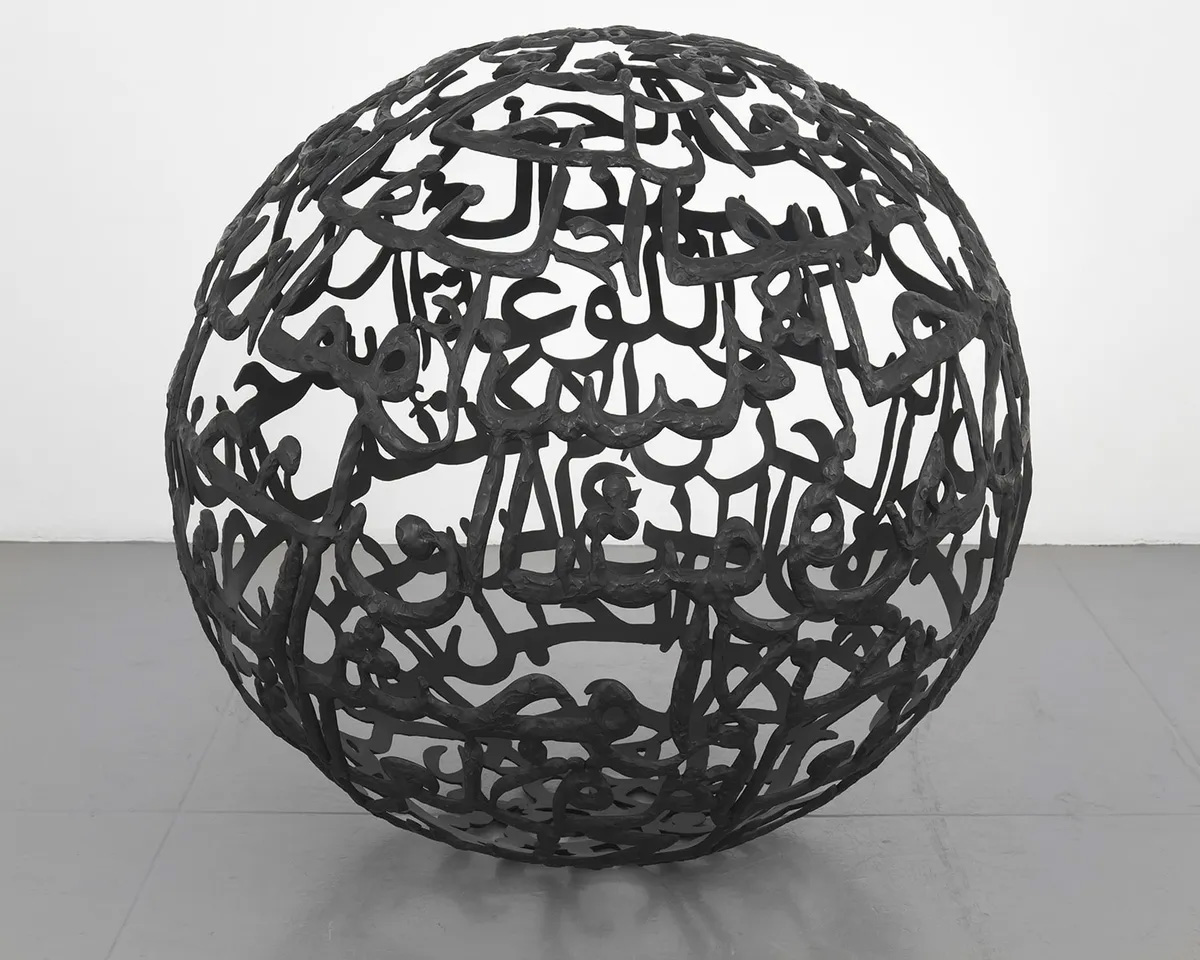
The survey exhibition “Ghada Amer. Sculpture Since 1991” brings together over three decades of the artist’s foundational three-dimensional work, framing human perception not as an isolated visual reaction, but as an active, physical, and spatial negotiation. The layout of the exhibition is meticulously arranged to guide the viewer’s body through a series of conceptual barriers and fluid encounters. Her “paravents”, or folding screens, are positioned across the museum galleries as solid architectural interventions that simultaneously protect, contain, and reveal explicit relief figures. By forcing visitors to navigate around these screens and step in close proximity to inspect the relief surfaces, the exhibition layout compels an active physical commitment. Interspersed among these spatial structures are dynamic water fountains developed in collaboration with Pere Coll’s pottery workshop in Mallorca, alongside raw ceramic forms and solid bronzes. Together, the curated spaces within Es Baluard Museu transform viewing into a temporal process where movement, physical distance, and spatial boundaries dictate how meaning is revealed or withheld.
Born in Cairo, raised in Nice, and based in New York for several decades, Ghada Amer approaches this artistic environment from a deeply transcultural perspective. Operating across geographic and cultural borders, she resists the temptation to issue direct, didactic political statements. Instead, Amer embraces ambiguity as a revolutionary position, believing in the power of visual beauty and critical insight to expose societal injustice and cultural contradiction. Her work thrives within what philosopher Jacques Rancière termed the “in-between space”—a threshold or passage existing between opposing extremes. In Amer’s practice, this in-between becomes a fertile realm of difference, bridging distinct territories, genders, modes of facing the world, and artistic disciplines. Rather than offering straightforward declarations, she crafts spaces for deep reflection, where personal, political, cultural, and social spheres overlap so that every embroidered thread, molded clay contour, or cast bronze surface carries profound meaning.
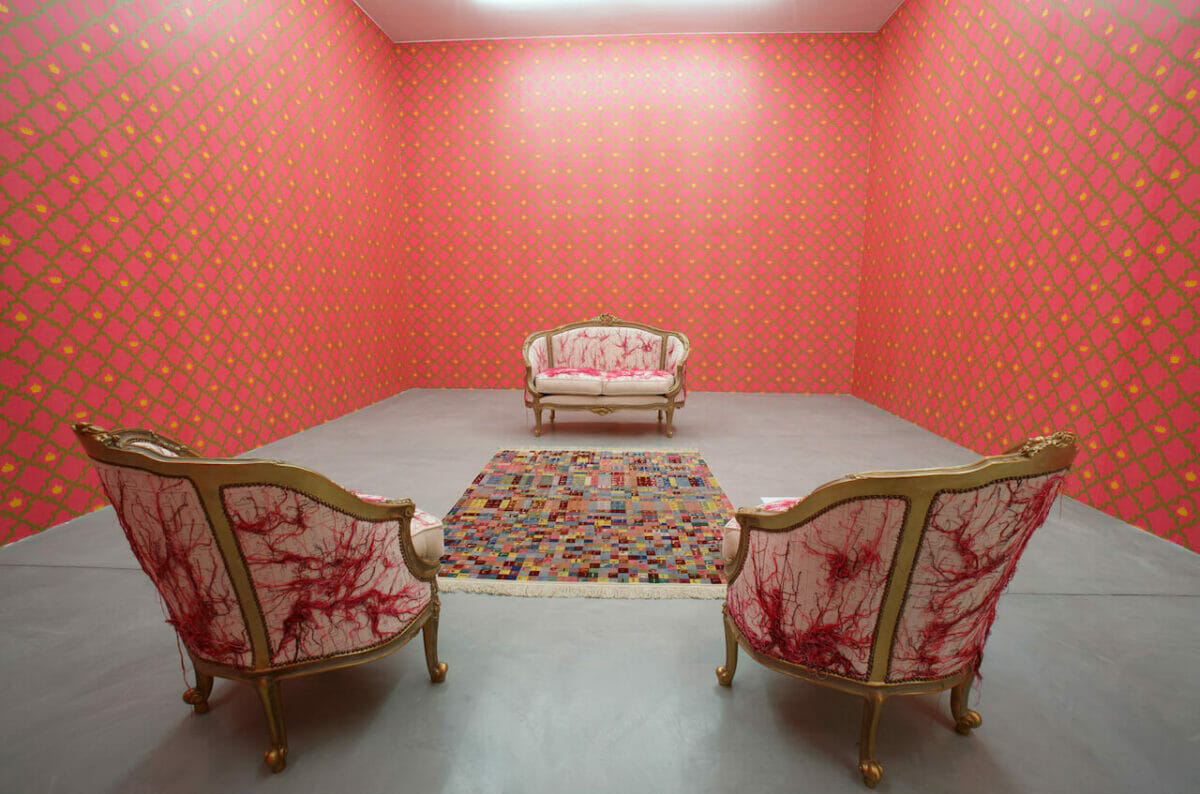
This conceptual foundation was first forged in Amer’s renowned embroidered paintings, which continue to inform her sculptural language. In these works, she transcribes erotic and pornographic imagery—sourced from commercial media targeted at men—onto canvas using needle and thread. By adopting embroidery, a technique historically taught to young women to enforce submissiveness, domesticity, and quiet patience, Amer reclaims the medium as a tool of subversion. Rather than tying off her threads cleanly on the reverse side, she allows long, unknotted, colorful bundles of string to cascade across the face of the canvas. These dangling threads mimic the gestural, spontaneous paint drips of Abstract Expressionism, a movement historically dominated by heroic male figures. The dense veil of thread blurs the explicit contours beneath, encrypting the iconography into a field of abstract color and redirecting visual pleasure away from voyeuristic consumption toward the tactile delight of the textile itself. Through this gesture, weaving moves far beyond the domestic realm to become a potent political tool against forgetting.
As her practice expanded beyond the two-dimensional frame, these same strategies of concealment and revelation materialized into three-dimensional space through her architectural and sculptural works. The folding screens featured throughout the exhibition act as physical manifestations of this tension, utilizing what was traditionally designed as a domestic privacy shield to upfront present unabashedly explicit figures in relief. What was originally conceived to hide becomes the exact instrument of revelation, causing a disconcerting shift in viewer awareness. A similar dynamic occurs in her aquatic works, where the continuous flow of water across ceramic fountain basins fractures reflected images, sheltering their mystery while reinforcing their material density. In stark contrast to these fluid, time-suspended pieces stand her heavy bronze sculptures. Where ceramics and water yield to unpredictability and motion, her bronzes possess a dense structural stability that visually parodies the rigid, unwavering ideological convictions that the artist continuously seeks to dismantle.
Grounding all of her sculptural production is an unwavering connection to the act of painting itself. This painterly impulse is most vividly realized in her ceramic sculptures, such as her “Thoughts” series, which draw upon the ancient heritage of Egyptian polychrome sculptures whose worn pigments still bear witness to the passage of time. In working with clay and glazes, Amer engages with a medium defined by its physical unpredictability during firing. Glazes bleed, run, and pool across folded clay slabs in uncontrollable ways, allowing color and texture to achieve a heightened poetic intensity. In these ceramic works, painting loses its centralized authority and begins to dissolve into three-dimensional form. Clay becomes a spatial canvas, and the unpredictable physical behavior of the material allows Amer to accompany her thoughts through process, creating sculpted paintings or painted sculptures that embody a radically contemporary presence.
When contextualized within the broader lineage of contemporary feminist craft, Amer’s distinctiveness lies in her refusal to offer moralizing or celebratory narratives. Where first-wave feminist artists like Faith Ringgold utilized story quilts to center Black history through domestic storytelling, Miriam Schapiro elevated handiwork through decorative “femmage” collages, and Tracey Emin employed hand-sewn banners for raw autobiographical confession, Amer utilizes thread as an abstract, painterly gesture of encrypted ambiguity. Similarly, where Judy Chicago used painted porcelain plates in “The Dinner Party” for explicit anatomical symbolism and Betty Woodman pushed pottery toward architectural cubism, Amer’s ceramics reject fixed iconography altogether. Instead of delivering an easily consumable message, Amer utilizes aesthetic beauty, vibrant glazes, and veiled surfaces to entice viewers into an “in-between space” where seduction, resistance, and critical awareness coexist, emphasizing the inherent difficulty of understanding what we see in the contemporary world.
Photo: Ghada Amer, Salon Courbé, © & Courtesy the artist
Info: Curators: Clara Garau and David Barro, Fundació Es Baluard Museu d’Art Contemporani de Palma, Plaça de la Porta de Santa Catalina 10, Palma, Mallorca, Spain, Duration: 18/92026 -31/1/2027, Days & Hours: Tue-Sat 10:00-20:00, Sun 10:00-15:00, https://esbaluard.org/