ART CITIES: N.York-Teresa Margolles
Teresa Margolles’s work examines the social causes and consequences of violence. For her, the morgue accurately reflects society, particularly that of her home country where deaths caused by drug-related crimes, poverty, political crisis and the government’s inept response has devastated communities. She has developed a unique, restrained language in order to speak for her silenced subjects, the victims discounted as ‘collateral damage’ of the conflict. Margolles holds a degree in Forensic Medicine and Communication Science from the Universidad Nacional Autónoma de Mexico.
By Efi Michalarou
Photo: MoMA Archive
Teresa Margolles’ first US large-scale museum exhibition titled “En el lugar de los hechos (At the Scene)” features several room-sized installations and a new commission. The artist presents sculptures, photographs, and video made over the past three decades throughout the MoMA PS1 galleries. Trained as a forensic pathologist and a photographer, Margolles has created work that examines the implications of transnational violence, with particular attention to the US-Mexico border. Across mediums, her works trace disappearances, murders, political displacements, and societal neglect through methodical research, site-responsive interventions, and a radical rethinking of the memorial.
In the early 1990s Margolles, along with other artists, formed the performance group and death metal band SEMEFO (the acronym for Mexico’s Forensic Medical Service). By the end of the decade, Margolles had begun working as an individual artist, focusing on stories and materials she found through her work in the morgue system, where she became attuned to the increasing violence in the city.” In Air” (2003/26), the gallery’s atmosphere is humidified using water that had been mixed with organic materials from sites where violence occurred. The work is closely related to “Vaporization” (2001), a signature work that Margolles showed at MoMA PS1 in 2002 in the context of the exhibition “Mexico City: An Exhibition about the Exchange Rates of Bodies and Values”. In the exhibition, Air references the artist’s longstanding history with MoMA PS1, but eliminates the visible fog of Vaporization, offering instead a more spare, distilled experience.
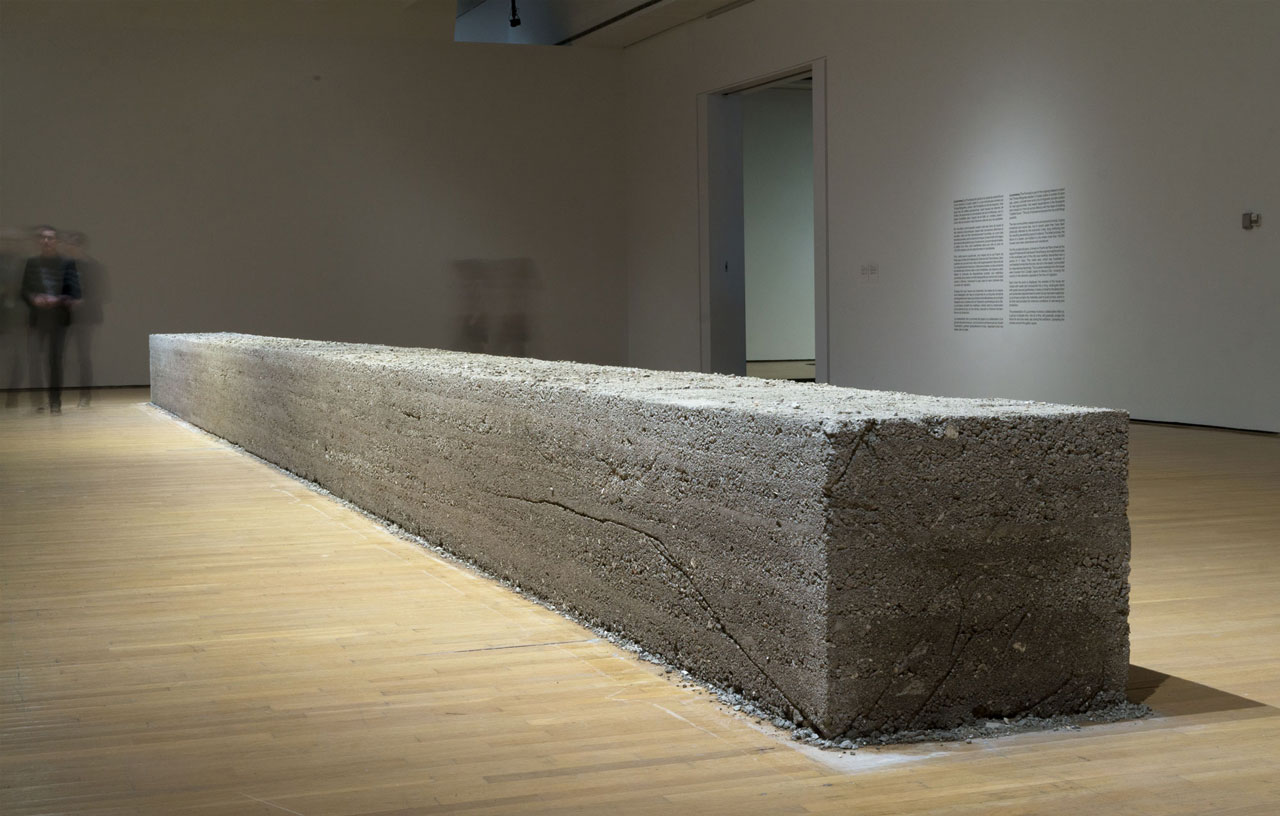
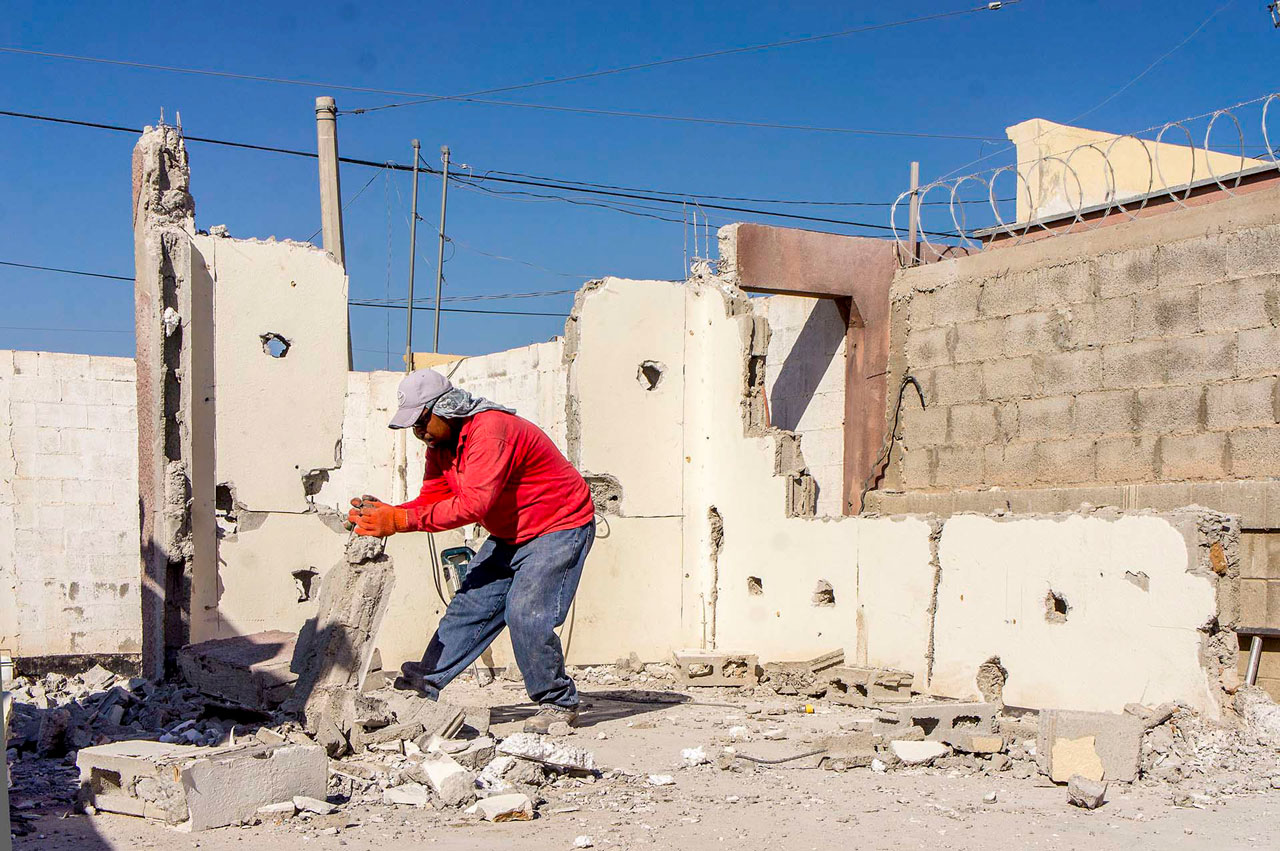
By the mid 2000s Margolles had begun a long-term research journey in Ciudad Juárez, a city experiencing high rates of femicides. There, she documented the desert landscapes, among other spaces, where murdered women had been found. The centerpiece of the exhibition is “La Promesa” (2012), a monumental sculpture created after Margolles acquired a house that had been abandoned by a family, together with all the belongings they left behind. Margolles carefully disassembled the home over 11 days and brought its debris to Mexico City. This material was used to create a long geometric barrier where, for an hour a day, participants gradually dissolved the sculpture into dust. The installation at MoMA PS1 consists of 20 tons of rubble, a fraction of the house’s total weight, alongside archival materials that document the house’s demolition and its original context of border violence. The title of the work,” La Promesa”, conjures the unfulfilled promises of macroeconomic policies, property ownership, and familial protection. While many of Margolles’s works deal with systemic harm along the US-Mexico border, the upcoming presentation speaks about broken promises in a way that potentially encompasses different stories and contexts. Along these lines, other works in the exhibition directly address the ongoing violence in the US. In “El agua de la ciudad, Dallas” (2016), for example, volunteers carefully clean the sites where violent murders took place in the city; each performance marks the site of violence and mourns the victim’s death.
Across varied scales, Margolles utilizes found objects to visualize the forces that underlie and enable violence, giving form to the magnitude of its ramifications. To create Receipt (2020), Margolles bought a box of 25 Winchester 12-gauge shells for $5.93 in the Cielo Vista Walmart in El Paso, Texas, four months after a white nationalist killed 23 people there. She has enlarged the receipt of this purchase to poster size, which audiences can take from a stack. Through such conceptual strategies, Margolles’s artworks bring pressing systemic issues into public view, materializing the ways violence permeates everyday life with feelings of loss.
MoMA will devote a second-floor collection gallery to Margolles’s “Aproximación al lugar de los hechos (Approaching the Scene)” (2026). The work consists of a large-scale sculpture made of seven heated steel plates, on which water—imbued with organic substances recovered from sites of violence—drips onto the center of each plate, producing a hissing sound and visible steam. The work inflects Minimalist forms with both humanity and danger
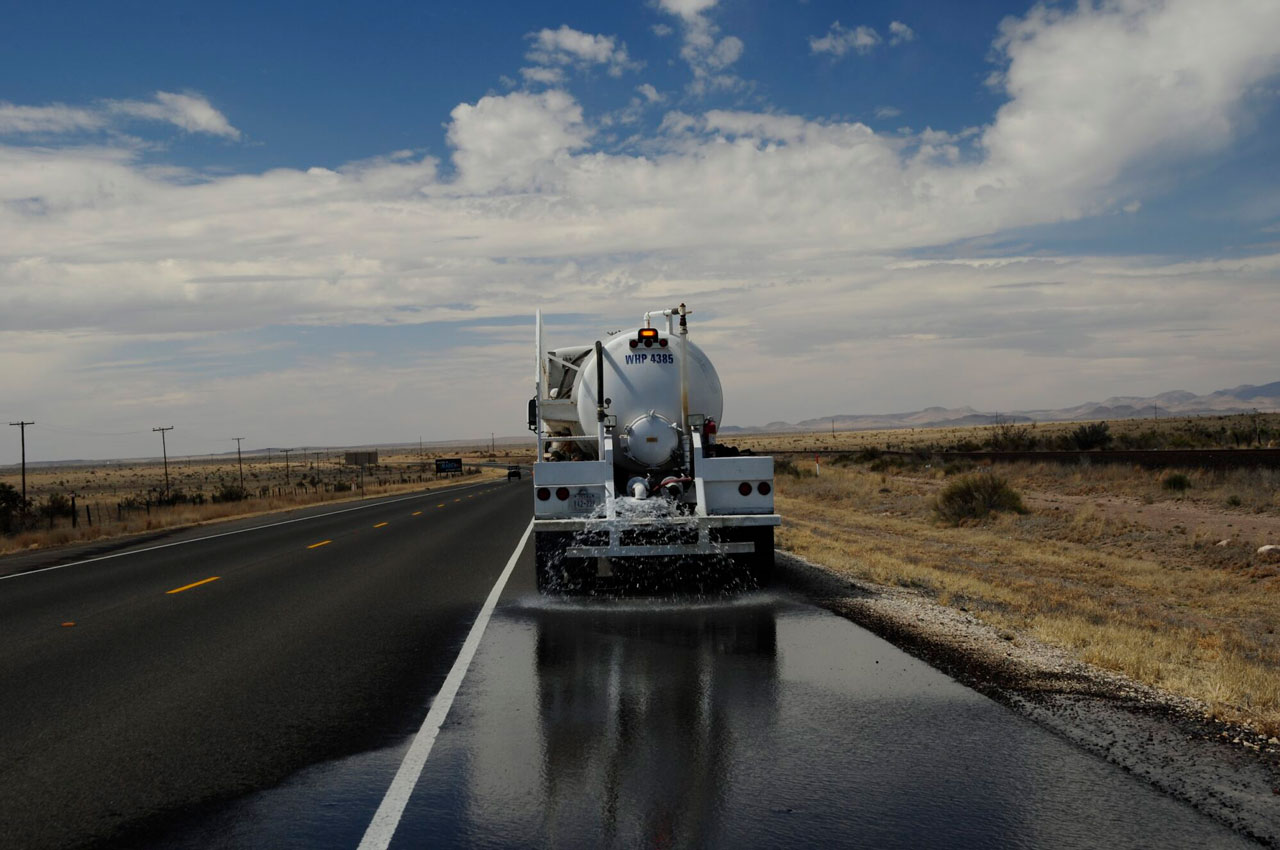
Photo: Teresa Margolles, Irrigación (Irrigation). 2010. Single channel video, color, sound. 34’ 12”. Courtesy the artist and mor charpentier, Paris. © 2026 Teresa Margolles
Info: MoMA PS1, 22-25 Jackson Avenue, Queens, New York, NY, SA, Duration: 24/9/2026-8/2/2027, Days & Hours: Mon, Thu-Fri & Sun 12:00-18:00, Sat 10:00-18:00, www.momaps1.org/