PHOTO:Taking Back Our Space-Photographic Perspectives
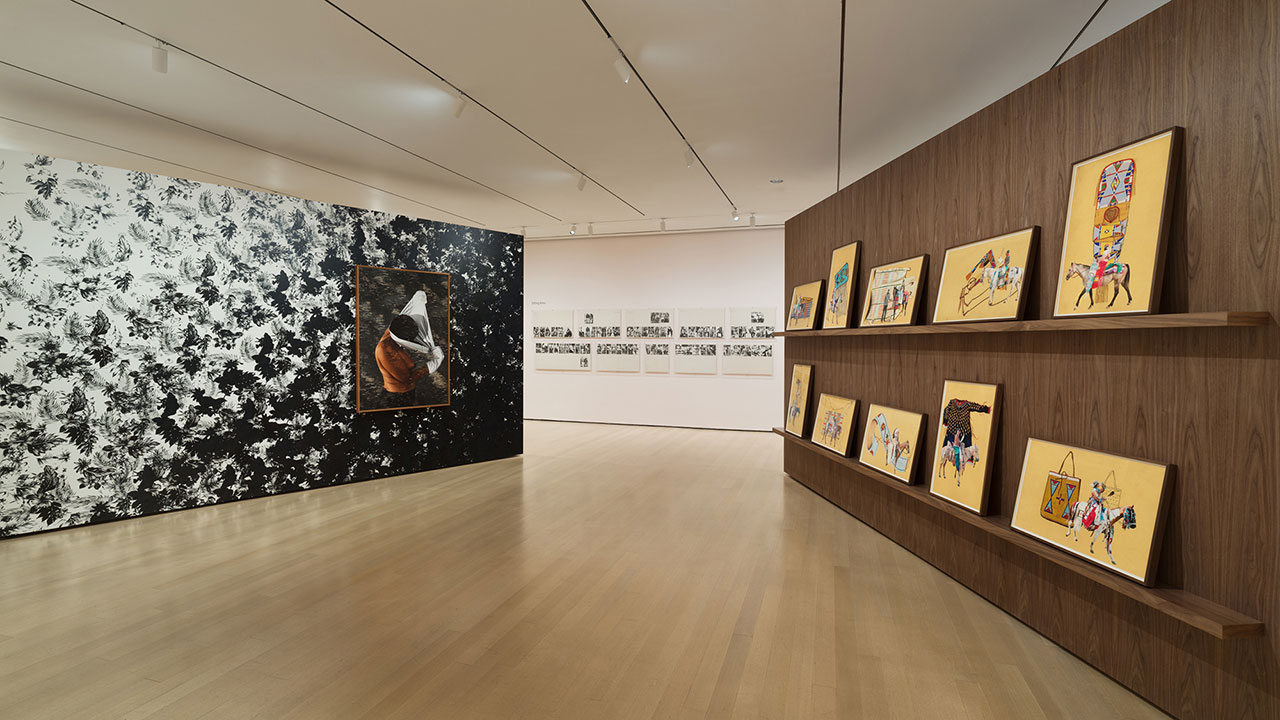
The exhibition “Taking Back Our Space: Photographic Perspectives”, present eight artists who use the photographic medium to explore the relationship between bodies and space from intersectional feminist perspectives. This exhibition brings Marianne Wex’s 1977 feminist photographic project “Let’s Take Back Our Space: ‘Female’ and ‘Male’ Body Language” as a Result of “Patriarchal Structures”, which MoMA acquired in its entirety in 2018, into dialogue with recent works by seven contemporary artists.
By Dimitris Lempesis
Photo: MoMA Archive
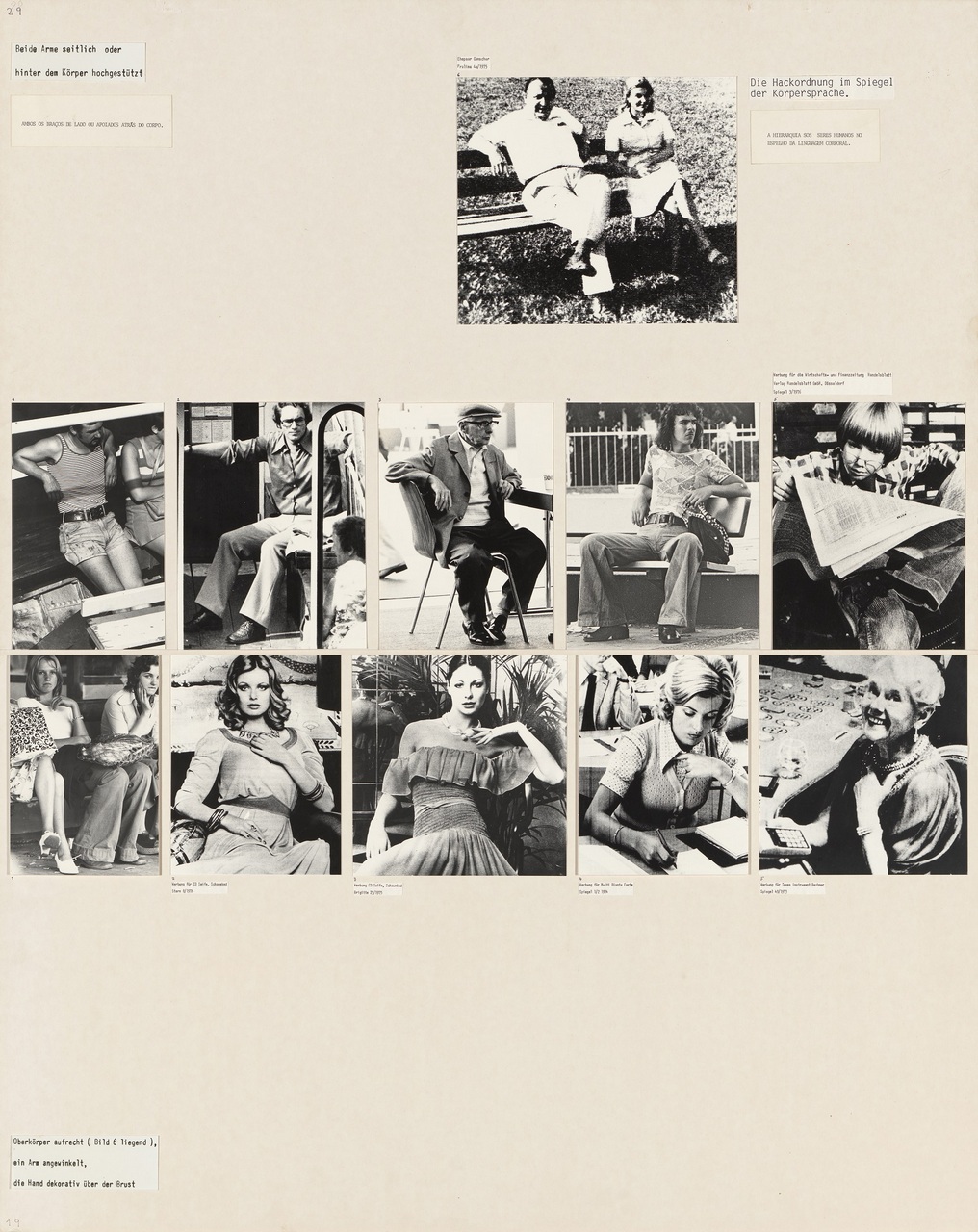
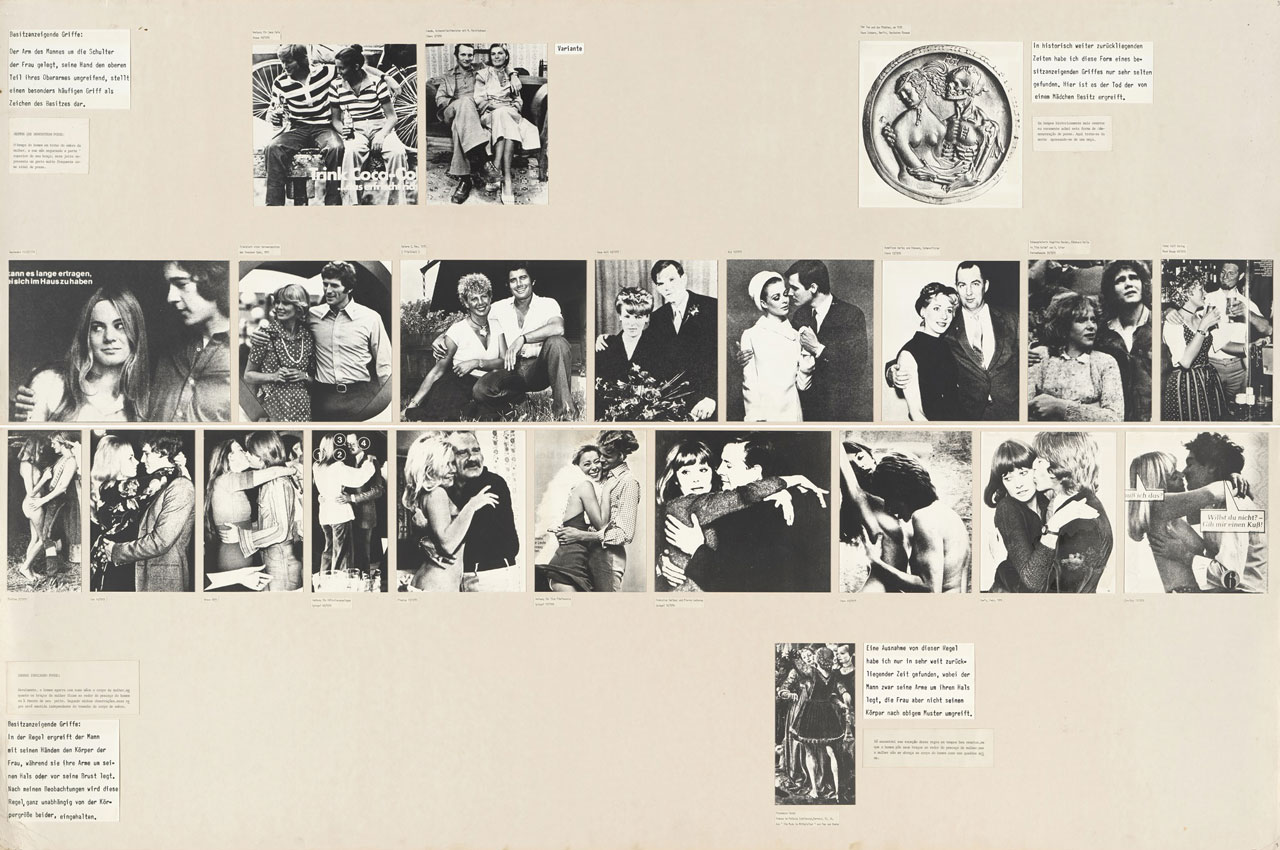
In 1972, the West German artist Marianne Wex set out to document and analyze the gendered body language she observed in everyday life. She picked up her camera and covertly photographed people in her hometown of Hamburg, observing how men and women had been socialized to inhabit space differently. Wex organized the images into categories like ”standing arms,” ”sitting legs,” ”lying down,” and ”possessive holds.” She wrote: ”I see these mostly unconscious actions as essential parts of our communication.” By pasting her photographs onto over 200 panels alongside pictures appropriated from advertisements, mass media, and art historical sources, she constructed a critical archive of everyday gestures. The sweeping installation premiered in Berlin in 1977, as part of “Kiinstlerinnen International 1877-1977”, a major exhibition of art by women. Two years later, Wex published the project in a book of the same title, “Let’s Take Back Our Space: IIFemale” and IIMale” Body Language as a Result of Patriarchal Structures”. Responding to the era’s radical feminist thought and activism, Wex aimed to reveal how culture and history shape- and make seem natural-the ways we live in and use our bodies. The exhibition “Taking Back Our Space: Photographic Perspectives” brings Wex’s sociological intervention into dialogue with seven contemporary artists whose practices extend and complicate a feminist photographic history. Attentive to the intersections of race and gender beyond the binary, these artists confront societally constructed relationships between bodies and space. Within this framework, ”taking back space” is both an embodied practice and an act of critical engagement with sovereignty and decolonization. It involves reclaiming physical space, as well as challenging who controls historical narrative and self-representation.
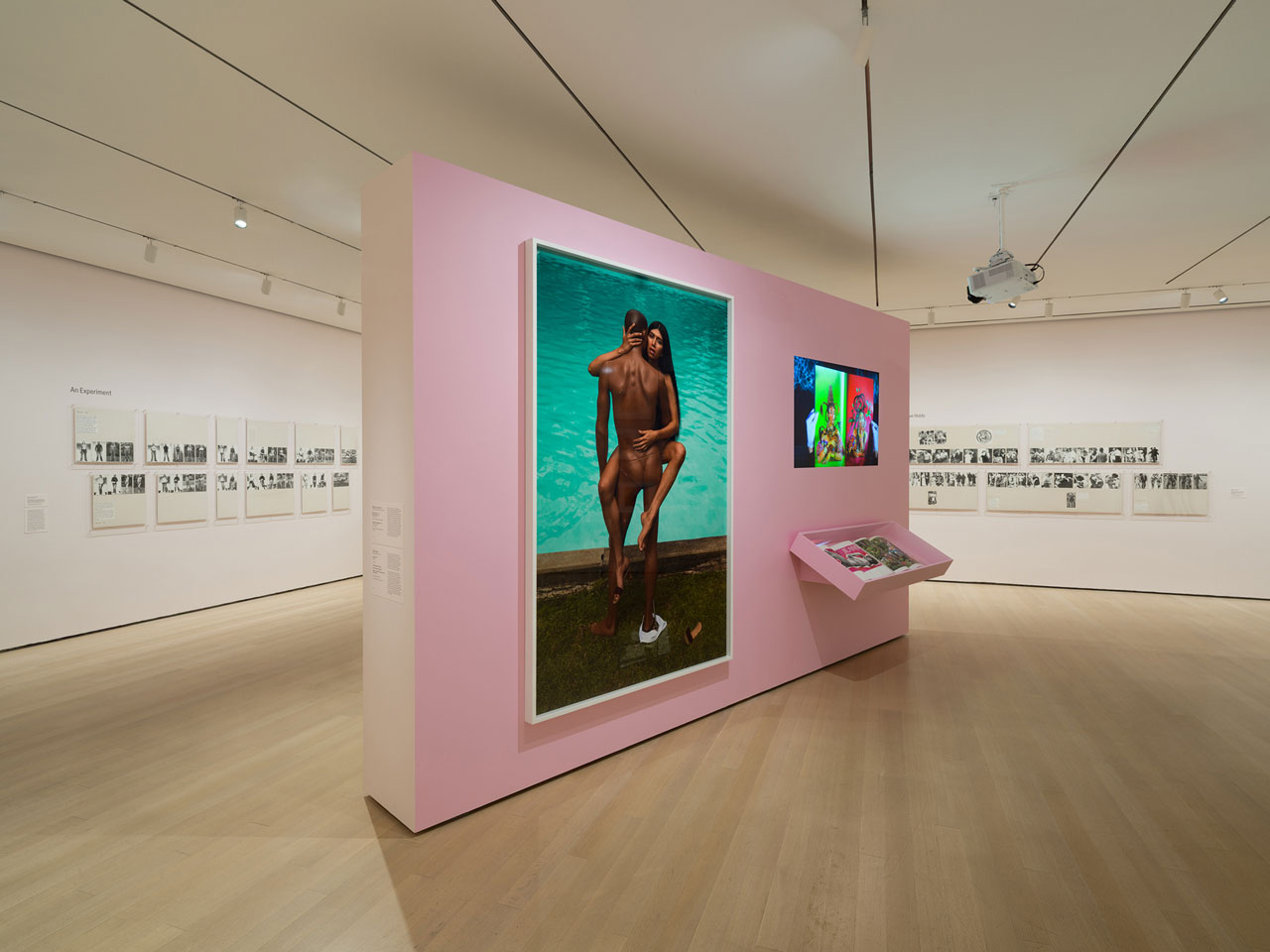
In “Body En Thrall”, p. 120 from “Indigenous Woman”, a 2018 artist book disguised as a fashion magazine, Martine Gutierrez wraps her legs around a mannequin and gazes toward the camera. She cheekily reverses the dynamics Marianne Wex catalogues in her “Possessive Holds” panels. The title plays on the near homophones of “in thrall,” meaning to be under someone else’s influence, and “enthrall,” to enchant someone completely. This wordplay evokes the simultaneous constraint and subversive power of desire. Striking haute couture poses as a Hollywood starlet, Gutierrez exerts erotic power over the mannequin as well as the viewers. The artist is at once captivating and captive to the entertainment industry’s narrow definition of feminine beauty.
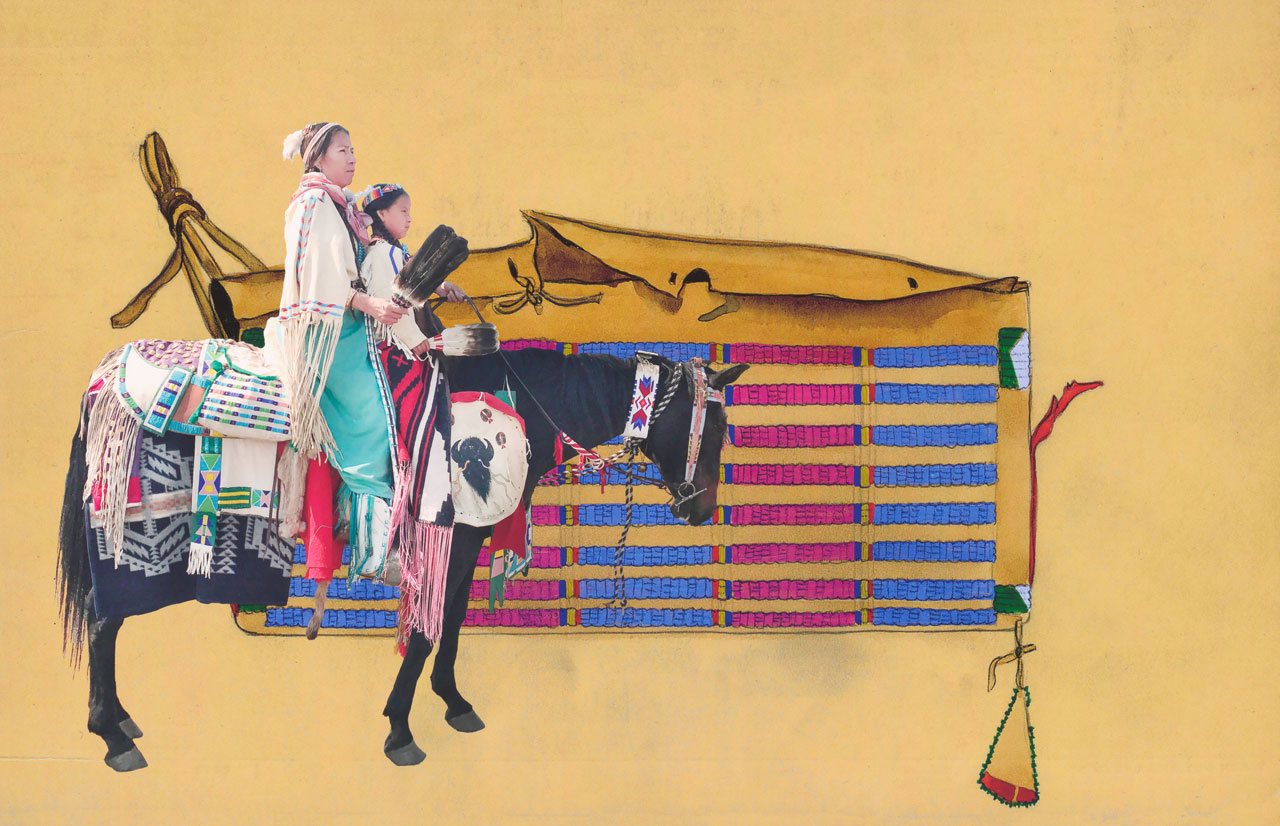
Wendy Red Star’s “Accession” series oers a visual pathway through which Apsáalooke objects in the Denver Art Museum’s collection can symbolically “return to the community.” She layers the museum’s catalogue cards of Native objects, drawn for the Denver Art Museum as part of a New Deal–funded project in the 1930s, with photographs she captured at the Crow Nation’s annual Crow Fair. Held each year on the third weekend of August, the Crow Fair is among the largest events organized by and for Indigenous peoples in North America. Pairing institutional drawings with contemporary images of Native cultural expression, Red Star’s collages counter the museum archive, and reclaim a space in which intergenerational memory, knowledge, and ritual can endure.
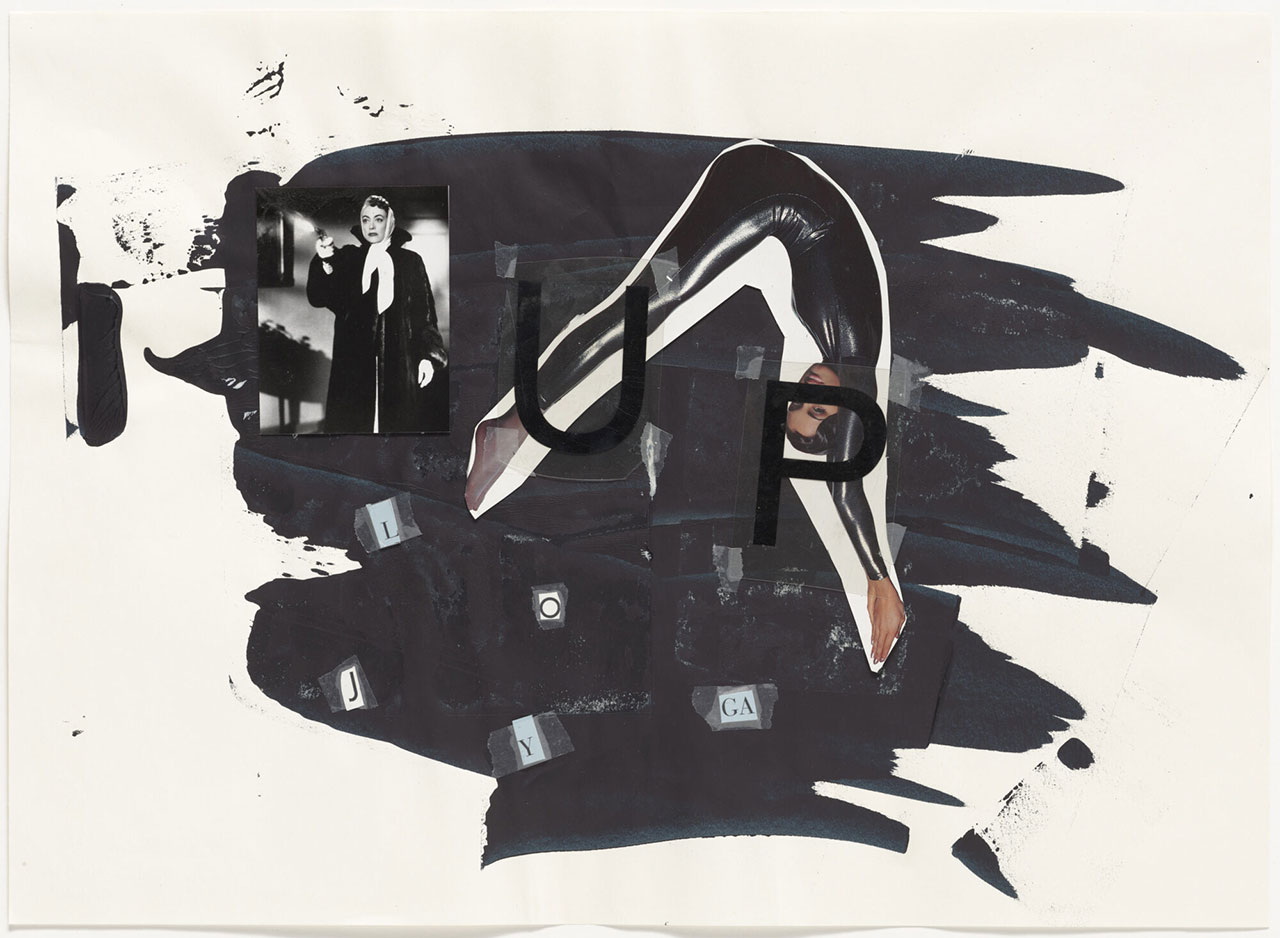
Inspired by the Czech designer Karel Teige’s typographic book “ABECEDA” (1926), Paulina Olowska has staged performances that adapt the written alphabet into one made of gesture. In this related series of collages, Olowska appropriates photographs from popular print culture, advertisements, and images of contemporary dance performances to invent a new alphabet. Her process is akin to Wex’s own use of found images, as in the cinematic and pornographic imagery in the nearby panels “Possessive Holds” and “Standing Arms.” Olowska draws a conceptual parallel between the performativity of the body and that of language, both deeply conditioned by patriarchal structures. By linking the two, she proposes the possibility of a new system of meaning beyond those inherited conventions.
Joiri Minaya turns colonially rooted constructions of “Caribbeanness” into a site of concealment and resistance. Her images transform clichéd tropical prints into a camouflage. In “Wake”, she overlays patterns of waves from a tourist postcard onto a photograph of herself removing a printed bodysuit. Blurring the distinction between figure and ground, Minaya allows herself to slip into the backdrop, a reference to maroon histories, in which formerly enslaved people sought freedom by disappearing into dense nature. The wallpaper “Eluvia” also reflects Minaya’s interest in what she calls “marooning a landscape.” Manipulating the silk-screening process, she renders the floral motif on a Hawaiian shirt into an almost illegible form. This disruption destabilizes the visual codes through which Dominican identity is often exoticized and culturally flattened.
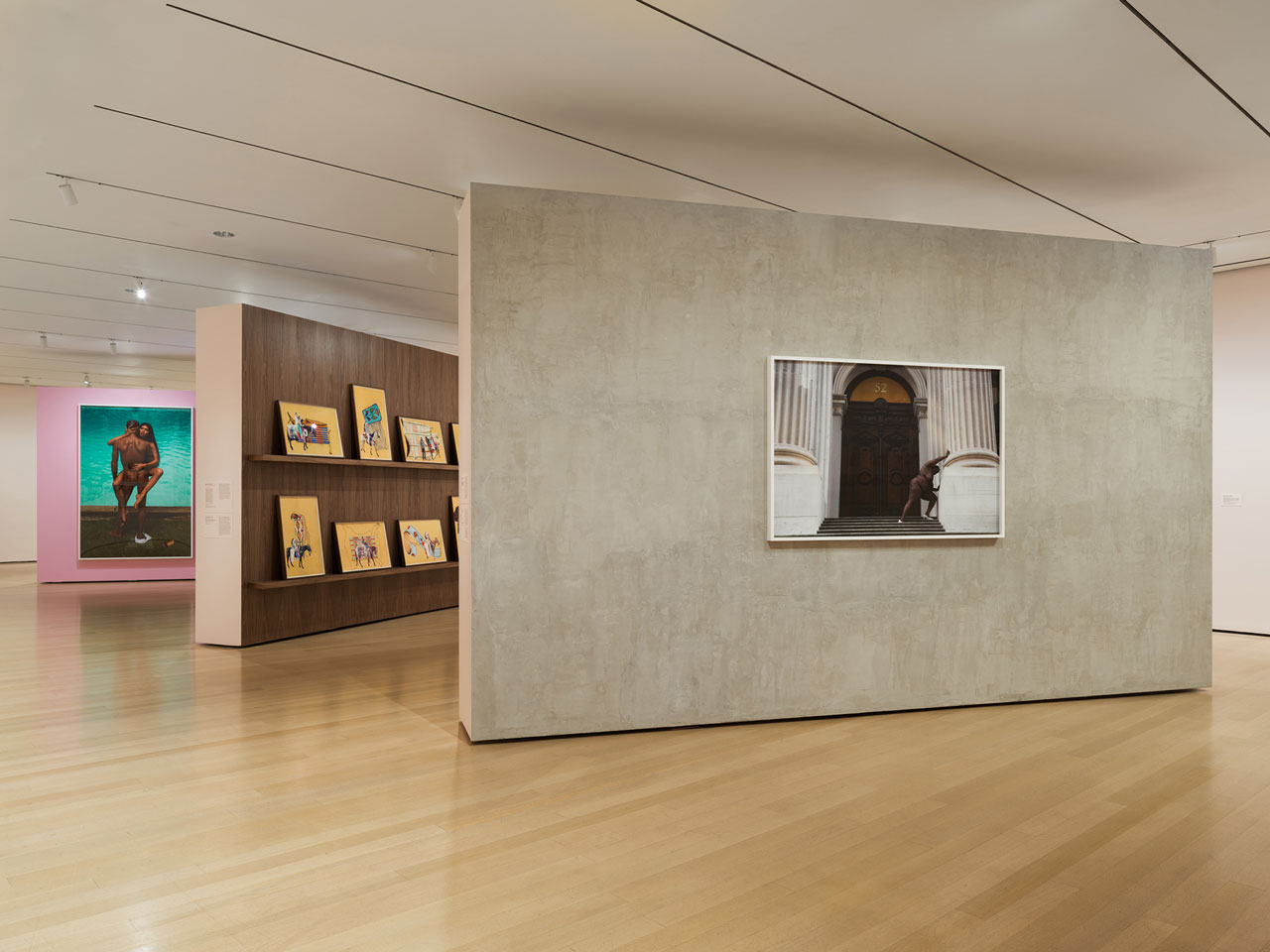
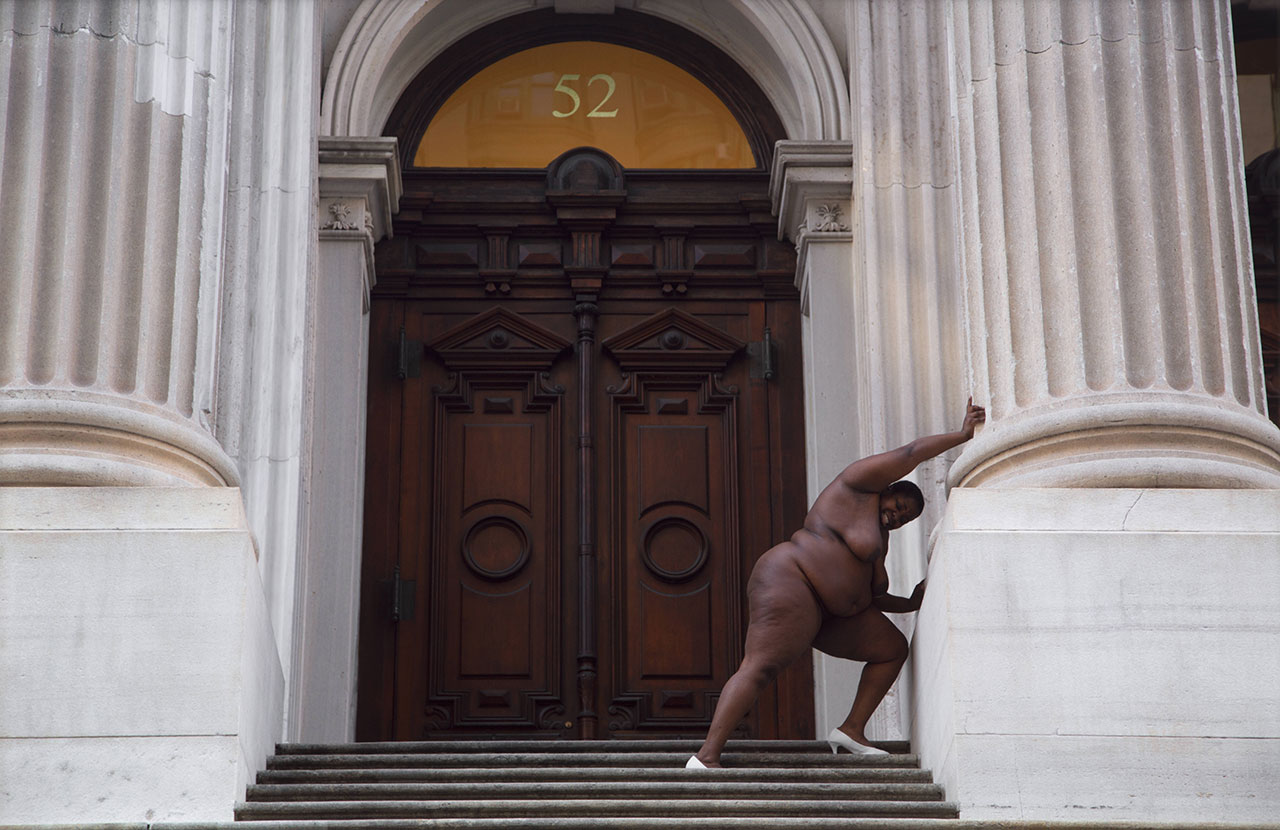
Nude save for a pair of white heels, an intentional reference to white patriarchy and the enduring history of racism in the United States, Nona Faustine braces herself against a marble column of the Tweed Courthouse in downtown Manhattan. The late nineteenth-century building stands just a few steps away from the African Burial Ground National Monument, the site where, in the 1990s, a massive colonial-era gravesite of enslaved individuals was inadvertently uncovered. Faustine’s bold positioning against the domineering architecture foregrounds the often-unacknowledged entanglement between the nation’s accumulated wealth and the exploited labor of Black people.
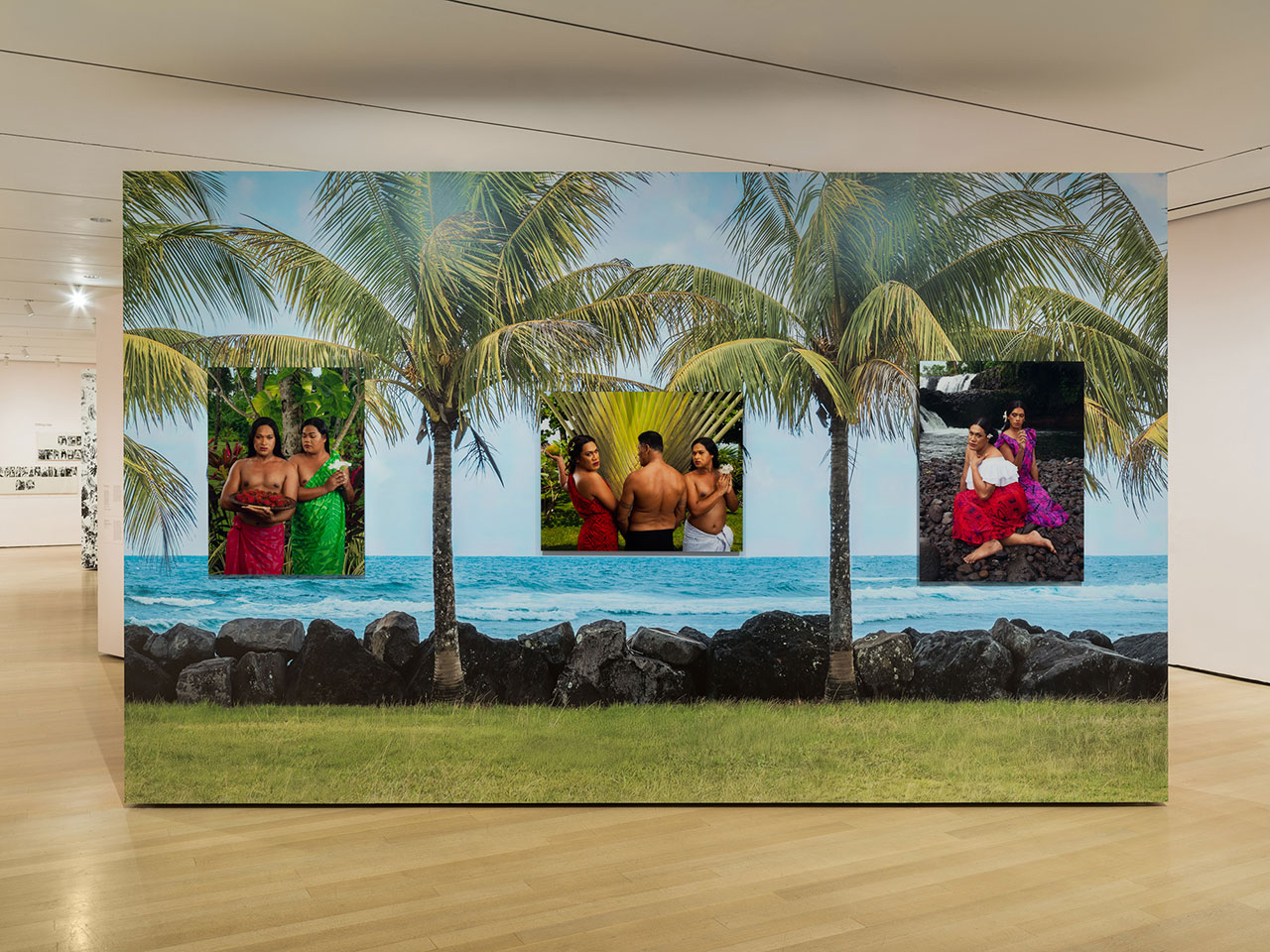
Lush flora, vibrant fauna, and cascading waterfalls compose the backdrops of Yuki Kihara’s photographic compositions. In them, the artist reclaims the Polynesian landscapes once appropriated by the nineteenth-century painter Paul Gauguin. “The Pacific region has become synonymous with images of unpolluted and vacant white sandy beaches,” says Kihara, “I intend to ‘camp’ the notion of ‘paradise.’” The models, Indigenous Samoan fa‘afafine— individuals assigned male at birth, but raised in the “manner of a woman”—brazenly hold the viewer’s gaze. The wallpaper, drawn from a photograph of the Aleipata islands, additionally recalls the vital role fa‘afafine and fa‘atama (those assigned female at birth who identify with a masculine role or expression) first responders played in the wake of the 2009 tsunami. Through these layered interventions, Kihara disrupts touristic and colonial imaginaries of the islands with tangible acts of queer presence, resilience, and life-making.
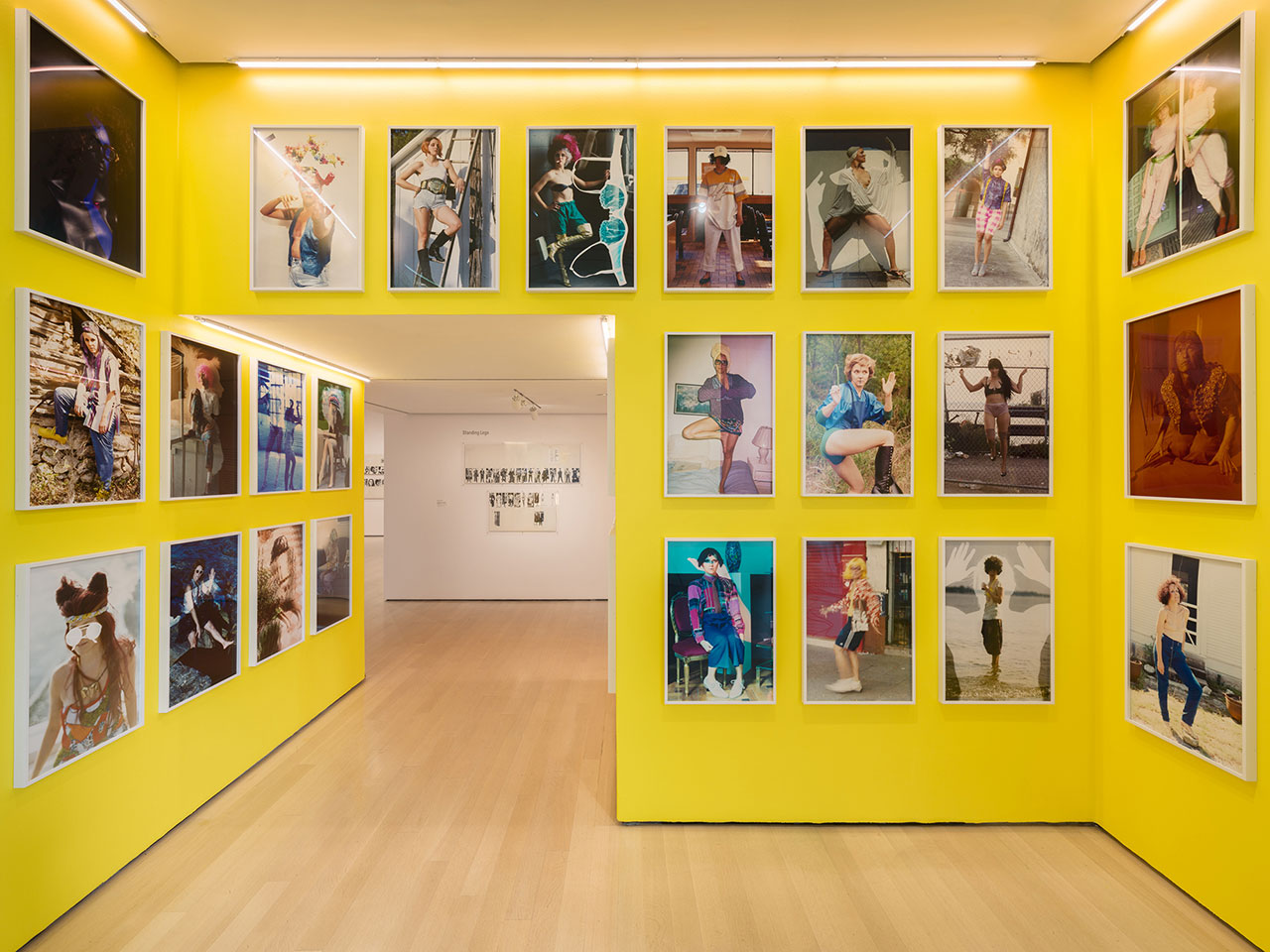
For K8 Hardy, the “failure to cohere” that is inherent in presenting oneself outside normative frameworks is a strategic act of refusal. Across dozens of photographs in her Position Series, many altered through digital and analog manipulation, she adopts an array of postures and disguises. She dons assorted wigs and outfits to restage gender identity as inherently fluid, queer, and activist. Hardy, one of the founders of the genderqueer art collective and journal LTTR, thus fractures the binary organization underpinning Let’s Take Back Our Space. Her series instead treats the “masculine” and “feminine” poses codified in Wex’s photographs less as fixed categories than as gestures to be sampled, remixed, and performed anew.
Works by: Marianne Wex, Nona Faustine, Martine Gutierrez, K8 Hardy, Yuki Kihara, Joiri Minaya, Paulina Olowska, and Wendy Red Star
Photo: Installation view of “Taking Back Our Space: Photographic Perspectives” on view at The Museum of Modern Art, New York, from 20/9/2026, through 2/5/2027. Photo: Jonathan Dorado, © The Museum of Modern Art, New York
Info; Curators: Roxana Marcoci and Caitlin Ryan, MoMA (Museum of Modern Art, 11 West 53 Street, Manhattan, New York, NY, USA, Duration: 20/9/2026-2/5/2027, Days & Hours: Mon-Thu & Sat-Sun 10:30-17:30, Fri 10:30-20:30, www.moma.org/
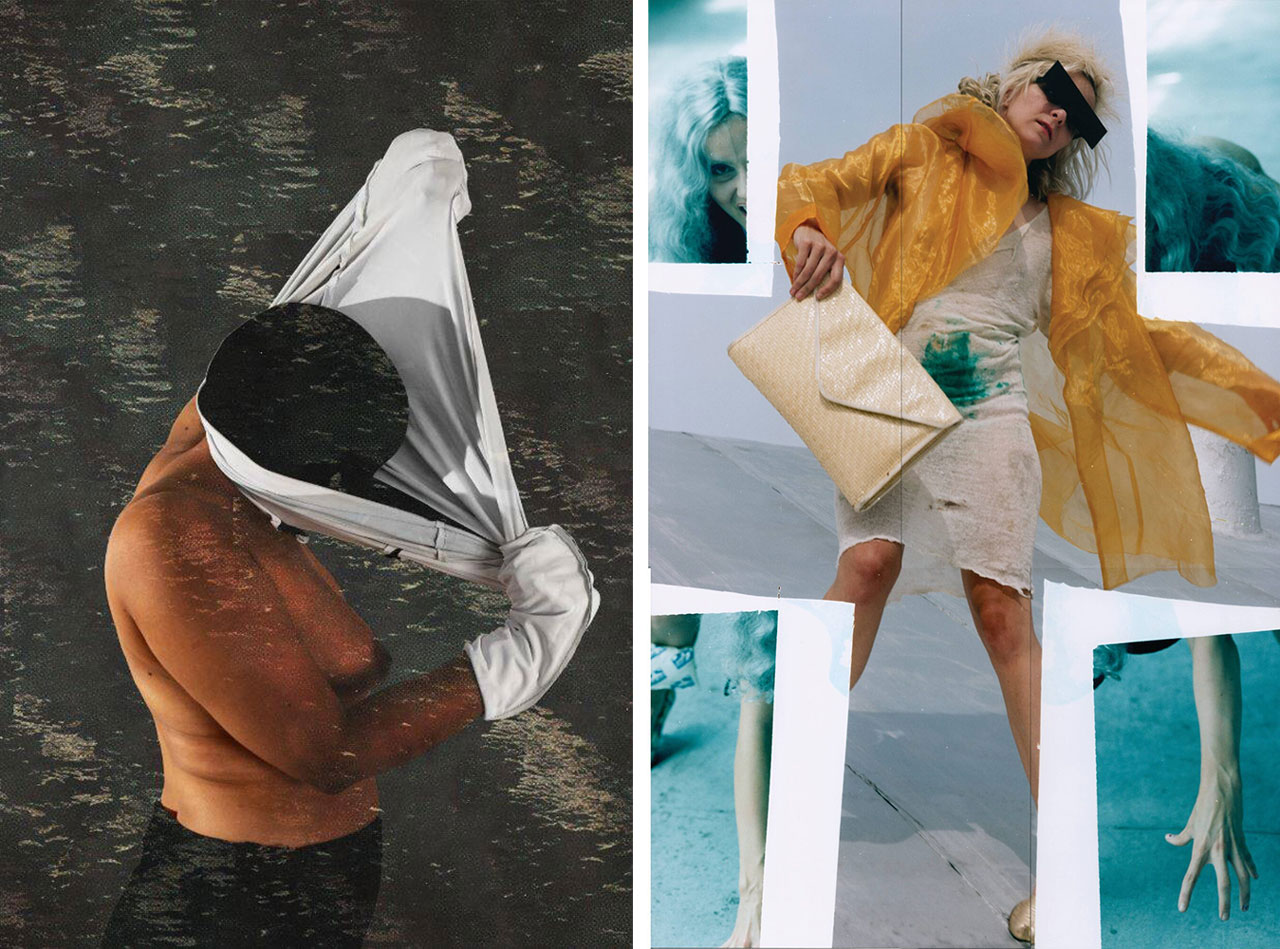
Right: K8 Hardy. Position Series (detail). 2007–12 (printed 2017). Fifty chromogenic color prints, 30 × 20″ (76.2 × 50.8 cm) each. The Museum of Modern Art, New York. Acquired with support from Fund for the Twenty-First Century and through the generosity of The Estate of Byron R. Meyer. © 2025 K8 Hardy
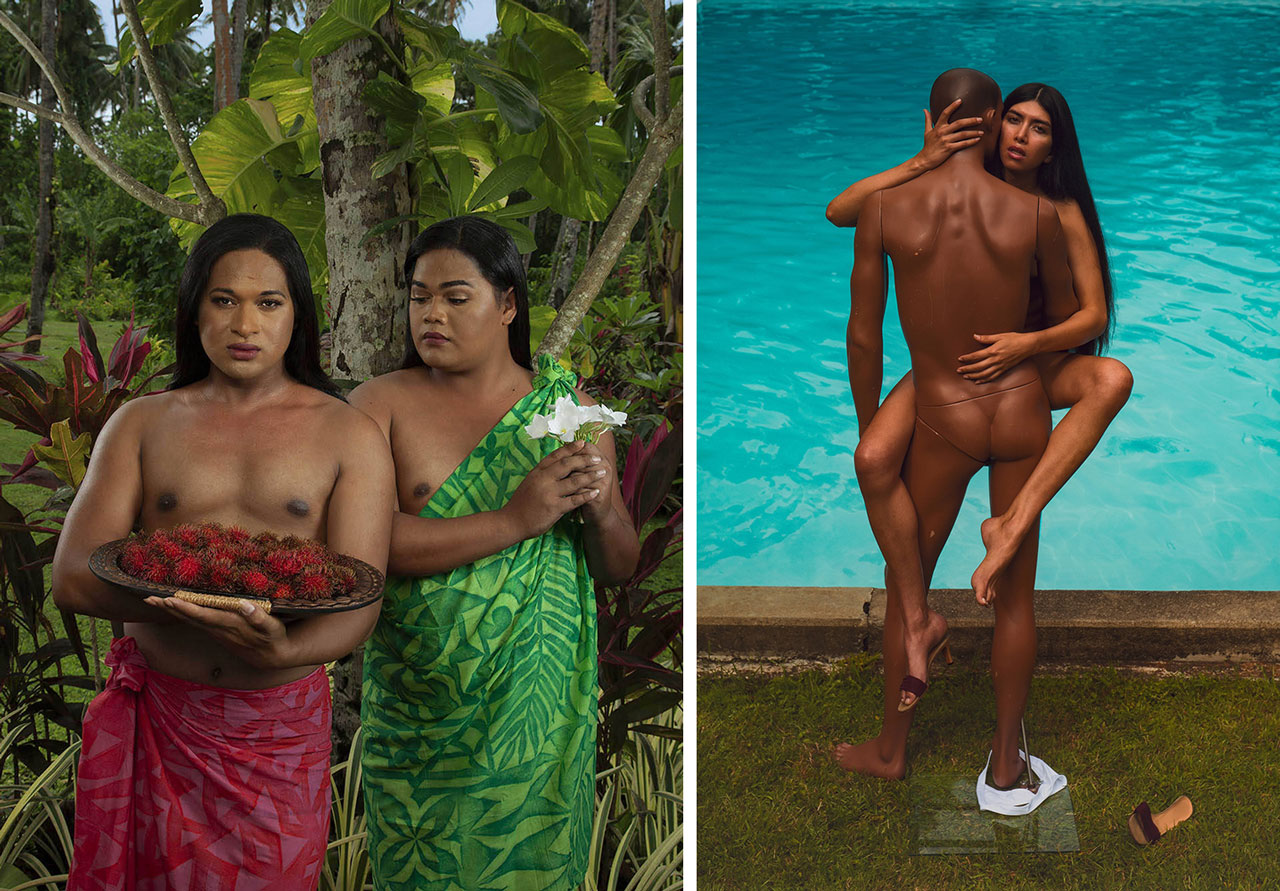
Right: Martine Gutierrez. Body En Thrall, p. 120 from Indigenous Woman. Chromogenic print, 90 × 60″ (228.6 × 152.4 cm). The Museum of Modern Art, New York, Fund for the Twenty-First Century. © 2025 Martine Gutierrez