
PRESENTATION: Keith Sonnier-Inside Light, 1968–1970
Throughout a career spanning six decades, Keith Sonnier authored a complex body of work that challenges dogmas at the heart of twentieth- and twenty-first-century art historical narratives, often questioning previous conceptions of what sculpture—and indeed, art itself—could be and do. While his work draws associations with artistic movements and genres from process art to conceptualism to minimalism, his visionary practice stands apart for its expansive and generous approach to worlds both within and beyond the studio.
By Dimitris Lempesis
Photo: David Kordansky Gallery Archive
David Kordansky Gallery presents “Keith Sonnier: Inside Light, 1968–1970,” an exhibition devoted to a decisive three-year period in the career of the American artist Keith Sonnier (1941–2020). The exhibition brings together Sonnier’s earliest experiments with neon, argon and incandescent light, tracing the moment when these unconventional materials became the foundation for a radically expanded conception of sculpture. The presentation, previously shown in New York in 2024, has been expanded for its Los Angeles edition.
Sonnier emerged in the late 1960s as part of a generation of artists who challenged the established boundaries of sculpture through the use of industrial, unstable and ephemeral materials. After studying at the University of Southwestern Louisiana and receiving an MFA from Rutgers University in 1966, he entered an exceptionally experimental New York art environment, where artists including Eva Hesse, Bruce Nauman, Richard Serra and Richard Tuttle were similarly questioning the conventions of traditional sculpture.
For Sonnier, material was never simply a physical substance. Neon tubing, rubber, flocking, glass, aluminum, fabric, electrical wiring and porcelain fixtures possessed their own visual, tactile and spatial possibilities. Rather than concealing the mechanisms supporting his works, he frequently incorporated them into the composition. Wires, transformers and fixtures became active elements, transforming functional technology into a vocabulary of lines, gestures and structures. His sculptures therefore occupy an uncertain territory between object, drawing, architecture and light.
The origins of this material sensibility can be traced to Sonnier’s childhood in Mamou, Louisiana, where he spent time in his father’s hardware store, as well as to his encounters with contemporary art. During a year in Paris, his experience of Robert Rauschenberg’s “Oracle” (1962–65), a five-part assemblage incorporating found industrial materials, contributed to his expanding understanding of what sculpture could encompass. At the same time, memories of Louisiana—including the mysterious presence of illuminated signs interacting with landscape and weather—remained an important sensory reference throughout his career.
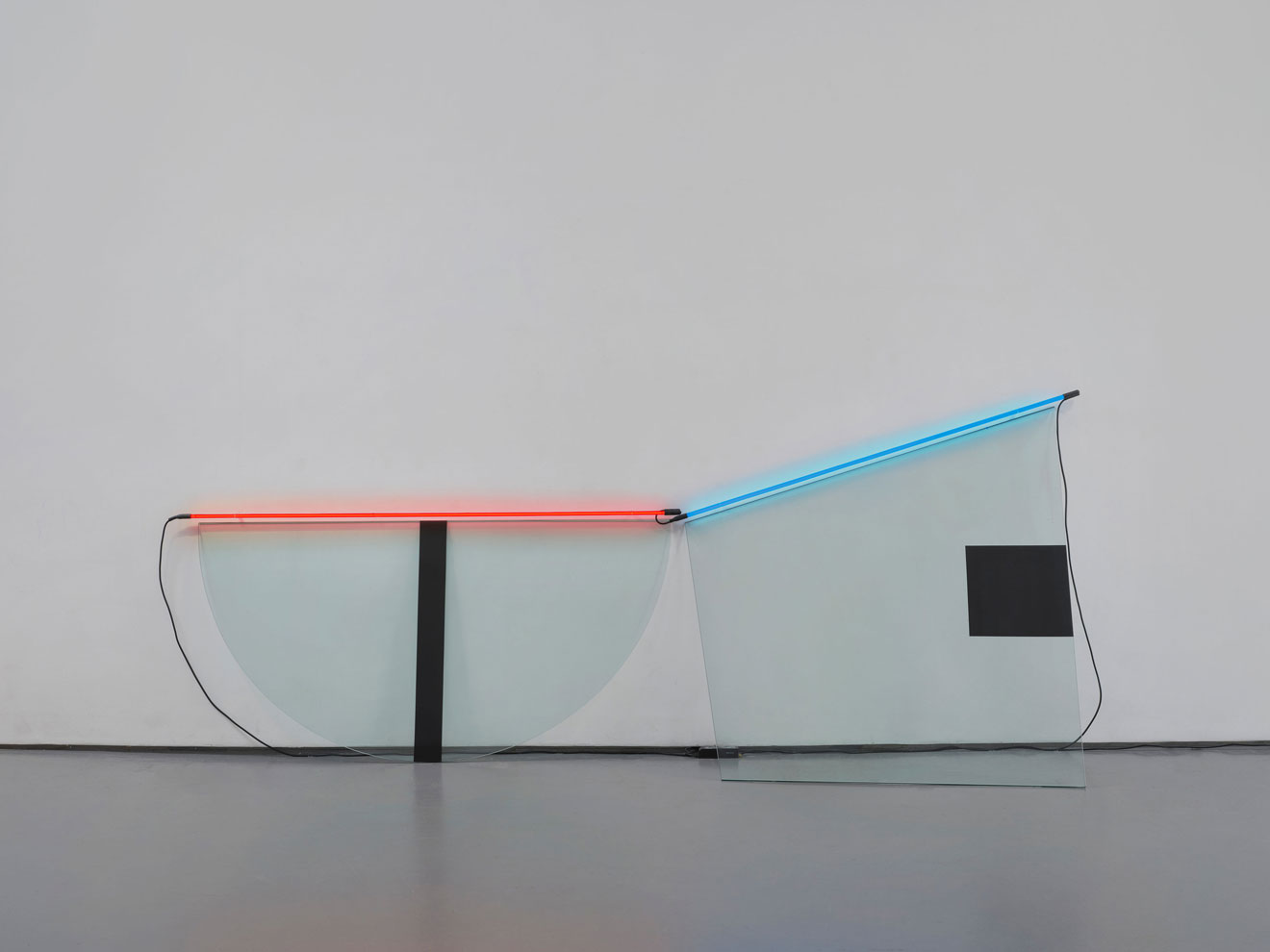
The transition toward light-based sculpture began in earnest in 1968. Works such as “Arced Neon (Cool White)” and “Arced Neon (Violet0”) establish an economical visual language in which a single luminous line becomes an independent spatial gesture. Neon does not merely illuminate an object; it becomes the object, drawing directly into the surrounding space. Sonnier discovered in this medium a way to make sculpture simultaneously immaterial and physical.
This relationship between light and space is particularly evident in “Untitled Neon Corner Piece” (1969). Neon tubes, aluminum supports, paint and electrical fixtures converge within the architecture of the corner, making the wall itself part of the work. The sculpture does not simply occupy the gallery; it depends upon the gallery for its physical and perceptual existence. Light extends the work beyond its material boundaries, producing shadows and reflections that change according to the viewer’s position.
Site-specificity was therefore integral to Sonnier’s practice from the beginning. His installations establish reciprocal relationships with walls, ceilings and floors, which operate almost as structural components of the sculpture. The architecture becomes both support and participant. The viewer, too, enters this system: a passing body casts a shadow, interrupts the light and temporarily alters the composition.
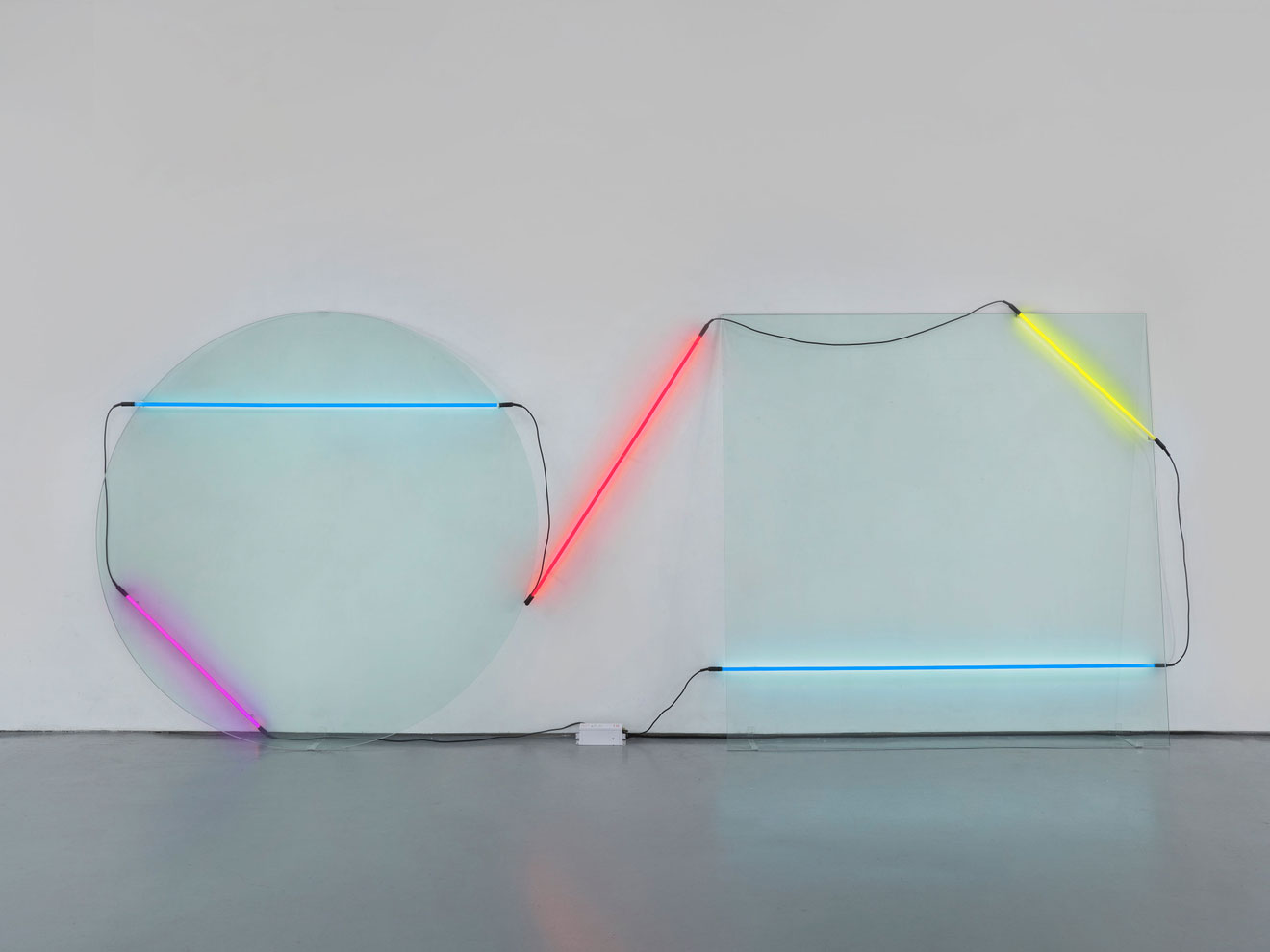
Among the works associated with this period, “Ba-O-Ba 0I” (1969) demonstrates Sonnier’s increasingly complex understanding of the relationship between light, color and material. The title refers to a Haitian French expression that Sonnier translated as “the effect of moonlight on the skin.” Glass and neon establish a dialogue between transparency, reflection and illumination, while the work can be experienced alternately as a picture, a sculptural construction or an environment. The distinction between two and three dimensions becomes deliberately unstable.
The works also demonstrate why Sonnier’s practice has frequently been discussed in relation to Post-Minimalism, Process Art and the broader material experiments of the late 1960s. Yet his position remained distinct. While Minimalism often emphasized industrial precision, repetition and objecthood, Sonnier introduced materials capable of irregularity, sensuality and transformation. His use of light opened sculpture toward atmosphere, perception and bodily experience. Contemporary accounts of his work emphasize precisely this challenge to conventional ideas of sculpture.
His position within the experimental art of the period was reinforced by his participation in exhibitions that became important reference points for the history of postwar art, including Harald Szeemann’s “Live in Your Head: When Attitudes Become Form” at Kunsthalle Bern in 1969. Sonnier also participated in “Anti-Illusion: Procedures/Materials” at the Whitney Museum that same year and represented the United States at the Venice Biennale in 1972.
What makes the 1968–70 period particularly revealing is the extraordinary speed with which Sonnier expanded the possibilities of neon. The early monochromatic line gestures develop within a short time into increasingly layered installations. “Neon Wrapping Incandescent V” (1970), for example, combines neon, incandescent bulbs, porcelain fixtures and a transformer in a complex spatial construction. The work demonstrates how quickly the artist moved from treating light as a linear element to constructing environments in which multiple sources of illumination interact with one another.
This evolution also illustrates a fundamental characteristic of Sonnier’s practice: his interest was not simply in the appearance of new materials, but in discovering what they could do. Neon could bend, traverse architectural space, surround another material, define a corner or produce an immaterial field. Electrical components could become lines. Glass could function simultaneously as surface and volume. Light could become a sculptural medium without losing its connection to technology and everyday life.
Sonnier’s relationship to the technological culture of his time was consequently central rather than incidental. He belonged to a generation witnessing rapid transformations in communication, manufacturing, electronics and mass media. His practice absorbed these developments without becoming technological art in a narrowly descriptive sense. Instead, technology became a means of reconsidering perception and the relationship between the human body and its environment.
His work also maintained a strong connection to the informal, experimental spirit of the New York art scene. Sonnier’s own recollections, preserved in the Smithsonian’s Archives of American Art, reveal the proximity between his practice and that of artists such as Hesse, Nauman and Serra, while also documenting the resistance his generation encountered from more orthodox Minimalist positions.
Throughout a career spanning six decades, Sonnier continued to work across sculpture, installation, painting, video and performance. Yet the discoveries made between 1968 and 1970 remained fundamental to his artistic language. Neon became one of his defining materials, allowing him to “draw with light and colour in space” and to establish direct relationships between sculpture, architecture and the viewer.
:Inside Light, 1968–1970” consequently offers more than a historical reconstruction of an important moment. It reveals the experimental logic through which Sonnier transformed ordinary technological materials into a highly individual language of light, color, line and space. His sculptures do not simply present illuminated forms; they activate their surroundings, incorporate the viewer and make visible the normally overlooked structures that connect an object to its environment.
More than half a century after these works were made, Sonnier’s early neon sculptures retain their capacity to appear both immediate and unfamiliar. Their materials belong to the industrial world, but their effects are atmospheric and perceptual. Their structures can appear minimal, while their shadows, reflections and changing relationships with architecture remain fluid. It is precisely this tension—between material and immaterial, technology and sensation, object and environment—that gives Sonnier’s early work its continuing resonance.
Photo: Keith Sonnier, Ba-O-Ba I, 1969, glass, neon, and transformer, 84 x 210 x 10 inches (213.4 x 533.4 x 25.4 cm), © 2024 Estate of Keith Sonnier/Artists Rights Society (ARS), New York, Courtesy Estate of Keith Sonnier and David Kordansky Gallery
Info: David Kordansky Gallery, 5130 W. Edgewood Pl., Los Angeles, CA, USA, Duration: 18/9-24/10/2026, Days & Hours: Tue-Sat 10:00-18:00, www.davidkordanskygallery.com/
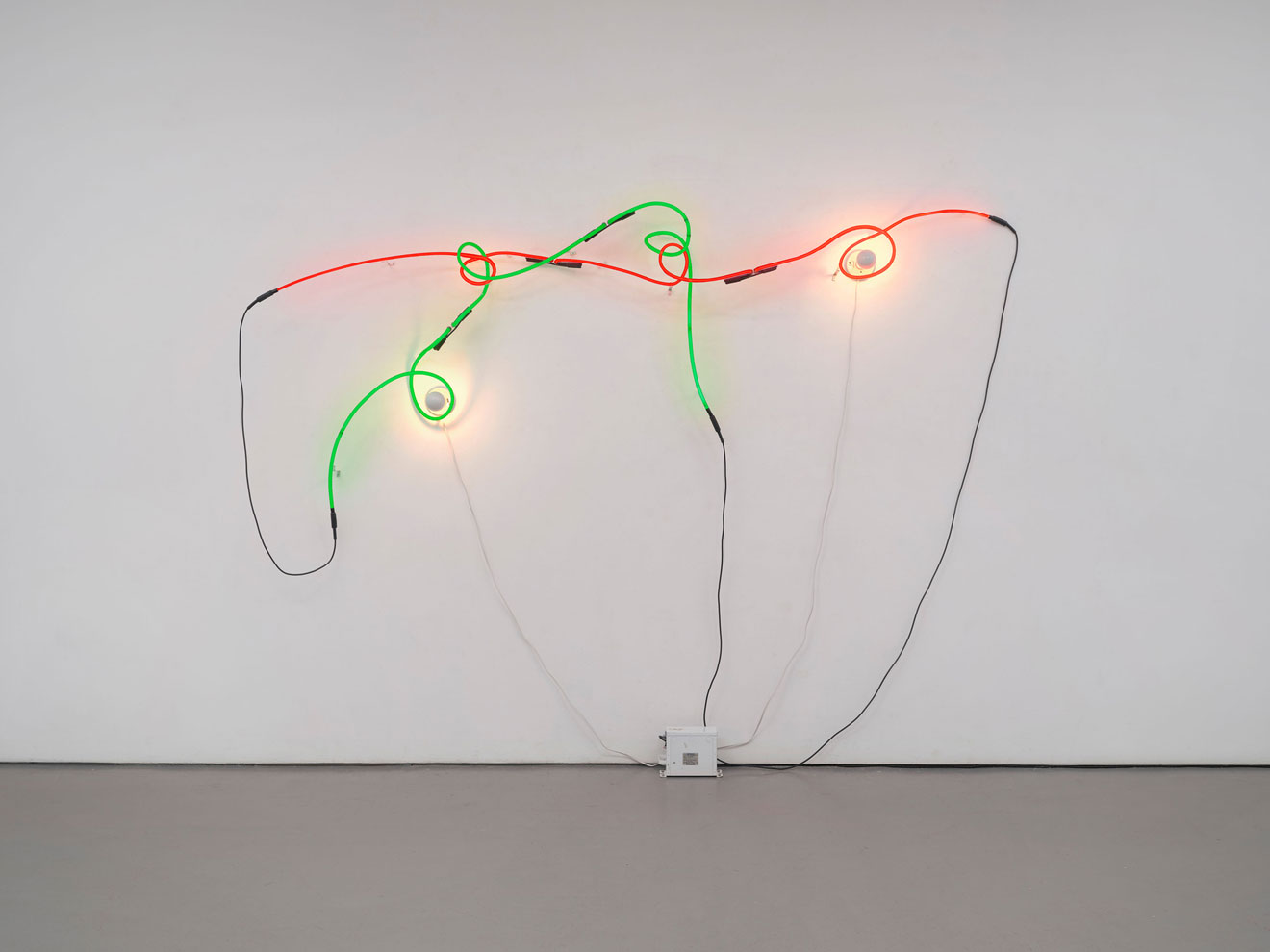
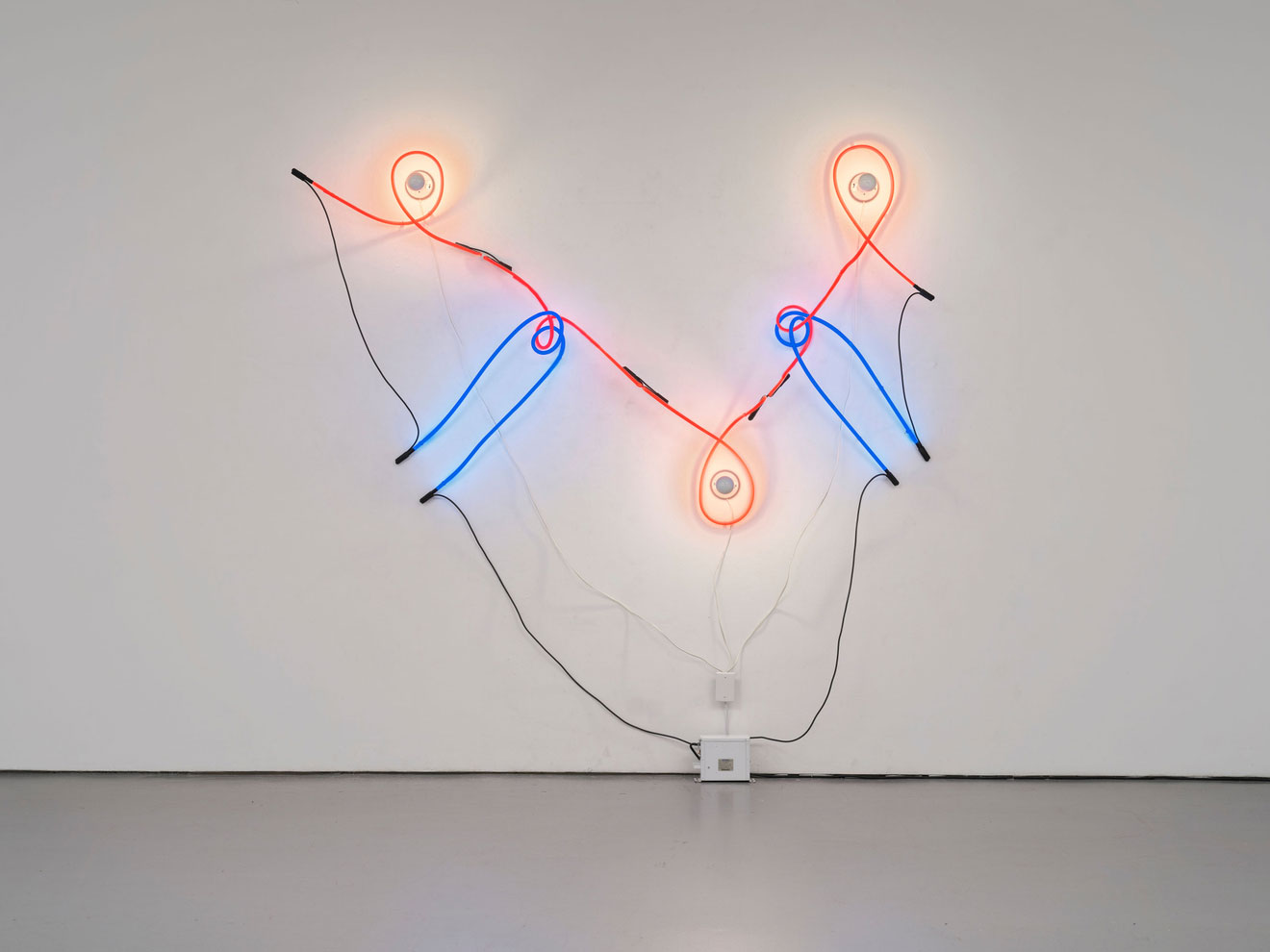
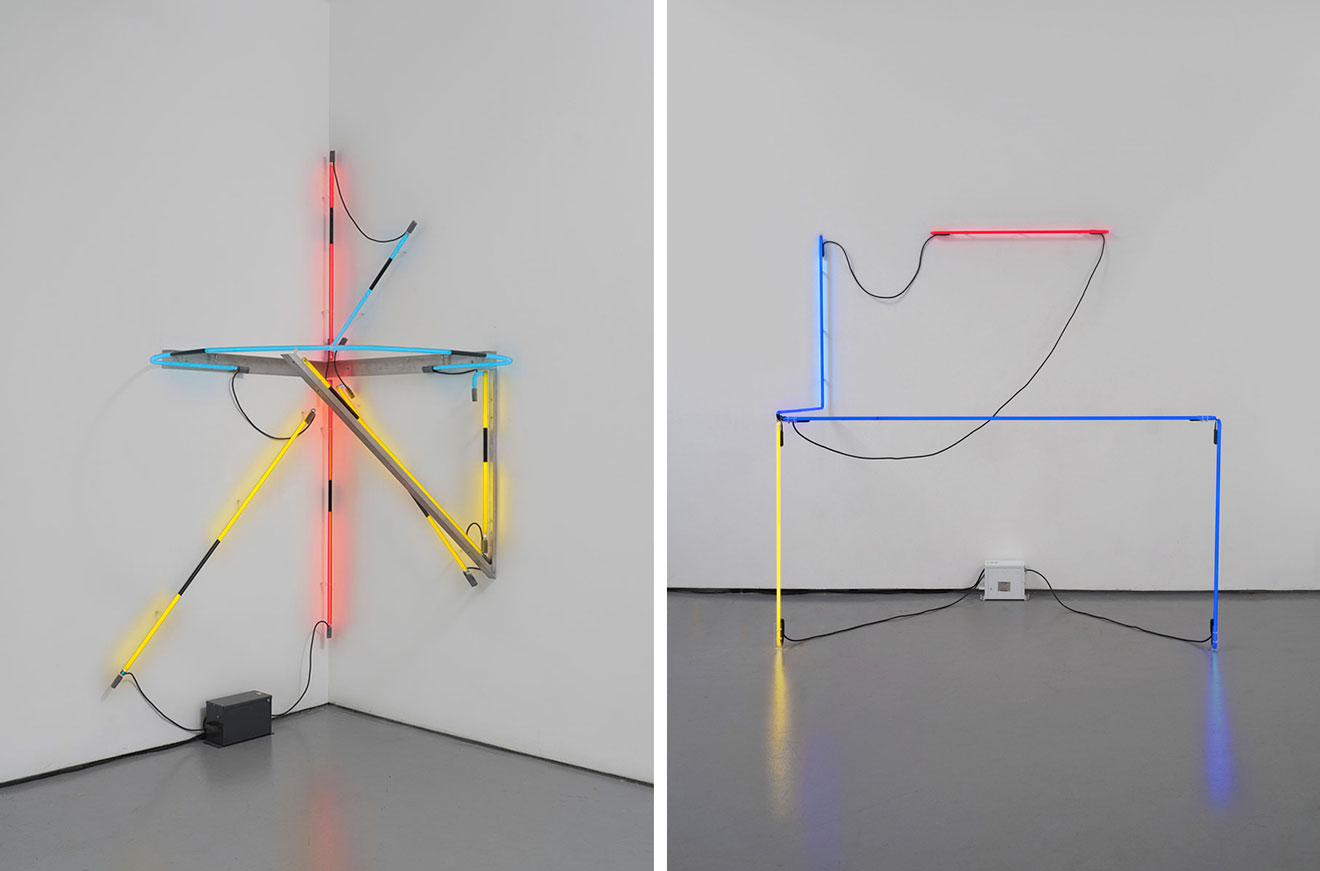
Right: Keith Sonnier, Neon Wrapping Neon V, 1969, neon and transformer, 75 x 73 x 36 1/2 inches (190.5 x 185.4 x 92.7 cm), © 2024 Estate of Keith Sonnier/Artists Rights Society (ARS), New York, Courtesy Estate of Keith Sonnier and David Kordansky Gallery