ART CITIES:PARIS-Christian Marclay
Christian Marclay’s latest exhibition brings together landmark works and recent series by Christian Marclay, exploring his longstanding fascination with the relationship between image and sound. As early as the 1970s, Marclay discovered Fluxus’s humorous relationship to music, specifically the way it made fun of the rituals of classical music. Drawn to Fluxus, punk rock, and performance art, the artist was inspired to start his own band, The Bachelors, Even, which involved unconventional uses of vinyl records. Conceiving of the sonic event in the broadest possible way, the artworks featured in this exhibition trace his lifelong practice of treating the vinyl record and its visual packaging as both medium and total work of art.
By Efi Michalarou
Photo: White Cube Galley Archive
Christian Marclay began his investigations into sound and art through performances with turntables in 1979 while he was still a student. His early practice is represented here through his “Recycled Records” (1980–86), fragmented and reassembled vinyl records that became hybrid objects which could be played, replete with abrupt leaps in tone and sound. In the nearby “Body Mix series’ (1991–92), he stitched album covers together to create works that are strange phantasms of music and culture—such as Deutsche Grammophon conductors given the slender legs of Tina Turner—recalling Surrealist Exquisite Corpses.
The exhibition also features key works from the late 1980s that established Marclay’s conceptual approach to recorded sound. In 1988, the artist photographed the 45 RPM vinyl single of a popular song by Simon and Garfunkel, titling the photograph “The Sound of Silence”. That same year, Marclay created “Secret”, a metal mother disc with a heavy-duty padlock secured through its centre, presenting a visual paradox that riffs, in part, on Marcel Duchamp’s enigmatic 1916 sculpture “With Hidden Noise (À bruit secret)”. Displayed nearby are examples from his “Imaginary Records’ series from the late 1980s and 90s, collages made of altered record covers that seek to conjure imaginary music in the mind of the viewer.
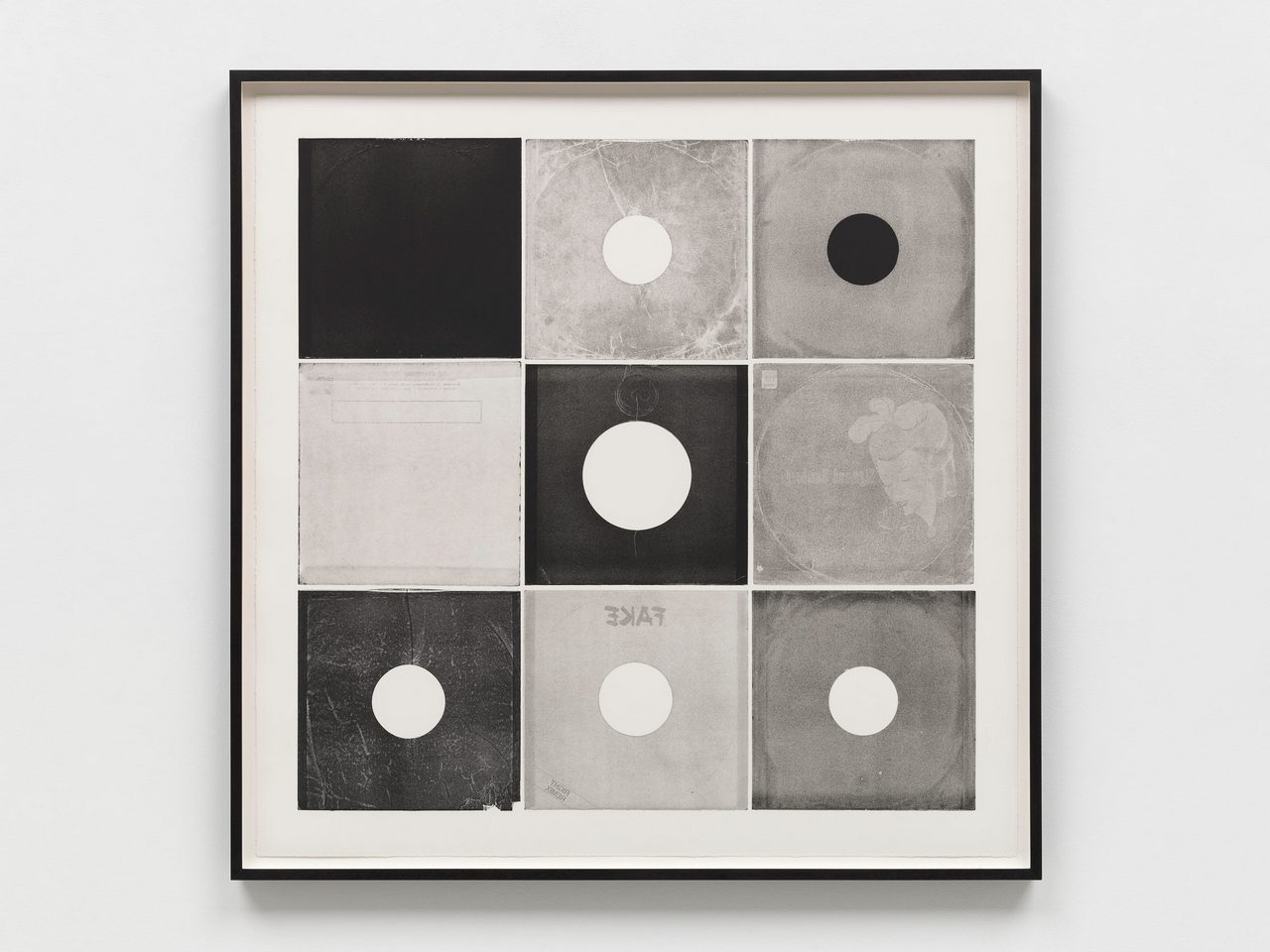
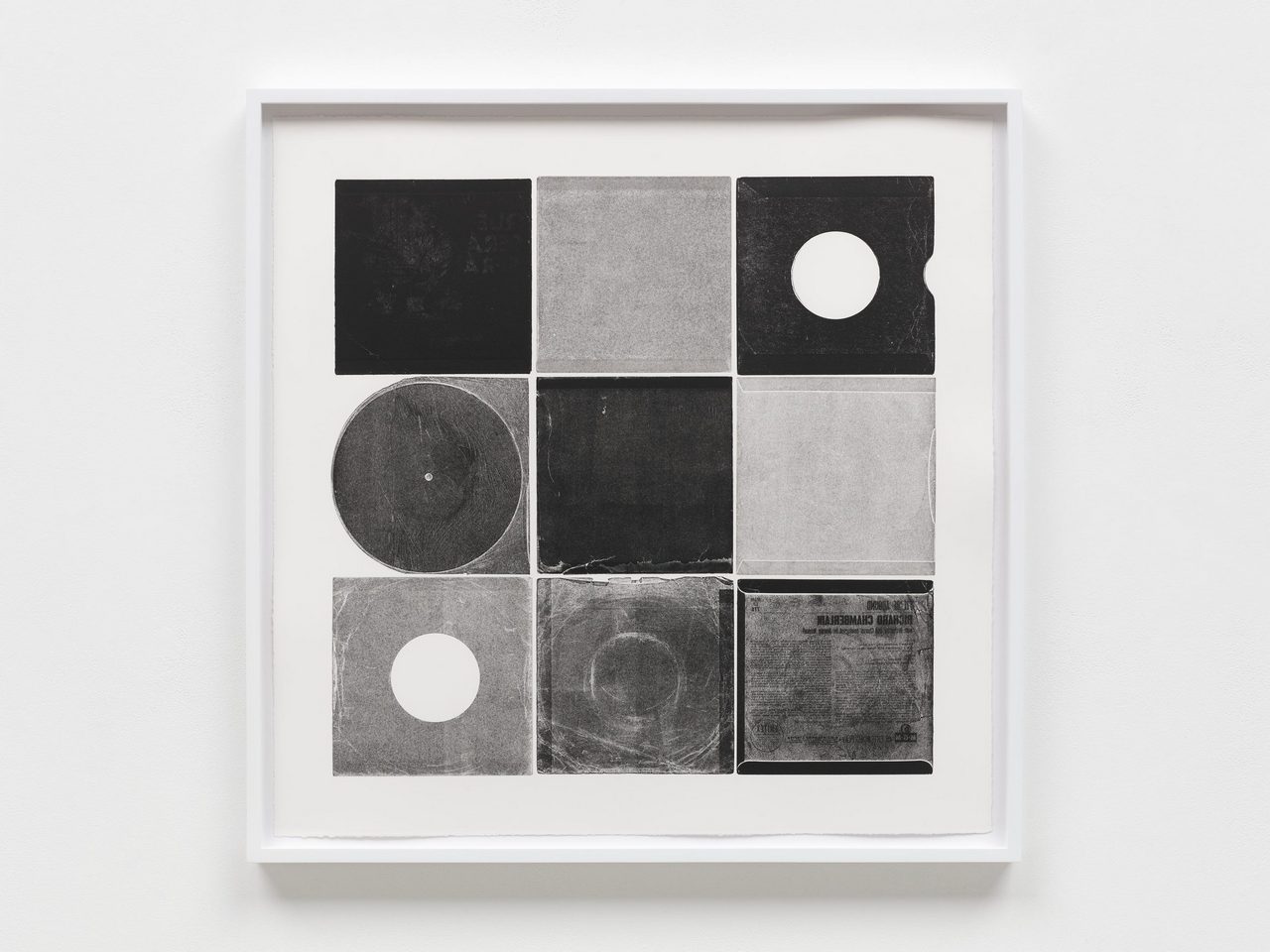
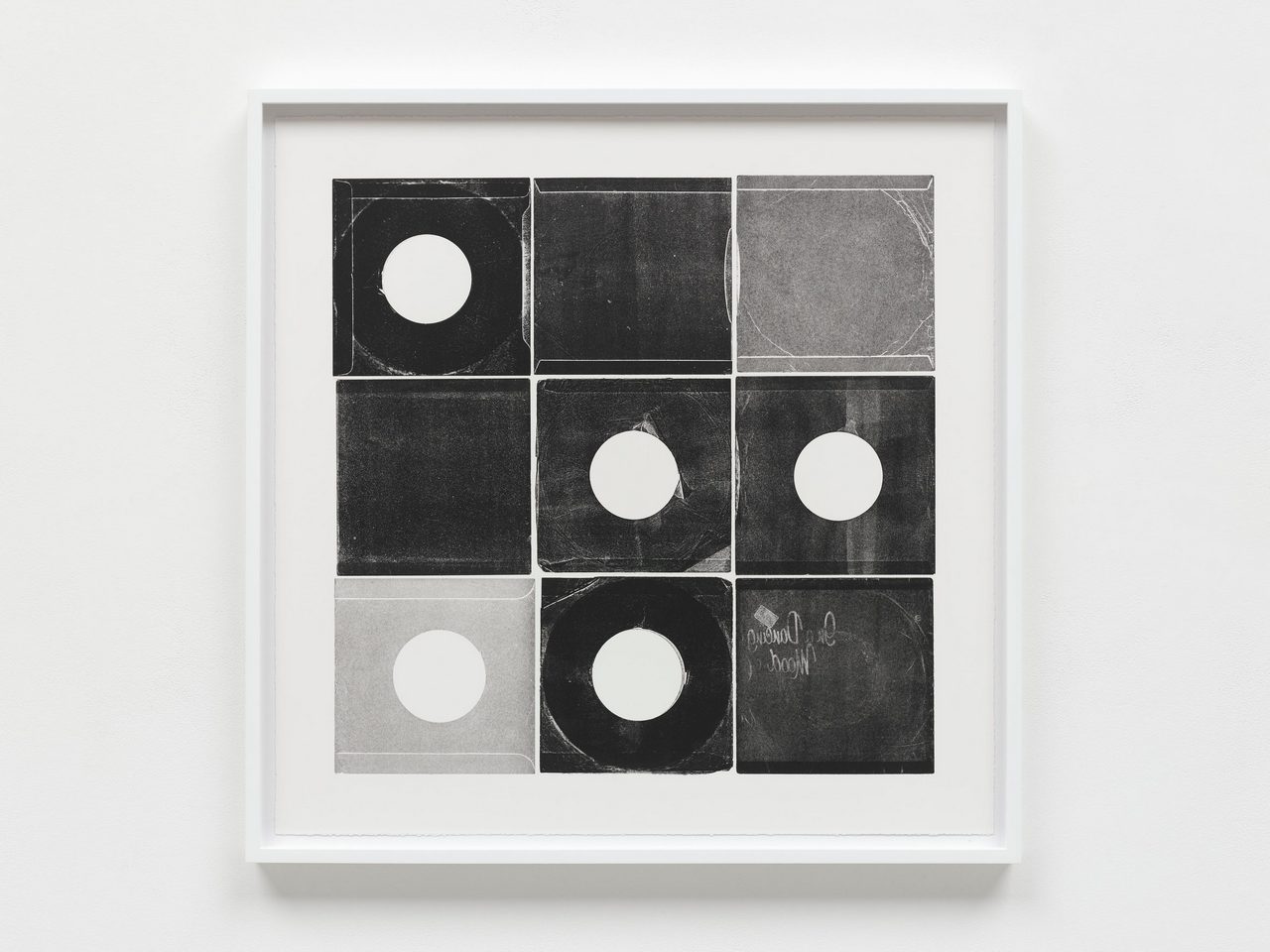
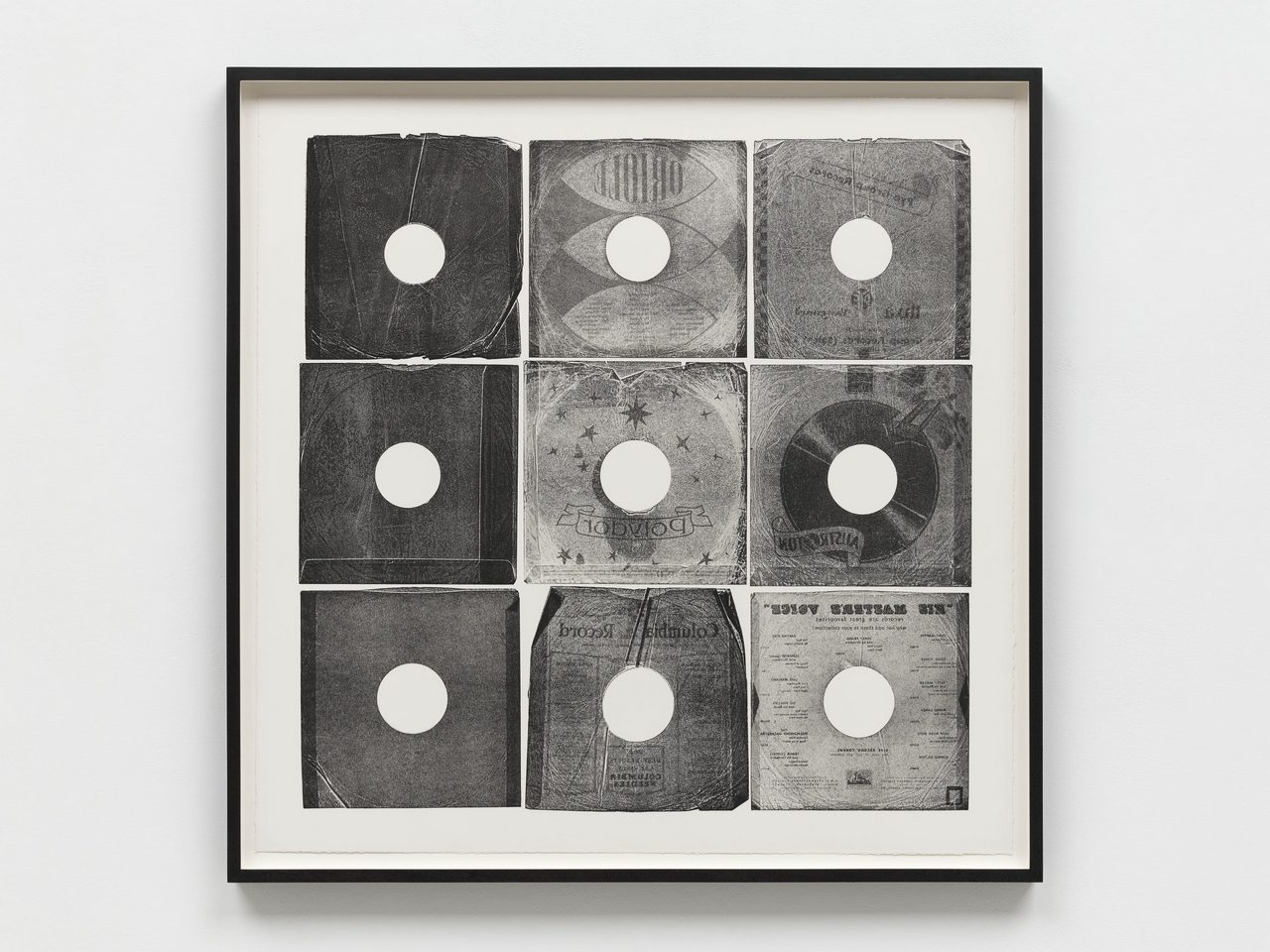
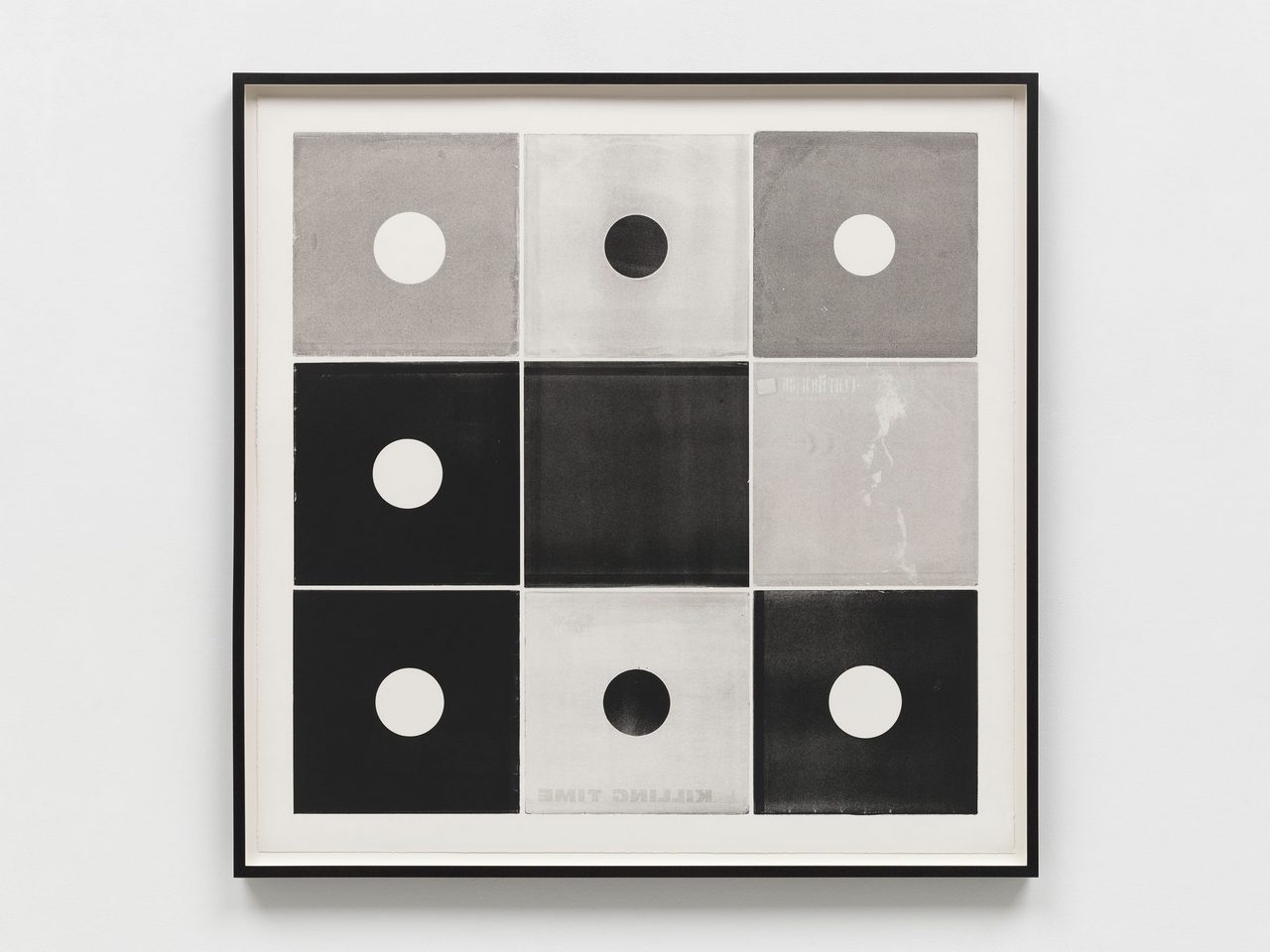
Marclay’s new monotypes presented in the exhibition are almost photographic in nature. To produce these works on paper, the artist applies ink directly to the card jackets and paper sleeves of records, before passing them through a roller press to generate a unique impression. This printing technique transfers the ink traces of the record packaging onto the paper’s surface as a ghost image. Variations in the original record cover designs are inflected in the resulting print, with details such as the absorbency of the paper, or which areas are coated with gloss finish, affecting what information is registered in the moment of transfer. As Marclay observes, the object’s signs of wear and tear are also conveyed, with its folds, creases, and marks becoming arbiters of meaning in their own right. His attention to this minor lexicon of use and loving traces reflects on the record’s ability to capture what could otherwise be lost to time, while serving as a symbol of memory’s impermanence and material deterioration.
The simple, descriptive titles of Marclay’s series Sleeves and Covers exist to mark their place in a wider set or catalogue, echoing the numbered opuses that index works of classical music. Though firstly functional, the titles also enumerate the artist’s trials and errors, the logic of the sequence upturned where iterations may have been drafted or discarded. The artist’s use of 7-inch, 10-inch, and 12-inch records speaks to both the duration of play and changing tastes. In “Sleeves and Covers (Nine 10″ / No 45)”, on view in the gallery, nine 10-inch record sleeves are arranged in a grid; their spare, typographical designs point to a time when marketing a record through the musician’s likeness or image was not yet a popular strategy. That Marclay’s monotypes employ three different vinyl formats gestures towards the visual and sonic cultures of bygone decades, as well as the waning demand or obsolescence of certain technological forms. However, as the artist notes, renewed enthusiasm for 12-inch vinyl today suggests that the ethereal pleasure of music remains tethered to material form.
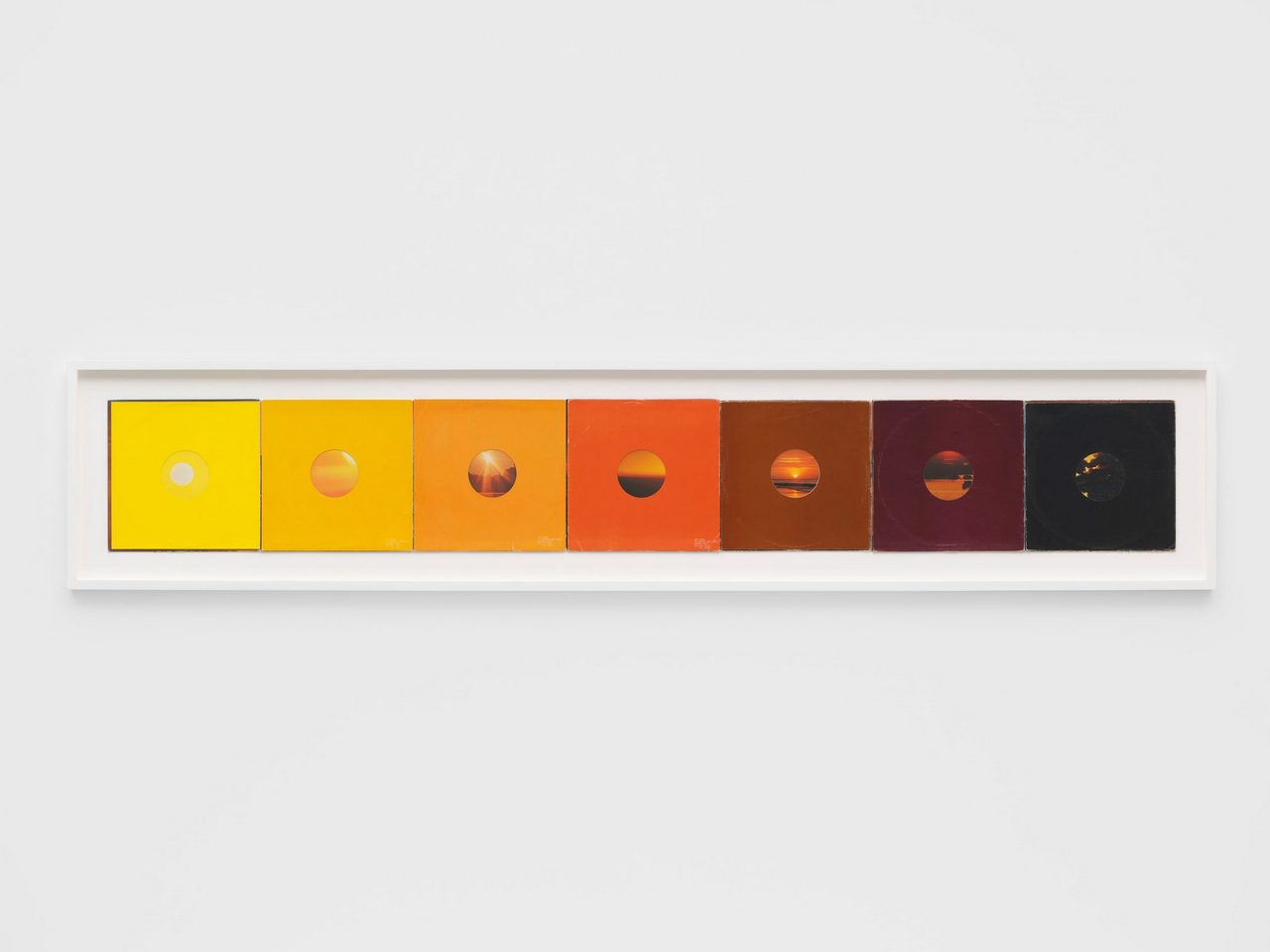
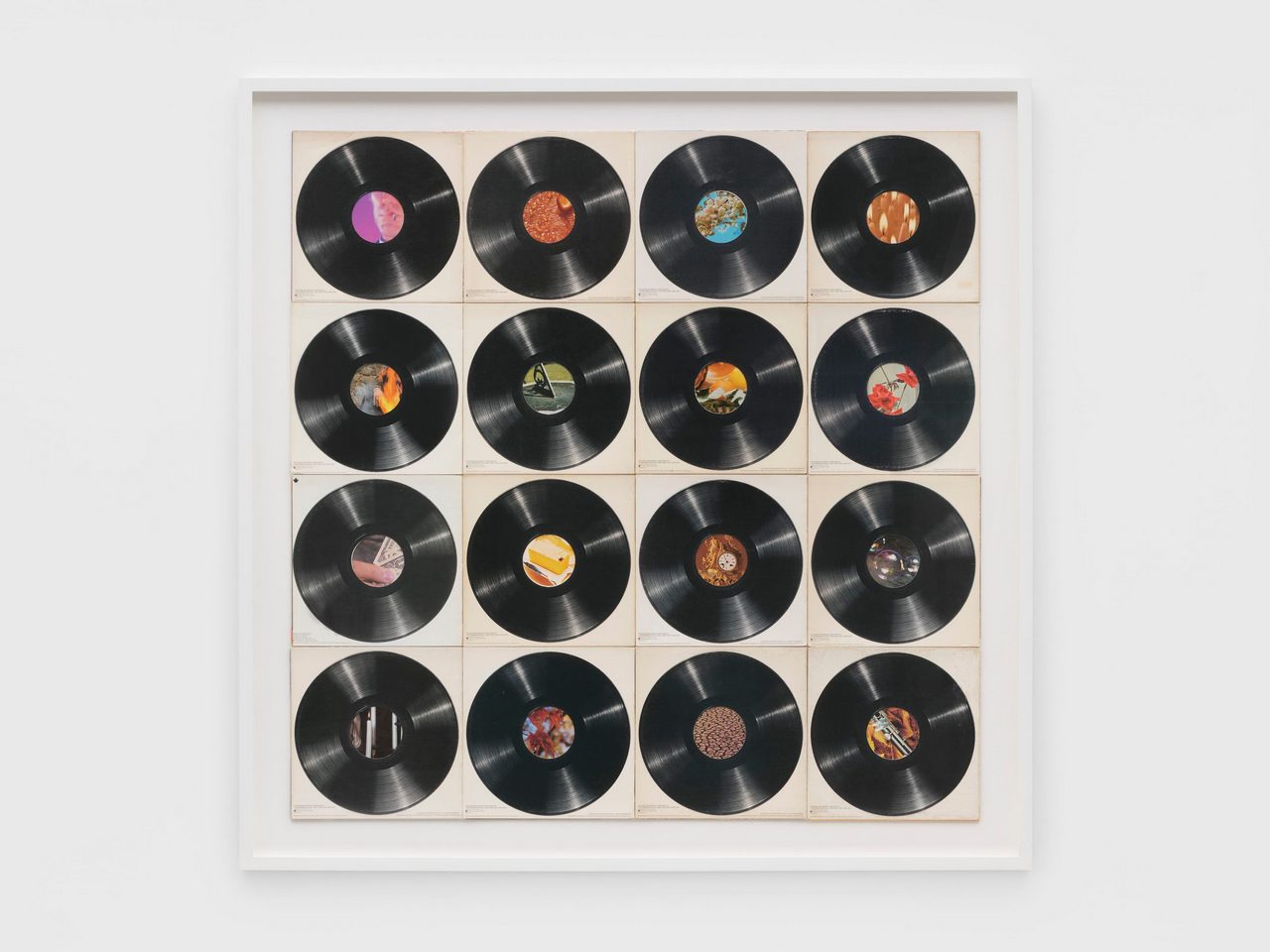
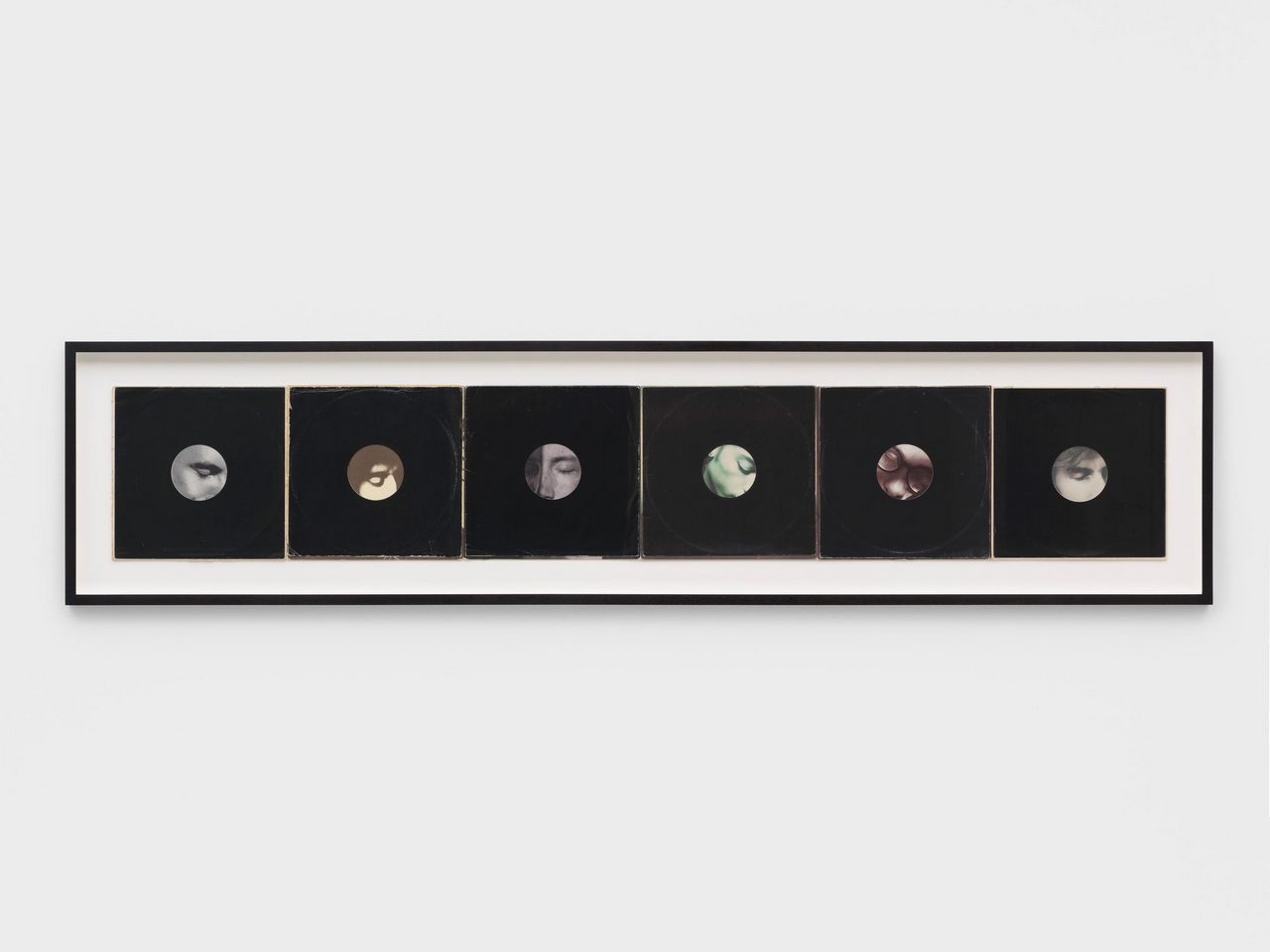
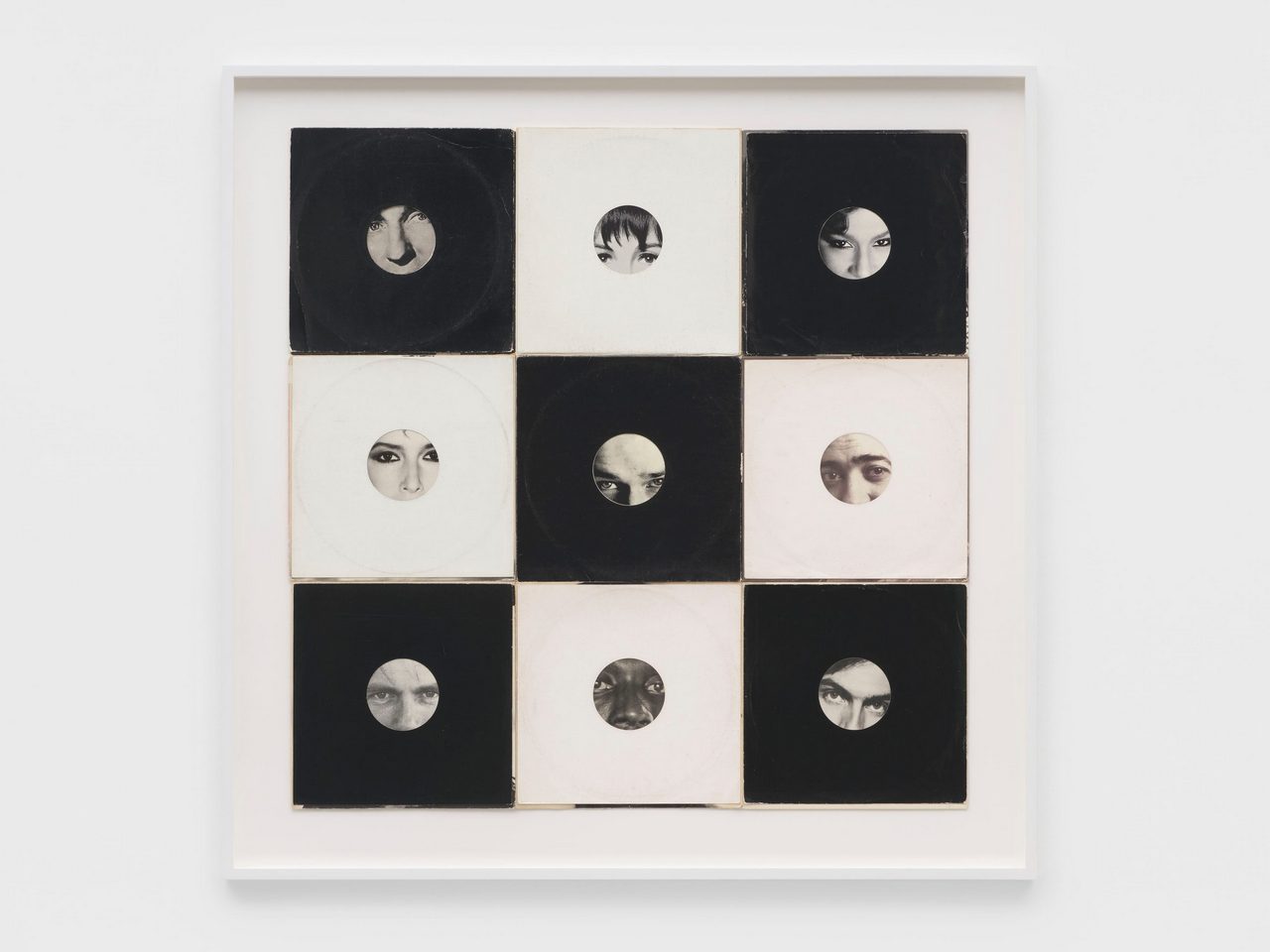
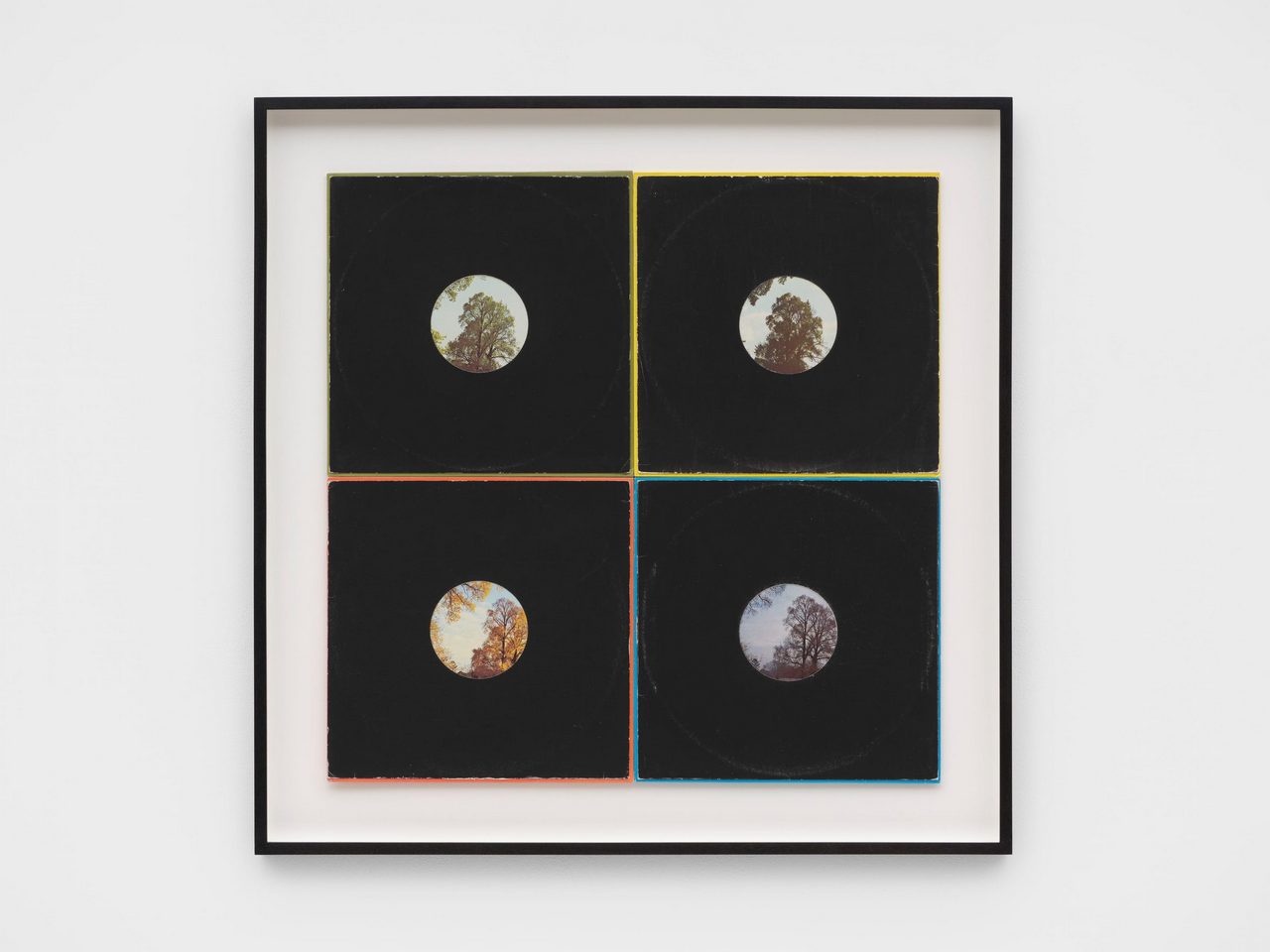
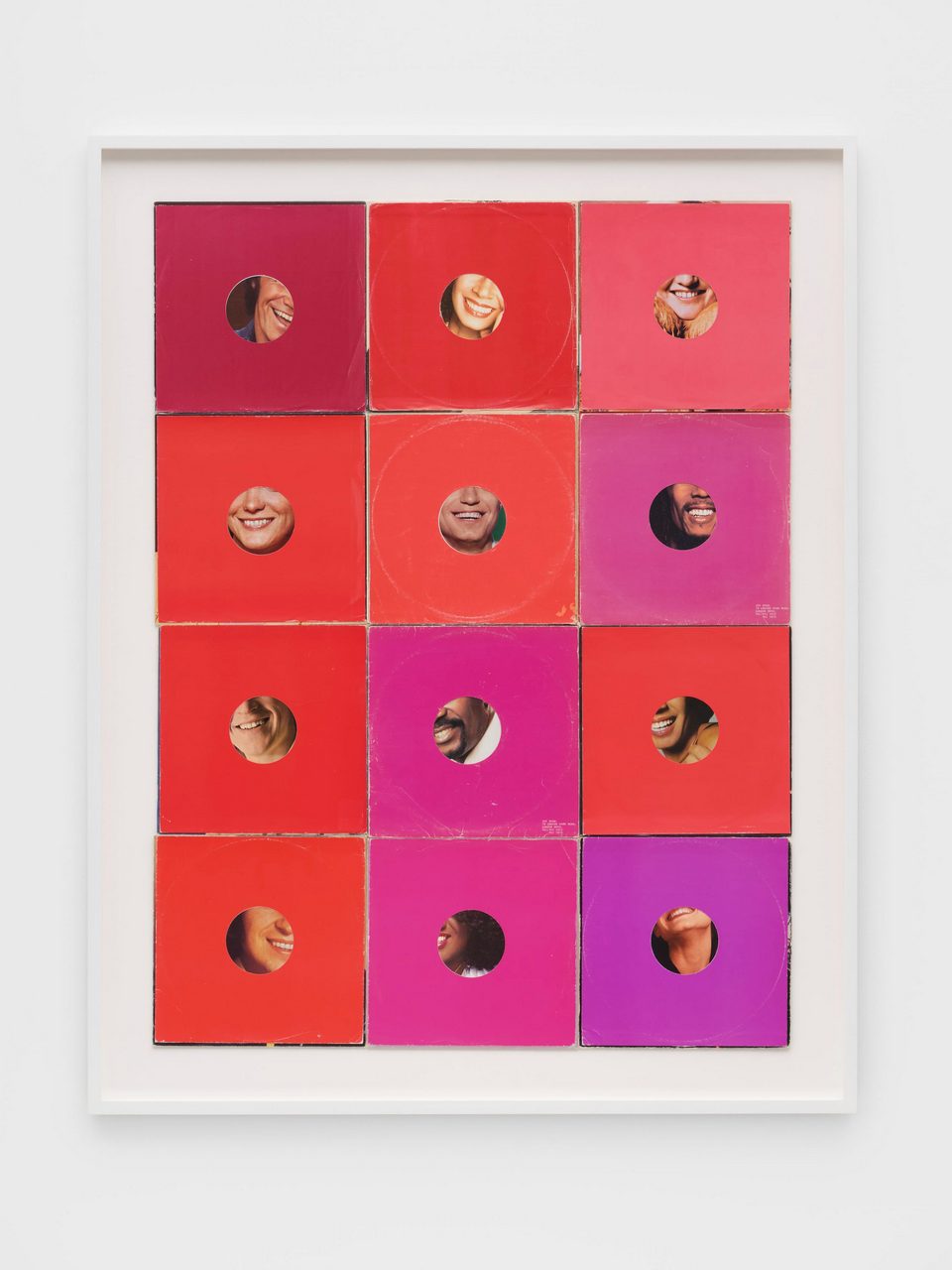
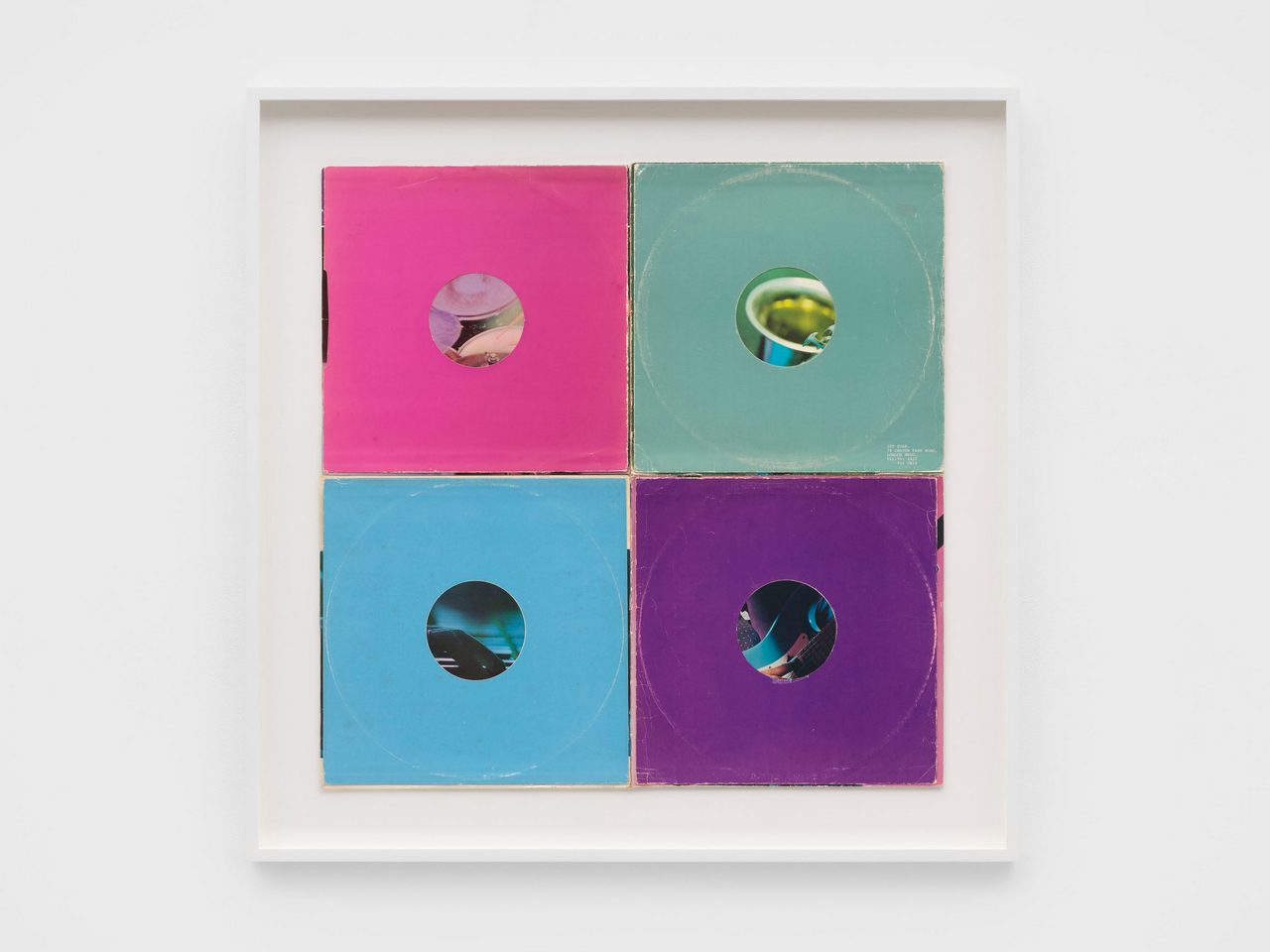
Chance operations are as integral to Marclay’s “Oculi” series as they are to the monotypes, yet they engage striking parallels and divergences when shown alongside one another in the gallery space. Unlike the printed impressions, the Oculi works are assisted readymades that take as their starting point the found records themselves. Using the 12-inch sleeves’ circular apertures—originally cut to reveal the record label—as a framing device, the artist overlays the sleeves on record covers, isolating details of the imagery beneath. The sleeve is transformed from protective packaging into a compositional tool, or even a viewfinder, staging fragments of hands, eyes, and mouths through acts of selection and concealment. Reflecting on the simplicity of this intervention—its lack of editing process—Marclay also notes the imperfect superimposition: the spillover of the minutely larger record cover that creates a border around the sleeve.
The typological groupings of “Oculi” on display harness repetition to show universality and accentuate difference. In “Oculi (Listening Men)”, six record sleeves and covers have been assembled in a single row, their apertures encircling the closed eyes of six men, lost in a music the viewer cannot hear. Their closed eyes signal their immersion in sound, one that requires a wilful separation of the senses—an expression of concentrated listening that appears as both mysterious absenteeism and knowing performativity. A silent representation of sound, as in painting or sculpture, intrigues the artist because its muteness underscores sound’s intangible nature, rendering the image a representation of an absence. Elsewhere, the records of “Oculi (Sunsets)” are also organised in a horizontal line, but instead invoke a filmic sequence or tonal scale, the windows of their color-matched sleeves framing the spectral ombré of seven gradually setting suns. With the trope of the sunset, Marclay makes an overt reference to the passage of time while invoking a private, potentially sentimental, soundtrack in its beholder.
Throughout the exhibition, Marclay’s practice engages with the sonic event in all its permutations. Understanding the recording studio as an instrument in its own right, the artist treats the vinyl record and its imagery by extension as a total work of art. Foregrounding the tactile histories of the objects, his new monotypes and collages combine chance operations and formal, compositional rules to consider the record as a cultural and commercial artefact. A reflection on the passage of time and sound as a carrier of memory, the artworks in this exhibition speak of our persistent efforts to capture the ineffable by way of making record.
Photo: Christian Marclay, Oculi (Quartet), 2026, Four record covers and sleeves, 62.7 x 62.7 cm | 24 3/4 x 24 3/4 in., 77.2 x 77.2 x 4 cm | 30 1/2 x 30 1/2 x 1 1/2 in. (framed), © Christian Marclay, Courtesy the artist and White Cube Gallery
Info: White Cube Paris, 10 avenue Matignon, Paris, France, Duration: 9/9-10/10/2026, Days &Hours: 10:30-12:30 & 13:30-18:00, www.whitecube.com/