PRESENTATION:Hugo Ruyant-Pastoral Melody
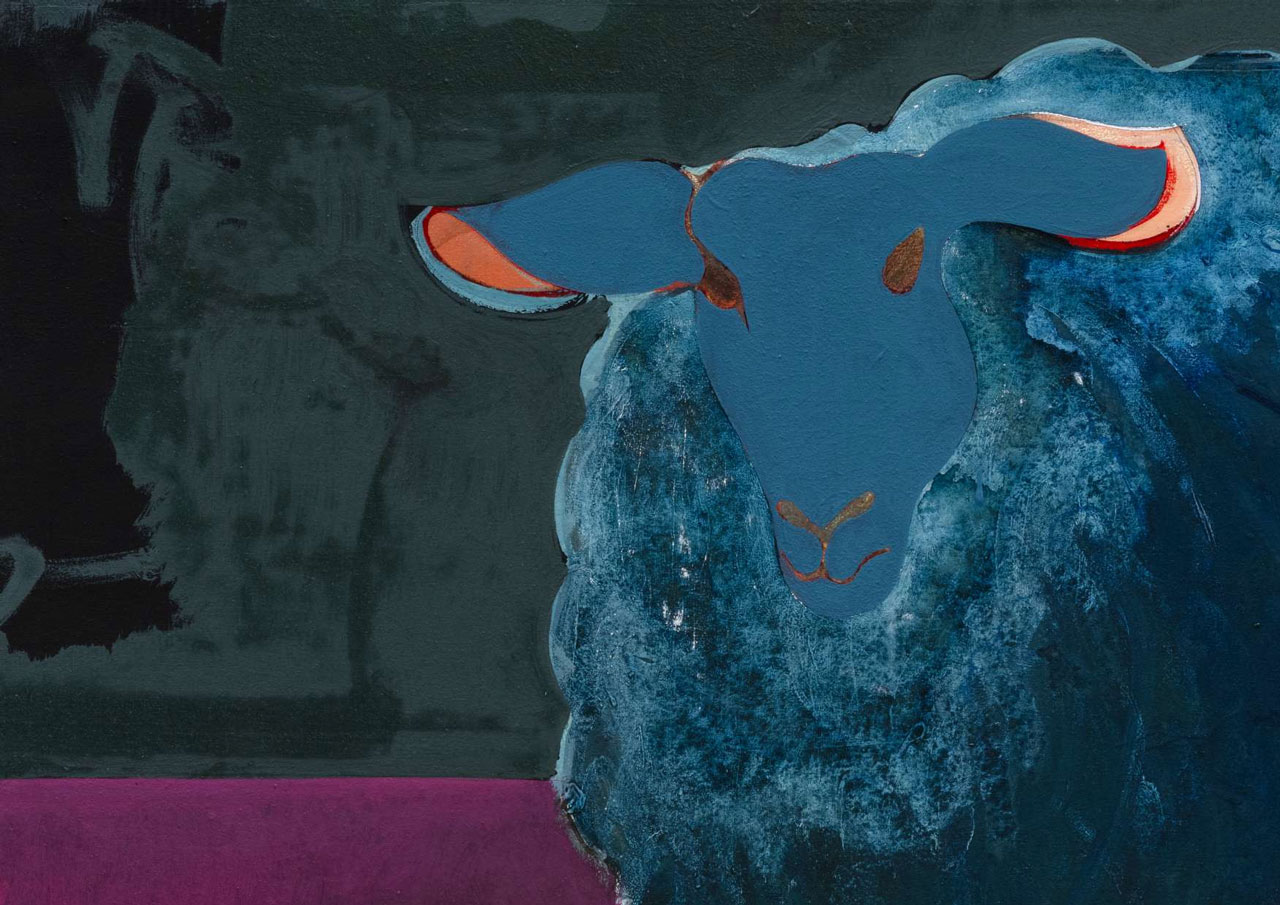
Hugo Ruyant’s paintings are conceived as comic-book squares, propelled to the scale of Painting. By zooming in, each image synthesizes the entire narrative into a “key character”. His drawing and colors cut out characters always in motion, caught in a transitory state where emotions are fixed in matter. The figures are taken out of context, invading our reality. They appear head-on in front of the viewer.
By Dimitris Lempesis
Photo: Michel Rein Gallery Archive
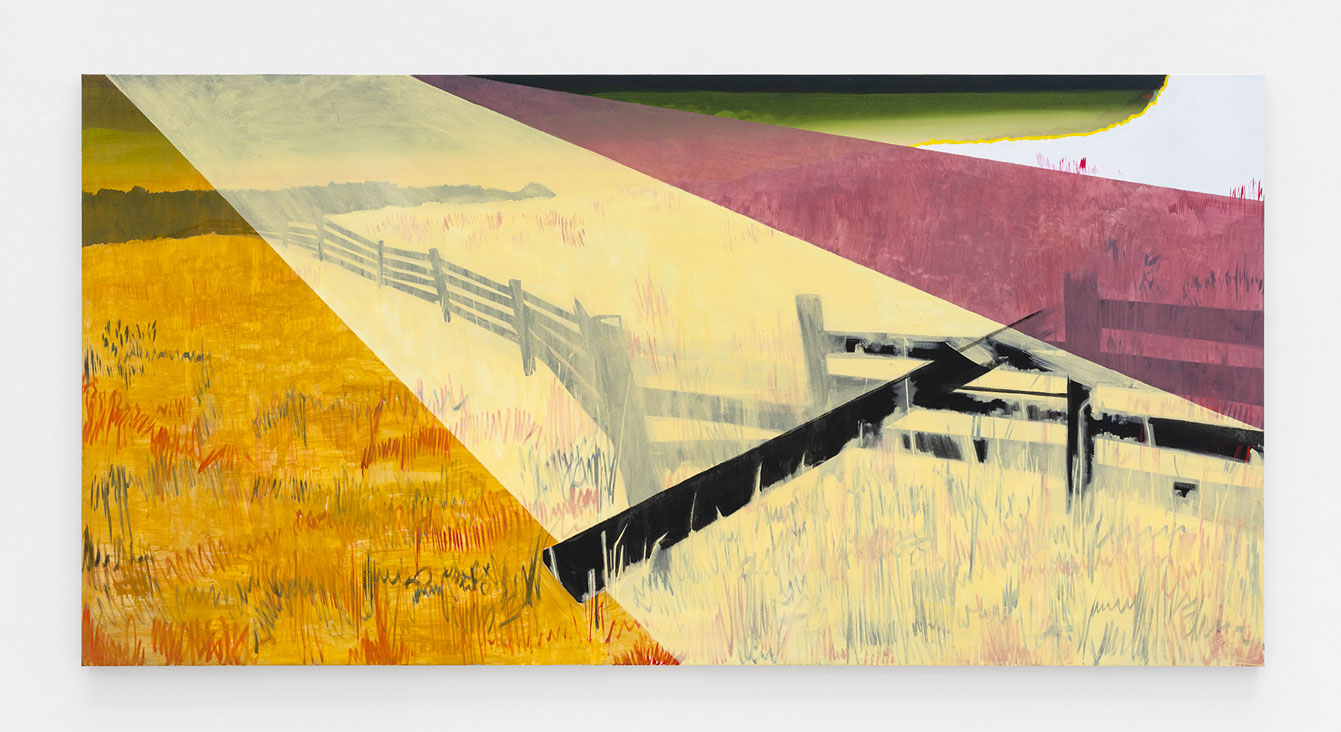
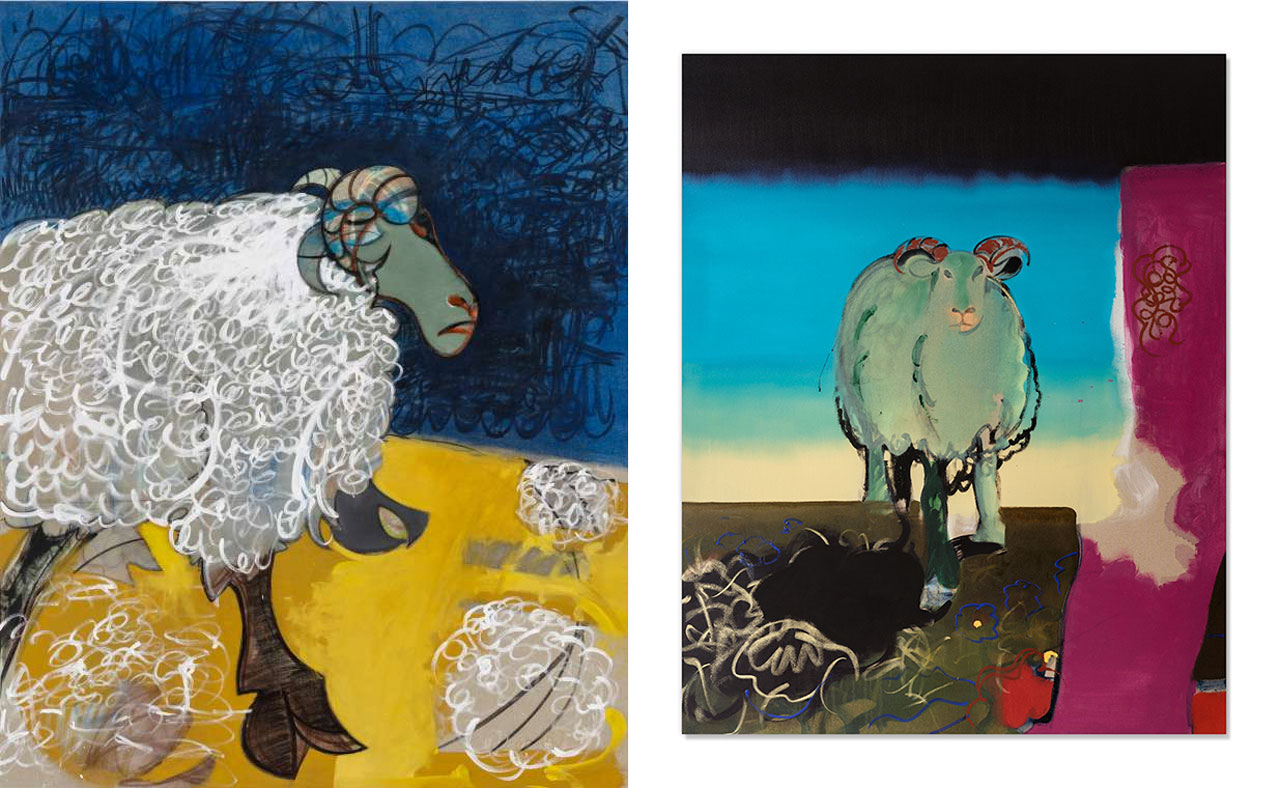
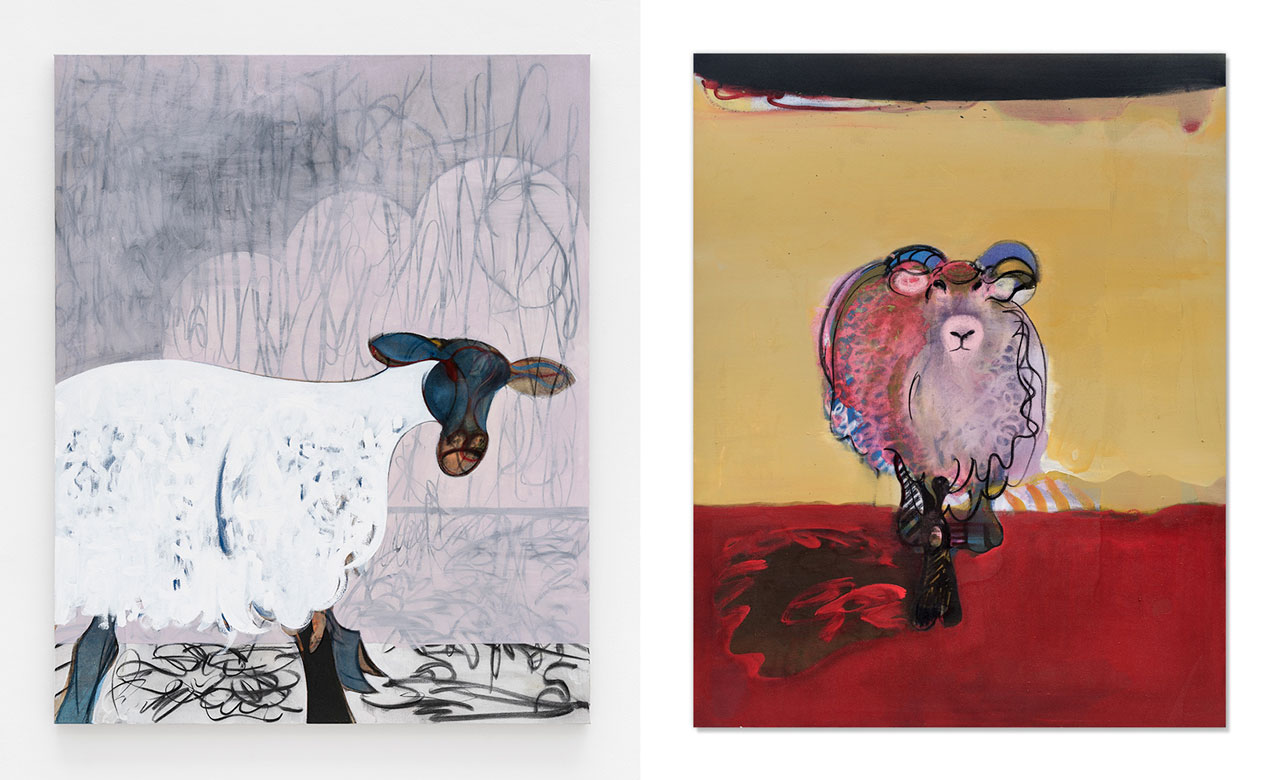
At the intersection where visual pop culture collides with art-historical tradition, contemporary French painter Hugo Ruyant builds a world defined by thresholds, displacements, and subtle subversions. Born in 1992 and working out of Paris, Ruyant brings a distinct kinetic energy to large-scale canvas work. His paintings are conceived as comic-book frames propelled to the scale of painting, zooming in on single moments, cutting out figures in motion, and capturing key characters caught in a transitory state where emotions are fixed in matter. In his exhibition “Pastoral Melody”, Ruyant deploys this graphic technique to take on one of Western painting’s most enduring allegories: the pastoral landscape.
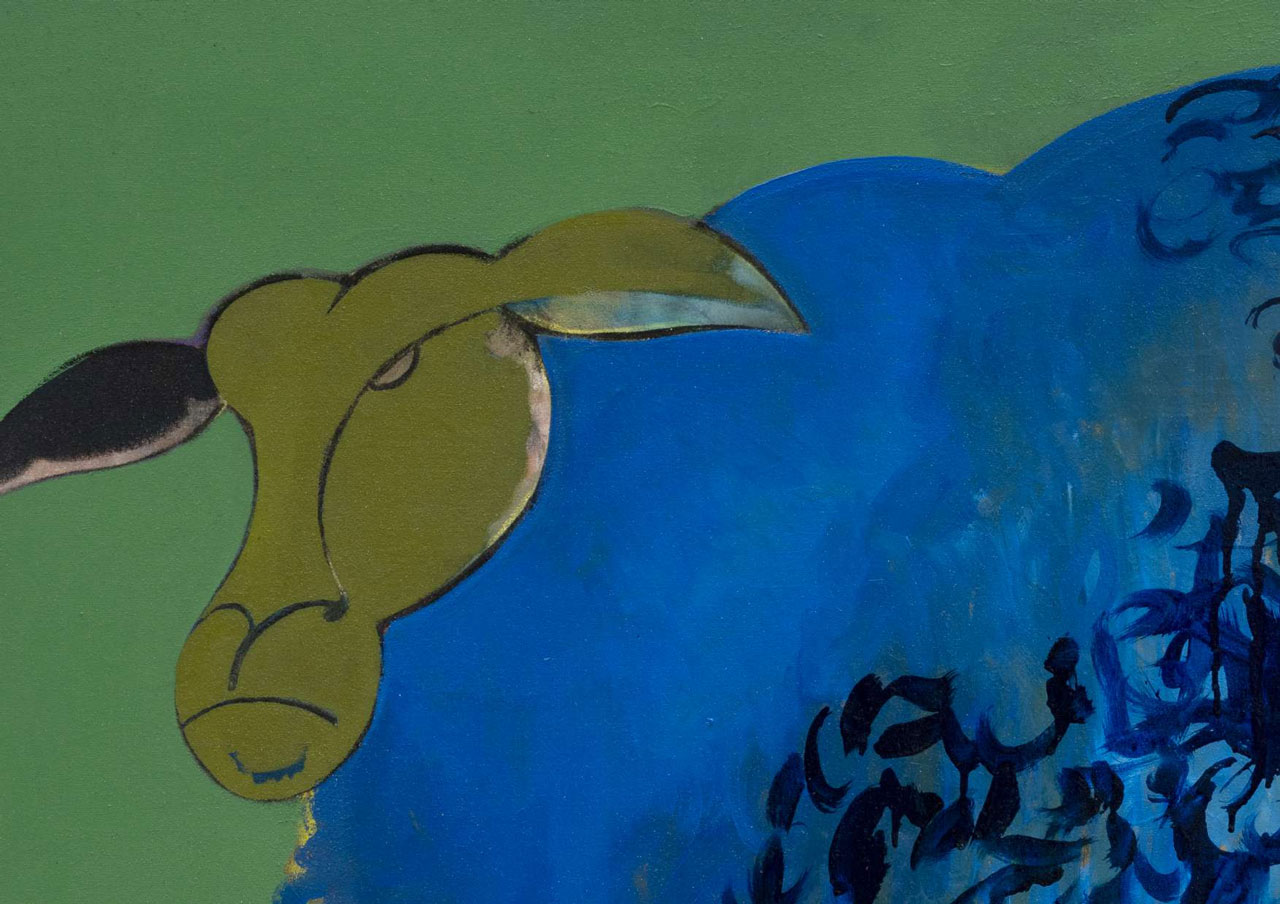
Nothing in Hugo Ruyant’s work is purely demonstrative; everything is a matter of thresholds. The forms remain recognisable, yet their apparent certainty begins to waver. Symbols are never simply stated, but instead emerge almost imperceptibly, allowing familiar shapes to exist on the boundary between certainty and ambiguity. Color structures this space of uncertainty. Rather than accompanying the subject, color transforms it. It generates its own force—a mental light that distances motifs from any descriptive reading. Beneath these surface choices lies the history of painting, operating as a hidden substratum that nourishes the gaze without ever imposing itself as quotation.
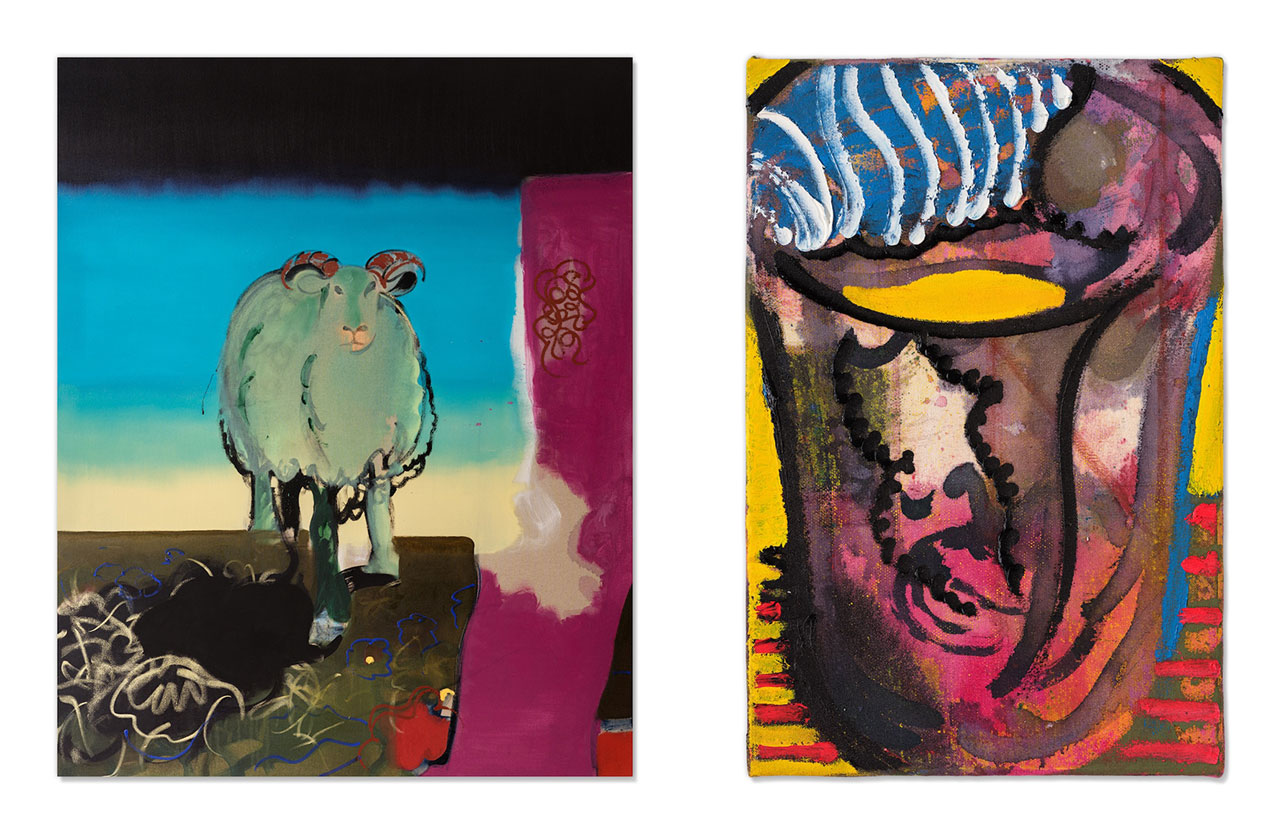
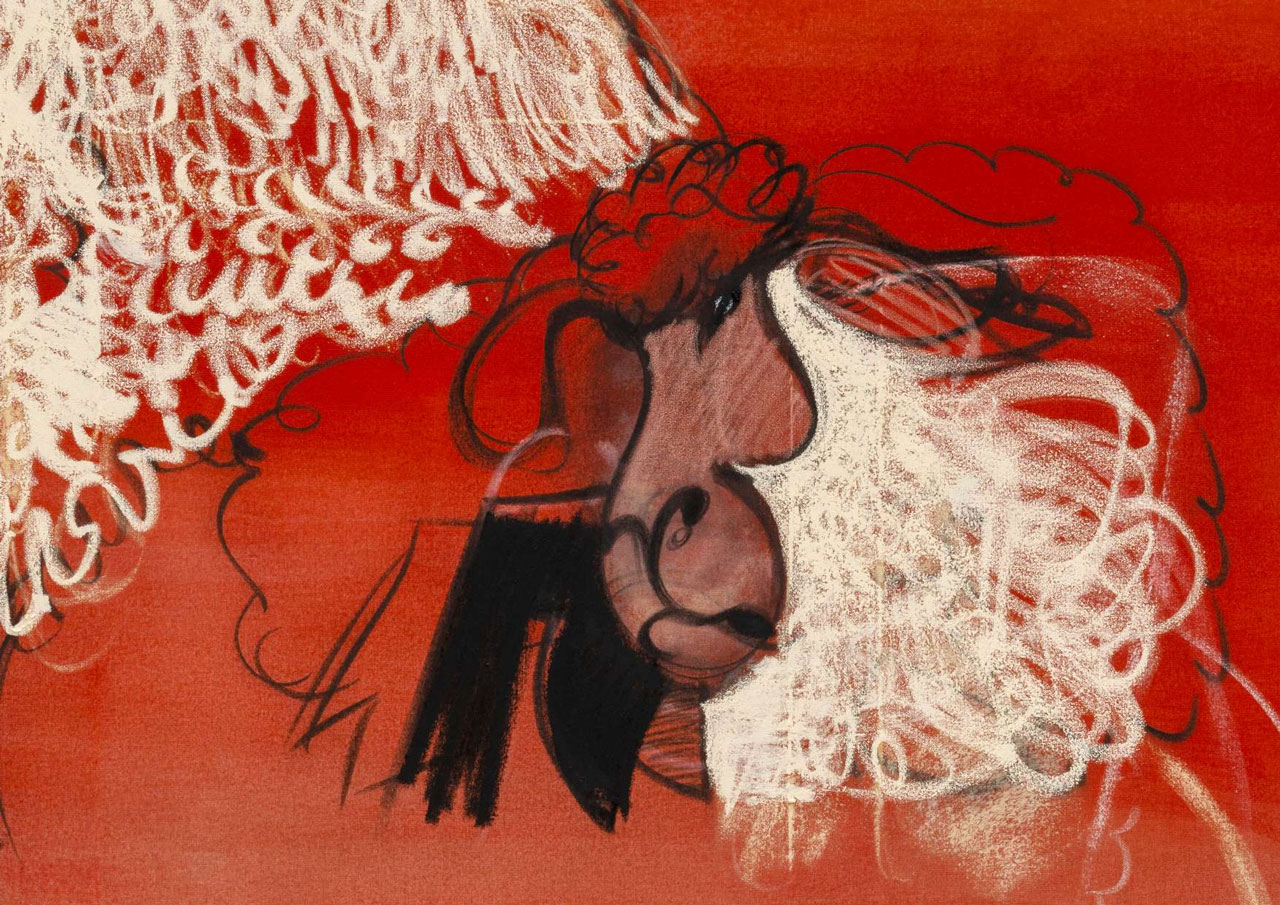
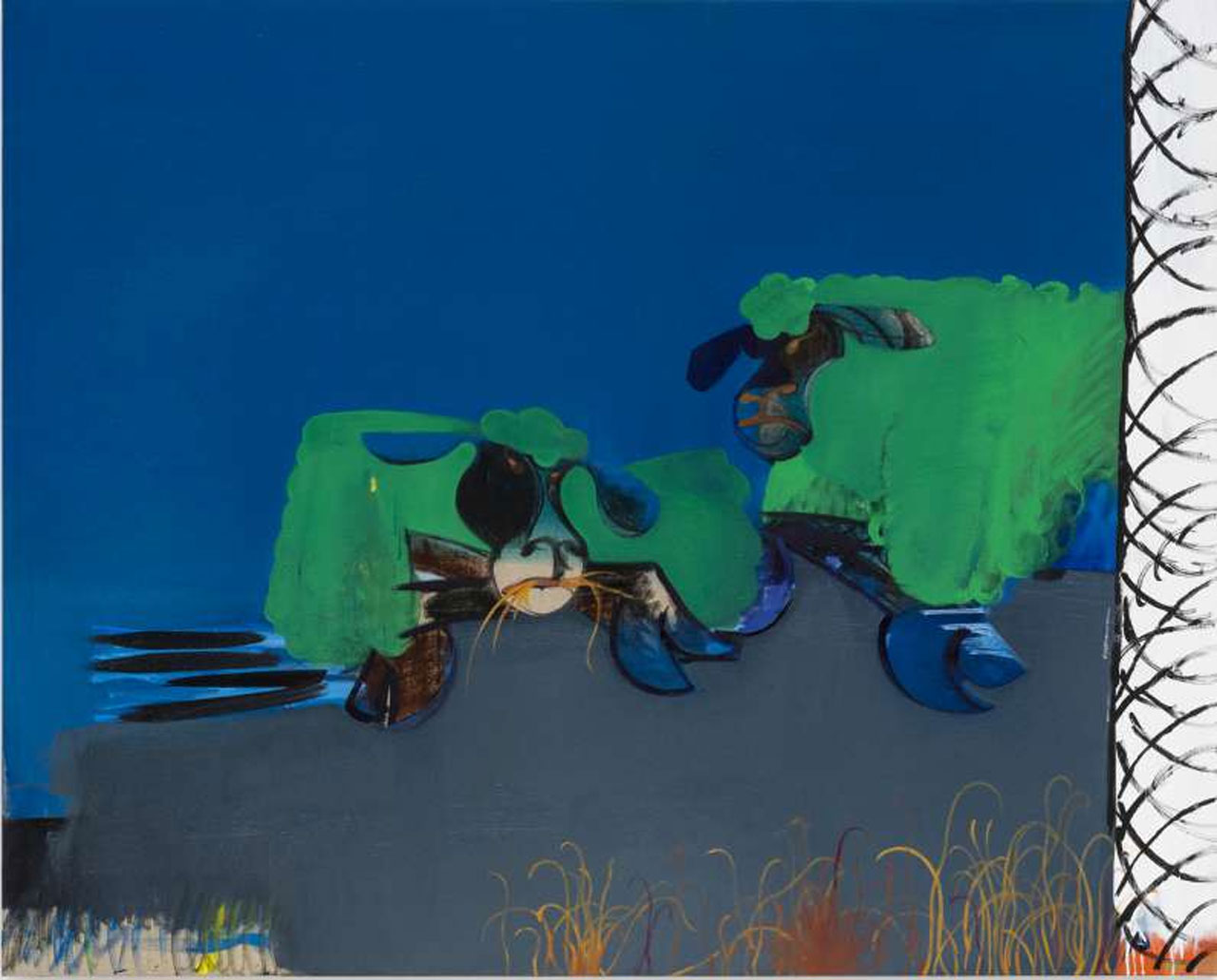
The pastoral motif belongs to the great narratives of Western painting. For centuries, these figures served to articulate ideas of order and the organization of the world. The shepherd leads, protects, and gathers, while the sheep follows and the lamb embodies innocence, sacrifice, and redemption. In “Pastoral Melody”, Ruyant suspends this order. The shepherd disappears entirely from the scene, and the flock ceases to be a uniform, passive mass. Instead, each sheep becomes an individual portrait, asserting an irreducible singularity through its own morphology. By removing the guiding authority of the shepherd, the collective shifts, and painting restores an identity to figures that, for centuries, were deprived of one.
This displacement resonates directly with the present. Contemporary societies continually produce new figures of authority, new beliefs, and new narratives. As voices overlap and certainties fragment, Ruyant’s work poses a crucial question: How might each individual exist within, and act upon, the collective when there is no longer a leader? Set against these earthly presences, paintings of star-filled skies emerge. These imaginary constellations act as maps without territories. They point toward no particular direction, but instead delineate a field of possibilities—a fragile cosmology in which every trajectory remains to be invented. The pastoral landscape thus opens onto another scale, somewhere between the intimate and the cosmic.
This is how Hugo Ruyant’s painting operates: it takes ancient forms and strips them of their original function. It does not reactivate myths; it puts them to the test. This reveals the affinity he claims with the American artist Paul Thek. Their connection relies less on visual appearance than on a shared capacity to unsettle symbolic systems in order to recover, beneath them, a more direct, more uncertain experience of the world.
Photo: Hugo Ruyant, Courtesy the artist and Michel Rein Gallery
Info: Michel Rein Gallery, Paris 42 rue de Turenne, Paris France, Duration: 5/9-10/10/2026, Days & Hours: Tue-Sat 11:00-19:00, https://michelrein.com/