PRESENTATION:Clément Cogitore-Ferdinandea
A leading figure on the contemporary art scene, Clément Cogitore has, for over twenty-five years, developed a body of work at the crossroads of contemporary art and cinema. The power of the images he conjures generates narratives that oscillate between reality and fiction, exploring how we inhabit the world today. Collective memory, rituals, and the sacred flow through his films and installations, uncovering the political, social, and mythological forces that shape our contemporary experience.
By Dimitris Lempesis
Photo: Galerie Nathalie Obadia Archive
Clément Cogitore presnts his solo exhibition “Ferdinandea”, following presentations at Madre — Museo d’Arte Contemporanea Donnaregina in Naples — and subsequently at Mucem in Marseille, under the title “Clément Cogitore. Ferdinandea, l’île éphémère”, this body of work continues its journey in Paris in a new configuration. A film, videos, archival documents and engraved photographs compose the narratives of an island whose imprint endures beyond its disappearance.
Ferdinandea appeared between late June and mid-July 1831 in the Strait of Sicily, off the Tunisian coast. Born of underwater volcanic activity, the island emerged from the depths before disappearing a few months later beneath the waters of the Mediterranean. While the inhabitants of the nearby shores feared the awakening of a sea monster, this new territory aroused the curiosity of scientists and explorers, while European powers projected onto it their desires for appropriation. Within a few weeks, the island was claimed by Great Britain, France and the Kingdom of the Two Sicilies for its strategic position. Its multiple names — Ferdinandea, Julia, Graham, Nerita — remain recorded in the archives as so many attempts to possess it. No sooner had it been named than it disappeared, leaving behind a paradoxical territory: an ephemeral island, which existed without ever being durably possessed; a fragment of land whose disappearance did not erase its narratives.
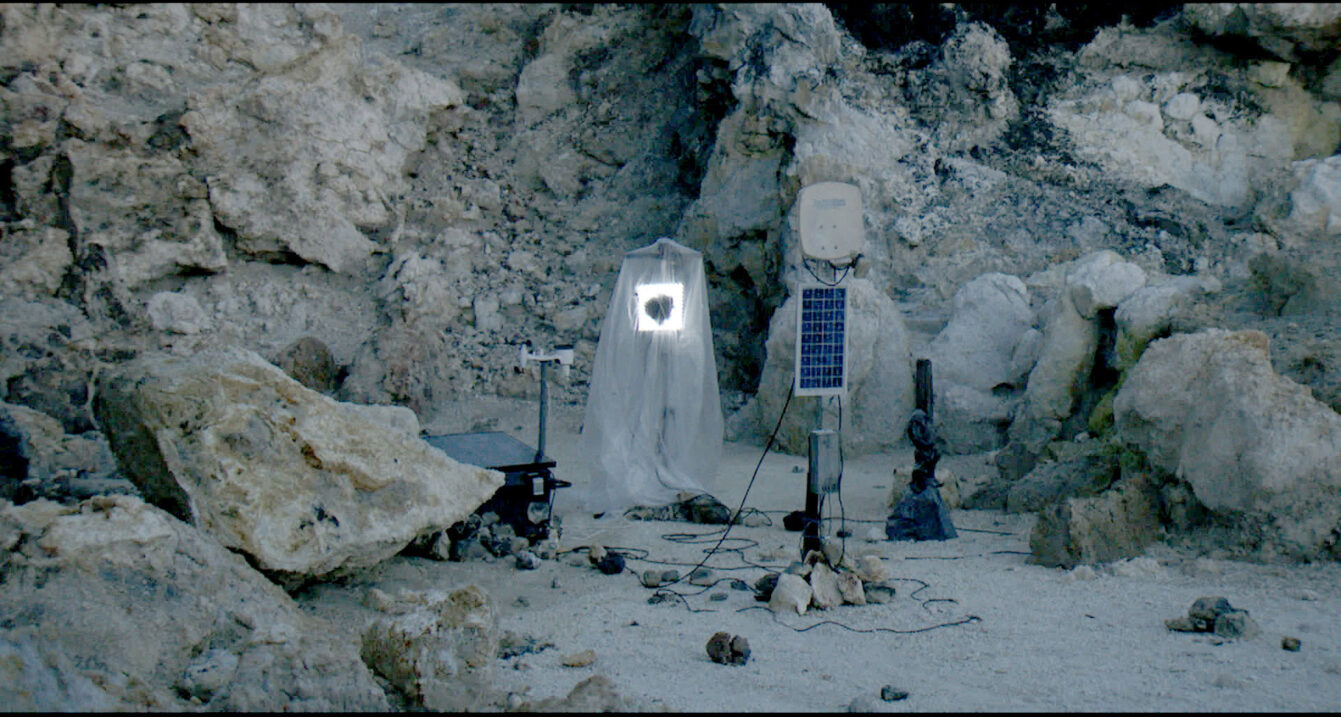
The exhibition opens with “Ferdinandea: Prémonitions”, a 16 mm film presented as a fictional cinematic archive. Here, the island is not yet visible, yet everything already seems to announce it. A table is laid — tablecloth, plates, teapot, sugar bowl — while the image gradually darkens, causing familiar objects to tip into an unsettling presence. The teapot turning black, fish abandoned to the movement of the waves, the light struggling to bring forth an image: together they compose a series of “suspended signs”, heralding the island’s appearance. In a book devoted to Clément Cogitore’s work, the philosopher and anthropologist Federico Leoni identifies this situation and describes it as a “pure sign”1: something is given to be seen in these elements, without its meaning yet being decipherable. Without documenting the island, the film explores this moment of uncertainty in which the land seems to want to say something, without yet delivering its message.
This attention to signs continues in “Ferdinandea: Incertitudes”, a nine-part video in which English, Italian, Sicilian, Maltese and Arabic intermingle. Following a prologue retracing the emergence of Ferdinandea in the nineteenth century — and its successive appropriations by colonial powers — the work evokes, in fragments, its twentieth-century history, before shifting into speculative fiction. Archives, re-enacted moments, radio voices and scientific surveys compose a cartography of metamorphosis, traversed by popular beliefs, scientific knowledge and national rivalries surrounding the island.
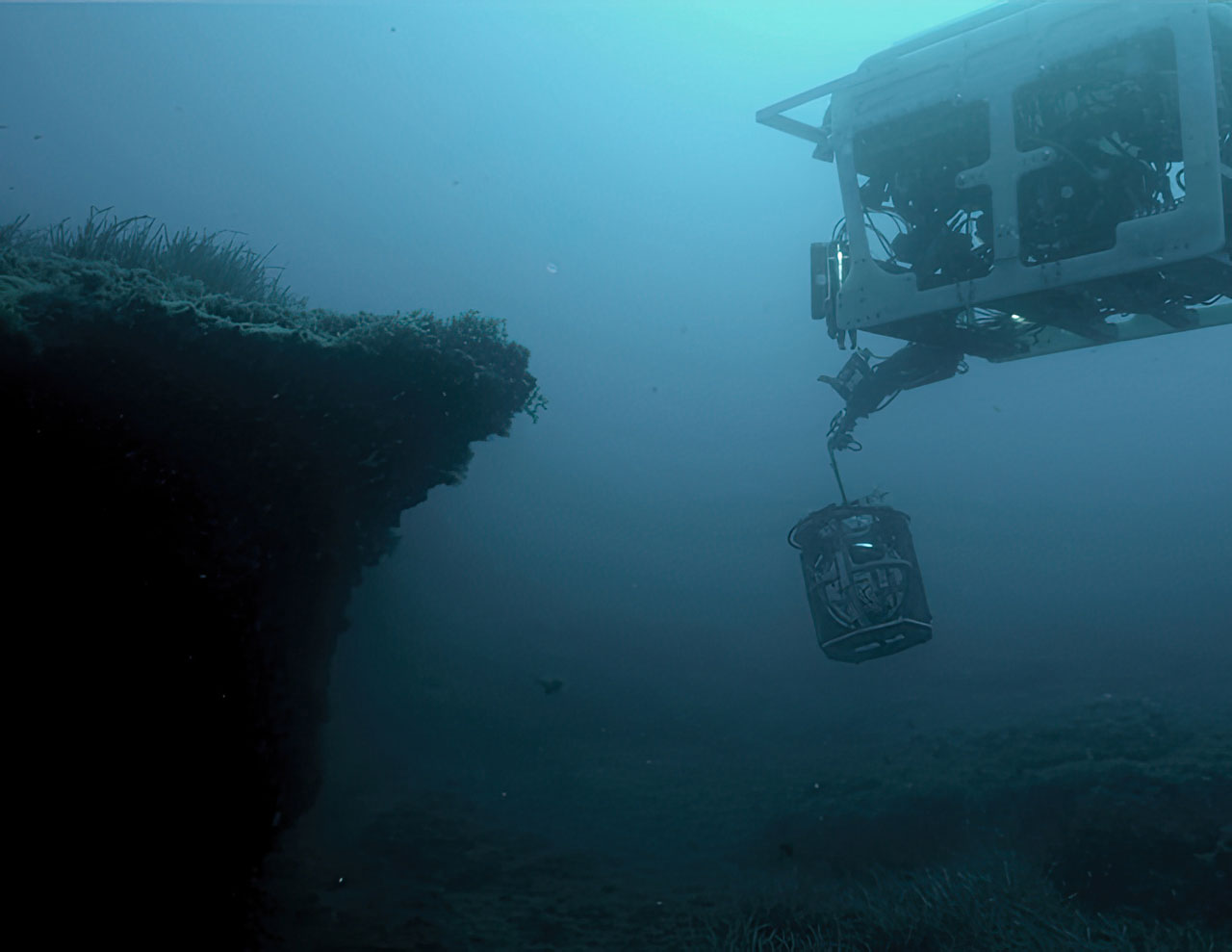
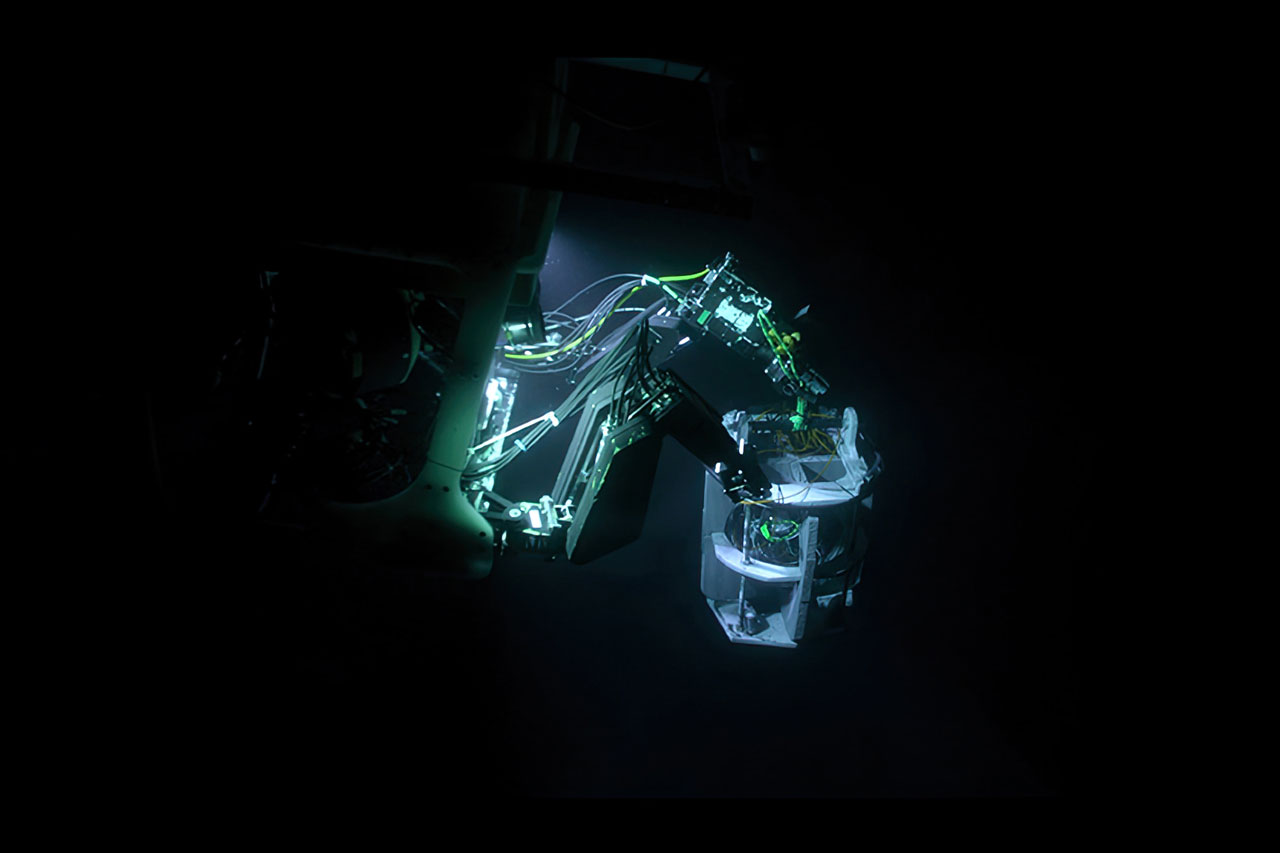
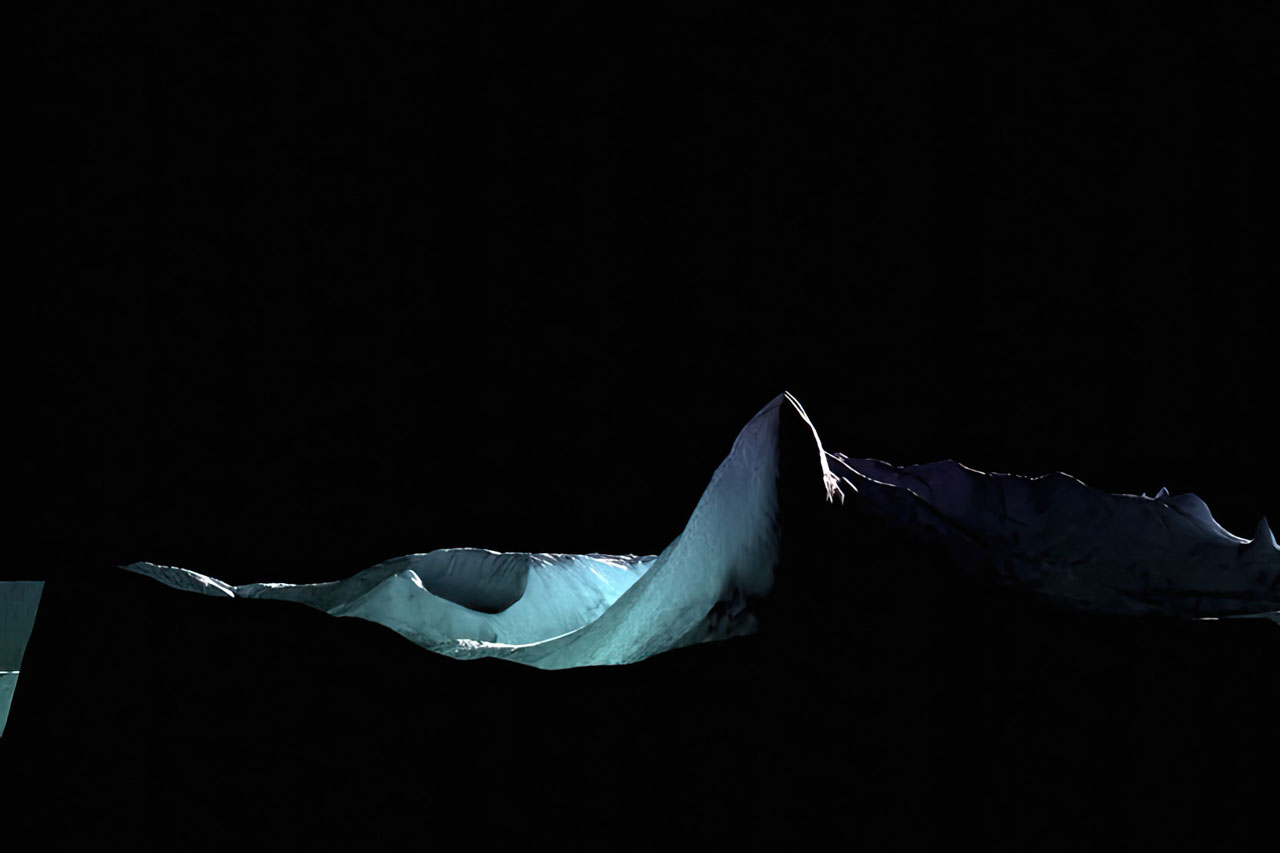
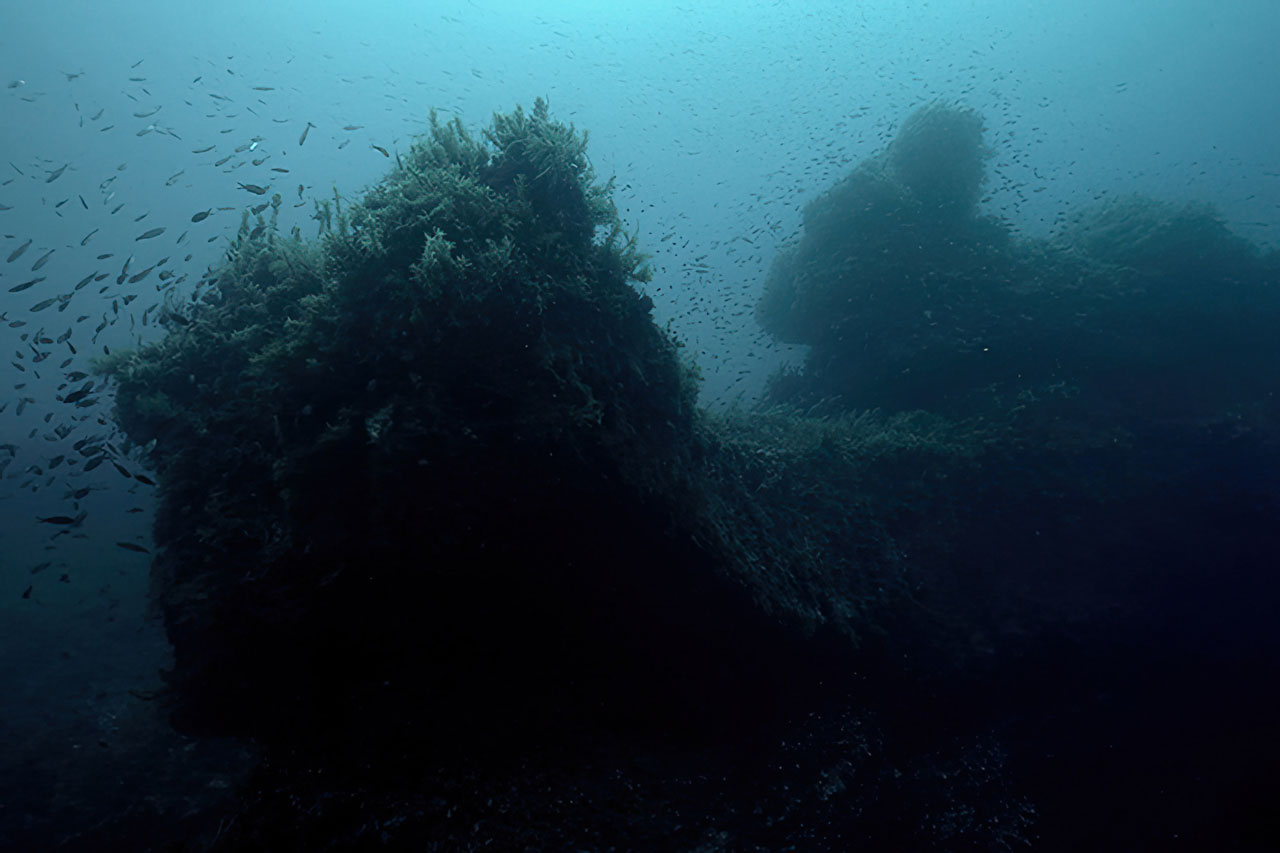
As the exhibition unfolds, attention shifts toward a scientific investigation conducted on Graham Bank, of which Ferdinandea forms part. In “Ferdinandea: Vigilances”, a camera descends into the depths and gradually reveals blocks of basalt now eroded by the sea. The documentary style might suggest a form of objectivity: Ferdinandea finally seems locatable. Yet the closer the film comes to the island, the more unstable it becomes. Where is Ferdinandea situated? In the rock, the algae, the fish, the currents that surround it? Scientific exploration thus reveals its own limits, pointing to the island in a shifting and almost dissolved form. At the end of the expedition, a seismograph is placed on the seabed near the submerged island. The instrument becomes a listening device, capturing the tremors of a possible resurgence: here, Ferdinandea exists in what vibrates and makes itself heard.
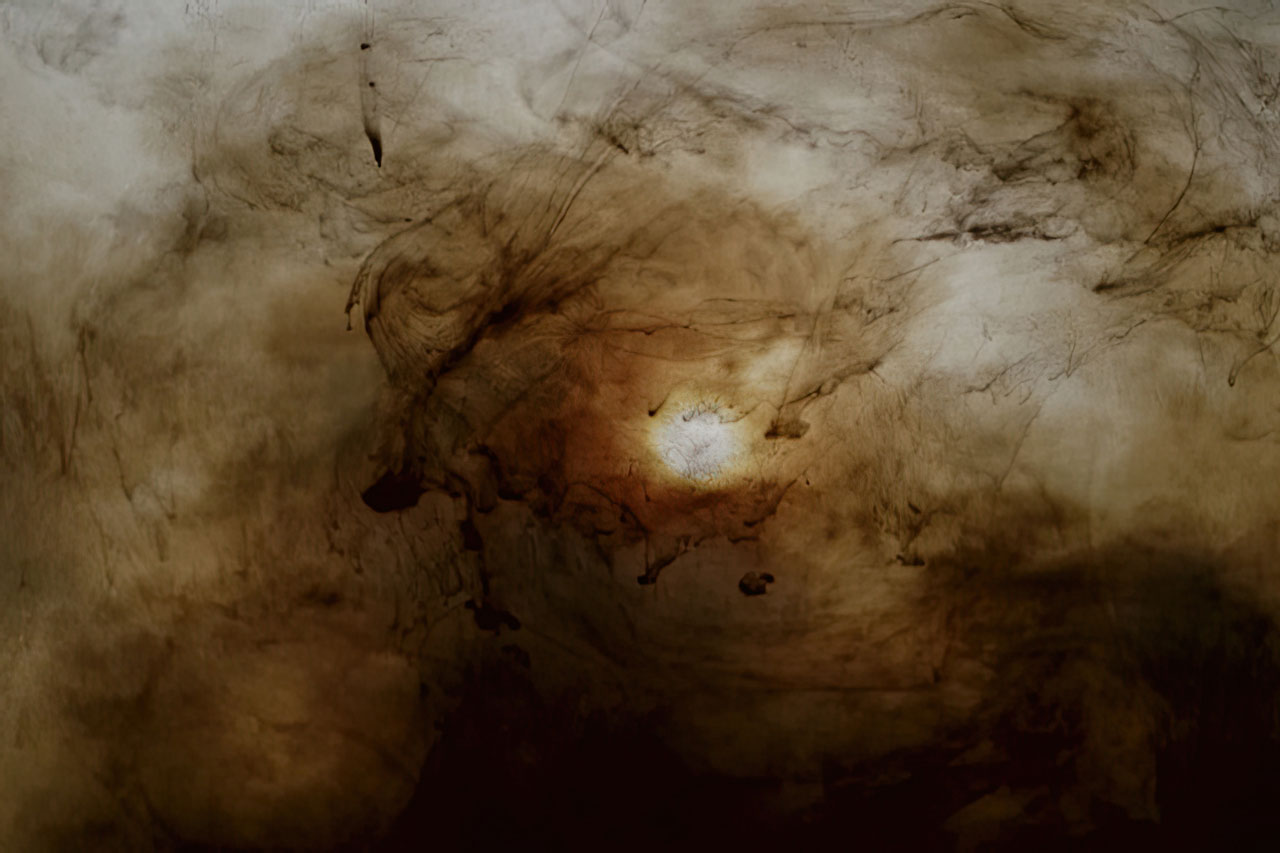
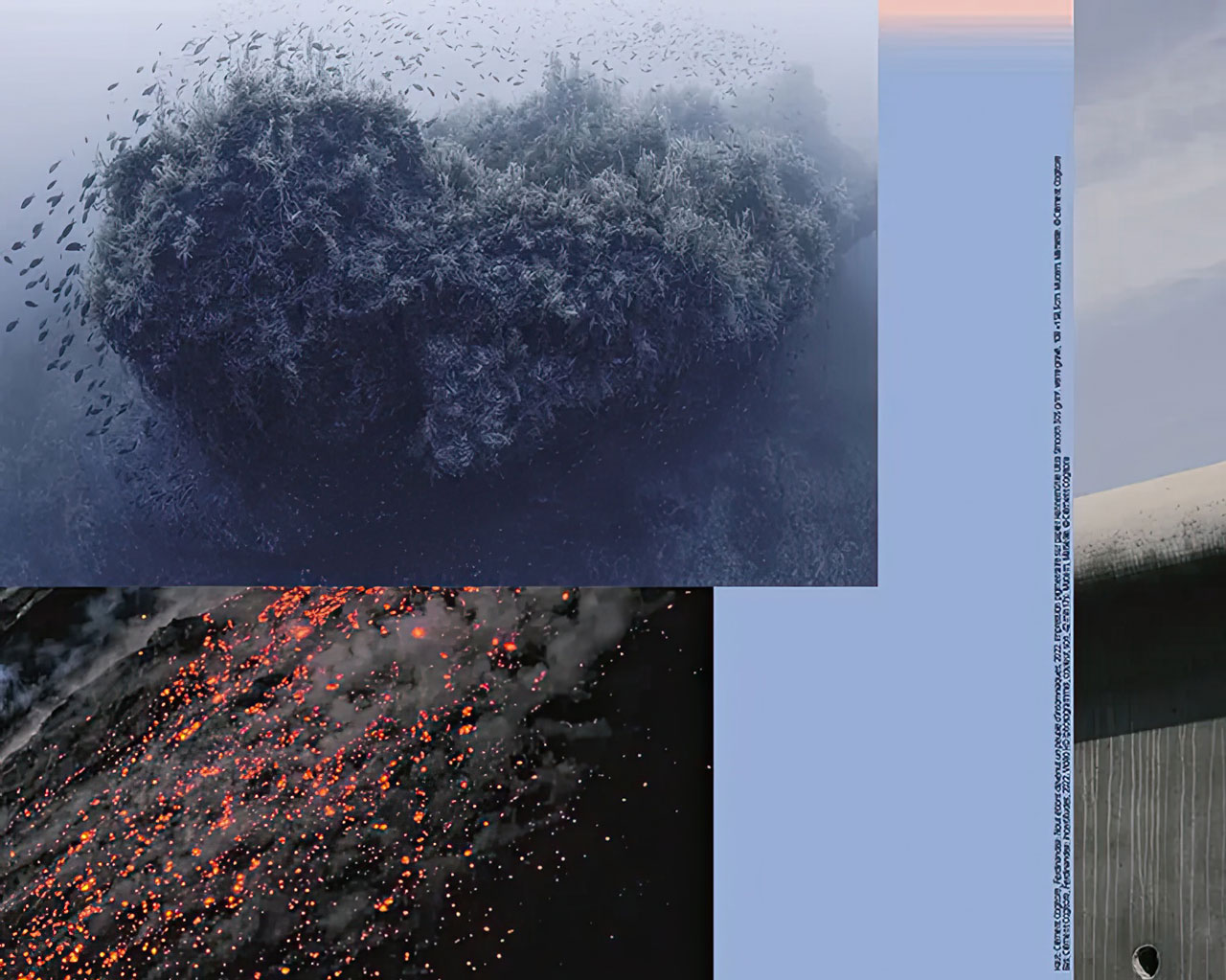
Engraved photographs bearing phrases in several languages extend, within the exhibition, this connection between image and omen. Their inscriptions function like oracles: they do not explain the works, but open up several possible readings. The image always seems to be in transformation. “Ferdinandea: Cendres” confirms this idea: a reproduction of a nineteenth-century engraving by Benedetto Marzolla is immersed in a bath of volcanic ash. It does not merely serve to represent Ferdinandea; it recalls what defines the island: its deposits, accidents and metamorphoses.
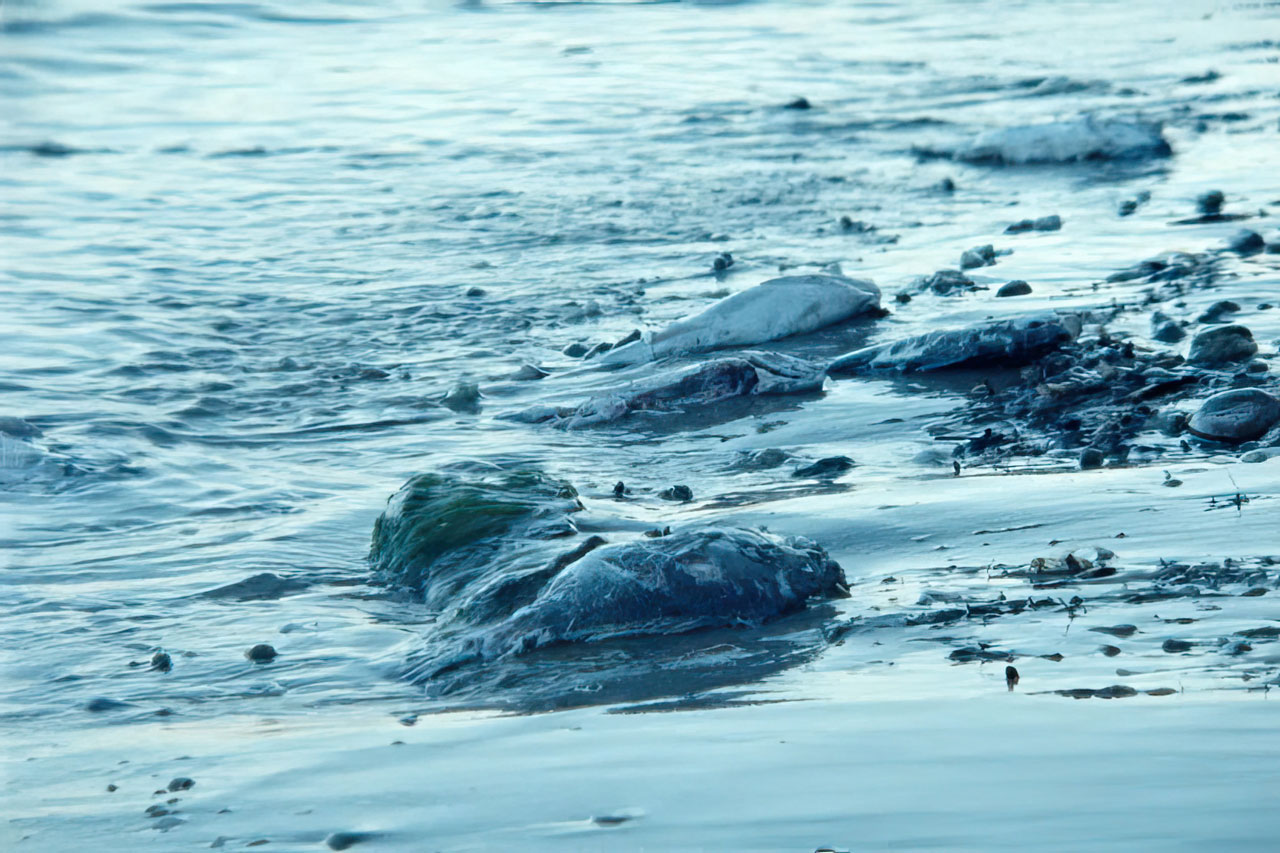
Photo: Clément Cogitore, from the series “Ferdinandea”, © Courtesy, Courtesy the artist and Galerie Nathalie Obadia
Info : Galerie Nathalie Obadia, 3 rue du Cloître Saint-Merri – 75004 Paris, France, Duration: 5/9-31/10/2026, Days & Hours: Mon-Sat 11:00-19:00, www.nathalieobadia.com/