ART CITIES:N.York-Sajal Sarkar
Sajal Sarkar’s practice explores transformation, identity, migration, and the fragility of human civilization. Working across painting, drawing, printmaking, and sculpture, he combines figuration and abstraction with symbolic references to mythology, environmental crisis, political unrest, and displacement. His recent works, described as “contextual abstraction,” use fragmented bodies, skeletal forms, landscapes, and layered materials to create psychologically charged images that connect ancient narratives with contemporary anxieties.
By Efi Michalarou
Photo: Aicon Contemporary Archive
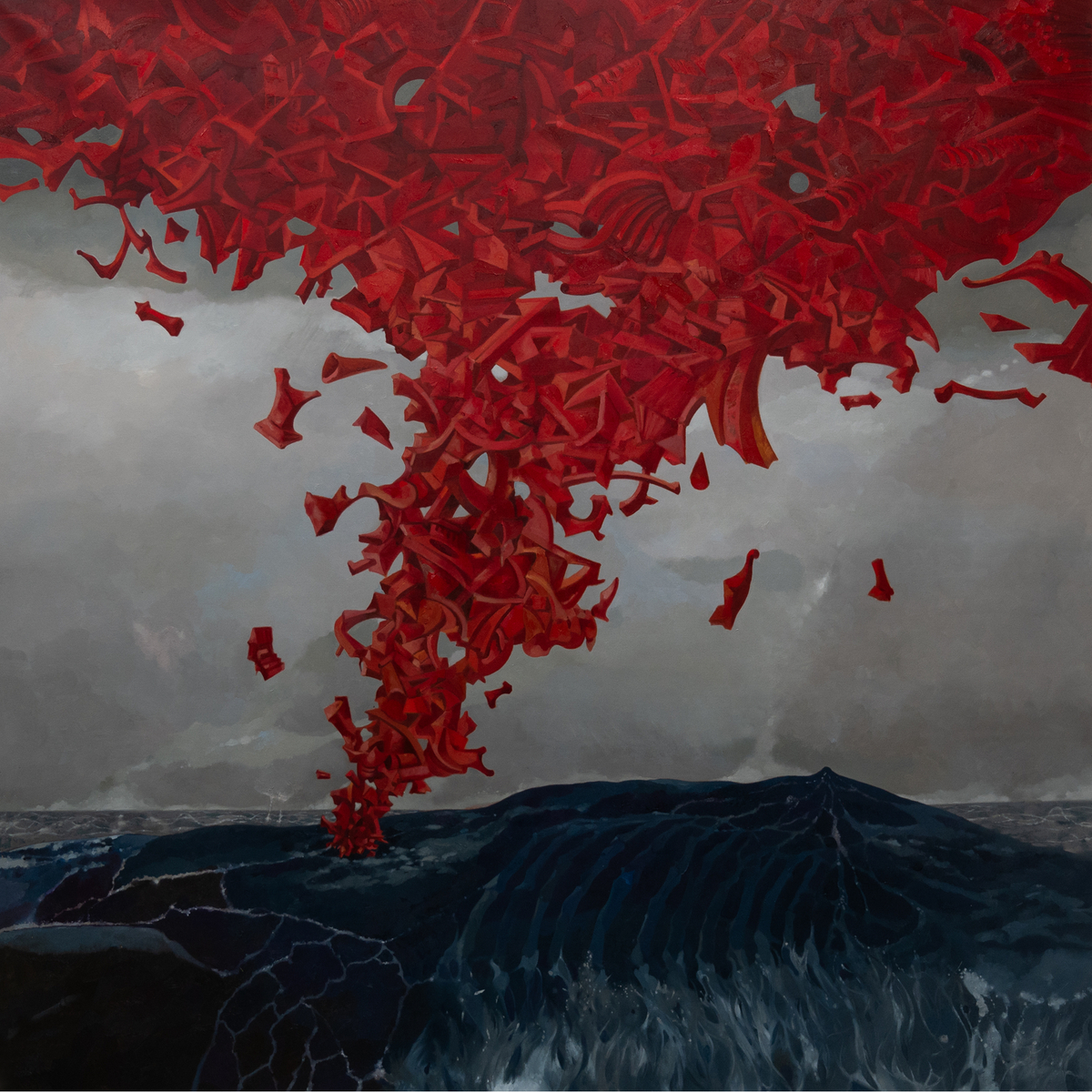
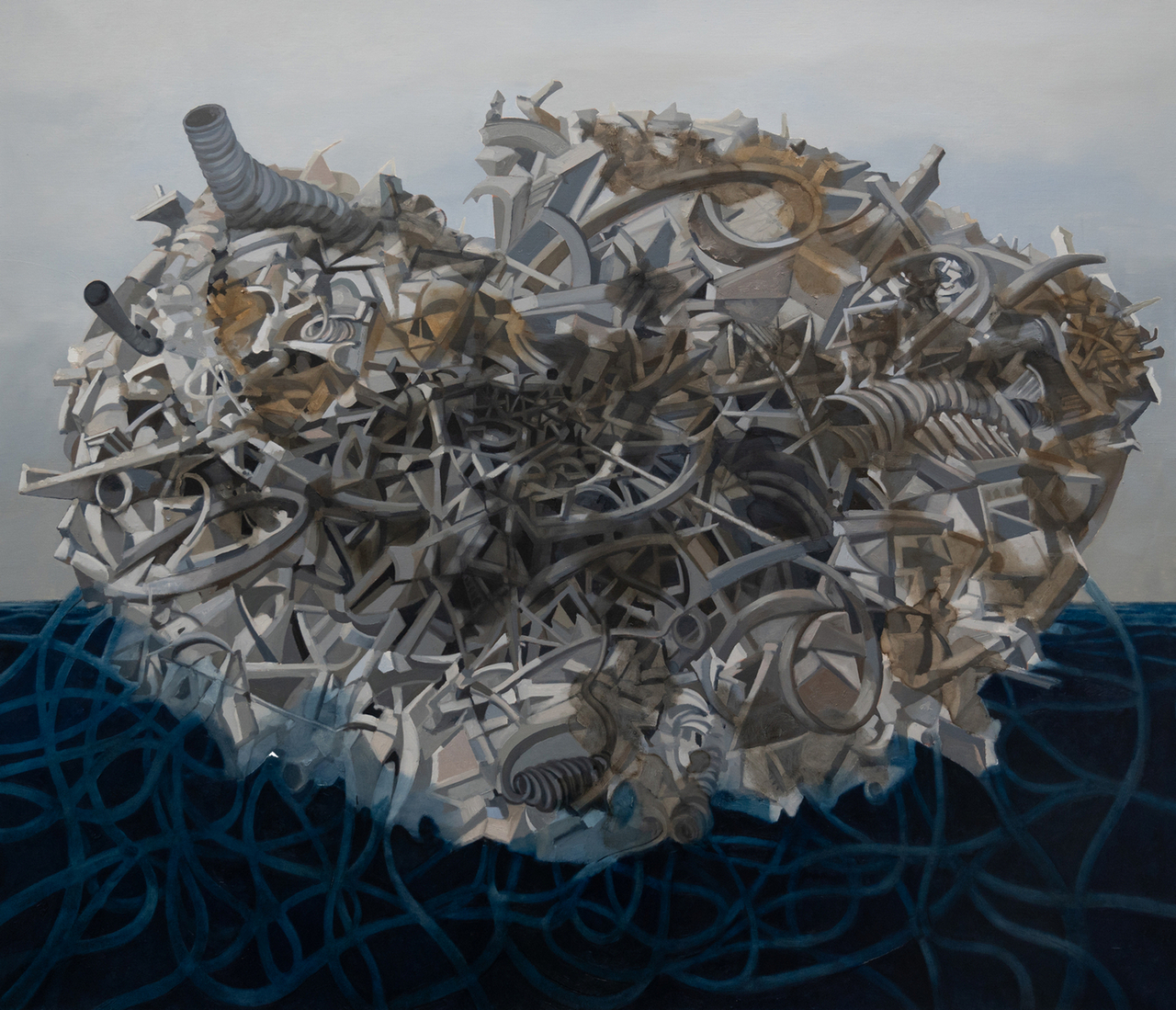
A desolate landscape unfolds across the canvas, punctuated only by faint traces of life hovering in the distance, where a strategically placed horizon sharply splits the terrain from the sky. This familiar, evocative trope of Romantic landscape painting, which Indian-born artist Sajal Sarkar spent over a decade refining, makes a prominent return in his series “Birth of Another God”, albeit with a violent twist. A massive, bizarre structure in the foreground interrupts the horizon, assembled from thousands of seemingly miniature fragments. Upon closer scrutiny, this structure reveals itself as a precarious amalgam where recognizable urban detritus and skeletal remains interlace with anonymous, unidentifiable forms. The entire cluster feels tentative, constantly threatening to fall apart under its own weight. It is precisely this friction between recognition and obscurity—between figuration and pure form—that anchors Sarkar’s visual language, positioning his practice within a vital historical dialogue surrounding the limits and politics of abstract art.
To understand Sarkar’s formal enterprise, one must examine the ideological paradoxes embedded within Western modernist abstraction. Throughout the twentieth century, movements defining themselves through terms like non-figurative or non-objective operated on a fundamental fallacy regarding pure abstraction. If figuration encompasses not merely human representation but any reference to corporeal reality, then pure non-objectivity is inherently a myth, as every painted mark retains the capacity to invoke a material reference. Kazimir Malevich’s iconic “White on White” from 1918 unequivocally demonstrated that pictorial realism and abstraction are not mutually exclusive opposites, but rather symbiotic forces embedded within one another, as his tilted white square inevitably reads as a blank canvas mounted against a wall. Early American Minimalists like Frank Stella similarly exposed this tension, revealing that formalist iconoclasm was largely rhetorical.
Furthermore, modernist abstraction historically carried hidden dynamics of power, as European and American movements were overwhelmingly launched by white, heterosexual male artists whose institutional standing permitted them to claim their subjective positions as universal. By branding their work as self-referential formalism, the art establishment reinforced a specific demographic’s perspective under the guise of neutral art. The critical revisions of the late twentieth century dismantled these utopian claims, arguing that an artist’s specific historical and political geography cannot be erased from the work. This critique catalyzed the rise of New Abstraction at the turn of the millennium, spearheaded by artists of color and diverse backgrounds like Mark Bradford, Julie Mehretu, Chris Ofili, and Nari Ward, who repurposed abstract strategies to encode surfaces with social, political, and material markers of reality.
Sajal Sarkar’s journey to this contemporary abstract landscape followed a markedly different trajectory, having been born, raised, and artistically trained far away from this milieu in Kolkata, India. The primary goal of art training in Kolkata institutions has long been the enhancement of technical skill, breeding a allegiance to figurative representation that neat fits into the city’s robust history of left-leaning intellectual culture. When Sarkar later relocated to Baroda in the state of Gujarat, he brought a deeply humanistic orientation. Troubled by crises of human suffering, his work from the Baroda period featured impeccably rendered bodies writhing in agony, channeling existential dread through explicit anatomical forms.
The decisive turning point in Sarkar’s practice occurred in 2016, when he immigrated to the United States with his family. Navigating an unfamiliar art ecosystem while confronting the xenophobia of American society forced a profound period of self-reflection that led him to rigorously revisit his entire creative process. Logistical constraints in his adopted home—most notably the lack of a large studio—pushed him away from sprawling canvases toward small-scale watercolors and drawings. Forced to adapt, Sarkar systematically stripped away the direct anatomical realism of his past, arriving at a radical simplification of form that transformed his expressive vocabulary into an intimate experience.
This stylistic evolution manifested in his 2019 exhibition “Perilous Home”, which established the groundwork for his current aesthetic. The works fell into two distinct groups: the first offered panoramic bisected landscapes where subtly curved horizons were harshly invaded by atmospheric threats like dark storm clouds, fire, and smoke. Sarkar mastered the art of controlled accidents, allowing dried watercolor puddles, stains, and pigment blotches to function as dynamic topographies of environmental distress. The second group moved entirely away from spatial illusionism, prioritizing flat surface design, geometric interaction, and an allover composition that, despite its detachment from corporeality, testified to an undaunted optimism amid personal and political peril.
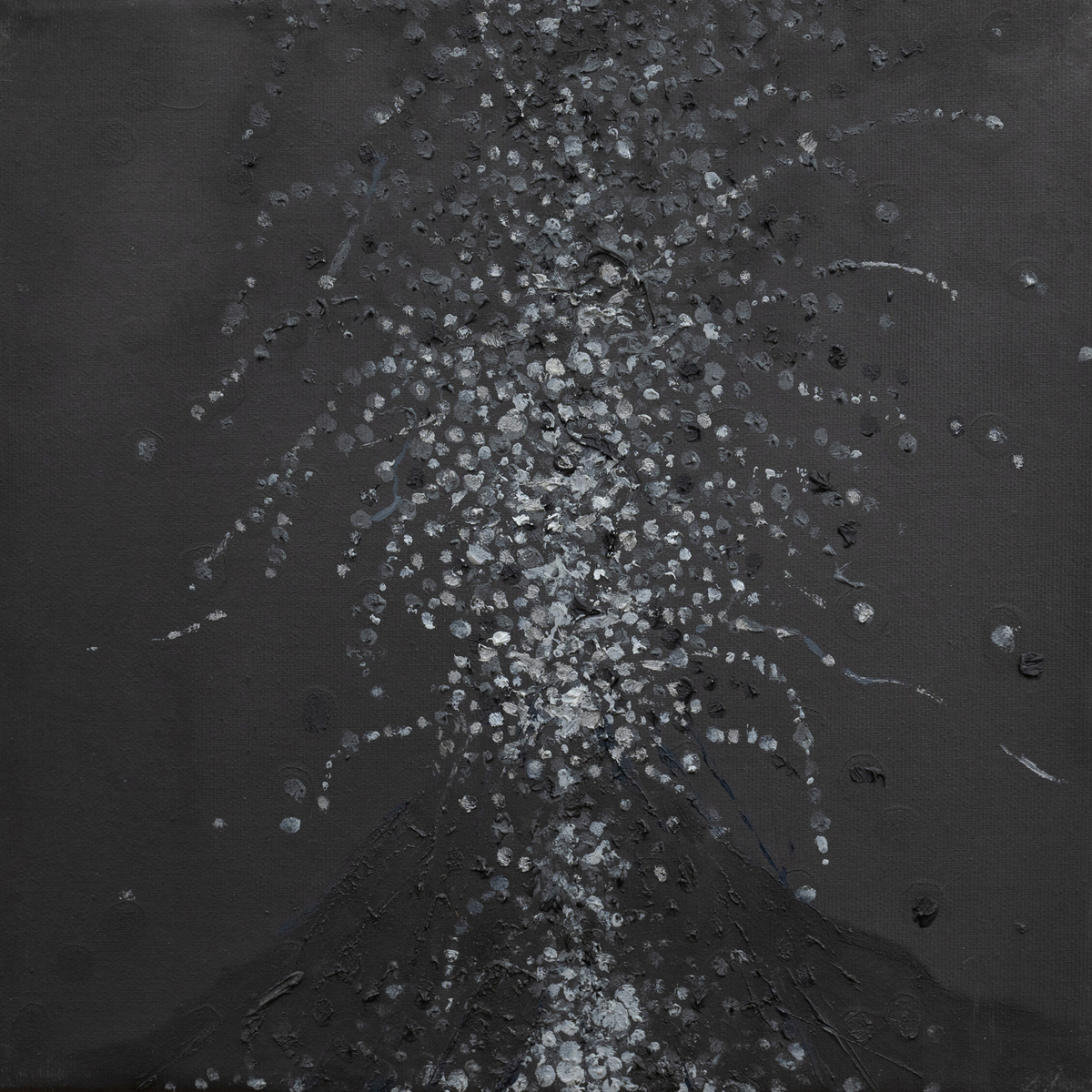
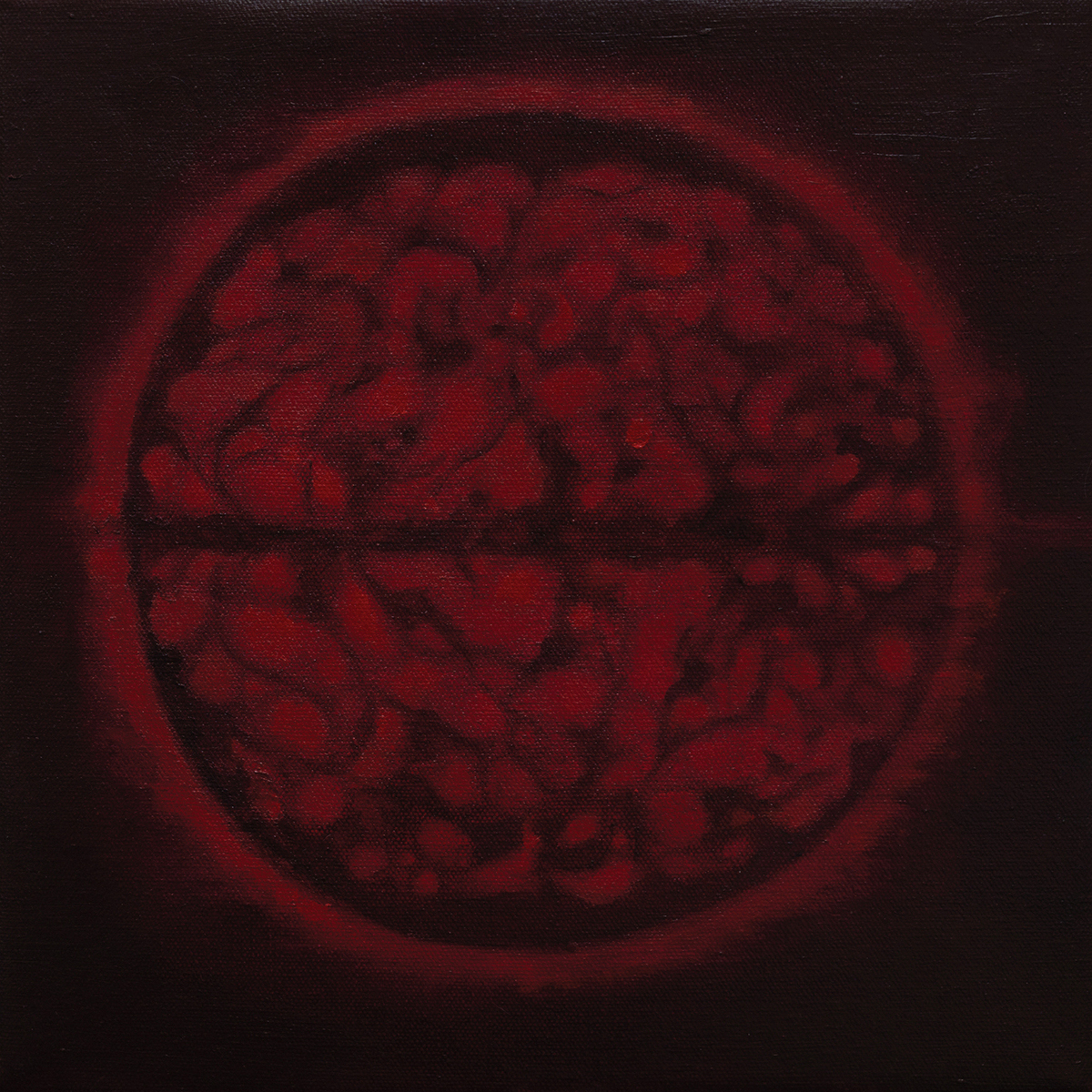
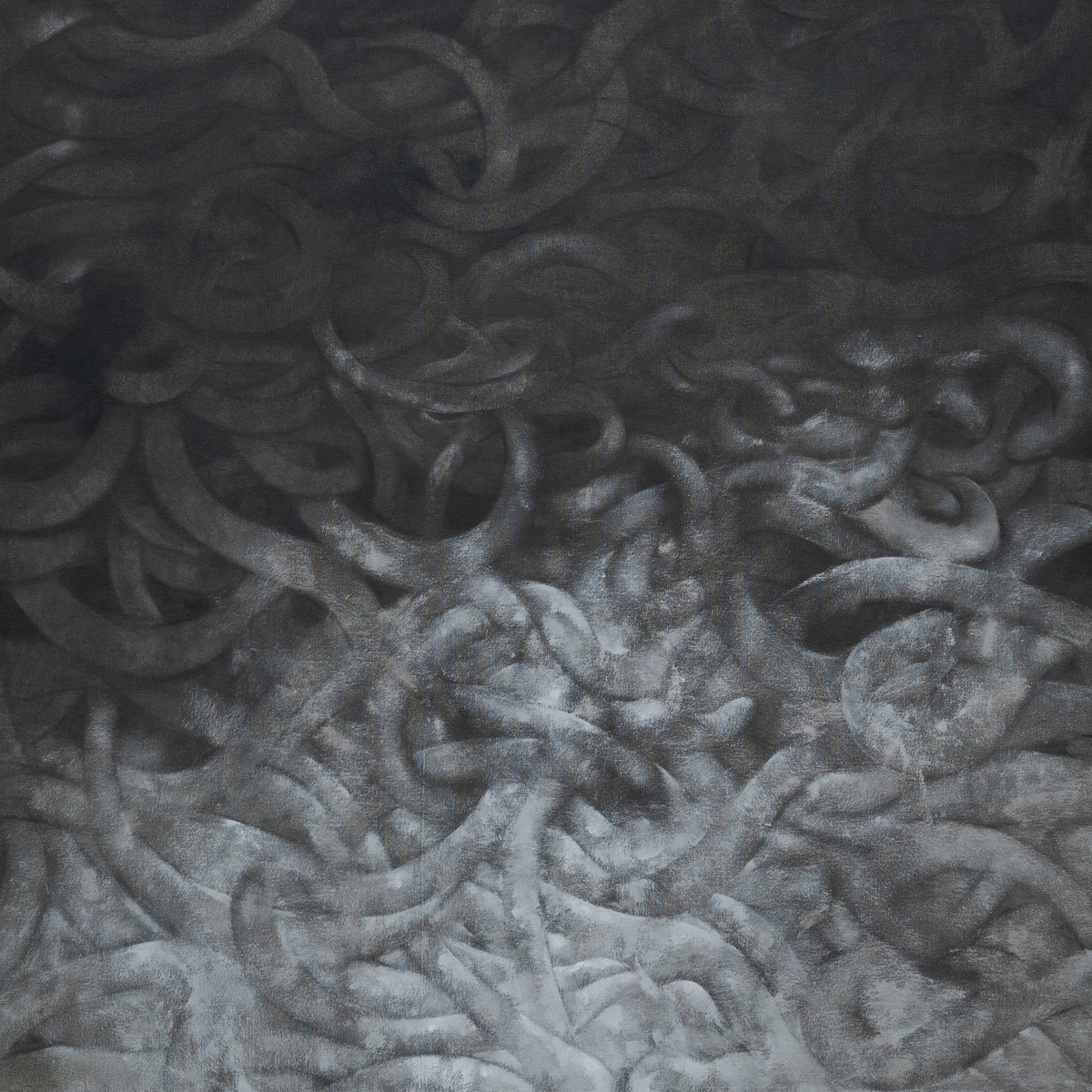
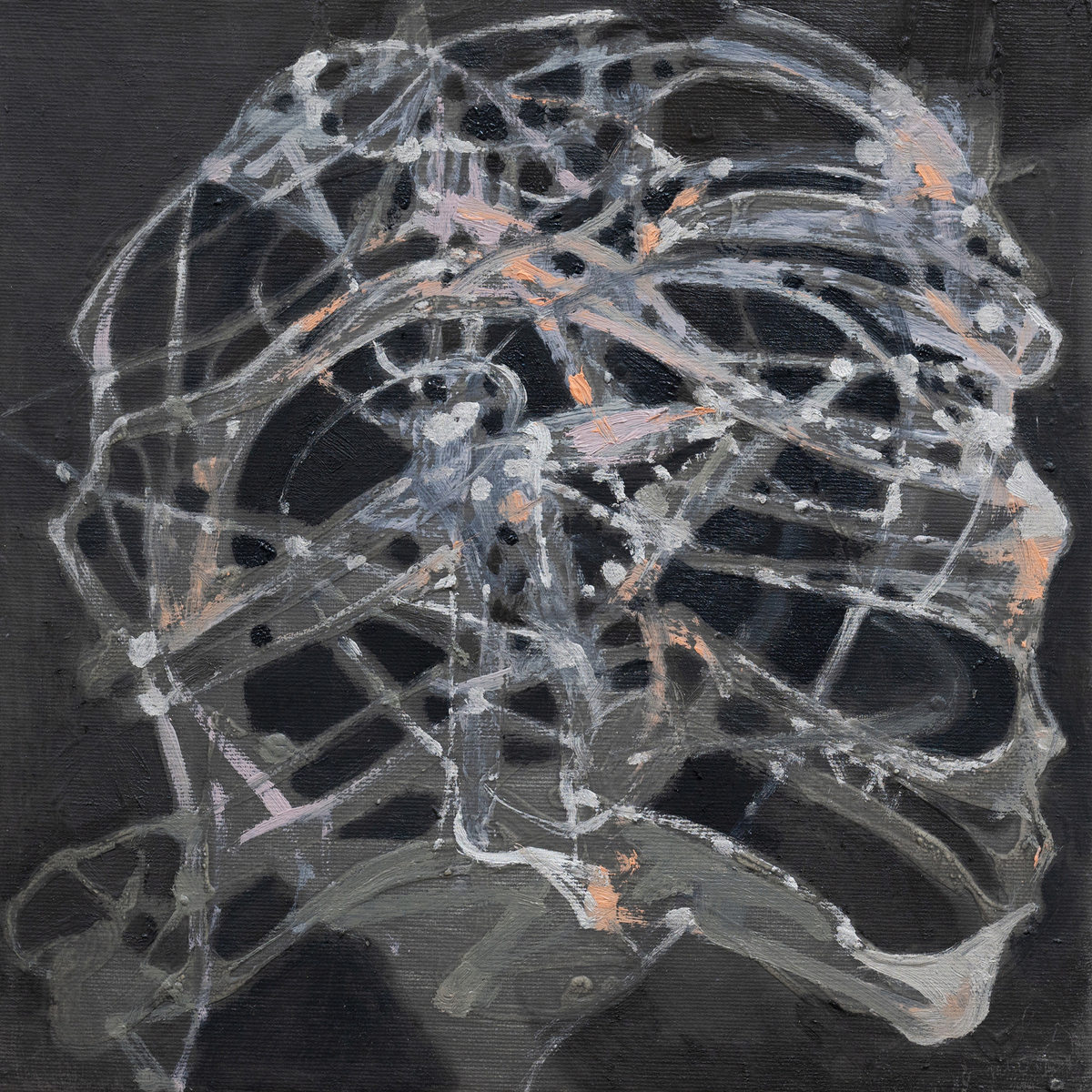
Sajal Sarkar’s latest body of work, “Birth of Another God”, synthesizes the intimate lessons of his watercolor period with the grand scale afforded by his current studio setup. Returning to large-scale oil canvases, Sarkar replaces the fluid stains of watercolor with meticulous, dense layers of paint that lend the work a somber gravity. The series is defined by its strategic deployment of ambiguity, achieved through a tension between recognizable objects and unnamable abstract entities that function as pure “things.” While evoking the Surrealist dreamscapes of Yves Tanguy, Sarkar’s compositions feel far more immediate and volatile due to the sheer density and instability of their central forms.
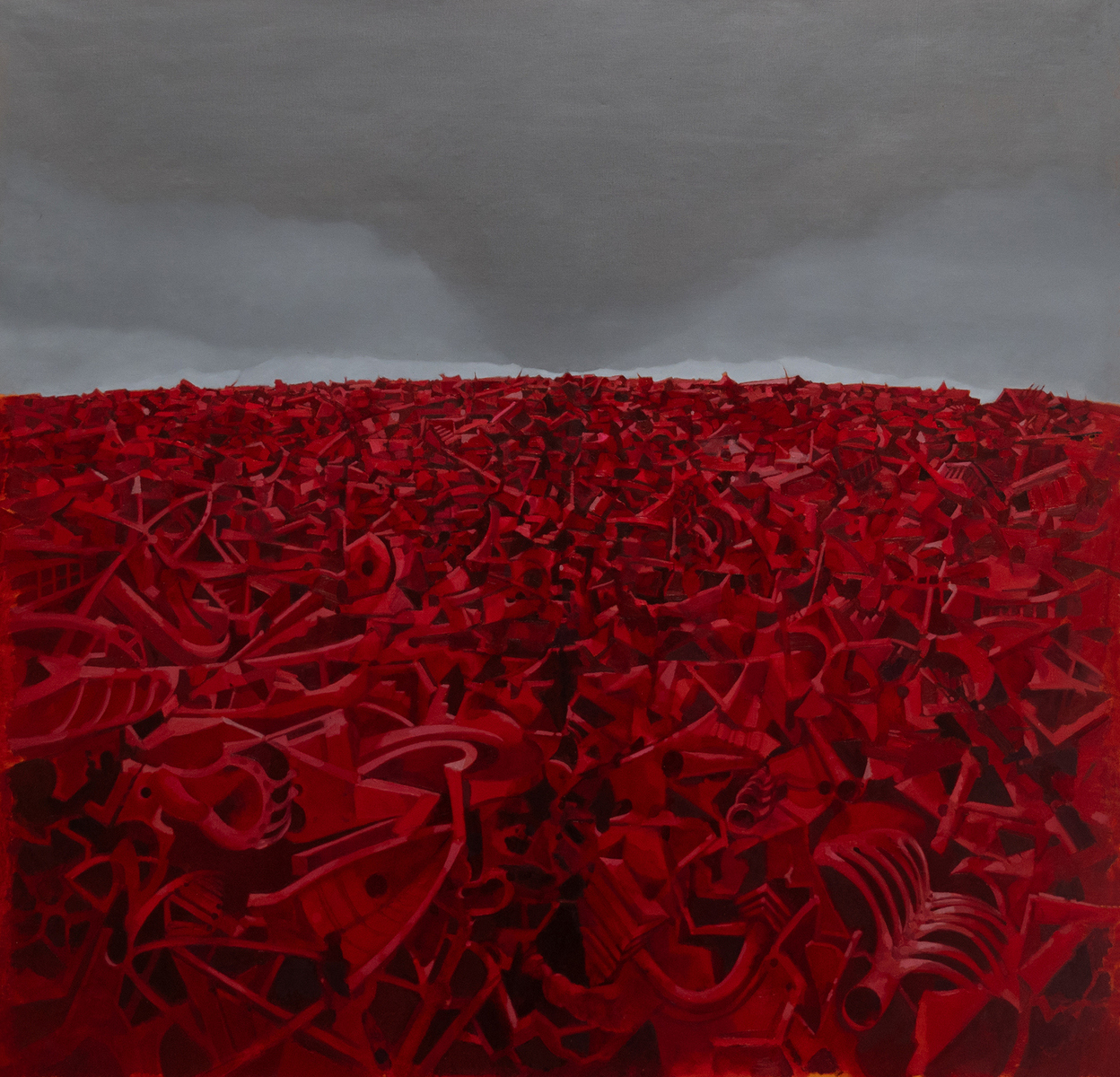
In “Imaginary Couple”, a massive upright structure dominates the foreground, defying simple description as a tall dead tree or a human figure. While the upper portion convincingly depicts a skeletal shaft with a visible vertebral column inside, strange, malleable, coil-like shapes replace the head, frustrating any attempt to read the entity definitively. At its base, a clearly recognized skeleton of a small animal anchors the work in stark realism, contrasting sharply with the abstract fragments surrounding it. Similarly, in “Birth of Another God”, an intensely red, tornado-like shape erupts from a dark landscape, composed not of wind but of countlessly splintered items resembling architectural debris and furniture that splinter outward. A similar encounter awaits in Floating Heart on Alakananda, where a dense, heart-shaped cluster built from unnamable shapes aggressively dominates the space. Through these primeval, threatened landscapes, Sarkar moves far beyond regional figuration or purely formal abstraction, creating a powerful visual metaphor for the contemporary condition—an earnest, introspective search for order, meaning, and renewal amid a chaotic and uncertain world.
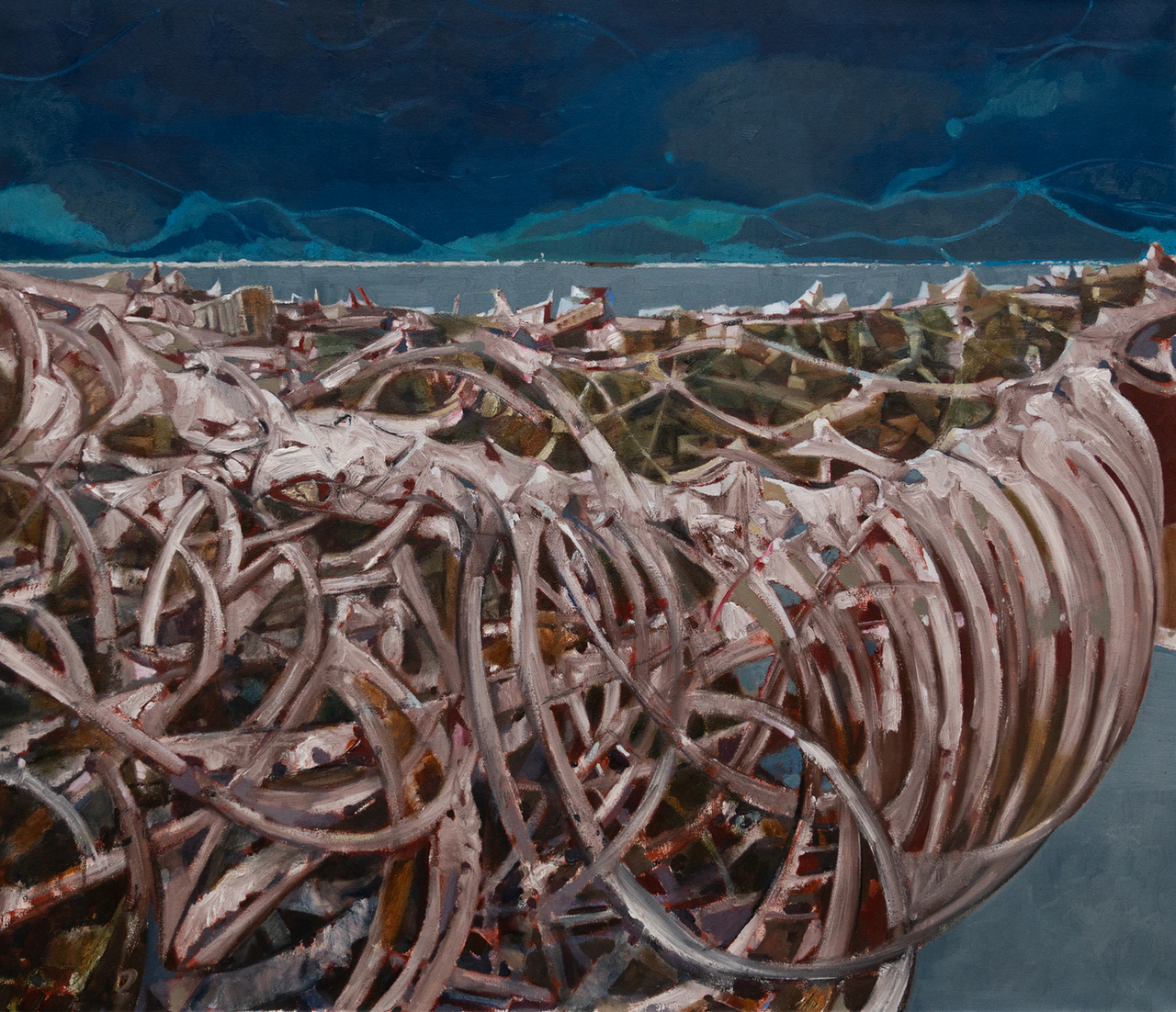
Photo: Sajal Sarkar, Imaginary Bridge, 2026, Oil on canvas, 48h x 55.75w in, © Sajal Sarkar, Courtesy the artist and Aicon Contemporary
Info: Aicon Contemporary, 35 Great Jones Street, New York, NY, USA, Duration: 30/7-5/9/2026, Days & Hours: Tue-Sat 10:00-18:00, www.aiconcontemporary.com/