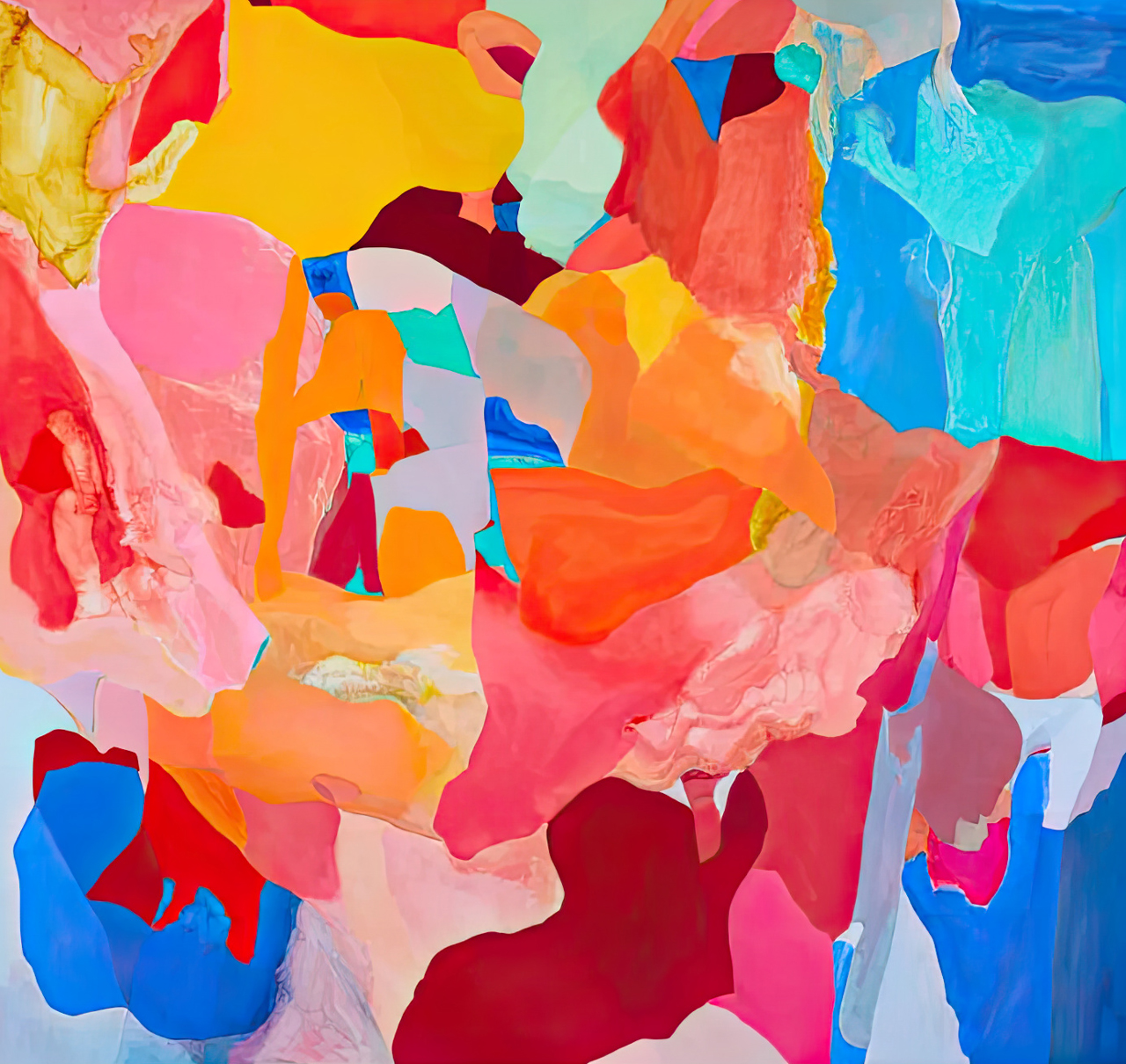
ART CITIES:Seoul-Hejum Bä
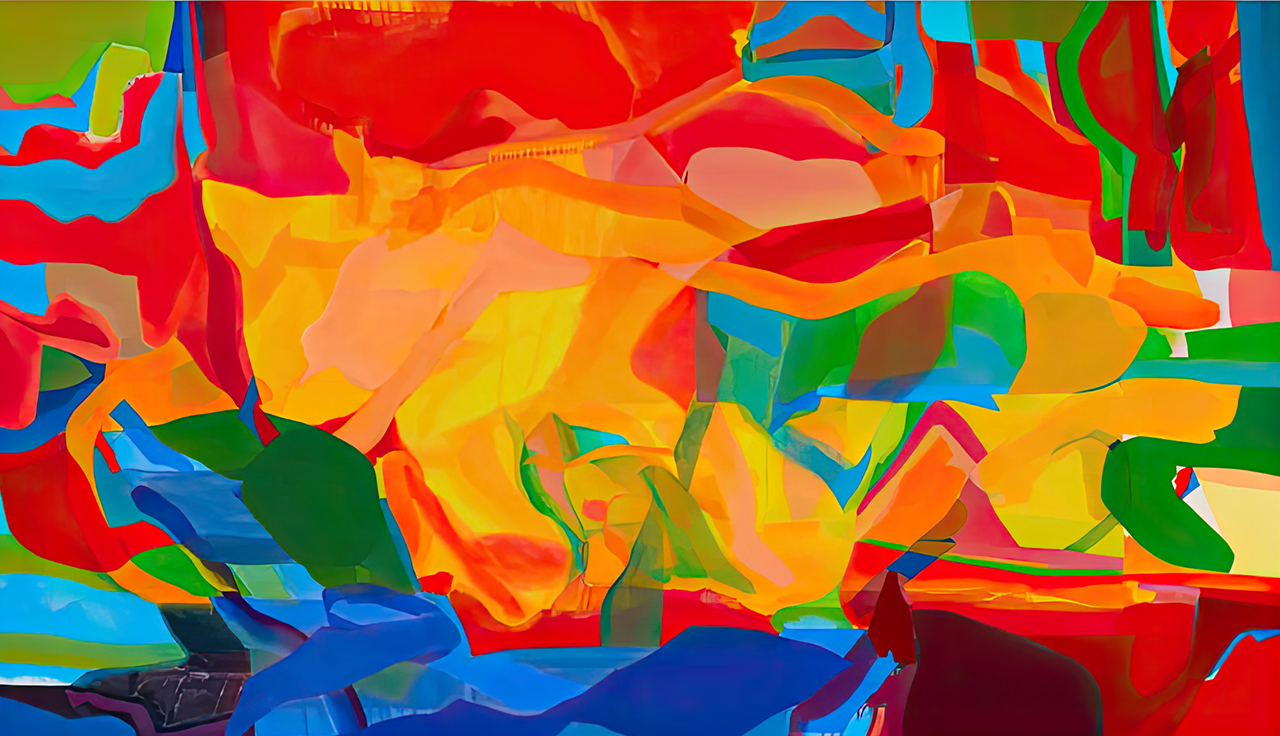
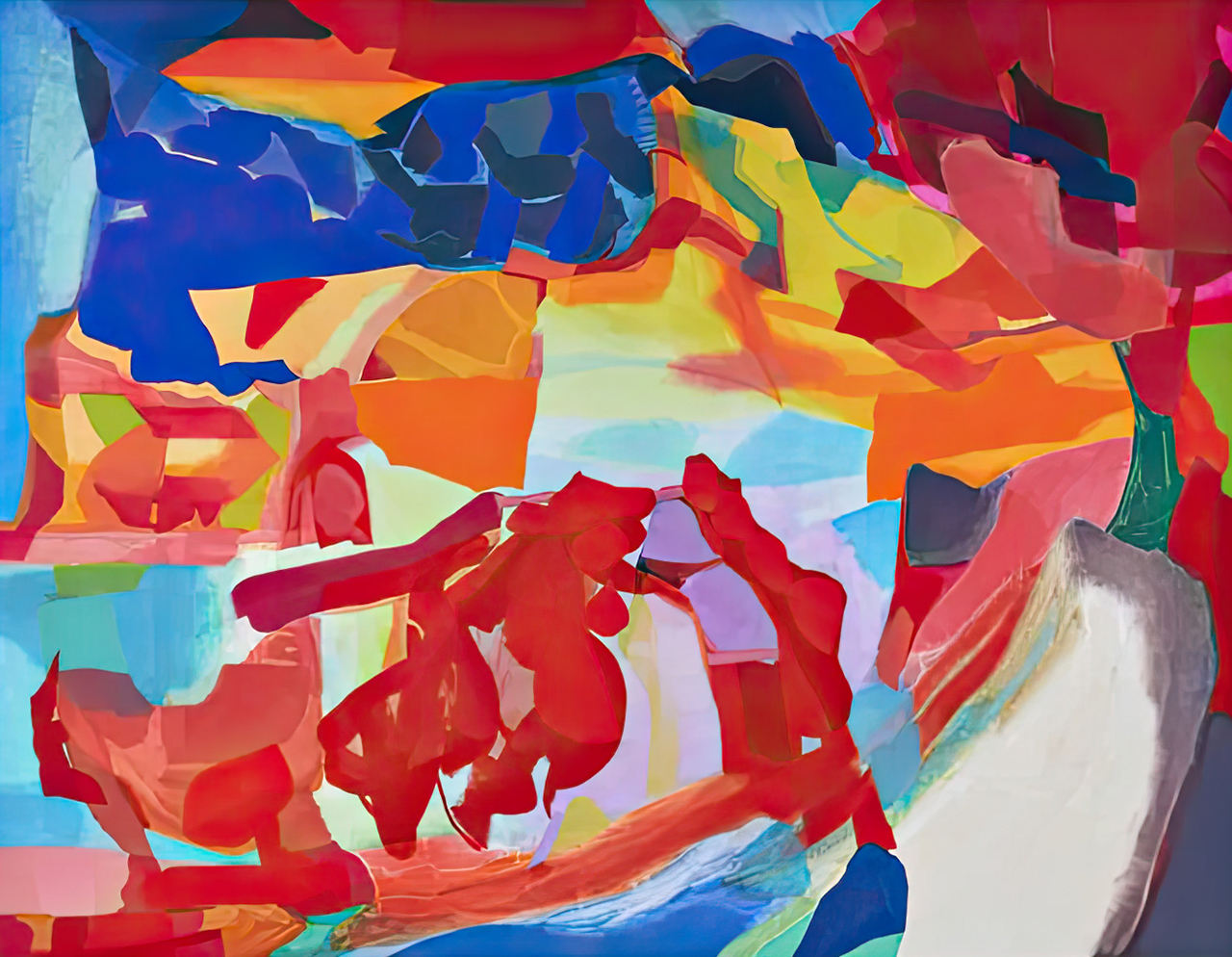
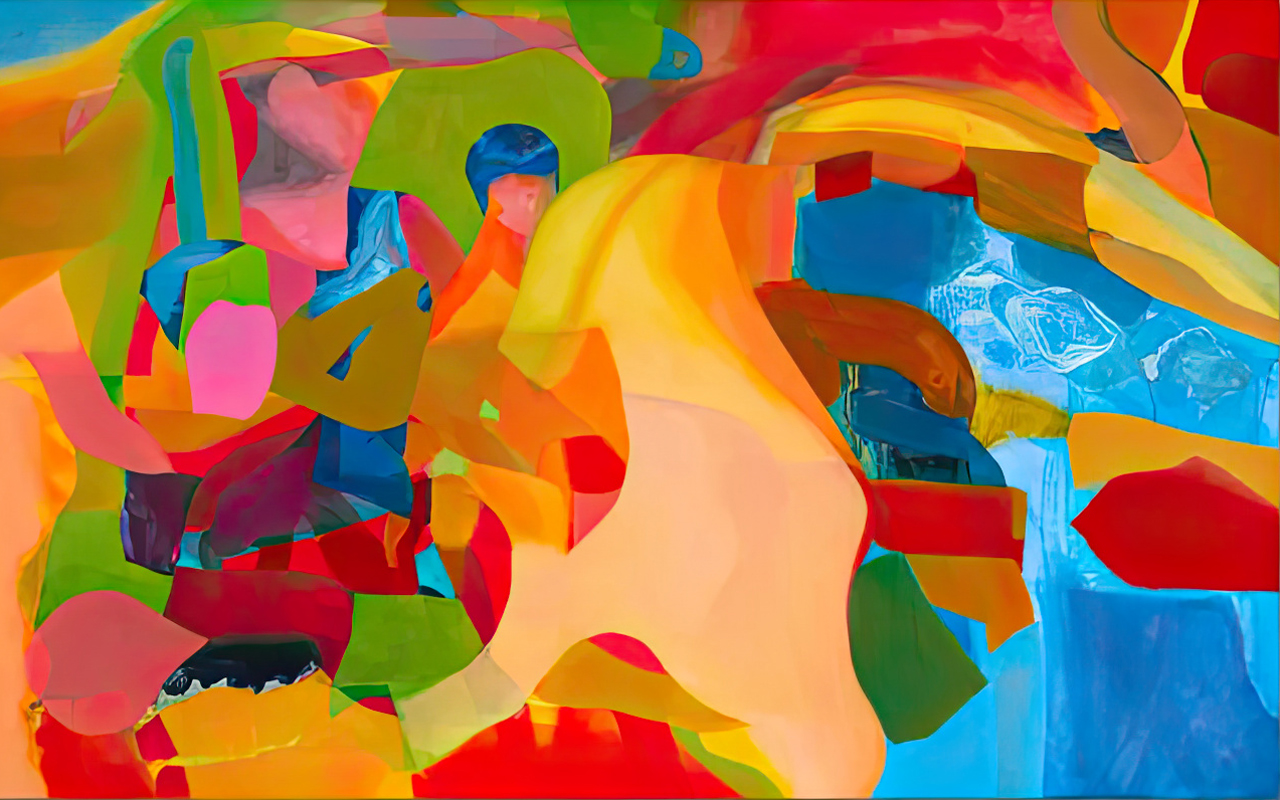
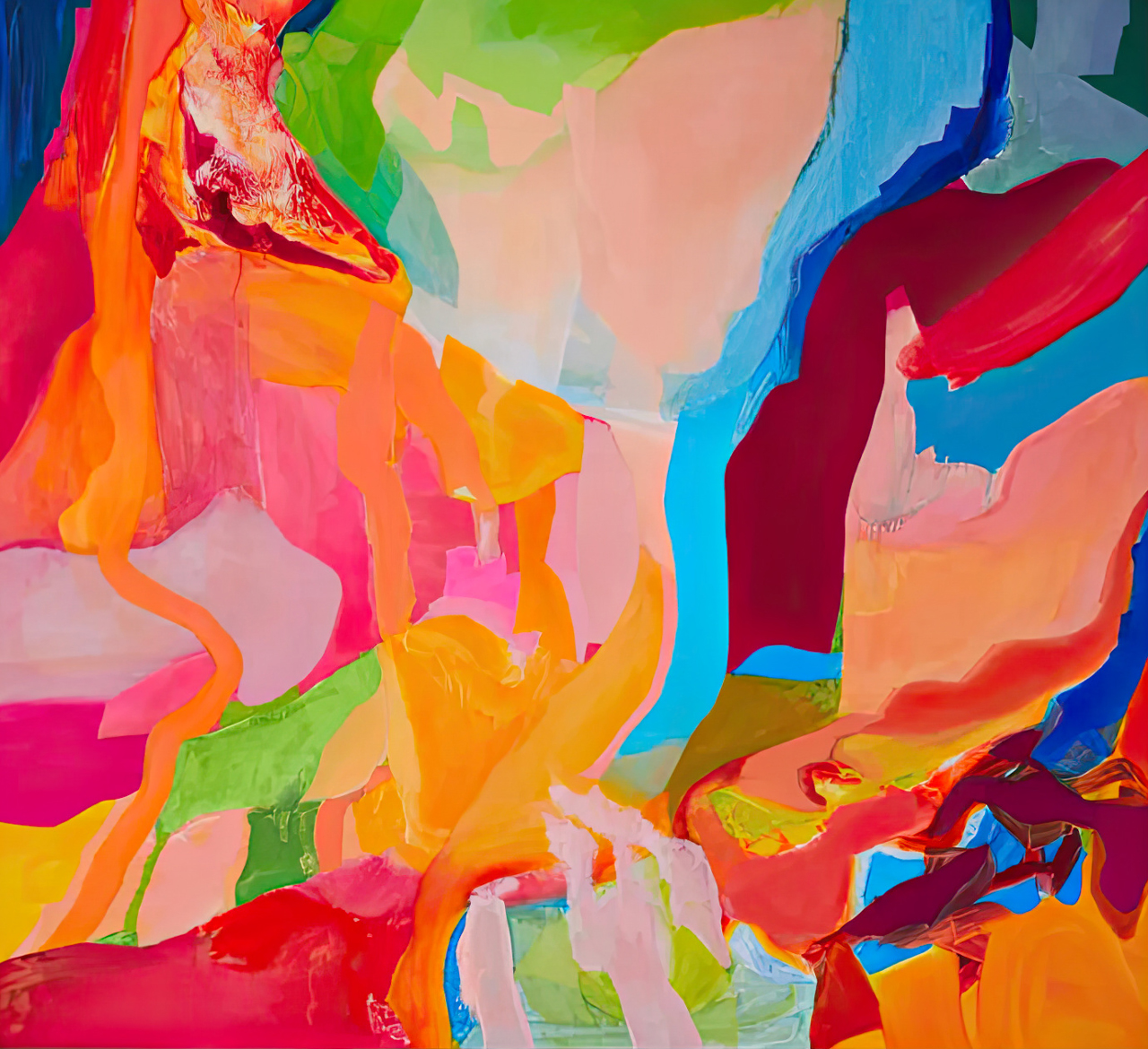
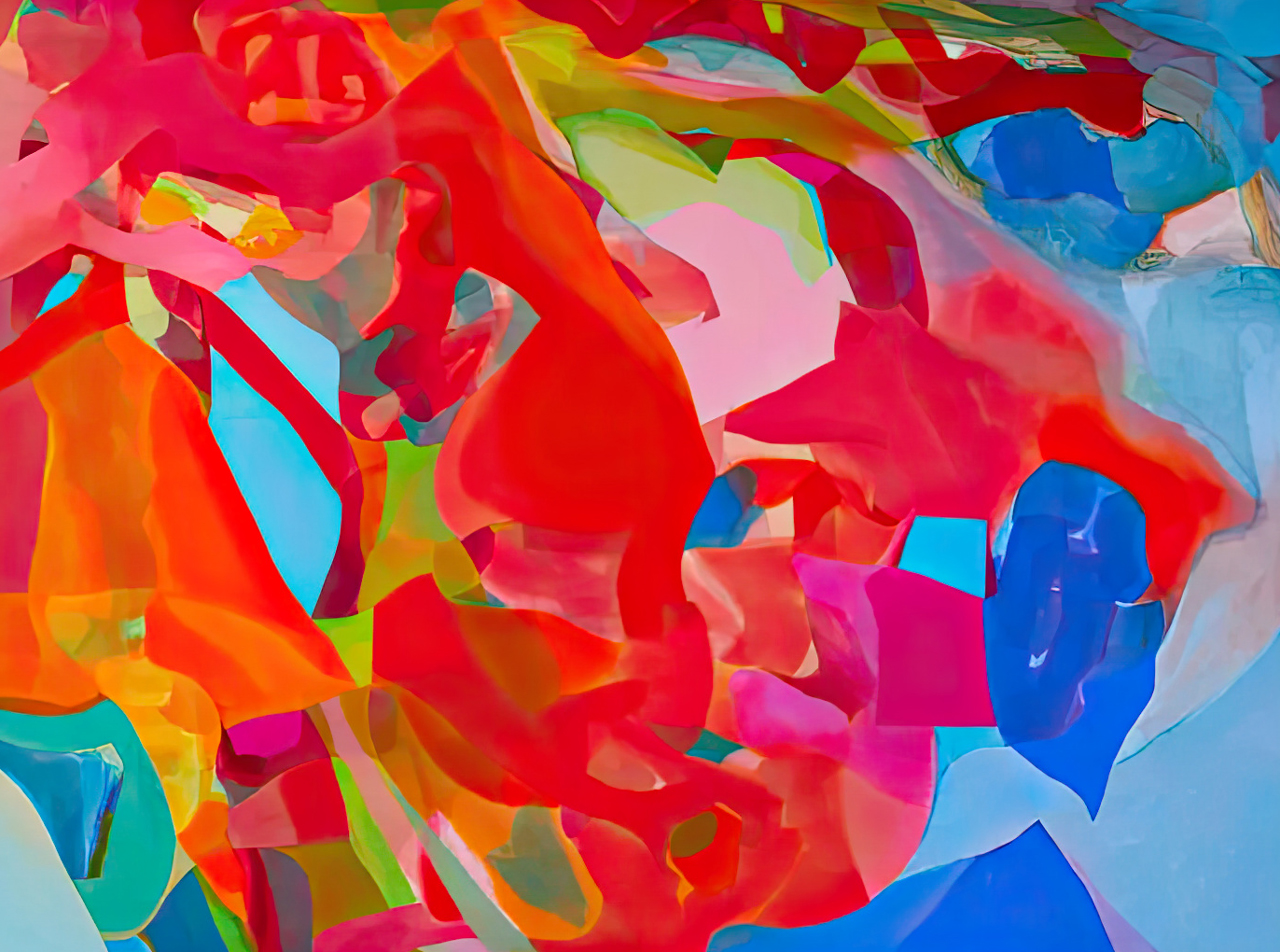
Hejum Bä’s understanding of contemporary communication – from both verbal and non-verbal language to the complex codes we navigate in everyday interactions – deeply influences her artistic practice. Her abstract, colorful works offer a layered depiction of the actions we perform when engaging with our phones, such as “swiping” and “tapping,” moving beyond pure emotion or intuition. In her paintings, Hejum Bä examines the complex relationships between visual elements, particularly the interaction of surface and background, color and line.
By Dimitris Lempesis
Photo: MASSIMODECARLO Gallery Archive
Set inside the quiet, wooden architecture of a traditional Korean hanok, Hejum Bä’s solo exhibition “Awakened” staged a surprisingly volatile convergence. For the first time in her practice, the Korean artist brought together three subjects that rarely share a conversational space, let alone a canvas: cryptocurrency, the ocean, and motherhood. The result was a body of work that refused simple allegory, offering instead a tactile, intellectually charged examination of contemporary anxiety, physical instinct, and speculative value.
Bä’s practice has long been grounded in passive observation. Her compositions typically begin with small, unremarkable moments glimpsed in passing—a fragment of conversation overheard on a subway, a gesture in the street, or a screen left open on someone else’s lap. These are brief, daily occurrences that most people let go of immediately, but Bä carries them with her, sometimes for years, until they demand visual form on canvas.
The initial spark for “Awakened” originated on a Seoul subway running through a neighborhood defined by ambition and daily effort. There, Bä began noticing a subtle dissonance running beneath the routine commute: passengers discussing crypto portfolios, market shifts, and digital investment strategies in the very same breath as family concerns, elder care, and children. For Bä, the juxtaposition was striking. “This image gave me a kind of breaking of my stereotyped intentions of bitcoiners and mothers at the same time,” she noted, bringing together two identities she had never previously thought to place in the same sentence.
This observation was deeply personal, yet it sat directly inside a massive economic shift. By early 2025, South Korea’s cryptocurrency exchanges counted more registered accounts than the country’s stock market had individual investors—a milestone widely reported in local financial media. Bä took this domestic reality as a point of departure, treating the societal condition not as a narrative to transcribe line by line, but as material to be transformed visually.
That pattern of bodies bent over phones, tracking invisible numbers in real time, drew Bä toward the chart itself as a visual motif. A cryptocurrency chart is a highly specific way of picturing time: flat, relentless, and always moving rightward as new data renews the trend. It represents a form of change with little relation to how time is actually experienced by a physical body.
To counter this digital flatness, Bä introduced an older, slower counterpart: the downward flow of milk, governed by gravity. In bringing these two forms of movement together, Bä sought to explore the space between financial value and physical anxiety, digital speculation and biological life.
She resisted rendering this natural flow too neatly. Left to itself, gravity produces a clean, predictable descent—not unlike the smooth lines plotted on a screen. Bä actively fought against this clean resolution. Treating gravity as a force to resist as much as to follow, she developed a vocabulary of irregular, vivid forms closer to the messy unpredictability of a living body. The core of the exhibition sits within this friction between the chart’s obedient flatness and the canvas’s refusal to yield to it.
That tension carried directly into the exhibition’s central works. In “Milk of a Bitcoiner-Mother” (2026), the volatile fluctuations of the market and the organic flow of maternal nourishment merge into a single painterly gesture.
Elsewhere, the focus turns away from financial currency to examine the physical realities of the body: “There Is an Ocean in the Pregnant Belly”(2024–25): employs the sensations of submersion and fluid pressure to frame pregnancy as an immersive, elemental state. “I Envy the Mother Conches” (2026): Uses the coiled, protective architecture of sea shells to approach maternal instinct as something hard, structural, and physical rather than sentimental. “Mosungchoosang” (2024–26): Anchors the entire series. Taking its name from the Korean term for the effort of identifying maternal instinct itself, the painting suggests that the heightened awareness required during pregnancy demands the same focused attention as reading an unstable market chart—both are constant attempts to find clarity inside something that continuously evolves.
Visually, Bä works in highly saturated reds, yellows, and blues. While such a vibrant palette could easily be mistaken for pure decoration, Bä has consistently rejected that reading. She treats color as a physical and chemical reality rather than an ornament or a mood, comparing its unstable, shifting quality to the vivid nature of water itself.
Bä’s conceptual framework is equally informed by theoretical perspectives. Her thinking has been shaped by writers who view the maternal body as deeply entangled with technology, language, and thought—including N. Katherine Hayles, Julia Kristeva, Catherine Clément, and Myriam Szejer. Rather than folding these complex influences into a single, resolved message, Awakened held its disparate subjects apart, allowing the contrast between them to generate heat.
By placing the market, the human body, and the ocean onto the same canvas within the quiet confines of a hanok, Bä succeeded in raising new questions about conditions rarely granted the same seriousness. Ultimately, Awakened captured two living systems—the market and the body—both vital, both unpredictable, and both fundamentally unwilling to settle.
Photo: Hejum Bä, Mosungchoosang, Oil on canvas, 2024-2026, 115 × 200 × 3.8 cm, 45 1/4 × 78 3/4 × 1 1/2 inches, © Hejum Bä, Courtesy the artist and MASSIMODECARLO Gallery
Info: MASSIMODECARLO Gallery, 27, Jahamun-ro 8-gil, Jongno-gu, Seoul, South Korea, Duration: 29/6-5/9/2026, Days & Hours: Daily 11:00-19:30, 11:00-22:00, https://massimodecarlo.com/