ART CITIES: Kassel-Charles Ray
Charles Ray is an influential American artist celebrated for his disquieting, meticulously crafted sculptures and conceptual works. Beginning his career in the 1970s using his own body as a sculptural element, Ray later transitioned to hyper-realistic figures, altered readymades, and industrial fabrications. By manipulating scale, density, and proportion, his provocative creations challenge perceptual norms and destabilize expectations of physical space. Ray’s oeuvre continually probes the boundaries between form, viewer, and art history.
By Efi Michalarou
Photo: Fridericianum Archive
For his debut solo exhibition in Germany at the Fridericianum in Kassel, Charles Ray resists the comfortable safety of a standard retrospective, opting instead to orchestrate a confrontational, deeply personal spatial dialogue that directly anchors the show in his own historical relationship to the venue. Ray returns to the exact upper-floor space where he debuted his seminal group sculpture “Oh! Charley, Charley, Charley…” at documenta 9 in 1992, approaching the site much like a survivor revisiting a past trauma. Believing that art must be born “alive and kicking in its time” to endure the zeitgeist, Ray treats this work—which features eight fiberglass casts of his own body engaged in an orgy—as an explosive, necessary beginning.
While built using techniques originally developed for display mannequins, it stands as a pop-figurative hybrid that marked a decisive turning point toward figurative sculpture. Ray invites viewers to bypass the overt sexuality of the piece to consider its philosophical weight: an exploration of the self, temporal identity, and diluted narcissism. Positioned as the antithesis to Constantin Brâncuşi’s “The Kiss” (1907/08)—where two entities merge into one—Ray’s masterpiece asserts that “your lover is a projection of yourself,” offering a world where there is no “other,” only a psychological explosion.
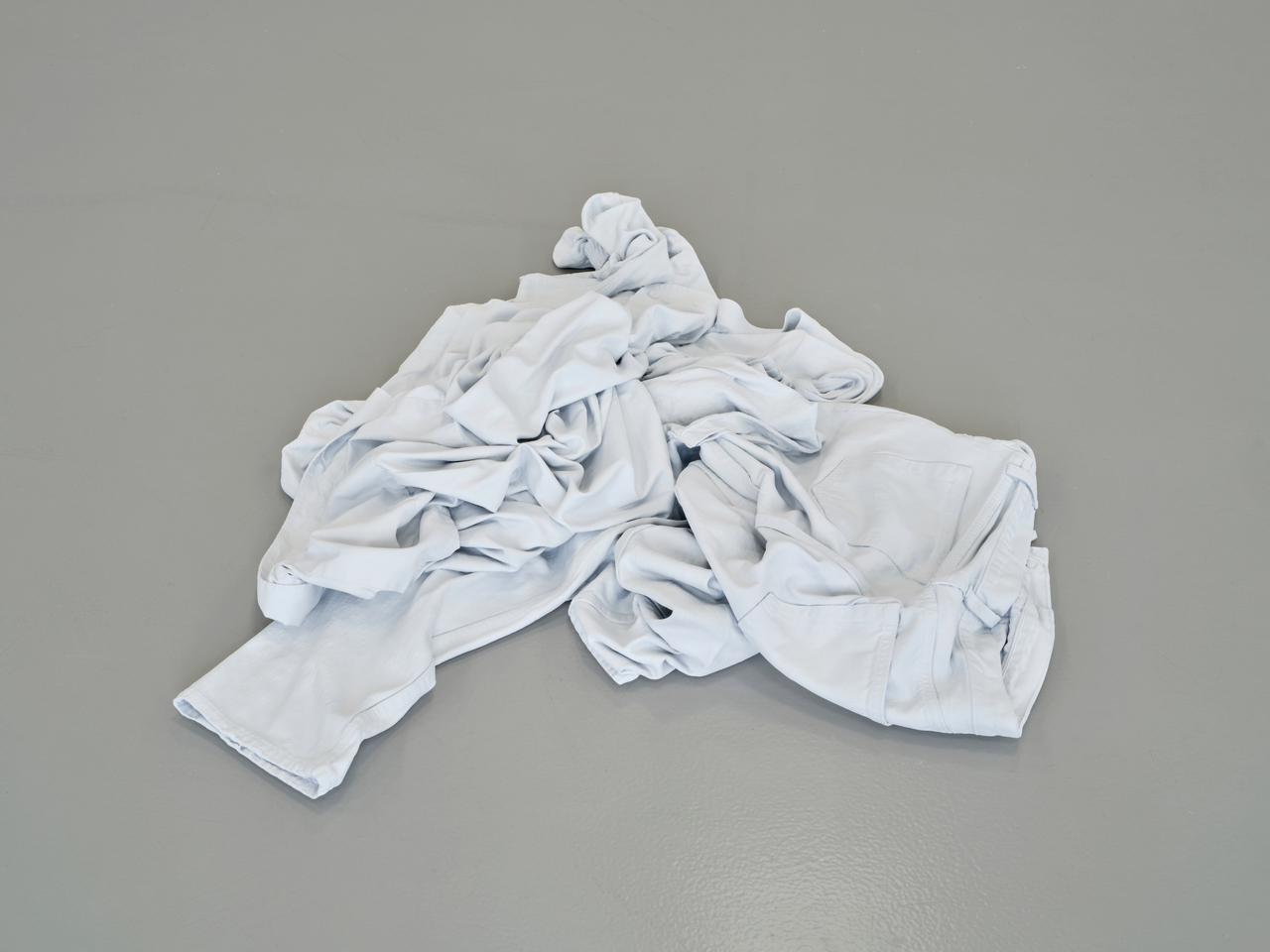
The exhibition juxtaposes this early trauma with nearly three decades of sculptural evolution, tracing how Ray’s inquiry into the physical and temporal self has shifted from bodily excess to profound introspection. In “Return to the One” (2020), a seated figure modeled from handmade paper, Ray uses his own body not for a self-portrait, but as an abstract vehicle to explore Plotinus’s philosophy of spiritual introspection. Nearby, “Clothes Pile” (2020)—a aluminum rendering of discarded garments on the floor—serves as an abstract foray into the sculptural idea of what can be hollow without being empty.
In the central room, “Aluminum Girl” (2003) stands as Ray’s first mature figurative piece. Treating the human figure much like Donald Judd approached the minimal box, Ray uses the surface as a manifold for sculptural events, bridging classical Greek kouroi stylization with modern abstraction. Placed in dialogue with “School Play” (2014)—a robotic, machine-milled stainless steel figure of a twelve-year-old boy in a makeshift toga tied by an adult—the work highlights the awkward transition between child-like play and rigid adult institutions. Elsewhere, inquisitive youth meets sacred tradition: “Boy with Frog” (2009) relies entirely on the invisible, charged trajectory between the boy and the creature, a void that acts as the internal wire around which the spatial composition is packed. Placed opposite the newly unveiled “Madonna and Child” (2026), this tension echoes a grander dialogue, bridging a distance between nature, science, and traditional Christian iconography.
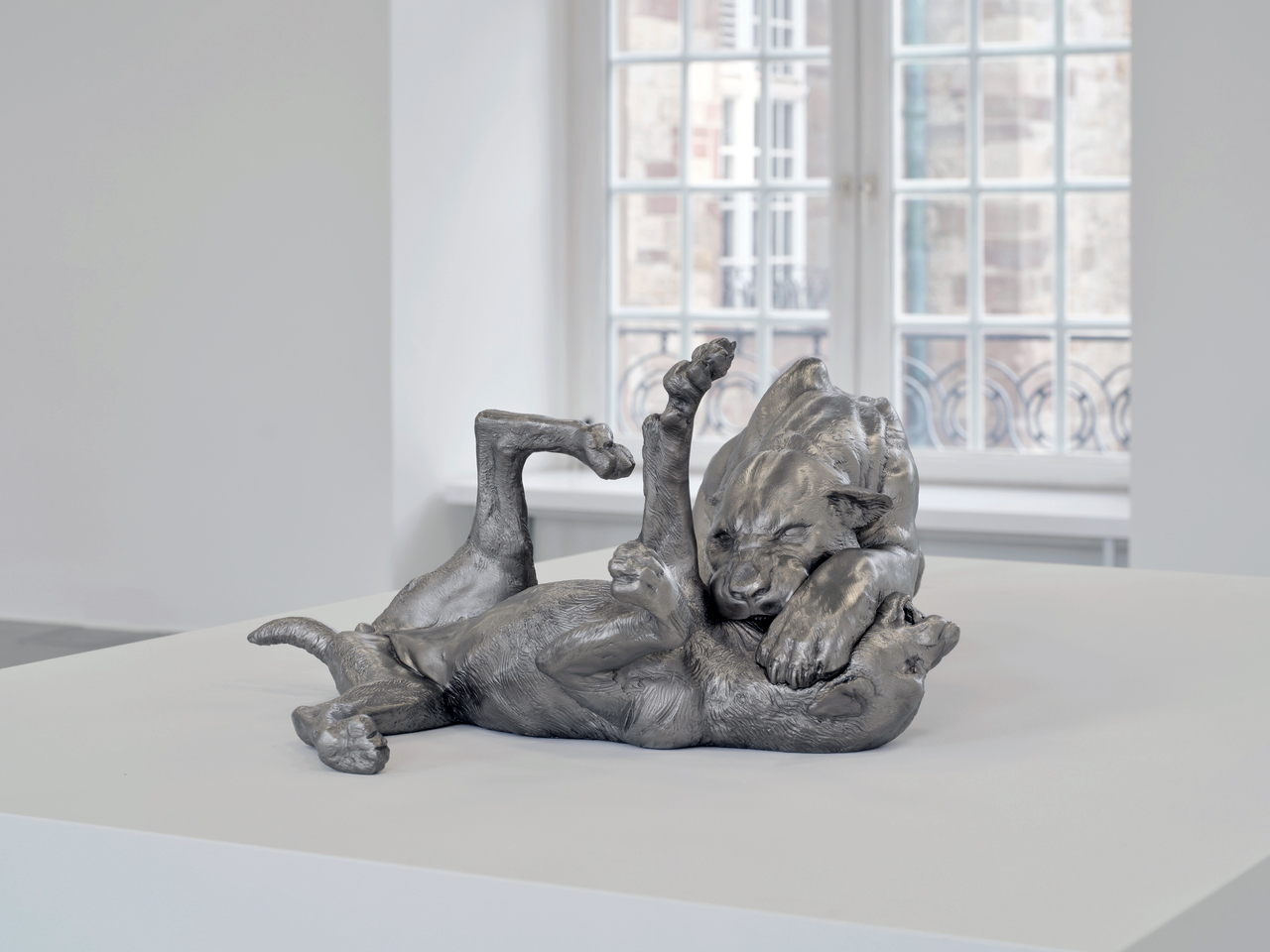
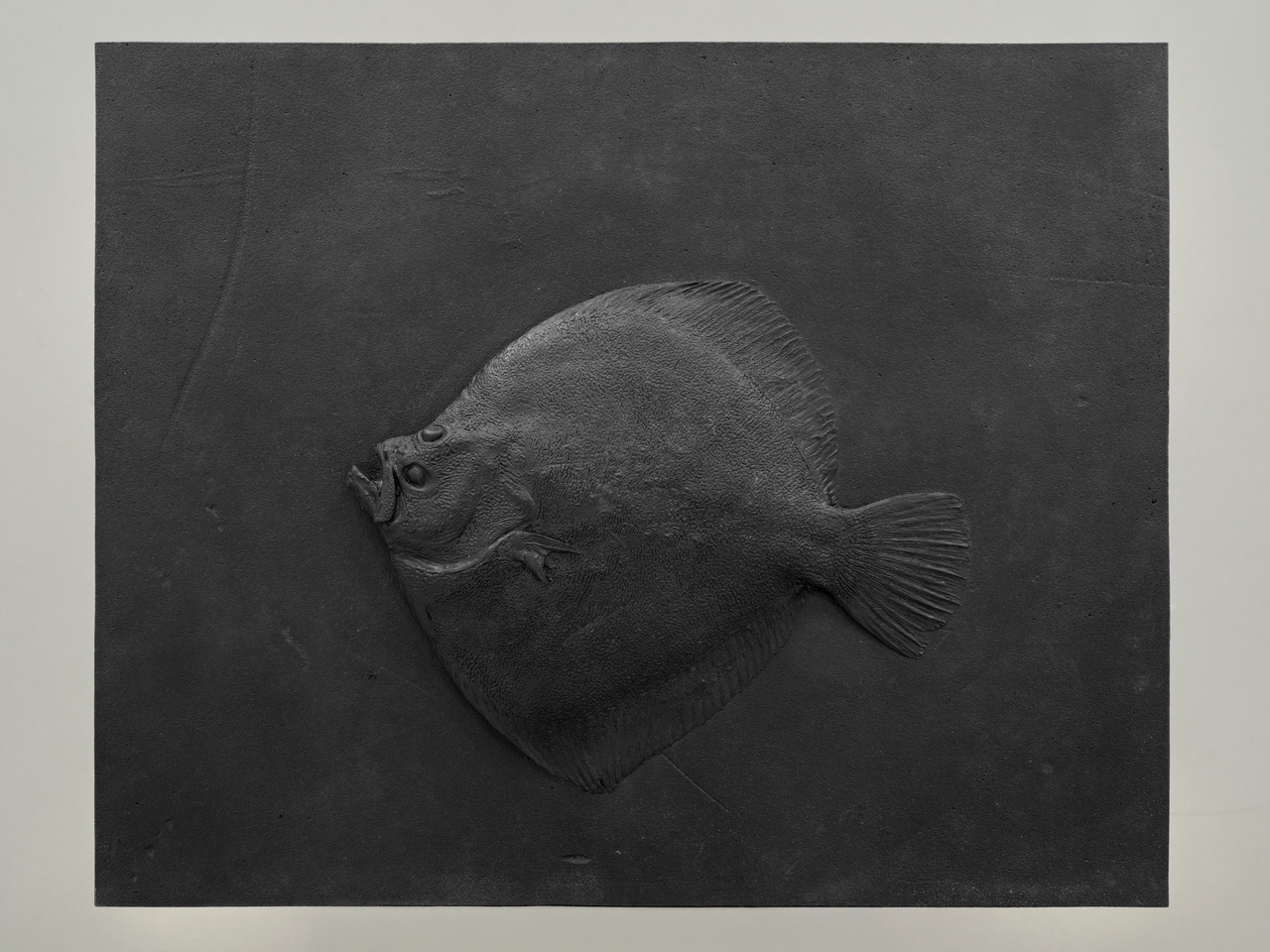
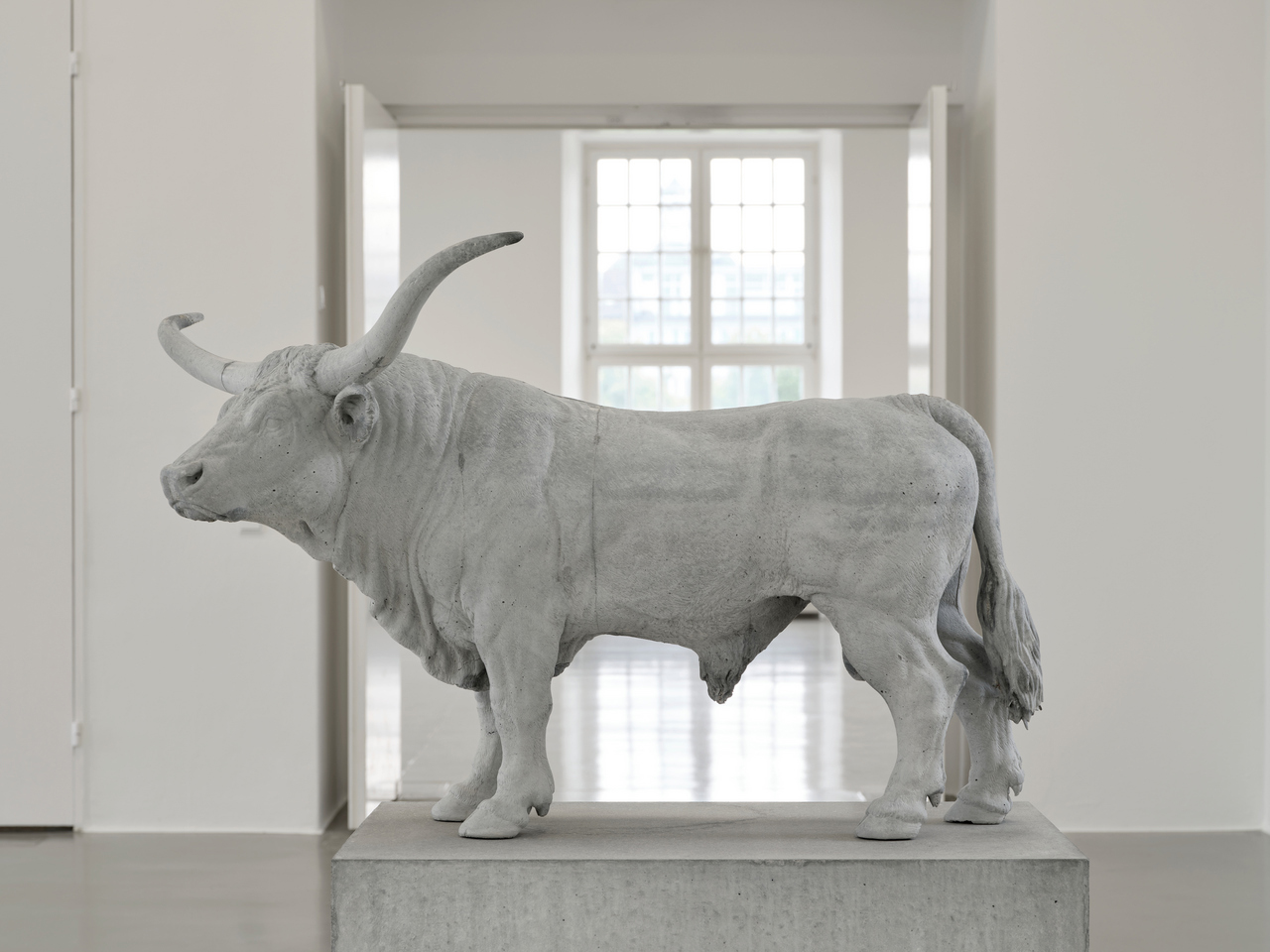
Surrounding these works in the original 1992 documenta space are three additional major debuts: the brutal, classical violence of “Mountain Lion Attacking a Dog” (2018), the immortalized, plinth-bound “Flounder” (2021), and the contemporary industrial weight of the cast-concrete “Bull” (2026). By confronting his origin point alongside his newest creations, Ray offers viewers an overarching artistic and psychological trajectory—a clear line drawn from traumatic self-multiplication to quiet, philosophical reflection.
Photo: Charles Ray, Bull, 2026, Photo: Nicolas Wefers, (Installation view Fridericianum, Kassel), © Charles Ray, documenta und Museum Fridericianum gGmbH
Info: Curators: Dana Schütte & Moritz Wesseler, Fridericianum, Friedrichsplatz 18, Kassel, Germany, Duration: 22/8/2026-3/1/2027, Days & Hours: Tue-Wed & Fri-Sun 11:00-18:00. Thu 11:00-20:00, https://fridericianum.org/
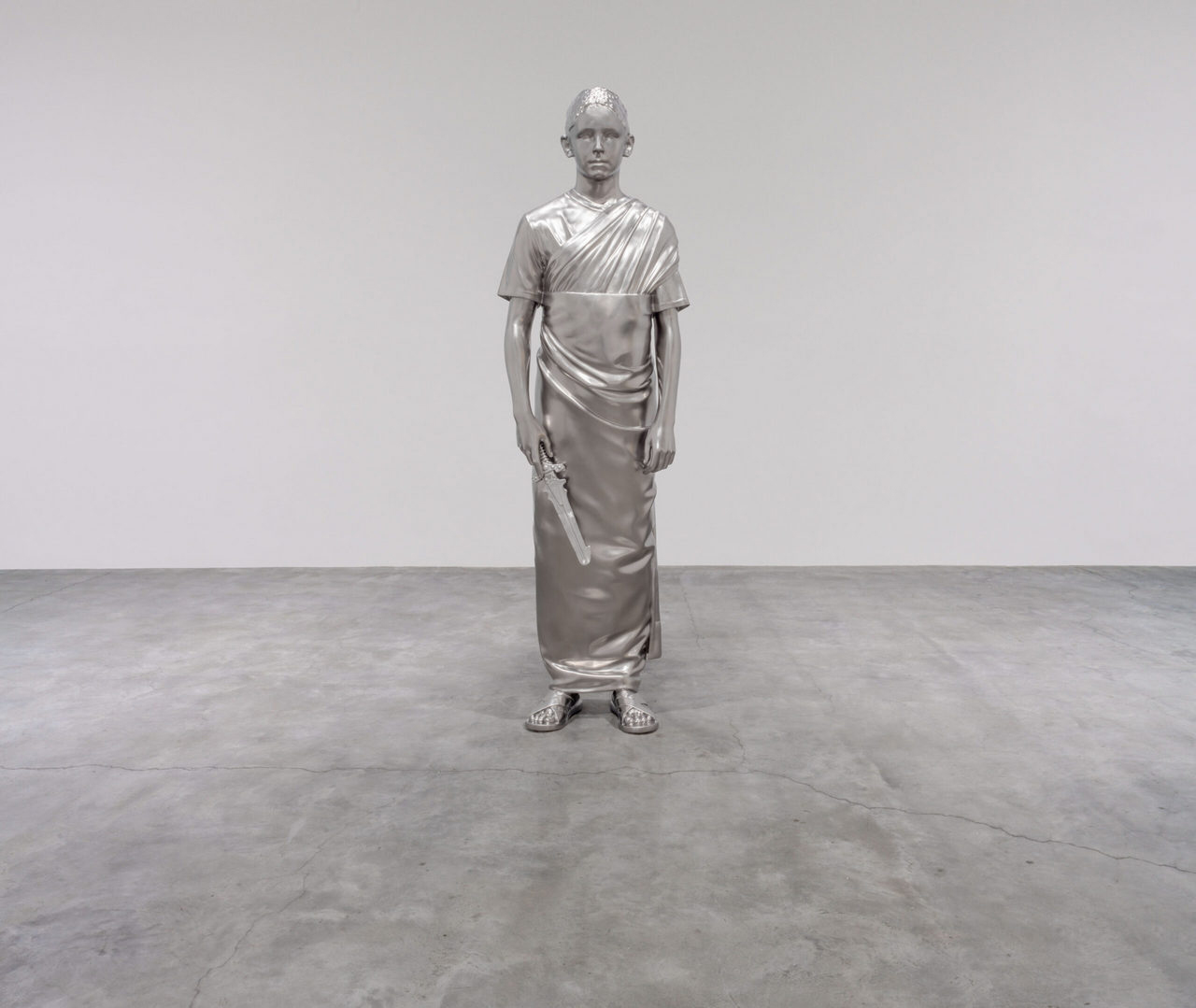
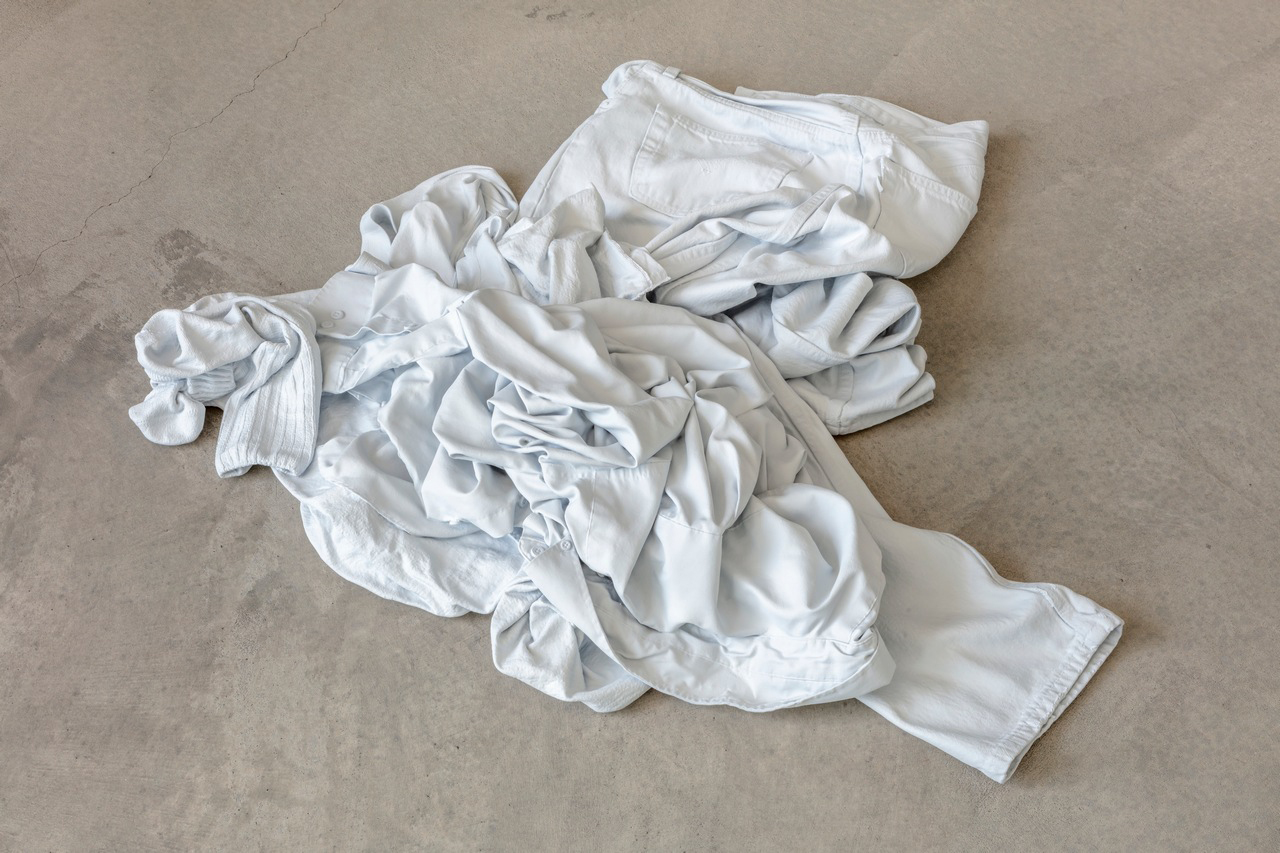
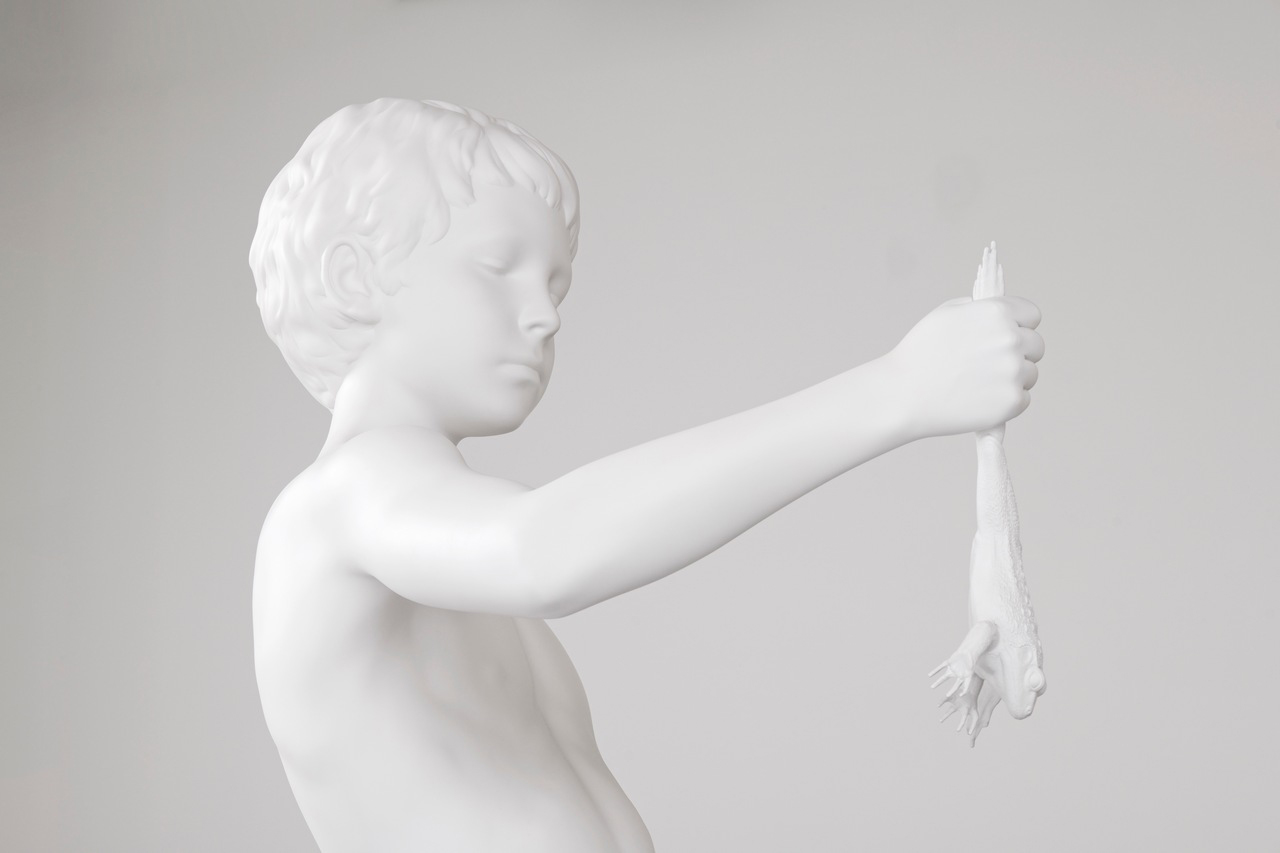
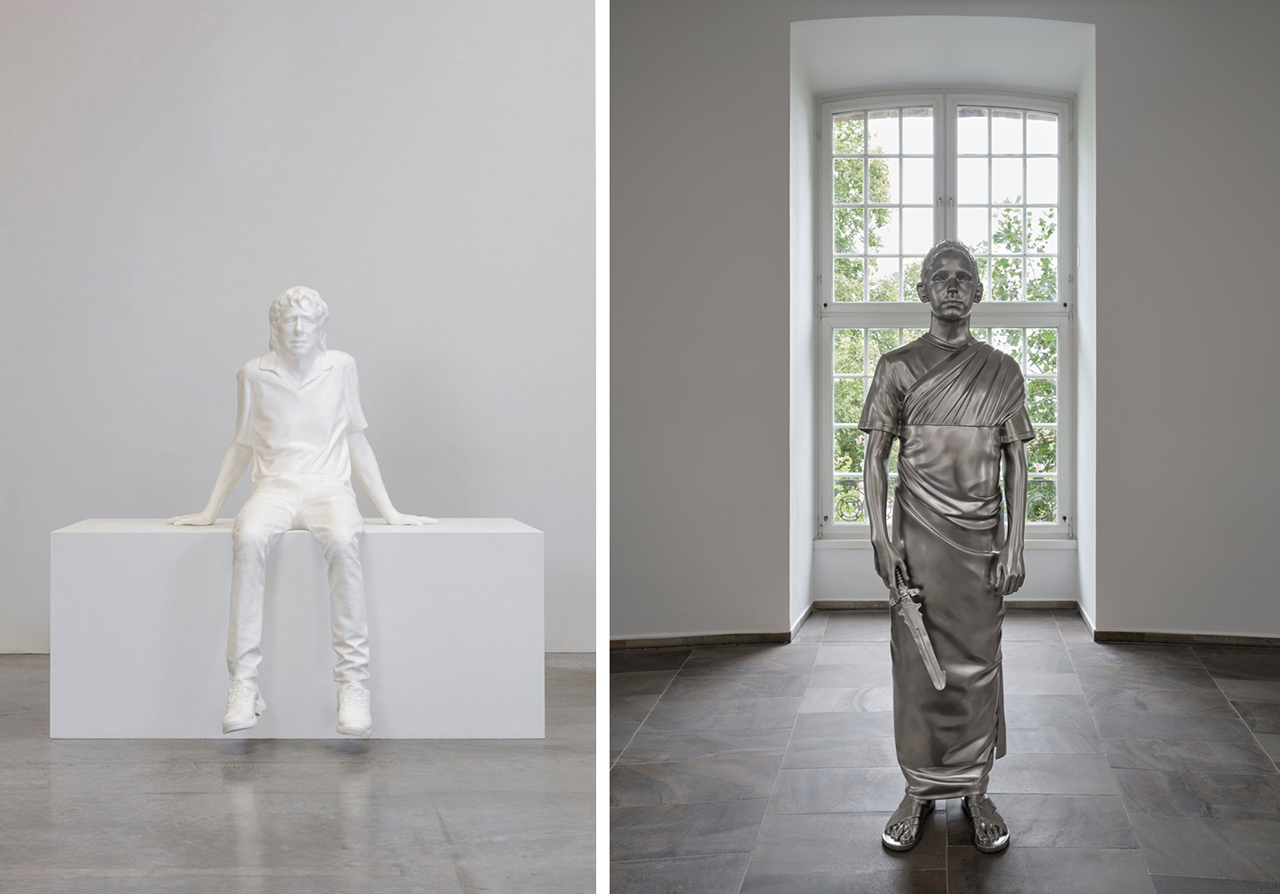
Right Charles Ray: School Play, 2014, Photo: Nicolas Wefers (Installation view Fridericianum, Kassel), © Charles Ray, documenta und Museum Fridericianum gGmbH