PRESENTATION:Thomas Hirschhorn-My Atlas
Thomas Hirschhorn creates immersive, chaotic installations that critique consumerism, media saturation, and political power. Utilizing everyday, low-cost materials like cardboard, packing tape, tin foil, and plywood, he builds “monuments” and “precarious structures” in public spaces. Hirschhorn’s work deliberately rejects traditional aesthetic polish to engage audiences directly in provocative intellectual discourse, treating art as a urgent, democratic force for political and philosophical reflection.
By Dimitris Lempesi
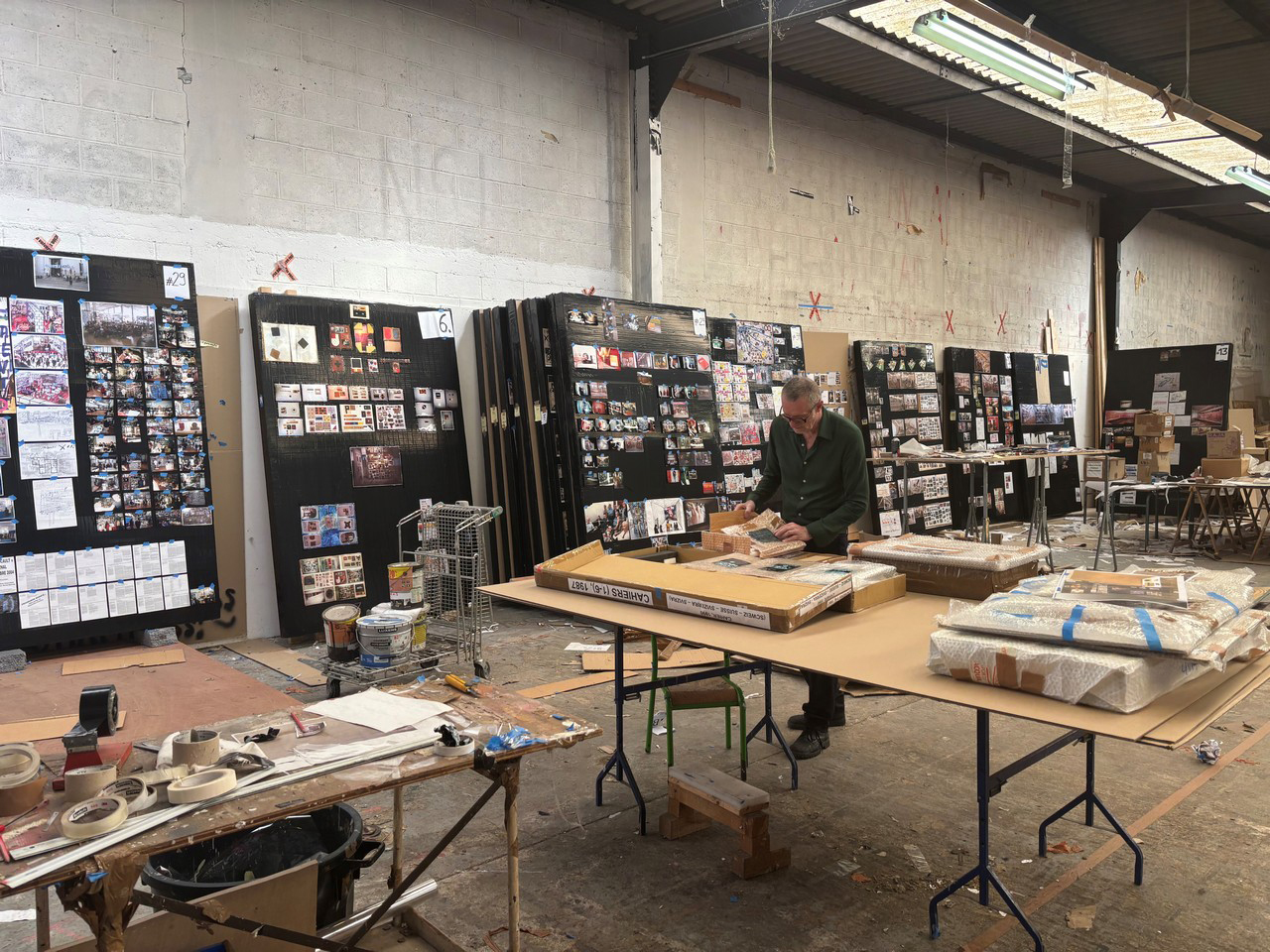
Photo: Bündner Kunstmuseum Chur
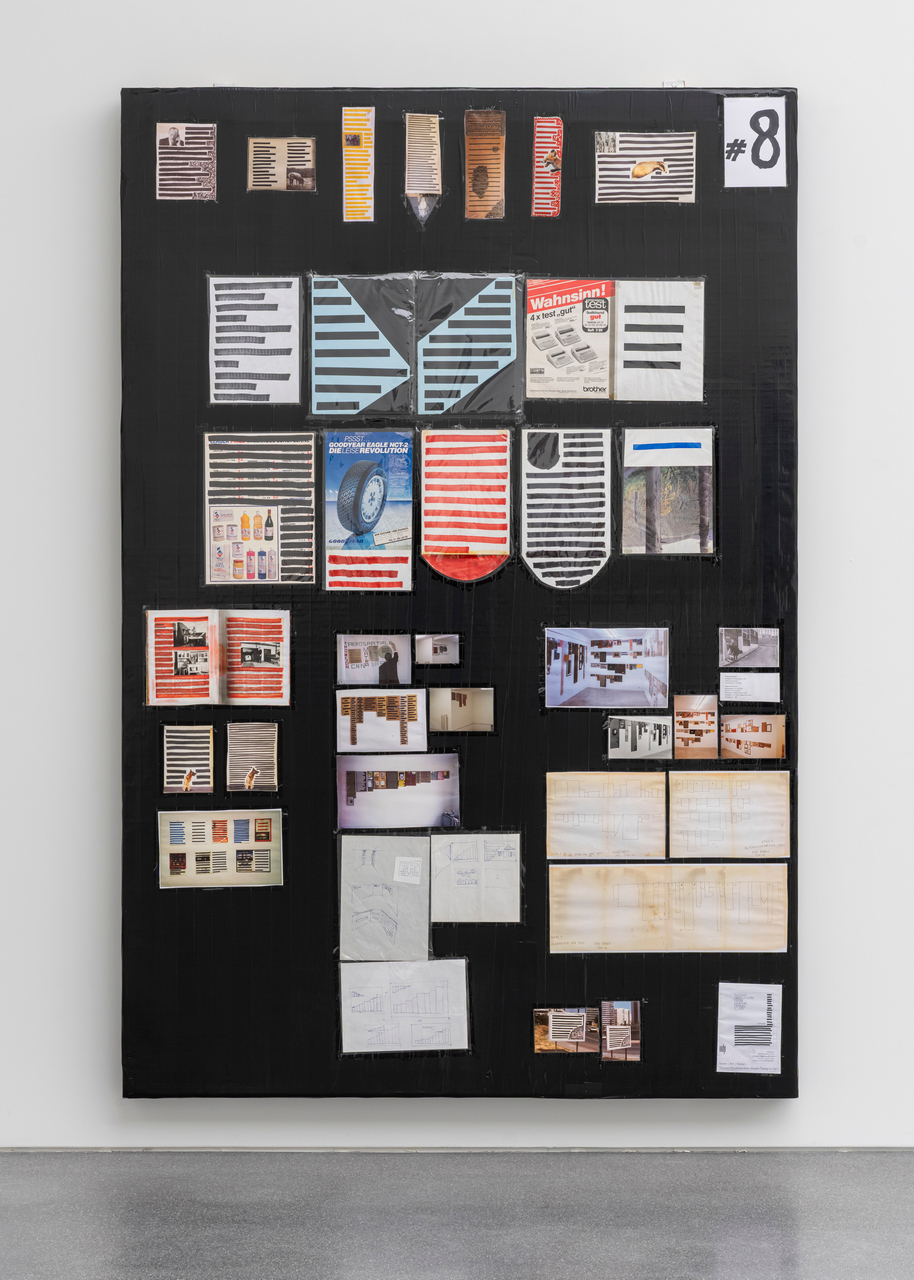
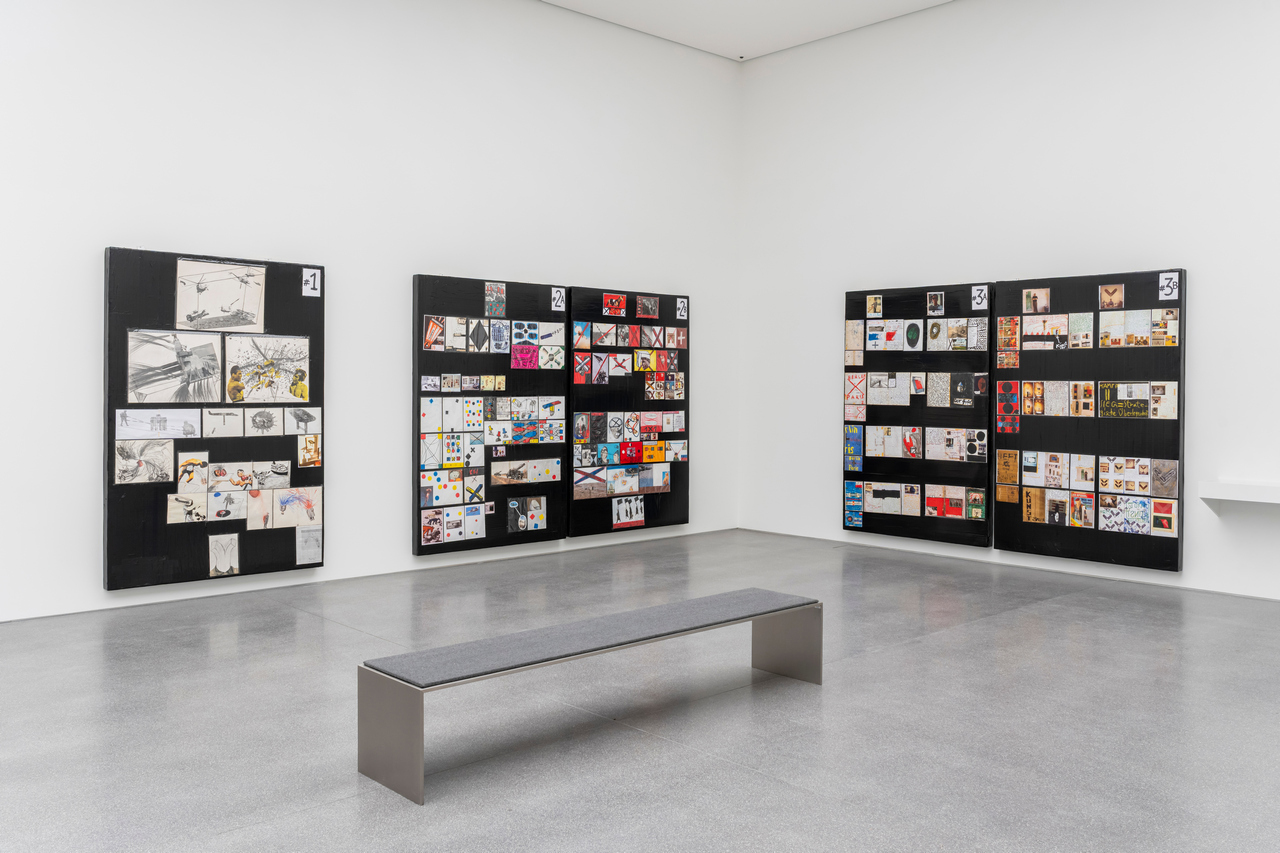
“My Atlas” is a major retrospective exhibition dedicated to Thomas Hirschhorn. The exhibition offers a comprehensive overview of Hirschhorn’s career spanning four decades, from the early 1980s to the present day. Born in Bern and raised in Davos, Hirschhorn attended the Zurich University of the Arts before moving to Paris in 1983, where he continues to live and work, gaining international recognition since the mid-1990s for his expansive installations. At the core of the exhibition stands the central work “My Atlas” (2025), a personal reinterpretation of the atlas concept inspired by art historian Aby Warburg’s famous “Mnemosyne Atlas”. Warburg’s original 1920s project mapped visual culture and human memory by mounting disparate images, paintings, and press clippings onto black fabric panels to create non-linear, open-ended relationships across time. Hirschhorn adapts this framework into a horizontal statement composed of 45 large cardboard panels wrapped in black plastic foil, mounting images of his own works alongside documents, drawings, references, and archival materials. Serving as a structural bridge across forty years of output, the work acts as an evolving, non-chronological matrix that maps out the artist’s multifaceted practice while exploring the tension between the self and the world, highlighting his ongoing artistic, social, and political relevance.
This visual methodology forms the foundation of Hirschhorn’s signature aesthetic, often described as “precarious sculpture.” Intentionally rejecting traditional notions of craftsmanship, luxury value, and classic aesthetic harmony, Hirschhorn favors cheap, accessible materials like brown packing tape, cardboard, and aluminum or plastic foil. For Hirschhorn, cardboard serves as a democratic, unpretentious material, packing tape acts as a universal binding agent that makes human assembly visible, and foil introduces a reflective, consumerist surface reminiscent of commercial packaging and emergency blankets. His dense, spatial environments explicitly embrace an “Energy yes, Quality no” ethos, turning museum rooms into urgent, temporary spaces that confront viewers with the chaotic realities of contemporary media, politics, and consumer culture.
Through this unpolished aesthetic, Hirschhorn’s practice directly critiques and inverts 1960s Minimalist sculpture. While Minimalists like Donald Judd created pristine, factory-finished geometric objects intended to exist as pure, neutral forms within a clean gallery space, Hirschhorn replaces pristine surfaces with ripped cardboard, peeling tape, and hand-written text. Where Minimalism isolated art from real-world narratives, Hirschhorn packs his installations with political commentary, news images, and philosophical texts to demonstrate that no art can remain neutral or detached from socio-political conflict. Furthermore, while Minimalist objects were crafted for permanent value, Hirschhorn builds ephemeral structures that embrace vulnerability and impermanence, transforming passive gallery viewing into an active intellectual and political engagement.
Photo:Thomas Hirschhorn, My Atlas, Plate #1, #2 and #3, 2025, Photo: Yanik Bürkli, © 2026, ProLitteris, Zürich
Info: Curator: Stephan Kunz, Bündner Kunstmuseum Chur, Bahnhofstrasse 35, Chur, Switzerland, Duration: 22/8-6/12/2026, Days & Hours: Tue-Sun 10:00-17:00, https://kunstmuseum.gr.ch/
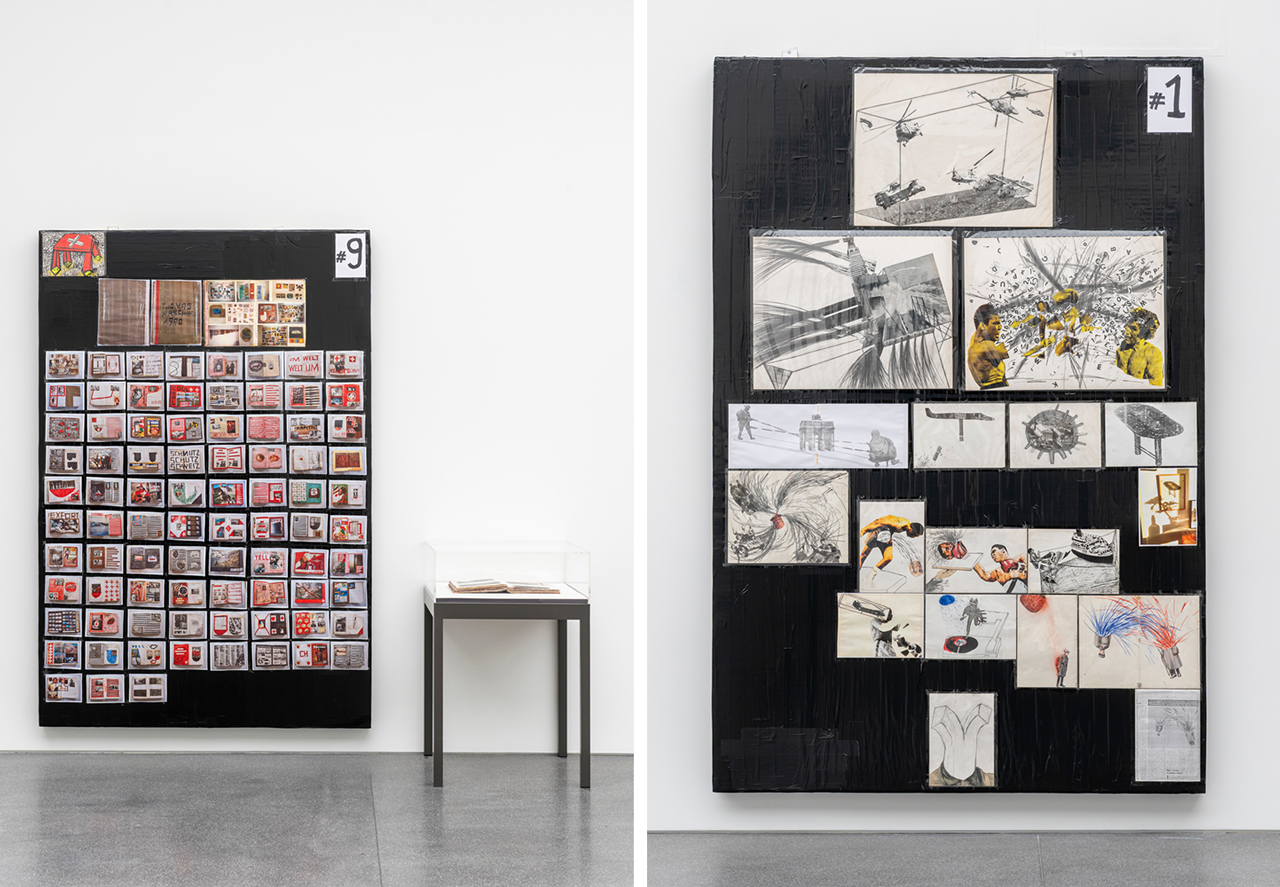
Right: Thomas Hirschhorn, My Atlas, Plate #1, 2025, Photo: Yanik Bürkli, © 2026, ProLitteris, Zurich
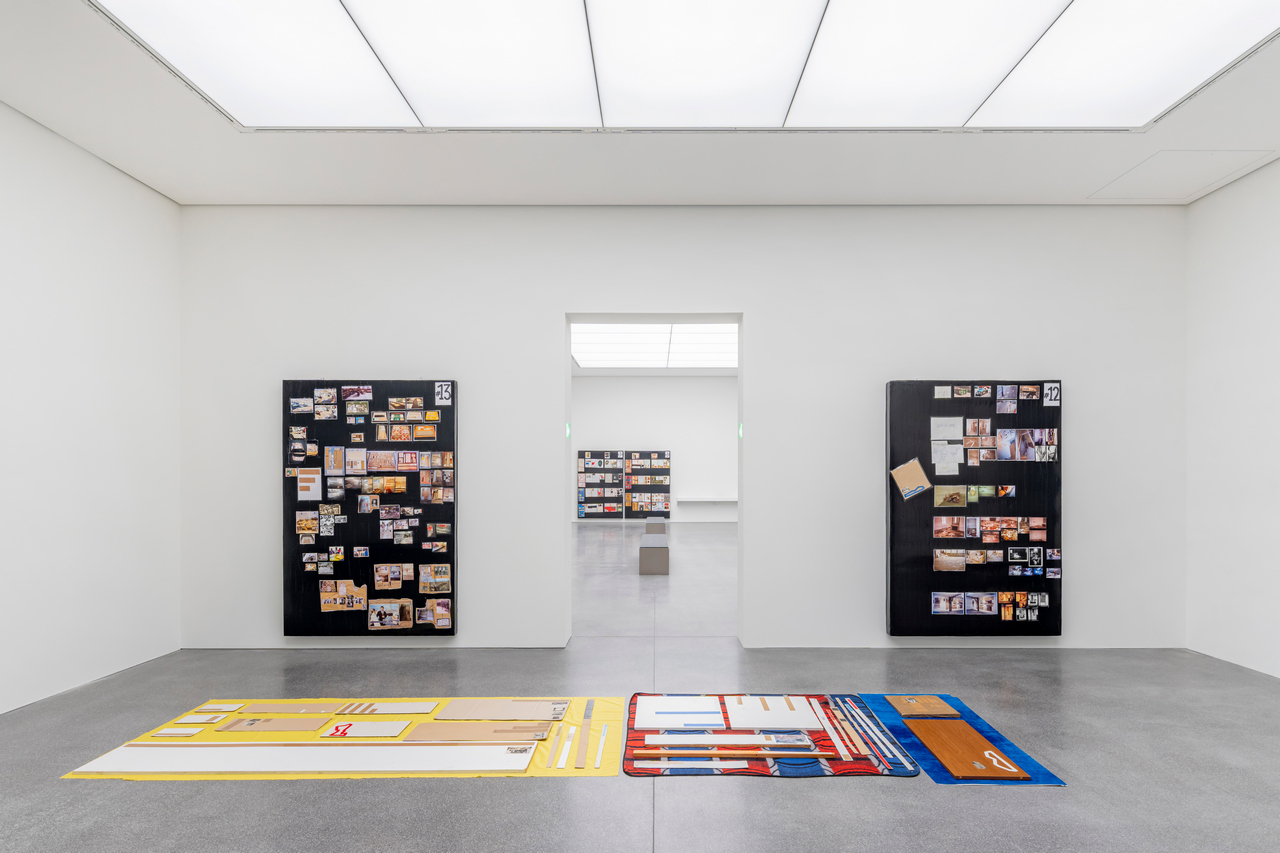
On the floor: Annex to Plate #13 Layout No. 1, 14, 36 1993
In the background: Plate #3
Photo: Yanik Bürkli © 2026, ProLitteris, Zurich