PRESENTATION: Carrie Yamaoka
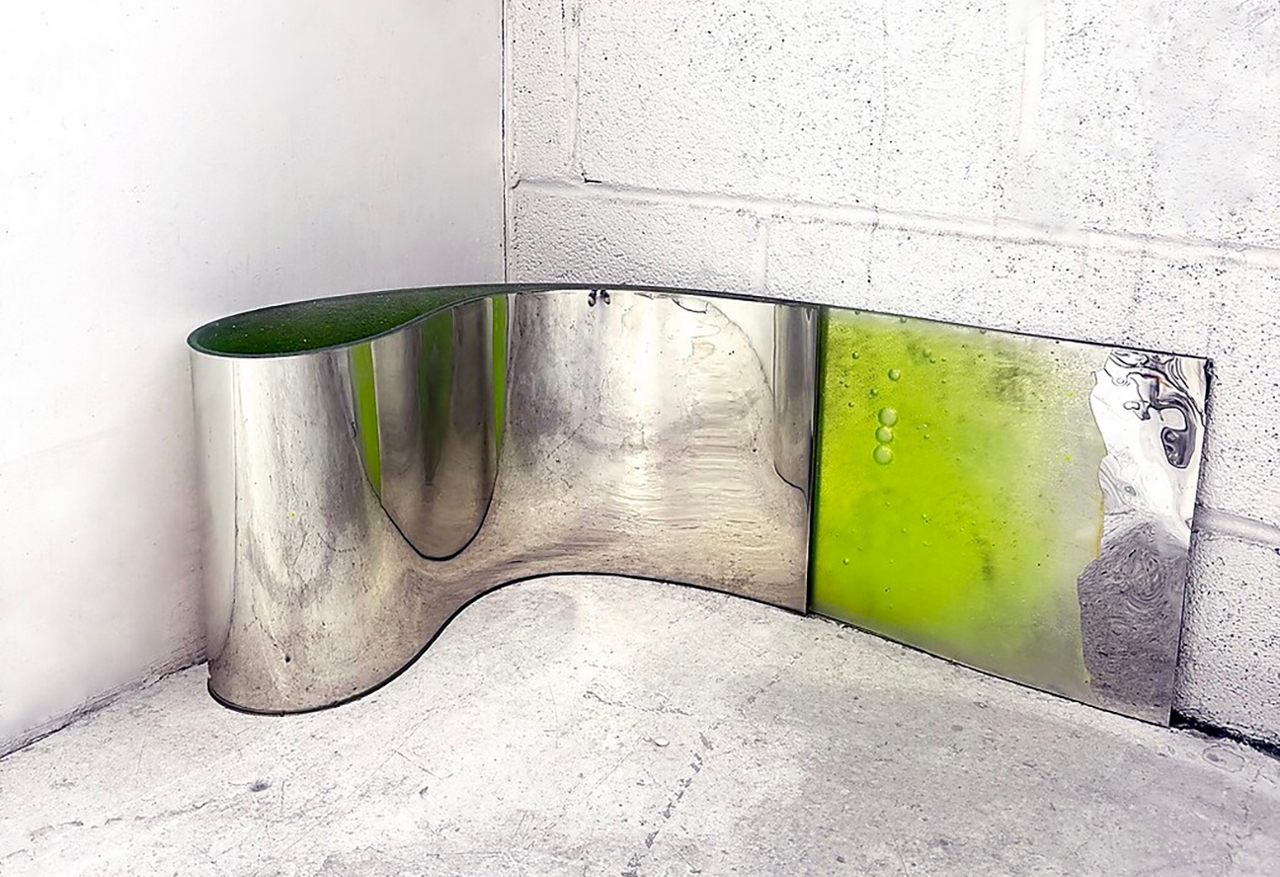
Working across sculpture, photography, painting, and drawing, Carrie Yamaoka focuses on surface, material, and process. Her art captures subtle, barely visible textures while navigating the balance between control and spontaneity. Through chemical reactions and shifting physical states, she redefines how objects document and record time.
By Dimitris Lempesis
Photo: Hamburger Kunsthalle Archive
The atrium of the Galerie der Gegenwart in Hamburg plays host to a seminal milestone: Carrie Yamaoka’s first solo exhibition in Germany. The landmark show arrives on the heels of the multidisciplinary artist receiving the prestigious Maria Lassnig Prize, honoring mid-career artists whose work deserves broader international recognition. For over three decades, Yamaoka has navigated the dynamic intersections of painting, drawing, photography, and sculpture. The German exhibition brings her rigorous, process-oriented practice into sharp focus, offering a comprehensive look at an oeuvre defined by mutable surfaces, material memory, and the constant blurring of artistic boundaries.
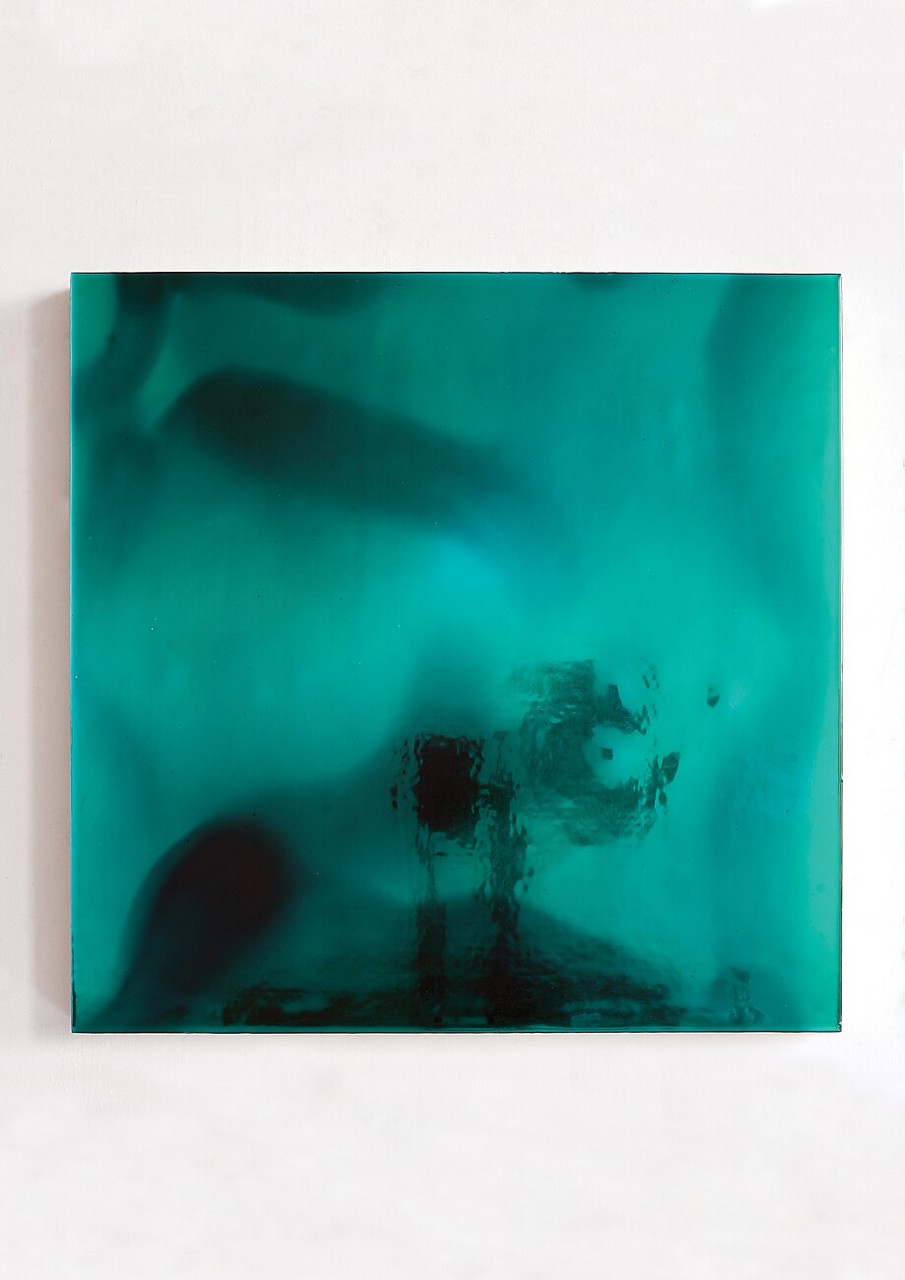
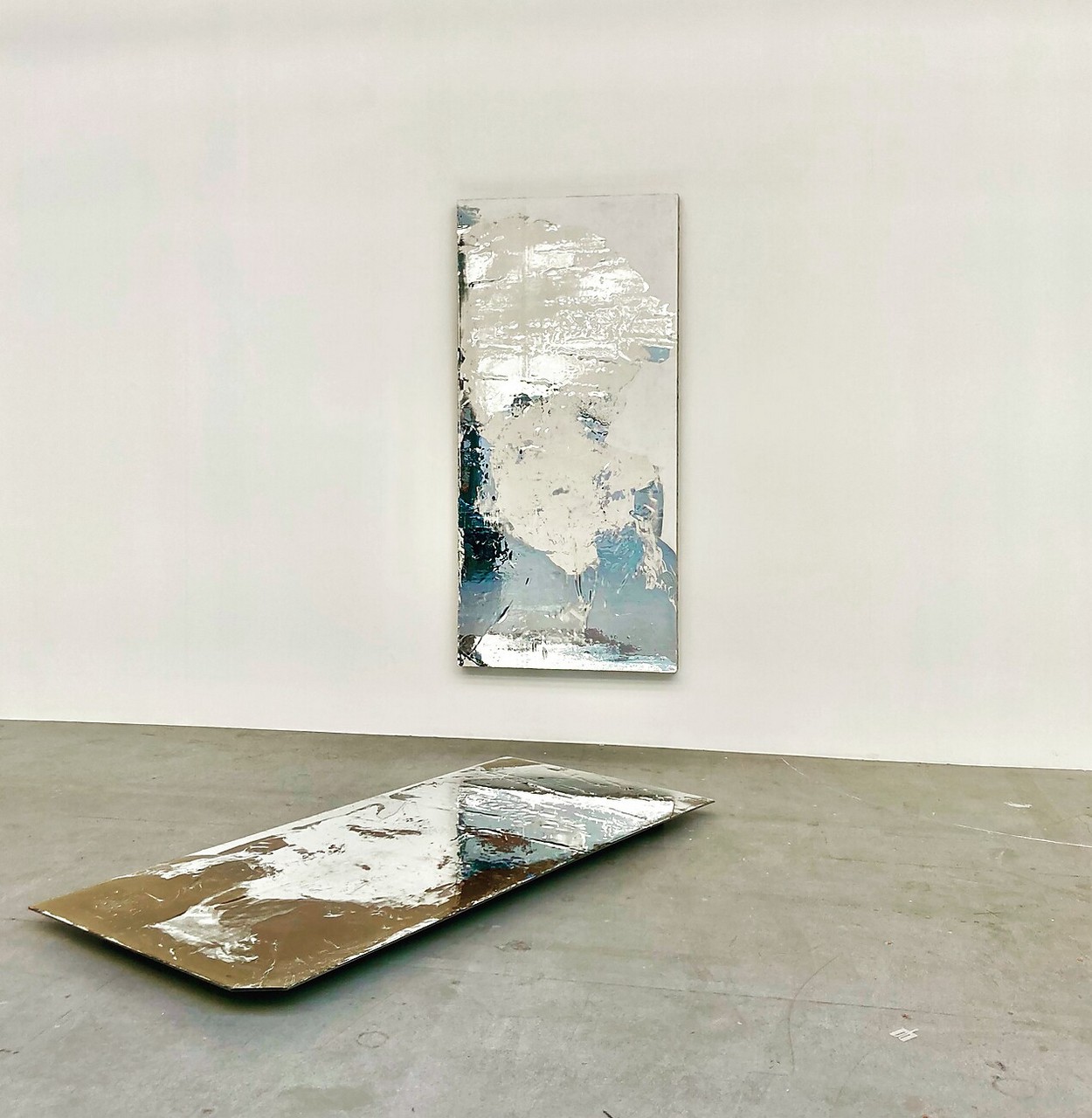
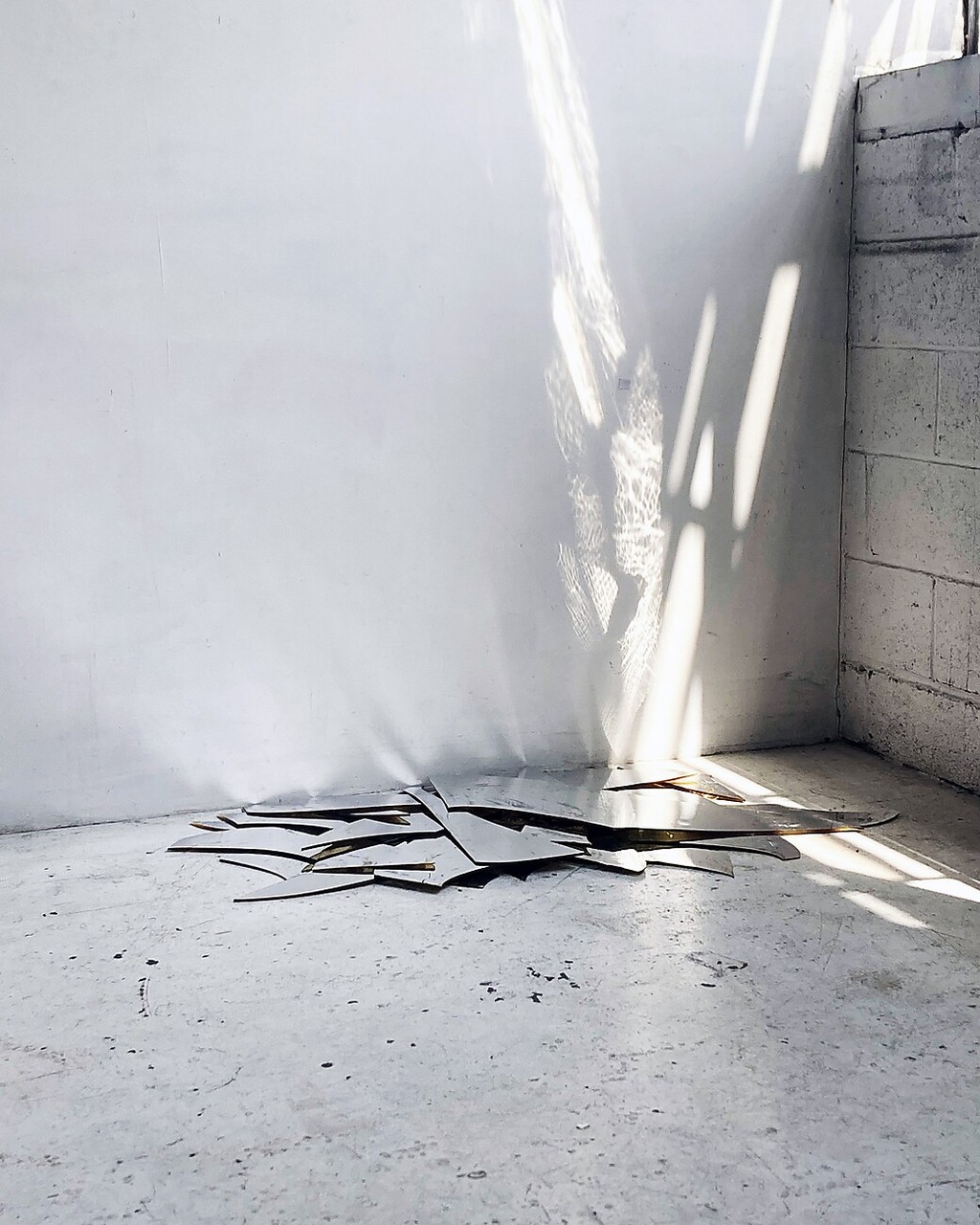
At the core of Yamaoka’s practice is an ongoing obsession with the topography of surfaces and the tactility of the barely visible. Working with dynamic materials ranging from polyester resin and flexible PVC to reflective Mylar and photo-sensitive chemicals, she allows chemical reactions, physical distortions, and chance incidents to dictate the final form of her objects. Rather than treating image-making as a static act of recording, Yamaoka questions the very ability—and inability—of photography to capture a definitive reality. Her mirror-like, semi-reflective image supports collapse the distance between the artwork and its environment. As light shifts and viewers move past the works, the gallery space, the architecture, and the spectators themselves intermingle on the artwork’s surface, dissolving the traditional divides between the studio and the exhibition space, the creator and the viewer, and production and completion.
Yamaoka’s contemporary material investigations are rooted in her early text-based works, which subtly challenged how history and language are recorded. During this period, she frequently worked with typewriter correction ribbons, a material designed specifically to hide mistakes and render errors invisible. Instead of using the ribbon to erase, Yamaoka elevated the physical act of correction itself. By making the traces of erasures visible, she transformed a mechanism of concealment into an essential visual element, proving that what is removed often carries as much weight as what remains.
Standard art historical convention assumes a linear progression: an artist conceives a work, executes it, signs it, and moves on. Yamaoka deliberately subverts this hierarchy by frequently revisiting her own earlier creations—sometimes five, ten, or even twenty-five years after their initial completion—to alter, reprocess, or physically reshape them. By treating her past output as raw material for present intervention, Yamaoka challenges the market-driven demand for finished, permanent objects and reinforces her belief that art exists in a perpetual state of flux.
Yamaoka’s conceptual interest in fluidity and hybridity mirrors her personal background. Her identity is shaped by a complex diasporic lineage combining Japanese immigration to the U.S., dating from the late 19th to early 20th centuries, with white Anglo-Saxon Protestant heritage. A formative period spent living in Japan during her teenage years deeply influenced her perception of displacement, visibility, and cultural memory.
This acute awareness of marginality also fueled her political activism. In 1991, amidst the height of the AIDS epidemic and urgent political mobilization for LGBTQ+ rights, Yamaoka co-founded the fierce pussy collective alongside Nancy Brooks Brody, Joy Episalla, and Zoe Leonard. Using low-tech visual tactics such as wheat-pasting posters across New York City, the queer art collective brought lesbian identity and AIDS advocacy directly into the public sphere. Today, in her solo exhibition at the Galerie der Gegenwart, Yamaoka’s multi-layered career comes full circle. By marrying the radical politics of visibility with a deeply poetic material practice, her work invites audiences not merely to look at art, but to see themselves reflected within its ever-shifting conditions.
Photo: Carrie Yamaoka, 68 by 12 green redux, 2004-2025, © Carrie Yamaoka, Courtesy the artist and Hamburger Kunsthalle
Info: Curator: Dr. Brigitte Kölle, Assistant Curator: Michelle Adler, Hamburger Kunsthalle , Glockengießerwall 5, Hamburg, Germany, Duration: 21/8/2026-10/1/2027, Days & Hours: Tue-Wed & Fri-Sun 10:00-18:00, Thu 10:00-21:00, www.hamburger-kunsthalle.de/