
PREVIEW: Thalita Hamaoui-A Terra Sonha Ossos
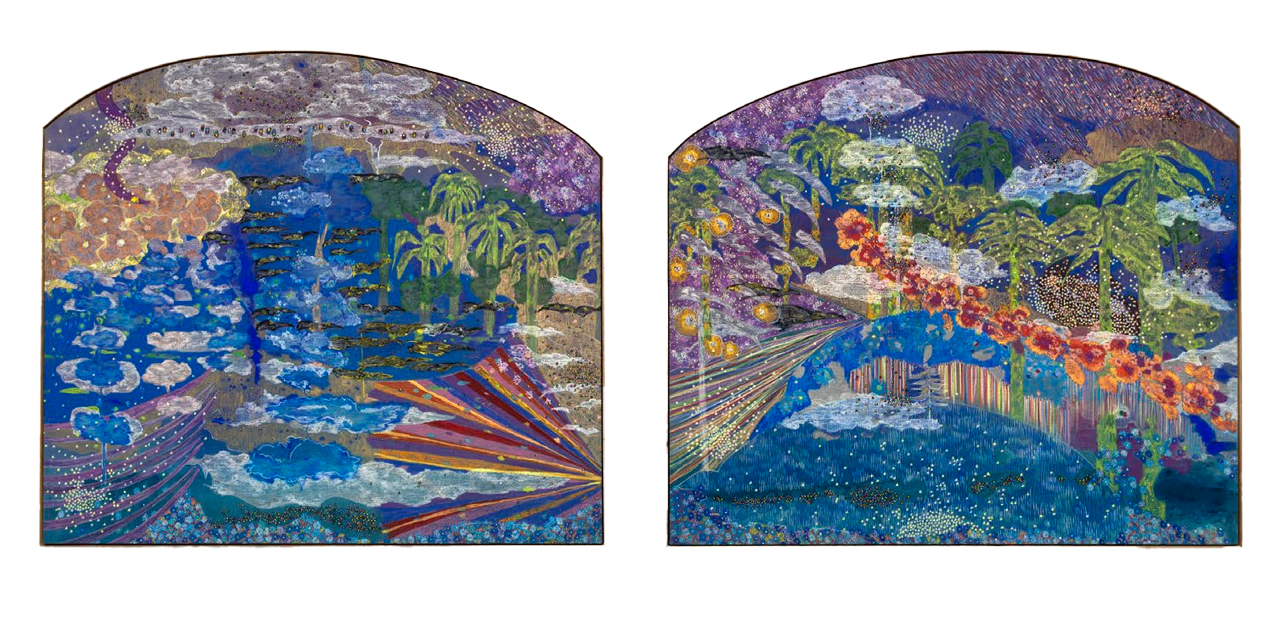
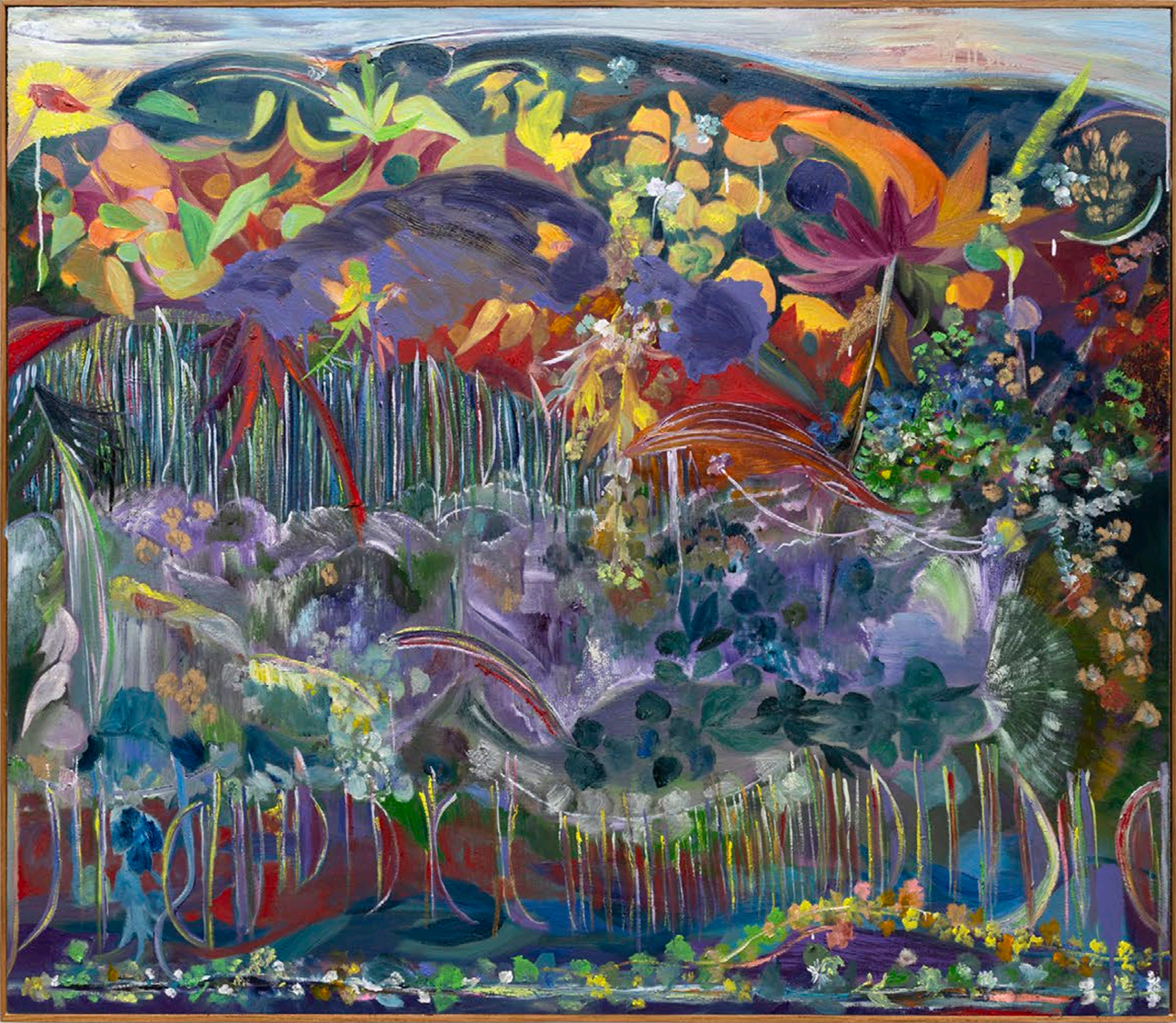
Throughout her vibrant, kaleidoscopic paintings, Thalita Hamaoui imagines fantastical, overgrown landscapes that glow with a rich, internal luminosity. Building her work layer upon layer, Hamaoui conjures dense jungles amidst constant transformation—each element of the landscape seemingly poised on the verge of change: growing, blooming, evolving. Devoid of humans and animals, these landscapes nevertheless teem with lush botanical life—chimerical flowers and trees growing out of rugged, gestural hillsides. Characterized by rich, saturated color palettes, layered linework, and rhythm.
By Dimitris Lempesis
Photo: Boesky Gallery Archive
“A Terra Sonha Ossos” (The Earth Dreams Bones) marks her first solo presentation in China, bringing together a body of paintings that considers landscape not as scenery, but as a living, remembering presence. The exhibition extends a central concern of Hamaoui’s practice: the possibility of imagining a world in which nature is not an object of representation, but an active subject—one that possesses memory, desire, rhythm and, perhaps, the capacity to dream.
For Hamaoui landscape is never simply a subject. Her paintings do not proceed from direct observation of nature, nor do they attempt to reproduce recognizable places. Instead, the natural world becomes a point of departure for a more intuitive and embodied investigation. Organic forms emerge, dissolve and overlap; foliage, flowers, branches and unfamiliar vegetal structures seem to grow simultaneously across the surface. As recent writing on her work has observed, these botanical elements resist realism, unfolding instead through rhythms that bring vegetal matter and fictional constructions into a dreamlike proximity.
The title “A Terra Sonha Ossos” provides the conceptual and poetic key to the exhibitionn. The phrase proposes a reversal of the conventional relationship between humanity and the natural world. What if the earth itself were the subject? What if it were the earth, rather than the human being, that dreams, remembers and carries desire?
The “bones” of the title suggest the underlying structures of existence: geological strata, roots, mineral matter, buried memory and the deep material foundations from which life emerges and to which it eventually returns. The earth becomes simultaneously body and archive. Beneath the exuberance of Hamaoui’s painted surfaces lies an awareness of duration—a time that exceeds the human scale and in which growth, decay, disappearance and renewal are part of a continuous cycle.
This conception resonates strongly with the thought of Ailton Krenak, the Brazilian Indigenous thinker, writer and environmental activist. Hamaoui was reading Krenak’s “Ancestral Future” (Futuro Ancestral) to her son while the paintings were developing. Published in English as “Ancestral Future”, the book challenges the linear conception of time and proposes an understanding of rivers, soil and trees as living entities participating in the planet’s vital cycles. Krenak’s formulation that “the future is ancestral” suggests that what appears to belong to the past remains an active presence in the present and a possible foundation for the future.
This perspective is particularly significant for Hamaoui, who lives in São Paulo, one of the world’s great metropolitan centers, while maintaining a close relationship with the Atlantic Forest surrounding the city. Her journeys into the forest become an embodied reconnection with a different order of existence. The encounter is not primarily intellectual: it is registered through the body, sensation and the nervous system. The forest becomes something experienced rather than represented—a living body whose rhythms can be sensed before they can be translated into language.
This distinction is essential to understanding Hamaoui’s paintings. Nature does not appear in them as an illustration of an ecological argument. Rather, ecological awareness is embedded in the artist’s method. Painting becomes a form of listening.
Hamaoui does not begin with a fixed image or a predetermined destination. Instead, she allows the painting to develop through successive gestures, additions, removals and transformations. The process is cumulative but also archaeological. Every finished surface contains the remains of what preceded it: buried images, erased marks, rejected forms and earlier paintings that continue to exert a pressure from beneath the visible surface. What finally appears is therefore not a single image, but the accumulated history of everything that attempted to exist within the painting.
Her method recalls the processes of living systems themselves. Nothing is entirely erased; matter changes form. One layer becomes the foundation for another. Growth incorporates decay, and disappearance becomes part of emergence.
The resulting paintings possess an unusual sense of movement. Hamaoui has described her search for images “that are moving all the time”—moments of perception that seem to appear and disappear almost simultaneously. Her paintings evoke “space and time that passes by very quickly,” a fleeting sensation that cannot be completely captured or stabilized. This quality distinguishes her work from a purely descriptive approach to landscape. The image is less a representation of a place than an event taking place before the eye.
Color plays a decisive role in this experience. Hamaoui treats color not principally as a structural system but as sensation. Combinations emerge intuitively, responding to the physical and emotional effects of one color upon another. Her chromatic vocabulary can move from saturated, almost tropical intensities to darker and more atmospheric passages, producing a constantly shifting sense of depth and temperature.
This sensorial approach to color is also connected to the broader art-historical currents that inform her practice. Her work has been discussed in relation to the luminous color of Impressionist and Post-Impressionist painting, the saturated palettes of East Asian painting traditions, and the countercultural legacy of Brazil’s Tropicália movement. Yet these references are absorbed rather than quoted. They become part of a personal pictorial language in which art history, memory, landscape and imagination continually intersect.
The physical scale of the paintings intensifies this experience. Hamaoui has increasingly worked with large formats, allowing gesture to become bodily and expansive. For example, the monumental “Corpo de vento” measures 275 × 540 cm, while “Ritmo da terra” measures 360 × 275 cm. The scale transforms the paintings from images to environments: the viewer does not simply look at a landscape but encounters something that seems to surround and absorb the body.
Alongside the paintings, “A Terra Sonha Ossos” also introduces a diptych that operates at a quieter register. Here the intensity of Hamaoui’s larger paintings gives way to a more intimate sense of duration and breath. Created with tempera, acrylic and oil pastel on surfaces dyed with pigment—sometimes submerged, sometimes placed directly on the floor—the works emerge through a slower and more open process.
Although their geometric structure might initially suggest the conventional logic of a window, Hamaoui understands these works differently: as an open door. The distinction is significant. A window separates the viewer from the world it frames; a door proposes passage. The diptych therefore extends the exhibition’s larger proposition that painting can become a threshold between different states of perception.
Hamaoui’s achievement lies precisely in keeping this proposition open. Her paintings do not dictate what the viewer should see. They remain unstable, suggestive and alive, allowing recognition to occur slowly and intuitively. A flower may become a body; a body may become a landscape; a landscape may become a memory; and beneath all of them lies the earth—not as passive ground, but as an ancient, active presence.
If the earth dreams bones, Hamaoui’s paintings can be understood as fragments of that dream: luminous, unstable and constantly becoming. They ask us not simply to look at the natural world, but to reconsider what it means to inhabit it.
Photo: Thalita Hamaoui, Desertos, cordilheiras, correntes oceânicas e as tempestades, 2026, Tempera, acrylic, and oil pastel on linen, Overall: 59 1/2 x 135 3/8 inches, 151 x 344 cm, Diptych, each: 59 1/2 x 67 3/4 inches, 151 x 172 cm, © Thalita Hamaoui, Courtesy the artist and Boesky Gallery
Info: Curator: Irina Stark, Pond Society, 2555-1 Longteng Avenue, Xuhui District, Shanghai, China, Duration: 28/8-15/10/2026, Days & Hours: Tue-Sun 11:00-17:00, http://instagram.com/pondsocietyofficial/
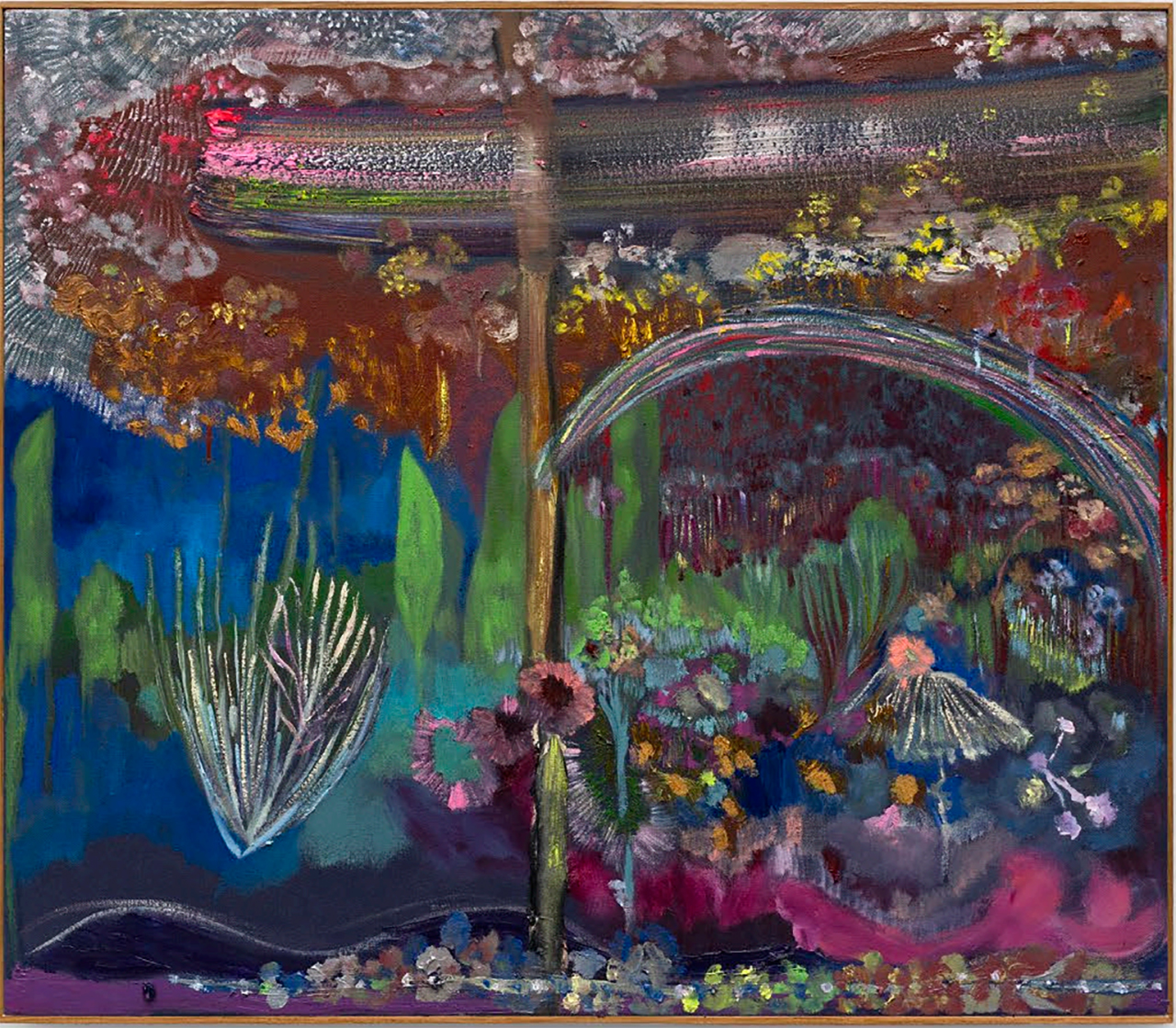
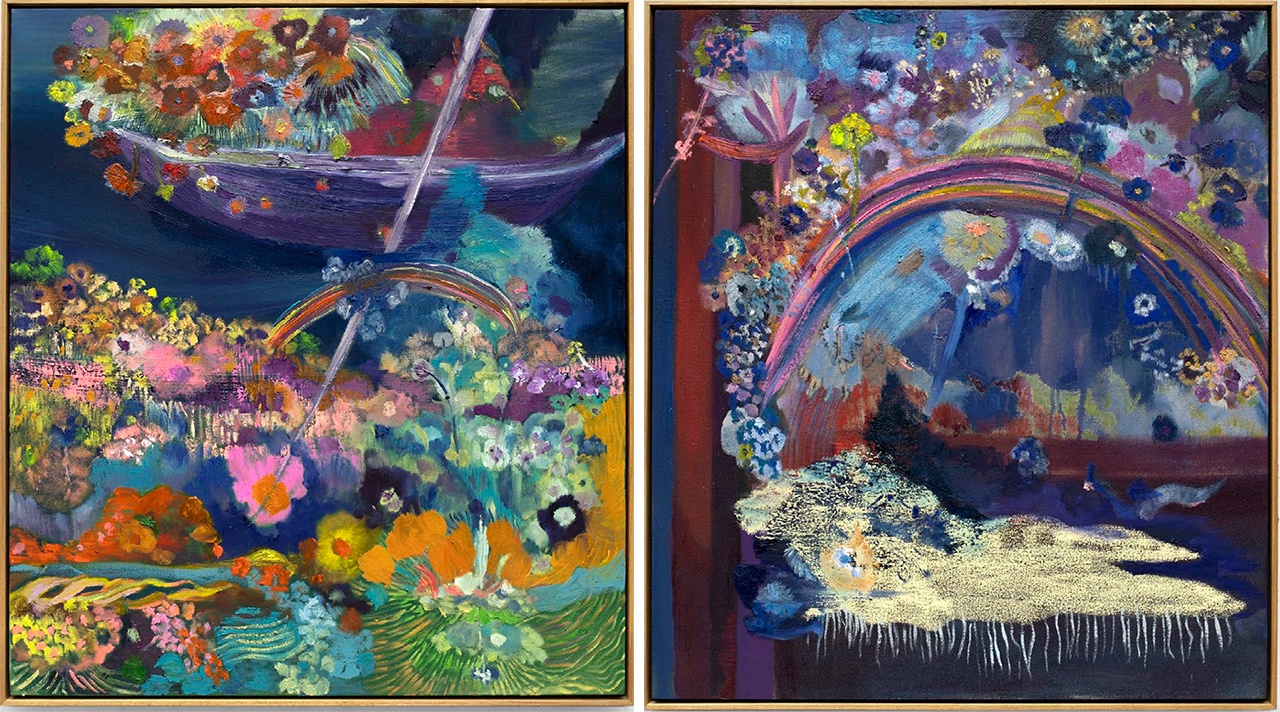
Right: Thalita Hamaoui, Continua brilhando, 2026, Oil, oil stick, and pigment on linen, 35 3/8 x 31 1/2 inches, 90 x 80 cm, © Thalita Hamaoui, Courtesy the artist and Boesky Gallery
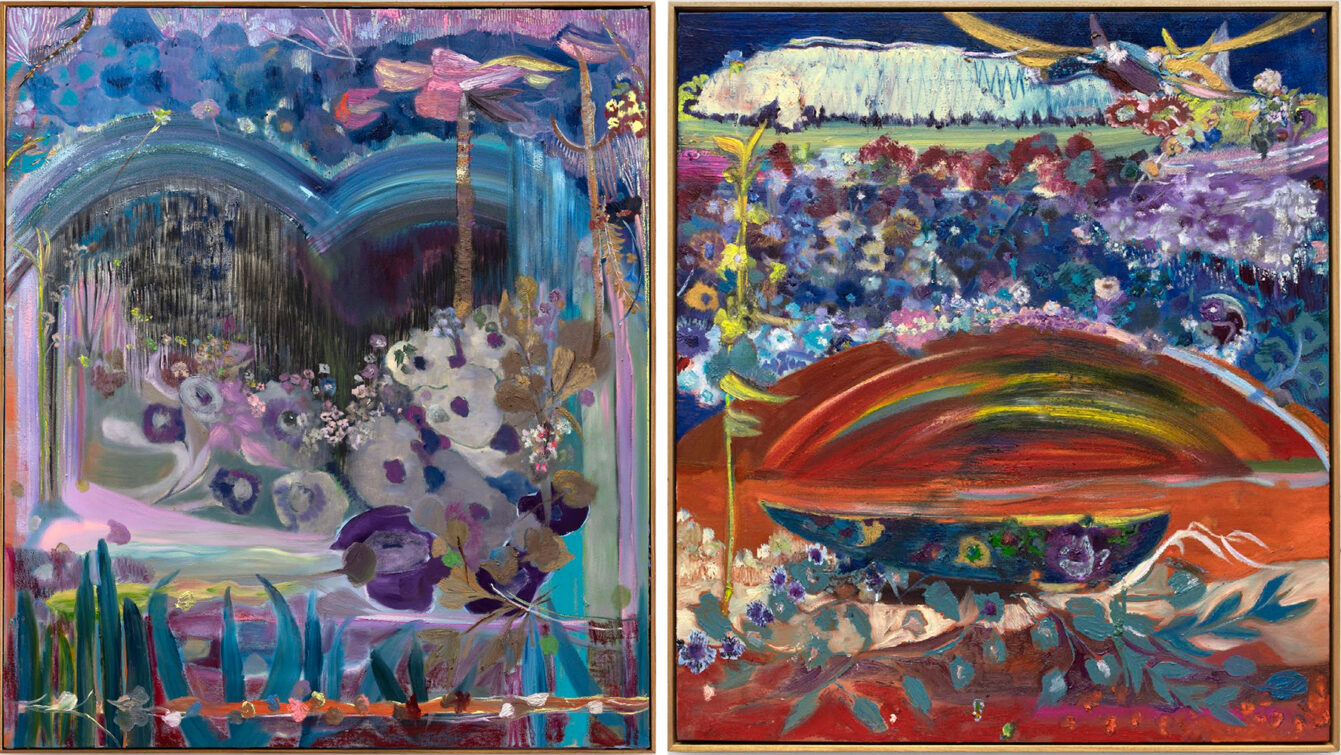
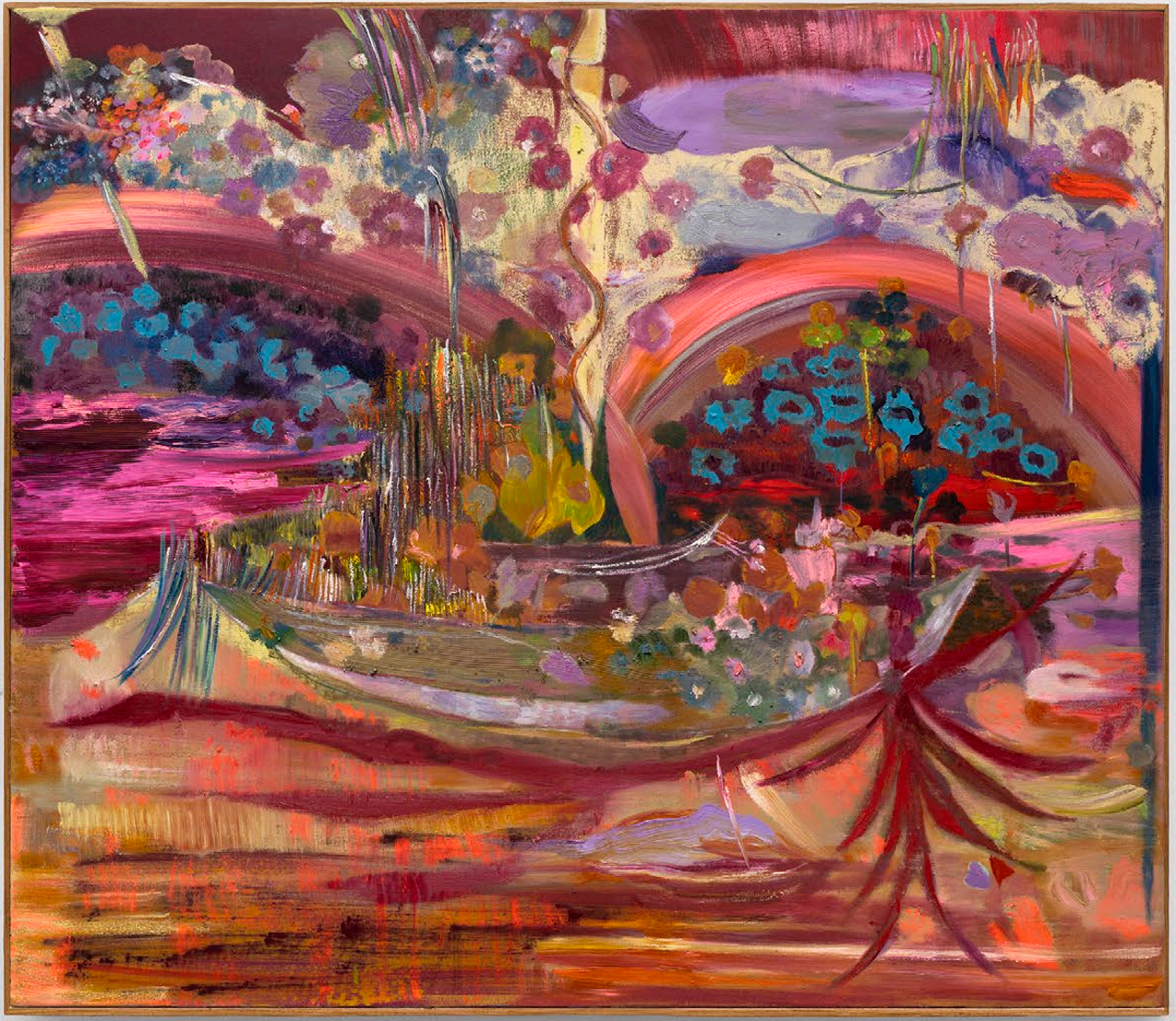
Right: Thalita Hamaoui, Terras raras, 2026, Oil and oil stick on canvas, 35 3/8 x 31 1/2 inches, 90 x 80 cm, © Thalita Hamaoui, Courtesy the artist and Boesky Gallery
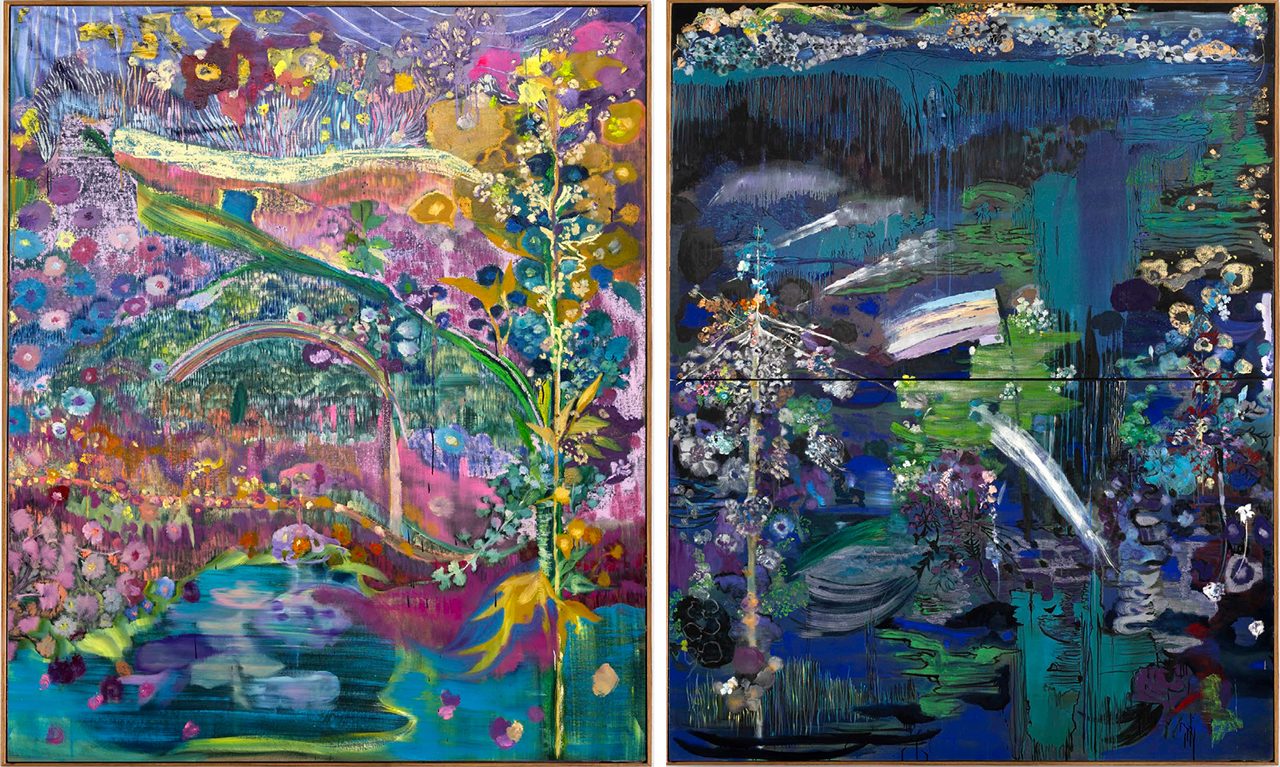
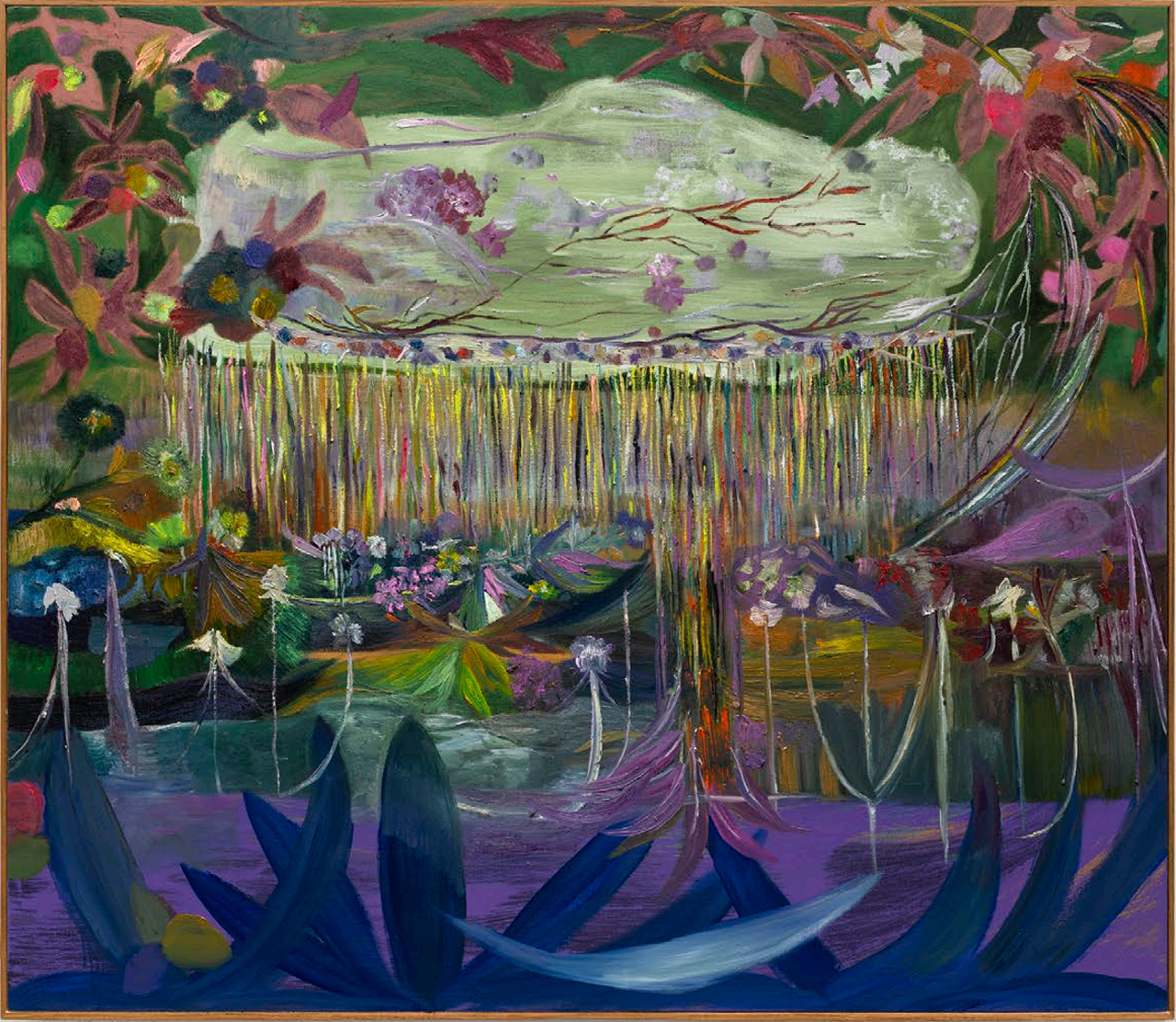
Right: Thalita Hamaoui, Constelação memória, 2026, Oil, tempera, oil stick, and pigment on linen, Overall: 129 7/8 x 104 3/8 inches, 330 x 265 cm, Diptych, each: 65 x 104 3/8 inches, 165 x 265 cm, © Thalita Hamaoui, Courtesy the artist and Boesky Gallery