PRESENTATION: Haas Brothers-Uncanny Valley
The Haas Brothers (twins Nikolai and Simon Haas) are Los Angeles-based artists and designers celebrated for blurring the line between functional furniture and fine art sculpture. Since establishing their studio in 2010, they have developed a playful, surreal, and deeply tactile aesthetic that blends nature, science fiction, psychedelia, and bodily humor.
By Efi Michalarou
Photo: MAD Archive
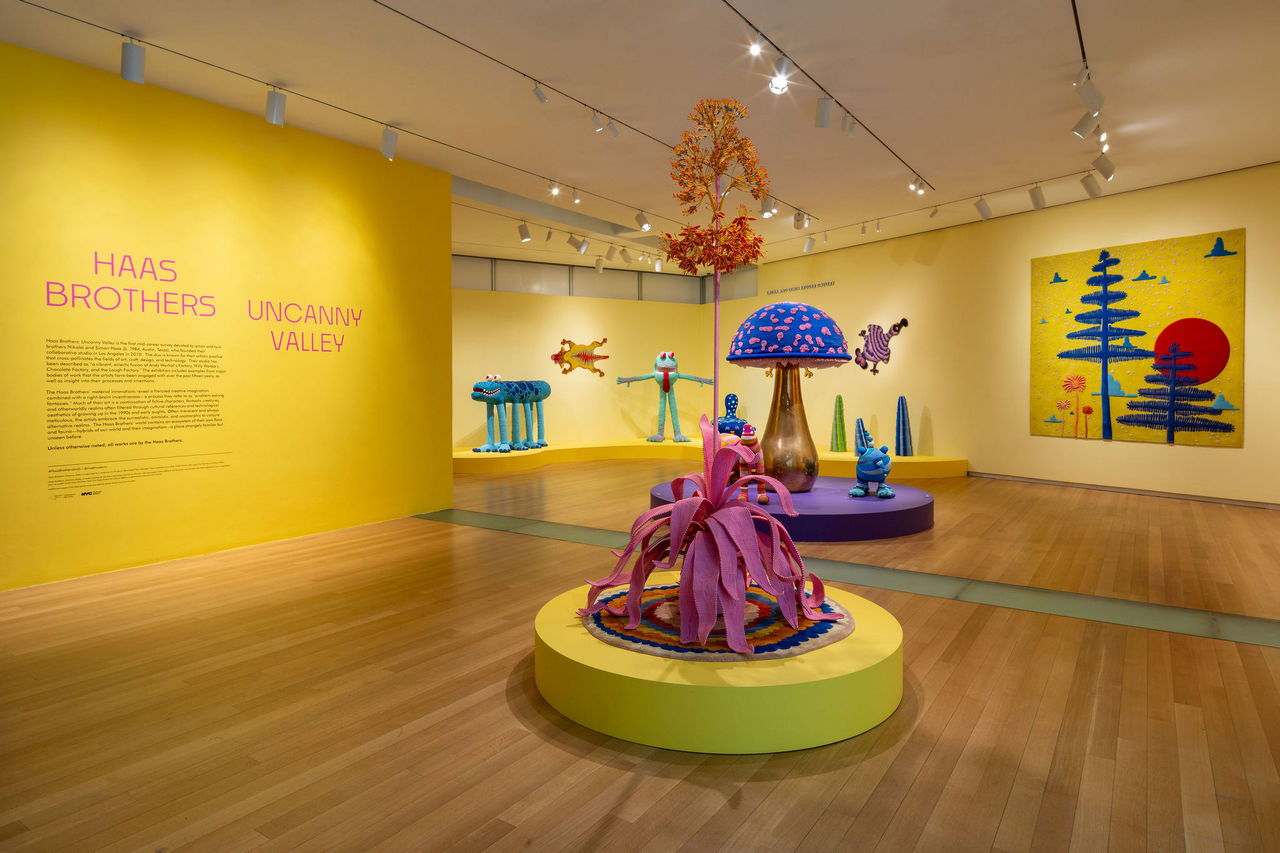
When entering the fantastical universe of Nikolai and Simon Haas, conventional boundaries between high art, functional design, traditional craft, and advanced digital technology dissolve. “Haas Brothers: Uncanny Valley”, is a major mid-career survey gathering roughly 85 works spanning more than fifteen years of the Los Angeles–based twins’ collaborative output. It offers an immersive journey into what the artists describe as “problem-solving fantasies”—a creative framework where meticulous, hand-built physical forms blend seamlessly with algorithmically driven experimentation.
Founded in 2010, the Haas Brothers studio has become a vital voice in contemporary design, celebrated for its surreal zoomorphic forms, vibrant material choices, and playful humor. Essentially self-taught, Nikolai and Simon Haas defy standard art-world taxonomy: Nikolai brings an intuitive, gestural approach to sculpting, while Simon acts as a system-oriented researcher who devises custom mathematical and digital processes.
The Haas Brothers refuse the traditional hierarchies separating art, design, craft, and technology, presenting objects that feel simultaneously ancient and futuristic while speaking to the emotional power of making in the twenty-first century. The duo embodies everything the museum stands for through their fearless experimentation, material mastery, and expansive vision of modern craft.
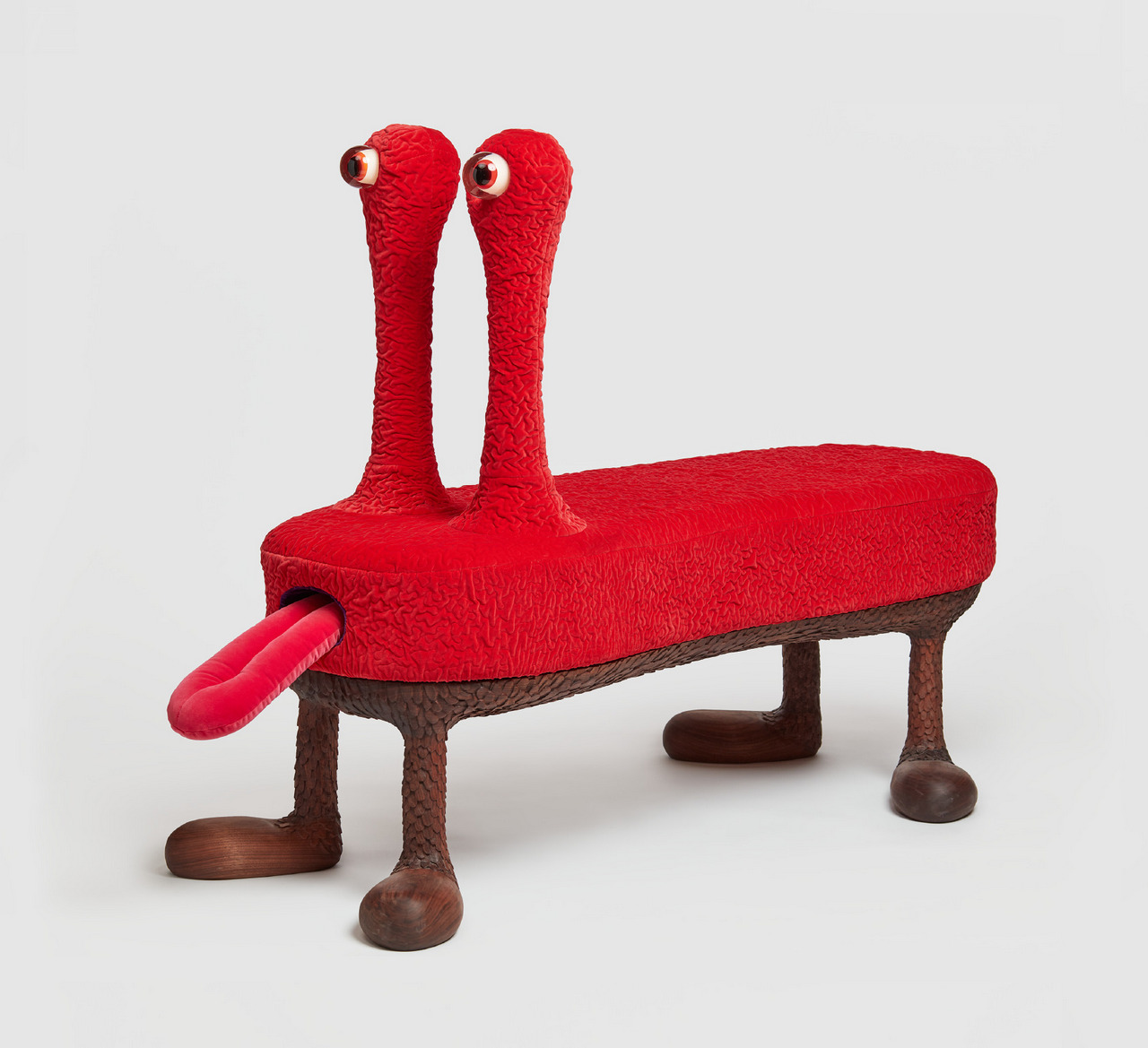
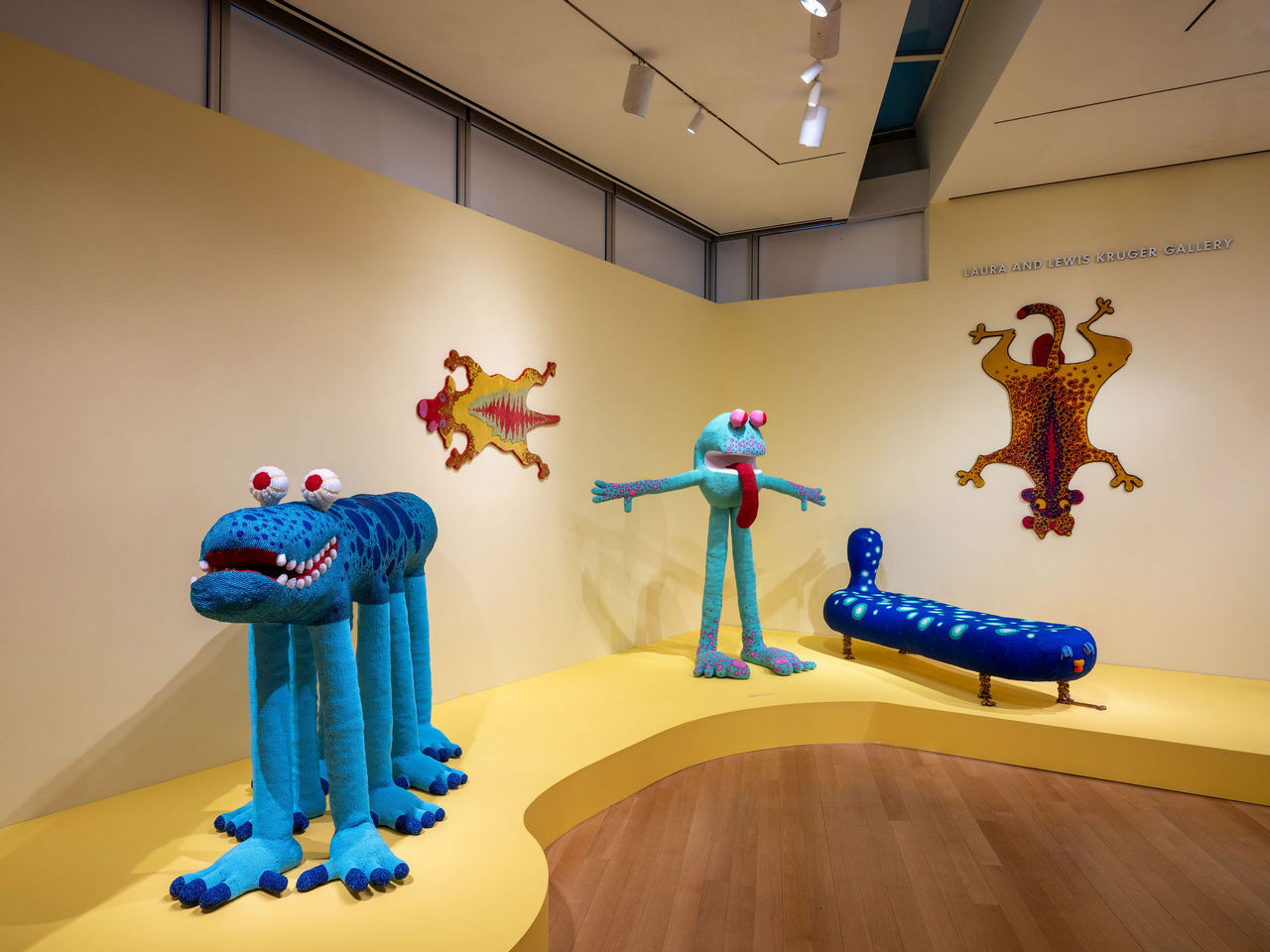
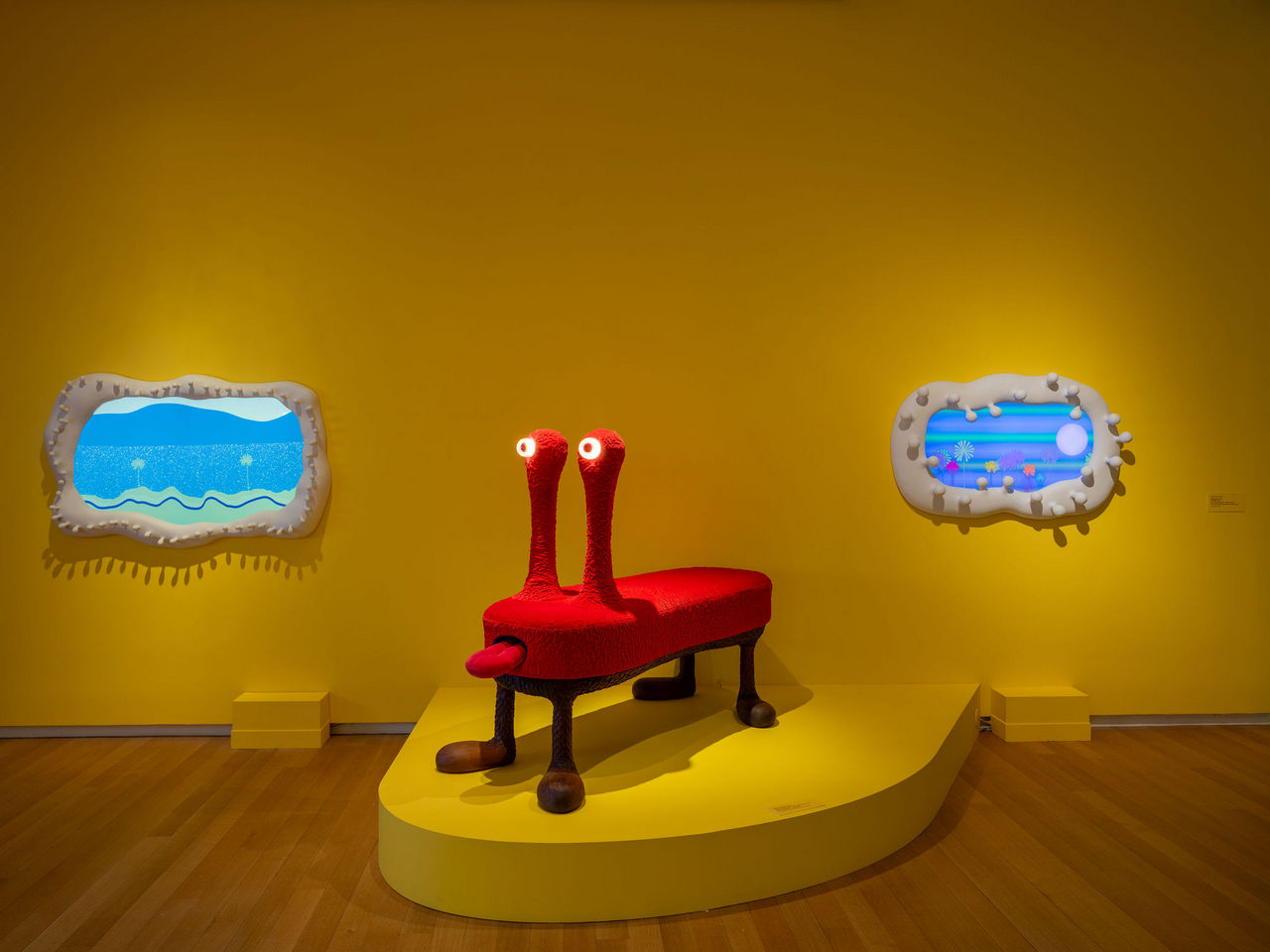
Staged through a series of dynamic, otherworldly vignettes, “Uncanny Valley” highlights the key series that have defined the brothers’ career. The iconic “Beasts”—zoomorphic, tactile creatures brimming with personality and cultural commentary—blend luxurious animal pelts with hand-carved ebony and cast bronze to function as both sculpture and furniture.
Demonstrating their fluency in modern technology, the exhibition also features “Endless Paintings”, which consist of algorithmically generated landscapes inspired by early computer graphics, alongside “Emergent Sculptures” that explore self-generating forms through digital code.
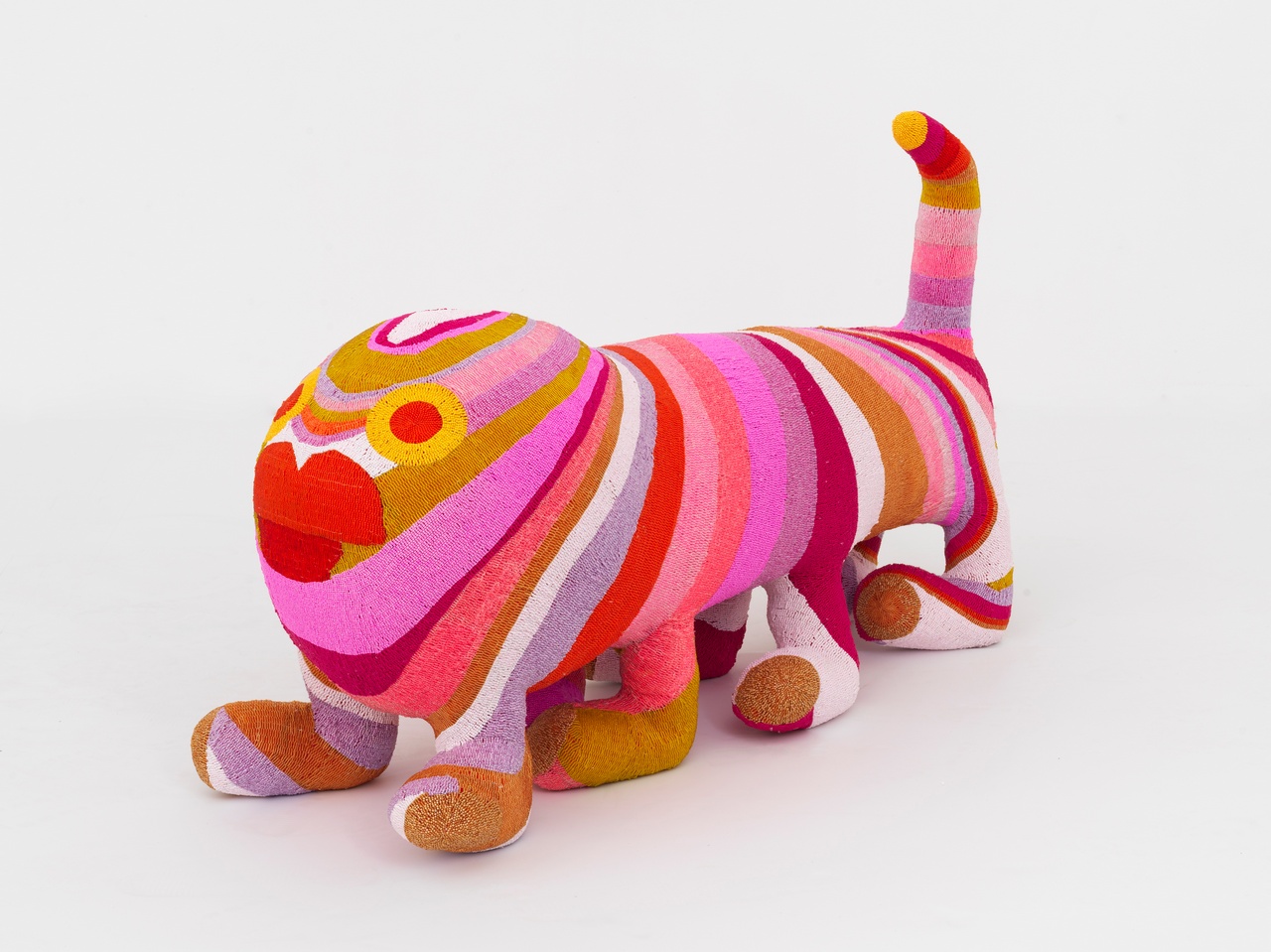
Central to their practice is a commitment to equitable, community-driven craft, exemplified by their “Freaks” series. Developed in partnership with Monkeybiz, a beadwork collective in Cape Town, South Africa, and later expanded with women artisans in Lost Hills, California, these intricately beaded works underscore the Haas Brothers’ belief in art as a collective, socially engaged endeavor.
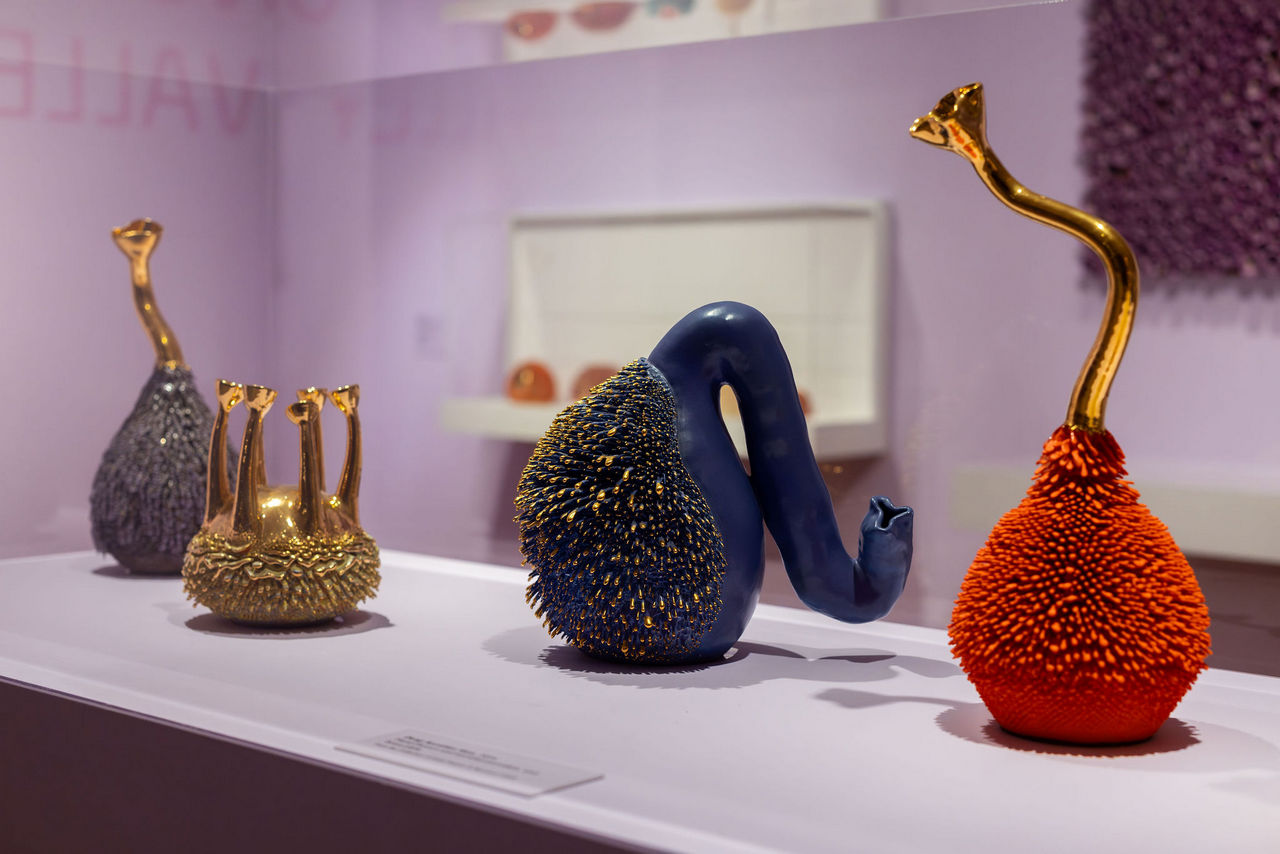
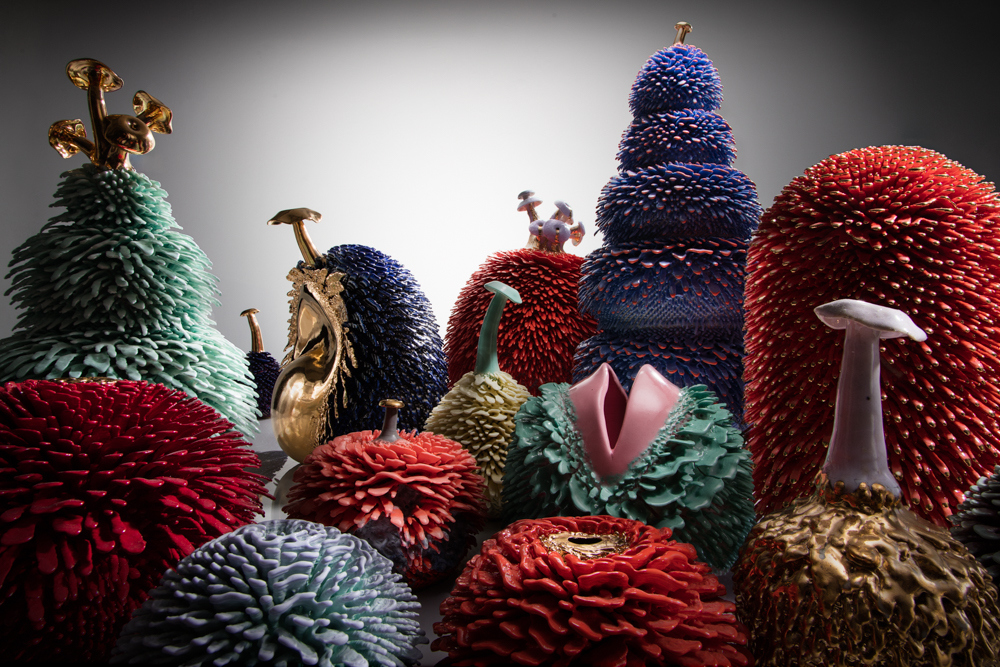
The Haas Brothers combine algorithmically generated code and liquid slip techniques to mimic biological growth, bridging digital logic with tactile ceramic art. While these two approaches exist in distinct mediums—one computational and digital, the other physical and ceramic—they stem from a shared artistic goal of using system-based rules to generate organic, self-evolving forms.
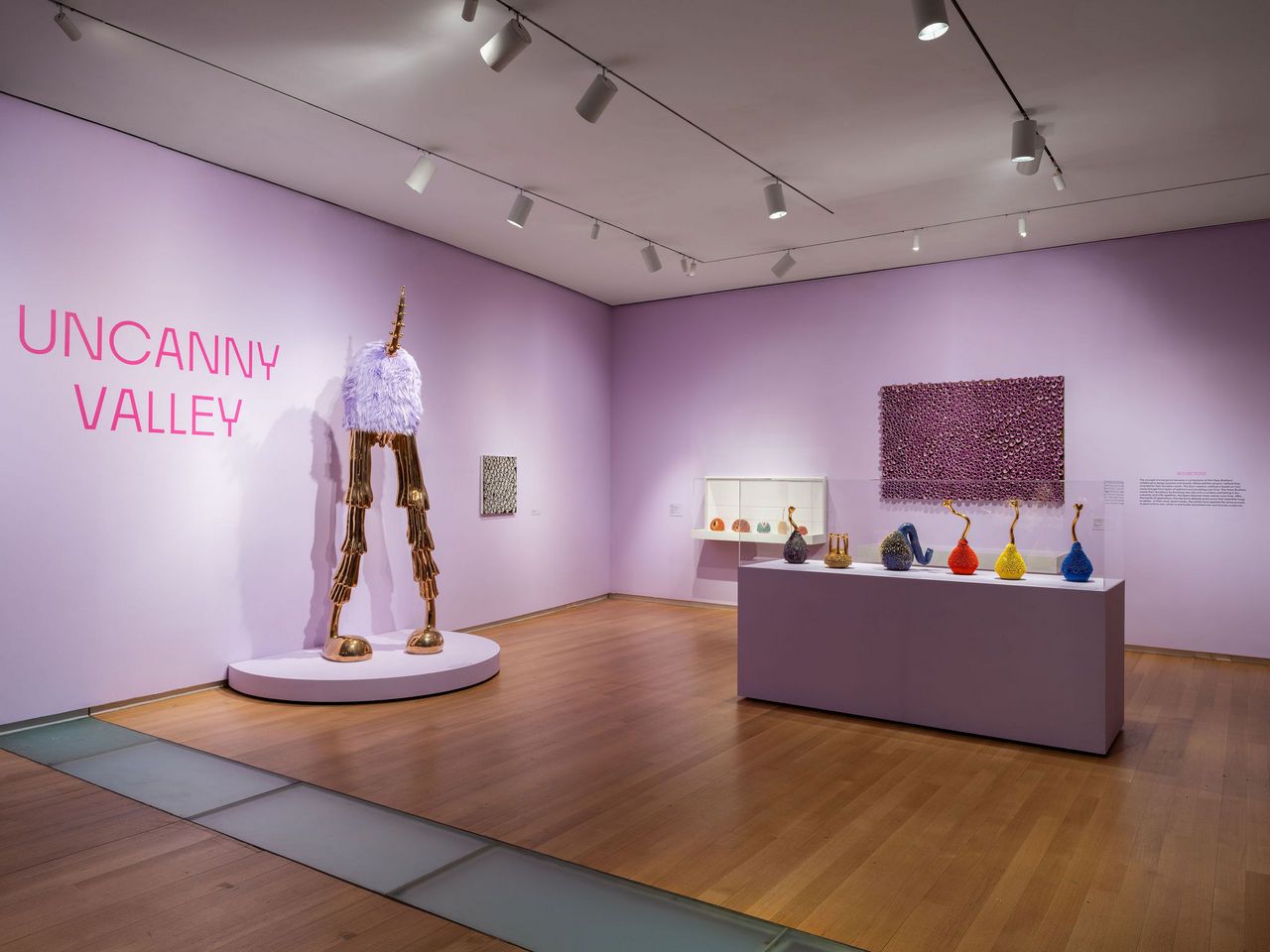
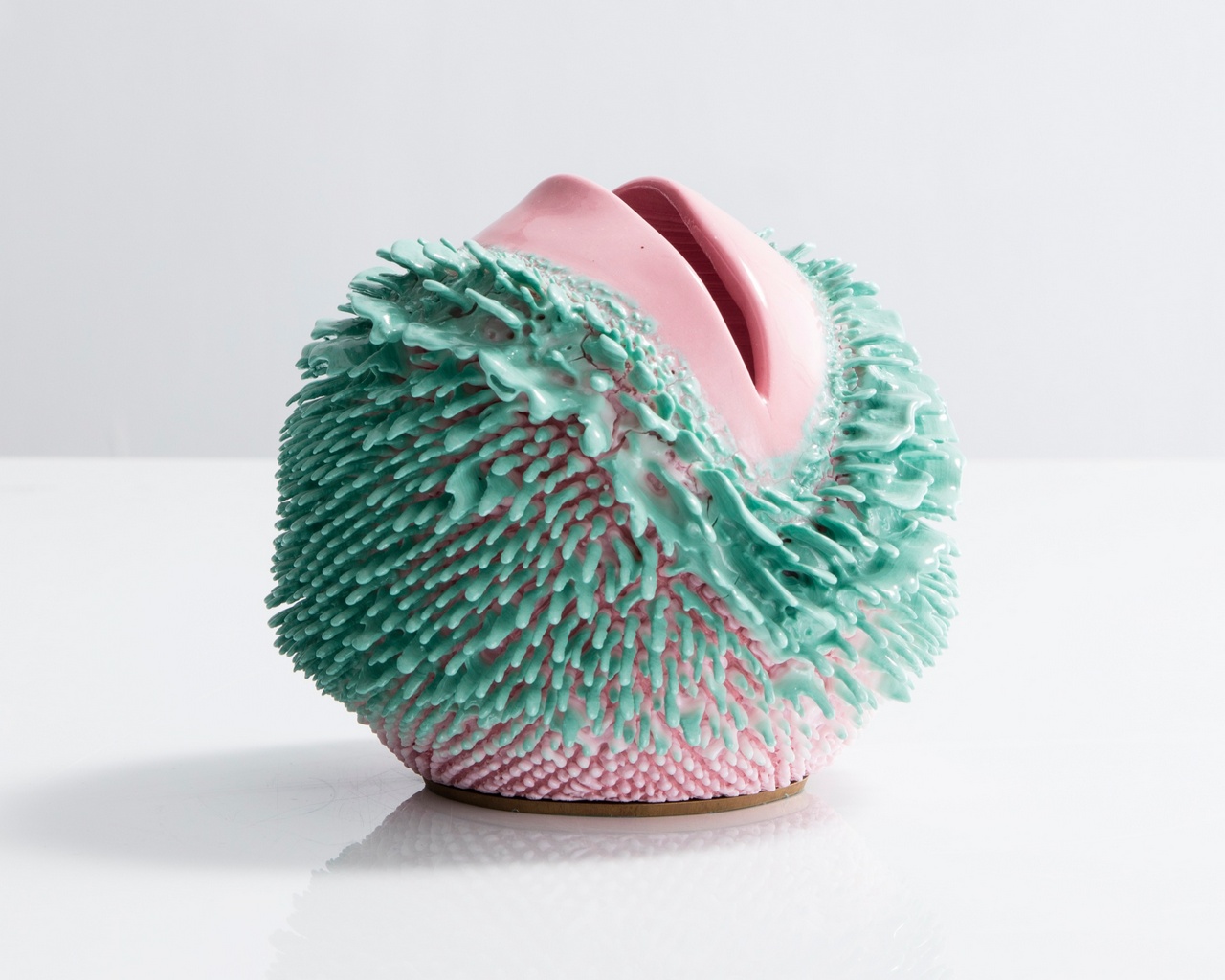
To create their textured, coral-like “Accretion” ceramic vessels, Simon Haas invented a specialized physical process using liquid ceramic clay, or slip. A core porcelain vessel is placed on a potter’s wheel set to spin at a controlled speed, where liquid slip is brushed onto the spinning form in deliberate, calculated strokes. As the wheel turns, the natural surface tension and rapid drying rate of the liquid slip pull the material outward into tiny tentacles or petals. Through thousands of rhythmic brushstrokes applied over hours, the clay naturally grows outward in layers, mimicking biological processes seen in moss, sea anemones, and coral reefs.
While the liquid slip process relies on physical chemistry and surface tension, their computational work depends on digital rules designed through custom mathematical scripts. Instead of manually modeling a shape in 3D software, the artists write code that defines mathematical growth parameters similar to how DNA dictates cellular growth in nature. In series like their “Emergent Sculptures” and “Endless Paintings”, the algorithms execute these rules autonomously to generate forms that fold, branch, and evolve on their own, which are then translated into physical objects using 3D printing, CNC milling, or bronze casting.
Both methods reveal the core philosophy behind the Haas studio. By establishing a rigid system—whether a mathematical algorithm or a physical routine on a pottery wheel—the artists step back and allow the chosen process to guide the outcome, resulting in works that feel simultaneously artificial, ancient, and alive.
Photo: Haas Brothers, Bruce Willis Beyonclé, 2016, Photo: Joe Kramm. Courtesy of R & Company
Info: Curator: Laura Mott, Assistant Curator: Katy Kim, Museum of Arts and Design (MAD), 2 Columbus Circle, New York, NY, USA< Duration: 11/4-16/8/2026, Days & Hours: Tue-Wed & Fri-Sun 10:00-18:00, Thu 12:00-20:00, https://madmuseum.org/