ART CITIES:London-Rudy Loewe
Rudy Loewe is a multidisciplinary artist who blends painting, drawing, and sculpture to examine a complex web of socio-political dynamics. Through their work, Loewe brings to life histories unearthed through archival research and interviews. Loewe presents figures from African and Caribbean folklore such as Anansi, known as a spider and a trickster, Anansi is a recurring character in Loewe’s work; reimagined as a gender-nonconforming shapeshifter that breaks and decodes heteronormative structures, embracing fluidity and the unknown.
By Dimitris Lempesis
Photo: Welcome Collection Archive
In “Intimacies of Care – Spaces of Grief and Possibility”, Rudy Loewe presents an exhibition that moves beyond the conventional boundaries of contemporary art to become a space for reflection, collective healing, and political imagination. Through sculpture, painting, text, and sound, Loewe confronts one of the most urgent yet underrepresented issues in British society: the racial inequalities embedded within mental healthcare. Rather than merely documenting injustice, the exhibition proposes alternative models of care grounded in empathy, mutual support, and community responsibility.
For more than a decade, discussions surrounding mental health in the United Kingdom have increasingly acknowledged the structural disparities affecting Black communities. Numerous studies have demonstrated that Black people are disproportionately subjected to compulsory psychiatric detention, coercive treatment, and institutional mistrust. These experiences are not isolated incidents but symptoms of systemic racism that continues to shape healthcare, social policy, and public perception. Loewe’s exhibition positions itself within this wider discourse, asking how care might be reimagined if it were rooted in dignity, listening, and shared experience rather than surveillance and control.
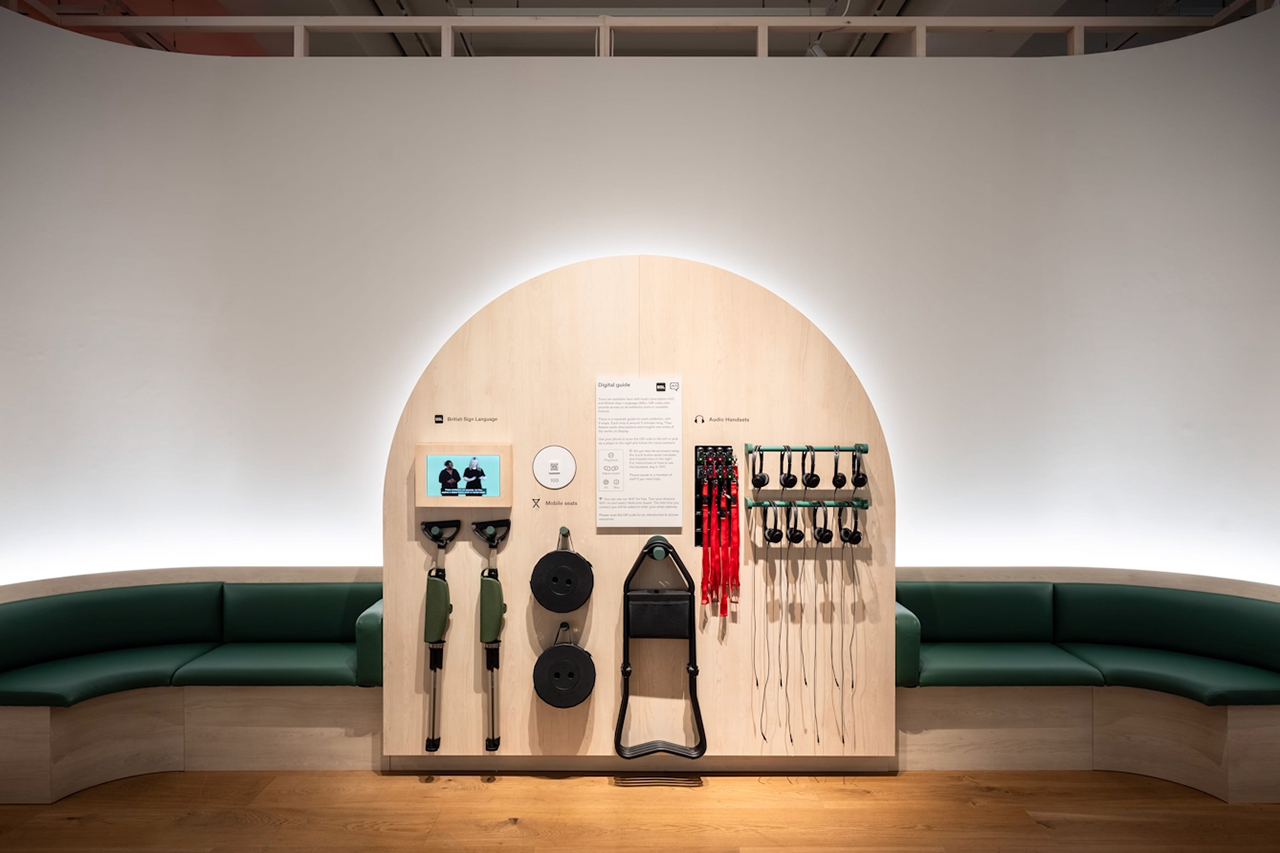
The exhibition unfolds as a carefully choreographed network of interconnected works, each exploring different emotional and political dimensions of care. Together they transform the gallery into a contemplative environment where visitors are encouraged not only to observe but also to pause, rest, and consider their own relationships to vulnerability and support. Throughout the exhibition, Loewe accompanies each artwork with reflective texts and specially designed tactile symbols, extending accessibility while encouraging multiple ways of engaging with the work.
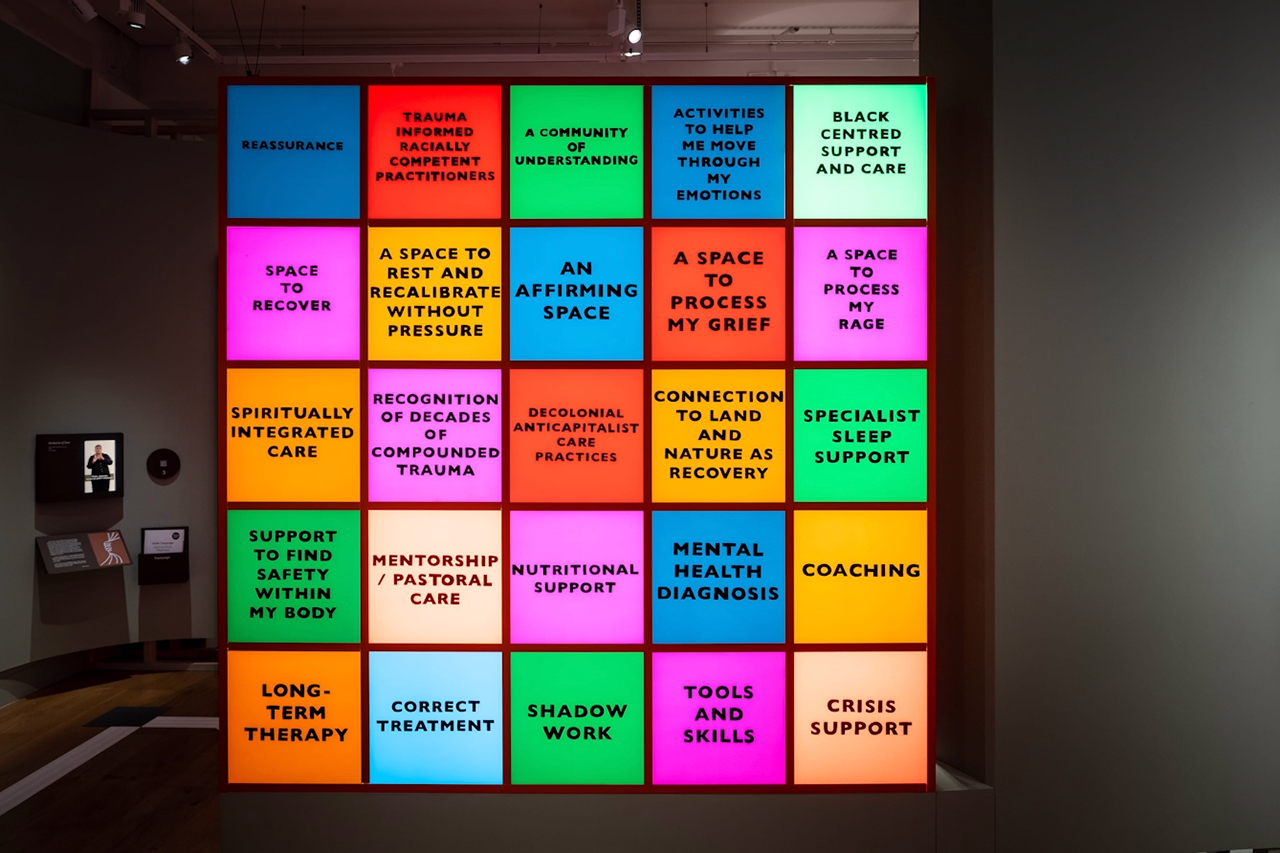
One of the exhibition’s central installations, “The Search for Care / The Lack of Care”, immediately establishes the exhibition’s conceptual framework. Constructed as a large illuminated grid composed of coloured panels, the sculpture presents two contrasting realities. One side displays words associated with compassionate care—trust, safety, understanding, dignity—while the reverse confronts viewers with experiences of neglect, fear, isolation, and coercion. By allowing visitors to walk around the work and encounter both perspectives, Loewe visualizes the profound gap between what care should be and what many people, particularly Black individuals navigating Britain’s mental health system, actually experience. The installation ultimately gestures toward a future where the positive vocabulary no longer represents aspiration but lived reality.
Language itself becomes material in “Intimacies of Care”, a poem presented in the form of a public poster. Deeply personal yet universally resonant, the text reflects on illness, mutual aid, and the sustaining power of community networks. Rather than centering institutional care, Loewe foregrounds the often invisible labour performed by friends, families, and marginalized communities. Particular attention is given to disabled QTIPOC+ communities whose experiences frequently exist outside dominant narratives of healthcare. The poem becomes both testimony and invitation, encouraging audiences to consider how acts of care emerge through everyday gestures of solidarity.
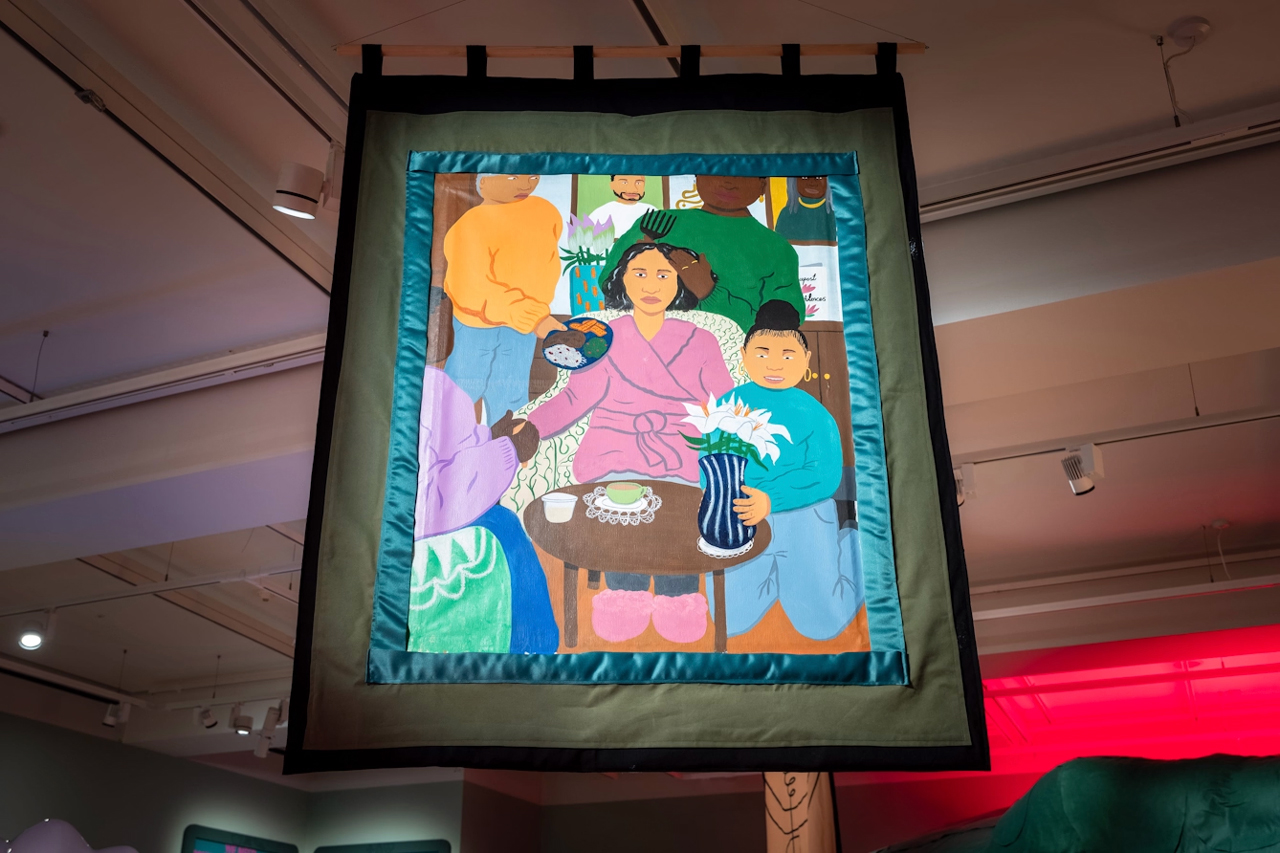
Grief occupies the emotional centre of “It Takes a Community to Hold These Wounds”. The painting depicts an individual surrounded by others during a moment of profound loss, emphasizing that mourning is never solely an individual experience. Instead, grief becomes something collectively carried. Rich in emotional intimacy, the work challenges the increasingly individualized understanding of mental wellbeing by proposing that healing requires communal presence. The image resonates with traditions of collective care that have long sustained marginalized communities in the face of structural violence.
Perhaps the exhibition’s most immersive work is “Activation Sculpture”, an evolving installation shaped as four interconnected hands holding one another. The sculpture incorporates an audio composition featuring voices recorded during participatory workshops conducted by the artist. At intervals the sculptural form physically opens, allowing visitors to enter its interior and occupy a temporary sanctuary for rest, conversation, or contemplation. In this transformation, sculpture becomes architecture, while architecture becomes an embodied experience of collective support. Rather than functioning as a static object, the work performs care by creating a space where healing is imagined as something shared rather than individually pursued.
Participation becomes explicit in “List of Demands”, a collaborative painting developed through workshops with individuals reflecting on their own experiences of mental healthcare. The resulting work presents a series of collective demands advocating for structural reform, emphasizing that meaningful change must emerge from those directly affected by existing systems. Significantly, Loewe introduces the concept of carceral care—forms of psychiatric intervention that operate through confinement, coercion, and loss of autonomy. The painting exposes the paradox of institutions that claim to provide care while reproducing mechanisms of control, surveillance, and punishment. Rather than remaining symbolic, the list is intended as a genuine political document to be presented to government authorities, extending the exhibition’s impact beyond the gallery walls.
Throughout the exhibition, Loewe rejects simplistic binaries between personal experience and political critique. The works insist that mental health cannot be understood independently of race, disability, social inequality, and historical violence. Instead, emotional wellbeing emerges as a collective responsibility shaped by institutions, communities, and interpersonal relationships alike.
What distinguishes “Intimacies of Care – Spaces of Grief and Possibility” is its refusal to reduce art to illustration or activism alone. The exhibition demonstrates how contemporary art can function simultaneously as aesthetic experience, educational resource, social intervention, and site of healing. Rather than offering definitive answers, Loewe creates conditions for dialogue, empathy, and imagination. Visitors leave not simply with greater awareness of racial injustice within mental healthcare, but with an expanded understanding of what genuine care might look like when it is built upon trust, reciprocity, and collective responsibility.
In an era when conversations surrounding mental health are increasingly public yet often remain detached from questions of structural inequality, Rudy Loewe’s exhibition offers a compelling reminder that care is never neutral. It is shaped by histories of power, exclusion, and resistance—but it also contains the possibility of transformation. Through works that invite contemplation, participation, and rest, Intimacies of Care – Spaces of Grief and Possibility proposes that healing begins not with institutions alone, but with communities willing to imagine more just and compassionate futures.
Photo: Rudy Loewe, The Search for Care / The Lack of Care, Rudy Loewe, 2026, Commissioned by Wellcome Collection. “Rudy Loewe: Intimacies of Care – Spaces of Grief and Possibility” exhibition at Wellcome Collection-London, 2026, © Rudy Loewe, Courtesy the artist and Wellcome Collection, Photo: Benjamin Gilbert
Info: Curator: Madeleine Kennedy, Welcome Collection, 183 Euston Road, London, United Kingdom, Duration: 10/7/2026-7/2/2027. Days & Hours: Tue-Sun 10:00-18:00, https://wellcomecollection.org/
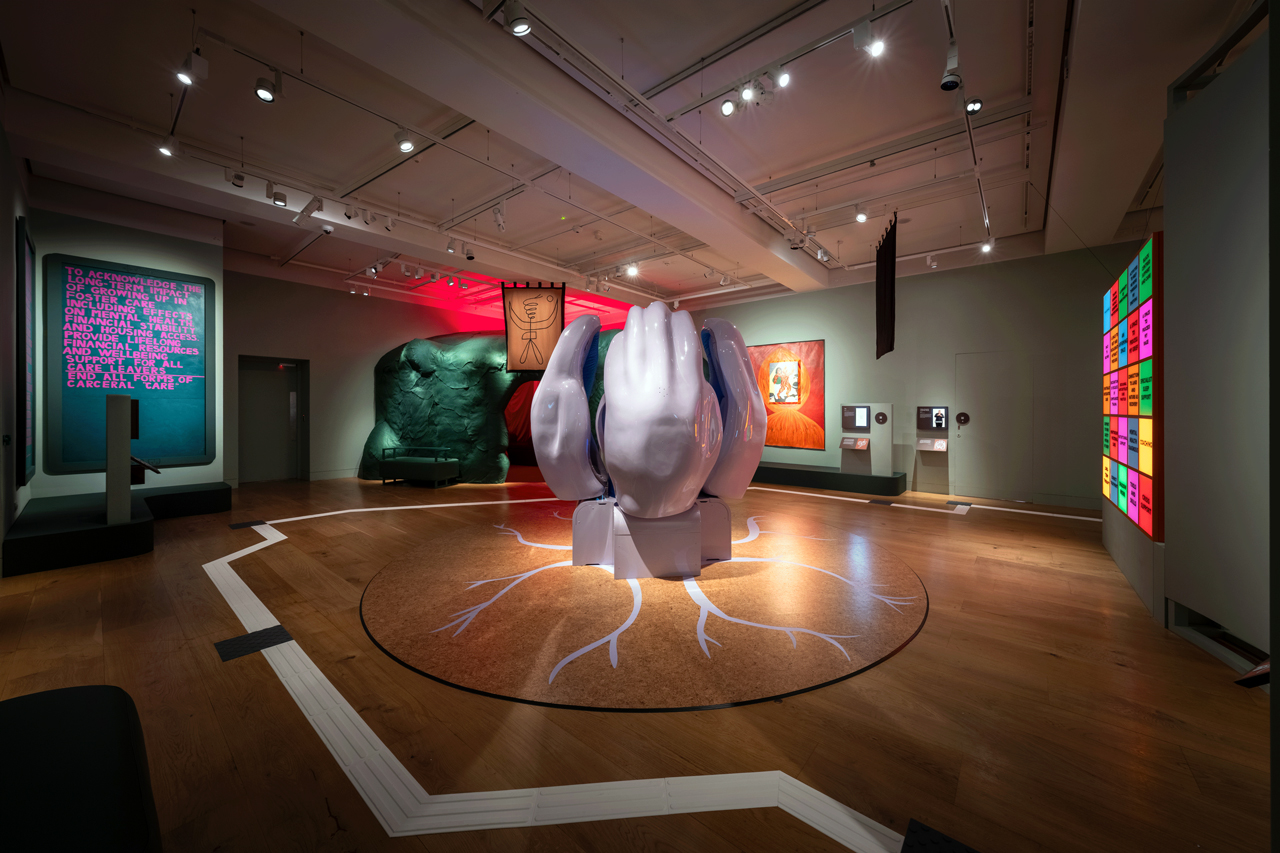
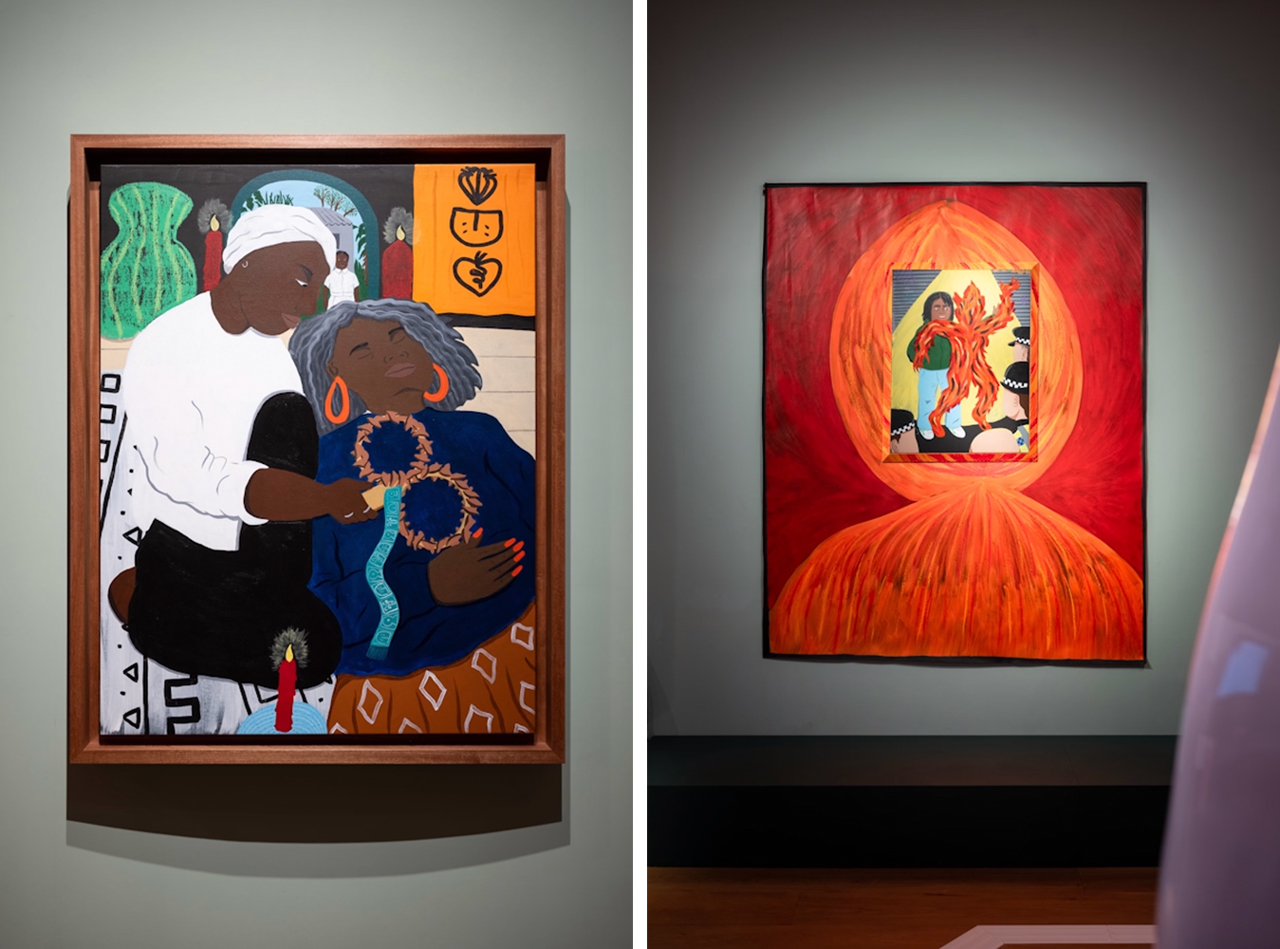
Right: Rudy Loewe, Rage, 2025-26, Commissioned by Wellcome Collection. “Rudy Loewe: Intimacies of Care – Spaces of Grief and Possibility” exhibition at Wellcome Collection-London, 2026, © Rudy Loewe, Courtesy the artist and Wellcome Collection, Photo: Benjamin Gilbert
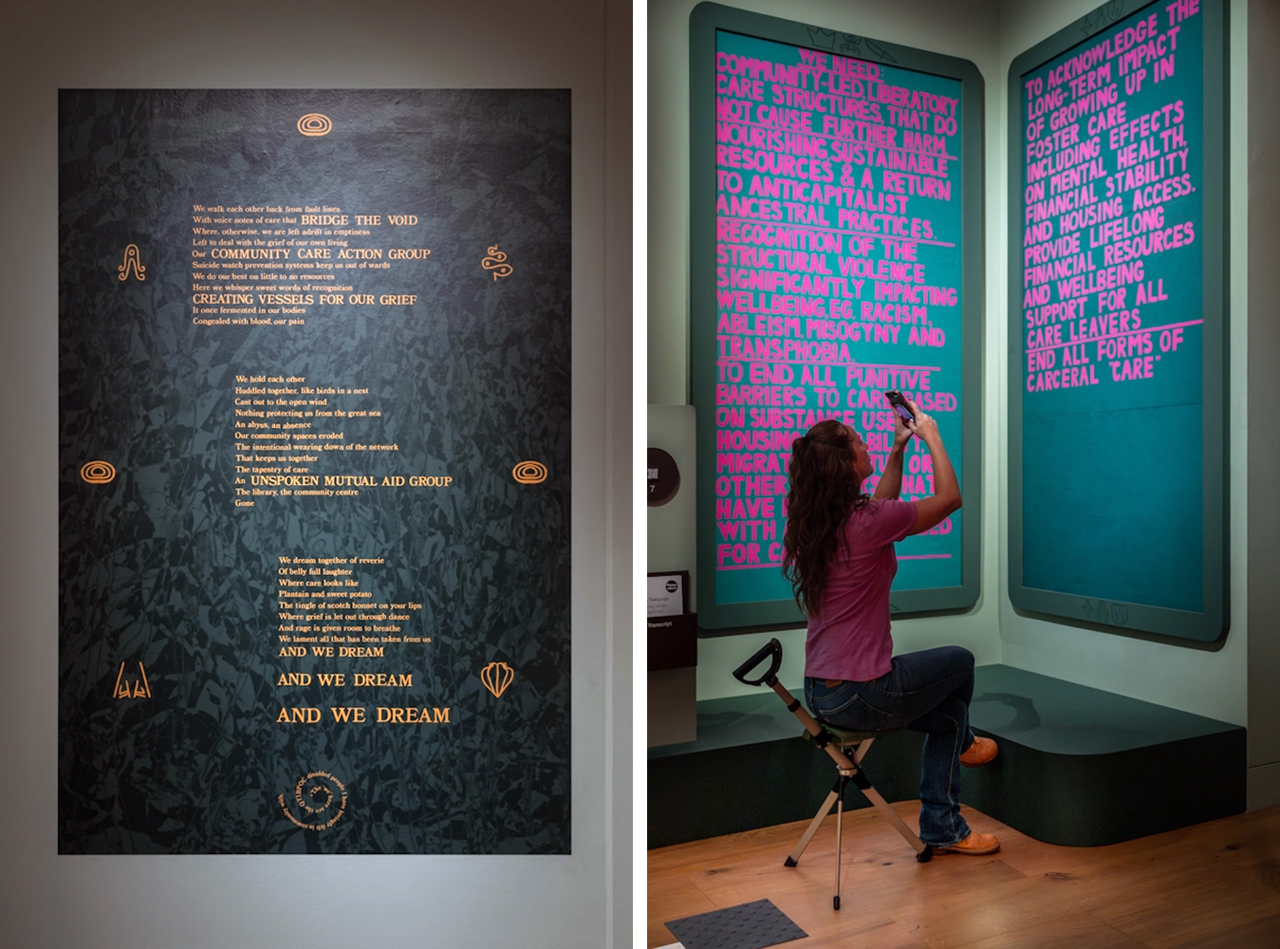
Right: Rudy Loewe, List of Demands, 2025-26, Commissioned by Wellcome Collection. “Rudy Loewe: Intimacies of Care – Spaces of Grief and Possibility” exhibition at Wellcome Collection-London, 2026, © Rudy Loewe, Courtesy the artist and Wellcome Collection, Photo: Benjamin Gilbert
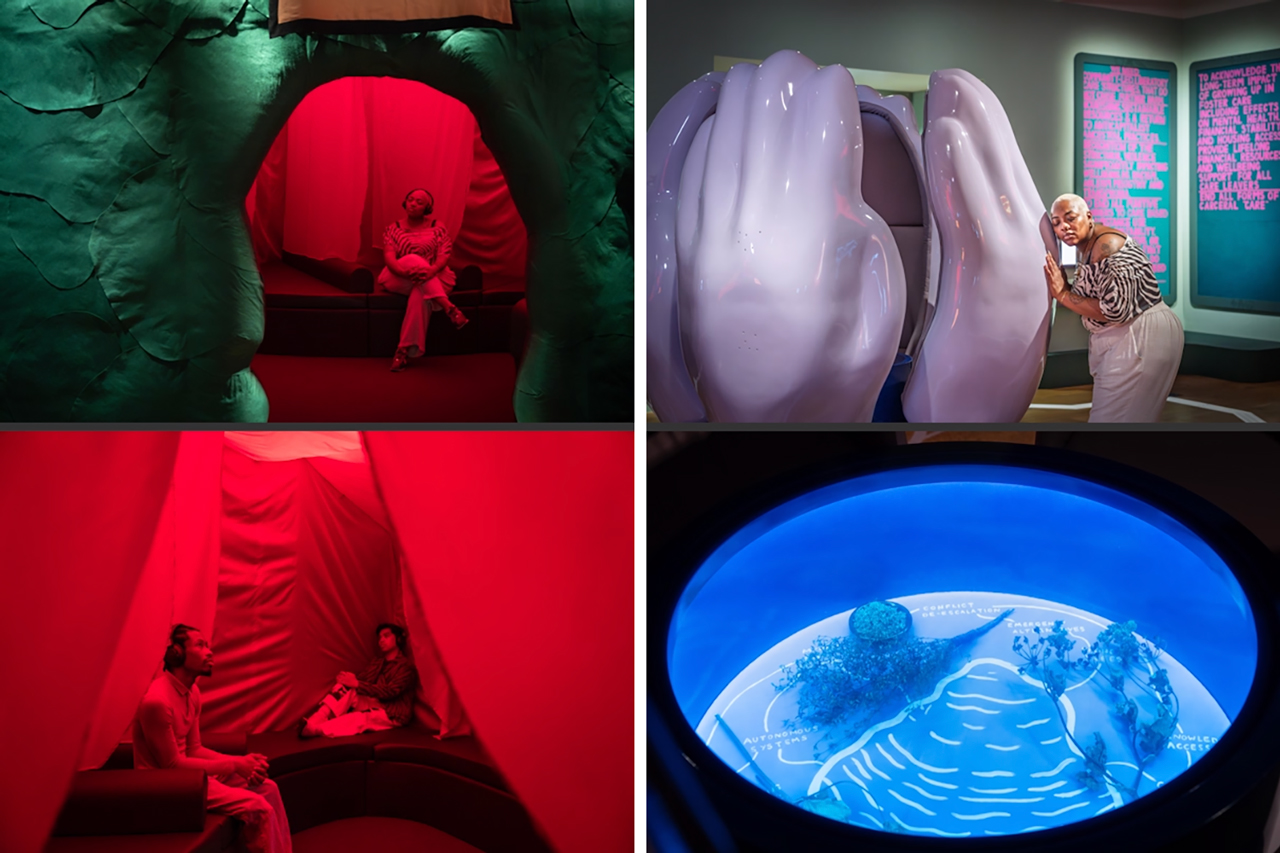
Right: Rudy Loewe Activation Sculpture, 2026, Commissioned by Wellcome Collection. “Rudy Loewe: Intimacies of Care – Spaces of Grief and Possibility” exhibition at Wellcome Collection-London, 2026, © Rudy Loewe, Courtesy the artist and Wellcome Collection, Photo: Benjamin Gilbert