BIENNALS:61st Venice Biennale-In Search of Sotto Voce
Every time the vaporetto approaches the Giardini for the Venice Biennale, I experience the same familiar anticipation. This year, however, the 61st edition carried a strange, underlying sense of tension. Following the unexpected death of curator Koyo Kouoh and the collective resignation of the jury amid political pressure surrounding the participation of Israel and Russia, the Biennale found itself facing an unprecedented institutional crisis. The decision to entrust the Golden Lion awards to a public vote felt less like an act of democratization and more like an awkward attempt to shift political responsibility onto the visitors themselves, turning a stroll through the Biennale into a peculiar form of political rodeo.
By Vicky Trochidou
Photo: Vicky Trochidou’s Archive
The greatest paradox of this year’s exhibition lay in its very title: In Minor Keys. According to Kouoh’s curatorial statement, In Minor Keys was conceived as a sotto voce experience—a space for slowing down, reflection and healing. Visitors were invited to engage with art at a quieter, more attentive pace. In reality, however, nothing felt quiet. The sheer number of works, combined with the tense political atmosphere surrounding the Biennale, created a level of noise that overshadowed the exhibition’s central premise.
In the Biennale’s main exhibition spaces at the Giardini and the Arsenale, Kouoh moved away from conventional thematic divisions. Instead of organising the exhibition into clearly defined sections, she built a sequence around recurring motifs: shrines, spaces for rest and collective ritual. On paper, it promised a slower, more reflective way of experiencing the exhibition. In practice, however, it often felt exhausting. The sheer number of works (despite some genuinely outstanding pieces) combined with labels that were often difficult to read, turned what was meant to be a restorative experience into one of physical fatigue and sensory overload.
The national pavilions, however, largely followed their own paths, often independently of the Biennale’s central curatorial framework. Among them, several stood out for the clarity and confidence of their ideas. Austria’s Seaworld Venice was undoubtedly one of the freshest and most daring presentations of this year’s Biennale. Florentina Holzinger’s demanding live performances transformed water, the body and physical endurance into a constantly shifting ecosystem, blurring the boundaries between performer, audience and exhibition space. In Spain’s Los restos, Oriol Vilanova drew on a collection of postcards he has assembled over more than twenty years, shifting attention from the image itself to the postcard as an object of memory and archive. Germany’s Ruin, by Henrike Naumann and Sung Tieu, turned the pavilion into a historical document in its own right, exploring the architecture and ideologies embedded in the building. Meanwhile, Andreas Angelidakis transformed the Greek pavilion, Escape Room, into a contemporary Platonic cave, questioning national identity , through a setting that balanced nightclub aesthetics with the visual language of the tourist kiosk, while deliberately weaving into the installation references to artists such as Vasso Katraki and Yannis Tsarouchis.
However, one pavilion that truly stood out was India’s at the Arsenale, “Geographies of Distance: Remembering Home”. Returning to the Biennale after 2019, it became one of the few moments that genuinely touched the spirit of In Minor Keys, as it managed to translate Koyo Kouoh’s sotto voce into a truly quiet, poetic, and deeply human experience.
Curated by art historian Dr Amin Jaffer, the pavilion reimagines the idea of “home” not as a fixed geographical location but as an inner condition shaped by memory, lived experience, ritual and cultural heritage. As articulated in the curatorial statement, in a world defined by displacement and constant transformation, belonging is no longer rooted in place alone but reconstructed through materials, memories and personal narratives.
The pavilion brings together five artists who work in very different ways, yet all seem to revolve around the same question: what does “home” mean when it is no longer tied to a fixed place?
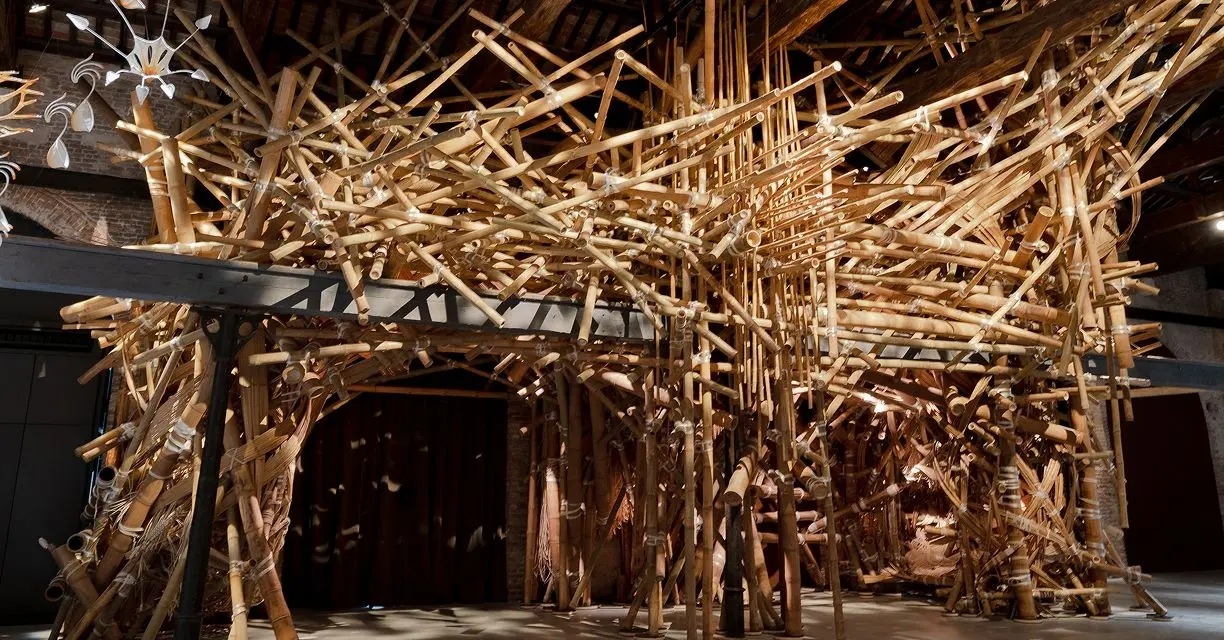
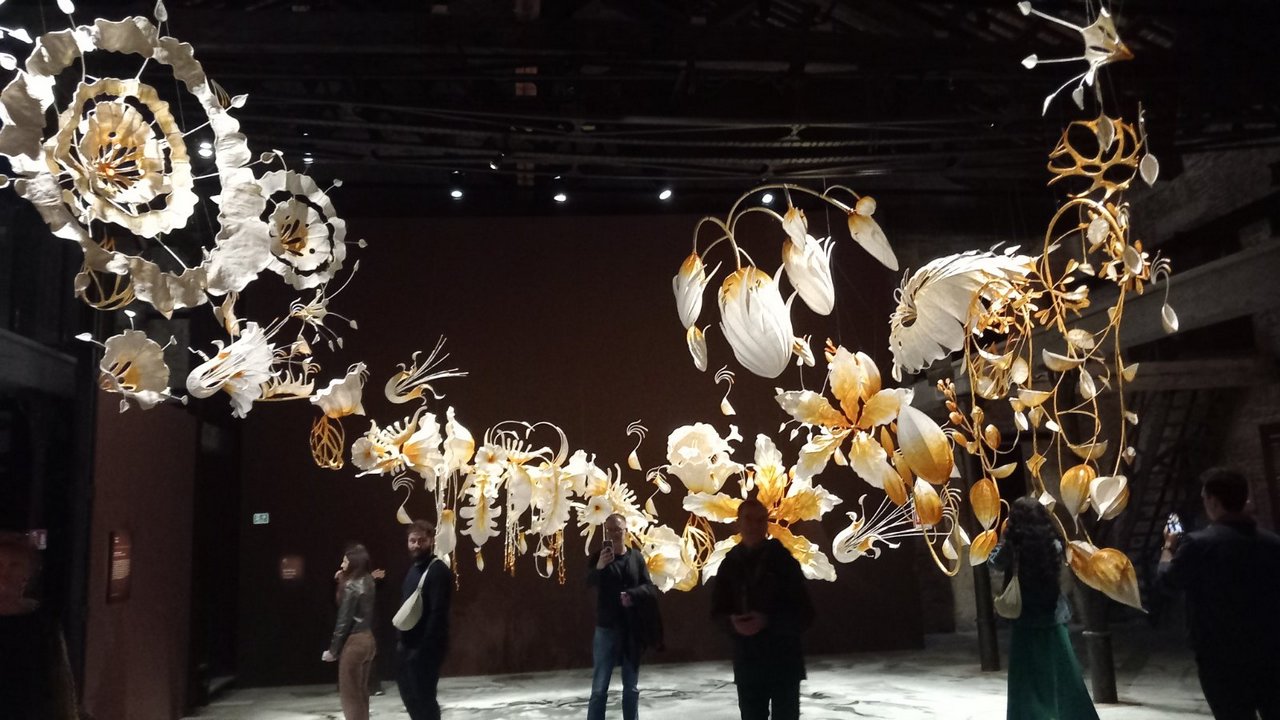
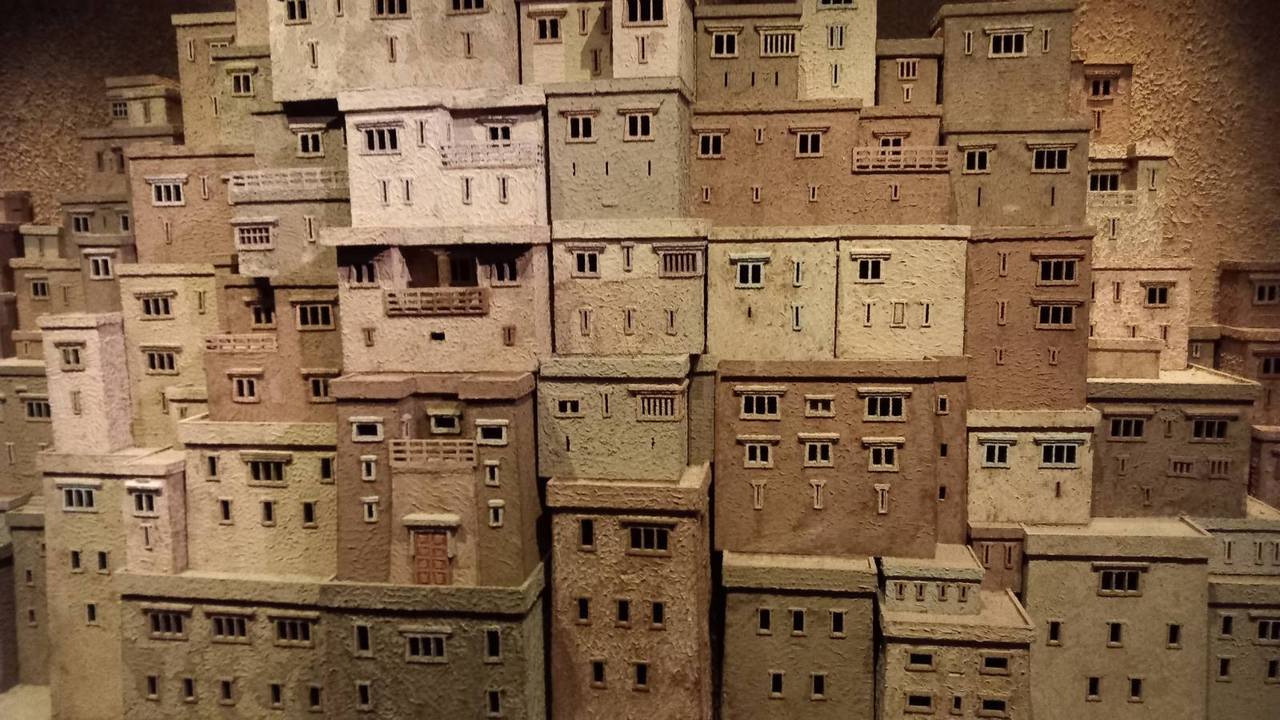
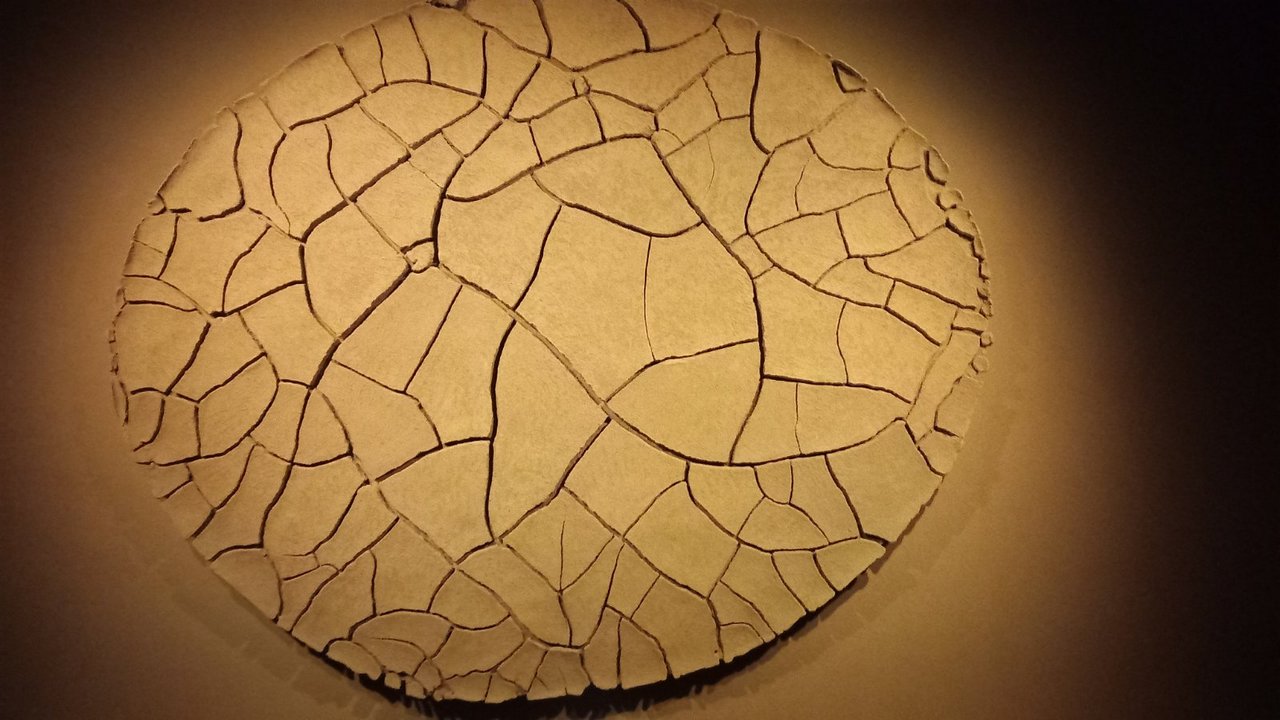
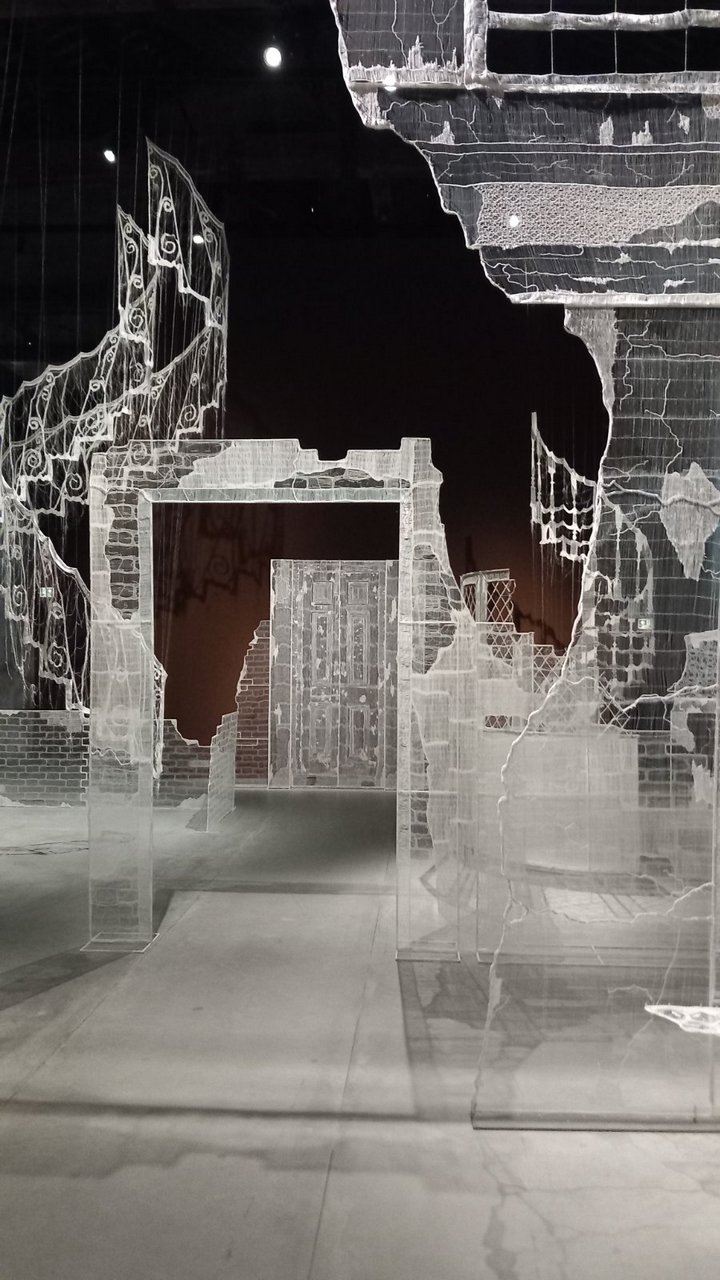
Alwar Balasubramaniam works with clay, soil, and natural pigments, creating forms that seem to exist somewhere between the body and the landscape. Sumakshi Singh constructs fragile architectures out of thread, like traces of memory that continue to exist even after what they evoke has disappeared. Ranjani Shettar’s organic structures seem to hover between the vegetal and the human, while Asim Waqif returns to traditional craftsmanship and natural materials, exploring their relationship with the contemporary urban environment. Skarma Sonam Tashi draws from the traditions of Ladakh, transforming papier-mâché into a medium through which personal and collective memories take shape.
What moved me most was the coherence of this coexistence. Despite their different points of departure, all the works seem to revolve around the same question, using materials as “living traces of memory”. In this way, the idea of home is not presented as a fixed place, but as something we carry with us, through our experiences, our losses, and the things we choose to remember.
In conclusion, this year’s Biennale leaves behind a strong aftertaste. The sotto voce may have been drowned out by the noise of geopolitical crisis and institutional uncertainty, yet art once again revealed itself as a mirror of our present moment. The 2026 Biennale did not allow us to look away. Instead, it asked us to confront, to question, and ultimately to find our own position within the chaos.
Photo: Alwar Balasubramaniam, Drift, 2026, Earth and resin, Photo: Courtesy Vicky Trochidou
Info: Venice Biennale 2026, The Giardini, Viale Trento 1260 and the Arsenale, Campo de la Tana, Duration : 9/5-22/11/2026, Days & Hours : Tue-Sun 10:00-18:00, www.labiennale.org/en/