ART CITIES:Rome Hito Steyerl
For more than two decades, Hito Steyerl has been one of the most influential artists, filmmakers, and theorists of contemporary art. Her work critically examines the circulation of images in the digital age, the militarization of technology, and the hidden infrastructures that shape perception, exposing the political and social forces embedded in today’s visual culture.
By Dimitris Lempesis
Photo: MACRO Archive
Hito Steyerl’s “Mechanical Kurds” marks one of the most incisive and unsettling contributions to MACRO’s 2026 exhibition season. Commissioned in 2025 by the Jeu de Paume (Paris) and the New Museum (New York), and presented in Italy for the first time, the work extends Steyerl’s long-standing investigation into the global entanglements of labour, image production, and political power. Over the past decade, Steyerl has become one of the most influential artists dissecting the social, political, and ecological infrastructures of artificial intelligence. “Mechanical Kurds “is not simply another chapter in this inquiry — it is a cartographic exposure of the bodies, territories, and conflicts that contemporary automation depends on, yet systematically erases.
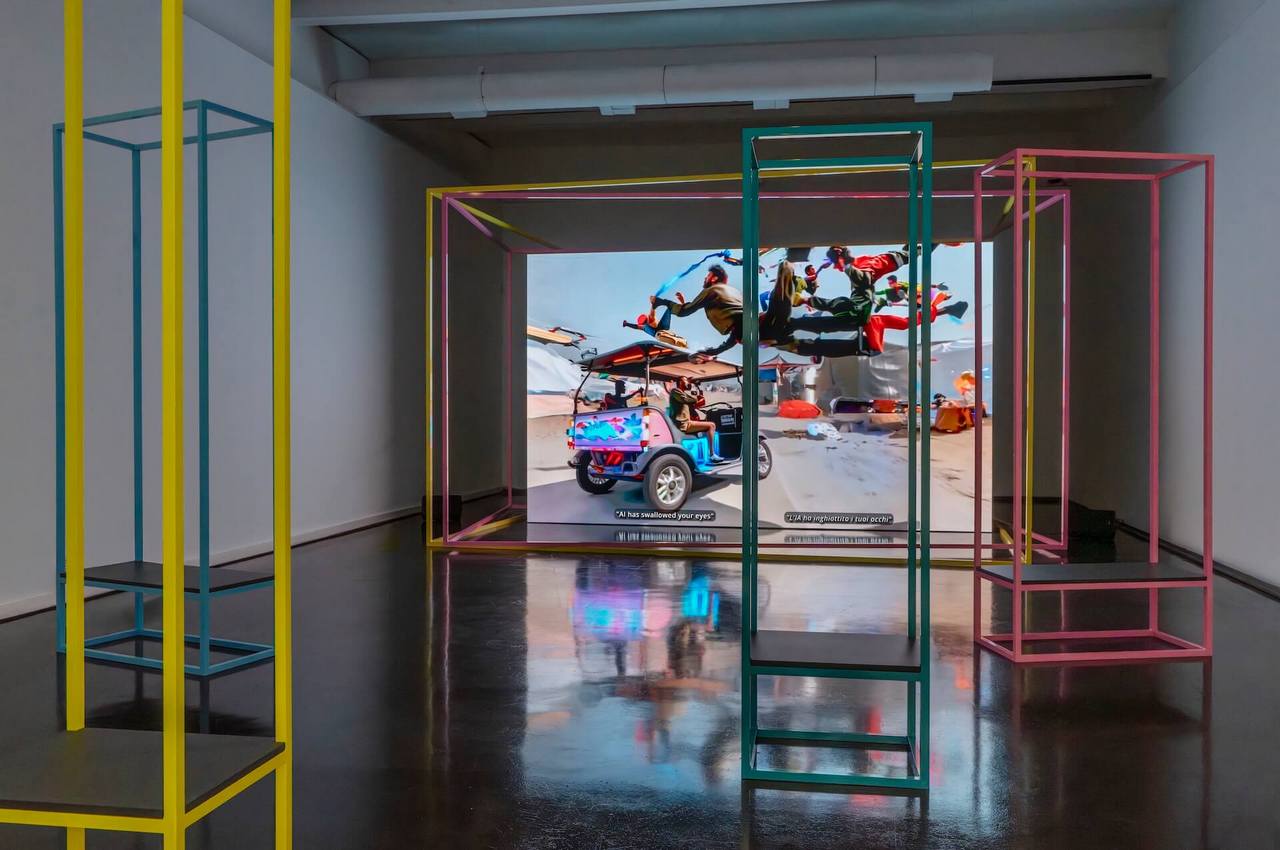
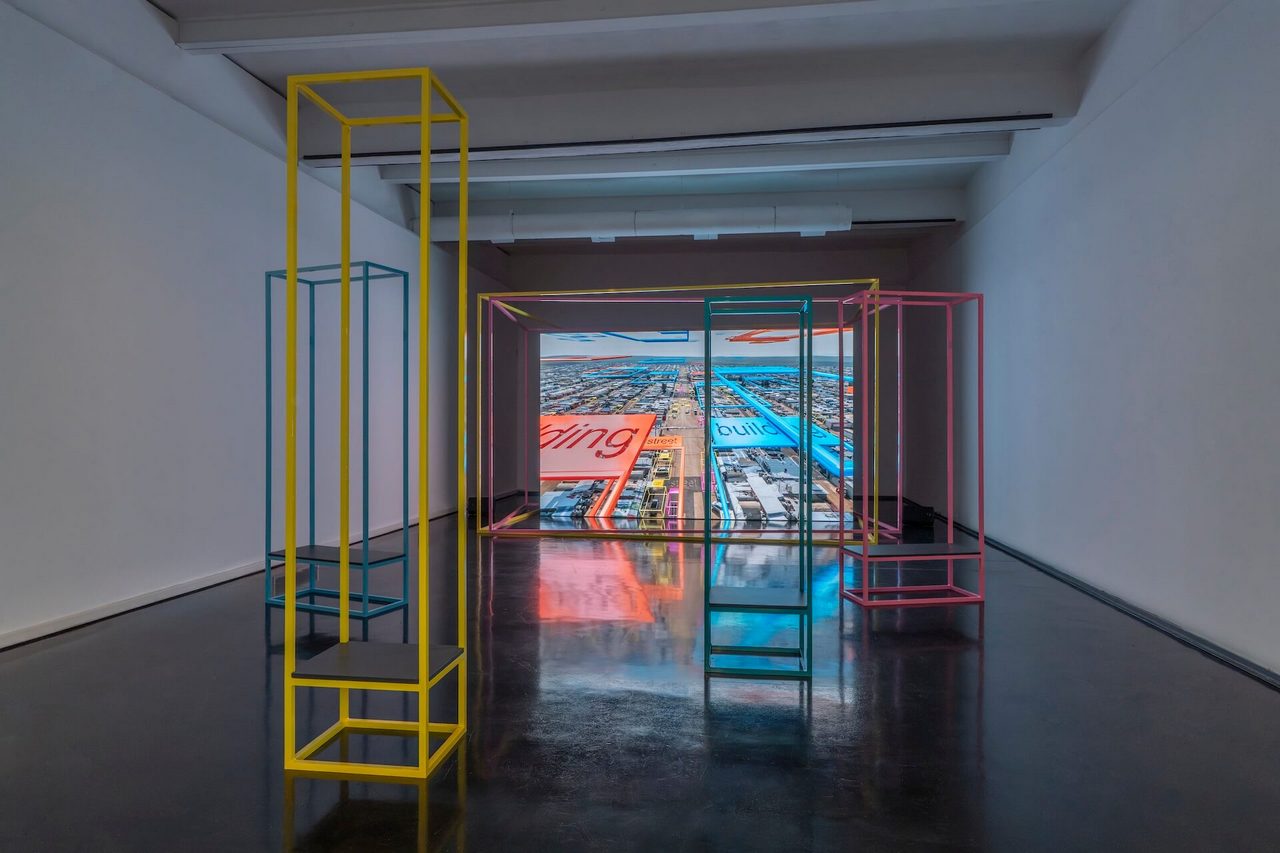
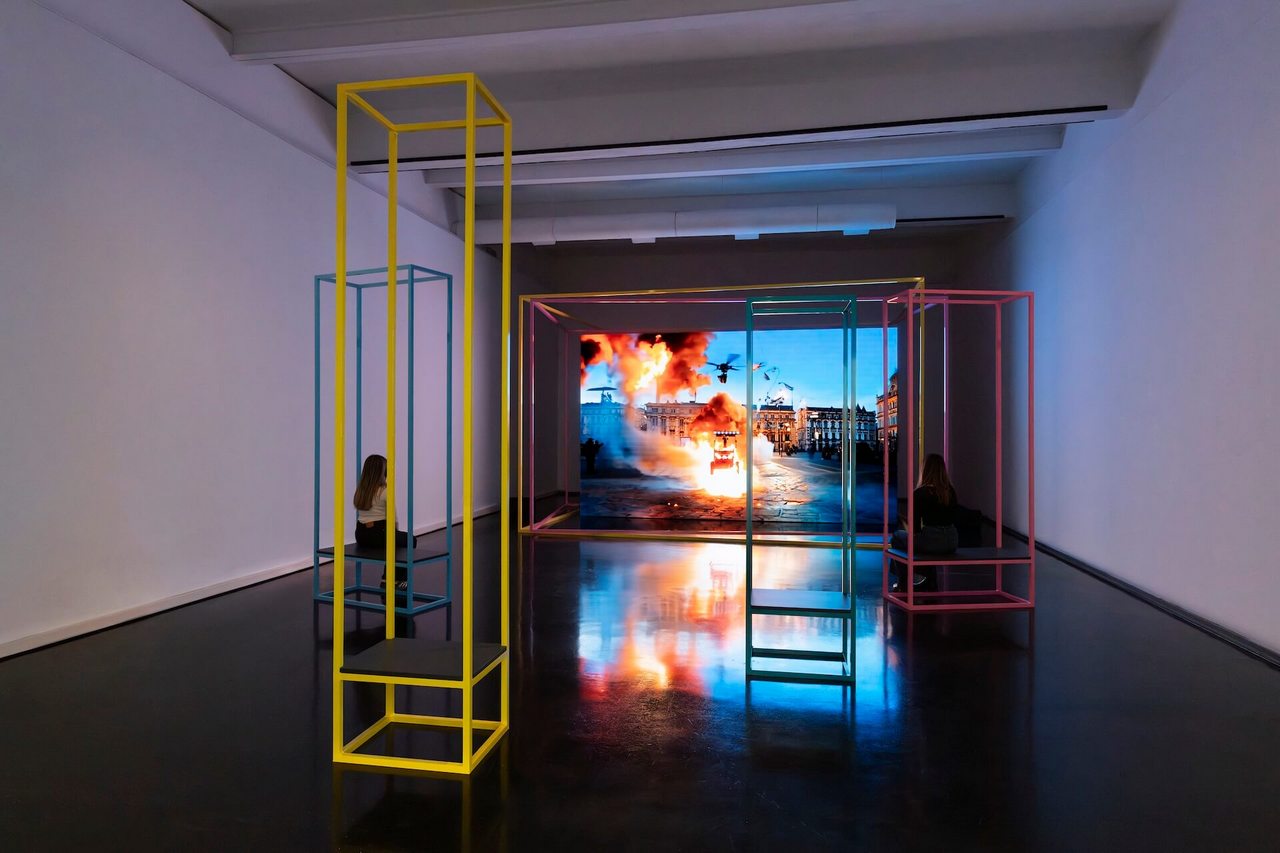
Steyerl’s practice has often been described through Jacques Rancière’s notion of documentary fiction: a hybrid form that refuses the binary between fact and fabrication, instead mobilising both to produce critical knowledge. In “Mechanical Kurds”, this strategy becomes a method for confronting the ideological opacity of AI systems. The work combines a single-channel video with immersive spatial elements, creating an environment where viewers oscillate between witnessing and participating in the mechanisms of digital labour.
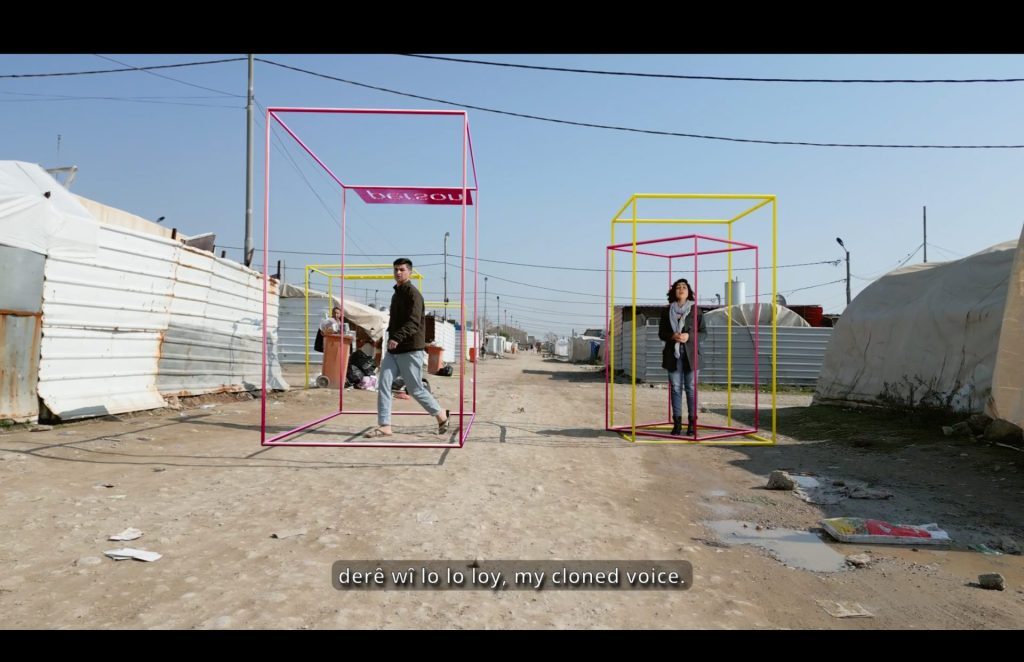
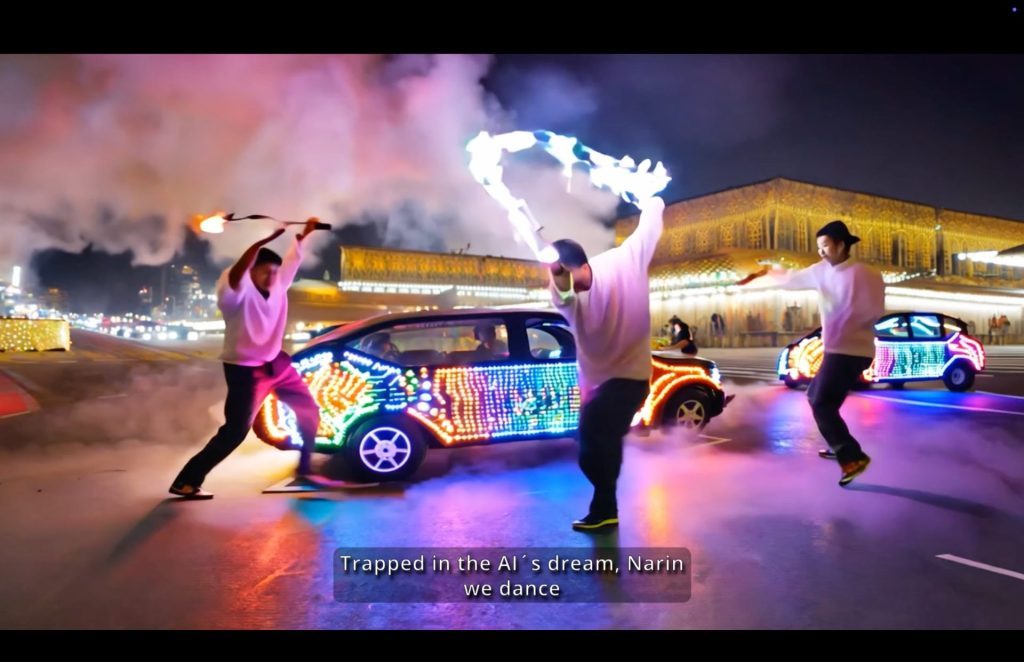
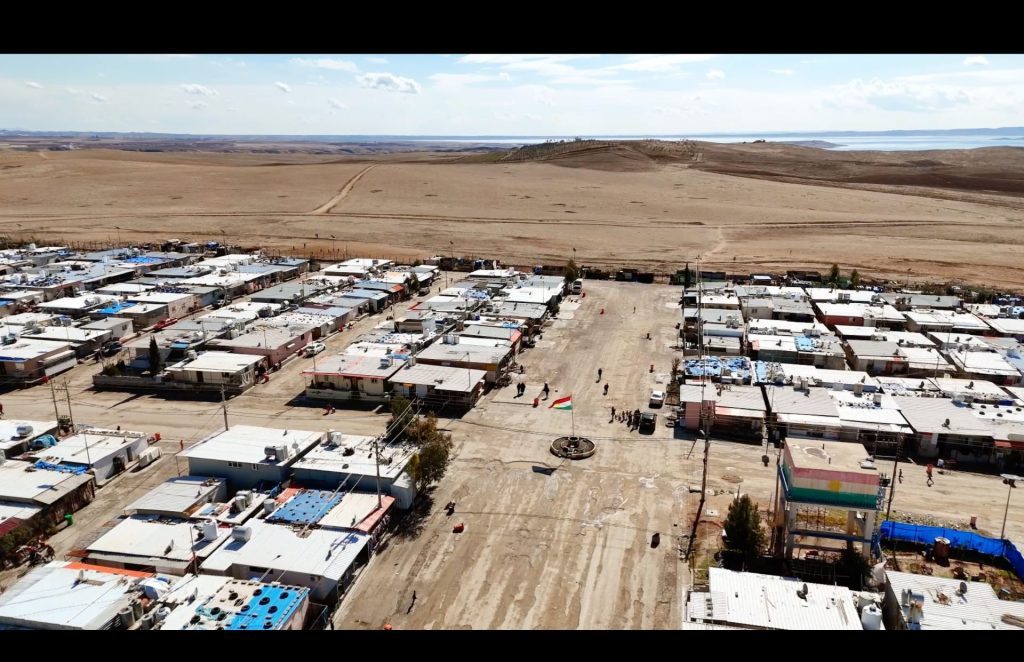
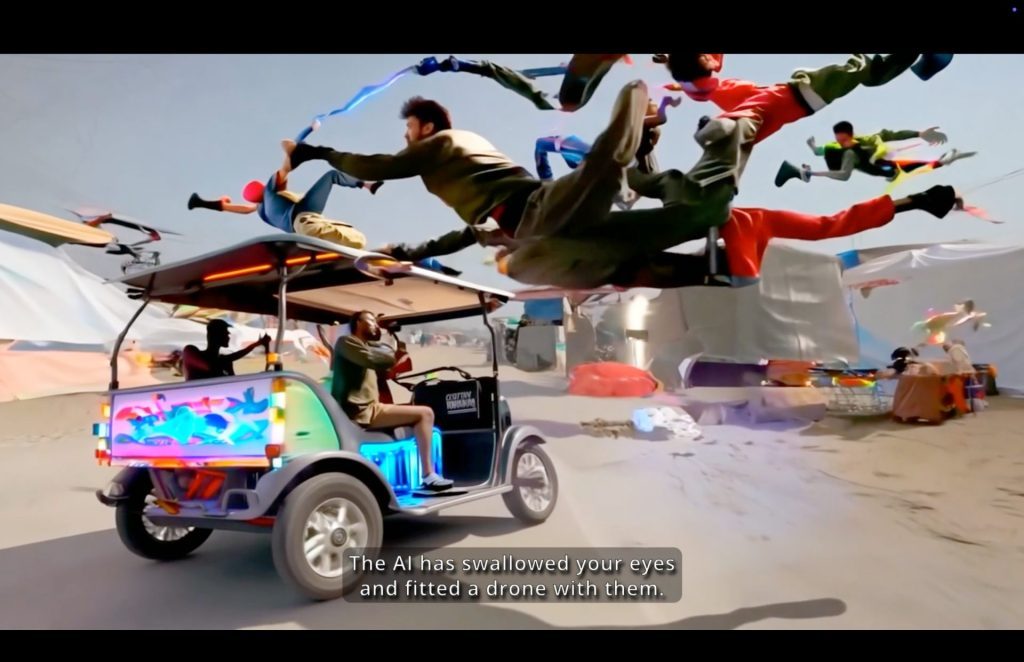
The film juxtaposes documentary footage from the Domiz refugee camp in Iraqi Kurdistan with generative imagery. This oscillation between lived reality and synthetic vision mirrors the unstable epistemology of AI itself — a technology that promises objectivity while relying on profoundly subjective human inputs.
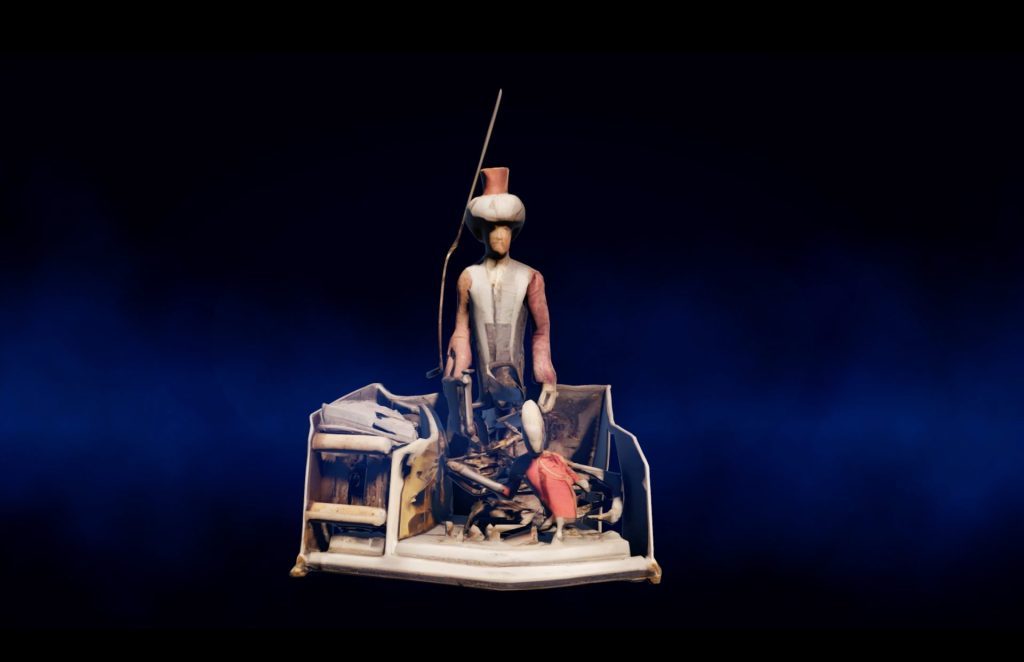
The title anchors the work in a long genealogy of machine mystification. The “Mechanical Turk” an 18th‑century automaton dressed in Ottoman attire, famously defeated opponents at chess while concealing a human operator inside. Steyerl revisits this historical deception to illuminate its contemporary reincarnation: Amazon’s Mechanical Turk, a crowdsourcing platform launched in the early 2000s that outsources micro‑tasks — including AI training — to dispersed digital workers.
By invoking this lineage, Steyerl exposes a persistent ideological fantasy: the belief in autonomous machines that operate independently of human labour. “Mechanical Kurds” dismantles this fantasy by foregrounding the workers whose invisible labour sustains the global AI economy.
At the centre of the video are the voices of three Kurdish‑Syrian refugees who perform image‑classification tasks using “bounding boxes,” the framing tools that allow computer vision systems to recognise objects. Their testimonies reveal the precarious system of “ghost work” — labour that is essential to automation yet rendered invisible by design.
Steyerl extends these bounding boxes into the exhibition architecture itself, transforming a technical instrument of AI training into a spatial metaphor. Visitors move through an environment that echoes the workers’ digital tasks, implicating them in the same processes of classification and surveillance.
The most devastating turn in Steyerl’s narrative is the circular relationship between image production and political violence. The same workers who annotate images for automated systems become targets of automated drones during Turkish military operations against Kurdish populations. The film reveals how geopolitical conflicts — and the human lives entangled within them — become exploitable resources for global technology corporations.
This circularity is not metaphorical; it is infrastructural. The labour that trains AI systems feeds into the very technologies that perpetuate violence against the workers themselves. Steyerl’s work exposes this feedback loop with stark clarity, refusing the comforting narratives of technological neutrality.
Throughout the installation, Steyerl foregrounds the fragility of digital infrastructures built on extractive monopolies of human and energy resources. The video moves fluidly between documentary and fiction, revealing how the digital economy depends on both material exploitation and narrative manipulation. The work insists that AI is not an abstract computational entity but a geopolitical apparatus shaped by borders, conflicts, and bodies.
The exhibition proposes a new grammar for understanding images in the age of automation. Steyerl challenges viewers to recognise that every dataset, every bounding box, every algorithmic decision is embedded in a network of human labour and political violence. Her work does not simply critique AI; it reconfigures the terms through which we perceive and interpret the world.
In an era when machine vision increasingly mediates reality, Steyerl’s documentary fiction becomes a vital tool for reclaiming critical agency. Mechanical Kurds is not only an artwork — it is a counter‑infrastructure, a system for making visible what the digital economy works tirelessly to conceal.
Photo: Hito Steyerl, Mechanical Kurds (Still(, 2025, Single-channel HD video installation (color, sound), Duration: 13 min, © Hito Steyerl, Courtesy the artist and MACRO (Museo d’Arte Contemporanea di Roma)
Info: Curator: Alice Labor, MACRO (Museo d’Arte Contemporanea di Roma), V. Nizza 138, Rome Italy, Duration; 29/4-6/112026, Days & Hours: Tue-Sun 10:00-19:00, www.museomacro.it/