BOOK:Rachel Kneebone-399 Days, White Cube Books’
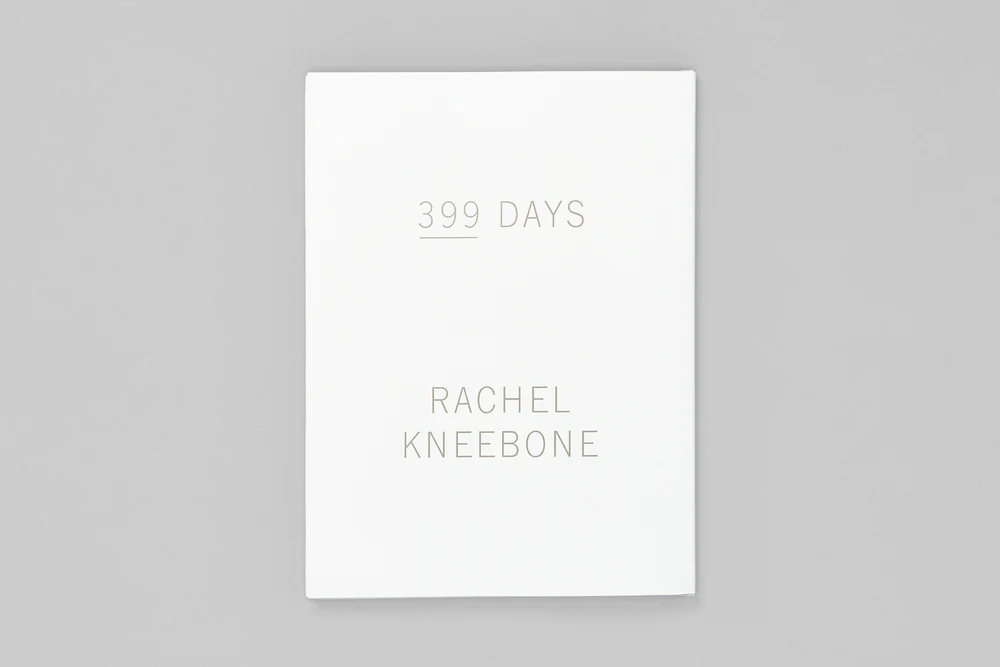
Rachel Kneebone’s work addresses and questions the human condition: renewal, life cycles and the physical body. Working primarily in sculpture that embraces the unpredictable nature of its medium – porcelain – Kneebone focuses on ideas of movement and metamorphosis, transformation and suspension and the material manifestation of fluid physical states. Kneebone has stated that her work is ‘concerned with inhabiting the body, what it is to be alive in the world’.
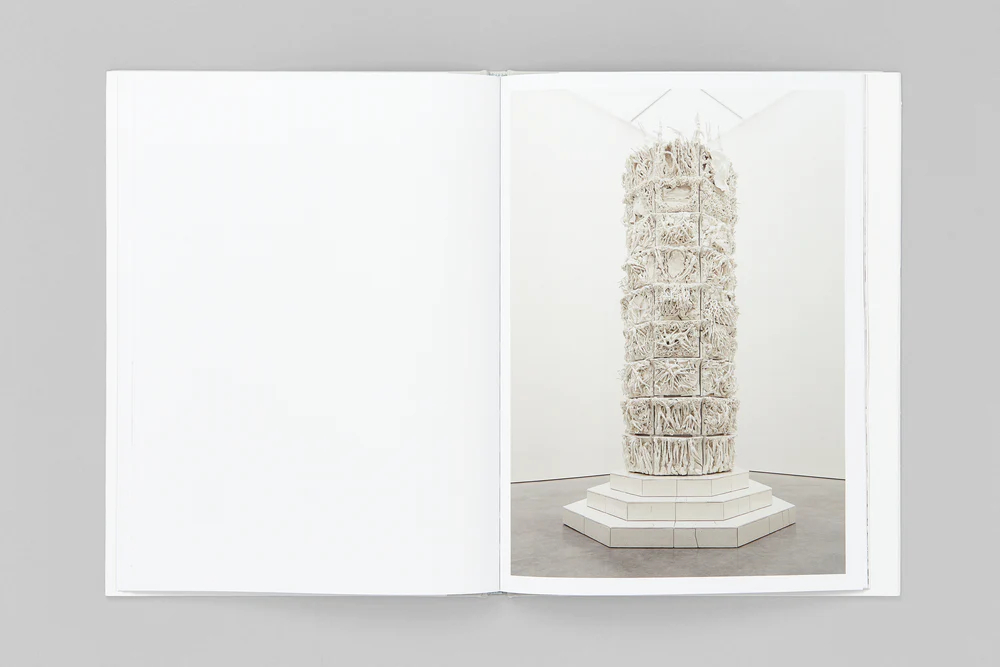
In the realm of contemporary sculpture, few artists probe the visceral realities of human existence as intensely as British artist Rachel Kneebone. Working primarily in porcelain—a medium notorious for its delicate, unpredictable, and demanding nature—Kneebone creates works that explore movement, metamorphosis, and the fluid physical states of being alive. Published by White Cube Books, the volume “399 Days” captures Kneebone’s most ambitious installation to date: a monumental, monochromatic tower presented at White Cube Bermondsey in London.
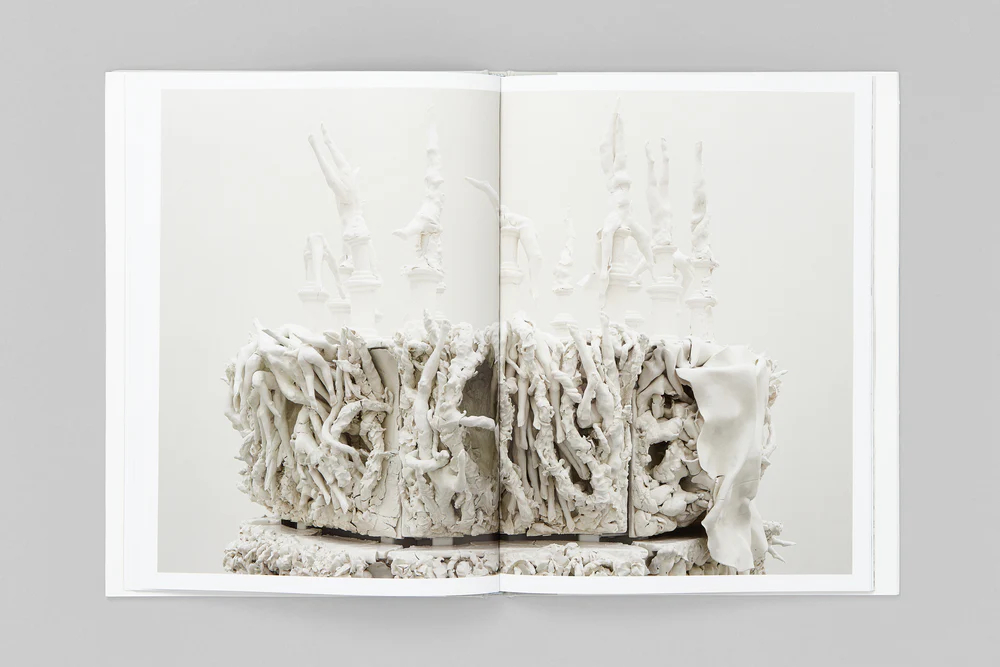
Standing as an architectonic tower composed of meticulously worked porcelain tiles, “399 Days” represents a profound physical and conceptual undertaking. Constructed over its namesake duration, the sculpture fills space through an overabundance of form and intricate detail, contemplating ideas of nothingness through total visual excess. The surface of the sculpture resists a single, static viewpoint as limbs, torsos, and organic contours emerge from and collapse back into raw porcelain, blurring the boundaries between figure and abstraction. The viewer is forced into a process of active looking, continually moving between tightly rendered figurative scenarios up close and the looming, architectonic structure from a distance. The sculpture moves from tightly controlled figuration near its base to looser, expressive modeling at the top, where the physical form appears to dissolve into air.
Kneebone’s sculptures do not offer tranquil resolution; instead, they operate across constant psychological and physical dualities, balancing material against form, control against abandon, and attraction against repulsion. The work draws deeply from intellectual and psychoanalytic frameworks, notably the writings of French philosopher Georges Bataille and psychiatrist R.D. Laing, particularly his 1970 poetic text “Knots”. By exploiting the structural limits and natural collapses of fired porcelain, Kneebone mirrors the tangled emotional and psychological states described by Laing, giving material weight to what it feels like to inhabit a physical body in the world.
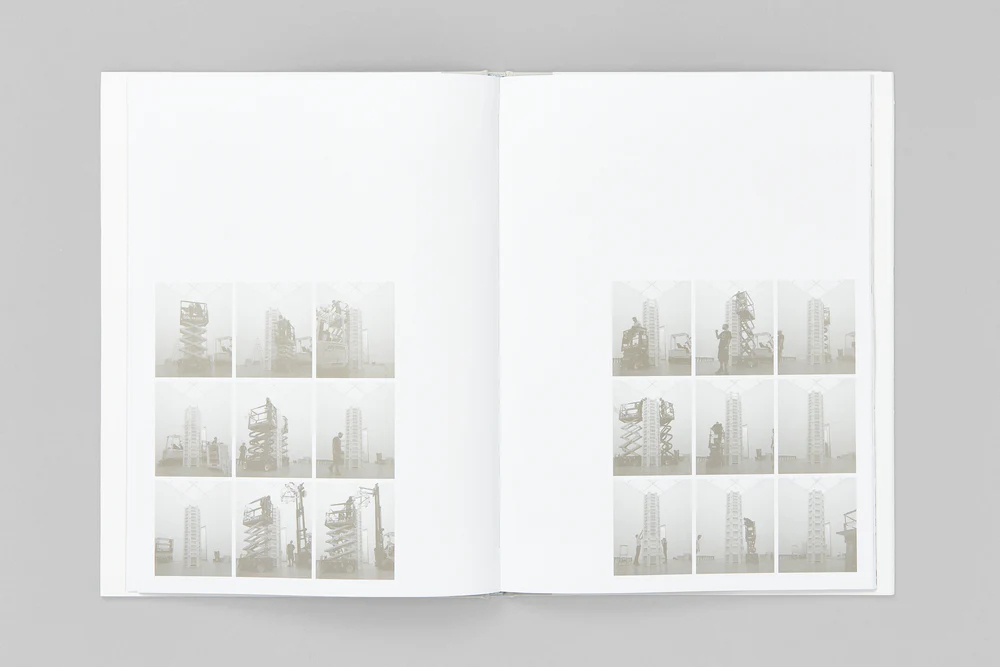
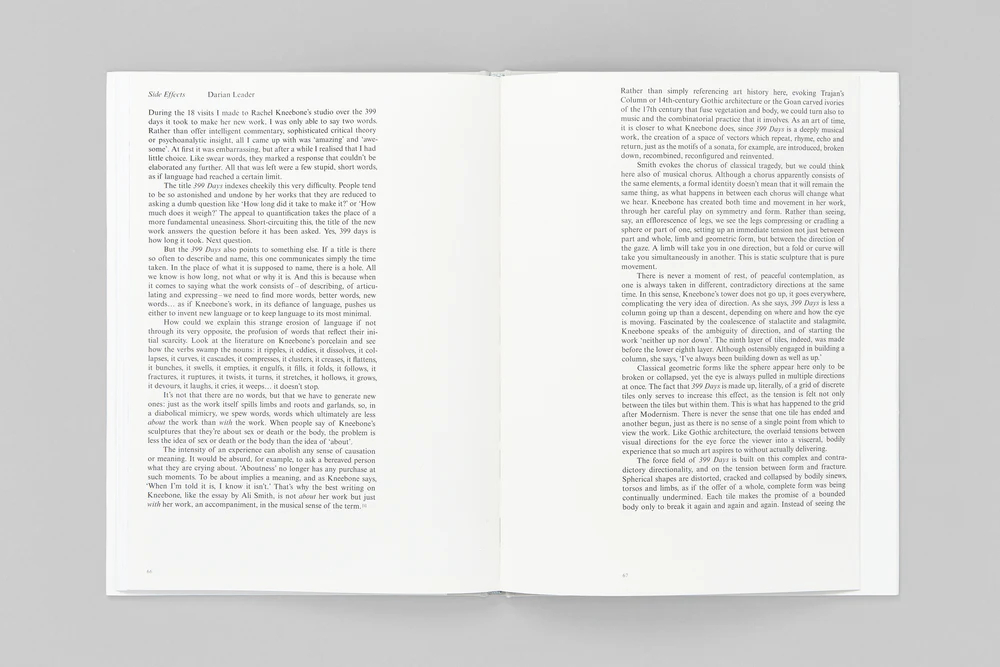
The book “399 Days” serves as both an enduring record and an extension of the exhibition experience. The volume features comprehensive photography, including sweeping installation views alongside intimate macro photography detailing the fine ridges, cracks, and figures of individual tiles. It tracks the painstaking creation process across multiple studio visits, revealing the mechanics behind handling massive porcelain works. Furthermore, psychoanalyst and author Darian Leader provides an insightful essay analyzing the work’s semiotic density and formal complexity. Leader examines how Kneebone’s delicacy of hand translates complex human experiences of embodiment, discordance, and transformation into tangible, energized ceramic forms. Through its dual focus on rigorous studio process and psychoanalytic theory, White Cube Books’ “399 Days” stands as an indispensable portrait of an artist pushing porcelain—and the representation of the human body—to its absolute limit.