PREVIEW:Lesvos-SPECTRAL
Some exhibitions ask us to look. The group exhibition “SPECTRAL” asks us to pause, listen, and sense what cannot always be seen. Bringing together artists from different generations and disciplines, the exhibition explores the fragile territory where presence and absence meet, where memory leaves traces rather than clear images, and where silence can speak as powerfully as words.
By Efi Micha;arou
Photo: K-Gold Temporary Gallery Archive
Instead of treating the spectral as something supernatural, SPECTRAL understands it as a condition of contemporary life. Ghosts become metaphors for forgotten histories, overlooked lives, and emotions that continue to shape the present. Throughout the exhibition, memories surface as fragments, gestures, echoes, and imprints, reminding us that reality is composed not only of what is visible but also of what quietly remains. The participating artists approach these ideas from remarkably different perspectives. Their works do not seek a single definition of the “spectral.” Rather, they reveal how personal experience, political history, language, and material culture all carry invisible layers that continue to influence how we see the world.
One of the exhibition’s most compelling works is Bruce Nauman’s celebrated video installation, which demonstrates his enduring fascination with language and perception. Two actors repeatedly recite the same one hundred phrases while gradually falling out of sync. What begins as a simple linguistic exercise slowly transforms into something deeply unsettling. As repetition strips words of their familiarity, language becomes increasingly psychological, exposing how ordinary statements can acquire unexpected authority, tension, and even menace.
Everyday life takes center stage in Serpil Yeter’s photographic series documenting Istanbul’s local markets. Rather than focusing on faces, Yeter photographs the feet of vendors and visitors moving through crowded streets. This unusual viewpoint creates a vivid portrait of collective life without relying on individual identity. Her images quietly acknowledge the realities of labor while celebrating the resilience, rhythm, and dignity embedded in ordinary routines. Through these seemingly modest observations, the markets become places where memory, belonging, and hope continue to unfold.
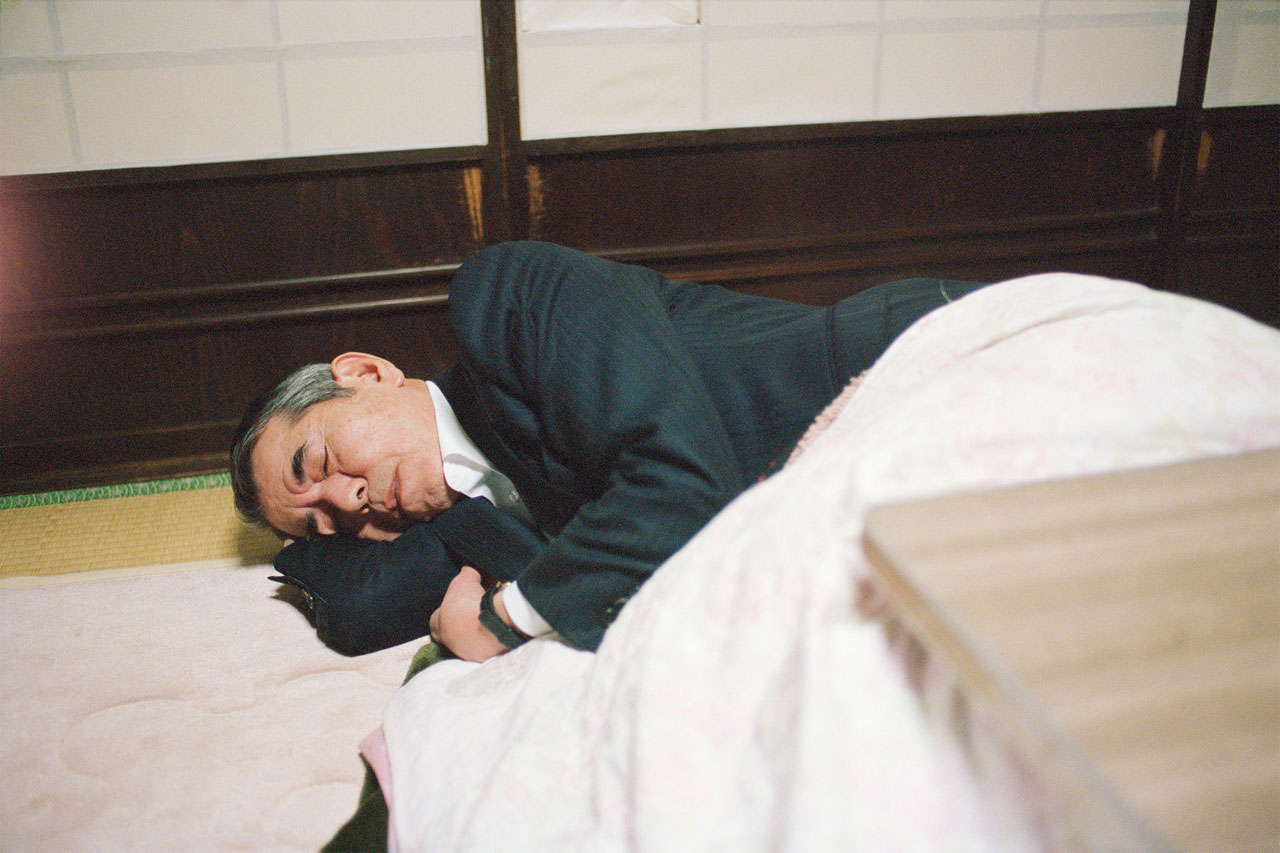
The passing of time is equally central to Anders Edström’s photographs from Shiotani. Created over more than two decades, the images accompany his long relationship with his wife’s family in a small village north of Kyoto. Everyday interiors, changing landscapes, family gatherings, and quiet moments accumulate into something far greater than documentary photography. As generations disappear and loved ones are lost, the photographs become both an intimate family memoir and a moving reflection on the quiet transformations of rural life.
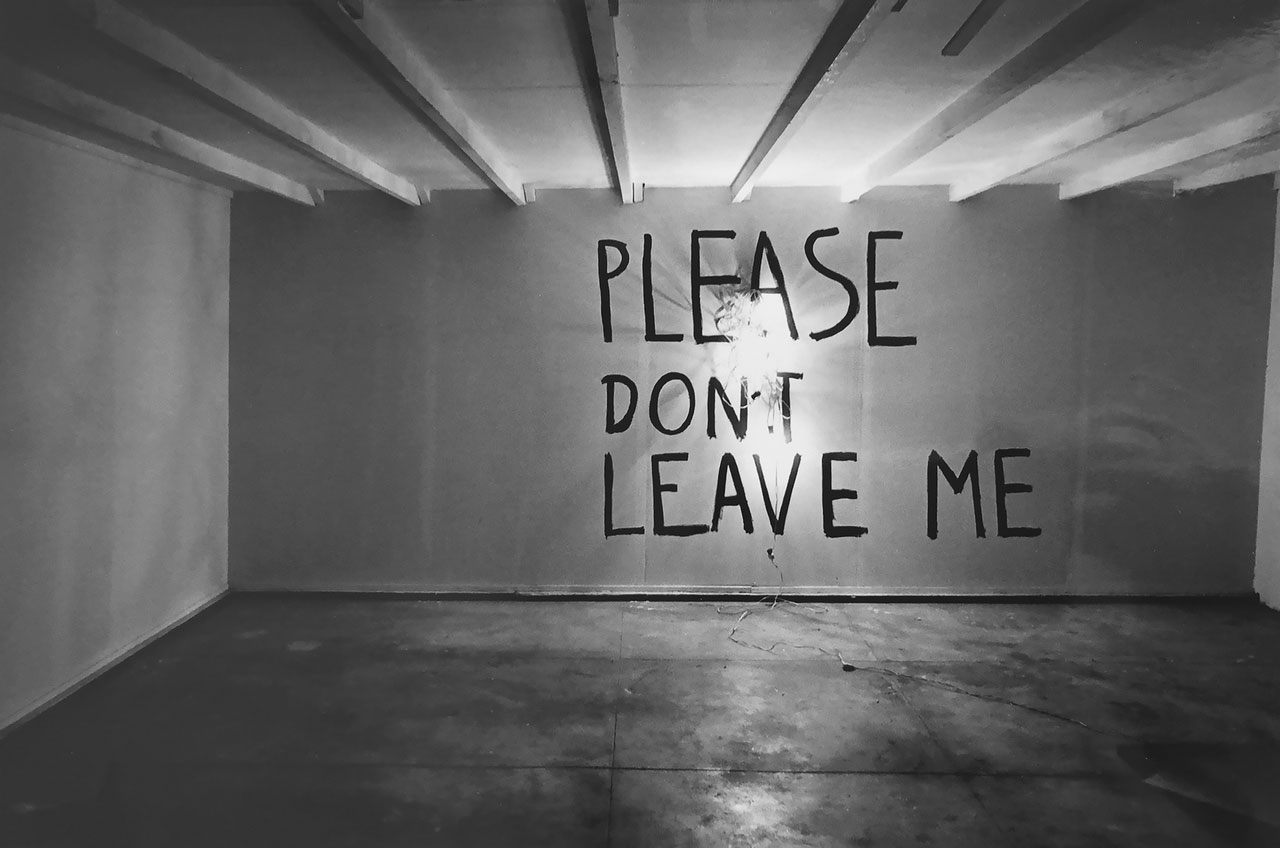
Few works embody absence as poignantly as Bas Jan Ader’s “Please don’t leave me”. The installation consists simply of a handwritten plea illuminated by a string of light bulbs, yet its emotional resonance remains profound. The work leaves its narrative deliberately unresolved, inviting viewers to imagine who is speaking and who is departing. Today, knowing the artist disappeared at sea in 1975 during his final performance, the installation carries an almost unbearable poignancy, transforming a conceptual gesture into one of contemporary art’s most haunting meditations on longing and loss.
Fashion designer Angelos Frentzos contributes an installation that bridges craftsmanship, history, and memory. Using antique garments and textiles discovered during his travels in Izmir, he reconstructs couture silhouettes while preserving the individuality of every fragment. Dowry linens, silk nightgowns, and ceremonial clothing retain their own histories even as they become part of entirely new compositions. The result is less a fashion statement than an archaeological excavation, where forgotten materials are granted a new life without erasing their past.
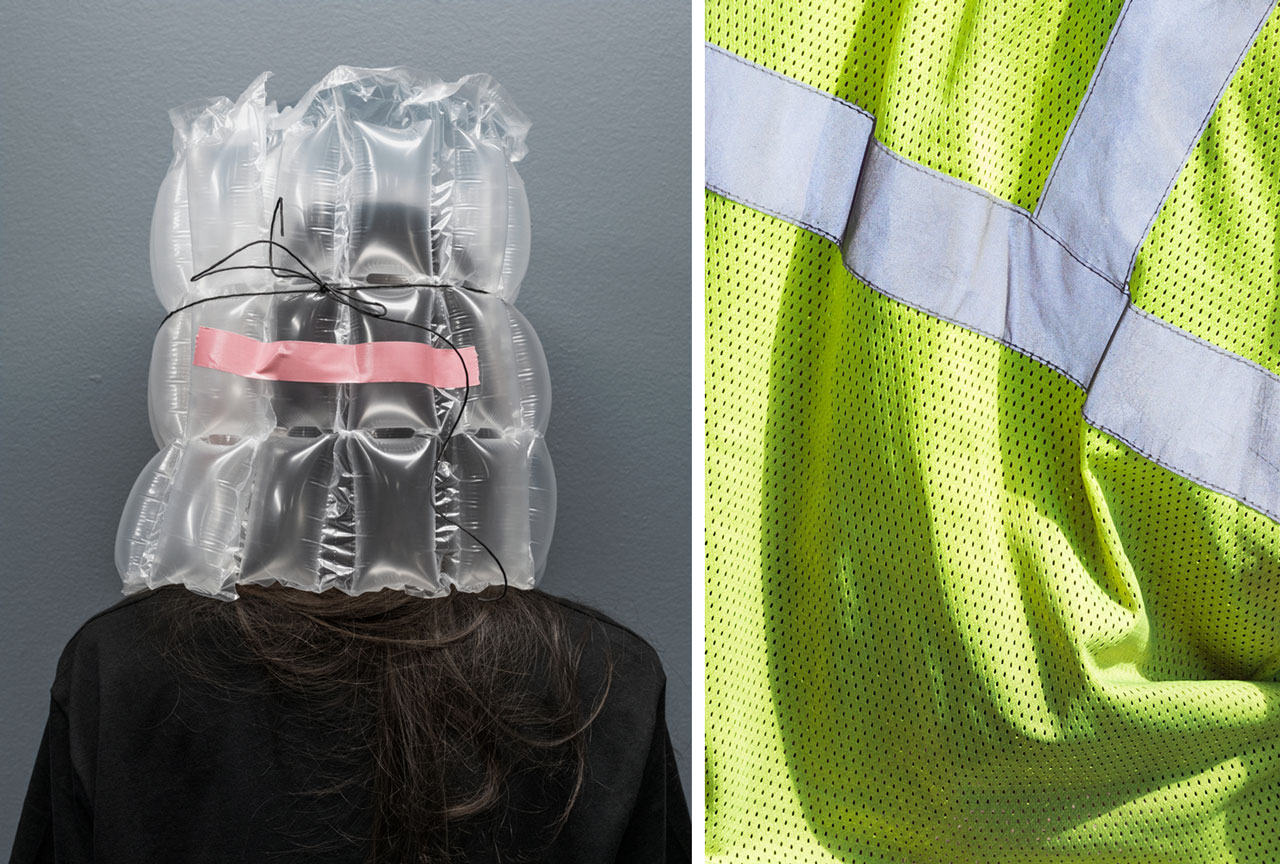
Questions of protection and vulnerability define Jackie Nickerson’s photograph from the “Field Test” series. Human figures are partially concealed beneath industrial plastics, agricultural mesh, and synthetic coverings originally designed to protect. Created after her experience documenting the Ebola epidemic in Liberia, the series reflects on how manufactured materials have come to mediate our relationship with both the body and the environment. The photographs are unsettling precisely because they reveal how safety and isolation, protection and confinement, have become increasingly intertwined.
Movement itself becomes a meditation on presence and disappearance in Hans van Manen’s “Two Pieces for HET”. Originally conceived as part of a larger ballet, the work unfolds in two contrasting movements: an exhilarating opening filled with extraordinary speed gives way to a slow, contemplative adagio. Van Manen famously described the choreography as “unravelling a piece of knitting rather than knitting it,” an image that beautifully captures the gradual dissolution of movement and emotion that defines the work.
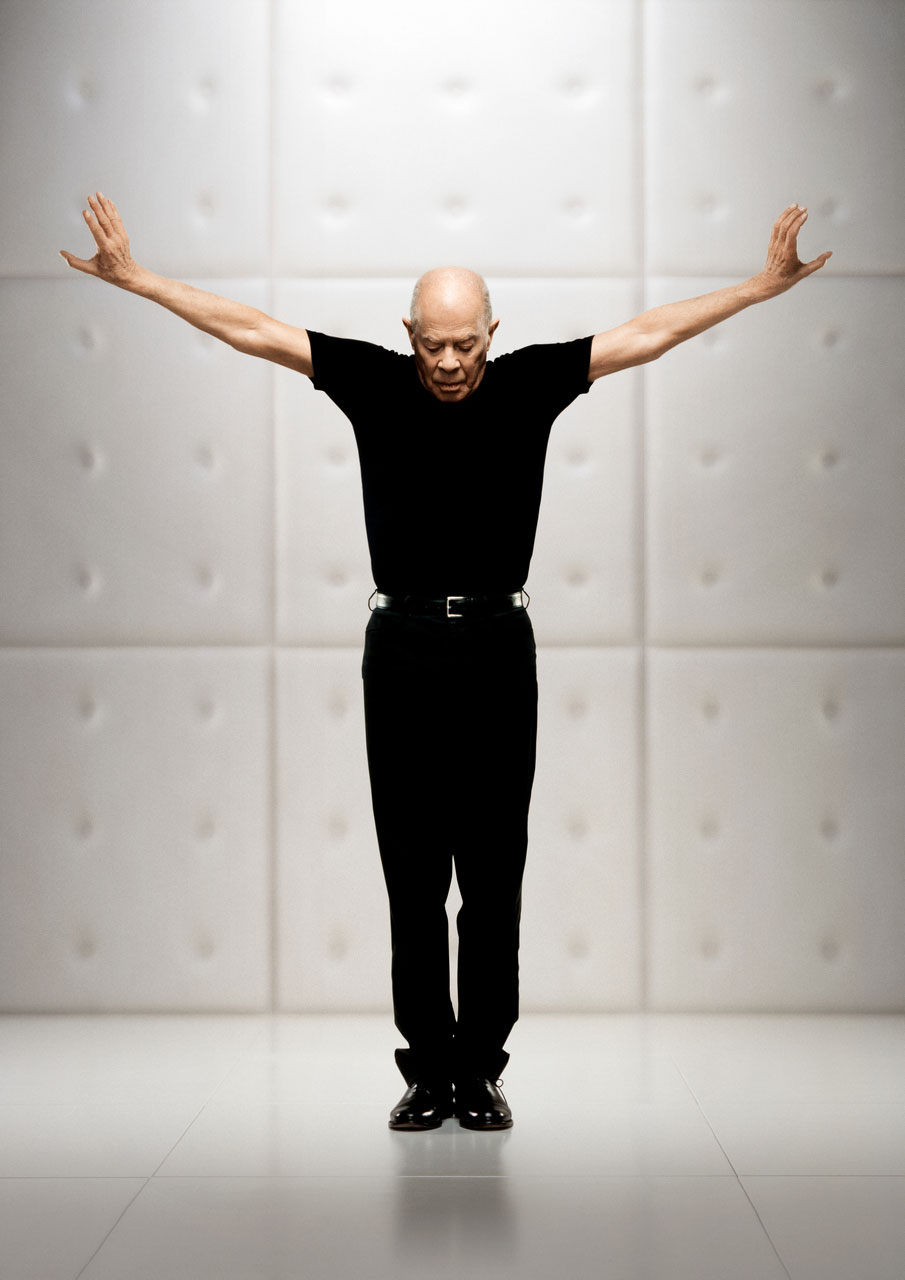
The close friendship between choreographer Hans van Manen and photographer Erwin Olaf is reflected in Olaf’s remarkable portrait of the artist. Known for his meticulous compositions, Olaf transforms the choreographer into an almost sculptural figure, arms extended like wings. The photograph reveals the physical discipline behind dance while also celebrating van Manen’s extraordinary artistic presence. Following the choreographer’s passing, the portrait has become an especially moving tribute to one of Europe’s most influential figures in contemporary dance.
The exhibition concludes with Yorgos Sapountzis, whose textile works speak quietly of remembrance, gratitude, and renewal. At the center stands a work bearing the reversed name of Rebecca Horn, his mentor and one of Germany’s most influential contemporary artists. The mirrored inscription suggests that memory itself is never direct; it is always refracted through time and experience. Created shortly before Horn’s death, the work serves as both homage and farewell, while the surrounding textile forms evoke plants in bloom, gently reminding us that endings and beginnings often exist within the same cycle.
Although the artists represented in “SPECTRAL” work across photography, video, installation, choreography, fashion, and textiles, their practices share a common sensitivity toward what escapes immediate visibility. Their works invite viewers to slow down, to embrace ambiguity, and to recognize that absence is never simply emptiness. It carries history, emotion, memory, and possibility.
Participating artists: Bas Jan Ader, Anders Edström, Angelos Frentzos, Bruce Nauman, Jackie Nickerson, Erwin Olaf, Yorgos Sapountzis, Hans van Manen, and Serpil Yeter
Photo left: Jackie Nickerson, Clear Head, 2019., Courtesy of the artist and Jack Shainman Gallery, New York. Photo right: Louis De Belle, Cartographies series, 2015. Courtesy of the artist
Info: Curator: Nicolas Vamvouklis, K-Gold Temporary Gallery, Agia Paraskevi, Lesvos, Greece, Duration: 25/7-6/9/2026, Days & Hours: Sat-Sun 11:00–14:00 & 19:00–22:00, https://kgoldtemporarygallery.tumblr.com/