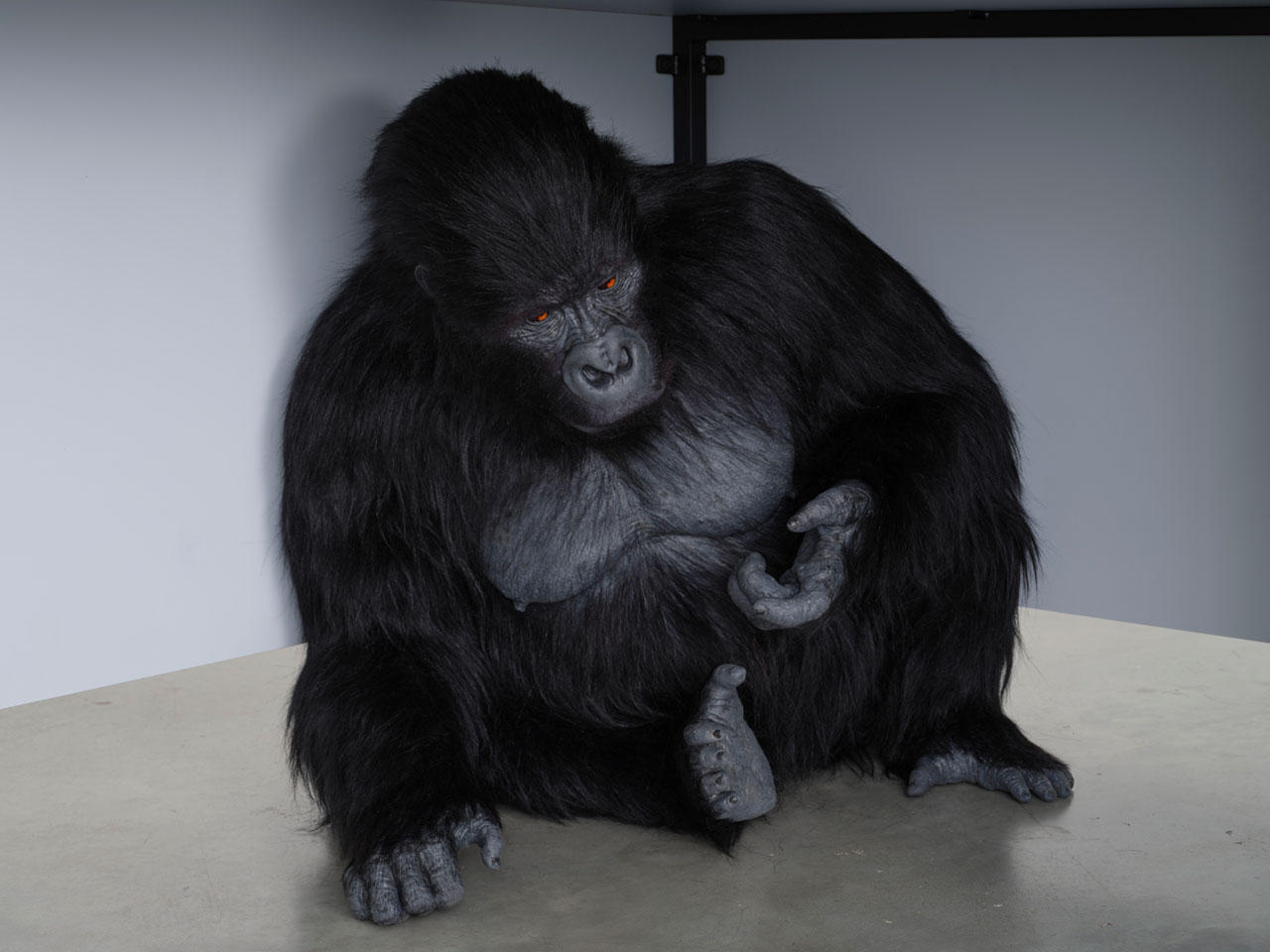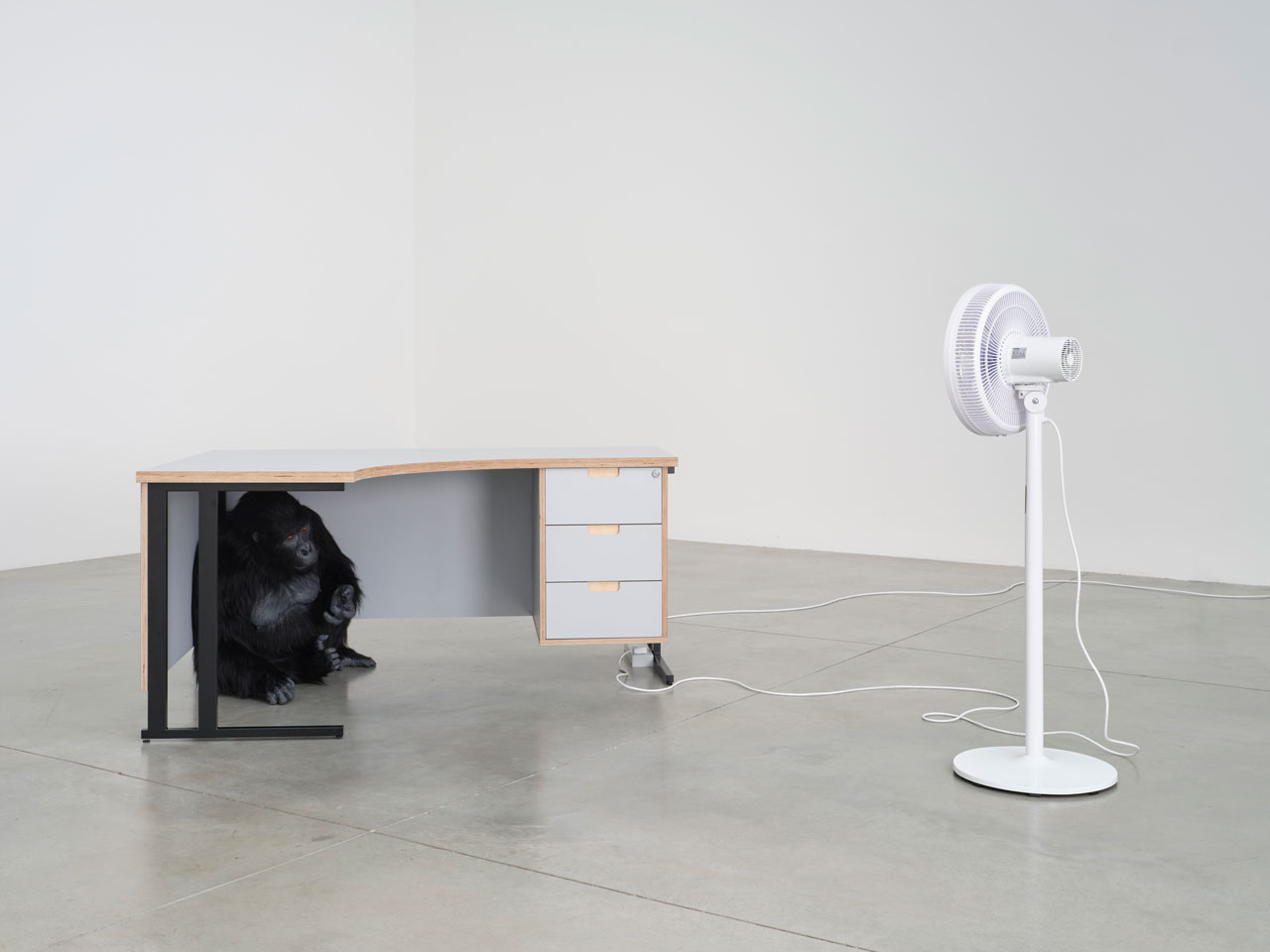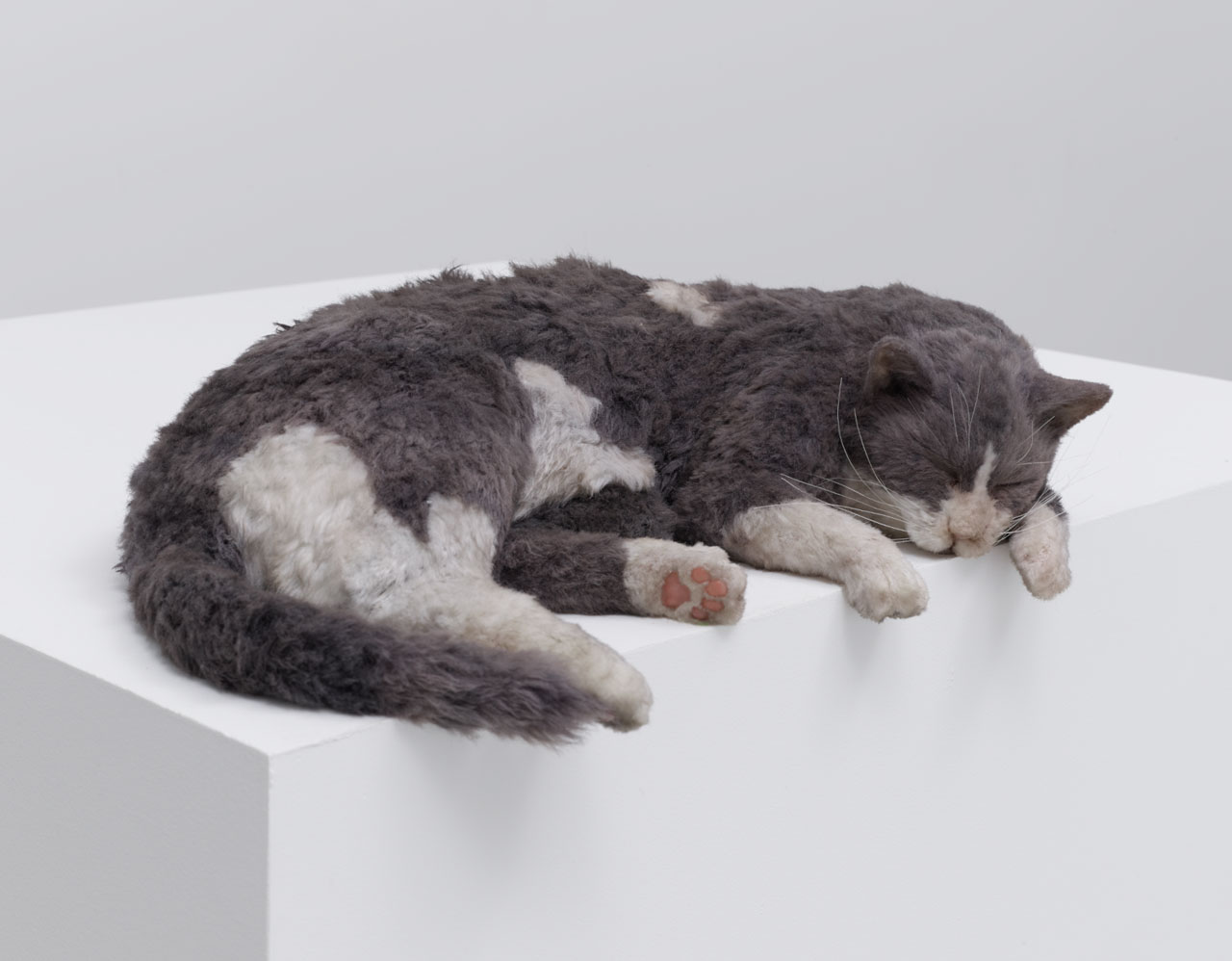
PRESENTATION: Ryan Gander-One Hundred Things Twice
Few contemporary artists have explored the instability of meaning with the consistency and conceptual rigor of Ryan Gander. Over the past two decades, the British artist has established an international reputation for a multidisciplinary practice that moves effortlessly between sculpture, installation, film, writing, graphic design, architecture, performance and publishing. Rather than adhering to a recognizable visual style, Gander constructs situations in which viewers become active participants, assembling narratives from fragments, clues and unexpected associations. His works frequently resist definitive interpretation, inviting audiences to inhabit a space where ambiguity becomes a productive form of knowledge.
By Dimitris Lempesis
Photo: Salzburger Kunstverein archive
This intellectual openness is central to “One Hundred Things Twice,” Gander’s solo exhibition at Salzburger Kunstverein, developed as part of the institution’s annual program “CAPTCHA Realism.” The exhibition proposes neither a chronological survey nor a coherent narrative. Instead, it unfolds as an inventory of possible realities, where objects exist in pairs, echoes, doubles and subtle variations that continuously destabilize perception.
The title initially suggests order and classification—a measurable collection of one hundred discrete objects. Yet Gander immediately undermines such expectations. Nothing in the exhibition remains singular for long. Every object appears to carry the possibility of another version of itself, another memory, another interpretation or another temporal existence. The exhibition becomes less an accumulation of artworks than a network of relationships in perpetual transformation.
Throughout his career, Gander has demonstrated an enduring fascination with language, systems of knowledge and the hidden mechanisms through which meaning is produced. Rather than presenting fixed statements, his works often operate within moments of uncertainty—those brief intervals before interpretation crystallizes. They resemble philosophical propositions disguised as everyday encounters, where ordinary materials become catalysts for speculative thought.
In “One Hundred Things Twice”, this strategy reaches remarkable clarity. The exhibition evokes ideas commonly associated with quantum mechanics—not by illustrating scientific theories, but by adopting their conceptual implications. Just as quantum physics proposes that particles may occupy multiple states simultaneously until observation determines a particular condition, Gander presents artworks that seem suspended between several possible identities. An object functions simultaneously as presence and absence, original and echo, memory and anticipation.
This dialogue with contemporary scientific thought has less to do with physics than with perception itself. Visitors quickly discover that certainty proves elusive. The meaning of each work shifts according to its proximity to another object, the sequence in which it is encountered, the memories it activates or the expectations it quietly frustrates. Every artwork exists not in isolation but within an intricate ecology of relationships.
Such relational thinking reflects broader developments in contemporary philosophy. Rather than understanding objects as autonomous entities possessing stable identities, Gander suggests that things emerge through their interactions with one another. Meaning is never contained within the artwork alone; it circulates continuously between artist, object, exhibition space and viewer. Observation itself becomes a creative act.
This approach has long distinguished Gander’s practice from more conventional forms of conceptual art. While deeply informed by philosophy, linguistics and institutional critique, his exhibitions rarely appear didactic. Instead, they often employ wit, playfulness and moments of quiet surprise to encourage intellectual curiosity. His works invite reflection without dictating conclusions, rewarding sustained attention rather than immediate comprehension.
The annual program “CAPTCHA Realism” provides an especially fitting context for such an investigation. Borrowing its title from the digital tests designed to distinguish humans from machines, the program explores contemporary experiences shaped by technology, artificial intelligence and changing forms of perception. Within this framework, Gander’s exhibition asks what distinguishes human consciousness from computational logic. Machines categorize and identify. Humans hesitate, remember, speculate and imagine alternatives. It is precisely within these moments of uncertainty that One Hundred Things Twice locates its artistic and philosophical force.
Walking through the exhibition becomes an exercise in cognitive participation. The viewer repeatedly encounters situations that resist closure. A sculpture recalls another sculpture; a gesture suggests an absent event; an object appears simultaneously familiar and strangely displaced. These recurring encounters produce an uncanny sensation of déjà vu—a feeling that one has experienced this place before, although perhaps only in imagination.
The exhibition also challenges traditional assumptions about authorship and authority. There is no privileged position from which the exhibition can be fully understood. Each visitor constructs a different constellation of meanings according to personal memories, movements and associations. Reality itself appears plural rather than singular, composed of overlapping possibilities rather than fixed certainties.
This democratization of interpretation represents one of Gander’s most significant contributions to contemporary art. Rather than offering answers, he constructs conditions under which multiple truths can coexist. Every object contains the possibility of another object; every narrative suggests an alternative version that almost—but not quite—came into being.
Ultimately, One Hundred Things Twice is not an exhibition about duplication but about potentiality. It reminds us that every encounter carries unseen alternatives, every certainty conceals ambiguity, and every act of perception remains unfinished. In Gander’s hands, the gallery becomes less a repository of objects than a dynamic environment in which thought itself becomes material.
At a moment when contemporary culture increasingly privileges speed, certainty and immediate recognition, Ryan Gander proposes something altogether more demanding—and more rewarding. He asks viewers to slow down, to embrace uncertainty and to recognize that meaning is never simply found but continually constructed. The result is an exhibition that lingers long after leaving the gallery, not because it provides definitive answers, but because it transforms doubt into one of art’s most generative possibilities.
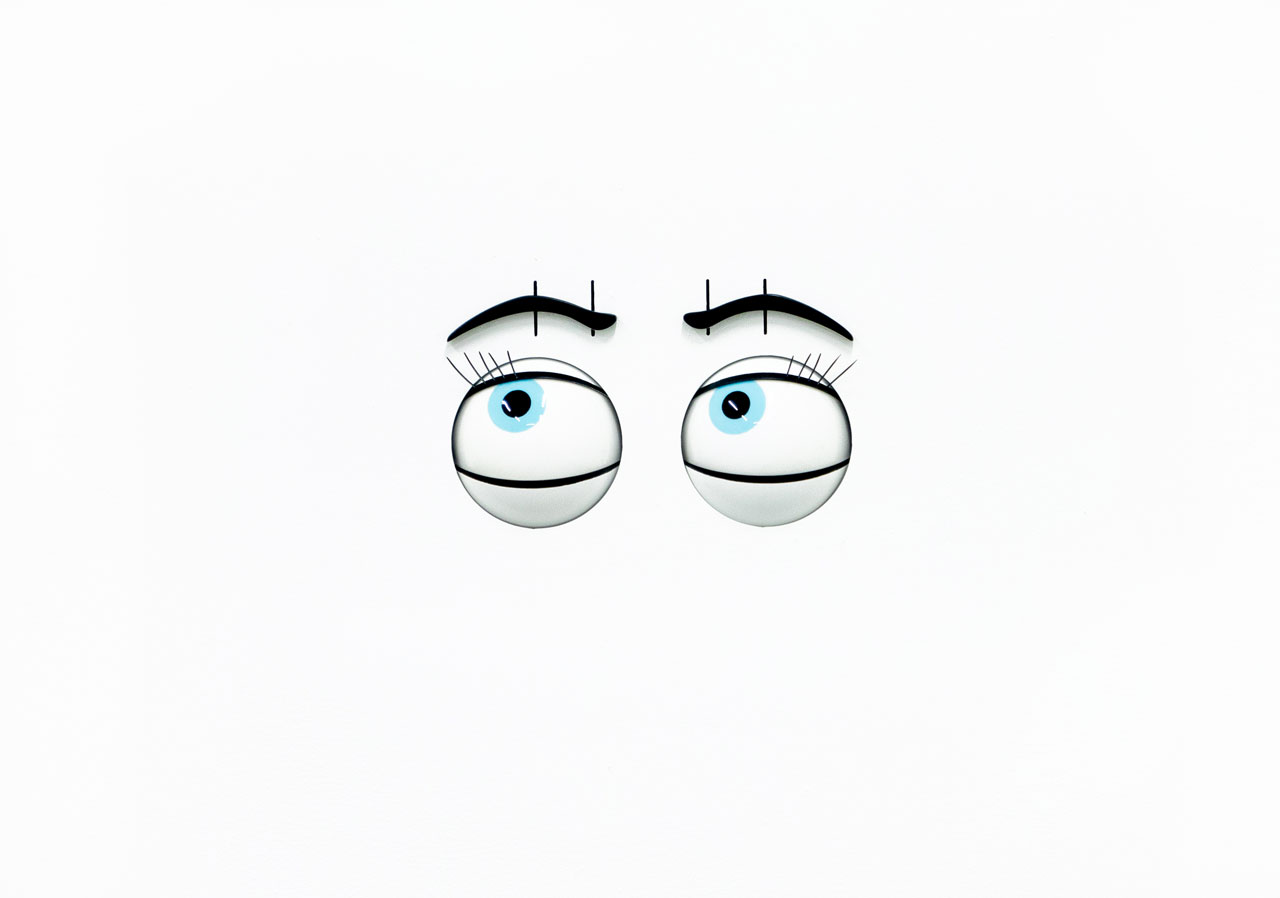
Photo: Ryan Gander, Dominae Illud Opus Populare, 2016, animatronic eyes, sensors, 35 × 35 × 17,5 cm, courtesy of the artist and Lisson Gallery. Photo: Tania Castro
Info: Curator: Mirela Baciak, Salzburger Kunstverein, Hellbrunner Straße 3, Salzburg, Austria, Duration: 24/7-20/9/2026, Days & Hours: Tue-sun 11:00-19:00, https://salzburger-kunstverein.at/
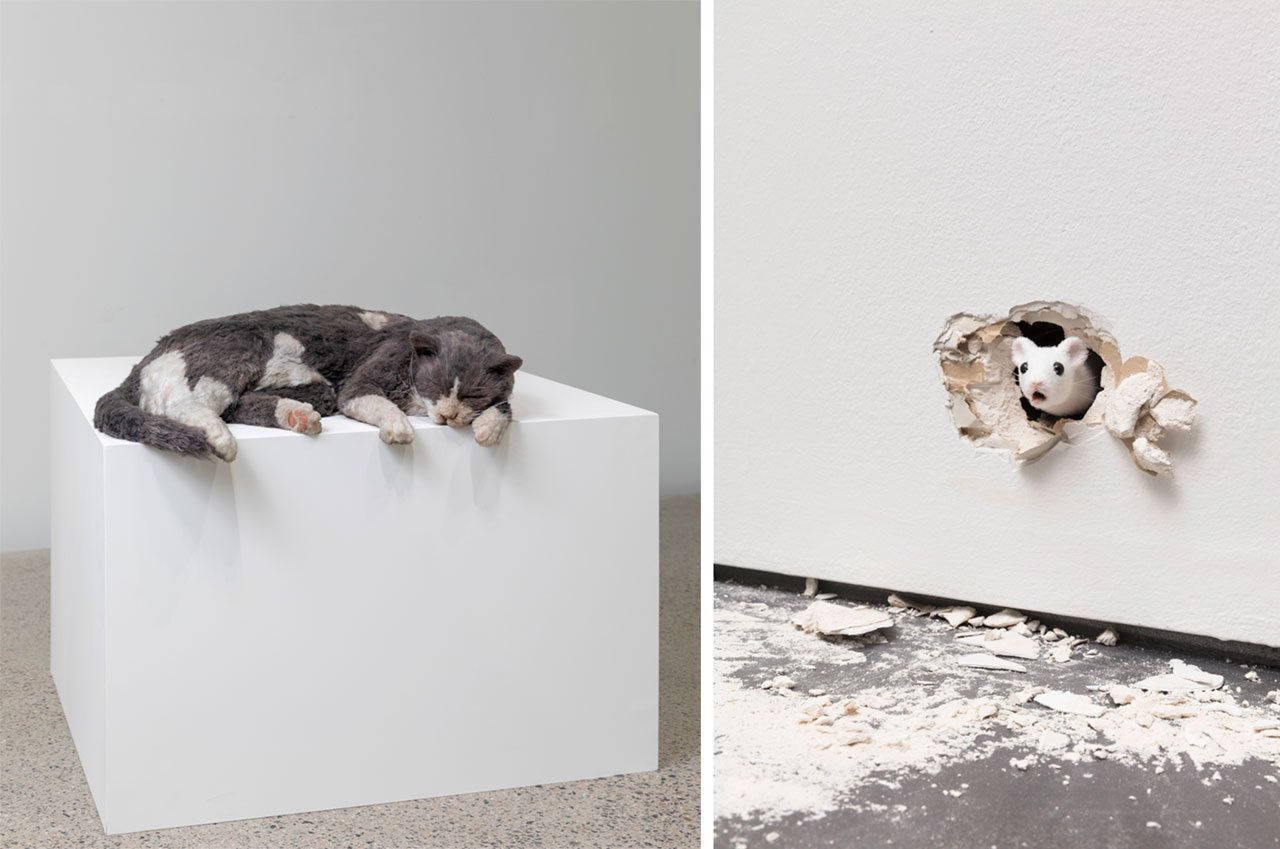
Right: Ryan Gander, I… I… I…, 2019, animatronic mouse, hole in a wall, 19,4 × 24 × 28,2 cm, (installation), duration (animatronics): 7 min approx., courtesy of the artist and Esther Schipper. Photo: Andre Rosetti