PREVIEW:Maria Taniguchi-Afterimage
Maria Taniguchi works across a diverse range of media, including painting, video, sculpture, pottery, printmaking, drawing and writing. Central to her practice are questions of labour, repetition, and temporality, which she explores through an ongoing engagement with materiality and process. Her works invite audiences to experience material culture sensorially, connecting it to broader notions of time, space, labour and technology.
By Dimitris Lempesis
Photo: Singapore Art Museum (SAM) Archive
“Afterimage” is the first monographic exhibition of Maria Taniguchi at a Singapore museum. Opening on 24 July 2026, the exhibition brings together nearly two decades of Taniguchi’s multidisciplinary practice, featuring her signature “brick paintings”, modular “Runaways sculptures, and four video works, including the newly commissioned A painter, if black were a place. Together, these works offer audiences the most comprehensive presentation of Taniguchi’s practice in Singapore to date.
Taking its title from visual sensations that linger in a viewer’s field of vision, «Afterimage» explores the recurring themes of repetition, time and labour that have shaped Taniguchi’s practice over nearly two decades. Through painting, sculpture and moving image, the exhibition invites audiences to slow down and reflect on the quiet processes that underpin both artistic creation and everyday life.
The exhibition comes at a significant moment in Taniguchi’s career, following her major survey at the Museum of Contemporary Art and Design Manila. It also reflects SAM’s continued commitment to presenting ambitious exhibitions by leading contemporary artists from Southeast Asia while supporting new commissions that advance artistic practice in the region.
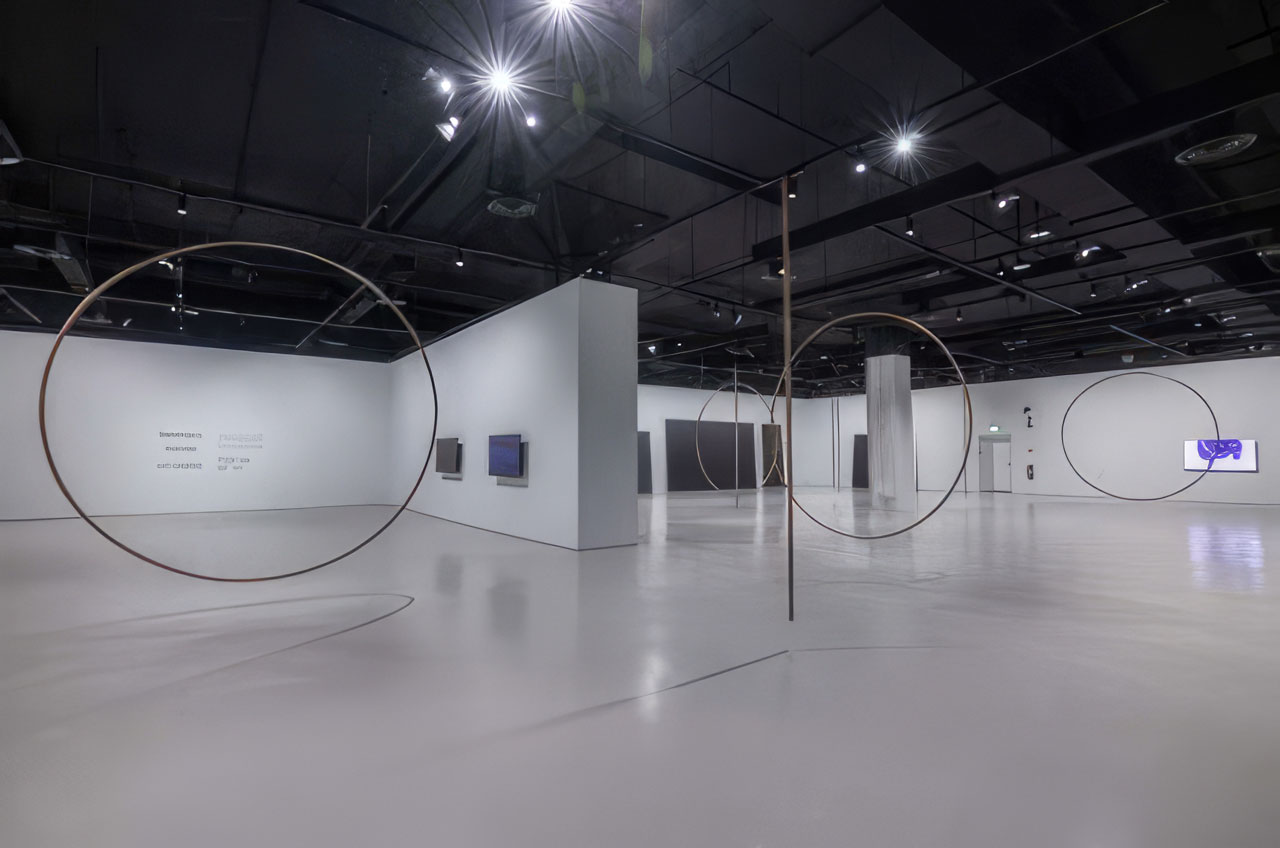
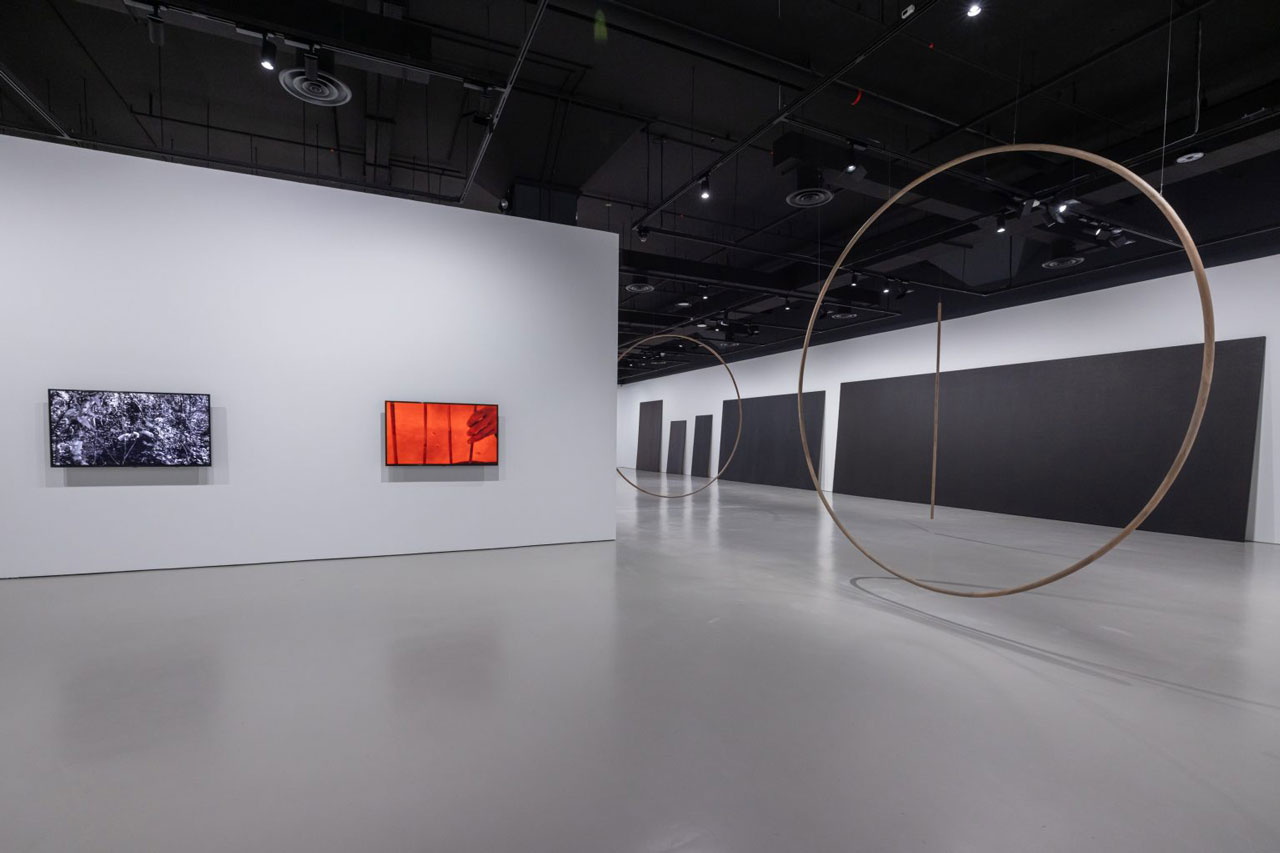
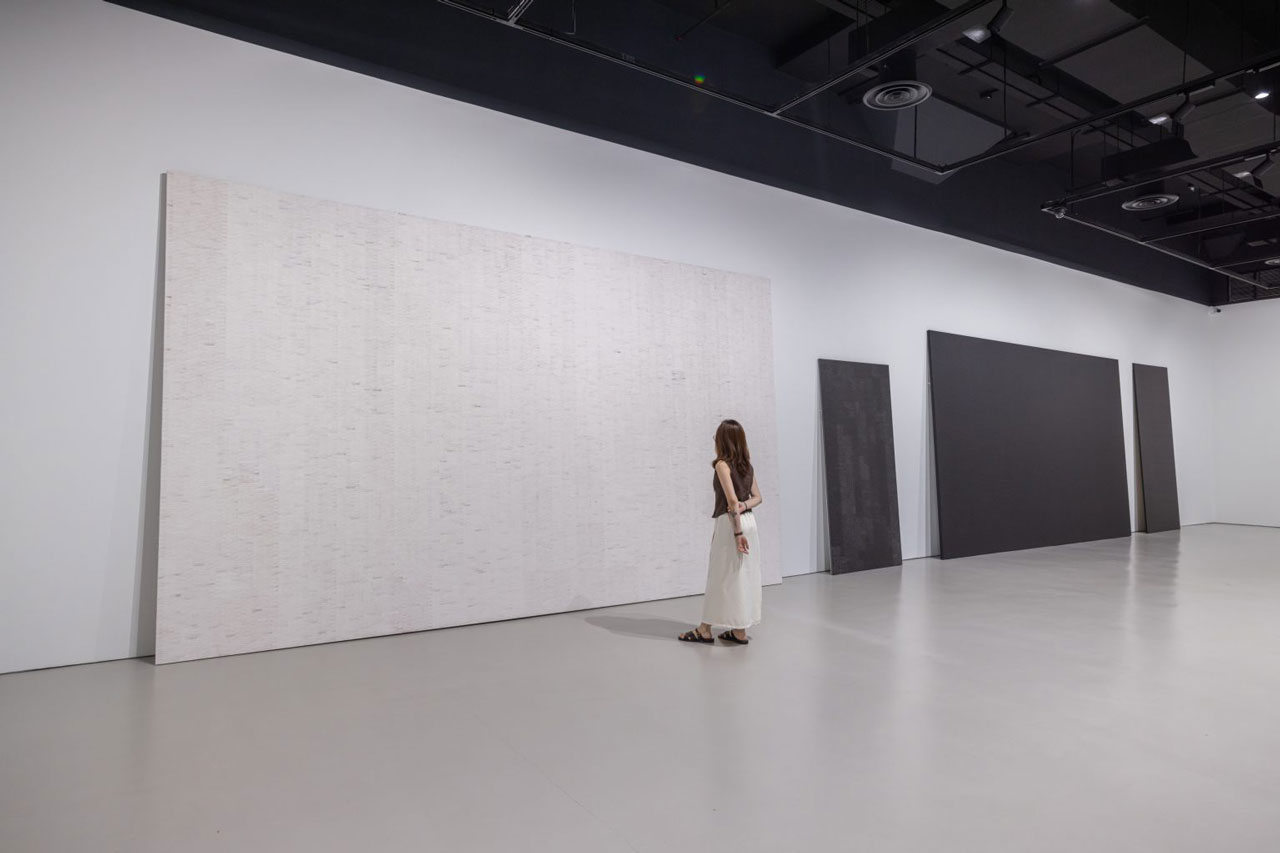
At the heart of Taniguchi’s practice lies an unwavering dedication to repetition as both method and meaning. Her “brick paintings” (2008– ) feature uniform rows of pencil-drawn rectangles, each carefully filled in with paint over days or weeks. Rather than a deliberate response to the art-historical legacy of minimalism, they capture the sheer time and effort invested in creating each work. This ongoing series of paintings remain untitled and unnumbered, as Taniguchi treats each new canvas as part of a single, continuously growing artwork. The series has evolved subtly with shifts in colour and scale, tracing the progression of her artistic practice over the years. Leaning against the gallery walls, Taniguchi’s large “brick paintings” blur the boundaries between painting, sculpture and architectural space.
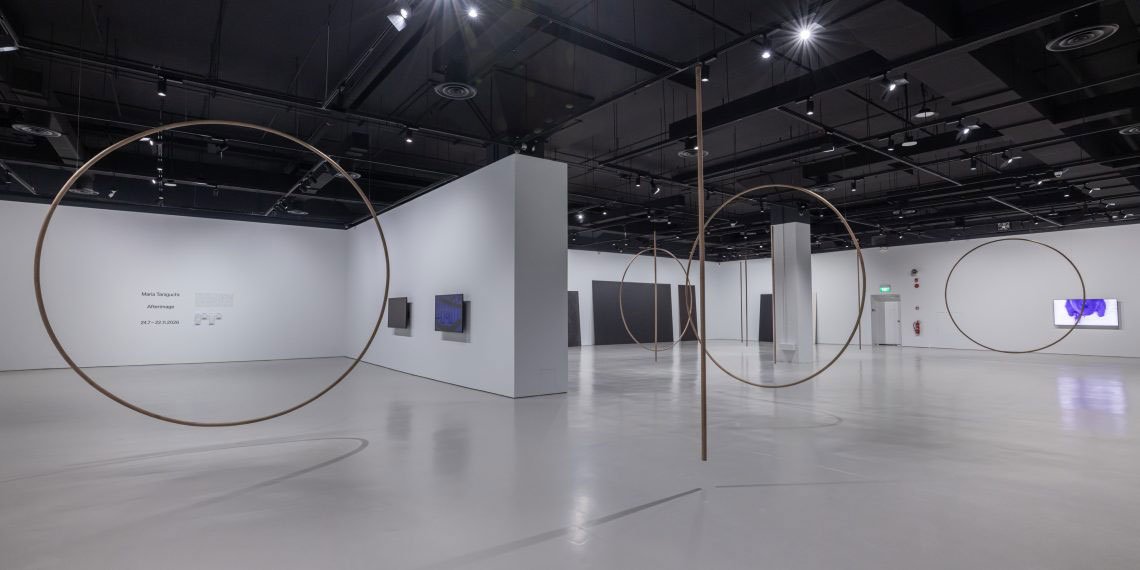
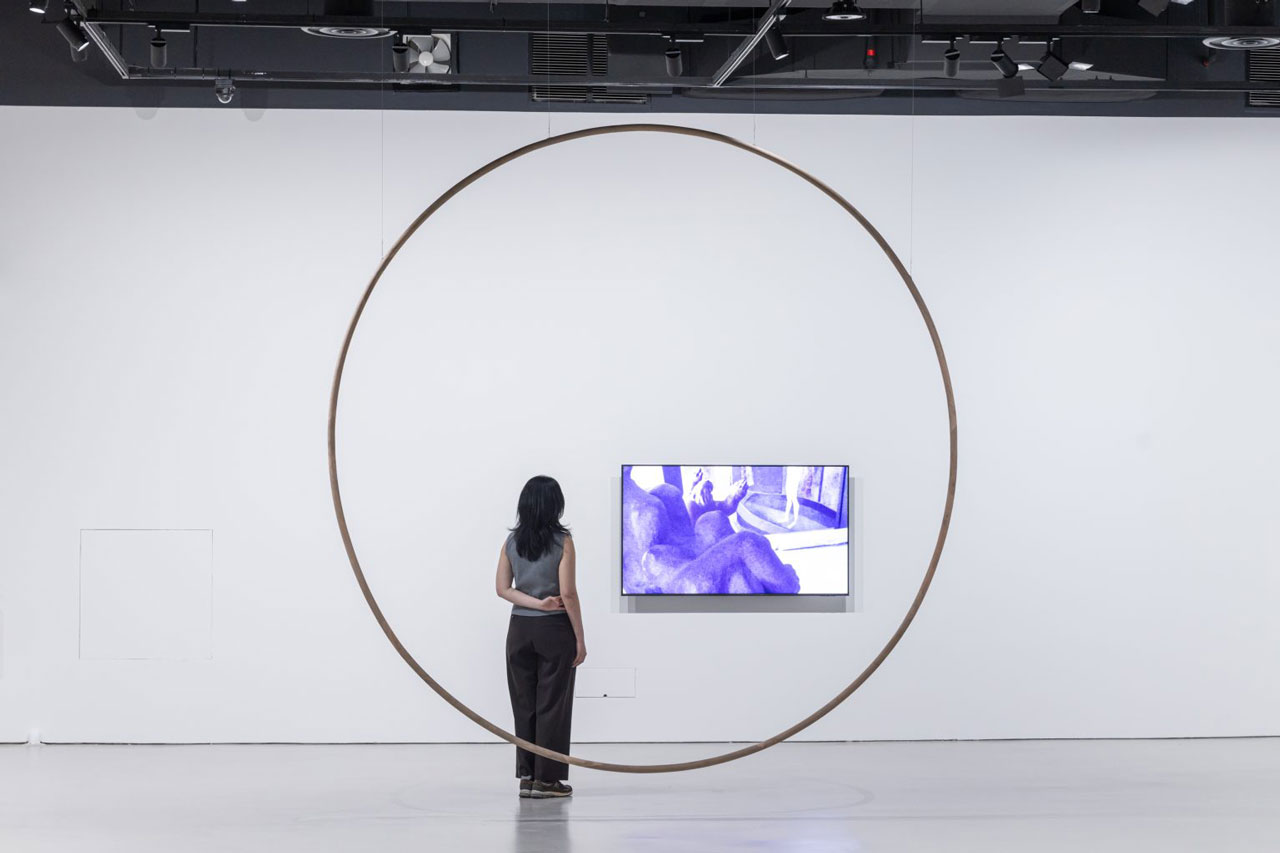
“Runaways” (2026) features site-responsive sculptures—some standing several metres tall—that merge personal memory with traditional craft. Using the gallery as a canvas, Taniguchi transforms simple circles and lines, the most fundamental elements of drawing, into three-dimensional compositions. This sparse formal vocabulary evokes computational language like the 1 and 0 of binary code to suggest infinite possibilities within the gallery space. Carved from Java plum wood, known in the Philippines as duhat, these sculptures carry intergenerational memory: Taniguchi’s mother craved the tree’s dark violet fruit while pregnant with her. By embracing handcraft over industrial production and embedding personal history, Taniguchi challenges the seemingly detached nature of minimalism. At SAM, “Runaways” serves as a series of spatial markers guiding visitors through Gallery 3, including new site-responsive iterations created specifically for this exhibition.
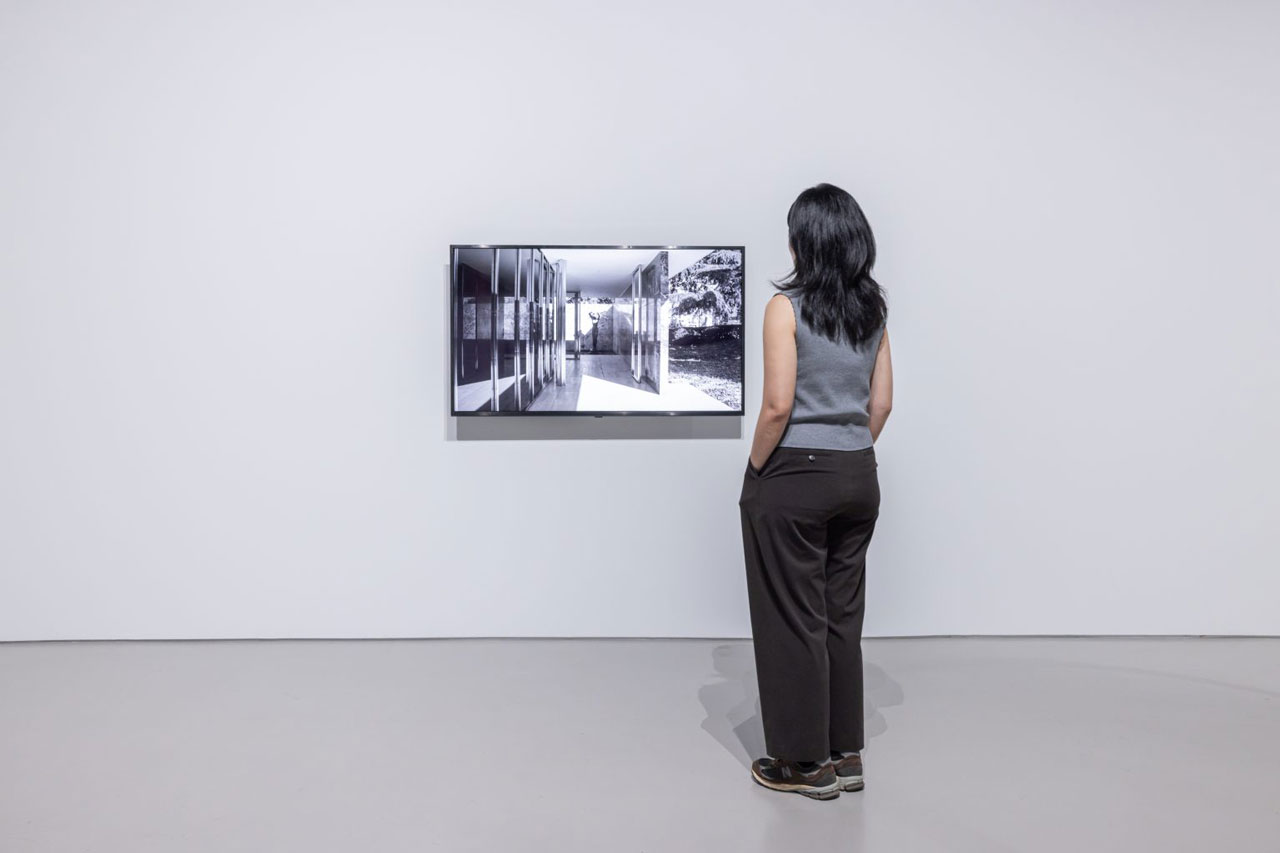
Four video works extend Taniguchi’s longstanding interest in repetition, duration and process into moving image, exploring themes of history, memory, and modernist architecture. “Mies 421” (2010) documents her attention to structural details throughout the 1929 Barcelona Pavilion designed by influential German architects Mies van der Rohe and Lilly Reich. Black-and-white still photographs focus on the building’s minimal lines and varied surface textures, echoing the architectural quality of her “brick paintings”. Synchronised with an accelerating metronome, the mechanical progression of images generates a sense of mounting tension while emphasising how repeated fragments accumulate into a larger whole.
Subsequently, “Figure Study” (2012) and “Figure Study” (2018) trace Taniguchi’s evolving investigations into the body, space, and time. The 2012 work, also shot in black-and-white, captures two workers in a dense jungle extracting clay from the earth and filling white bags. Filmed from multiple angles, the repetitive labour unfolds to the irregular rhythm of their tools—a sonic counterpoint to the metronomic precision of “Mies 421”.
“Figure Study” (2018) prioritises process over narrative through tightly framed, richly saturated red and blue images. A sequence of stills captures the artist’s hands shaping raw clay, making visible subtle traces of labour invested over time. These are followed by a single shot that tracks the length of the finished object, though the narrow framing prevents viewers from grasping how the individual parts relate to the whole. This fragmented approach recalls Taniguchi’s formative exercises at the Philippine High School for the Arts, where students experimented with materials without a predetermined outcome.
The newly commissioned video, “A painter, if black were a place” (2026), explores Taniguchi’s artistic lineage through an intimate look at her relationship with her mother, Christina “Kitty” Taniguchi, who is a painter and literary scholar. Mirroring the structure of “Mies 421”, the film moves through a series of grainy, pixelated still images, captured in the artist’s hometown of Dumaguete City in 2012. The digital photographs feel warm and intimate, but their quality evokes nostalgia and the gradual fading of personal memories. The closely cropped images of a garden filled with terracotta sculptures in this newly commissioned video counter the modernist lines of the Barcelona Pavilion present in “Mies 421”. At the same time, several paintings by Kitty are woven throughout the film, emphasising the intergenerational connection that informs the younger Taniguchi’s use of material in her Runaways sculptures. The flow of images is disrupted by fields of black which, upon close inspection, reveal themselves as hand-painted surfaces with subtle variations—much like Taniguchi’s own painted canvases.
Photo: Maria Taniguch, Afterimage, Exhibition view, SAM at Tanjong Pagar Distripark, 2026, Courtesy of Singapore Art Museum
Info: Singapore Art Museum (SAM), Tanjong Pagar Distripark, 39 Keppel Rd, #01-02, Singapore, Duration: 24/7-22/11/2026, Days & Hours: Daily 10:000-19:00, www.singaporeartmuseum.sg/