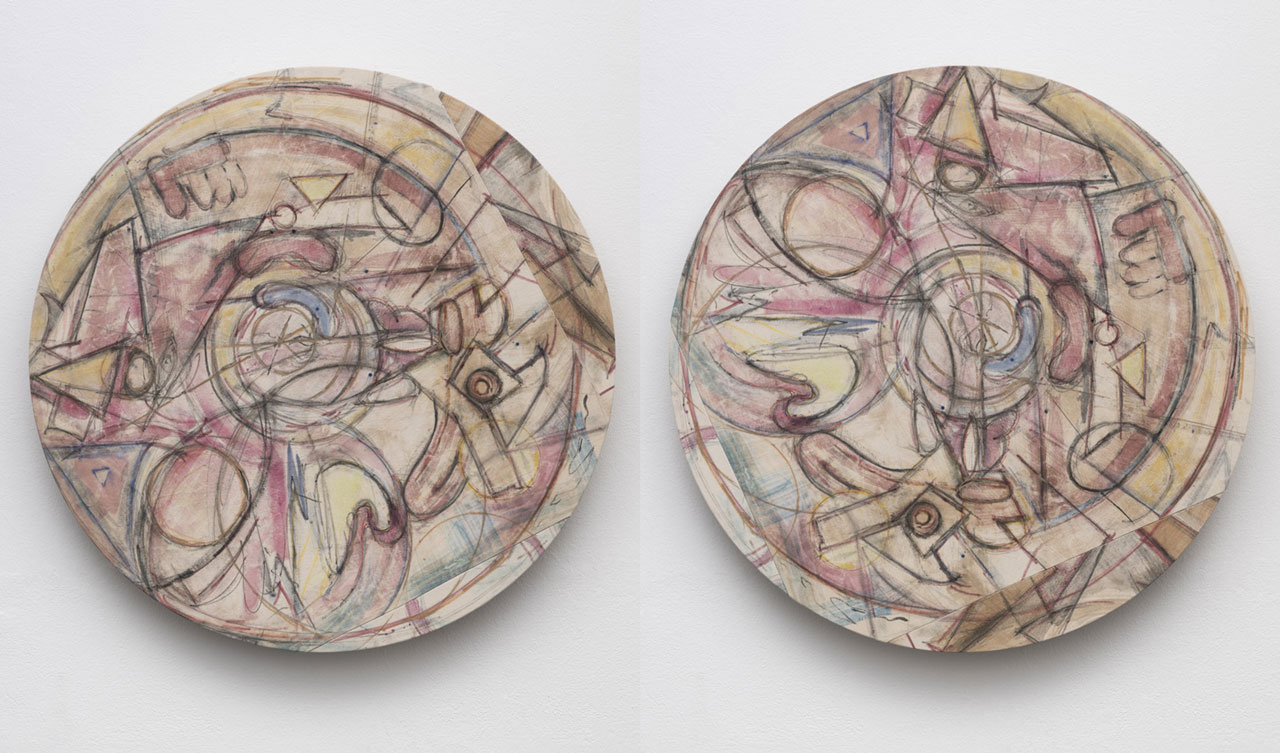
ART CITIES:Berlin-J. Parker Valentine
J. Parker Valentine is an artist whose practice is deeply rooted in drawing but expands across film, video, photography, collage, and sculpture. Working between abstraction and suggestion, Valentine explores how images emerge, disappear, and transform through processes of making and unmaking. Her works examine the drawn line not as a fixed gesture confined to a surface, but as a force that can extend beyond paper or panel into physical space, material presence, and perception itself.
By Dimitris Lempesis
Photo: Galerie Max Mayer Archive
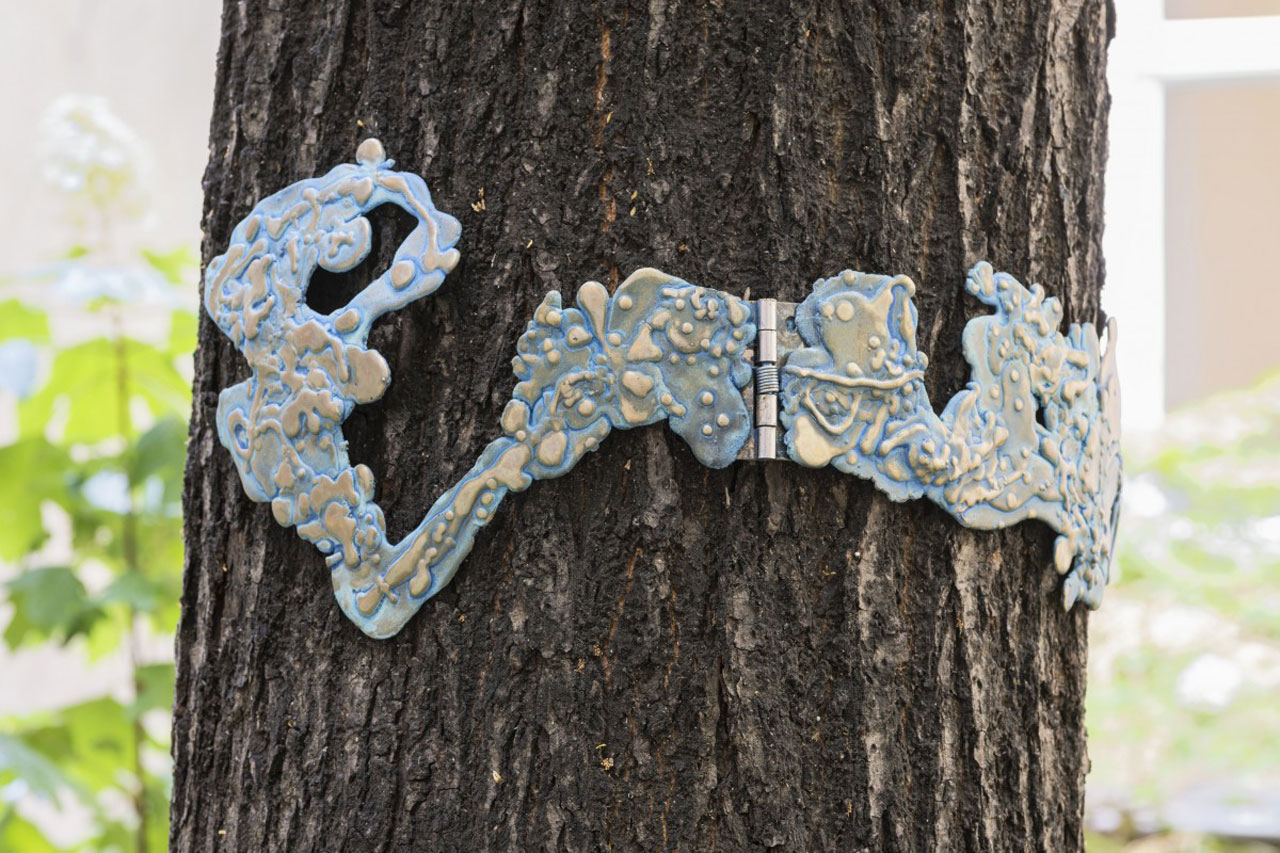
Her exhibition “Panthalassa”, presented as her fifth solo exhibition at Galerie Max Mayer, takes its title from the ancient ocean that once surrounded the Earth and witnessed the early evolution of life. Through new drawings and bronze sculptures, Valentine investigates shifting forms of vision, where images emerge while familiar boundaries between nature, object, and environment begin to dissolve. For the first time, the gallery’s exterior space becomes part of the exhibition, with a bronze sculpture wrapping around a tree in the courtyard, creating an encounter between sculptural form and organic growth. Like the prehistoric ocean that inspired its title, Panthalassa evokes a world in constant transformation, where borders remain fluid and forms continue to evolve.
Valentine’s artistic language begins with drawing, but her understanding of drawing extends far beyond traditional definitions. Her marks record movement, alteration, and uncertainty, revealing the physical process behind the image. On delicately balanced MDF panels, graphite and erased passages create compositions that hover between abstraction and figuration. Fragments may suggest a body, a landscape, or an unknown structure, yet the artist avoids fixed interpretations. Instead, the work remains open, allowing meaning to develop through the viewer’s experience.
Erasure plays a central role in Valentine’s practice. Rather than treating removal as destruction, she uses it as a creative action that reveals another layer of the image. The erased areas become active spaces where traces of previous marks remain visible, creating a dialogue between presence and absence. In her work, what disappears becomes as important as what remains. Shadows, light, empty space, and material gaps function almost like additional artistic mediums, expanding the drawing into an environment of perception.
This approach challenges the traditional relationship between image and object. Valentine’s lines appear to move beyond the edges of the surface, transforming two-dimensional drawings into sculptural experiences. Her sculptures in clay, fabric, and bronze retain the sensitivity and immediacy of drawing, suggesting that a line can become a physical form while still maintaining the memory of its original gesture.
A defining element of Valentine’s practice is her ability to create narrative through abstraction. Rather than presenting recognizable stories or completed images, she constructs situations in which forms continuously shift. The viewer encounters works that seem to exist between states—between emergence and disappearance, structure and fragmentation, memory and invention. This unresolved quality is central to her exploration of how images are created and understood.
The works in “Panthalassa” developed through an extended process of transformation. Several drawings began from a large-scale canvas that Valentine worked on over many months. Through repeated acts of cutting, washing, rearranging, and redrawing, the surface became a record of multiple moments and decisions. Earlier versions remain embedded within later compositions, allowing the history of the artwork’s development to remain visible.
The resulting works reflect the artist’s interest in cycles of change found in both natural and human processes. Like geological formations or biological evolution, Valentine’s images accumulate layers over time. They do not represent a single moment but instead reveal a continuous process of becoming.
A rotating work in the exhibition pushes this idea further by introducing movement into the viewing experience. As the circular form turns, the image changes, creating a sense of depth and transformation similar to looking into a constantly shifting environment. Its motion recalls cycles of time, evolution, and the endless movement of natural systems.
The conceptual atmosphere of “Panthalassa” is also connected to John Steinbeck’s reflections in “The Log from the Sea of Cortez”, where he writes: “An ocean without its unnamed monsters would be like a completely dreamless sleep.” The image suggests that the unknown is not an absence to overcome but an essential part of imagination and discovery. Valentine’s work similarly embraces uncertainty, allowing unfamiliar forms and meanings to emerge.
Throughout her career, Valentine has expanded the possibilities of drawing by treating it as an active, evolving system rather than a static medium. Her practice demonstrates that a line can become an object, an absence can become an image, and an unfinished process can become the artwork itself.
With “Panthalassa”, Valentine creates a space where drawing, sculpture, and environment merge into a fluid experience. Inspired by the ancient ocean that connected the earliest forms of life, the exhibition reflects her ongoing investigation into transformation, perception, and the unstable boundaries between what is visible and what remains unknown. Her work reminds us that images are not simply created—they continue to evolve, change, and exist in a constant state of becoming.
Photo: J. Parker Valentine, Untitled (Grip), detail, 2026, bronze, blue patina, stainless steel hinge, 25 x 70 cm, Arched, © J. Parker Valentine, Courtesy the artist and Galerie Max Mayer
Info: Galerie Max Mayer, Hardenbergstraße 9a, 2nd backyard, Berlin, Germany, Duration: 27/-22/8/2026, Days & Hours: Wed-Sat 11:00-18:00, www.maxmayer.net/
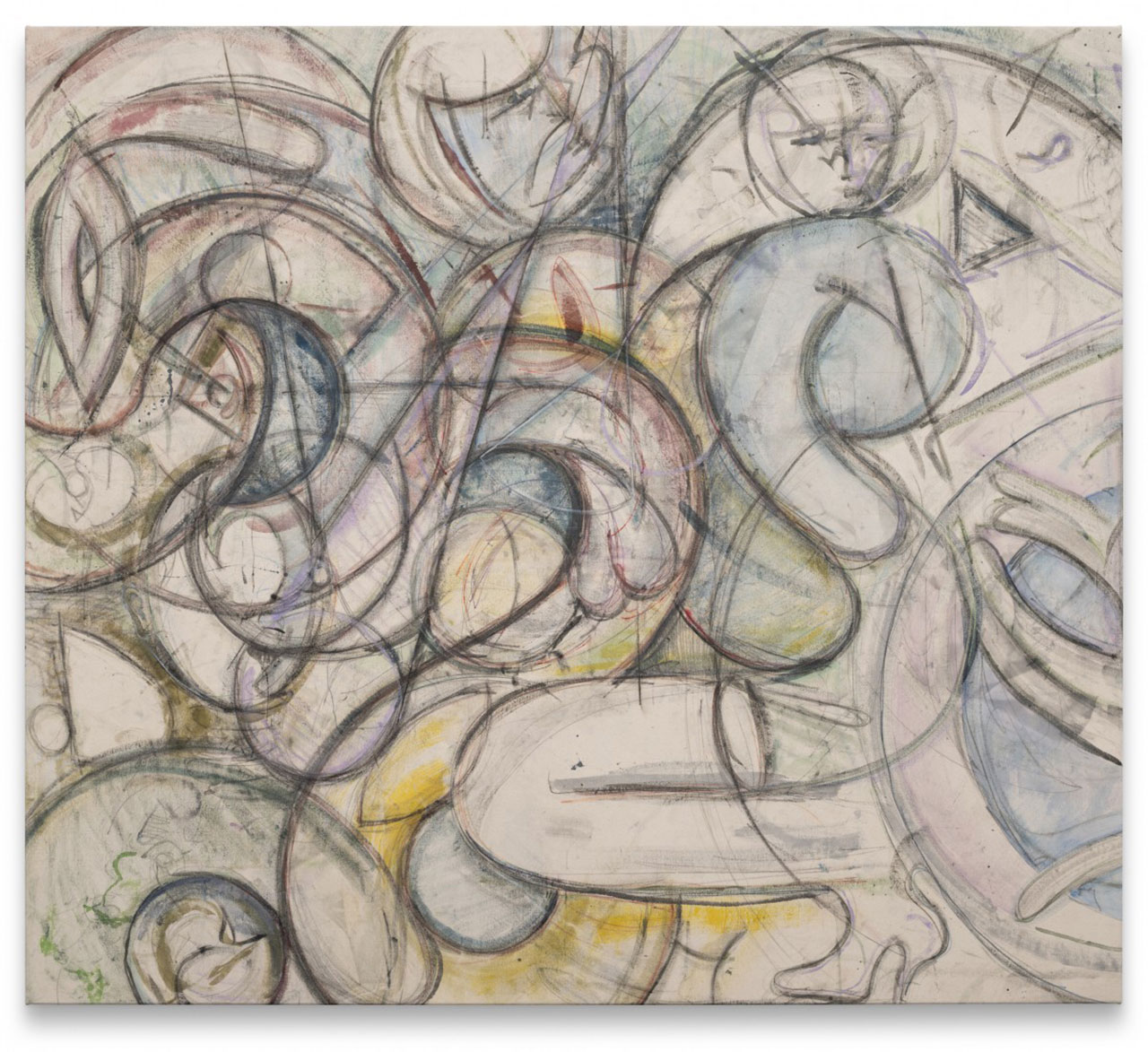
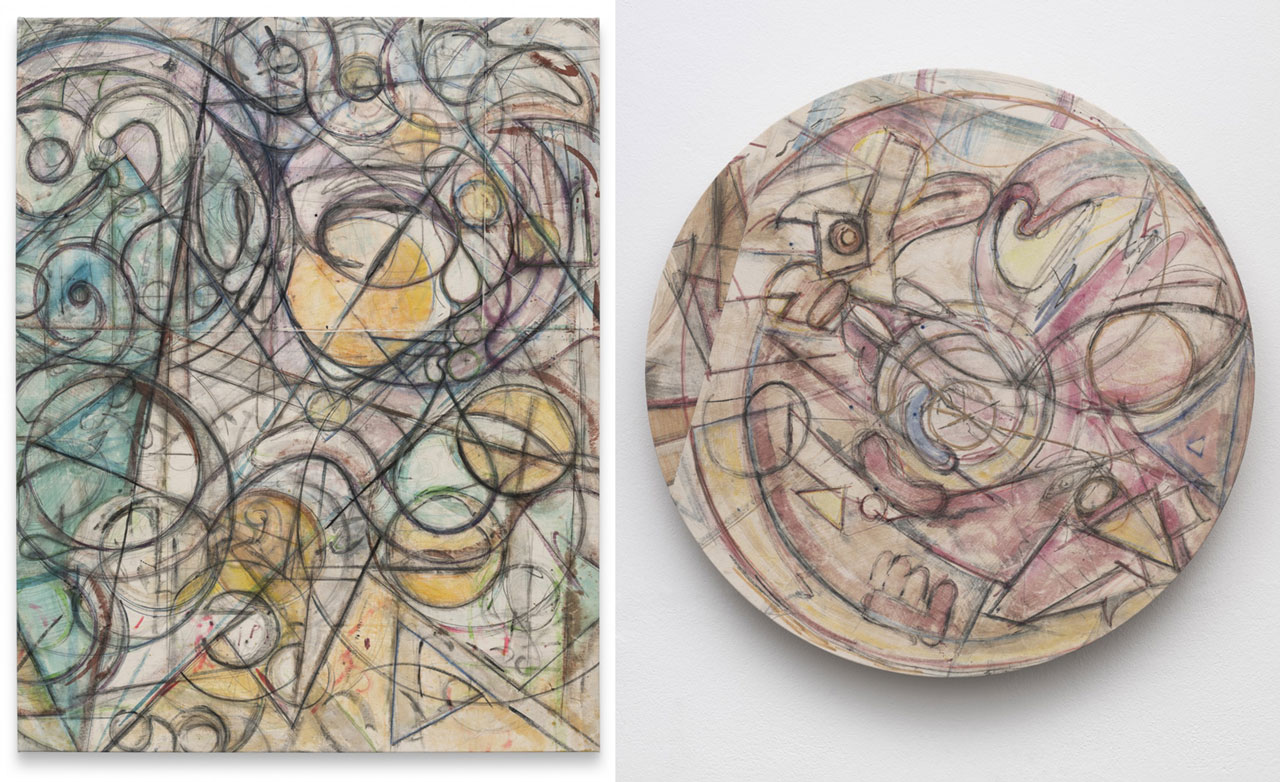
Right: J. Parker Valentine, Untitled Wheel, 2026, graphite, ink, water soluble colored pencil, water soluble pastel, marker, beet juice, 124.5 cm diameter, © J. Parker Valentine, Courtesy the artist and Galerie Max Mayer
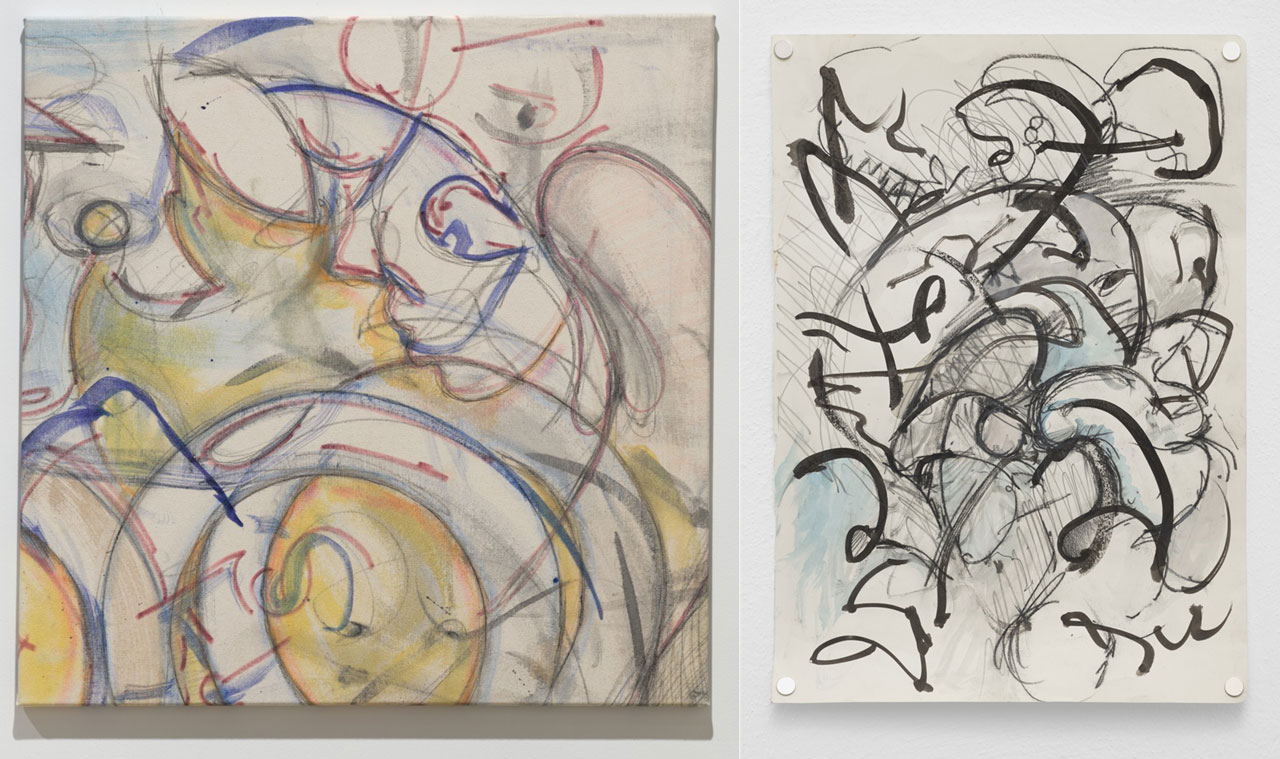
Right: J. Parker Valentine, Untitled, 2026, graphite, ink, milk paint, 41.5 x 29.5 cm, © J. Parker Valentine, Courtesy the artist and Galerie Max Mayer