PHOTO:Martin Parr-We Are Martin Parr
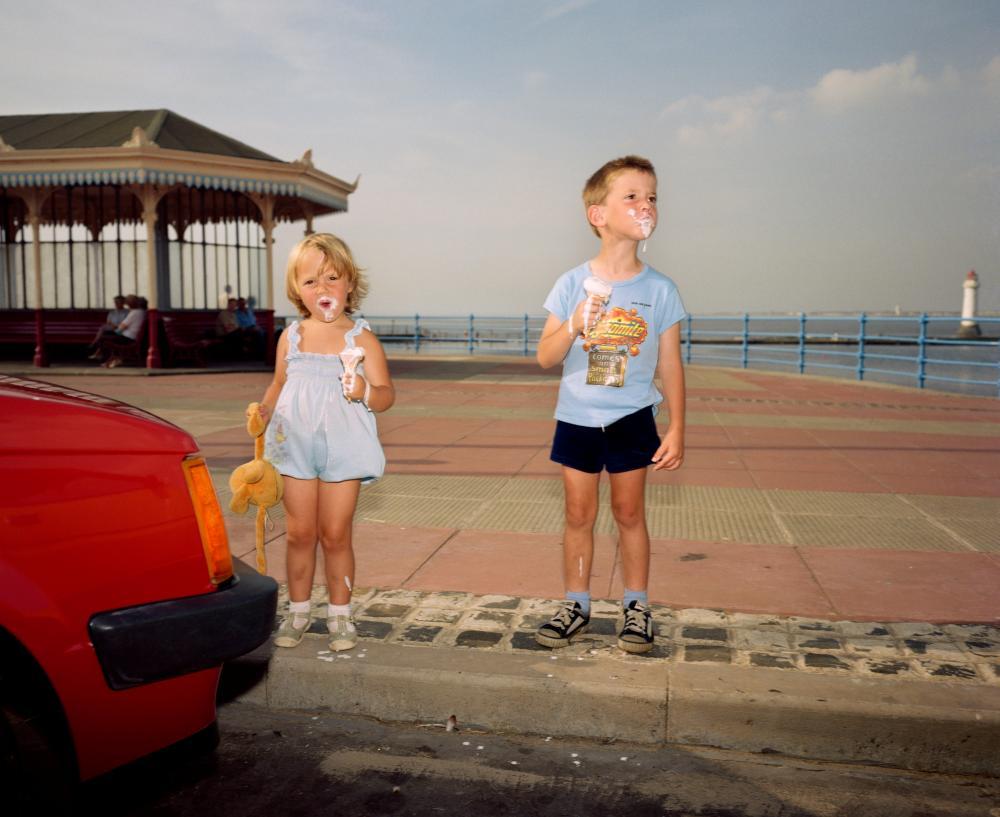
In a world saturated with vivid images, exaggerated colors, and carefully constructed visual narratives, the photography of Martin Parr remains remarkably relevant. The intense colors, close-up perspectives, and seemingly ordinary scenes that define his work have become familiar visual codes of contemporary culture, appearing daily in advertising, social media feeds, and travel photography. Yet decades before these aesthetics became widespread, Parr was already examining how people consume, perform, and represent their lives through images.
By Dimitris Lempesis
Photo: SEMA Archive
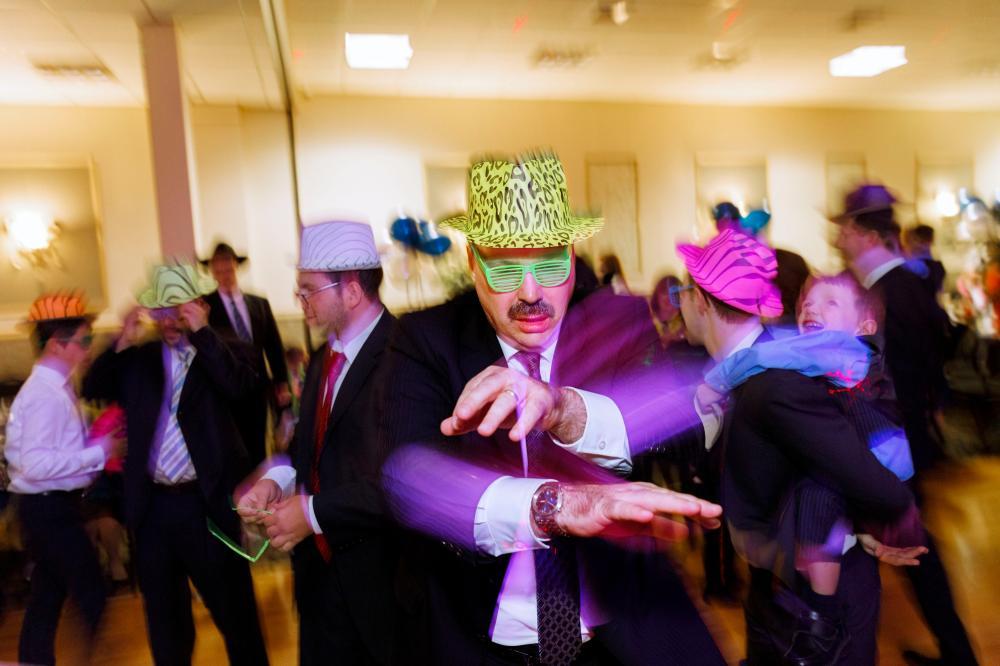
Through his sharp eye, distinctive humor, and uncompromising attention to everyday details, Parr transformed the overlooked moments of daily existence into a vast portrait of contemporary society. His photographs reveal not extraordinary events, but ordinary experiences: tourists posing for photographs, families enjoying vacations, shoppers moving through supermarkets, crowds gathering at sporting events, and people eating, relaxing, and displaying themselves in public spaces.
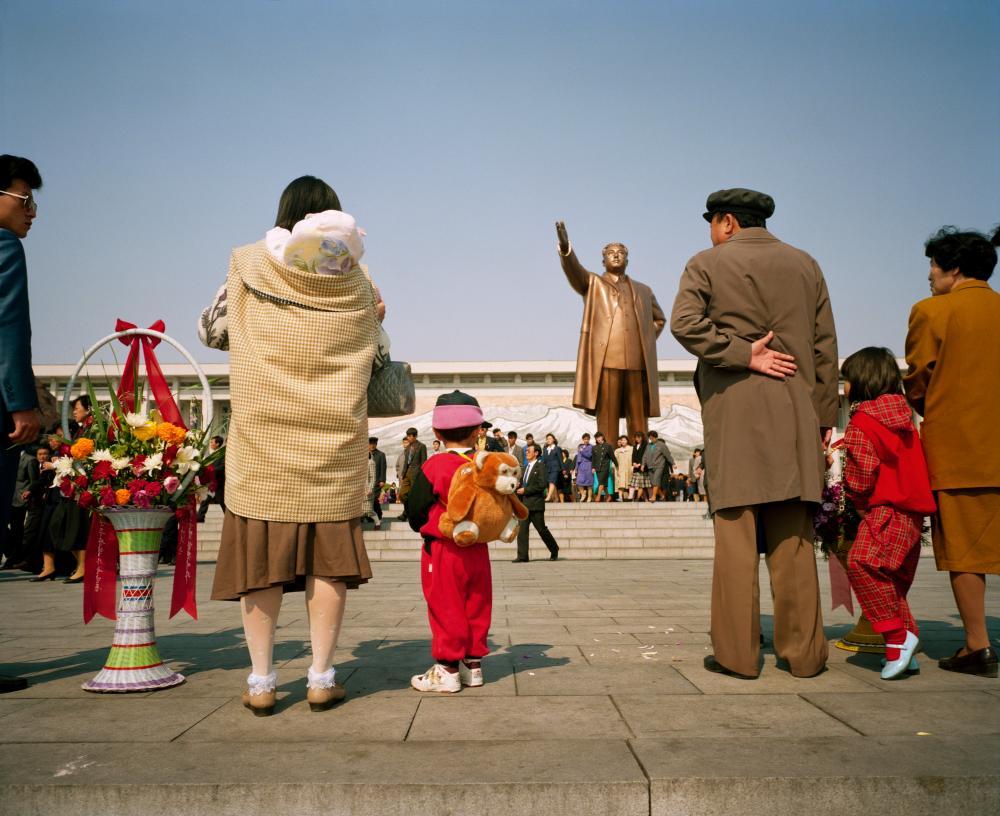
The exhibition “Martin Parr: We Are Martin Parr” presents a comprehensive exploration of the photographer’s career, bringing together fourteen major photographic series, more than 500 works, and the complete collection of his 89 published photobooks. As the first major retrospective of Parr held in Asia following his passing, the exhibition highlights the extraordinary scope of his practice, from his early black-and-white documentary photography to his later experiments with saturated color and large-scale social observation. It also includes his photographs taken during visits to North and South Korea between the late 1990s and early 2000s, offering further insight into his global exploration of contemporary life.
A member of the internationally renowned photographic collective Magnum Photos, Martin Parr has spent more than five decades documenting the visual habits and social rituals of contemporary society. Unlike traditional documentary photographers who often focus on moments of crisis, political events, or dramatic human experiences, Parr turned his attention toward the seemingly insignificant scenes that define everyday existence.
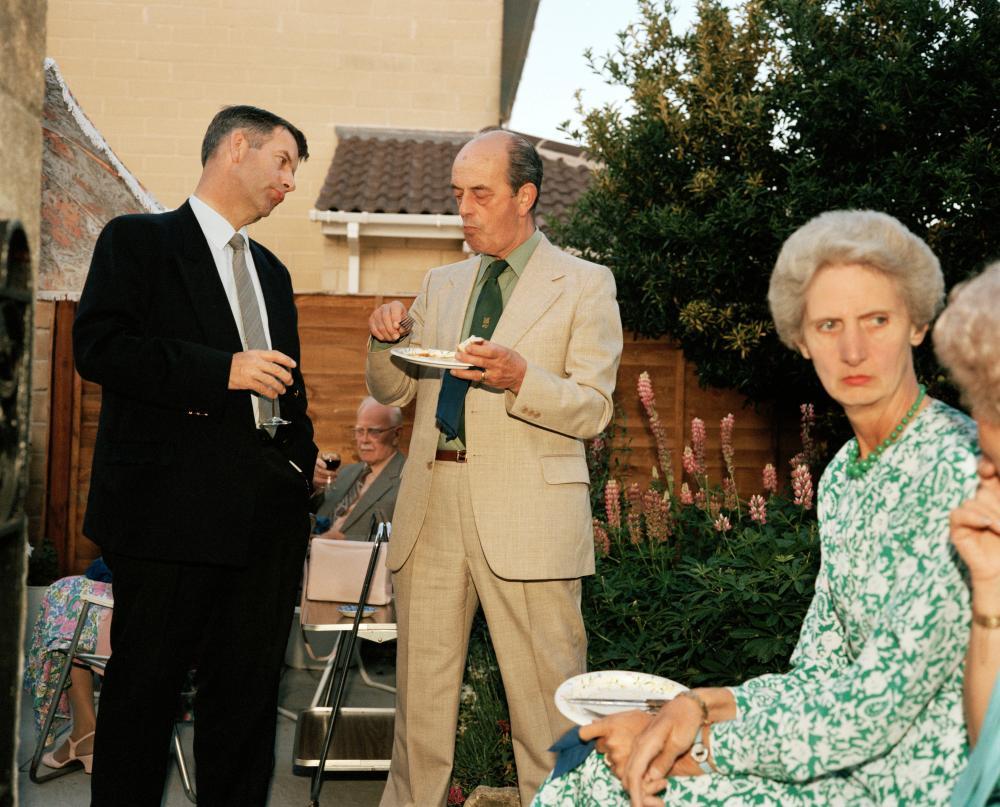
His subjects are rarely famous individuals or historical figures. Instead, they are ordinary people encountered in ordinary places: holidaymakers on crowded beaches, visitors at tourist attractions, consumers surrounded by products, and individuals carefully presenting themselves before the camera.
Born in England in 1952, Parr developed a photographic language that examined the transformation of society during the late twentieth century, particularly the growth of consumer culture and international tourism from the 1980s onward. As affordable travel, mass consumption, and image-making technologies reshaped everyday behavior, Parr documented the ways people interacted with these new social realities.
His photographs became a visual archive of a world increasingly defined by experiences of leisure, consumption, and self-presentation.
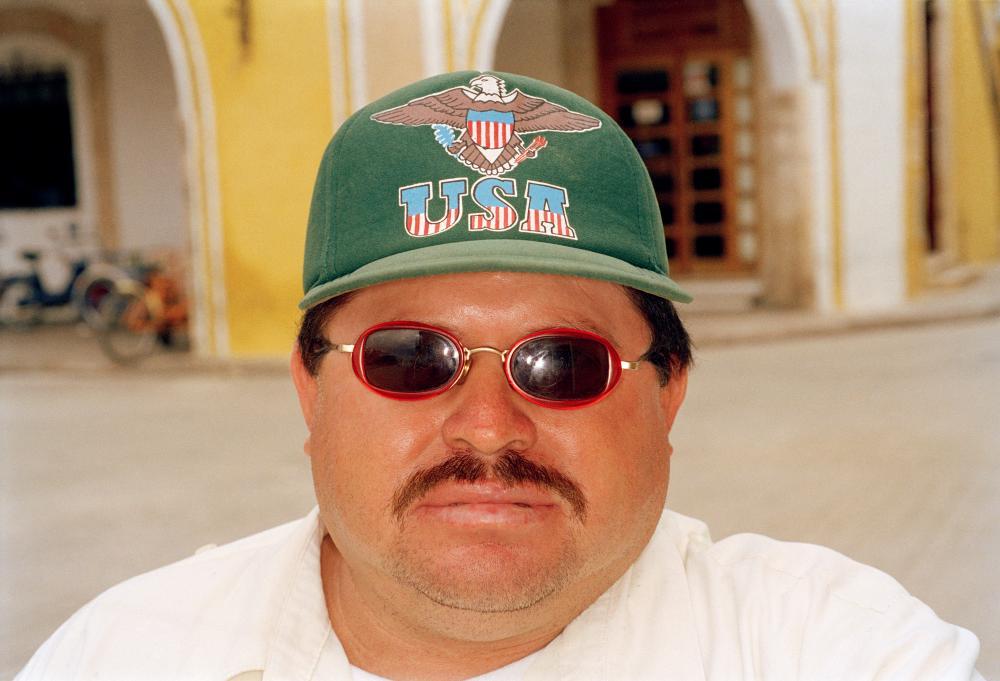
Martin Parr’s photography is often described as humorous, ironic, or even satirical. His exaggerated colors, awkward compositions, and close-up views can reveal the absurdity of contemporary habits. A tourist’s carefully staged vacation photograph, a crowded restaurant table filled with food, or a shopper surrounded by consumer goods may appear comical when isolated within Parr’s frame.
However, reducing his work to simple criticism of consumer society overlooks the complexity of his approach.
Parr does not photograph his subjects from a distant position of judgment. Instead, he moves physically and psychologically close to them. His camera enters their spaces, observes their gestures, and captures moments of vulnerability, pleasure, vanity, and desire. The people in his photographs are not presented as objects of ridicule; they are participants in the same cultural systems that shape all of our lives.
His photographs reveal a shared human condition: the desire to enjoy, to belong, to remember experiences, and to create images of ourselves for others.
Through this intimate perspective, Parr transforms everyday behavior into a form of social portraiture. His photographs ask viewers to consider not only what they are seeing, but also their own relationship to the scenes before them.
One of Parr’s most recognizable contributions to contemporary photography is his use of intense color. Beginning in the 1980s, he embraced color photography at a time when black-and-white imagery was still strongly associated with serious documentary traditions.
His use of highly saturated colors was revolutionary. Bright reds, deep blues, artificial greens, and exaggerated skin tones created images that felt simultaneously familiar and strangely unreal. The colors did not simply record reality; they intensified it, exposing the visual excess of contemporary consumer culture.
This approach reflected the changing image environment of the late twentieth century, when advertising, television, and commercial photography increasingly shaped how people saw the world. Parr adopted these visual strategies while transforming them into a critical and artistic language of his own.
His photographs often appear almost too vivid to be real, yet they reveal precisely the reality of a world increasingly experienced through images.
Although Parr’s work is deeply connected to British society, his photographic investigations have always been international. He traveled extensively, documenting similarities and differences in the ways people around the world consume, celebrate, and represent themselves.
His photographs of the Korean peninsula, taken during visits in the late 1990s and early 2000s, demonstrate this global perspective. As in his other projects, Parr focused not on political narratives but on everyday encounters: public spaces, social rituals, leisure activities, and moments of ordinary life.
By observing different cultures through the same attentive gaze, Parr reveals both the diversity and the shared patterns of contemporary experience. Across continents, people engage in similar acts of consumption, tourism, celebration, and self-documentation.
In today’s era of artificial intelligence, algorithmically generated imagery, and endlessly refined digital photographs, Parr’s work takes on renewed significance. His photographs resist perfection. They embrace accidents, awkwardness, excessive details, and moments that would traditionally be considered insignificant.
Rather than creating idealized images, Parr focuses on the imperfect reality of human experience.
His photographs preserve the physical presence of photography itself: the encounter between photographer and subject, the unpredictability of the moment, and the material reality of the captured image. They remind viewers that photography is not only about producing beautiful pictures—it is also about observing, questioning, and understanding the world.
At a time when images are increasingly smooth, controlled, and artificial, Parr’s photographs celebrate the unpredictable and imperfect nature of everyday life.
The enduring power of Martin Parr’s photography lies in its ability to transform the familiar into something strange and revealing. His images encourage viewers to reconsider scenes they might normally ignore: a crowded beach, a family meal, a shopping aisle, a tourist attraction.
The people within his photographs are not distant subjects. They are reflections of contemporary society—and of ourselves.
We recognize their gestures, their desires, their habits, and their relationship with images because we participate in the same visual culture. We consume, photograph, share, and present ourselves constantly. Parr’s camera observes these behaviors with humor and curiosity, but also with a sense of recognition.
His photographs raise a fundamental question: are we merely looking at these scenes from the outside, or are we already part of them? Martin Parr’s work does not offer easy answers. Instead, it invites us to look again—to examine the ordinary moments that surround us and discover within them the complexities of modern life. His photography reminds us that the everyday is never truly ordinary; it is where society reveals itself most clearly.
Photo: Martin Parr, New Brighton, England, 1983-85 ⓒ Martin Parr / Magnum Photos
Info: Curator: Hyunjung Son, Assistant Curators: Minhoon Lee and Yubin Song, Photography Seoul Museum of Art, 68, Madeul-ro 13-gil, Dobong-gu, Seoul, South Korea, Duration: 16/7-18/1082026, Days & Hours: Tue-Fri 10:00-18:00, Sat-Sun 1000-19:00, https://sema.seoul.go.kr/