PRESENTATION: Alexandra Grant-One star is enough to believe in the light
Alexandra Grant explores of the use of text and language in various media—painting, drawing, sculpture, film, and photography—probes ideas of translation, identity, dis/location, and social responsibility. Grant regularly collaborates with other artists, writers, and philosophers, resulting in creations that embody the synergy between words and visuals.
By Efi Michalarou
Photo: Neues Museum Archive
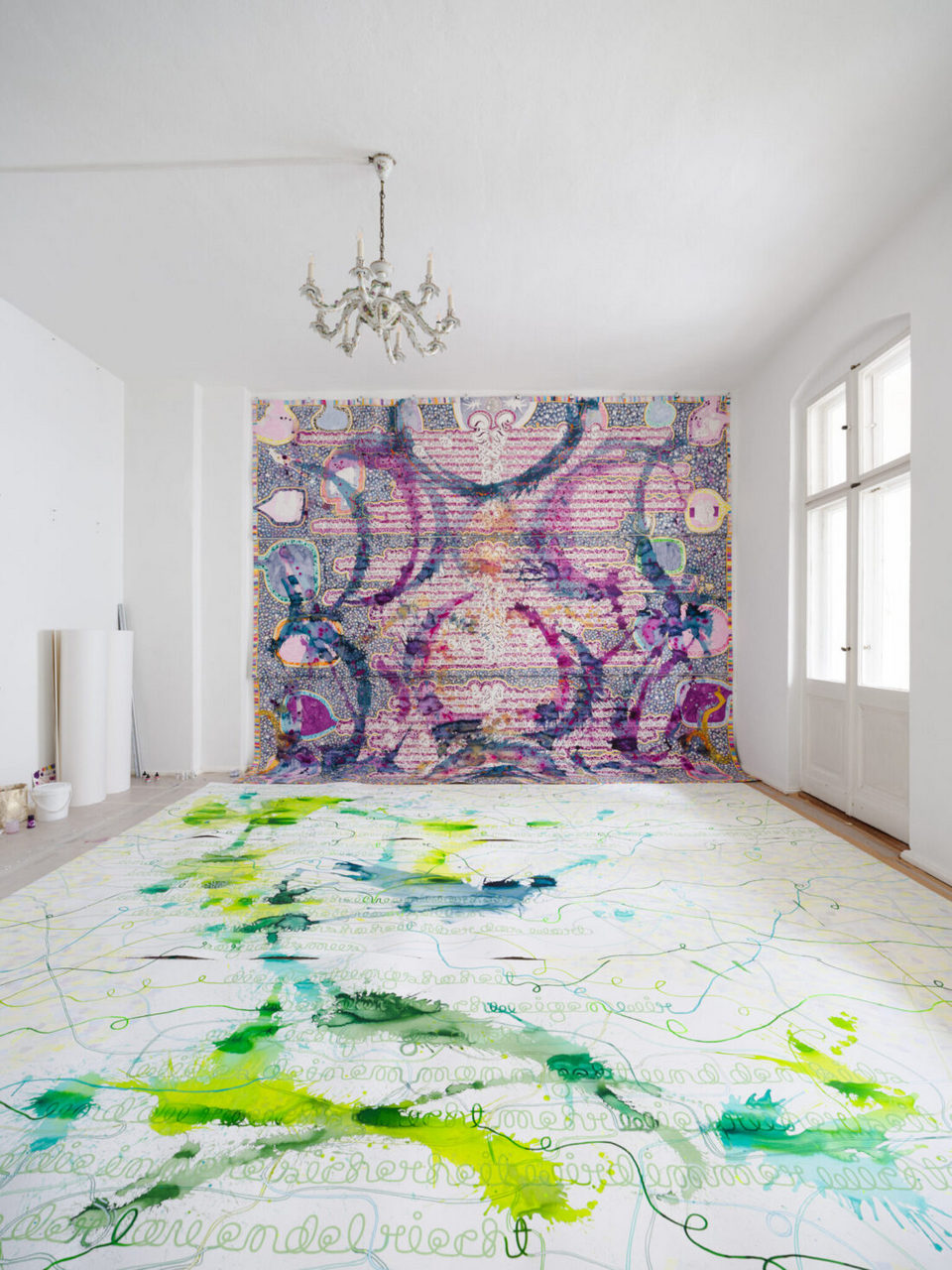
Alexandra Grant presents her first solo museum exhibition in Germany, “Ein Stern genügt, um an das Licht zu glauben” (One Star Is Enough to Believe in the Light). Bringing together painting, printmaking, and literature, the exhibition transforms the written word into a visual language, exploring how ideas travel across borders of language, culture, history, and identity. The exhibition marks a significant moment in Grant’s ongoing investigation into the relationship between text and image.
Grant’s eight monumental paintings created for the exhibition are inspired by eight women writers whose lives and works reveal the power of language to challenge social structures and create new forms of visibility. Four of the selected writers have direct connections to Nuremberg: medieval mystic and author Christina Ebner (1277–1356), Baroque writer Maria Catharina Stockfleth (1633–1692), novelist Gisela Elsner (1937–1992), and contemporary poet Pauline Füg (born 1983). Their inclusion places the exhibition within the literary history of a city long associated with the circulation of knowledge, books, and ideas.
The other writers represented in Grant’s works extend this dialogue beyond geography. They include French feminist theorist and novelist Hélène Cixous, German-Turkish author Fatma Aydemir, writer Rasha Khayat, and novelist and playwright Olivia Wenzel. Across different generations and cultural backgrounds, these authors examine questions of belonging, memory, gender, migration, violence, and personal freedom. Their writings become the starting point for Grant’s visual compositions, where fragments of language are transformed into layered fields of color, movement, and meaning.
Literature has always been central to Grant’s artistic practice. Rather than treating text as a fixed object contained within a book, she approaches writing as a living material that can be reshaped, fragmented, and experienced visually. This approach reflects her role as co-founder of the independent publishing house X Artists’ Books, which focuses on collaborations between artists, writers, and thinkers. Through both publishing and visual art, Grant examines who is given a platform and whose voices have historically been overlooked.
The focus on women writers is therefore fundamental to the exhibition. For centuries, literary and artistic histories have often been shaped around the achievements of men, while women’s contributions were minimized or excluded. Grant’s project responds to this imbalance by highlighting writers who created influential bodies of work despite social, political, or cultural barriers.
The exhibition’s title—”One Star Is Enough to Believe in the Light”—expresses this idea of persistence and hope. The selected authors do not ignore experiences of oppression, including racial and sexual violence, discrimination, and restrictive gender expectations. Instead, their writing demonstrates resilience: the ability to imagine alternatives, claim space, and create new possibilities through language.
A recurring theme in Grant’s work is translation—not only between languages but also between cultures, identities, and artistic forms. Many of the writers she selected exist between linguistic worlds. Some write in German while having grown up multilingual; others use German as a literary language while exploring other cultural or linguistic experiences.
This theme resonates deeply with Grant’s own biography. Raised between the United States, Mexico, and France, she has long considered questions of cultural belonging and communication central to her artistic thinking. Her works often incorporate text in multiple languages, challenging the idea that a person’s identity can be defined by a single “native” language.
By presenting language as fluid rather than fixed, Grant emphasizes the role of translation in shaping how literature is received. Translation becomes not merely a technical process but an act of interpretation, transformation, and exchange.
For the eight works produced specifically for the exhibition, Grant draws inspiration from Nuremberg’s historic role as a major center of printing and publishing. The city’s connection to the development of the book provides an important backdrop for her combination of digital processes, screen printing, and painting.
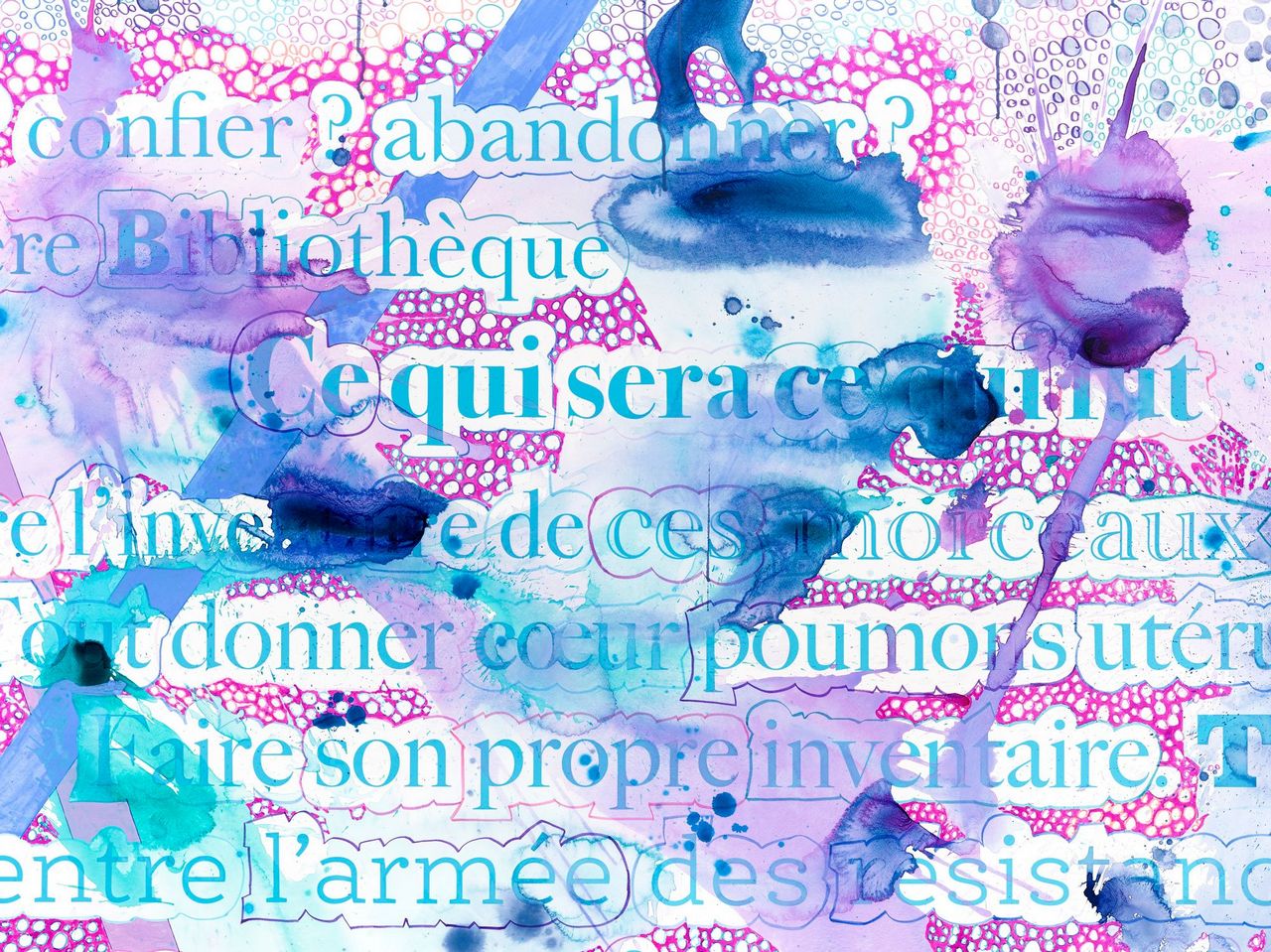
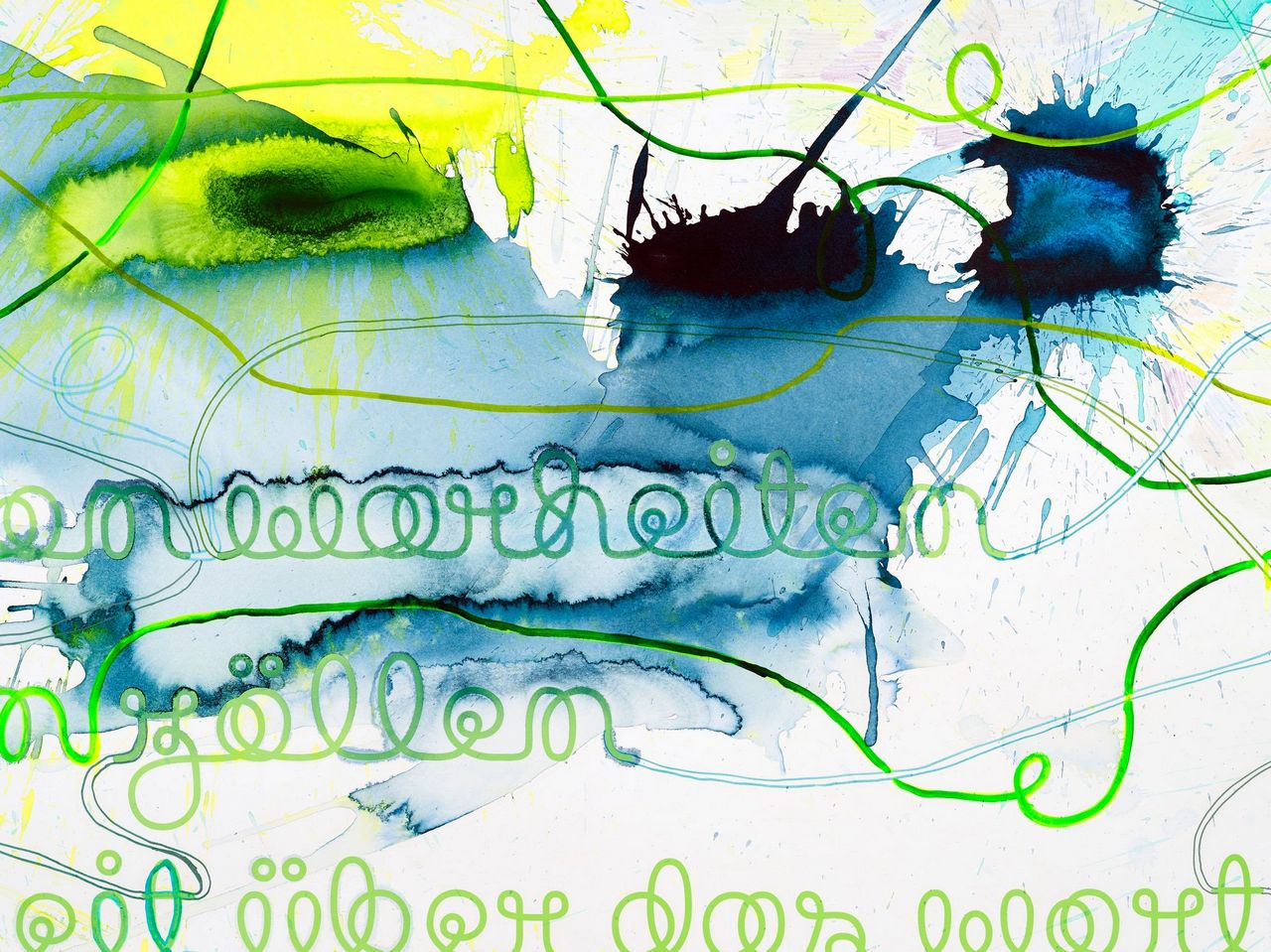
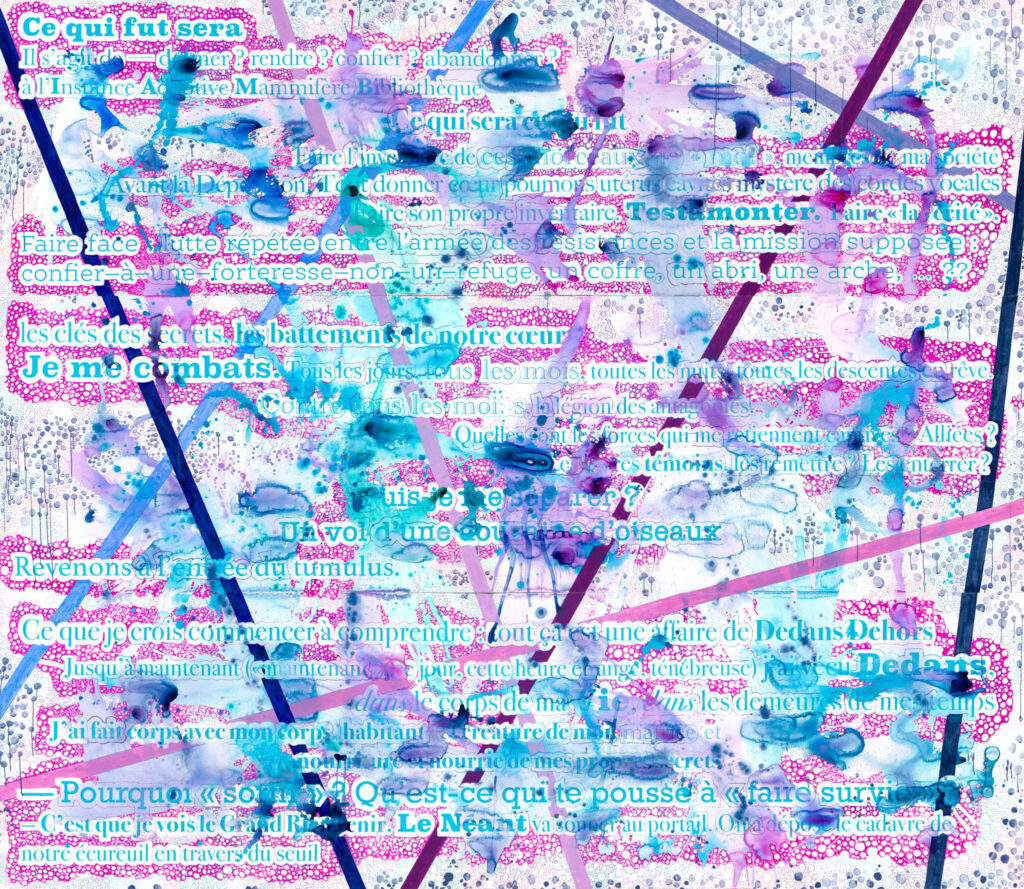
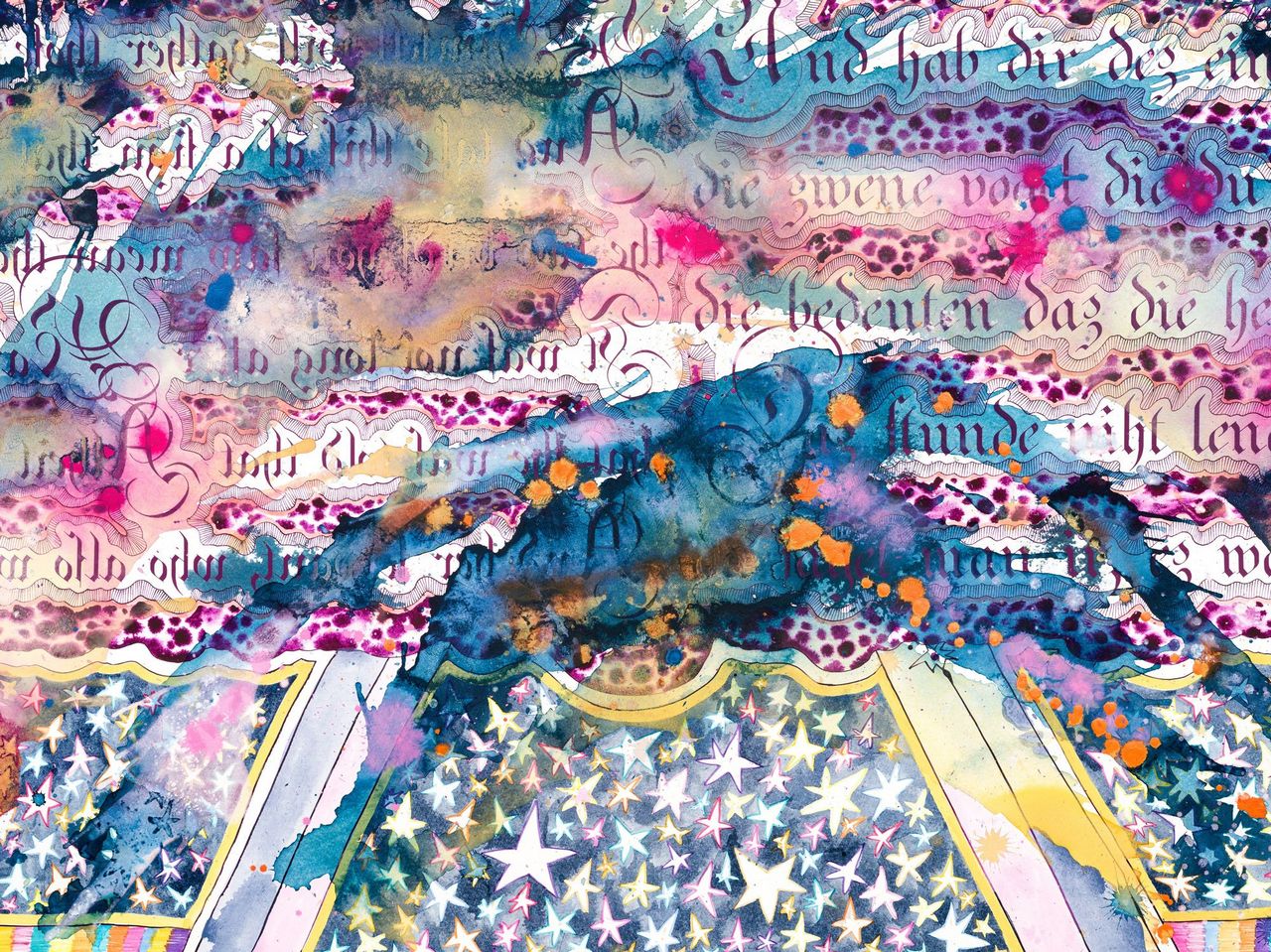
Grant begins by selecting excerpts from the writers’ texts, working either directly with living authors or through historical archives. She digitally alters these passages, manipulating typography by stretching, compressing, mirroring, and rearranging the words. These transformed texts are then transferred through screen printing onto large sheets of paper.
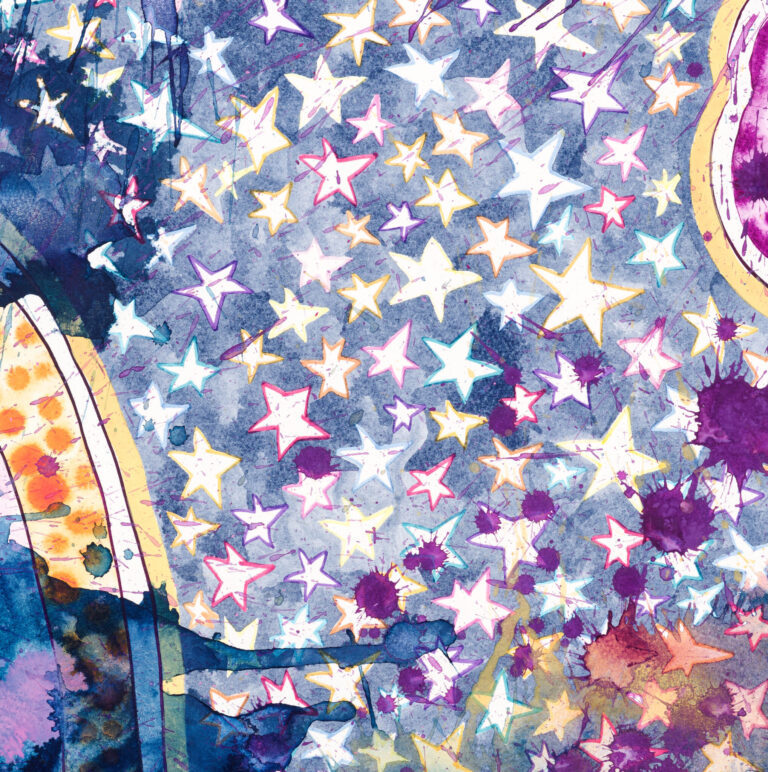
The printed language becomes the foundation for layers of acrylic paint, vivid inks, pencil marks, and paint-marker lines. Rather than simply illustrating the texts, Grant enters into a visual conversation with them. Words may disappear beneath layers of color, while others emerge with renewed emphasis. The result exists somewhere between painting and reading: an artwork that invites viewers to see language as both image and meaning.
Through “One Star Is Enough to Believe in the Light”, Grant creates a space where historical voices meet contemporary concerns. Medieval religious writing, Baroque literature, feminist theory, migration narratives, and modern German fiction all become part of a shared conversation about expression and visibility.
The exhibition also reflects the changing role of museums themselves: no longer simply places where established histories are preserved, but spaces where overlooked perspectives can be reconsidered. By bringing women writers into dialogue with visual art, Grant expands the traditional boundaries of both painting and literature.
At its heart, the exhibition asks a simple but profound question: who gets to be heard? Alexandra Grant’s answer is found in the act of bringing words into view. A single voice, a single text, or even a single star can illuminate a larger landscape.
Photo: Alexandra Grant, Le Dedan Dehors, (The Inside Outside, after Helene Cixous’s Ce qui n’était jamais arrivé, 2025), 2026. Silk screen, colored pencil, marker, acrylic paint, acrylic ink and sumi ink on paper. 390 x 450 cm, © Alexandra Grant and carlier gebauer
Info: Neues Museum – State Museum for Art and Design in Nuremberg, Klarissenplatz, Nuremberg, Germany, Duration: 17/7-11/10/2026, Days & Hours: Tue-Wed & Fri-Sun 10:00-18:00, Thu 10:00-20:00, htwww.nmn.de/