
PREVIEW: Mari Nagem-The Tropics, The Moon, and Mars
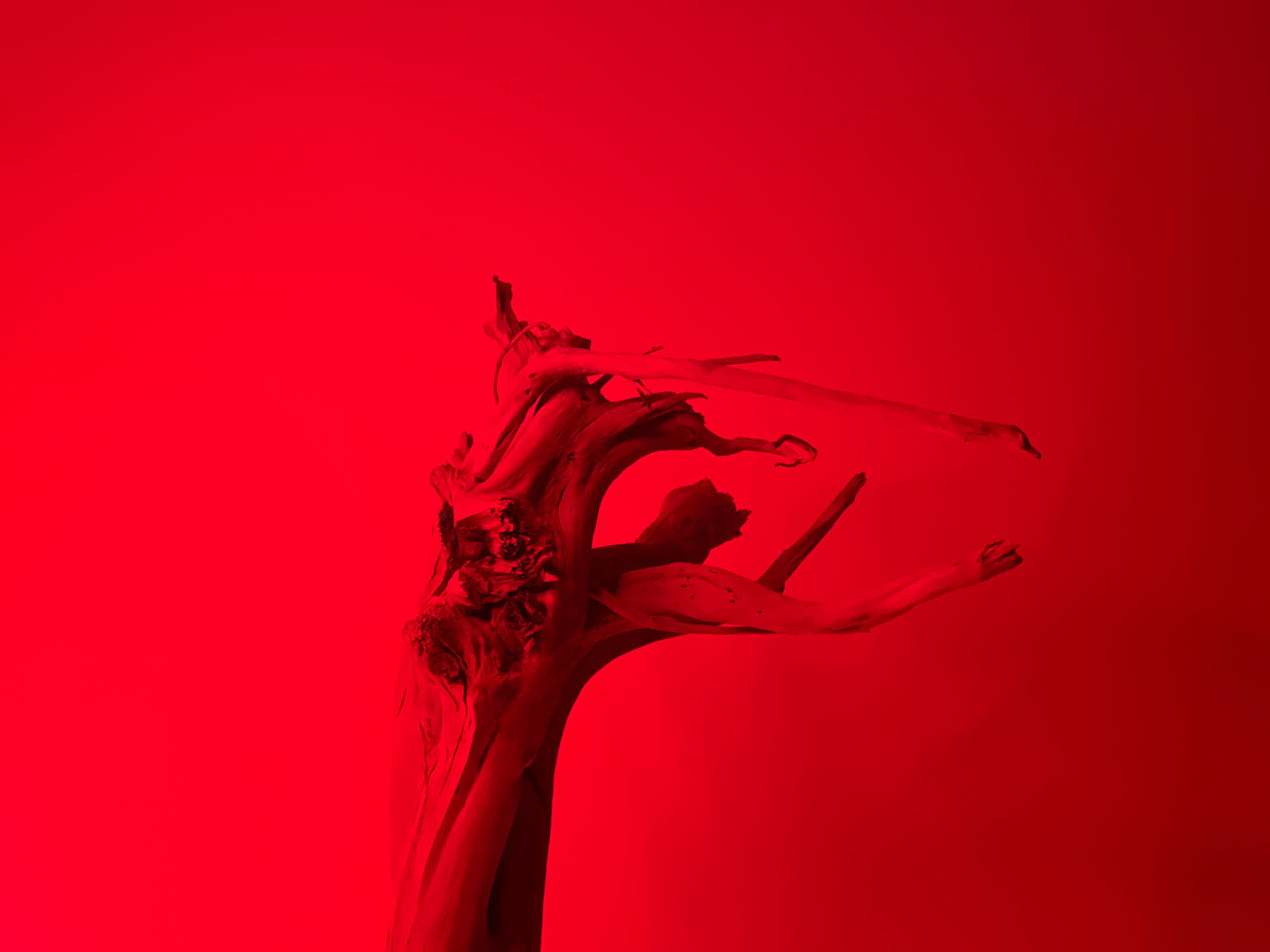
Mari Nagem’s first New York solo exhibition, “The Tropics, The Moon, and Mars”, presented at CUE Art Foundation, transforms the gallery into a speculative ecosystem where tropical landscapes, planetary exploration, digital systems, and geological time collapse into one another. Through an immersive installation combining light, sound, sculpture, painting, and digital experimentation, Nagem constructs what might be described as a post-natural environment: a place where the boundaries between organic life, technological systems, and artificial landscapes become increasingly unstable.
By Efi Michalarou
Photo: CUE Art Foundation Archive
“The Tropics, The Moon, and Mars” is an immersive installation that unites light, sound, sculpture, painting, and digital experiments. Mari Nagem constructs a post-natural tropical environment in which heat reorganizes relationships between bodies, technologies, geological formations, and living systems. The tropics appear as climate, home, and projection: a lived geography shaped by extraction, ecological transformation, and a long history of being imagined from elsewhere.
The exhibition originates from a simple yet unsettling proposition: humanity dreams of becoming an interplanetary species while remaining unable to live collaboratively with the terrestrial ecologies it already inhabits. Rather than presenting planetary expansion as technological triumph, Nagem considers how fantasies of the Moon and Mars extend the same logics that have long shaped extractive relationships on Earth. The three locales of the exhibition title become less distinct destinations than overlapping terrains through which to reconsider survival, adaptation, and coexistence.
Through the works, scientific knowledge is translated into material propositions. Data serves as landscape; research infrastructure is imagined as domestic architecture; geological formations resemble bodies; synthetic objects take on natural qualities of minerals, branches, and nests. In the work, Nagem approaches scientific research as transformative subtext, allowing empirical observation and speculative imagination to coexist within the same environment.
The exhibition opens with works that establish this conceptual framework. In “space analog”, a stainless-steel surface shifts between the functions of bed, table, workstation, and platform over the course of the exhibition. Its form exemplifies embodied research conducted at the University of Arizona’s Biosphere 2, where researchers developed adaptable furnishings for simulated lunar and Martian habitation. “tropics | moon | mars | ES”, a data painting generated through Google Ngram Viewer maps the appearance of these three place-constructs across Spanish-language literature, producing a terrain in which linguistic frequency becomes geological landscape. Together, these works position scientific inquiry, language, and everyday life as overlapping systems through which worlds are imagined and constructed.
Deeper into the gallery, natural light gives way to a saturated world of red-orange. Distinct orbital environments are populated by forms adapted to an unfamiliar climate. In “pássaros rodantes” (whirlybirds),
a yet untraced family artifact of birds carved from a tree trunk is transformed into a kinetic installation in which the figures move in reverse, evoking disrupted circadian rhythms, altered migration routes, and planetary cycles thrown out of alignment due to hyperheating. In another orbit, “ruínas ninhos”, ceramic sculptures embedded with mineral inclusions rest upon acrylic supports, suggesting futuristic ruins inspired by mining processes, mineral extraction, and the internal architecture of bird nests.
New ecological assemblages blur distinctions between organism and artifact, natural history and technological intervention. In “bouquet”, sawtooth oak from near the artist’s Brooklyn home and driftwood sourced from Marajó Bay in the Brazilian Amazon live alongside human-defined “invasive” plant species and plastic. This orbit serves as an offering and a symbol of human intervention; the act of editing, cutting, and shaping is made visible through selection and arrangement. In “à deriva (adrift)””, driftwood encrusted with stone and enamel is likewise an offering from the ocean, reminding us of the longevity and potency of geological time, and the relative brevity of human existence.
Several works draw directly from long-term environmental research conducted in Brazilian ecosystems. “flora futura (or the survival dance)” references the ESECAFLOR experiment developed by the Goeldi Museum and the Federal University of Pará in the Caxiuanã National Forest. Designed to simulate prolonged drought conditions, this longitudinal study investigates how the rainforest responds to sustained reductions in rainfall. Within the exhibition, Nagem transforms decades of scientific observation into speculative futures; research findings become a sensitive projection of precarious survival, where future flora and unfamiliar species emerge through adaptation rather than permanence.
Heat permeates every aspect of this environment. Synthetic light burns rather than tanning. Color functions as both climate and atmosphere. Bodies—human, vegetal, geological, and technological—search for new modes of communication and persistence within an increasingly arid landscape. Accompanied by a commissioned sound work from Mapuche-Brazilian musician Brisa Flow, the installation is a temporal and evolving choreography in which survival is neither guaranteed nor singular.
“The Tropics, The Moon, and Mars” resists imagining the future as either dystopian inevitability or technological salvation. Instead, Nagem considers how various systems and forms of knowledge—scientific, traditional, artistic, and material—might generate new ways of inhabiting worlds that are already undergoing profound ecological change. The exhibition compels us to consider where we are going next, and how different forms of life might continue together within altered conditions of heat, time, and planetary belonging.
Photo: Mari Nagem, Installation detail of à deriva (adrift), 2026. Driftwood, stone, enamel. 18 × 10 × 12 inches. Courtesy of the artist and CUE Art
Info: CUE Art Foundation, 137 West 25th Street, Ground Floor (Between 6th and 7th Avenues), New York, NY, USA, Duration: 11/7-26/9/2026, Days & Hours: Wed-Sat 11:00-18:00, https://cueartfoundation.org/
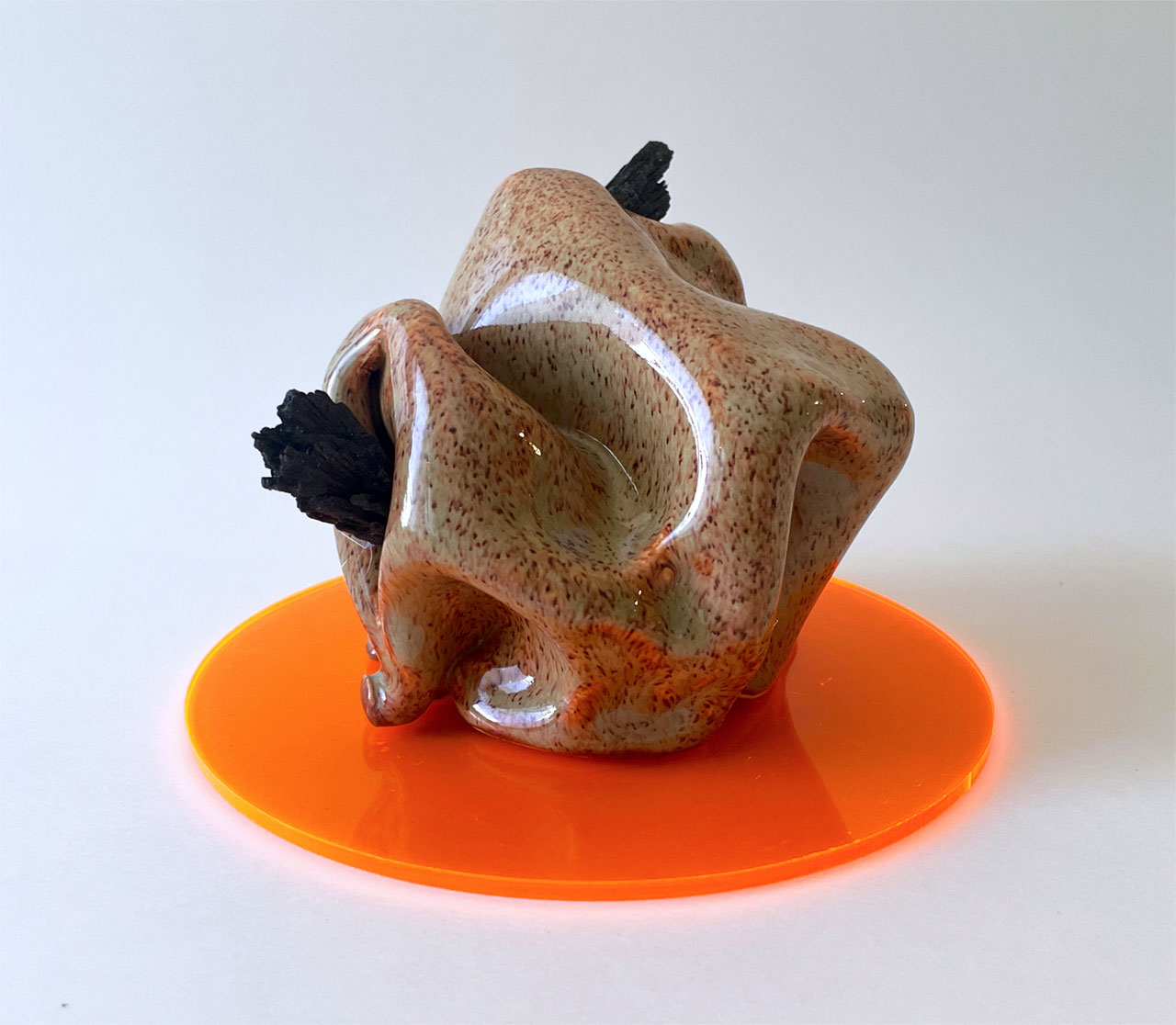
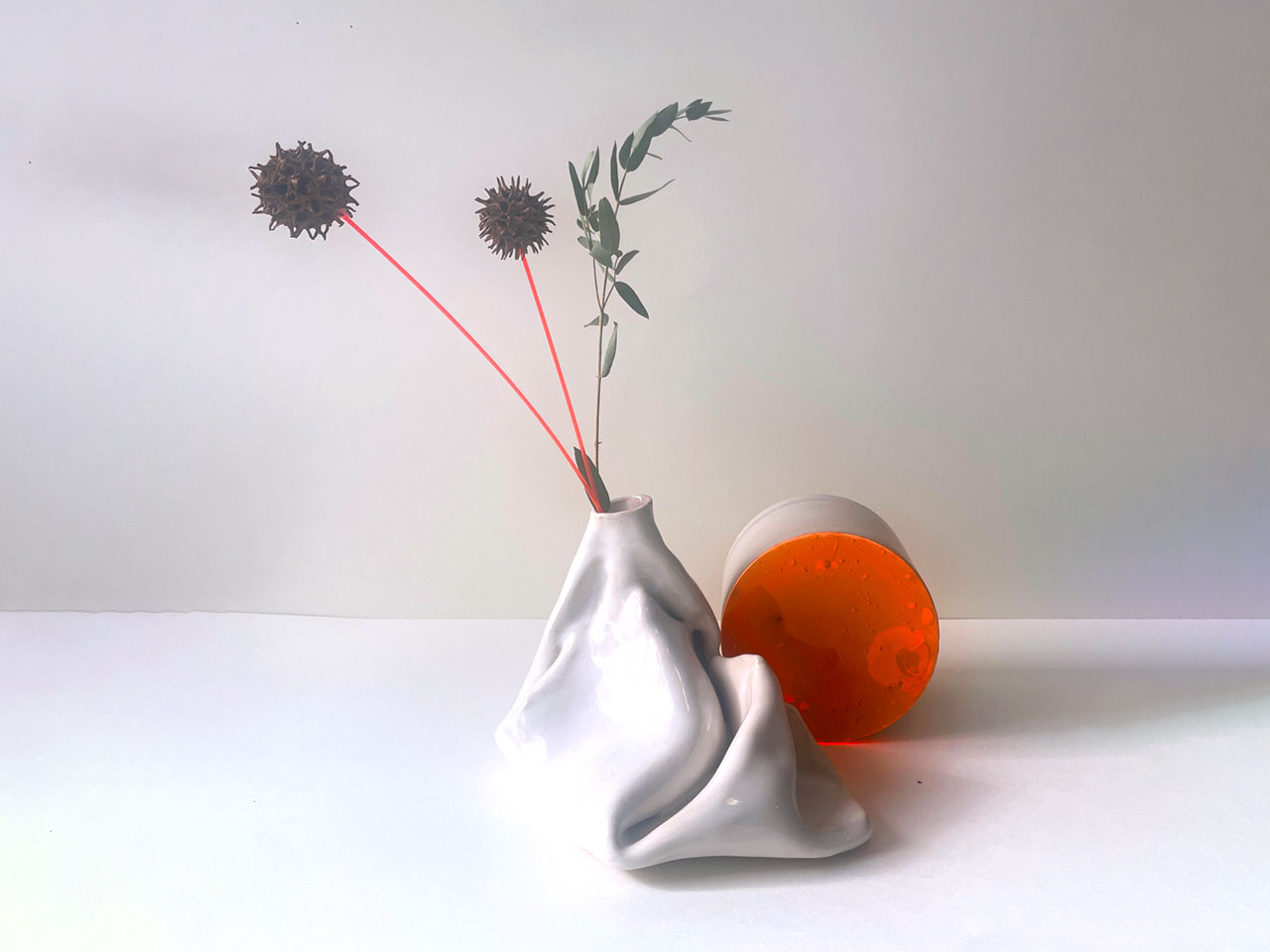
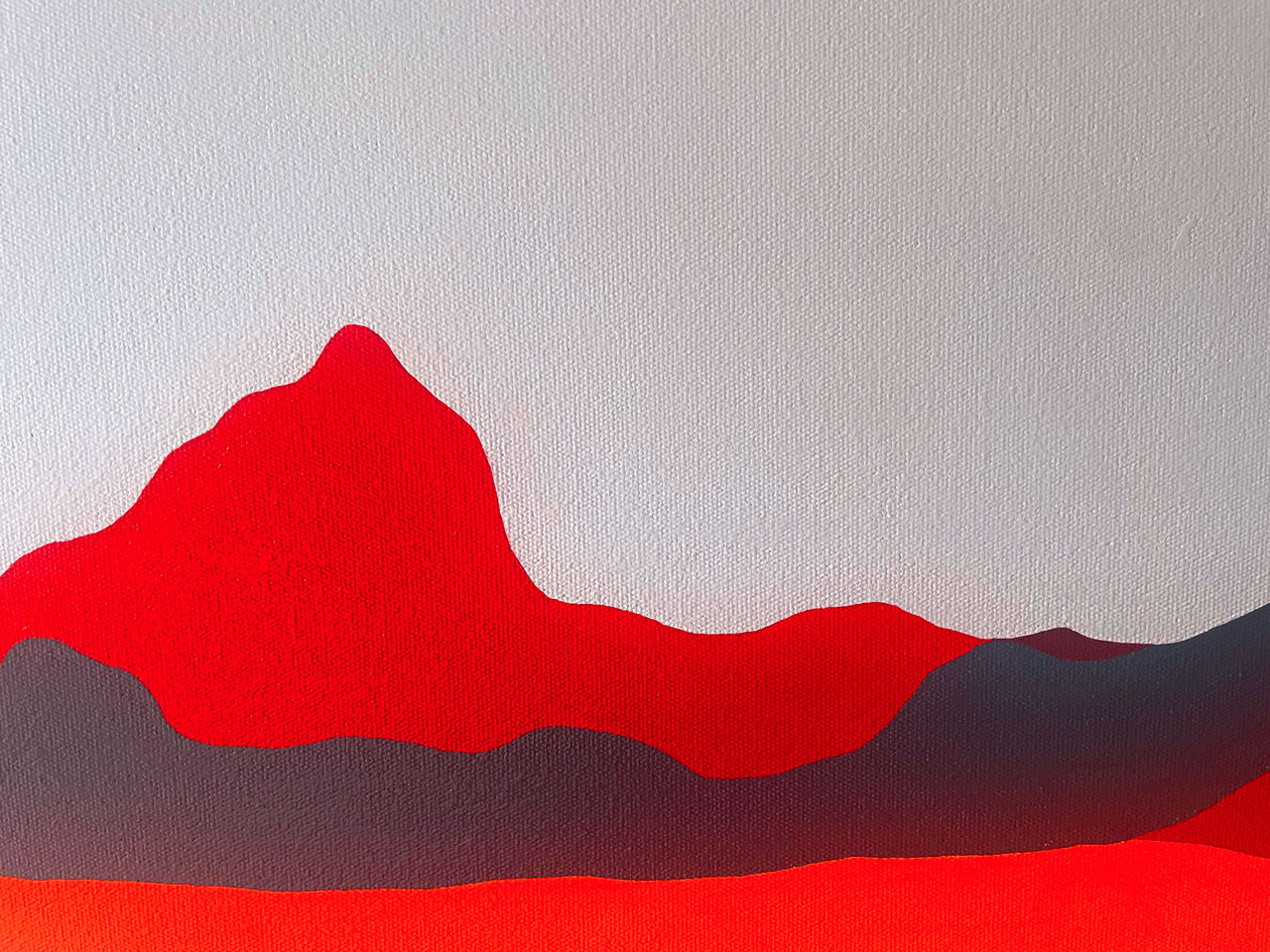
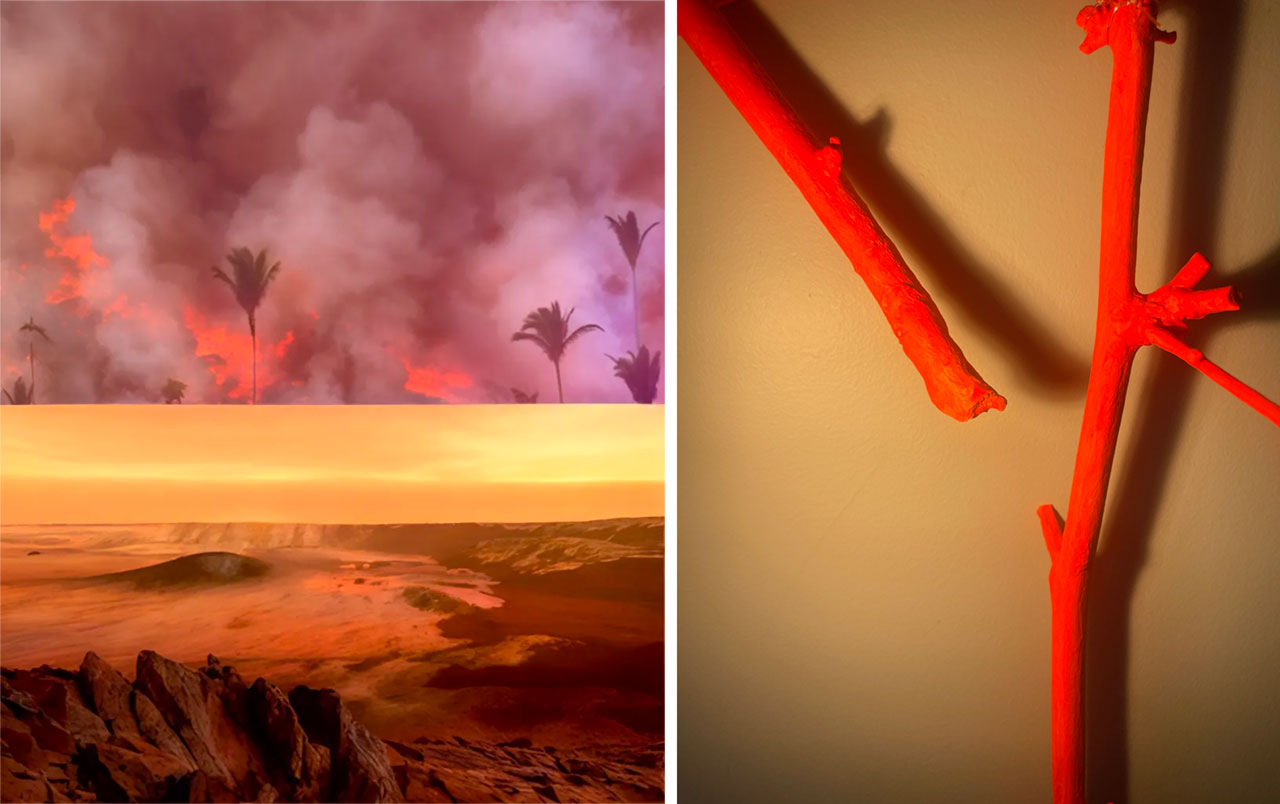
Right: Mari Nagem, Study for flora futura (or the survival dance), 2026. Branches, custom motors, neon light, sand; A work in direct dialogue with ESECAFLOR, a two-decade experiment by the Museu Goeldi and UFPA in Brazil’s Caxiuanã National Forest in Brazil that simulates extreme drought to study the resilience of the Amazon. Dimensions variable. Courtesy of the artist and CUE Art