PRESENTATION: Shirana Shahbazi=All at Once. An Interplay with Li Tavor
![Left: Shirana Shahbazi, [Stilleben-33-2009], 2009, C-print on aluminum, 150 × 120 cm, edition of 5 (+1 artist's proof, AP), courtesy of the artist and Galerie Peter Kilchmann, Zurich, Paris. Right: Shirana Shahbazi, Raum-Gelb-01, 2017, C-print on aluminum, 90 × 70 cm, edition of 5 (+1 artist's proof, AP), courtesy of the artist and Galerie Peter Kilchmann, Zurich, Paris.](http://www.dreamideamachine.com/web/wp-content/uploads/2026/07/01a.jpg)
Photography has long been associated with truth, documentation, and the faithful recording of reality. Yet few contemporary artists have challenged these assumptions as consistently and elegantly as Shirana Shahbazi. For more than three decades, the artist has transformed photography into a medium of perpetual reinvention, where images are neither fixed nor singular but become starting points for intricate spatial and conceptual investigations.
By Dimitris Lempesis
Photo: Kunstmuseum Luzern Arhive
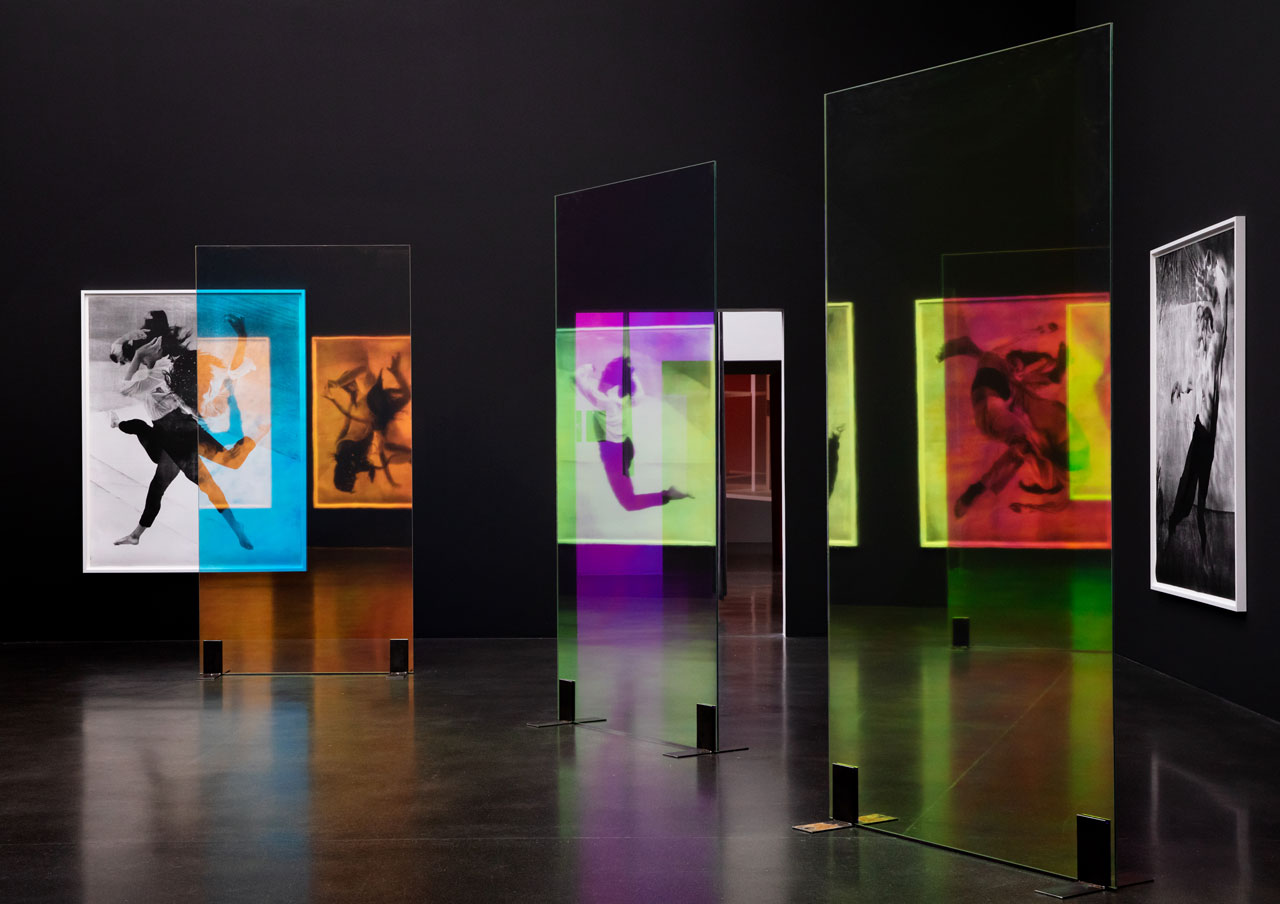
Shirana Shahbazi’s exhibition “All at Once. An Interplay with Li Tavor” presents one of the most comprehensive overviews of this evolving practice, bringing together works from different periods while introducing new installations and moving-image works that expand the dialogue between photography, architecture, sculpture, and perception.
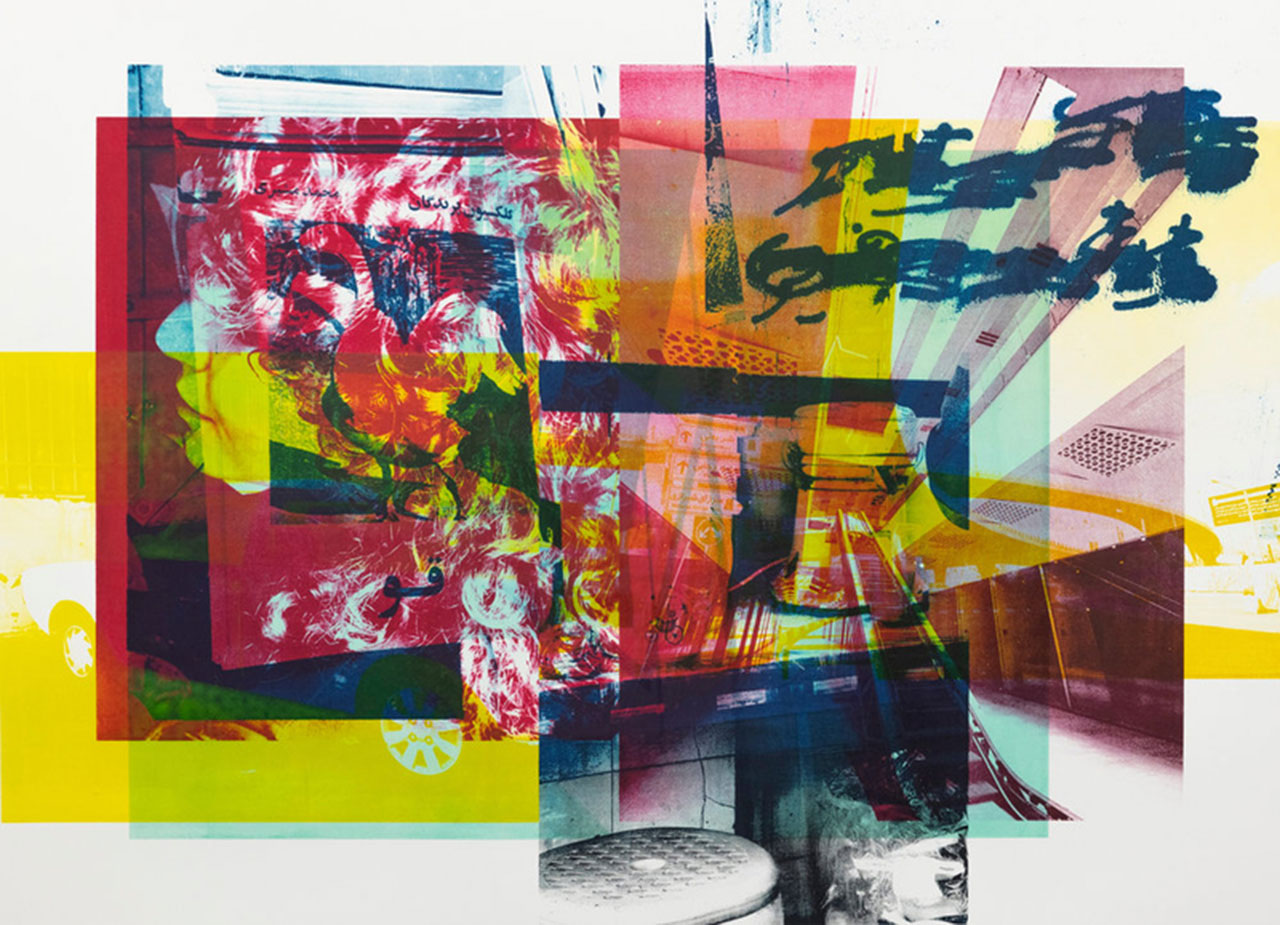
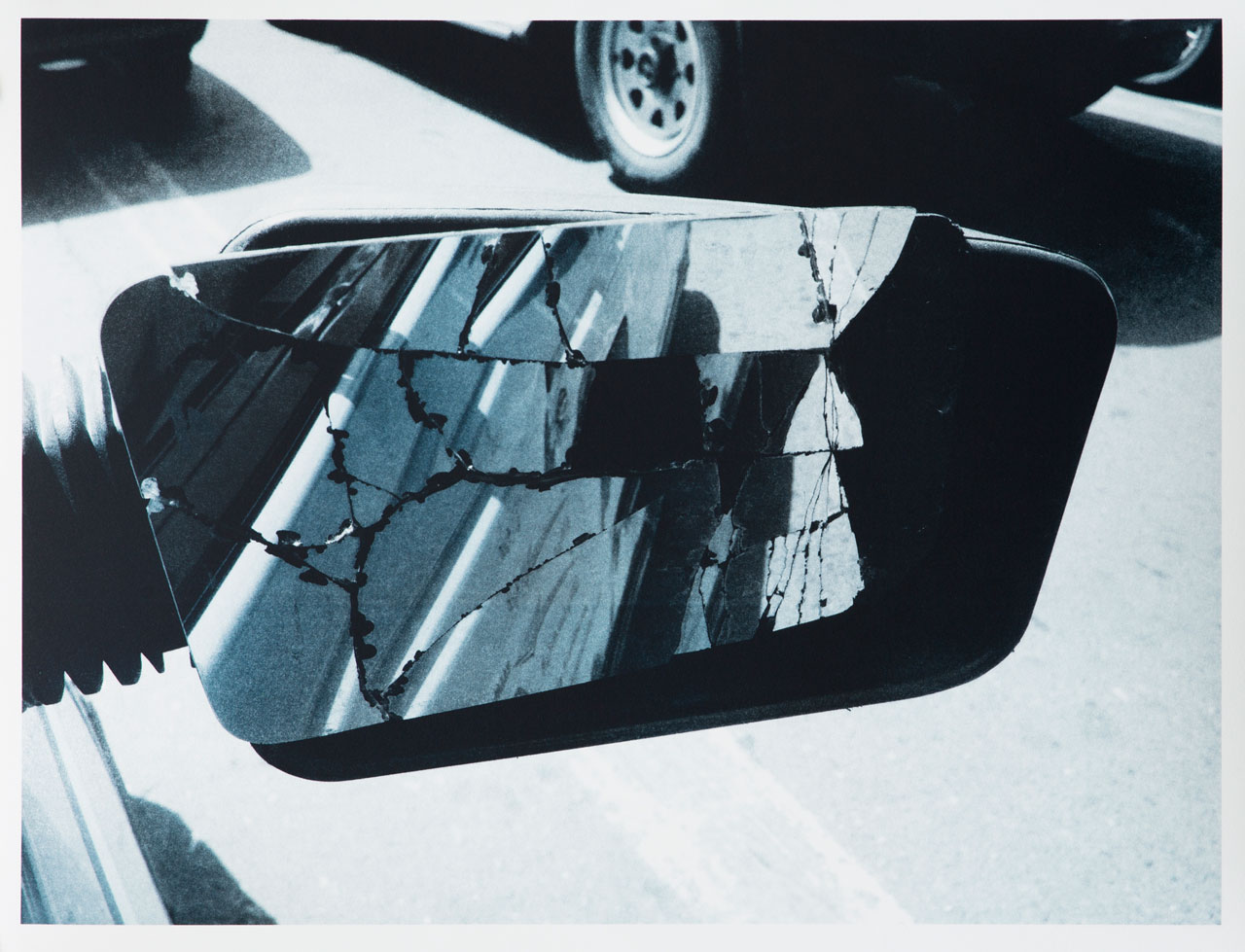
Born in Tehran in 1974 and raised in Switzerland, Shahbazi has built an internationally acclaimed career by questioning the very nature of photographic representation. Rather than treating the camera as an objective recording device, she approaches each photograph as raw material—something that can be translated, manipulated, layered, and reimagined through an array of analogue processes. Screen printing, lithography, collage, painting, and architectural installation become extensions of photography rather than departures from it. The resulting works inhabit a fertile territory between documentation and abstraction, where visual certainty continually dissolves into ambiguity.
This tension between the real and the constructed lies at the heart of Shahbazi’s artistic language. Landscapes, still lifes, portraits, interiors, and architectural fragments recur throughout her oeuvre, yet they resist straightforward interpretation. Instead, they function as components within larger visual systems, encouraging viewers to question how images shape our understanding of reality itself.
Perhaps nowhere is this more evident than in “Displacement”, the ongoing series initiated in 2023. Here, Shahbazi photographs carefully constructed models of architectural fragments staged within her studio. Captured from multiple viewpoints using analogue black-and-white photography, the resulting prints are layered into complex composite images before being enriched with translucent hand-applied color washes. Perspective becomes unstable; architectural space appears simultaneously interior and exterior, upright and inverted. Familiar spatial logic dissolves into a visual puzzle where orientation itself becomes uncertain.
The series reflects Shahbazi’s enduring fascination with perception—not as a passive act of seeing but as an active process of construction. Rather than presenting architecture as physical structure, “Displacement” turns it into a psychological landscape, exposing the ways images mediate our experience of space. What initially appears recognisable gradually reveals itself as an elaborate fiction assembled through photographic means.
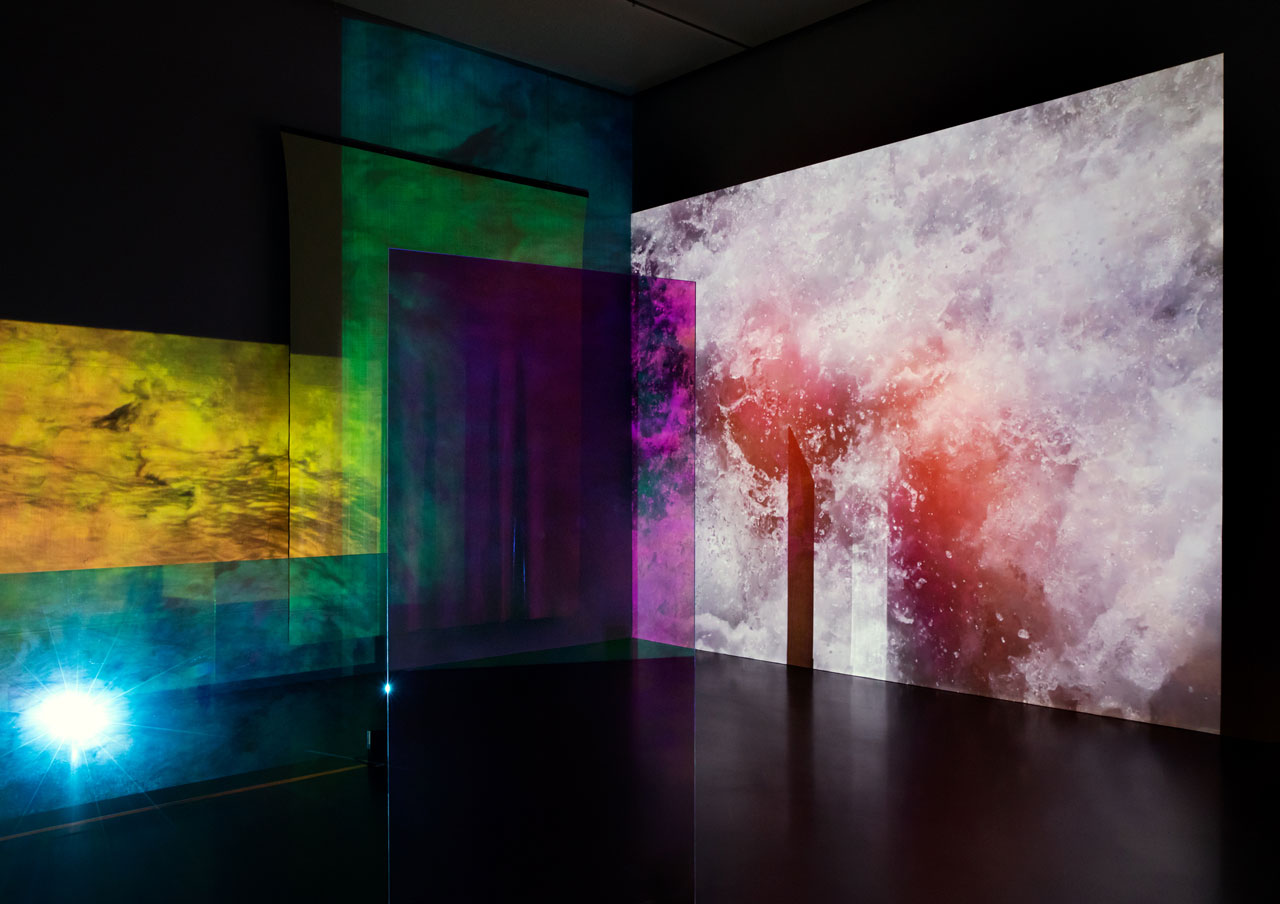
The exhibition extends these investigations into moving images. With “An Other Place” (2023), Shahbazi ventured for the first time into 16mm film, translating her exploration of layered realities into cinematic form. Rather than abandoning photography, film becomes another instrument through which time, movement, and perception intersect. For the Lucerne exhibition, she presents a newly commissioned video installation, further broadening her dialogue between still and moving images while maintaining the meticulous formal precision that defines her practice.
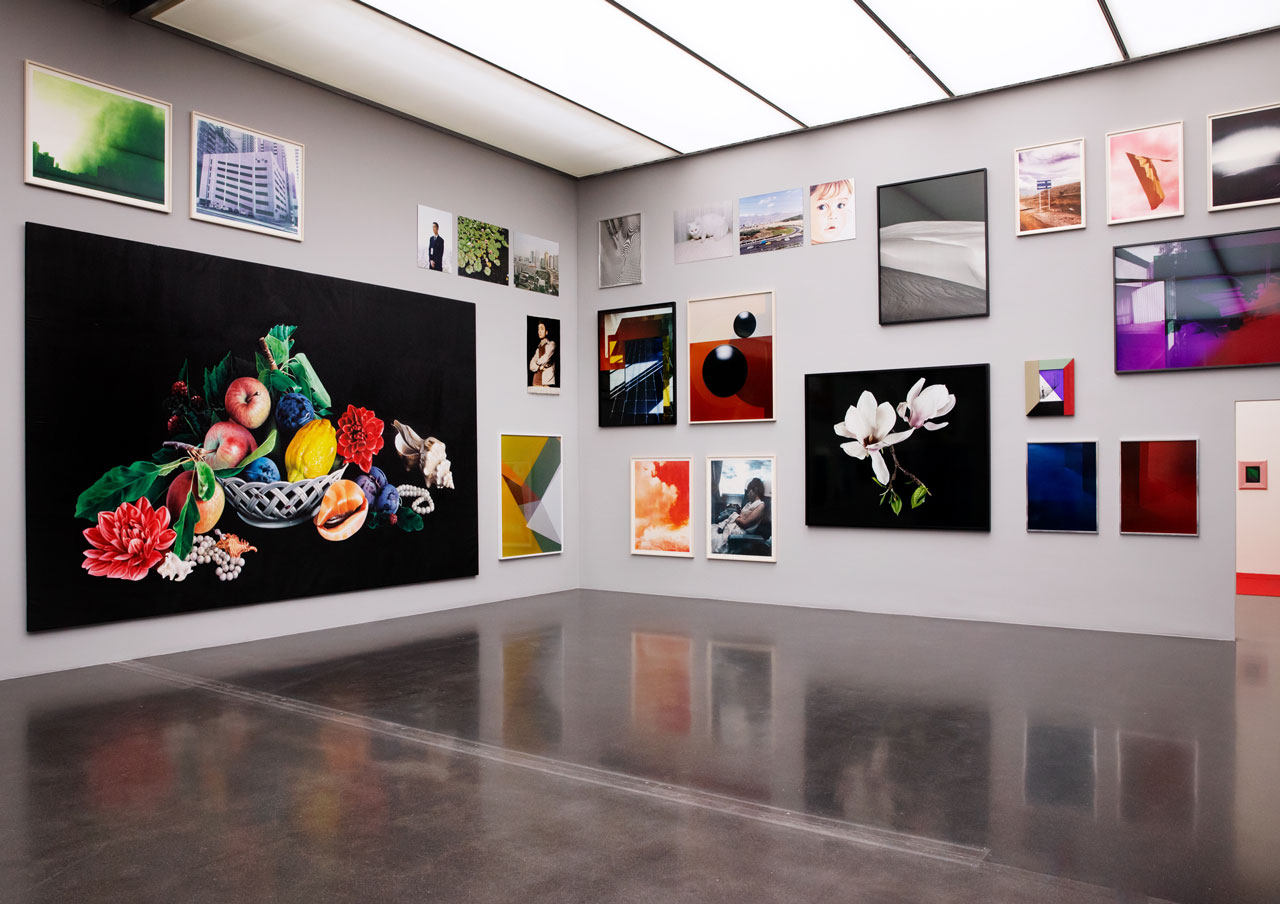
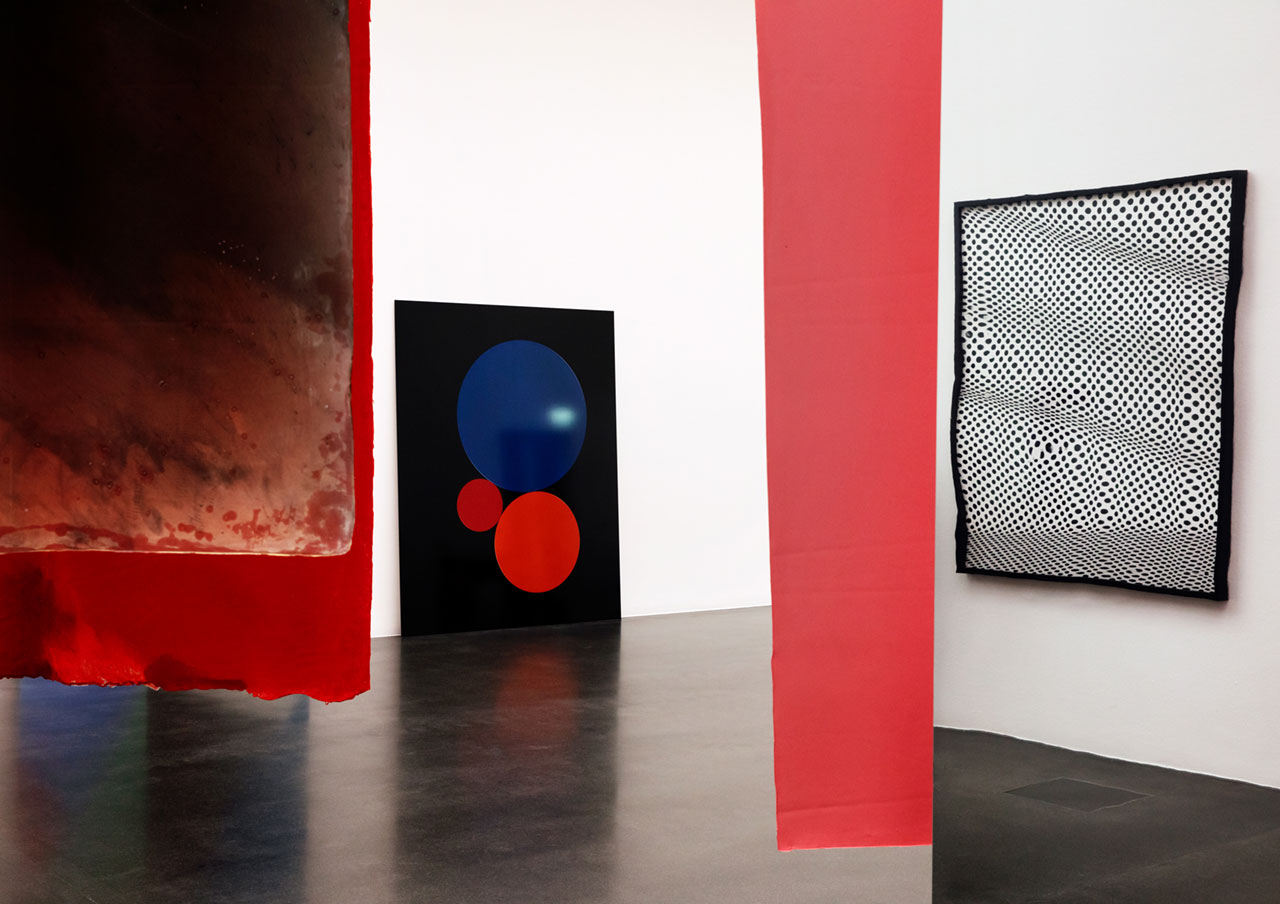
While Shahbazi’s photographs often command attention individually, “All at Once” demonstrates that her true medium may be exhibition space itself. The exhibition abandons chronological order in favour of a dense constellation of surfaces, colors, scales, and materials. Works from different decades coexist without hierarchy, allowing recurring motifs—reflection, repetition, fragmentation, and overlay—to emerge organically across time. The installation suggests that Shahbazi’s practice cannot be understood through isolated images alone; instead, meaning arises through relationships between works, materials, and the physical experience of moving through space.
This spatial complexity is amplified through an ambitious collaboration with Israeli artist Li Tavor. Responding directly to the museum’s architecture, Tavor suspends translucent latex membranes from the ceiling, creating shifting visual thresholds throughout the galleries. Depending on the viewer’s position, these hanging forms partially obscure, frame, or merge with Shahbazi’s photographs, producing constantly changing compositions. The encounter becomes less an exhibition of separate artworks than a living environment where photography, sculpture, and architecture continuously negotiate with one another.
The dialogue extends further through the inclusion of works by the late Iranian modernist Monir Shahroudy Farmanfarmaian, whose celebrated geometric mirror constructions similarly investigate reflection, multiplicity, and spatial perception. Together, the three artists generate an intergenerational conversation about abstraction, materiality, and the instability of visual experience, each approaching these concerns through radically different artistic vocabularies.
Throughout her career, Shahbazi has resisted the temptation to define herself solely as a photographer. Instead, she belongs to a generation of artists for whom photography is less a medium than a methodology—a way of thinking about images across disciplines. This approach has earned widespread international recognition, including Switzerland’s prestigious Prix Meret Oppenheim in 2019, awarded for her sustained contribution to contemporary art.
In an era saturated with endlessly circulating digital images, Shahbazi’s work offers a compelling alternative. Her photographs slow down vision rather than accelerating it. They refuse immediate legibility in favour of sustained looking, inviting viewers to inhabit uncertainty rather than resolve it. Reflection, layering, repetition, and displacement are not simply formal strategies but philosophical propositions—reminders that every image is a construction and that reality itself is always mediated by perception.
“All at Once” Shirana Shahbazi not merely as a photographer, but as an architect of visual experience. Through analogue processes, material experimentation, and spatial installation, she transforms photography into an immersive language where seeing becomes an act of questioning. In doing so, she offers one of the most nuanced and intellectually rigorous explorations of the image in contemporary art today.
Photo left: Shirana Shahbazi, [Stilleben-33-2009], 2009, C-Print auf Aluminium, 150 × 120 cm, Ed. von 5 (+ 1 AP), Courtesy of the artist und Galerie Peter Kilchmann, Zürich, Paris. Photo right: Shirana Shahbazi, Raum-Gelb-01, 2017, C-Print auf Aluminium, 90 × 70 cm, Ed. von 5 (+1 AP), Courtesy of the artist und Galerie Peter Kilchmann, Zürich, Paris
Info: Curator: Fanni Fetzer, Kunstmuseum Luzern, Europaplatz 1, Luzern, Switzerland, Duration: 4/7-10/10/2026, Tue & Thu-Sun 11:00-18:00, Wed 11:00-19:00, www.kunstmuseumluzern.ch/
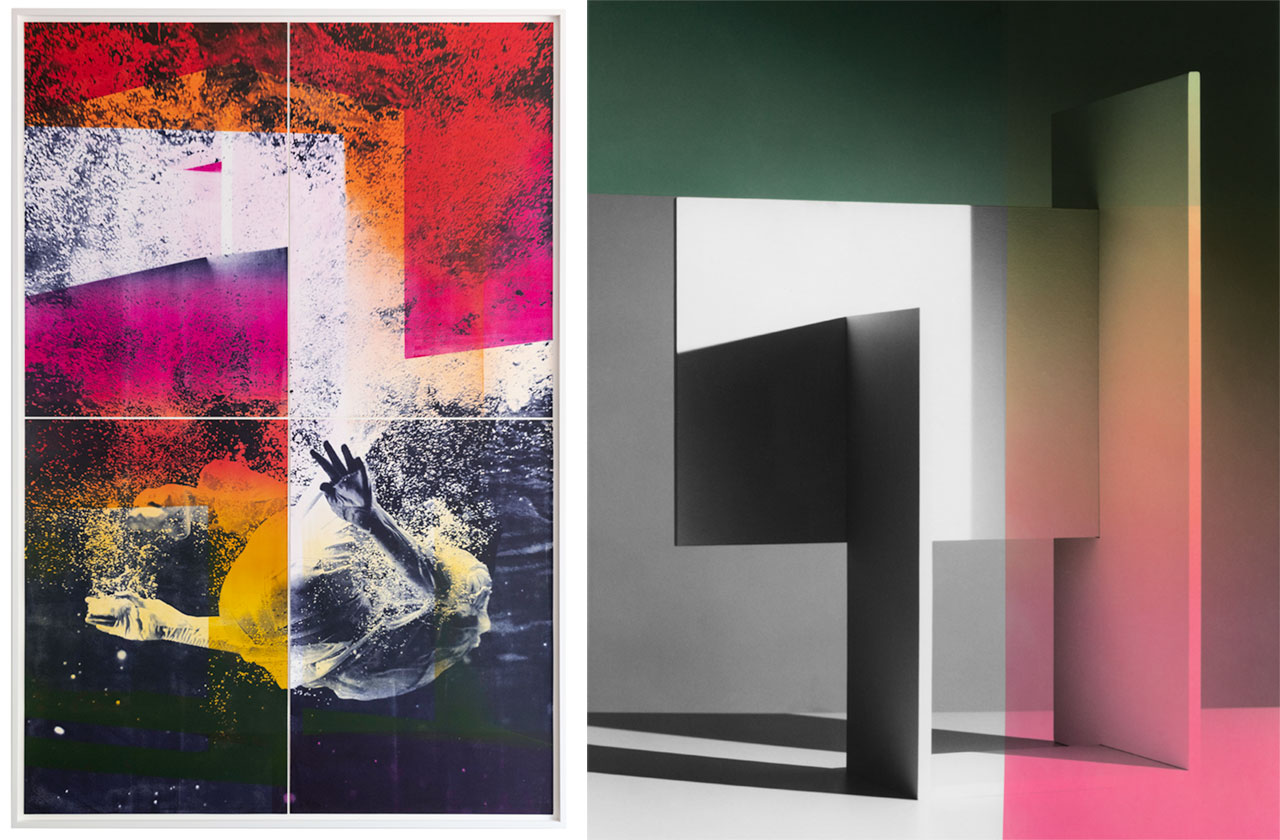
Right: Shirana Shahbazi, Displacement_17, 2023, hand-colored silver gelatin print on baryta paper mounted on aluminum, 23.5 × 17.5 cm, courtesy of the artist and Galerie Peter Kilchmann, Zurich, Paris
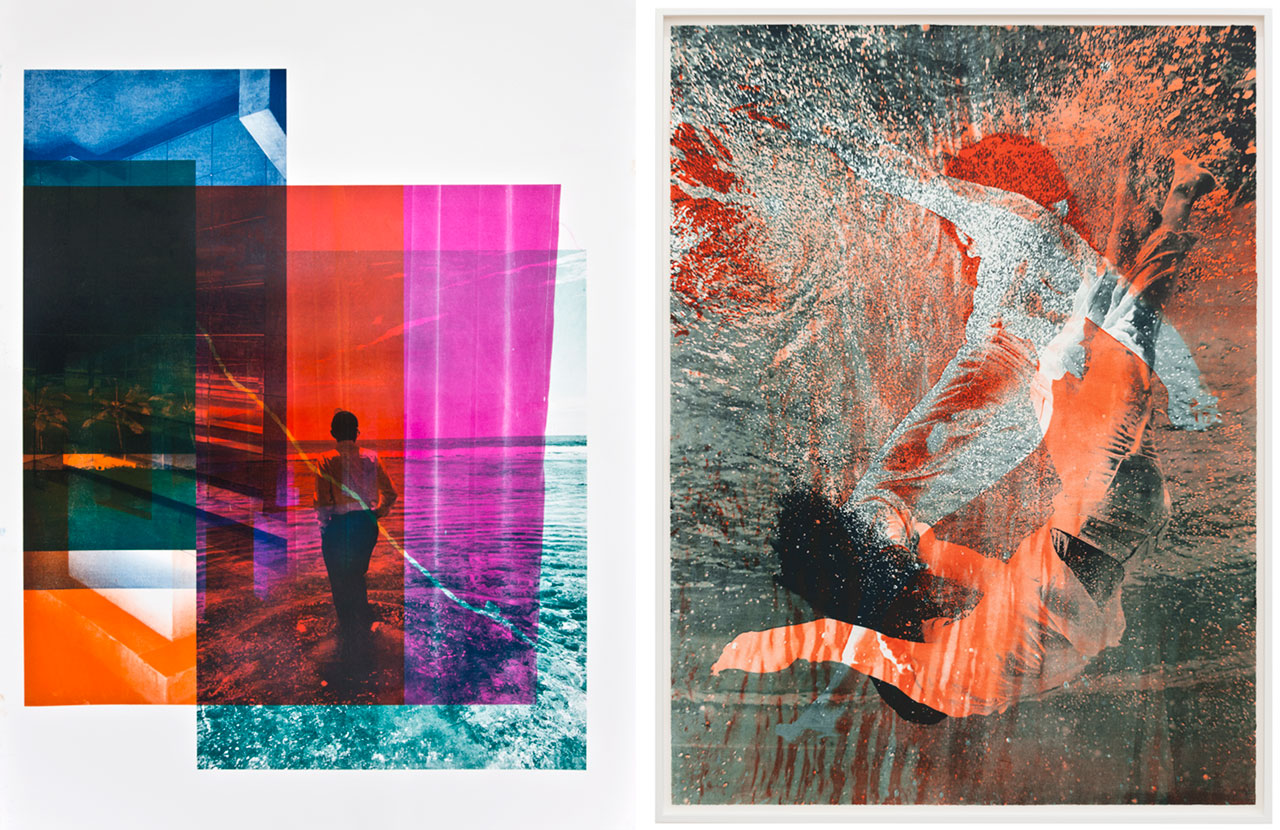
Right: Shirana Shahbazi, Falling_05 (Green & Red), 2024, two-color lithograph on handmade paper, 160 × 120 cm, edition of 1 (+1 artist’s proof, AP), courtesy of the artist and Galerie Peter Kilchmann, Zurich, Paris