PRESENTATION: TARWUK-Mit dem Frosch zu schmusen, ist es unmöglich
A generation ago, artists were often expected to define themselves through a recognisable style or medium. TARWUK have spent nearly two decades resisting exactly that. Formed by Bruno Pogačnik Tremow and Ivana Vukšić, TARWUK is less an artist duo than an ongoing experiment in collaboration. The artists describe the project as a condition rather than a partnership: a shared way of working in which authorship is fluid, identity remains deliberately unstable, and artistic practice takes precedence over finished objects. Their exhibitions are therefore not collections of discrete works but environments in which sculpture, painting, drawing and moving image continually overlap.
By Dimitris Lempesis
Photo: White Cube Gallery Archivve
This approach is rooted in theatre—not theatre as performance or illusion, but as a method of constructing relationships. Nothing in a TARWUK exhibition exists in isolation. Every object gains meaning through its proximity to another object, the architecture of the gallery and, crucially, the presence of the viewer. Rather than presenting autonomous sculptures, the artists construct situations that unfold through movement, hesitation and encounter.
The installation “Mit dem Frosch zu schmusen, ist es unmöglich” (Cuddling with the frog is impossible) occupying the ground floor gallery exemplifies this philosophy. TARWUK refer to the sprawling assemblage as a “harmonic percolator,” a phrase that captures both its improbable construction and its refusal to settle into a single identity. Built from salvaged materials, fragments and disparate objects, it resembles neither a traditional sculpture nor an installation in the conventional sense. Instead, it feels like a temporary stage set—something assembled in anticipation of an event that may already have happened or has yet to begin.
Where modern sculpture has historically celebrated permanence, stability and material authority, TARWUK embrace incompleteness. Their vocabulary privileges the fragment over the monument, contingency over certainty. As viewers move around the installation, relationships between its elements continually shift. The work cannot be apprehended from a single viewpoint, nor does it invite a definitive reading. Instead, it insists on uncertainty as an aesthetic experience.
This theatrical quality is reinforced by two monitors positioned at either end of the installation. One presents “13 Films” (2026), a sequence of thirteen one-minute videos recorded during the full and new moons throughout 2024. The other documents a conversation between the artists reflecting on their evolving collaboration, describing drawing as the foundation of their shared practice—the one medium that remains with them wherever they live or work. Together, these videos expand the installation beyond physical objects, transforming it into a constellation of images, ideas and conversations that continually circulate rather than conclude.
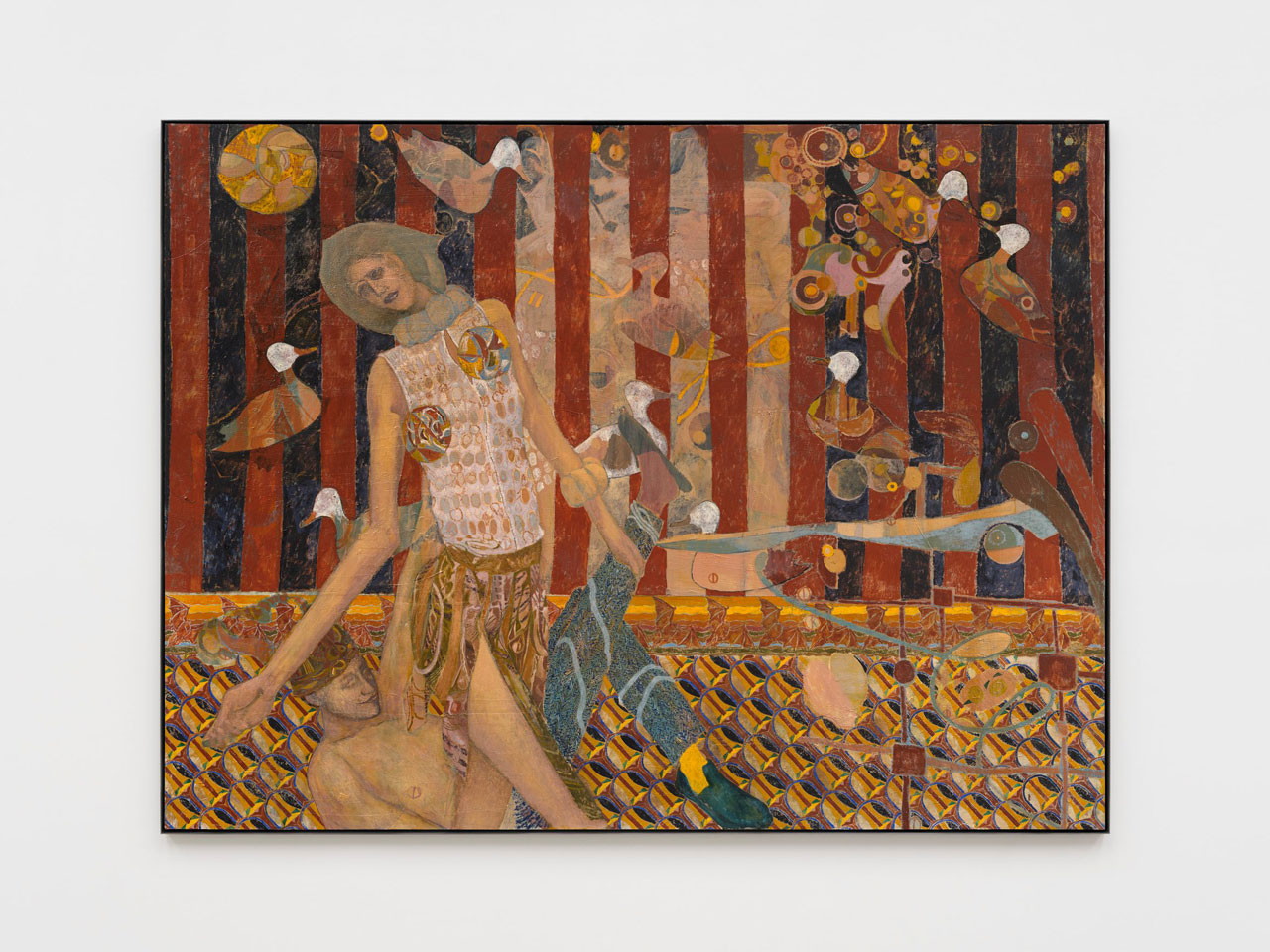
Descending into the gallery beneath the installation introduces an unexpected shift in atmosphere. Here, the visitor encounters a series of paintings populated by elegant, dreamlike figures rendered with remarkable precision. Their elongated bodies, decorative line and stylised theatricality inevitably recall the work of Aubrey Beardsley, whose fin-de-siècle illustrations similarly occupied the border between beauty, decadence and performance.
Yet these paintings do not simply reference Beardsley. They establish a productive tension with the installation above. While the assemblage is physically demanding, immersive and resistant, the paintings encourage slower, more contemplative looking. Their figures appear suspended within narratives that remain tantalizingly incomplete, performing for audiences who never arrive. Together, the two bodies of work establish a dialogue between distance and participation, refinement and disorder, observation and immersion.
Underlying this formal complexity is a shared historical experience. Both artists came of age during the violent dissolution of Yugoslavia, witnessing a landscape transformed by war, displacement and fractured identities. Although their work rarely illustrates these events directly, the emotional residue of that history permeates their practice. Earlier paintings often employed subdued palettes of greys, browns and chalky whites, giving their figures the appearance of archaeological remains excavated from an uncertain past. Their bodies seemed scarred, eroded and perpetually unfinished.
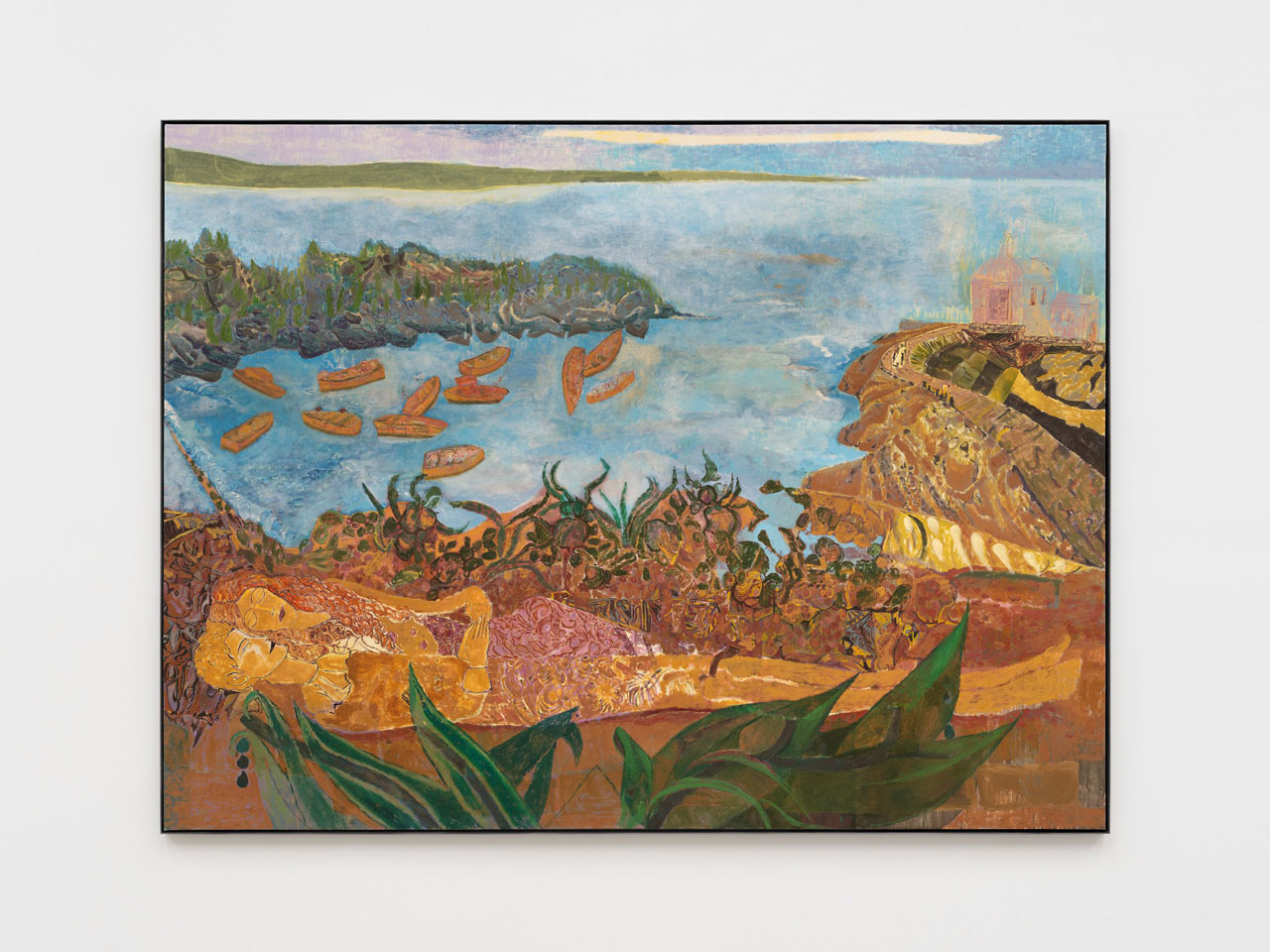
The current exhibition marks a striking departure from that visual language. One painting introduces an expansive field of vivid orange—an intervention that fundamentally alters the emotional register of the work. The color itself carries an intimate history. It originated in the studio of the late American painter Ron Gorchov, whose widow invited TARWUK to work in the space following his death. The artists transported the unused paint from studio to studio across New York, preserving it as both material and memory until it eventually found its place within this exhibition.
Only after completing the painting did they recognise another profound shift. For the first time in their practice, the image depicted an actual location: the Croatian village where members of their family continue to live and where the artists return each year. Geography entered the work not as abstraction but as lived memory.
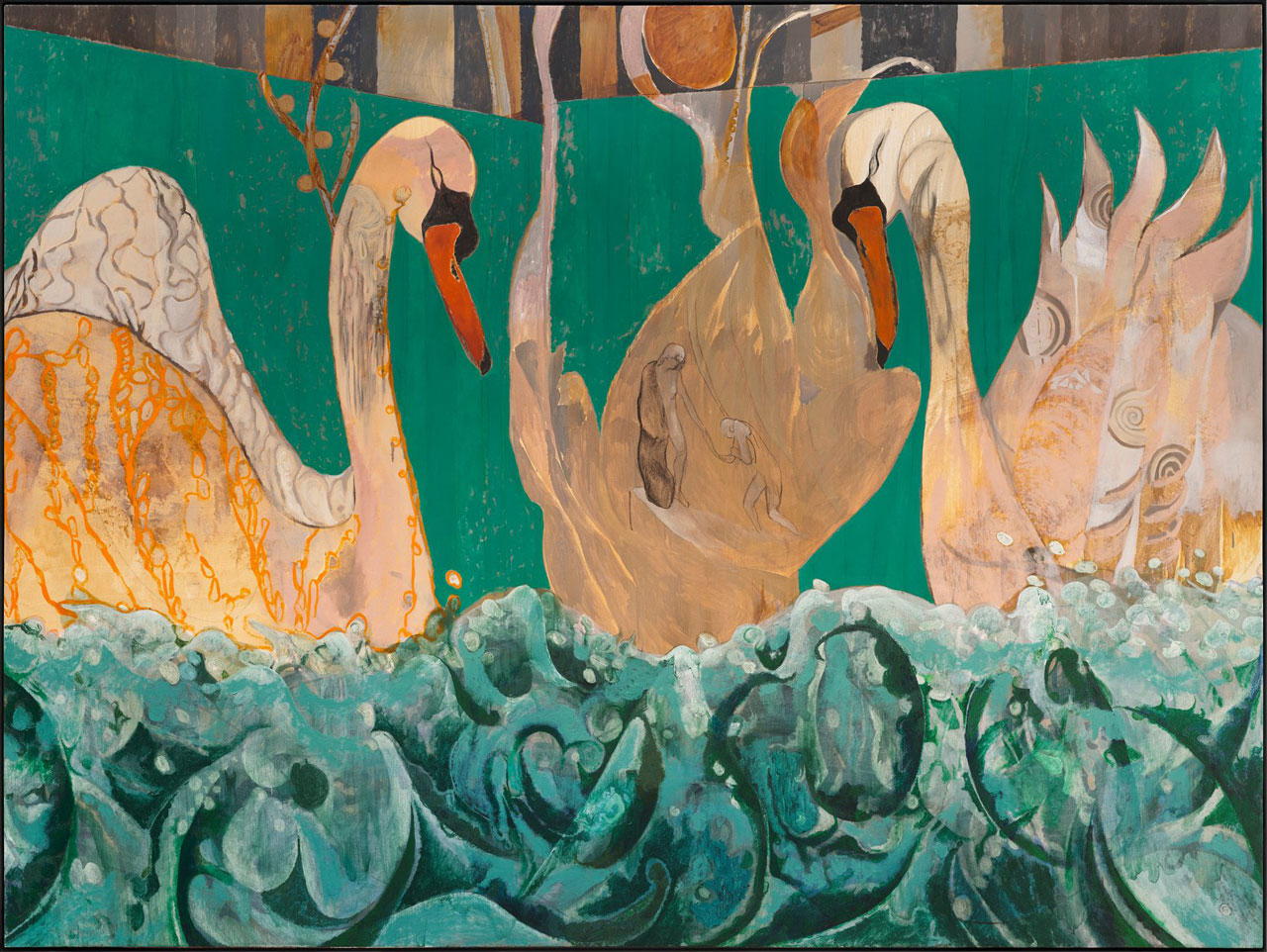
A companion painting emerged through an entirely different process. It originated in one of Ivana Vukšić’s dreams. Upon waking, she described the image to Bruno Pogačnik Tremow, who insisted they attempt to paint it. During its making, however, an unexpected disagreement arose. Bruno painted the lake blue. Ivana argued that swans inhabit green water. The painting was repainted, revised and repeatedly adjusted until the imagined landscape acquired its own internal coherence.
The disagreement over color is revealing. More than a technical decision, it reflects the central tension running throughout TARWUK’s practice: the collision between remembered reality and imagined experience. One painting depicts a real village filtered through memory; the other depicts a place that exists only in dreams. Together, they ask whether emotional truth depends upon factual accuracy at all.
The appearance of the swan deepens this dialogue. Throughout European cultural history, the bird has symbolised exile, longing and unattainable beauty. In the poetry of Stéphane Mallarmé, the swan is trapped within frozen ice, condemned to a state of permanent displacement. For Charles Baudelaire, in “Les Fleurs du Mal”, it becomes a creature violently separated from its natural habitat, wandering the rebuilt streets of Paris as an emblem of loss and estrangement.
TARWUK’s swan belongs to this lineage while transforming it. Appearing within a dream immediately alongside paintings of the artists’ actual home village, it becomes less a literary quotation than a mechanism for change. The swan permits an imaginative departure from their established visual vocabulary, opening a chromatic world of saturated colour and unfamiliar emotional territory. Longing becomes productive rather than nostalgic. Exile becomes a condition of artistic invention.
Transformation also shapes “13 Films”. The opening sequence combines aerial drone footage with laboured breathing, collapsing detached surveillance into an intensely physical sensation. Another film reflects upon the frog, noting that it possesses no awareness of its previous existence as a tadpole. Identity, the work suggests, is neither fixed nor fully knowable. Elsewhere, the artists imagine overeating until their bodies inflate like balloons and drift through an open window, replacing biological certainty with comic metamorphosis.
These recurring images of unstable bodies resonate with observations by film historian Tom Gunning, who has described amphibians as creatures capable of symbolically traversing different forms of existence. TARWUK adopt metamorphosis not simply as subject matter but as an artistic principle. Their figures, installations and collaborations all resist completion. Everything remains capable of becoming something else.
Perhaps this is what distinguishes TARWUK most clearly within contemporary art. At a moment when identity is often expected to be stable, categorisable and immediately legible, their work insists upon the opposite. Meaning remains provisional. Materials remain unsettled. Collaboration itself remains open-ended.
Rather than asking viewers to decipher symbols or solve conceptual puzzles, TARWUK invite them to inhabit uncertainty. Their exhibitions become places where contradictions coexist without resolution, where memory and dream intertwine, and where transformation is valued over permanence. In doing so, they remind us that art need not provide answers. Sometimes its greatest achievement is simply to keep possibilities alive.
Photo: TARWUK, MRTISKLAAH_segaugnaL_llamS_ni_stcejbuS_giB_tuobA_klaT_naC_uoY 2026, Oil, acrylic, and charcoal on canvas, 183.8 x 244.8 cm | 72 3/8 x 96 3/8 in., 185.1 x 246.1 x 5.1 cm | 72 7/8 x 96 7/8 x 2 in. (framed), © TARWUK, Courtesy the artists and White Cube Gallery
Info: White Cube Gallery, 25–26 Mason’s Yard, London, United Kingdom, Duration; 9/7-15/8/2026, Days & Hours: Tue-Sat 10:00-18:00, www.whitecube.com/
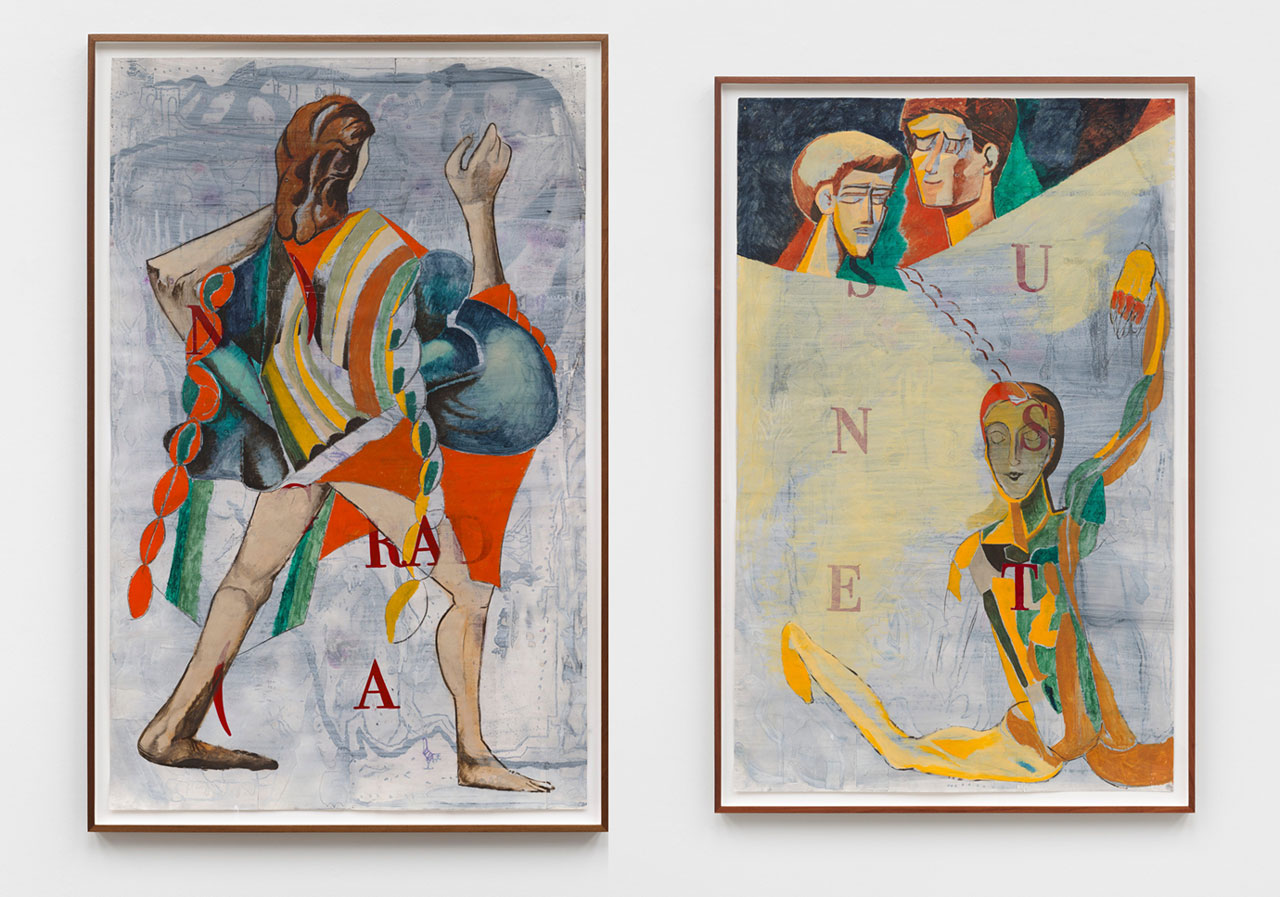
Right: TARWUK, TROOZ_kcohS_a_toG_tsuJ_I_!HO 2014-26, Pencil, collage, charcoal, acrylic, ballpoint pen, gesso and oil on paper, 152.4 x 95.3 cm | 60 x 37 1/2 in., 159.08 x 103.84 x 5.08 cm | 62 5/8 x 40 7/8 x 2 in.. (framed), © TARWUK, Courtesy the artists and White Cube Gallery