ART CITIES: Vienna-Rosmarie Lukasser
In an era in which digital networks shape almost every aspect of daily life, Austrian artist Rosmarie Lukasser offers a compelling artistic investigation into what it means to exist within an increasingly interconnected world. Rather than focusing on technology itself, Lukasser is interested in its human consequences: the subtle transformations of perception, communication, movement, and bodily awareness that emerge from constant connectivity. Her sculptures, drawings, and installations reveal the invisible infrastructures that bind people, places, and information into a global network, making abstract systems tangible through an intensely physical artistic language.
By Efi Michalarou
Photo: Galerie Krinzinger Archive
At the center of Rosmarie Lukasser’s recent solo exhibition, “Approaches to “…bin im Netz i5.0”, is the concept of the “Echoraum”—an echo chamber understood not as an acoustic phenomenon but as a resonant spatial model for the visualization of an artificial neural network. The exhibition unfolds as an exploration of interconnected systems, where technological infrastructures become spaces of reflection on contemporary human existence.
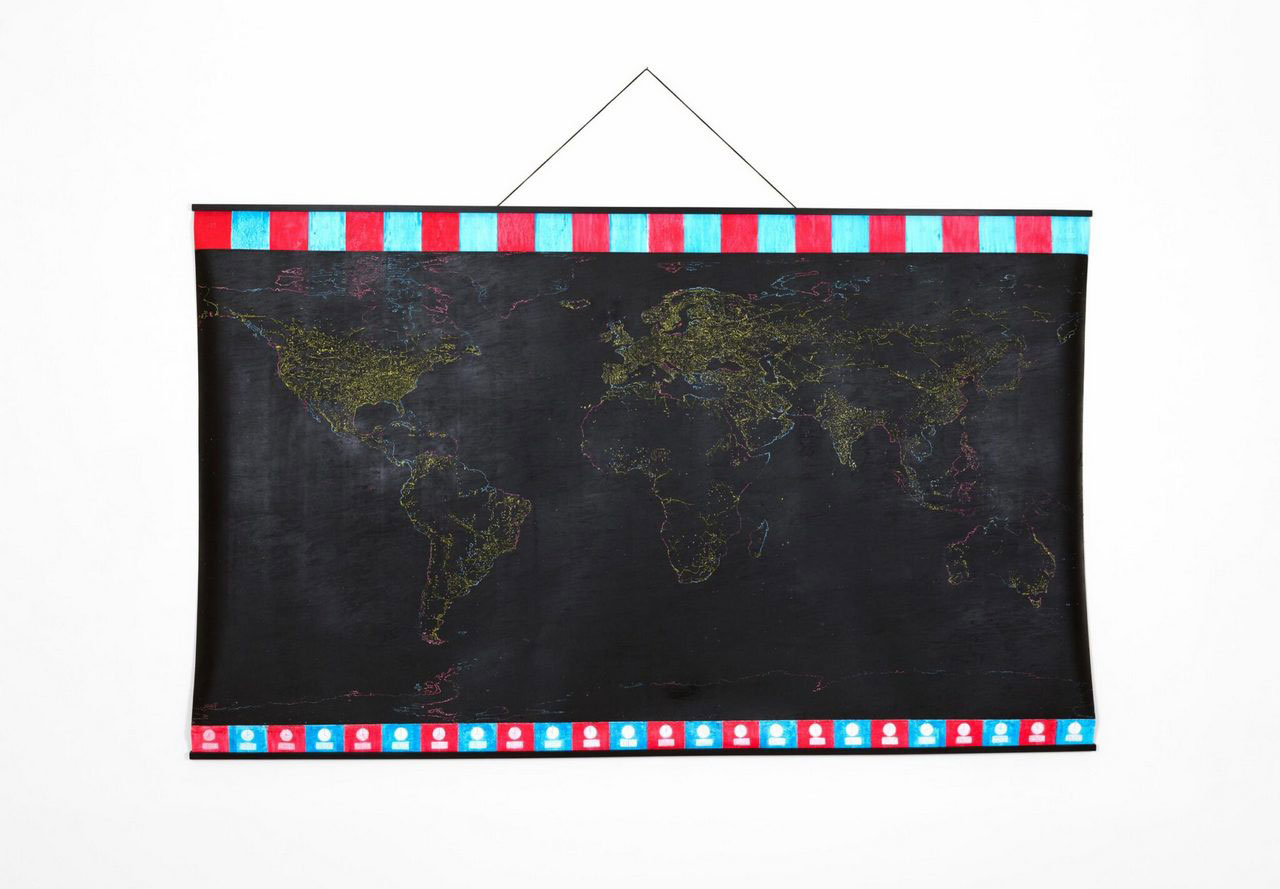
Lukasser translates the visual language of digital networks into analog forms. Maps of undersea communication cables, global energy grids, aviation routes, satellite positioning systems, and network topologies become the foundation for drawings, diagrams, sculptures, and installations. These systems, often invisible despite their profound influence on everyday life, are reimagined as aesthetic structures that expose the physical architecture behind the digital world. The artist’s works remind viewers that the internet is not an abstract cloud but a vast material network embedded in oceans, landscapes, cities, and bodies.
A monumental drawing of the global energy network forms one of the exhibition’s central works. Functioning simultaneously as artwork and research instrument, the map serves as a platform for Lukasser’s ongoing field studies. Observing people in public spaces, she records gestures, movements, and postures while adding handwritten notes that connect these observations with the structures of digital communication. These annotations transform the map into a living archive of human behavior within technological systems, revealing how invisible infrastructures subtly shape everyday actions.
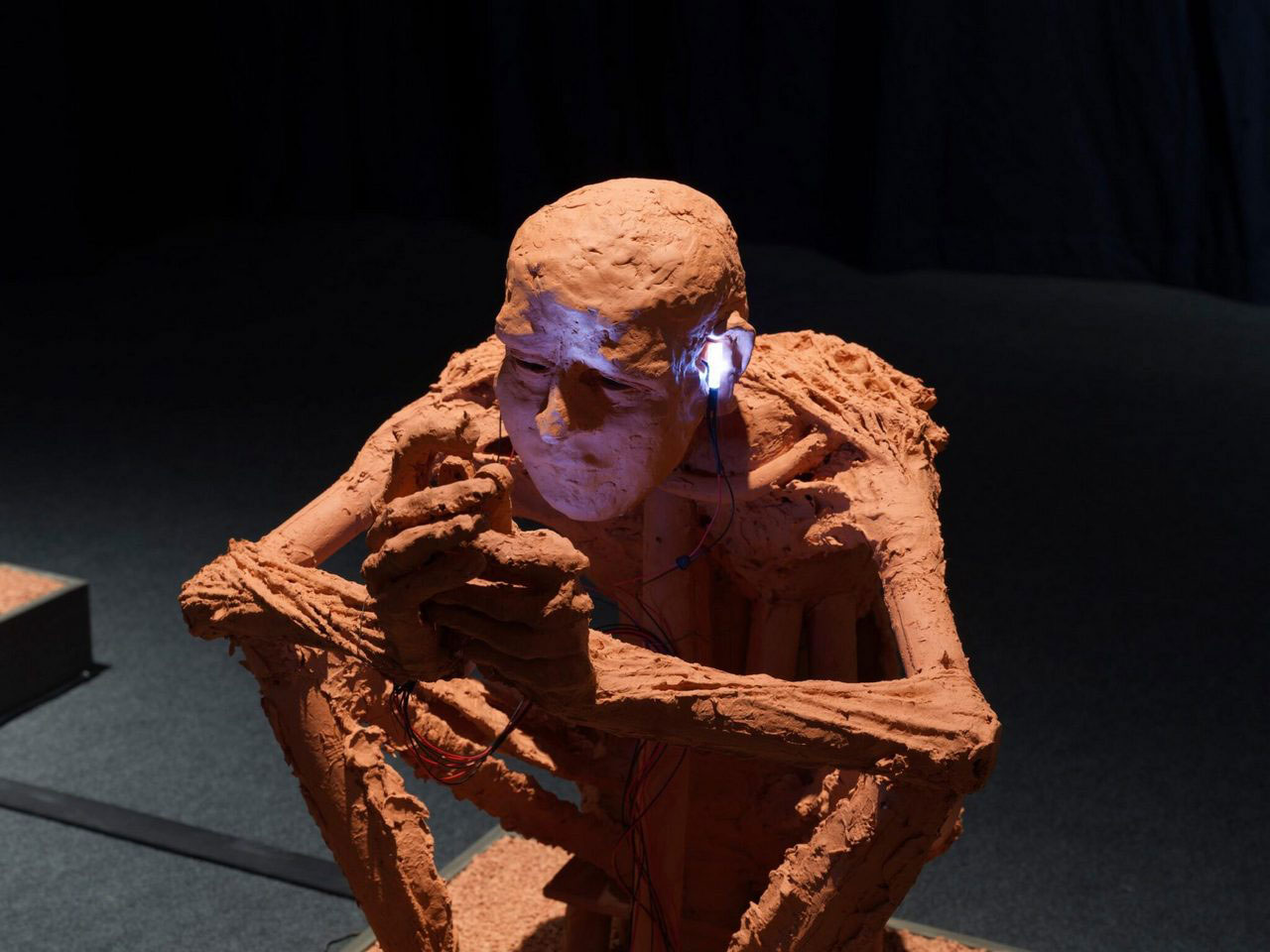
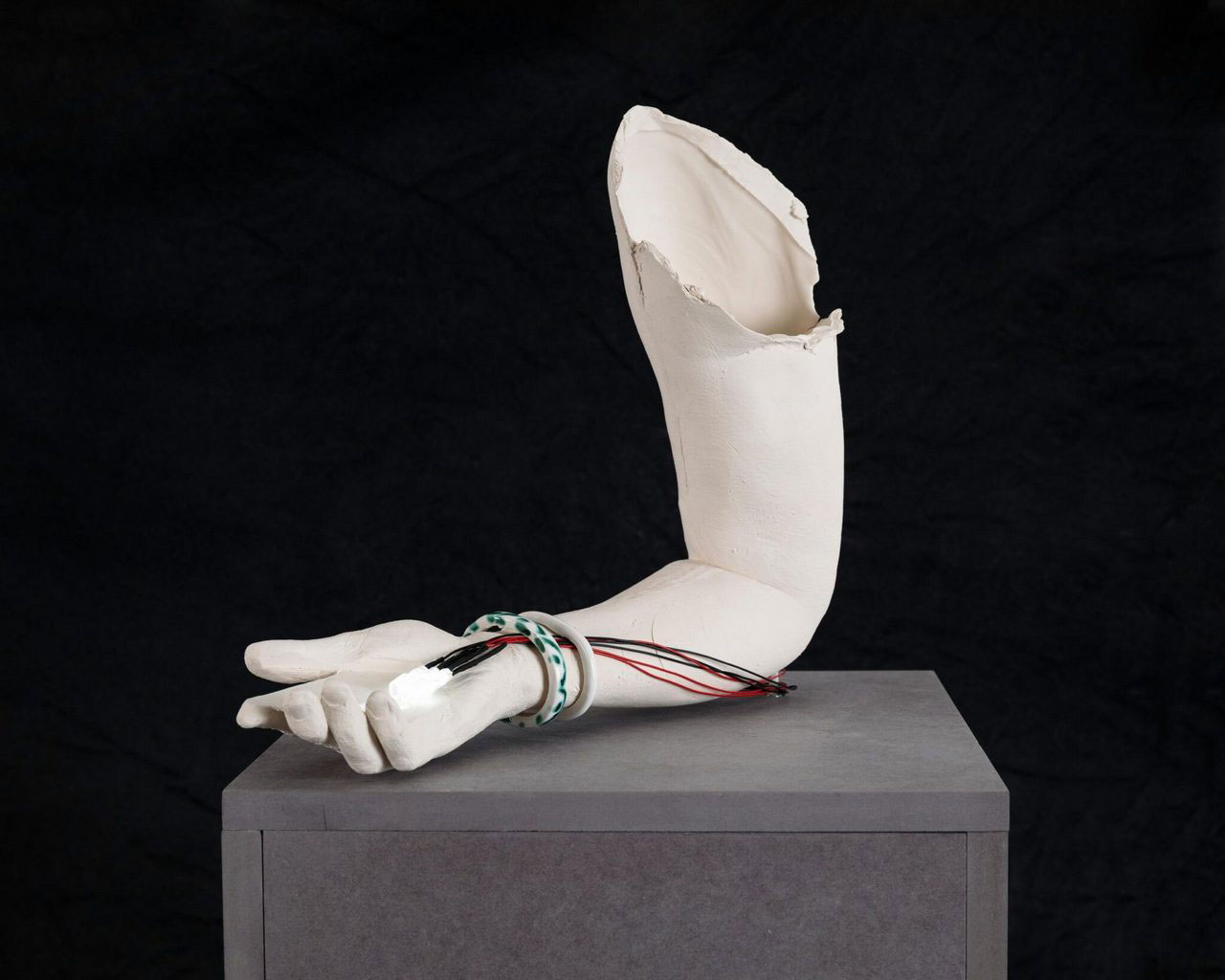
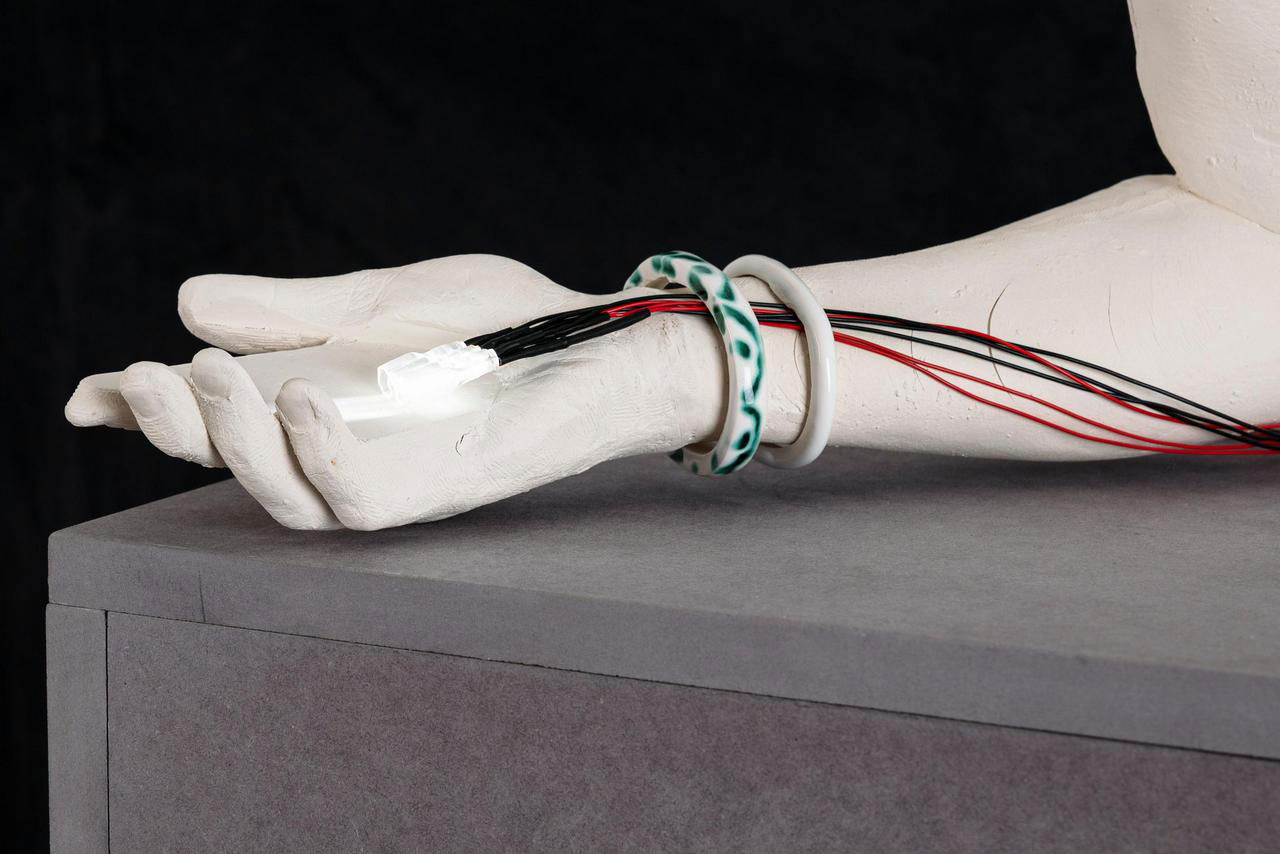
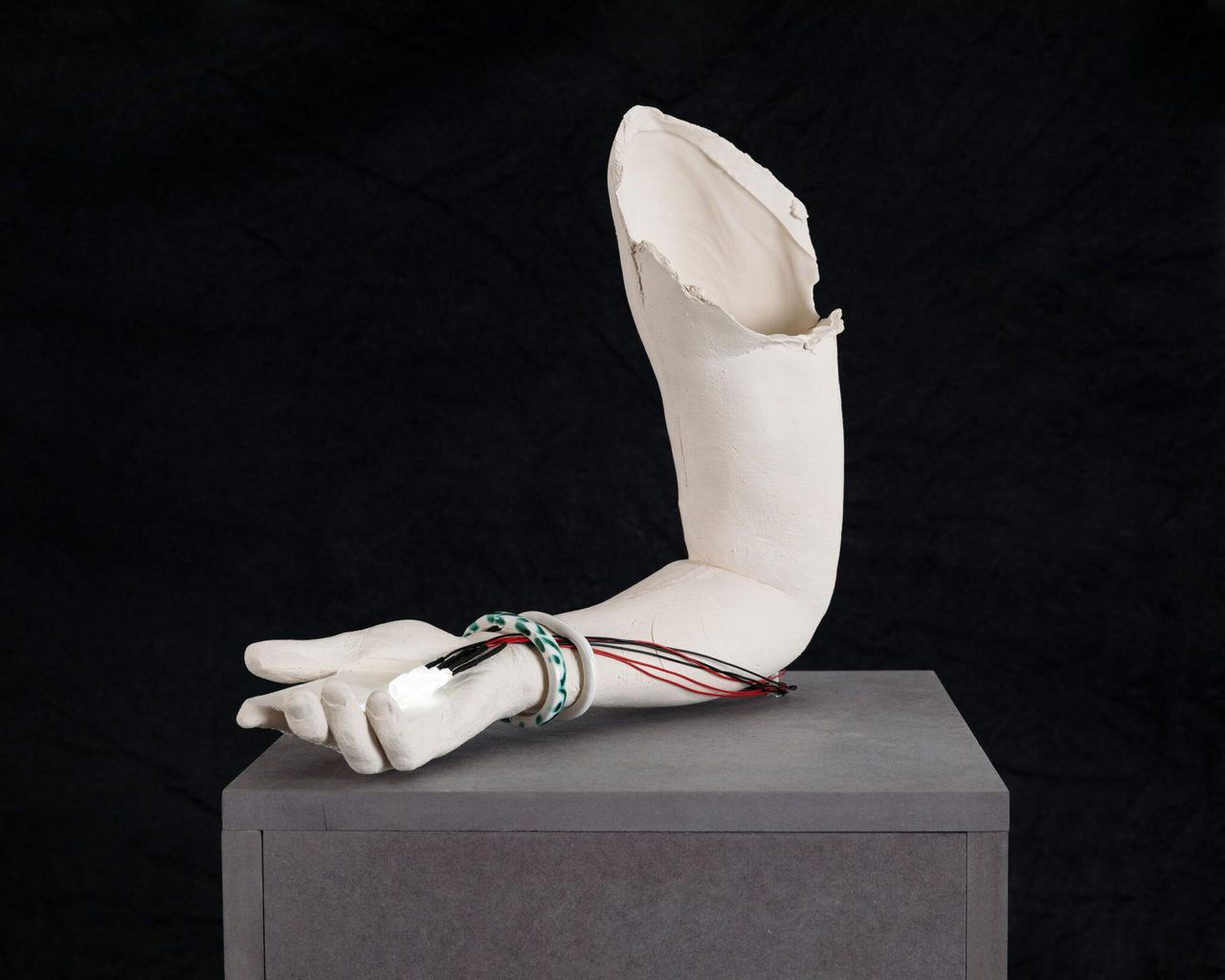
For more than fifteen years, Lukasser has examined the changing relationship between the human body and digital technology. Her long-running sculptural series “Annäherungen an “…bin im Netz” (“Approaches to ‘…I am on the Net'”) investigates the physical adaptations brought about by digital devices. Her life-sized figures appear simultaneously present and absent: rooted in a physical location while their attention, communication, and relationships extend into virtual space. The devices themselves are conspicuously absent. Instead, their presence is inscribed directly into the body. Hands, eyes, ears, necks, and shoulders become interfaces through which technology is experienced, suggesting that digital tools have become extensions of human anatomy rather than external instruments.
The newest generation of these sculptures deepens this investigation through material itself. Created in terracotta during the International Terra Symposium in Kikinda, Serbia—one of Europe’s most significant centers for monumental terracotta sculpture—and further refined at Gmundner Keramik in Austria, the works combine an ancient sculptural medium with questions rooted in contemporary digital culture. Clay, one of humanity’s oldest artistic materials, becomes a vehicle for exploring artificial intelligence, mobile communication, and networked existence. This tension between archaic materiality and technological subject matter creates a striking temporal dialogue in which the past and the future coexist within the same object. (Galerie Krinzinger)
Lukasser’s work also engages directly with media theory. Her sculpture “NAVSTAR_Globus 02” references Canadian philosopher and media theorist Marshall McLuhan, whose influential concept of the “global village” anticipated the profound social consequences of electronic communication. McLuhan described worldwide electrical and communication networks as humanity’s “fourth skin,” a technological layer enveloping the planet and extending the human nervous system across global space. Lukasser gives this theoretical proposition a sculptural form. Her globe becomes both an image of planetary connectivity and a meditation on how technological systems reshape human relationships, collapsing traditional experiences of distance and time into instantaneous communication.
Throughout the exhibition, systems of information are continuously brought back to the scale of the individual body. Lukasser’s figures embody a paradox that has become characteristic of contemporary life: they are physically isolated yet permanently connected, stationary yet engaged in distant interactions, materially present while mentally distributed across digital spaces. Rather than depicting technology itself, the artist visualizes its embodied effects—those subtle changes in posture, concentration, attention, and social presence that have become almost imperceptible through everyday repetition.
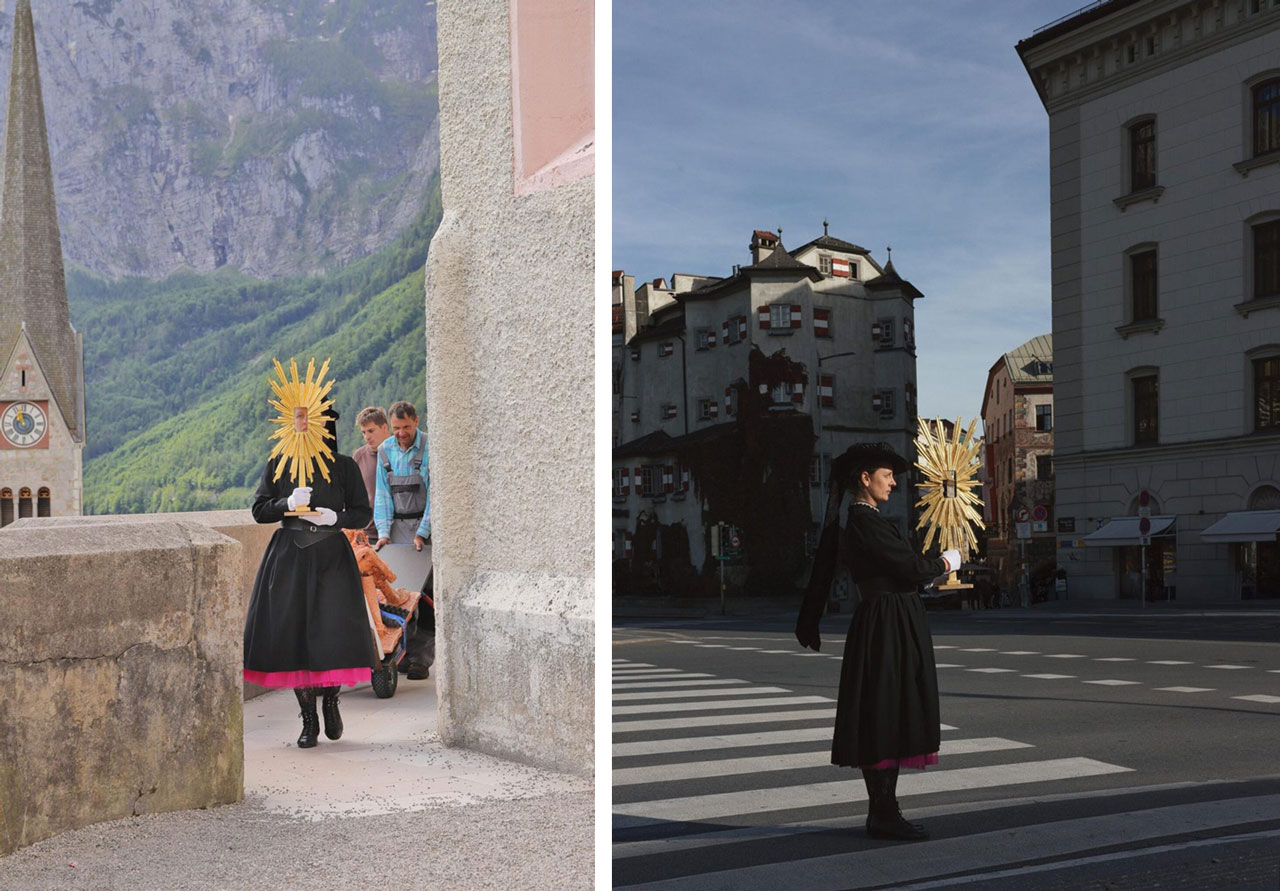
The exhibition concludes by extending these questions into the realm of ritual and collective meaning. A sculptural work recalling the form of a monstrance appropriates the visual language of religious display while relocating it within the context of contemporary digital culture. Traditional symbols of communal belief are transformed into reflections on new forms of collective attention, technological devotion, and networked participation. In doing so, Lukasser suggests that digital infrastructures have become not merely technical systems but cultural frameworks through which societies construct meaning, identity, and belonging.
Rosmarie Lukasser’s practice reveals that digital networks are never purely virtual. They are physical, material, social, and profoundly embodied. Through sculpture, drawing, and installation, she makes visible the infrastructures that shape contemporary existence while asking how human experience changes when the boundaries between body, technology, and communication become increasingly fluid. Her work invites viewers to reconsider the invisible systems they inhabit every day and to recognize that the most significant technological transformations often occur not within machines but within ourselves.
Photo: Rosmarie Lukasser, Smart Arm i5.0/ 1-6, 2025, ceramic, LED, Gmundner Keramik, 36 x 13 x 40 cm, © Rosmarie Lukasser, Courtesy the artist and Galerie Krinzinger
Info: Galerie Krinzinger, Seilerstätte 16, Vienna, Austria, Duration: 3/7-29/8/2026, Days & Hours: Tue-Fri 12:00-18:00, Sat 11:00-16:00, https://galerie-krinzinger.at/
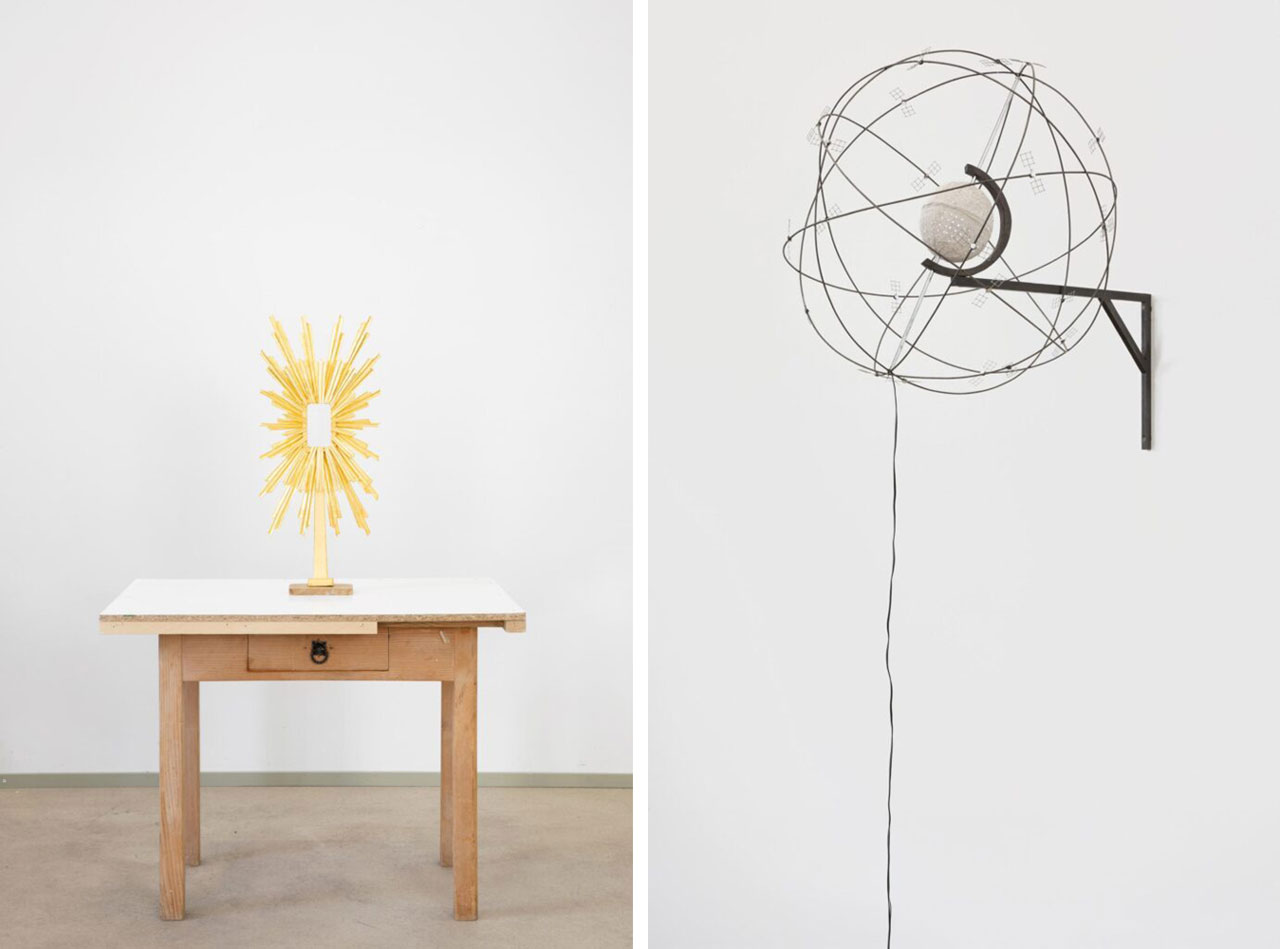
Right: Rosmarie Lukasser, NAVSTAR_Globus 02, 2021, plaster, wood, graphite, light, ⌀ 72 cm, © Rosmarie Lukasser, Courtesy the artist and Galerie Krinzinger