PRESENTATION: Radical. Real.-Nouveau Réalisme and the Art of the 1960s
More than sixty years after the founding declaration of Nouveau Réalisme was signed in Paris in October 1960, the movement around the critic Pierre Restany no longer reads as a closed chapter in art history. Instead, it appears as part of a much broader international shift in how artists began to understand reality itself. Across Europe, the United States, and Latin America, artists responded to the rapid transformations of the postwar world by turning directly to the materials of everyday life. Reality was no longer something to be represented—it became something to be used.
By Dimitris Lempesis
Photo: Kunsthalle Mannheim Archive
The exhibition “Radical. Real – Nouveau Réalisme and the Art of the 1960s” traces this development from the late 1950s through the early 1970s, a period marked by the rise of consumer society, accelerated industrial production, and deep political tensions shaped by the Cold War and decolonization. Bringing together works by artists such as Jasper Johns, Alina Szapocznikow, Tetsumi Kudo, Chryssa, and Feliza Bursztyn, it shows how widely this impulse spread. What connects these practices is not a single style, but a shared urgency: to find artistic languages capable of addressing a world that was changing faster than traditional forms could respond.
At the center of this transformation is the modern city. In the postwar decades, urban space becomes saturated with advertising, traffic, and mass communication. The street turns into a kind of open-air archive. Artists begin to treat it as such. The Affichistes—Raymond Hains and Jacques de la Villeglé among them—tear posters from walls and present them as they are found. What might have been discarded becomes meaningful: layers of torn paper carry traces of political messages, commercial persuasion, and anonymous intervention. The city writes itself into the work.
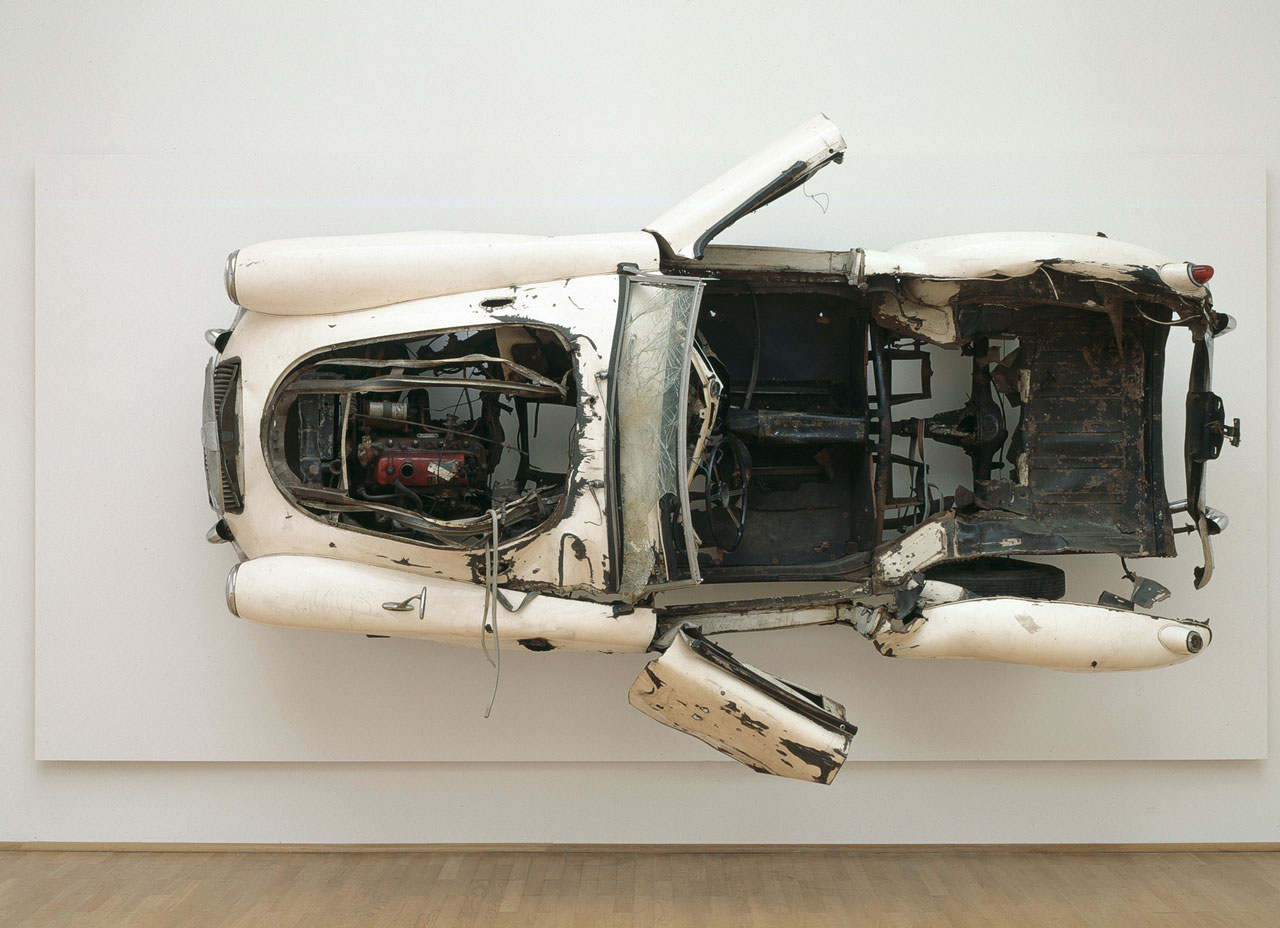
This attention to the everyday extends to objects. Instead of traditional materials like bronze or marble, artists turn to things that are already used, damaged, or thrown away. Scrap metal, packaging, consumer goods—all of it enters the studio. In Arman’s accumulations, identical objects are stacked until they become overwhelming, revealing the logic of mass production. Mimmo Rotella’s torn film posters show how quickly images circulate and decay in a media-driven culture. In each case, the object is not just depicted—it is left as it is, with its history still attached.
The human body becomes another central field of experimentation. In Yves Klein’s “Anthropometries,” models covered in paint press their bodies directly onto the canvas. The painting is created through physical presence rather than representation. George Segal casts entire figures in plaster, placing them in everyday settings that feel strangely suspended between life and stillness. Alina Szapocznikow fragments the body into unstable forms that hover between sculpture and memory, often suggesting both vulnerability and survival.
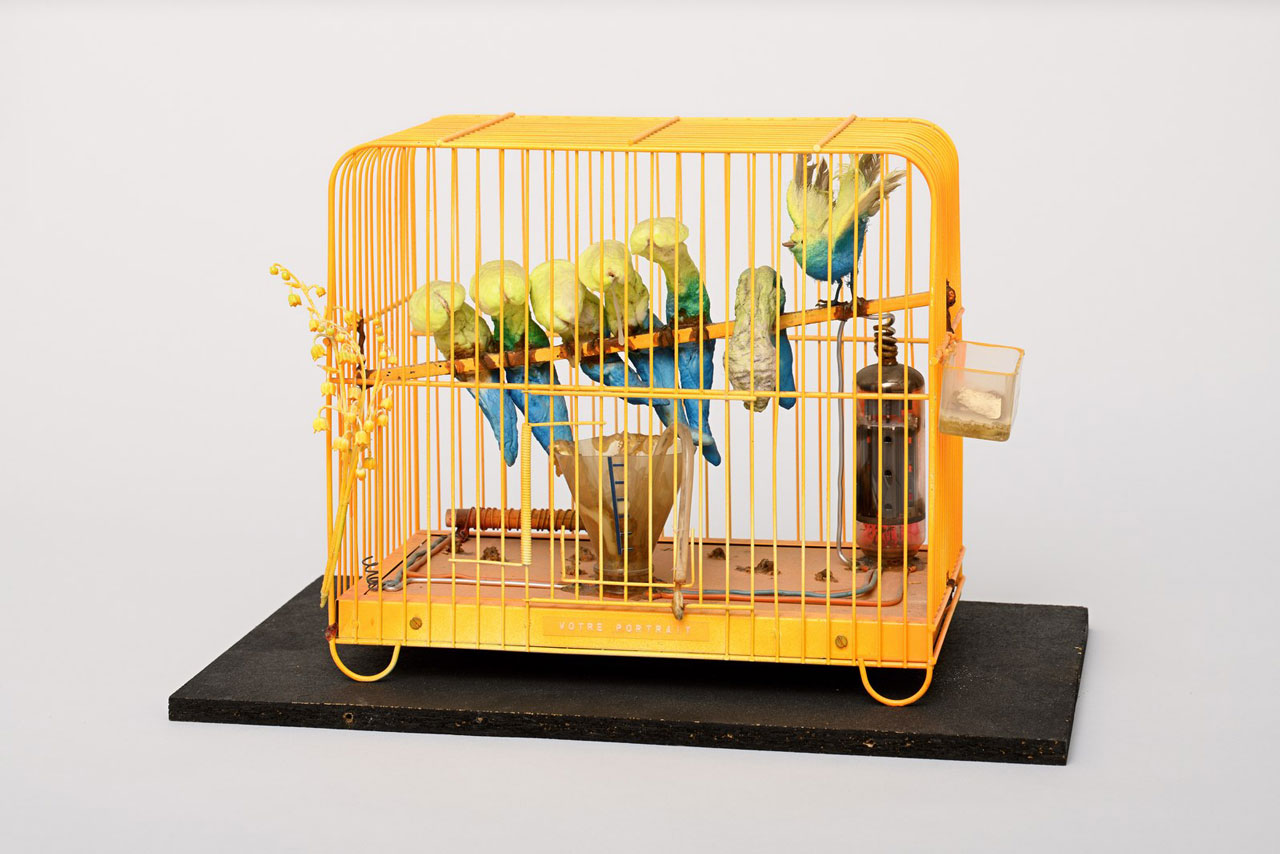
These works cannot be separated from their historical moment. The aftermath of the Second World War, the threat of nuclear destruction, and the rapid modernization of society all shape how artists think about the body. In Tetsumi Kudo’s work, distorted figures reflect fears of mutation and environmental collapse, as well as a deeper crisis of what it means to be human in the nuclear age. The body is no longer stable—it is exposed, altered, and uncertain.
Alongside this shift toward material and bodily experience, many artists move toward action and performance. Art is no longer only something to be made; it becomes something that happens. Niki de Saint Phalle’s “Tirs” are a clear example: paintings are literally shot at, causing paint to burst and flow across the surface. The act of making becomes visible, violent, and unpredictable. In similar ways, Arman destroys objects as part of his practice, and Marta Minujín burns her own work in a public performance. These gestures are not simply destructive. They transform art into an event shared with an audience, where meaning unfolds in real time.
At the same moment, artists begin to question how language itself functions. The Lettrists break words into letters and treat them as raw material. François Dufrêne’s sound poetry and poster works turn language into something physical, something that can be seen and heard rather than just read. In the United States, artists like Jasper Johns and Chryssa explore the visual noise of communication systems—newspapers, neon signs, typography—where meaning is never stable but constantly shifting. Language becomes another form of material reality.
One of the most important surfaces of this period is the torn poster. In the streets of Paris, the Affichistes collect fragments of advertising and political imagery, presenting them as layered records of urban life. These works are not composed in the traditional sense—they are found. Their meaning lies in what has been removed, damaged, or overwritten. Mimmo Rotella extends this logic through cinema posters, while Wolf Vostell introduces a more confrontational approach, using media images as a way to expose the political tensions of consumer culture.
The relationship between Nouveau Réalisme and American Pop Art adds another layer of complexity. The two movements often appeared in the same exhibitions, yet they approached similar materials in different ways. Pop Art, in artists like Claes Oldenburg, often reflects on consumer objects through imitation and distance. Nouveau Réalisme, by contrast, tends to work more directly with the object itself, preserving its physical presence and history. Still, the boundaries are not strict. Artists like Martial Raysse move between critique and fascination, using mass-produced imagery to both question and reflect contemporary beauty standards.
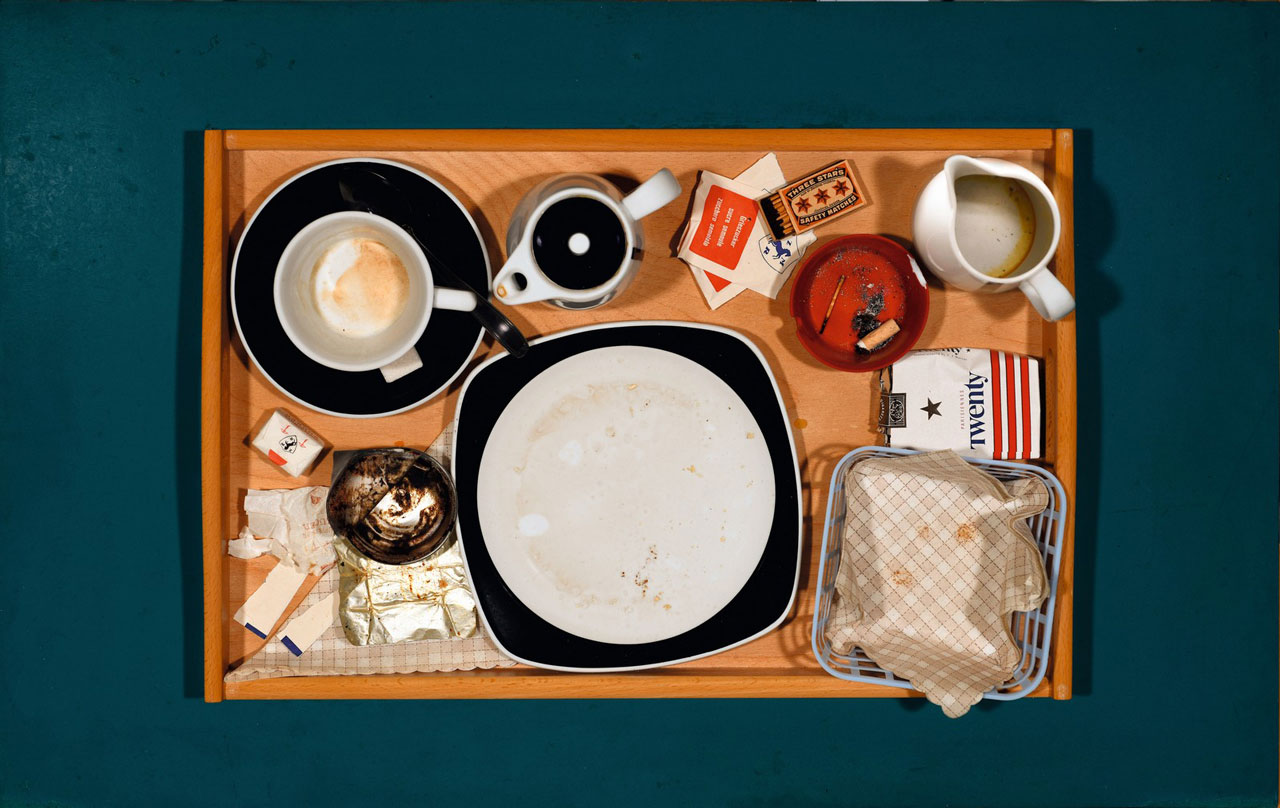
Underlying many of these practices is a concern with memory and absence. Daniel Spoerri’s “snare-pictures” preserve accidental arrangements of everyday life, turning a moment into a fixed constellation. Paul Thek’s “Technological Reliquaries” treat fragments of the body and modern materials as if they were relics, objects that carry meaning beyond their physical form. Even in their materiality, these works point toward something that is no longer fully present.
This tension between emptiness and fullness runs through much of Nouveau Réalisme. Yves Klein’s empty gallery spaces and immaterial zones stand in contrast to Arman’s densely packed accumulations of objects. One suggests expansion beyond material limits; the other insists on the weight of the material world. César’s compressed and expanding forms sit somewhere in between, holding both states at once.
Seen together, the works presented in “RADIKAL. REAL.” show that Nouveau Réalisme was never just about objects. It was about a new way of understanding reality itself—one shaped by consumption, media, technology, and memory. Artists across different continents were responding to the same condition: a world in which reality was no longer fixed, but constantly produced, fragmented, and reassembled.
What makes this work still relevant today is not only its historical significance, but its ongoing question: how do we perceive reality when it is always already mediated by objects, images, and systems? The artists of Nouveau Réalisme and their contemporaries did not answer this question. Instead, they made it visible—through fragments, actions, bodies, and the everyday materials of a rapidly changing world.
Photo: Kudo Tetsumi, Votre portrait, 1965-1966, Private collection, Belgium – Courtesy Galerie Loevenbruck, VG Bild-Kunst, Bonn 2026, Photo: Paul Louis
Info: Curator: Luisa Heese, Curatorial assistance: Dr. Stefano Agresti, Kunsthalle Mannheim, Friedrichsplatz 4, Mannheim, Germany, Duration: 3/7-1110/2026, Days & Hours: Tue=Sun 10:00-18:00, https://kuma.art
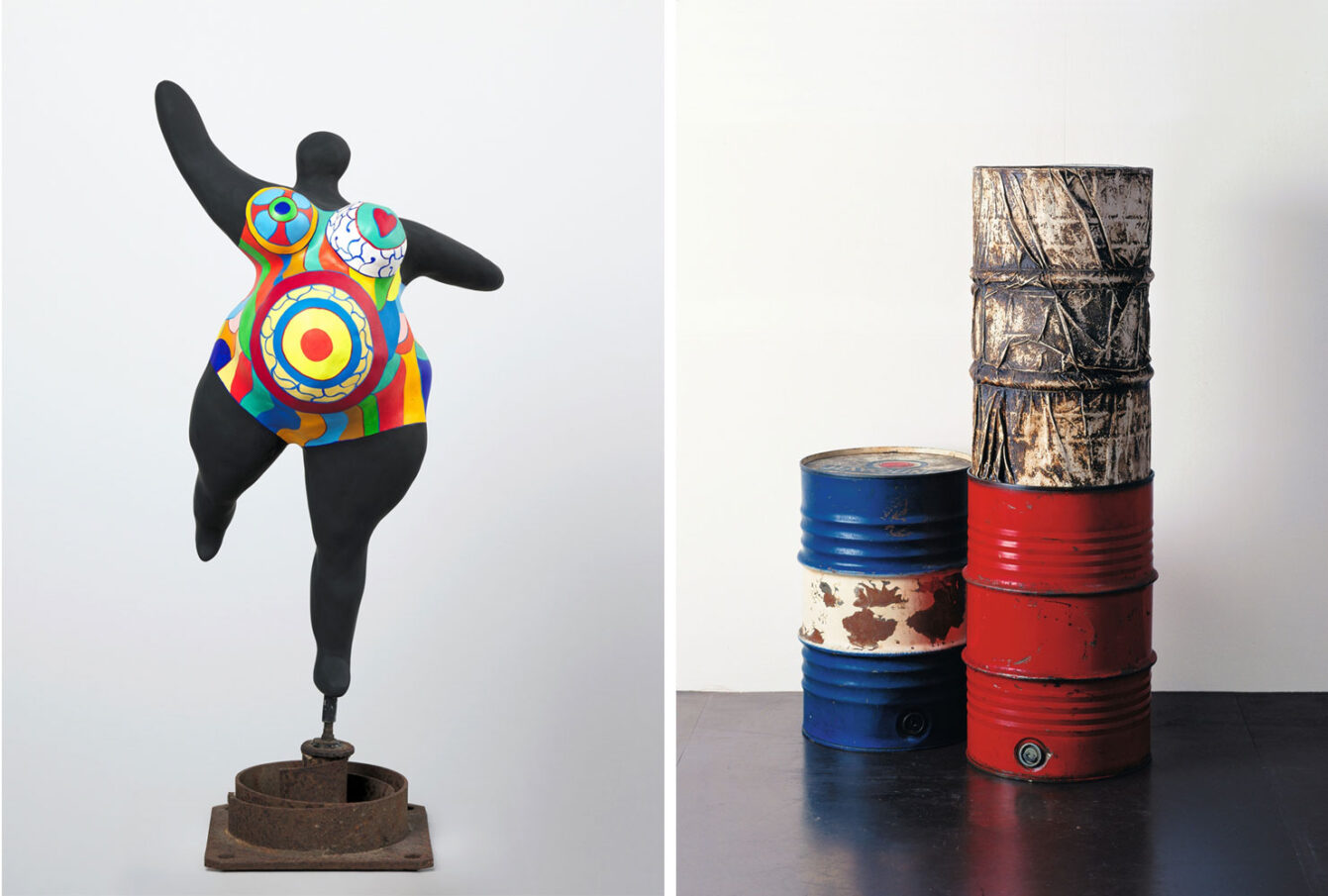
Right: Christo drei Ölfässer, 1958, Lehmbruck Museum Duisburg, VG Bild-Kunst, Bonn 2026, Photo: Wolfgang Volz (Christo)
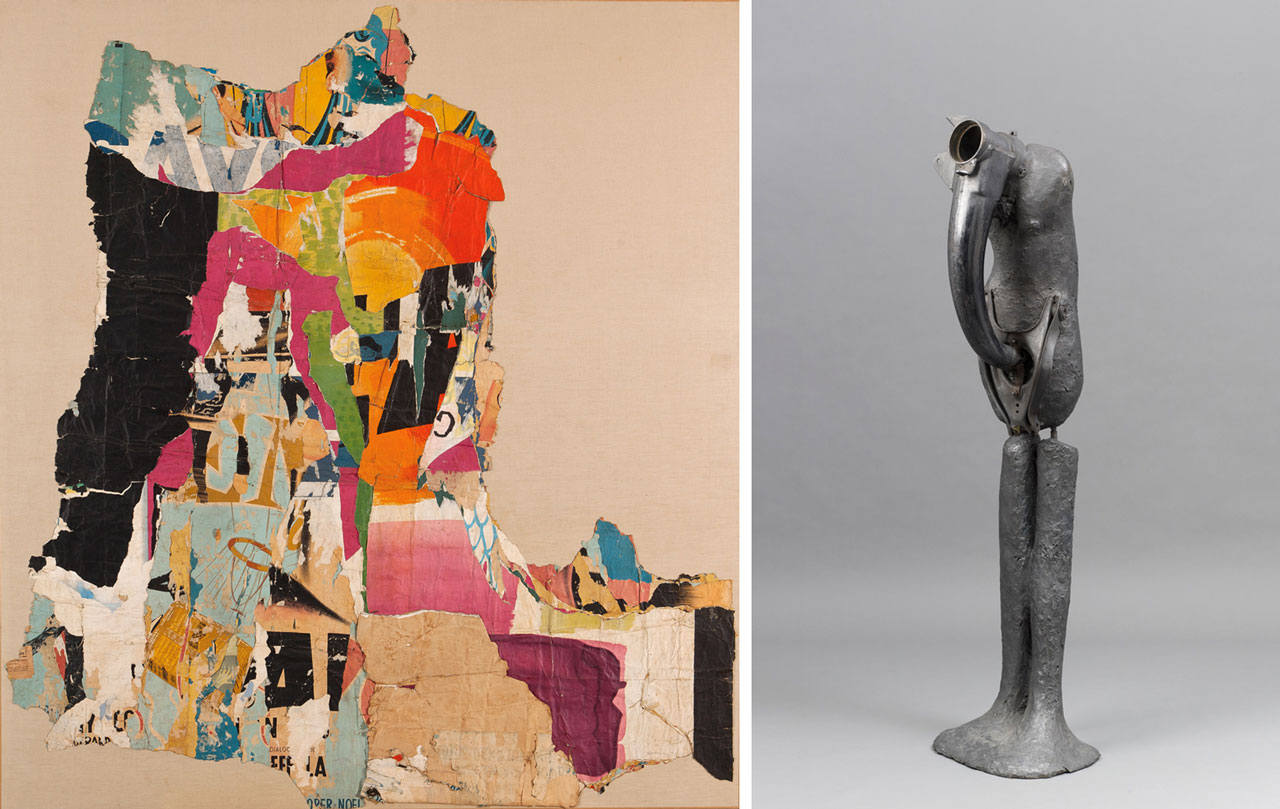
Right: Alina Szapocznikow, Człowiek z intrumentem, 1965, © ADAGP, Paris. Courtesy The Estate of Alina Szapocznikow | Galerie Loevenbruck, Paris | Hauser & Wirth, VG Bild-Kunst, Bonn 2026, Photo: Fabrice Gousset