ARCHITECTURE:Architects Of Liberation-Modernism In Western Africa
“Architects of Liberation: Modernism in Western Africa”, is the first major exhibition to examine modern architecture from the late 1950s through the early 1980s in the context of political independence in this region of Africa. The exhibition highlights the independence period as a prolific time of architectural production, during which leaders of newly founded African nations sought to redefine themselves and their countries in contrast to colonial rule. This new architectural identity engaged deeply with broader political ideas of Pan-Africanism and Africanization, which were promoted by new leaders and governments.
By Efi Michalarou
Photo: Moma Archive
“Architects of Liberation: Modernism in Western Africa” examines how architecture became a central instrument of political independence, nation-building, and cultural identity in West Africa during the decades following decolonization. Bringing together architectural drawings, photographs, models, and archival documents from seven countries (Benin, Cameroon, Côte d’Ivoire, Ghana, Nigeria, Senegal, and Togo) the exhibition explores how newly independent nations used architecture to express their aspirations for modernization while redefining themselves after colonial rule. It places particular emphasis on the first generation of professionally trained African architects, whose work combined international modernism with local traditions, climates, and cultural identities.
Following the wave of African independence that culminated in 1960, often referred to as the “Year of Africa,” governments across West Africa faced the challenge of constructing not only new political systems but also new national identities. This period coincided with a broader cultural revival in literature, music, visual arts, and architecture. Rather than simply adopting European modernist architecture, architects reinterpreted its principles to reflect local environmental conditions, indigenous building traditions, and the political goals of newly sovereign nations. Architecture therefore became a visible symbol of freedom, self-determination, and national progress.
One of the first priorities after independence was the development of modern infrastructure. Governments launched ambitious projects designed to promote industrialization, economic growth, and national integration. Large hydroelectric dams generated electricity needed for expanding industries and urban development, although they also displaced nearly 150,000 people whose homes were flooded by reservoirs. New transportation systems—including roads, railways, airports, and bridges—connected previously isolated regions, encouraged trade, and strengthened national unity among diverse populations. In some countries, entirely new capital cities, such as Yamoussoukro in Côte d’Ivoire and Abuja in Nigeria, were planned away from colonial administrative centers to symbolize a fresh political beginning and more balanced national development.
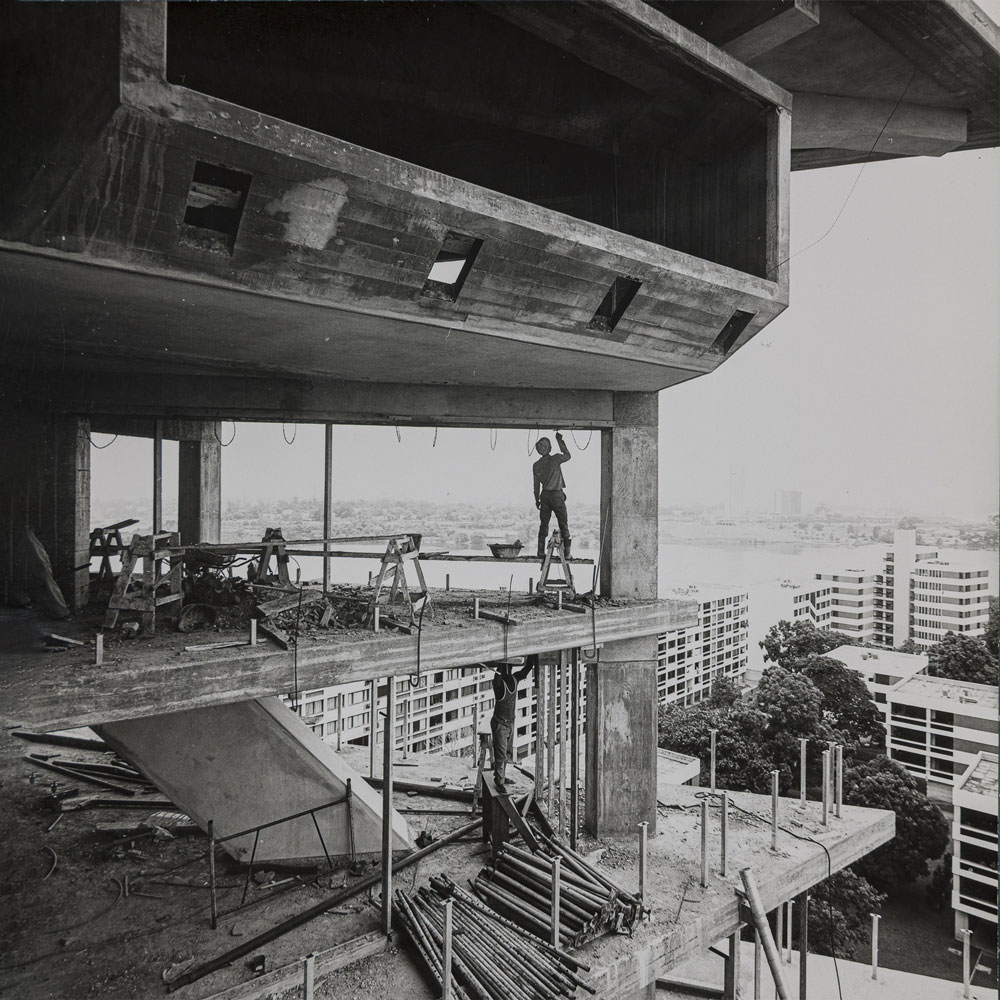
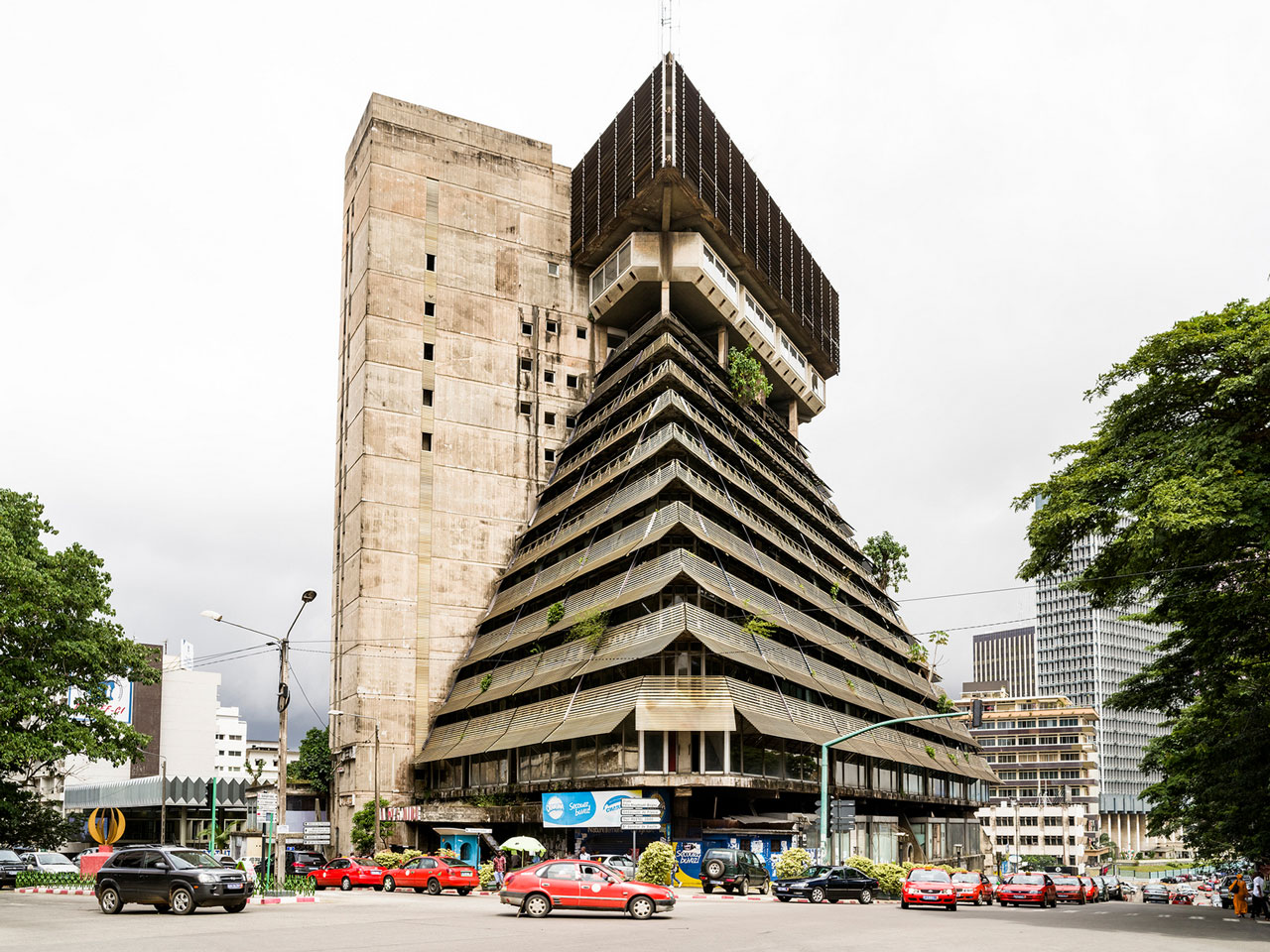
Rapid urbanization transformed many West African cities during this period. Economic growth encouraged the construction of commercial districts, government offices, and high-rise buildings that reshaped urban skylines. Lagos and Abidjan became leading examples of this transformation. In Lagos, government institutions and international companies commissioned landmark buildings designed by both Nigerian and British architects, reflecting the country’s economic ambitions. In Côte d’Ivoire, the economic boom driven by cocoa and coffee exports fueled the rapid expansion of Abidjan’s business district, Le Plateau. Modern towers, bridges, and iconic buildings such as “La Pyramide”, designed by Italian architect Rinaldo Olivieri, projected an image of prosperity and established the city as a major regional center.
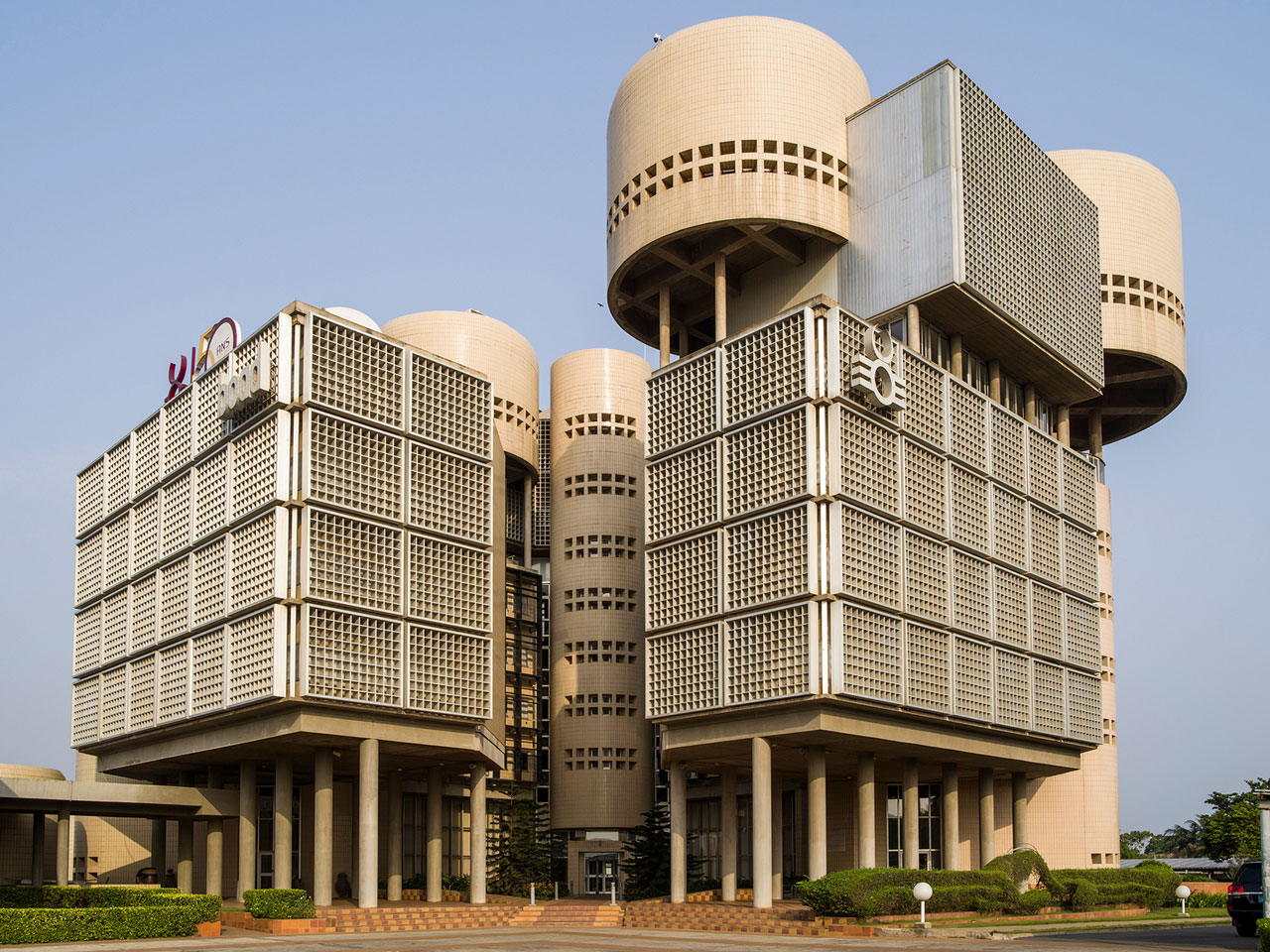
Public architecture played a significant role in expressing the values of newly independent states. Government ministries, banks, post offices, and civic buildings were designed with bold modern forms that deliberately broke away from colonial architectural traditions. Their innovative use of reinforced concrete, geometric forms, and climate-responsive features symbolized political independence, modernization, and confidence in the future. Beyond serving practical administrative functions, these buildings became visual representations of national identity and the optimism of the post-independence era.
Hotels also became important components of national development strategies. Governments recognized tourism and international diplomacy as essential to economic growth and commissioned luxury hotels to host foreign visitors, conferences, and political events. These buildings projected an image of cosmopolitanism and modernity while strengthening the international standing of newly independent nations.
Housing emerged as another major concern because rapidly expanding urban populations created severe shortages of accommodation. Governments developed affordable residential neighborhoods to reduce overcrowding and provide alternatives to informal settlements. At the same time, architects designed experimental private homes for political leaders and wealthier citizens that explored ways of adapting modern architecture to African climates and traditions. Some architects incorporated indigenous forms and local materials, while others embraced the International Style but modified it through features such as movable louvers, shaded terraces, and natural ventilation systems suited to tropical conditions.
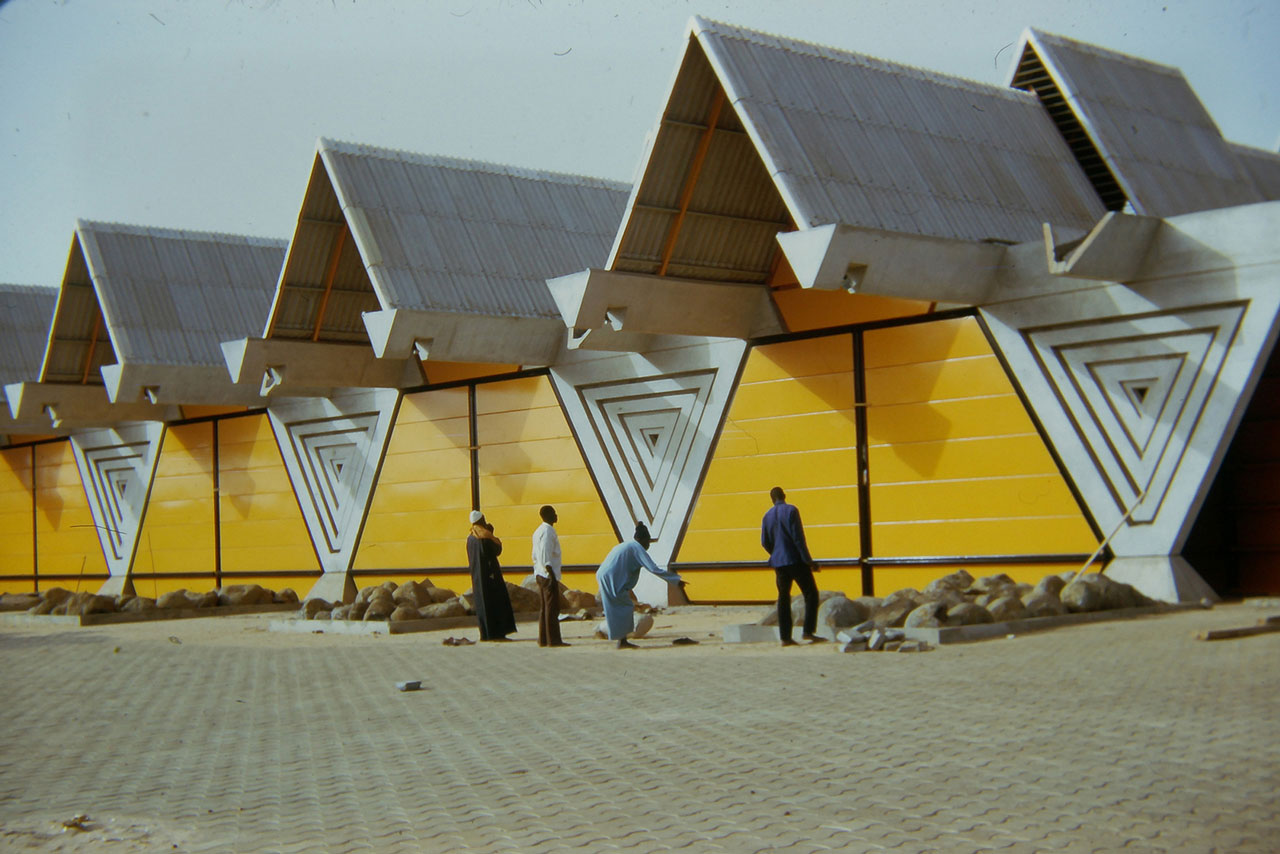
West African governments also invested heavily in exhibition halls, trade fairs, and cultural festivals as opportunities to present themselves to both domestic and international audiences. These projects strengthened diplomatic and commercial relationships while showcasing national achievements. Exhibition complexes provided architects with opportunities to experiment with innovative structural designs and geometric forms. One notable example is Senegal’s Centre International du Commerce Extérieur du Sénégal (CICES), whose repeated triangular design motif created a unified architectural identity throughout the complex.
A defining characteristic of post-independence architecture was the renewed appreciation of African cultural heritage. Colonial rule had often marginalized indigenous histories and building traditions, but newly independent governments sought to reclaim these traditions as foundations for modern national identities. Senegalese President Léopold Sédar Senghor became one of the strongest advocates of *Negritude*, a cultural and political philosophy celebrating African civilization and promoting a shared Black cultural consciousness. His vision inspired projects such as the proposed Musée des Civilisations Noires, intended to preserve and celebrate African history and culture.
This renewed interest in indigenous traditions also influenced architectural education and professional practice. Newly established universities and research institutions began documenting traditional African construction methods and settlement patterns, providing architects with new sources of inspiration. Nigerian artist and architect Demas Nwoko became one of the leading figures promoting the integration of indigenous artistic traditions with modern architecture. Through his magazine *New Culture* and his own architectural work, he demonstrated that contemporary African architecture could evolve from local craftsmanship and cultural heritage rather than relying solely on imported European models.
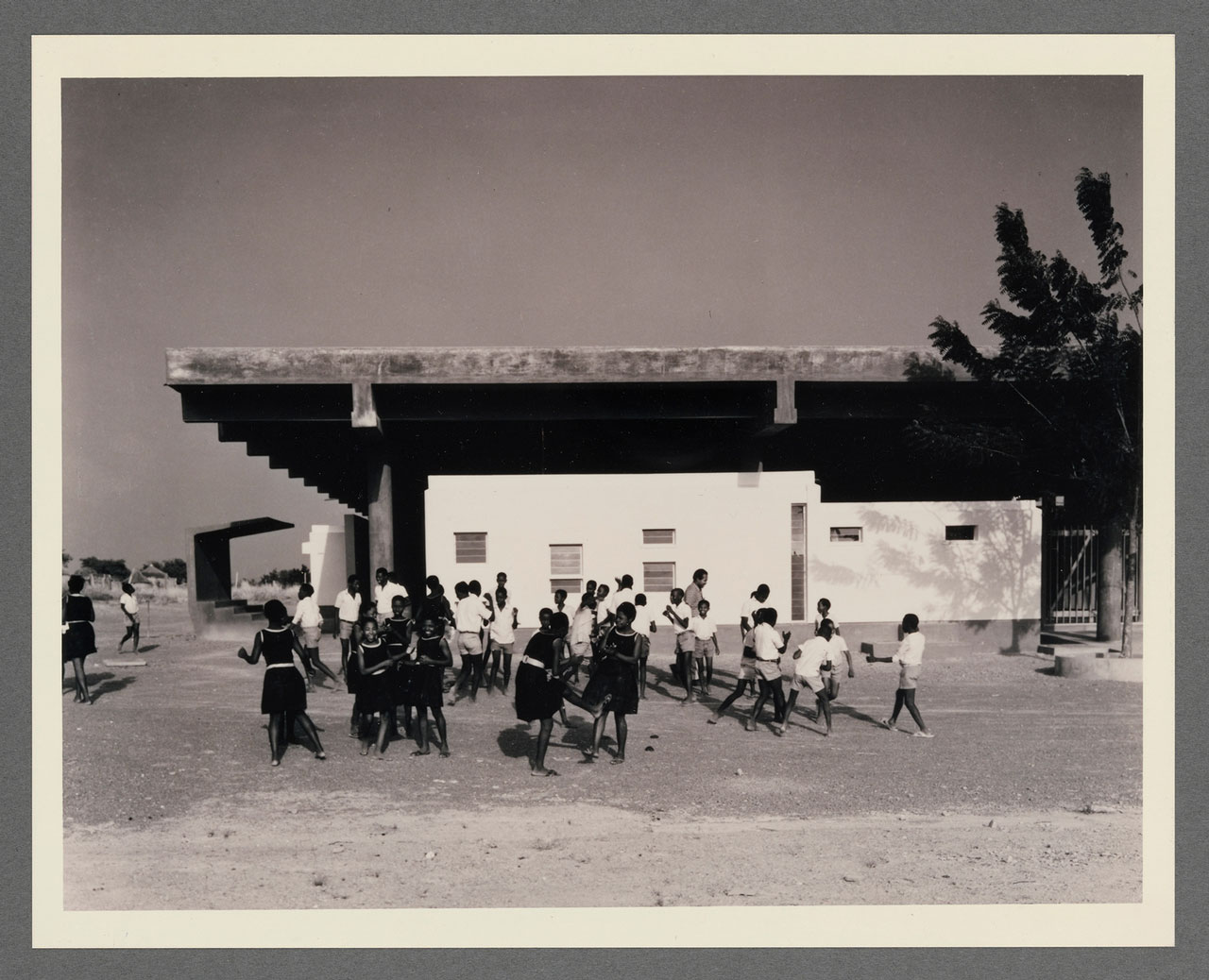
Education itself became a central objective of national development after independence. Since colonial governments had provided limited opportunities for higher education, newly independent countries invested heavily in schools, libraries, technical institutes, and universities. These institutions became important centers of architectural innovation, often featuring buildings specifically designed for tropical climates while reflecting national aspirations for scientific, technological, and intellectual progress. Universities such as the Institut National Polytechnique Félix Houphouët-Boigny in Côte d’Ivoire and the University of Ife (now Obafemi Awolowo University) in Nigeria trained the professionals needed to guide economic and social development.
Equally significant was the establishment of the first schools of architecture in sub-Saharan Africa. Previously, aspiring architects had generally been forced to study abroad, primarily in Europe. Local architecture schools enabled students to receive professional education within Africa while focusing on regional climates, indigenous materials, and the cultural needs of their own societies. This development encouraged the emergence of a new generation of African architects capable of creating buildings that reflected local identities rather than colonial models.
The exhibition highlights several architects whose careers illustrate the diversity of West African modernism. Jean Léon of Côte d’Ivoire became known for his innovative use of reinforced concrete and bold, futuristic forms. After returning from architectural studies in France, he worked on a wide range of public infrastructure projects before establishing his own practice. His most famous completed work, the auditorium at Lycée Mamie Adjoua in Yamoussoukro, resembles a futuristic spacecraft and demonstrates his willingness to experiment with structure and form. Although many of his visionary designs remained unbuilt, his sketches reveal remarkable creativity and optimism about his country’s future.
Cheikh Ngom is recognized as Senegal’s first native-born modern architect and one of the few Senegalese professionals to receive major public commissions during a period still dominated by French architects. His buildings, particularly the headquarters of the Central Bank of West African States (BCEAO) in Dakar, combined modernist principles with innovative geometric compositions and reinforced concrete construction. His work helped establish a distinctive architectural identity for independent Senegal.
Alan Vaughan-Richards represents another important approach to African modernism. Although originally from Britain, he rejected the tendency of many European architects to impose Western architectural solutions on African environments. Instead, he carefully studied indigenous Nigerian building traditions and incorporated them into modern architectural practice. His experimental houses near Lagos featured curved forms, locally sourced materials, close integration with the natural landscape, and design strategies inspired by traditional African construction. His work demonstrated that modern architecture could successfully combine international innovation with regional cultural knowledge.
The exhibition argues that architecture became one of the most powerful expressions of liberation in post-independence West Africa. Buildings served not only practical functions but also symbolized political freedom, economic ambition, cultural renewal, and national identity. Governments invested in infrastructure, housing, education, public institutions, and cultural facilities to demonstrate their commitment to modernization and self-reliance. At the same time, architects developed a unique form of modernism that respected local climates, indigenous traditions, and African cultural heritage. The resulting buildings continue to shape the urban landscapes of West Africa and stand as enduring symbols of the region’s determination to define its own architectural and cultural future after colonial rule.
Featured Architects and artists: John Owusu Addo, Victor (Vic) Adegbite, Raymond Aka Adjo, Jacques Nsangue Akwa, John Andrews, David Aradeon, Kader Attia, Babacar Bâ, James Barnor, Seydou Barry, Willis E. Bell, Zoran Bojović, Fernand Bonamy, J. Max Bond Jr., Robert Boy, Olivier-Clément Cacoub, Daniel Chenut, Henri Chomette, Jacek Chyrosz, Niksa Ciko, James Cubitt, Alpha Walid Diallo, Constantinos A. Doxiadis, Emilien Douala Bell, Jane Drew, Michel Ducharme, Guy Durand, Michel Ecochard, Augustine Akhuemokhan Egbor, Ousmane Faye, Yona Friedman, Edwin Maxwell Fry, R. Buckminster Fuller, François-Xavier Gbré, John Godwin, Heinz Fenchel, Messan Raphaël Ekoué-Hagbonon, Konrad Helbig, Nick Hollo, Gillian Hopwood, Aylette Jenness, Paul Kodjo, Stefan Kolchev, JeanFrançois Lamoureux, Christian Larras, Jean Léon, Ousseynou Ly, John Seyton Kole MacGregor, Miro Marasović, Jean Louis Marin, Philippe Ménard, Jean-Pierre Minost, Mordechai Moneh, Riccardo Morandi, Pier Luigi Nervi, Marilyn Nance, Cheikh Ngom, Bernard Nivet, Demas Nwoko, Marcello D’Olivo, Elpidio Olympio, Rinaldo Olivieri, Claude Parent, Charles Polónyi, Henry Pottier, Stanisław Rymaszewski, Armand Salomon, Kenneth Scott, Arieh Sharon, Hannah Shreckenbach, Thomas A. Todd, Alan Vaughan-Richards, Pedro Ramírez Vázquez, Gerhard Vetter, Carrie Mae Weems, Harry Weese
Photo: La Pyramide, Abidjan, Côte d’Ivoire. 1968–73. Rinaldo Olivieri (1931–1998). 2025. Photograph: François-Xavier Gbré
Info: Curators: Martino Stierli and Ikem Stanley Okoye, Assistant Curator: Mallory Cohen, MoMA (The Museum of Modern Art), 11 West 53 Street, Manhattan, New York, NY, USA, Duration: 5/7/2026-2/1/2027, Days & Hours: Mon-Thu & Sat-Sun 10:30-17:30, Fri 10:30-20:30, www.moma.org/
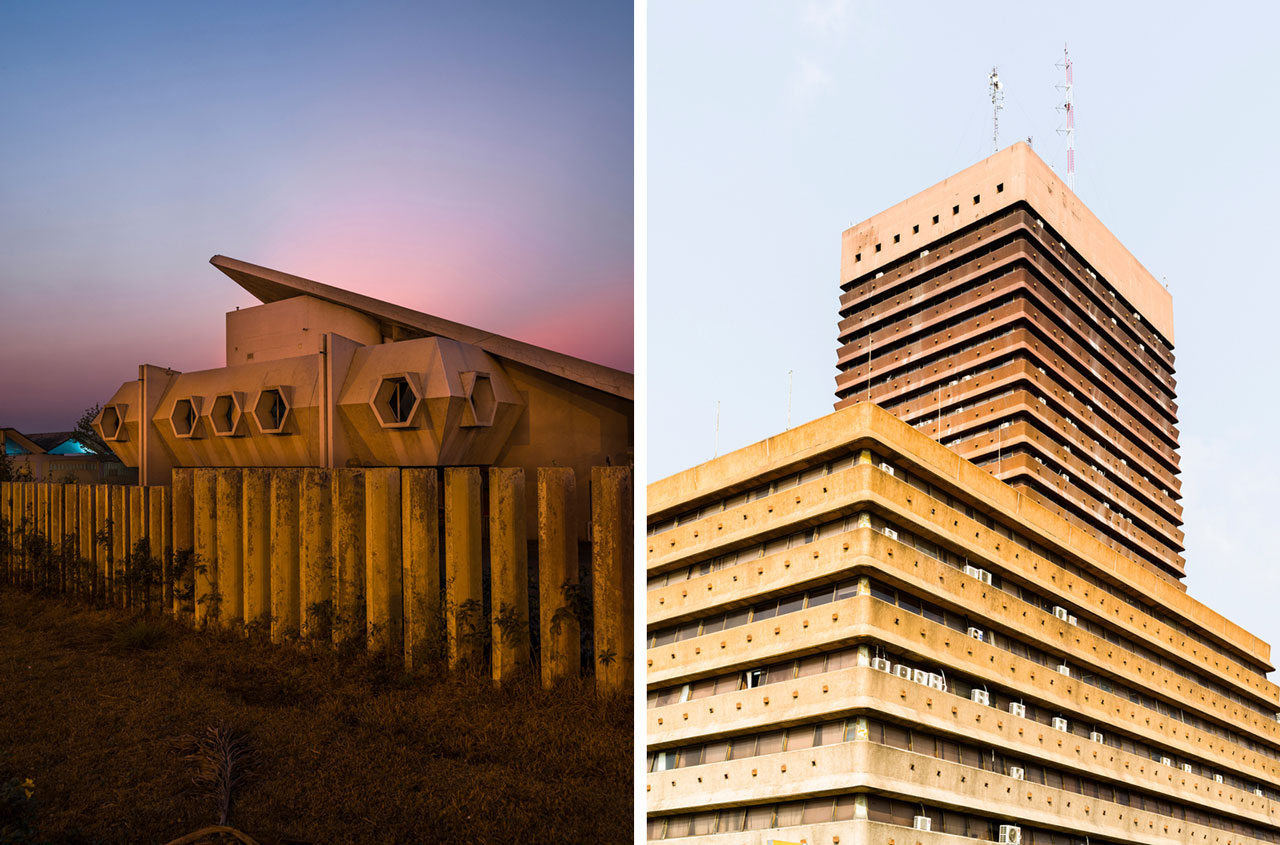
Right: Alpha 2000 (Société Ivoirienne de Banque), Abidjan, Côte d’Ivoire. 1974–76. Bureaux d’Études Henri Chomette (est. 1948). 2025. Photograph: François-Xavier Gbré