ART CITIES: Basel-Labouring Bodies
In the history of industrial modernity, the relationship between humans and machines has often been narrated through the image of the male factory worker: productive, disciplined, and integrated into the rhythms of industrial capitalism. The exhibition “Labouring Bodies”, challenges this familiar narrative by shifting attention toward bodies that have historically remained invisible within both art history and labour discourse. Through a feminist perspective, the exhibition examines how technology, labour, care, and reproduction intersect, revealing alternative histories of work and embodiment that extend from the early twentieth century to the digital present.
By Dimitris Lempesis
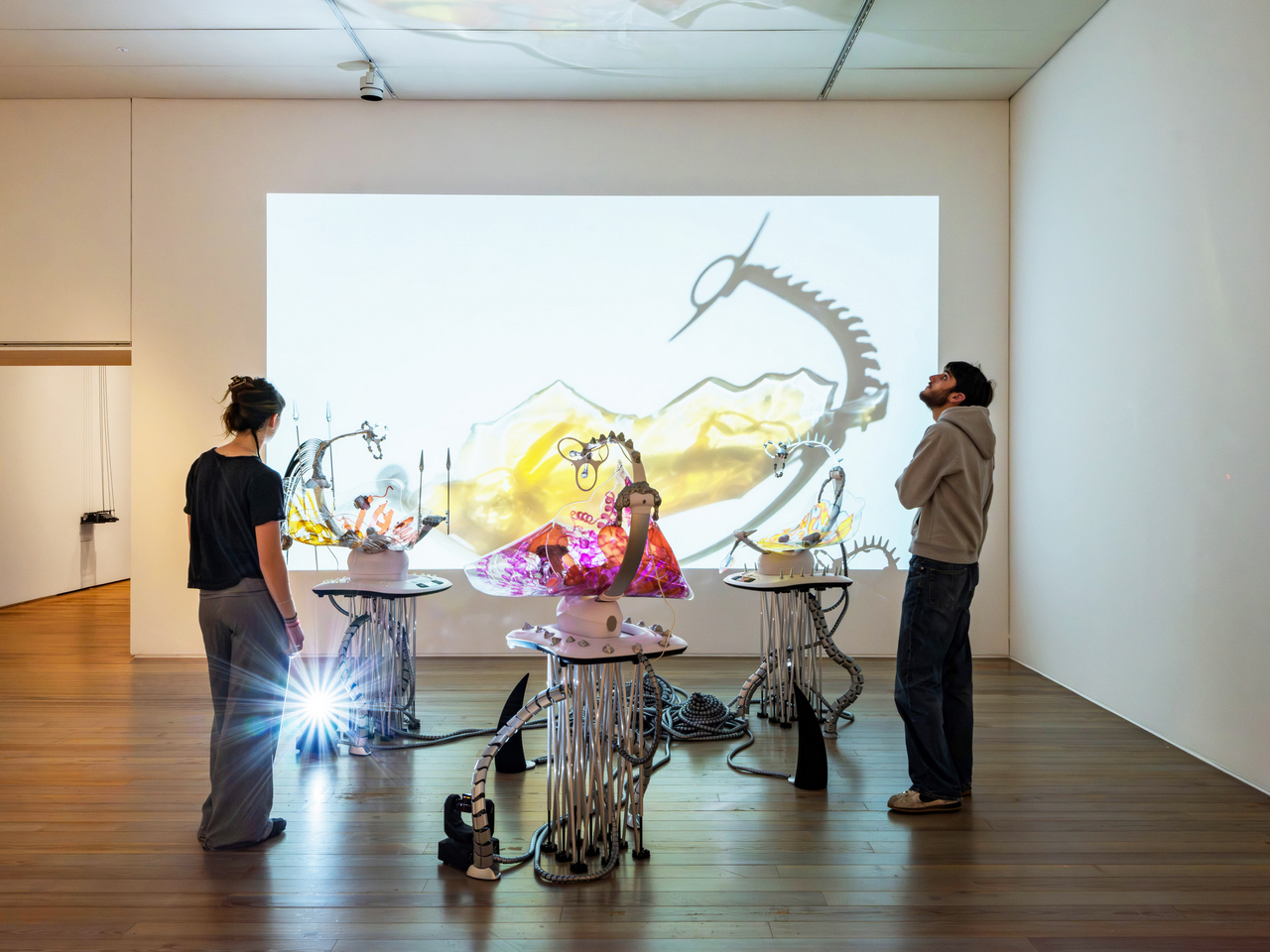
Photo: Museum Tinguely Archive
One of the exhibition’s central interventions is its critique of the dominant industrial image of labour. Rather than celebrating efficiency, productivity, and mechanized progress, “Labouring Bodies” foregrounds experiences of memory, care, vulnerability, and bodily knowledge.
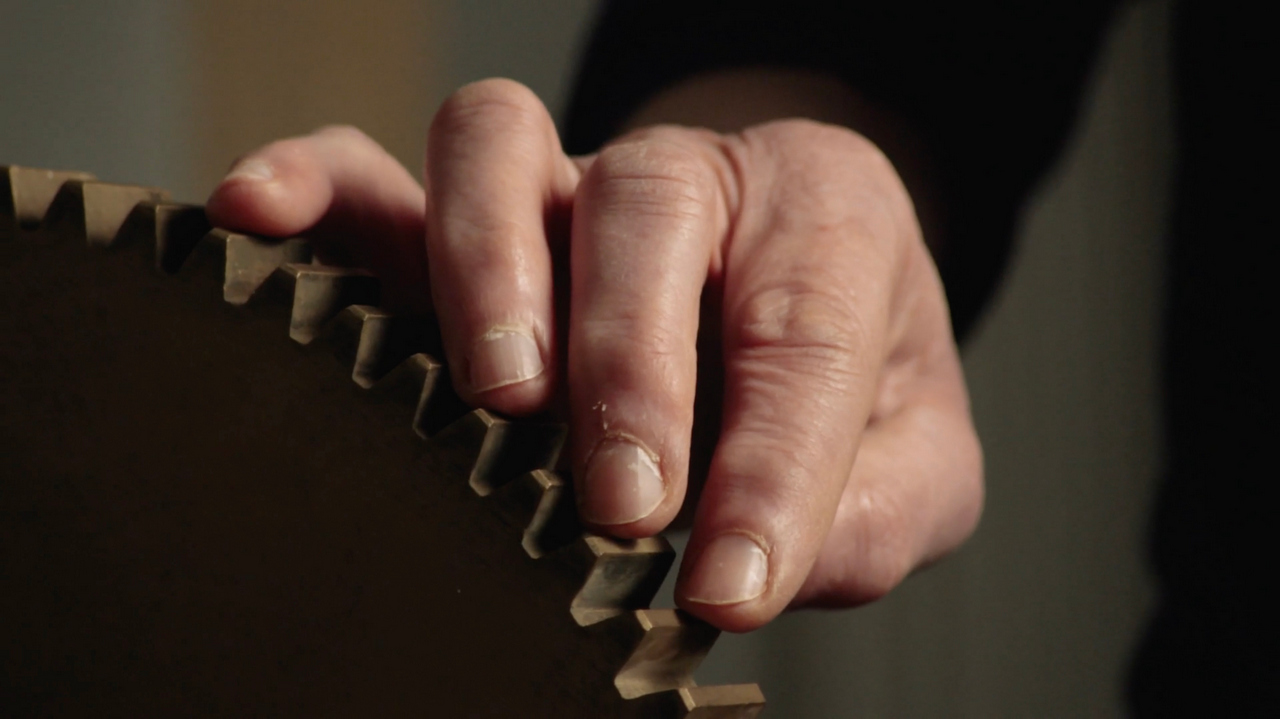
This approach is exemplified by Alexandra Navratil’s “The Night Side” (2016). Instead of depicting the energy and movement commonly associated with industrial production, the film focuses on the hand of a former factory worker gently touching machine parts. The gesture is intimate rather than productive, suggesting that labour is not merely an economic activity but also a deeply embodied experience shaped by memory and personal history. In this way, the work proposes an alternative understanding of human-machine relations—one based on touch, affect, and lived experience rather than technological mastery.
A major theme throughout the exhibition is the recognition of unpaid labour, particularly domestic and care work. Traditional economic systems tend to value wage labour while overlooking the reproductive and caring activities that sustain society. Feminist artists have long challenged this distinction.
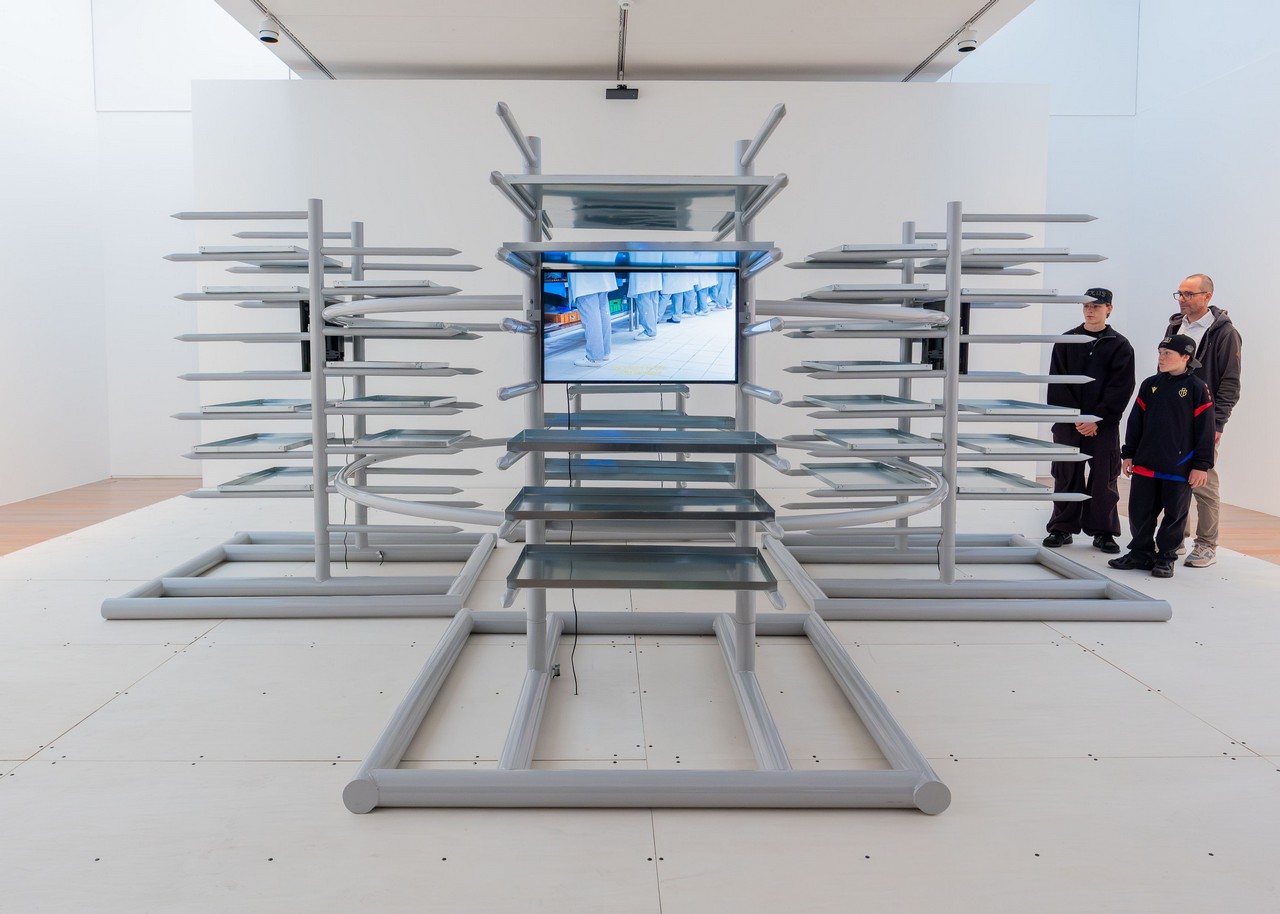
During the 1970s, artists associated with second-wave feminism questioned capitalist definitions of productivity. A notable example is Mary Kelly, whose 1974 installation juxtaposed footage from a tin-can factory with images of her pregnant body. By placing industrial production alongside biological reproduction, Kelly exposed the artificial separation between paid work and reproductive labour. The reconstruction of this rarely seen work in “Labouring Bodies” highlights its continuing relevance.
Similarly, Margaret Raspé documented the repetitive and seemingly endless routines of domestic life, while Helen Chadwick’s performance “In the Kitchen” (1977) critiqued the mechanization of housework. Chadwick transformed the kitchen into a technological system in which the female body appeared as one component of a larger machine, exposing how domestic labour often mirrors industrial forms of discipline and repetition.
Importantly, the exhibition also recovers earlier feminist perspectives. Artists such as Alice Lex-Nerlinger and Sella Hasse were already addressing the double burden placed on working women in the early twentieth century, demonstrating that critiques of gendered labour predate the feminist movements of the 1960s and 1970s.
The title “Labouring Bodies” carries a deliberate double meaning. Labour refers not only to work but also to childbirth, expanding the exhibition’s focus from economic production to biological reproduction.
A pivotal historical reference is “HON” (1966), created by Niki de Saint Phalle, Jean Tinguely, and Per Olof Ultvedt for the Moderna Museet. The monumental installation transformed the female body into a walk-in environment composed of technological, mechanical, and media elements. Rather than presenting the body as natural and separate from technology, “HON” depicted it as a hybrid construction shaped by culture and machinery.
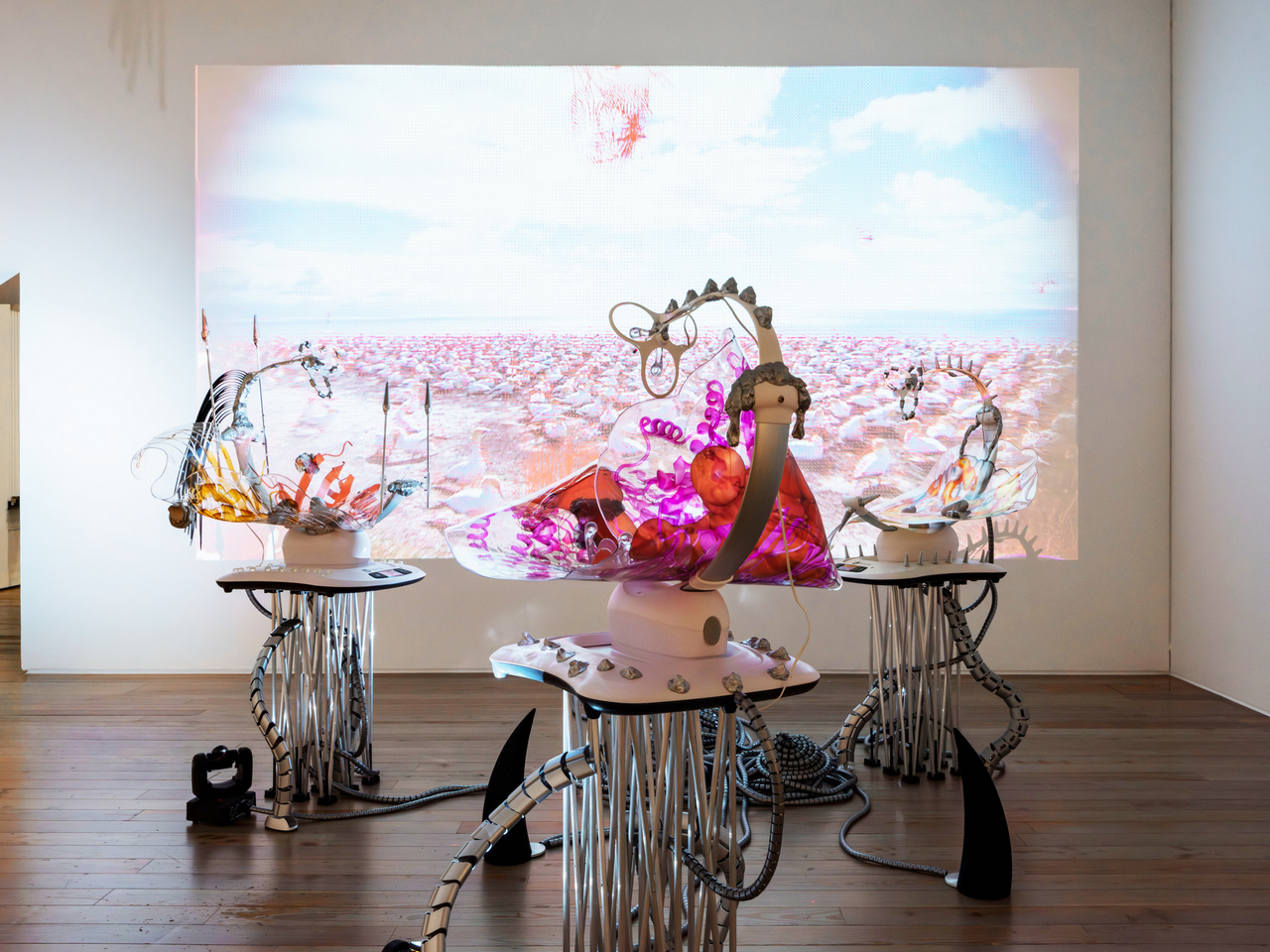
Contemporary artists extend these questions into the age of biotechnology and artificial intelligence. Works by Ani Liu and Katja Novitskova investigate the technologization of reproductive labour and speculate on future forms of care mediated by machines. Meanwhile, artists such as Juliana Huxtable, Frida Orupabo, and Tabita Rezaire examine how systems of power regulate female—and particularly Black female—bodies and their reproductive capacities. Their works reveal how technology can function not only as a tool of empowerment but also as an instrument of surveillance and control.
The exhibition further explores how technologies themselves acquire gendered meanings. Typewriters, adding machines, photocopiers, and computers have historically been associated with women performing repetitive administrative tasks. Yet these technologies have rarely been examined as sites where gender, labour, and machinery converge.
One of the exhibition’s most compelling contributions is its examination of the connections between textile production and digital technology. Historically, weaving was considered women’s work, while computing became increasingly associated with male expertise. Yet the origins of computer technology are deeply intertwined with textile production.
The exhibition highlights the contributions of Ada Lovelace, whose pioneering work laid foundations for modern computing but remained underappreciated for generations. It also reminds visitors that before computers were machines, “computers” were people—many of them women employed to perform calculations.
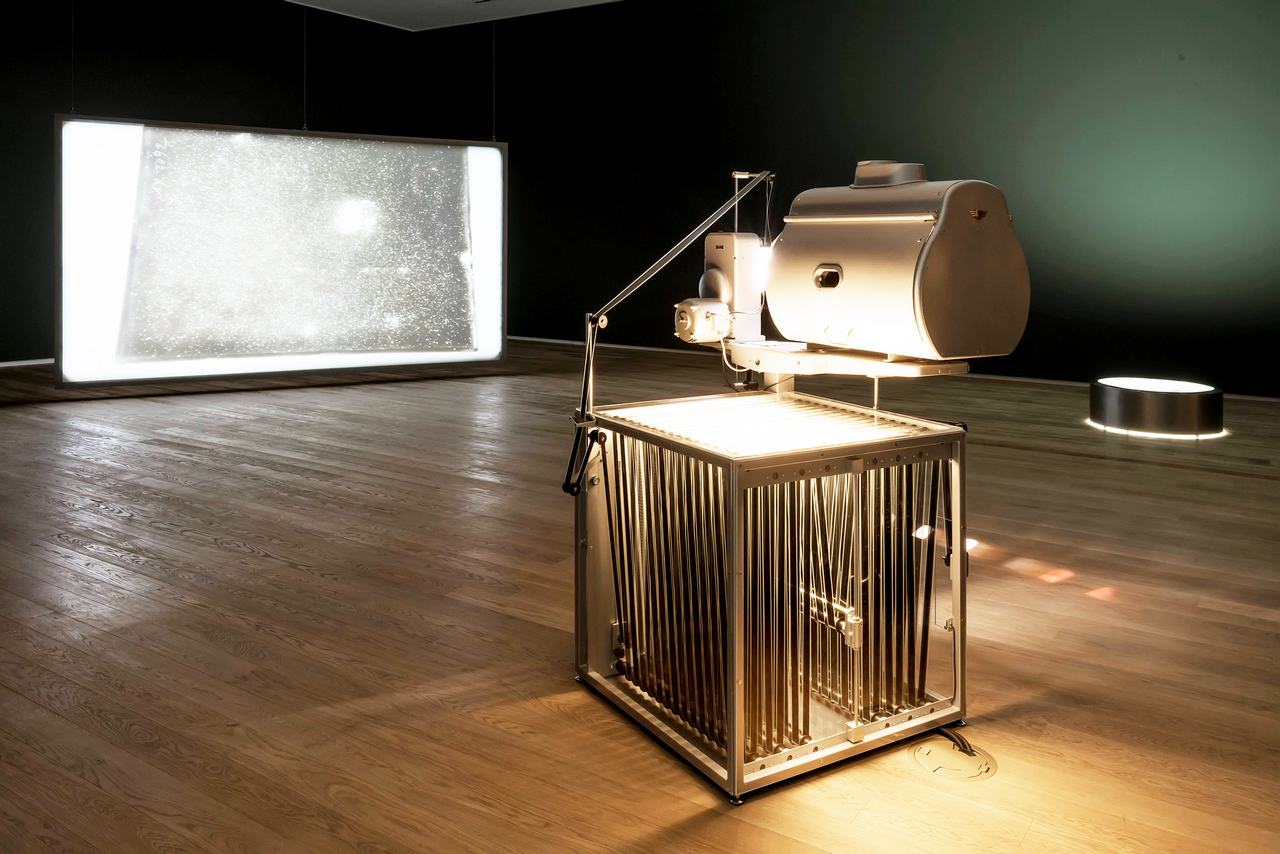
Through her work “Send Me Sky, Henrietta” (2018), Rosa Barba honours Henrietta Swan Leavitt, whose calculations enabled new methods for measuring cosmic distances. Her story exemplifies the often-overlooked contributions of women to scientific and technological progress.
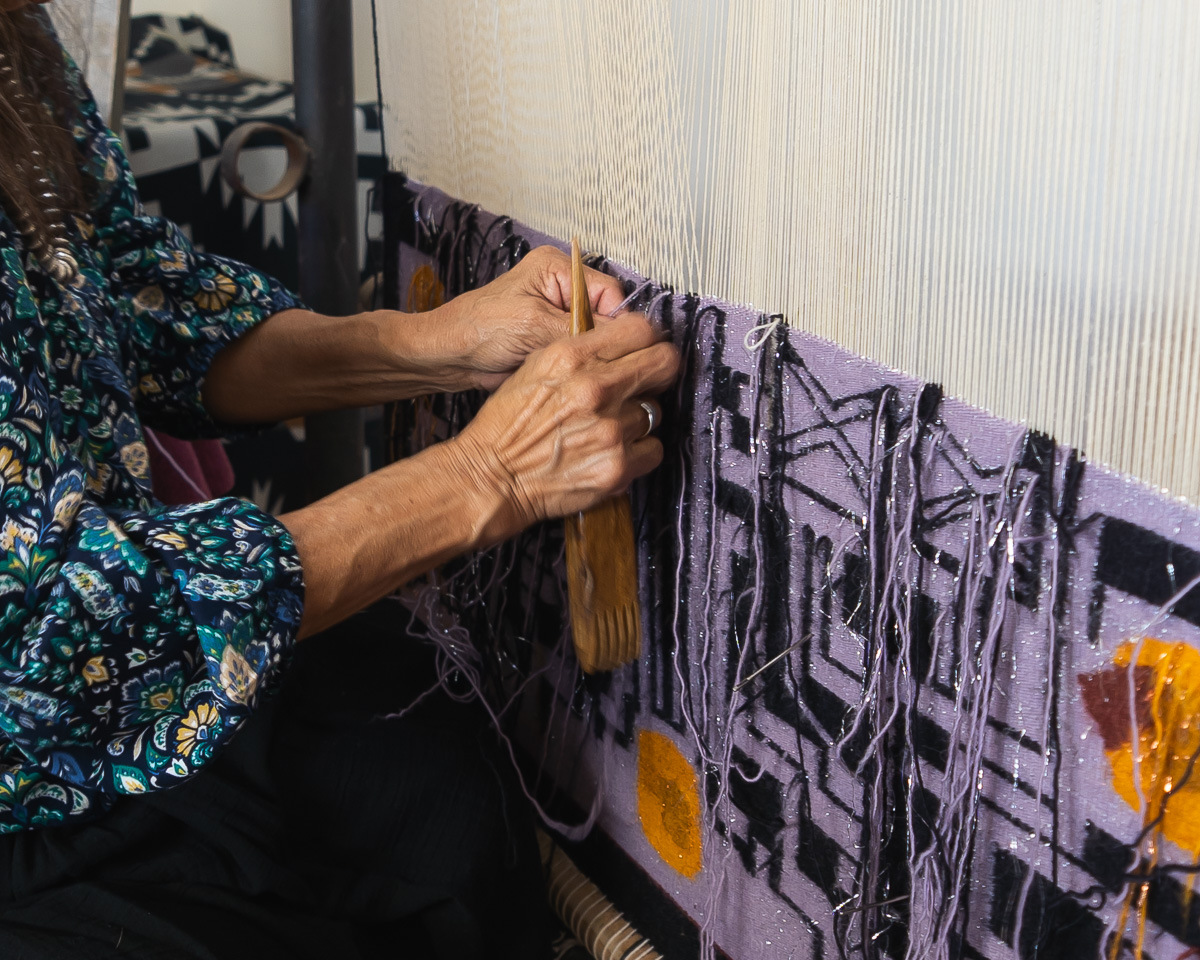
Equally significant is the specially commissioned Navajo rug by Marilou Schultz. Inspired by computer chips, the work visually links traditional weaving practices with the semiconductor industry. It also recalls the employment of Navajo women in early microchip manufacturing in the United States, revealing another hidden chapter in the history of technological labour.
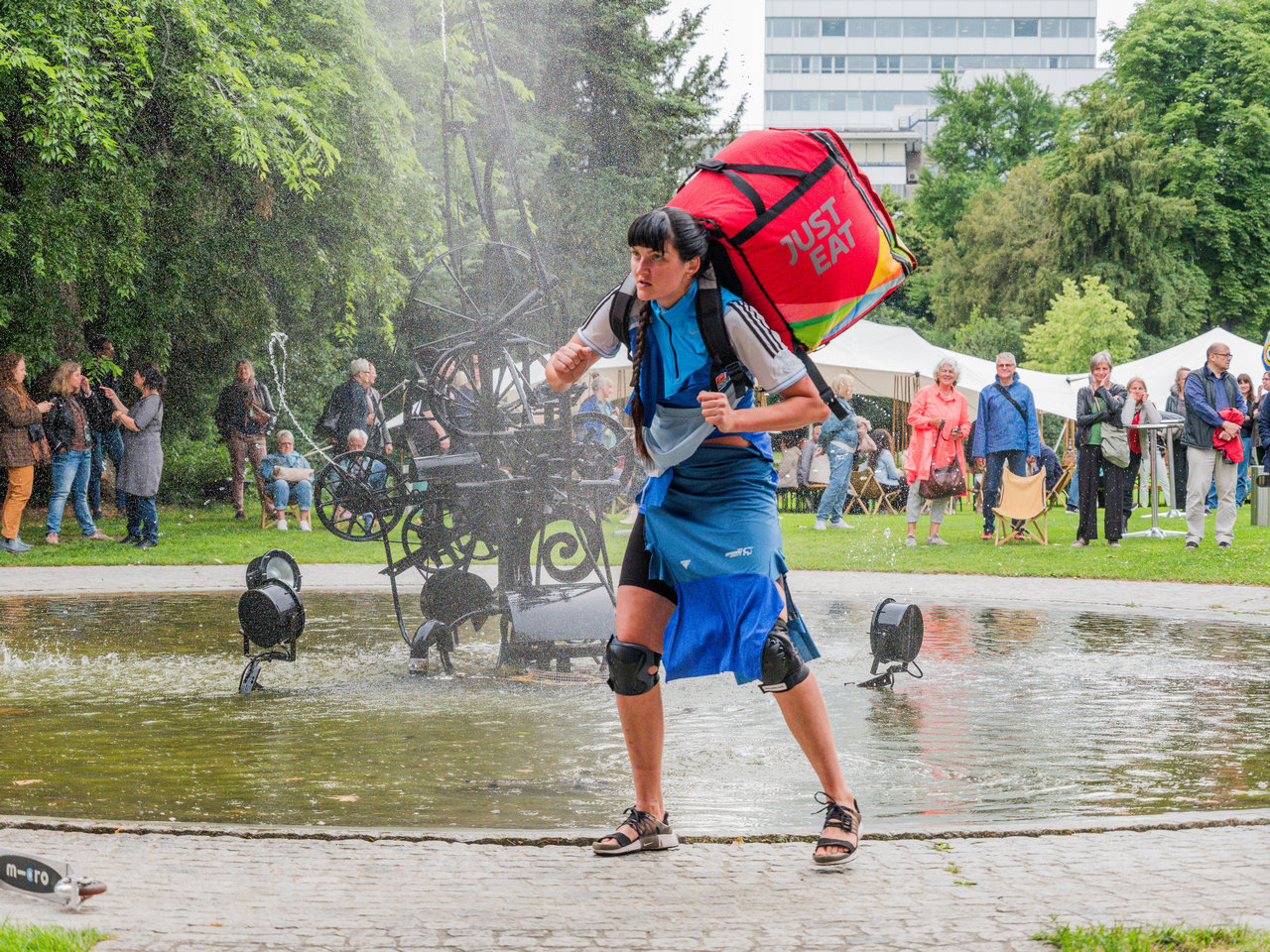
While much of the exhibition examines historical forms of labour, it also addresses contemporary conditions. New digital economies depend on vast amounts of invisible work, including data processing, content moderation, and algorithmic training performed by millions of workers worldwide.
By tracing connections between early forms of home-based labour and contemporary digital work, artists such as Daniela Brugger reveal how technological progress often reproduces older patterns of exploitation in new forms. The exhibition suggests that mechanization is not a completed historical process but an ongoing force shaping bodies, identities, and social hierarchies in the twenty-first century.
At its core, “Labouring Bodies” offers a critical response to contemporary enthusiasm surrounding human-machine integration. Rather than celebrating technological hybridity as inherently progressive, the exhibition asks who benefits from technological development, whose labour remains invisible, and how bodies continue to be disciplined through systems of production and reproduction.
Through its dialogue between historical and contemporary artworks, “Labouring Bodies” ultimately presents a more inclusive history of modernity—one that recognizes the workers, caregivers, mothers, clerks, weavers, and “human computers” whose contributions have too often been excluded from narratives of technological progress.
Works by: Berenice Abbott, Monira Al Oadiri, Rosa Barba, Clara Bausch, Alexandra Bircken, Thomas Brinkmann, Daniela Brugger, Ursula Burghardt, Feliza Bursztyn, CATPC, Mbuku Kim pala, Helen Chadwick, Sella Hasse, John Heartfield, Pati Hill, Rebecca Horn, Juliana Huxtable, Doruntina Kastrati, Mary Kelly, Aurora Kiraly, Kiki Kogelnik, Azade Kbker, Suzanne Lacy, Magda Langenstra -Uhlig, Alice Lex-Nerlinger, Elisabeth Niggemeyer, Ani Liu, Lee Lozano, Alexandra Navratil, Katja Novitskova, Ernestyna Orlowska, Frida Orupabo, Heiner Ranke, Mar garet Raspe, Tabita Rezaire, Evelyn Richter, Niki de Saint Phalle, Marilou Schultz, Jean Tin guely, Ruth Wolf-Rehfeldt, Doris Ziegler.
Photo: Marilou Schultz weaving Geo XX Diné Computer Chip Weaving, 2026, Photo Credit: Gabby Usinger
Info: Curator: Dr. Sandra Beate Reimann, Museum Tinguely, Paul Sacher-Anlage 1, Basel, Switzerland, Duration: 10/6-8/11/2026, Days & Hours: Tue-Sun 11:00-18:00, https://www.tinguely.ch/en.html