ART CITIES: London-Anish Kapoor
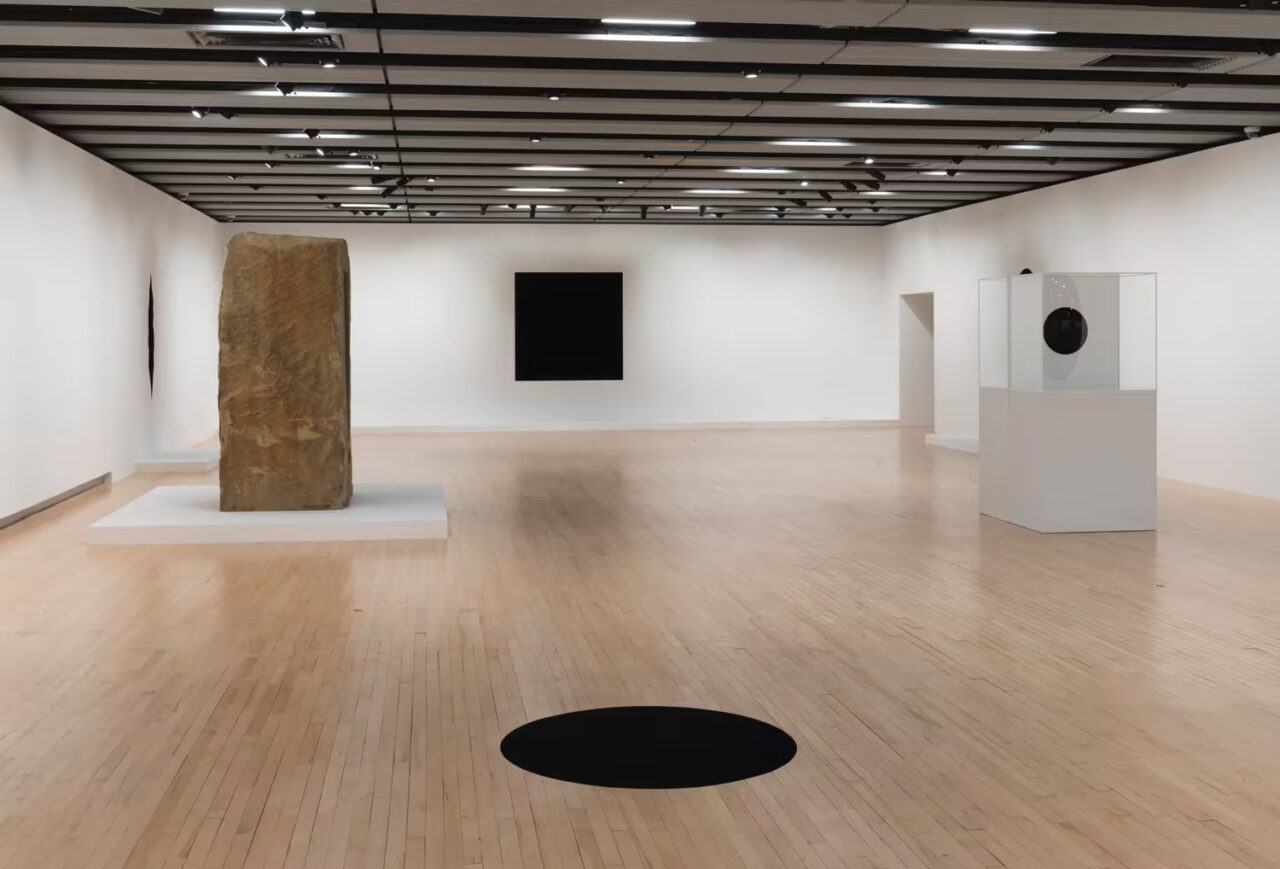
Few contemporary artists have challenged our understanding of space, materiality and perception as profoundly as Anish Kapoor. Over the course of four decades, Kapoor has relentlessly experimented with form and substance, creating sculptures and paintings that oscillate between the tangible and the unknowable. From seemingly bottomless voids and reflective mirror surfaces to monumental installations that engulf entire architectural spaces, his work continually asks viewers to reconsider the relationship between object, space and self.
By Efi Michalarou
Photo: Hayward Gallery Archive
Thw landmark exhibition at the Hayward Gallery marks Anish Kapoor’s highly anticipated return to the venue that hosted his first major UK survey in 1998. Occupying the entire gallery building and its outdoor terraces, the exhibition forms a centrepiece of the Southbank Centre’s 75th anniversary celebrations and serves as the final exhibition curated by Ralph Rugoff after two decades as Director of the Hayward Gallery.
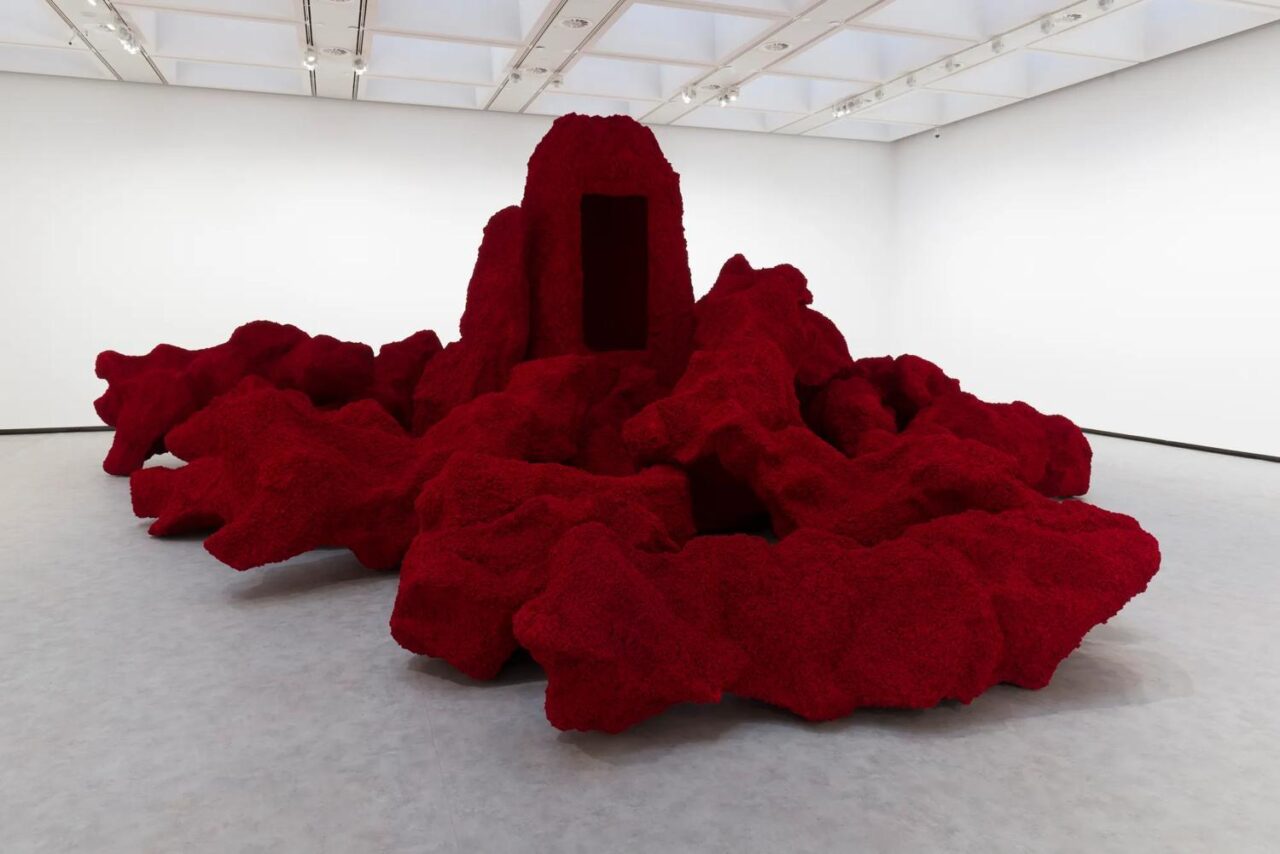
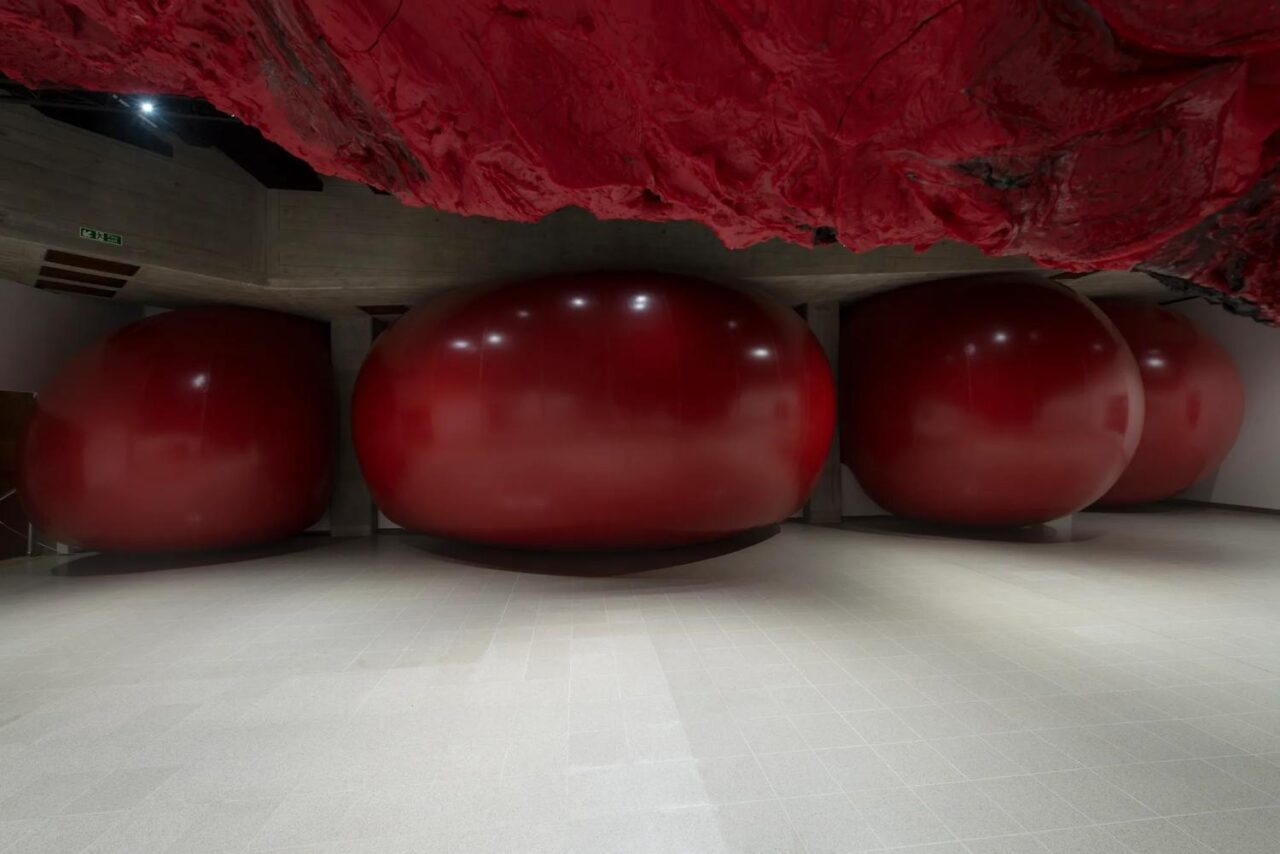
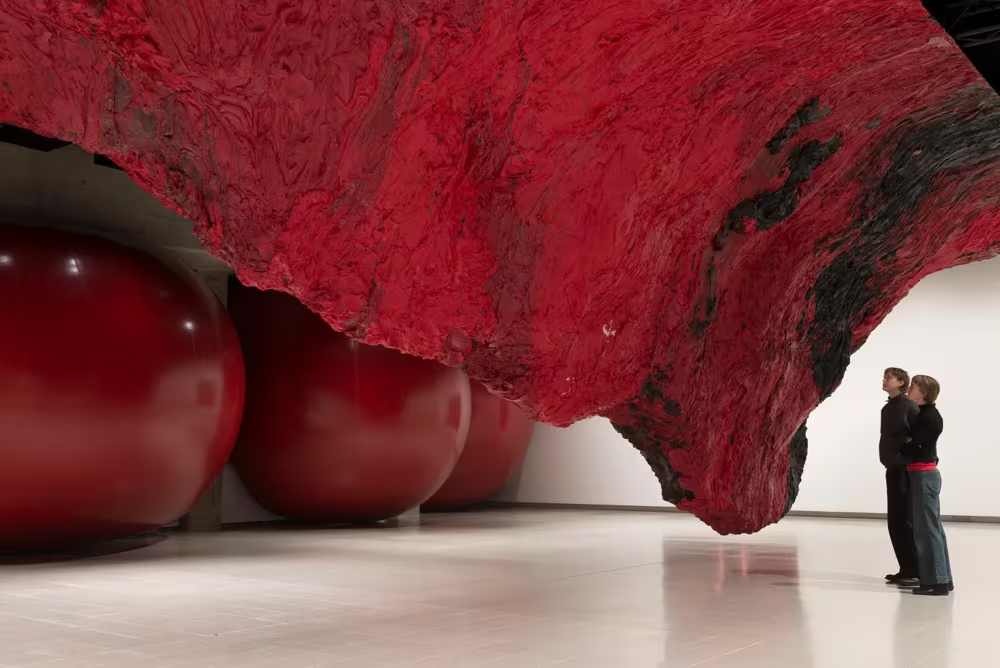
At the core of the exhibition are three monumental works that push sculpture beyond conventional boundaries, transforming entire sections of the Hayward into immersive environments. Visitors first encounter a colossal inflated PVC membrane that fills a six-metre-high gallery, stretching architecture to its limits and challenging our sense of scale, orientation and bodily presence. Elsewhere, a vast dark mountainous threshold looms over an expansive red landscape, creating a powerful dialogue between absence and presence, enclosure and openness. Completing this trio is Mount Moriah at the Gate of the Ghetto (2022), a gravity-defying work that descends dramatically from the ceiling, hovering only inches above the floor and generating a profound sense of tension and unease.
Throughout his career, Kapoor has been preoccupied with what he describes as “the space of the object” — the elusive territory where physical matter meets psychological and perceptual experience. This fascination is evident in the exhibition’s celebrated void works, whose seemingly infinite depths provoke feelings of wonder, uncertainty and vertigo. Rather than functioning as traditional sculptures, these works operate as perceptual puzzles, drawing viewers toward spaces that appear simultaneously present and absent.
Equally compelling are Kapoor’s iconic Vantablack sculptures. Coated in the light-absorbing nanotechnology often described as the blackest material ever created, these works challenge the very act of seeing. When viewed head-on, their surfaces absorb so much light that three-dimensional forms appear flattened into featureless voids, creating the uncanny impression that matter itself has disappeared. Kapoor uses this technological material not as a scientific novelty but as a means of questioning perception and the limits of visual knowledge.
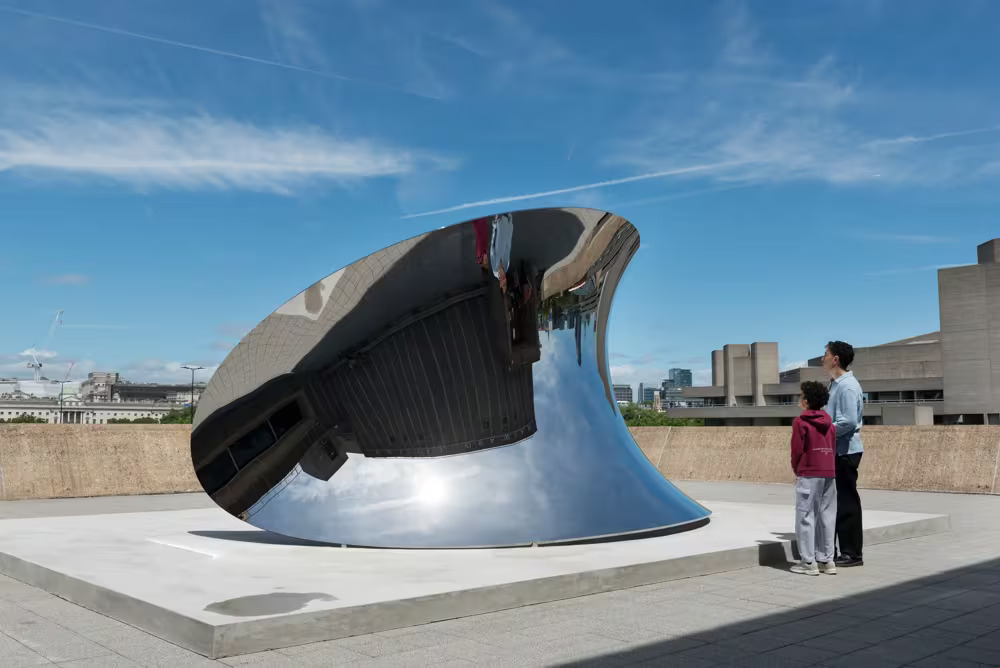
The exhibition also revisits another defining aspect of Kapoor’s practice: mirrored surfaces. His polished steel sculptures, including works that echo the spirit of celebrated public commissions such as “Sky Mirror” and Chicago’s “Cloud Gate” (“The Bean”), distort reflections and warp architectural surroundings into fluid, unstable images. Positioned both within the galleries and across the Hayward’s outdoor terraces, these works transform visitors into active participants, continuously reshaping their perception of space and movement.
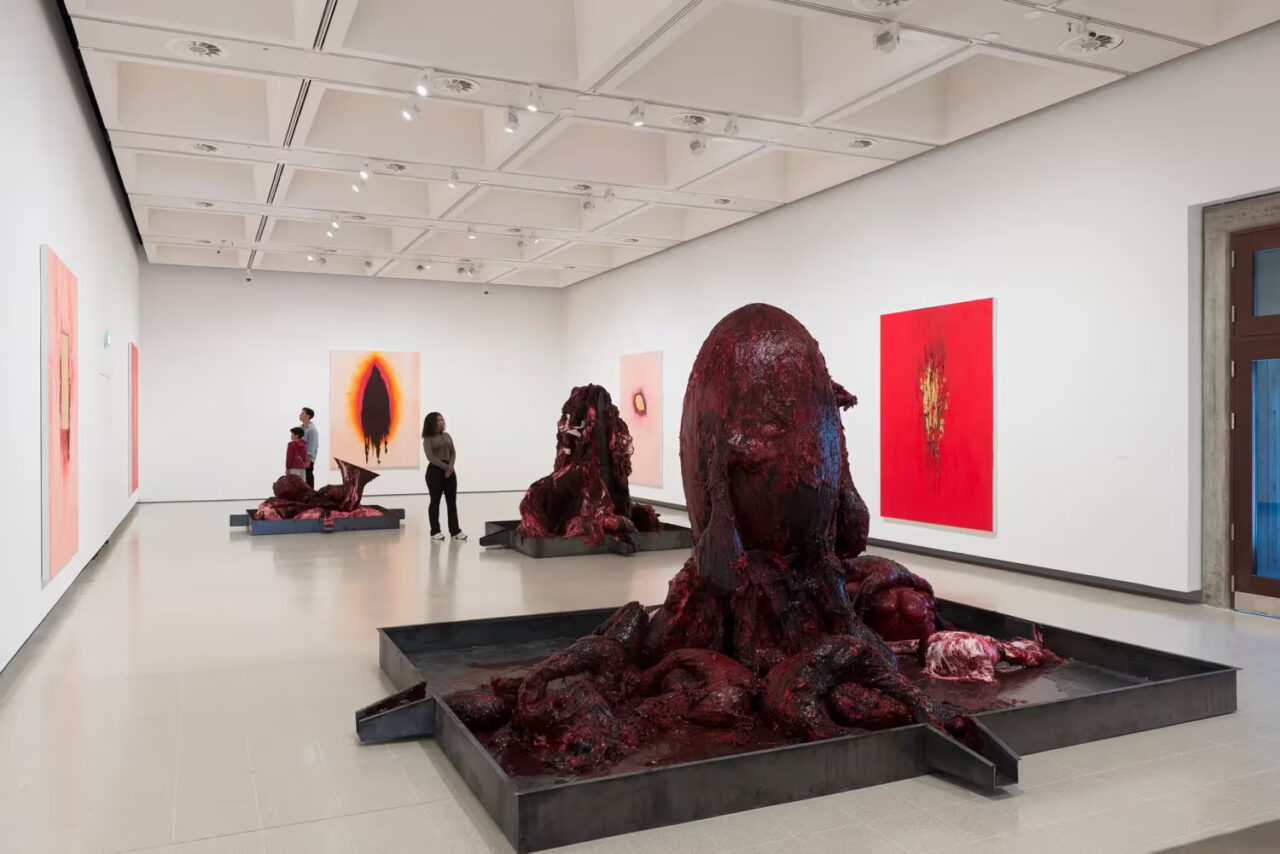
Alongside these immersive installations, Kapoor presents a body of recent paintings and sculptures that explore more visceral and corporeal themes. Created using silicone, resin and pigment, these works evoke exposed flesh, internal organs and bodily vulnerability. Their raw physicality stands in deliberate contrast to the polished perfection of the mirrors and the immaterial quality of the voids. Here, Kapoor confronts viewers with the fragility of human existence, prompting reflection on mortality, violence and the psychological impact of living in an age saturated with disturbing imagery.
Red, a colour that has long occupied a central place in Kapoor’s artistic vocabulary, dominates many of the exhibition’s newest works. Whether appearing as an immense landscape, a swollen architectural membrane or a bleeding sculptural form, red becomes a vehicle for multiple associations: creation and destruction, celebration and sacrifice, vitality and fear. Kapoor has frequently described colour as possessing emotional and symbolic power, and in these installations it functions as both material and metaphor.
What makes this exhibition particularly significant is the way it transforms the Hayward Gallery itself into an active component of the artwork. Many of the installations press against walls and floors, stretch across galleries or descend from ceilings, creating the sensation that the building is being reshaped from within. Rather than merely housing artworks, the architecture becomes part of Kapoor’s investigation into the boundaries between object and environment, interior and exterior, reality and illusion.
Nearly thirty years after his groundbreaking Hayward exhibition of 1998, Kapoor returns not with a retrospective but with a bold reaffirmation of his enduring artistic concerns. The exhibition demonstrates why he remains one of the most influential sculptors of our time: an artist capable of combining technical innovation, monumental scale and philosophical inquiry to create experiences that are at once disorienting, awe-inspiring and deeply human. Visitors leave not only having seen sculptures and paintings, but having encountered spaces that challenge the very nature of perception itself.
Photo: Anish Kapoor, Tsunami, 2025. © Anish Kapoor. All rights reserved, DACS, 2026. Photo: Dave Morgan
Info: Hayward Gallery, Southbank Centre, Belvedere Rd, London, United Kingdom, Duration: 16/6-18/10/2026, Days & Hours: Tue-Fri & Sun 10:00-18:00, Sat 10:00-20:00, www.southbankcentre.co.uk/