PRESENTATION: Video Killed the Radio Star
The 1980s remain one of the most influential and contradictory decades of the modern era. It was a period when dazzling images of consumer culture, fashion, music, and technological innovation coexisted with political tensions, economic restructuring, and global uncertainty. The exhibition “Video Killed the Radio Star: The 1980s and their Cultural Echoes”, presented at the Mudam Luxembourg – Musée d’Art Moderne Grand-Duc Jean, explores this pivotal moment in cultural history and examines how its legacy continues to shape contemporary society.
By Dimitris Lempesis
Photo: Moudam Archive
Marking the museum’s twentieth anniversary, the exhibition “Video Killed the Radio Star: The 1980s and their Cultural Echoes” brings together works from the Mudam Collection alongside important loans, inviting visitors to reconsider the decade that transformed the relationship between image, power, and identity.
The exhibition takes its title from the iconic 1979 song “Video Killed the Radio Star” by The Buggles, a cultural prophecy that anticipated the growing dominance of visual media. During the 1980s, television, advertising, and music videos increasingly shaped public consciousness. The launch of MTV in 1981 accelerated a shift from auditory to visual culture, establishing image as a primary vehicle of communication and influence. Yet the same screens that broadcast pop stars and consumer fantasies also transmitted images of political crises, environmental disasters, and international conflicts. The decade witnessed the coexistence of spectacle and anxiety, glamour and catastrophe. As the exhibition suggests, the birth of MTV and the shadow of the Chernobyl disaster were experienced through the same mediated lens.
Beyond its visual culture, the 1980s marked a profound political and economic transformation. The final years of the Cold War coincided with the rise of neoliberal policies associated with leaders such as Margaret Thatcher and Ronald Reagan. Deregulation, privatization, and the celebration of market values reshaped Western societies and influenced global economic structures. These changes affected not only politics but also cultural production, encouraging new forms of individualism and consumerism. The exhibition situates artistic developments within this broader context, revealing how artists responded to a rapidly changing world in which economic and political forces increasingly shaped everyday life.
Structured in two parts, the exhibition first examines the aesthetic revolutions of the early 1980s. Artists from post-war generations challenged the universal narratives that had long dominated Western art history. Rather than accepting singular interpretations of culture and identity, they explored fragmentation, plurality, and the instability of meaning. These artistic strategies reflected broader intellectual developments associated with postmodernism, while also anticipating the emergence of critical perspectives that questioned established structures of power.
The second section addresses the socio-political realities of the decade and their enduring relevance. Here, the exhibition highlights the growing influence of cultural criticism, feminist thought, and queer theory, movements that expanded and contested dominant narratives. These perspectives challenged assumptions about gender, sexuality, race, and representation, opening new possibilities for understanding identity and social relations. Their influence remains visible today in debates surrounding inclusion, diversity, and the politics of representation.
A remarkable feature of the exhibition is its broad selection of artists whose works illuminate different dimensions of the decade. Photographers such as Nan Goldin and Cindy Sherman explored identity, intimacy, and performance, challenging conventional representations of gender and selfhood. The architectural photographs of Bernd and Hilla Becher documented industrial structures with systematic precision, while artists such as Andreas Gursky and Thomas Struth examined the increasingly complex visual environments of late modernity. Together, these works reveal how artists engaged with the changing social and technological realities of the period.
The exhibition also creates a dialogue between historical and contemporary voices. Alongside artists associated with the 1980s, works by younger generations, including Anne Imhof, Sondra Perry, and Joyce Joumaa, demonstrate how many of the decade’s concerns continue to resonate today. Questions surrounding surveillance, media representation, identity construction, and technological mediation have become even more urgent in the age of social media, artificial intelligence, and algorithmic governance.
Perhaps the exhibition’s most compelling argument is that the 1980s were not merely a historical period but the beginning of a condition that defines contemporary life. The transition from ownership to access, identified by the curators as one of the decade’s defining shifts, anticipated today’s digital economy of streaming platforms, subscription services, and cloud-based technologies. Similarly, the increasing dominance of visual communication foreshadowed contemporary cultures of social networking, influencer marketing, and image-based self-presentation. What emerged in the 1980s as a new media landscape has evolved into a world characterized by constant connectivity and hypermediation.
By revisiting the decade through contemporary art, “Video Killed the Radio Star” encourages reflection on the origins of many of today’s cultural tensions. The exhibition asks what has been inherited from the 1980s and what may have been lost along the way. In an era increasingly shaped by algorithmic influence, mediated intimacy, and post-truth politics, these questions feel particularly urgent. Rather than offering nostalgia, the exhibition presents the 1980s as a crucial turning point—a moment when many of the tools, desires, contradictions, and anxieties of the twenty-first century first came into focus. Through its rich selection of artworks and historical perspectives, the exhibition demonstrates that understanding the 1980s is essential to understanding the world we inhabit today.
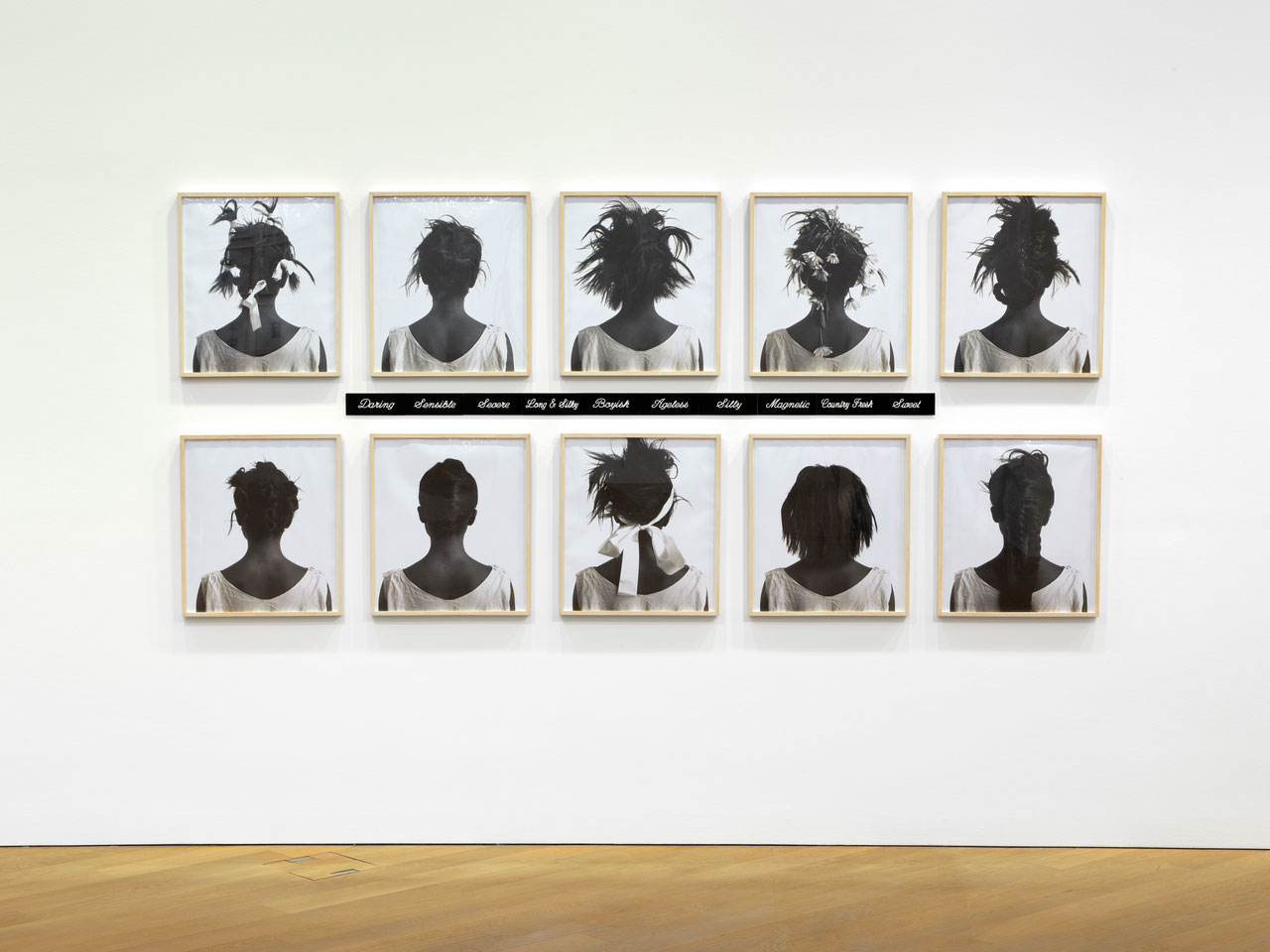
Works by: Bernd & Hilla Becher, Daniel Buren, Victor Burgin, Sophie Calle, Mel Chin, Günthe Förg, General Idea, Nan Goldin, Jack Goldstein, Andreas Gursky, Peter Halley, Anne Imhof, Joyce Joumaa, Isaac Julien, Martin Margiela, Park McArthur, Albert Oehlen, Grayson Perry, Sondra Perry, Josephine Pryde, Julika Rudelius, Sarkis, Julian Schnabel, Thomas Schütte, Cindy Sherman, Lorna Simpson, Michael E. Smith, Thomas Struth, Leyla Yenirce. These works will be joined by loans by artists including 4FSB, Bless, Rhea Dillon, Andrzej Steinbach, Vivienne Westwood, Alvin Baltrop, Harun Farocki, Roman Ondak, Martin Wong, Hélène Yamba-Giumbi, Richard Haughton, Michel Majerus and Angharad Williams.
Photo: Hélène Yamba-Guimbi, Foreign (1), 2025, Courtesy of the artist, Photo: Nicolas Brasseur, Photo: Nicolas Brasseur
Info: Curators: Bettina Steinbrügge, Assistant Curators: Caroline Honorien and Alexine Taddeï, Mudam Luxembourg – Musée d’Art Moderne Grand-Duc Jean, 3 Park Drai Eechelen, Clausen Luxembourg, Luxemburg, Duration: 12/6-17//10/2026, Days & Hours: Tue & Thu-Sun 10:00-18:00, Wed 10:00-21:00, www.mudam.com/
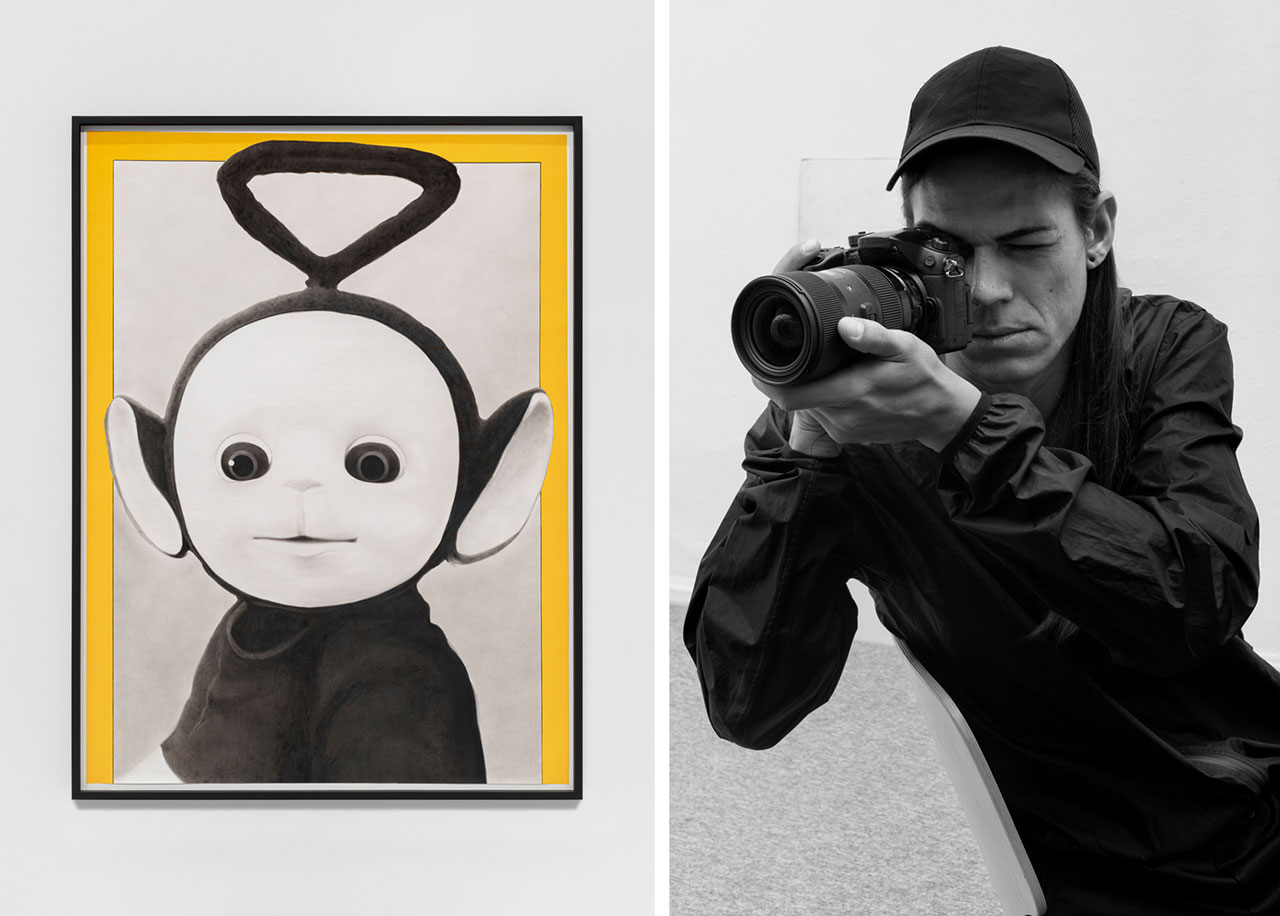
Right: Andrzej Steinbach, Untitled (from the Series Der Apparat), 2019 Courtesy of the artist and KIN
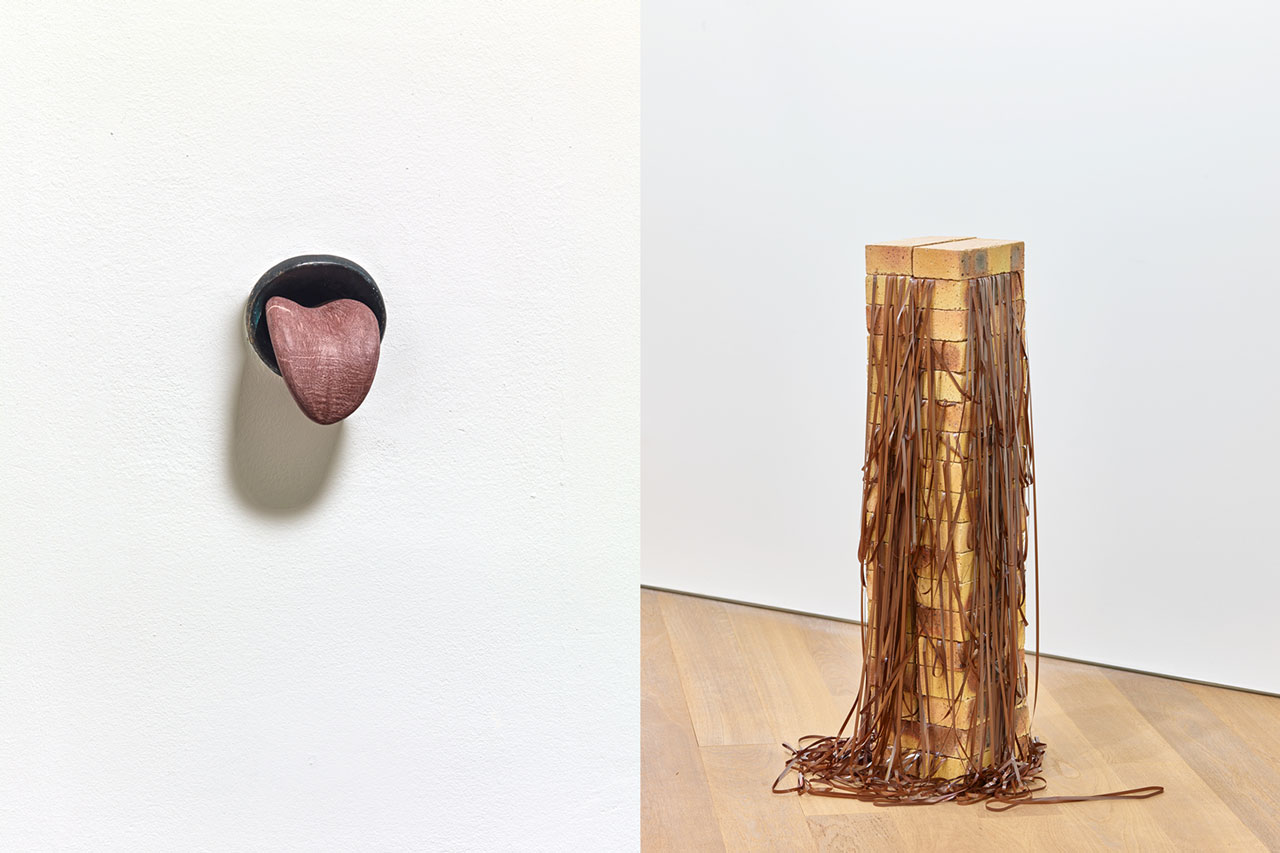
Right: Sarkis, La Sculpture Verticale en Brique et Bandes Magnétiques, 1984, Mudam Luxembourg Collection –Musée d’Art Moderne Grand-Duc Jean, Deposit 2006 – Collection M.J.S., Paris, Exhibition view Les 25 ans de la Collection Mudam, Mudam Luxembourg, 21.11.2020–29.05.2023, Photo: Rémi Villaggi © Mudam Luxembourg
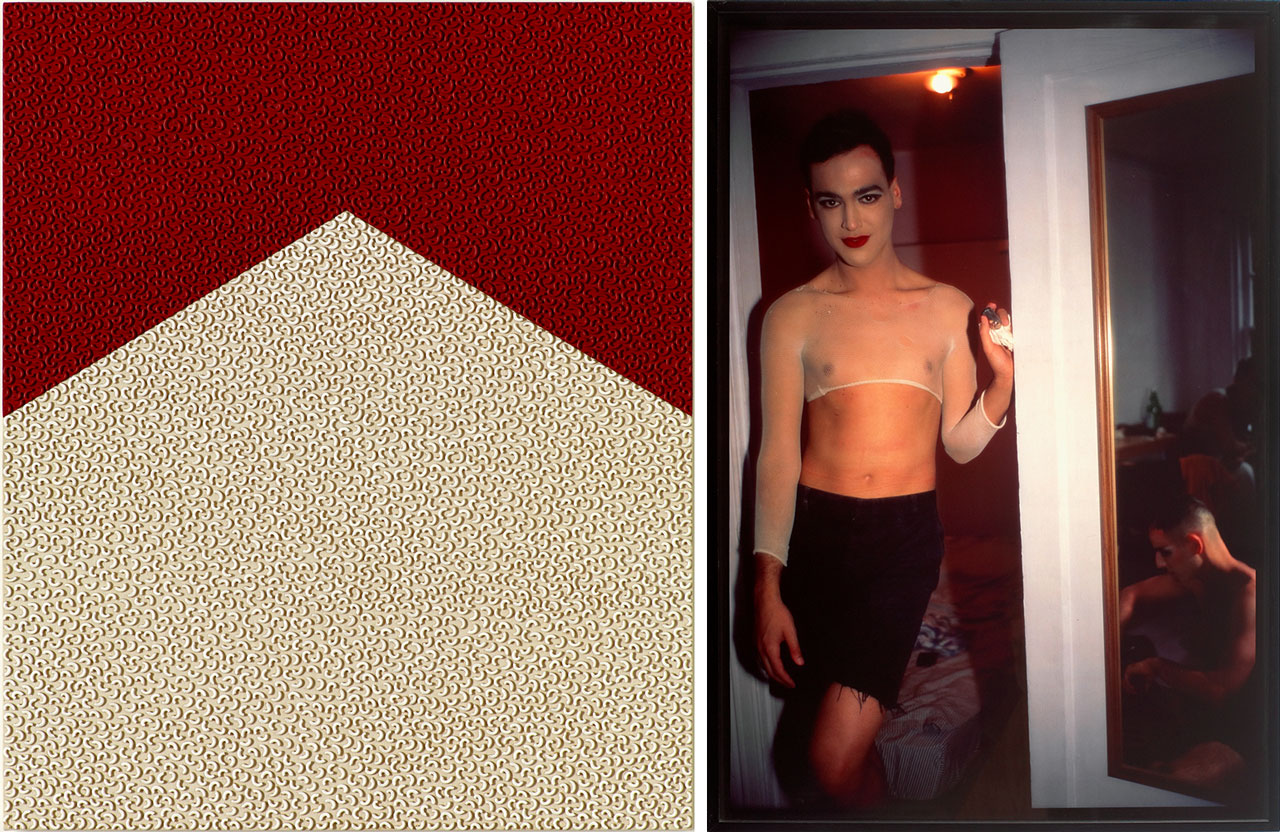
Right : Nan Goldin, Jimmy Paulette and Tabboo! undressing, NYC, 1991, Mudam Luxembourg Collection – Musée d’Art Moderne Grand-Duc Jean Acquisition 1997 – Contribution by FOCUNA Photo: Rémi Villaggi © Mudam Luxembourg