ART CITIES: Venice-Jenny Saville
Presented during the 2026 Biennale Arte, Jenny Saville’s exhibition at Ca’ Pesaro marks the first major exhibition dedicated to the British painter in Venice. Curated by Elisabetta Barisoni, the exhibition brings together more than thirty paintings and drawings spanning Saville’s career, from the early 1990s to the present. According to the press release, the works trace the evolution of her pictorial investigations while highlighting her sustained engagement with the representation of the body and its social, political, and cultural implications. They also reveal her deep connection to Venice and to the tradition of painting that has shaped the city for centuries.
By Vicky Trochidou
Photo: Vicky Trochidou’s Archive
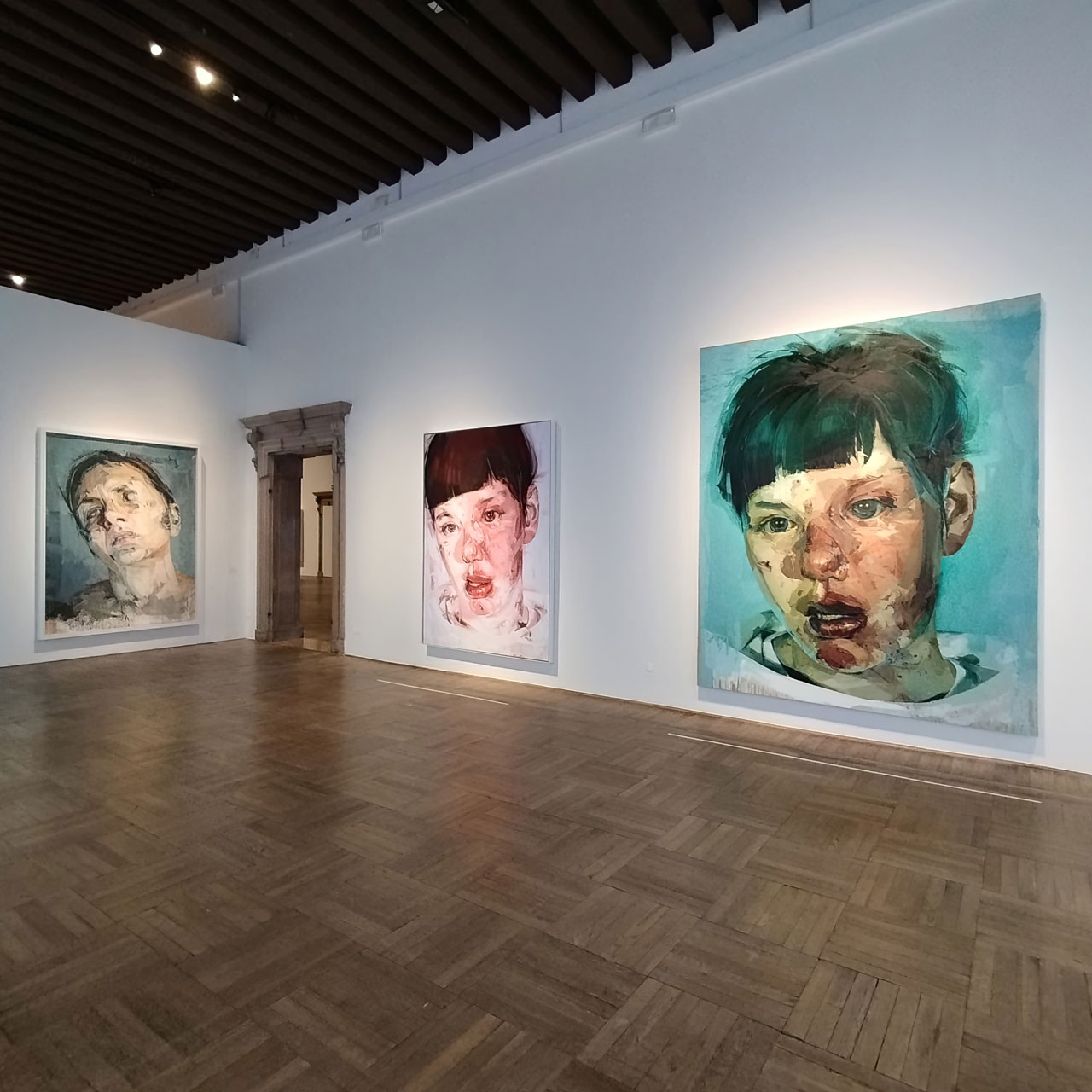
However, nothing prepared me for the experience of standing in front of Saville’s works. Entering the first room, I was immediately overwhelmed by their scale, the evident gestural quality and materiality. The paintings do not merely hang on the walls of Ca’ Pesaro, rather, harmonically curated, they engage fully with the architectural spaces of the Palazzo.
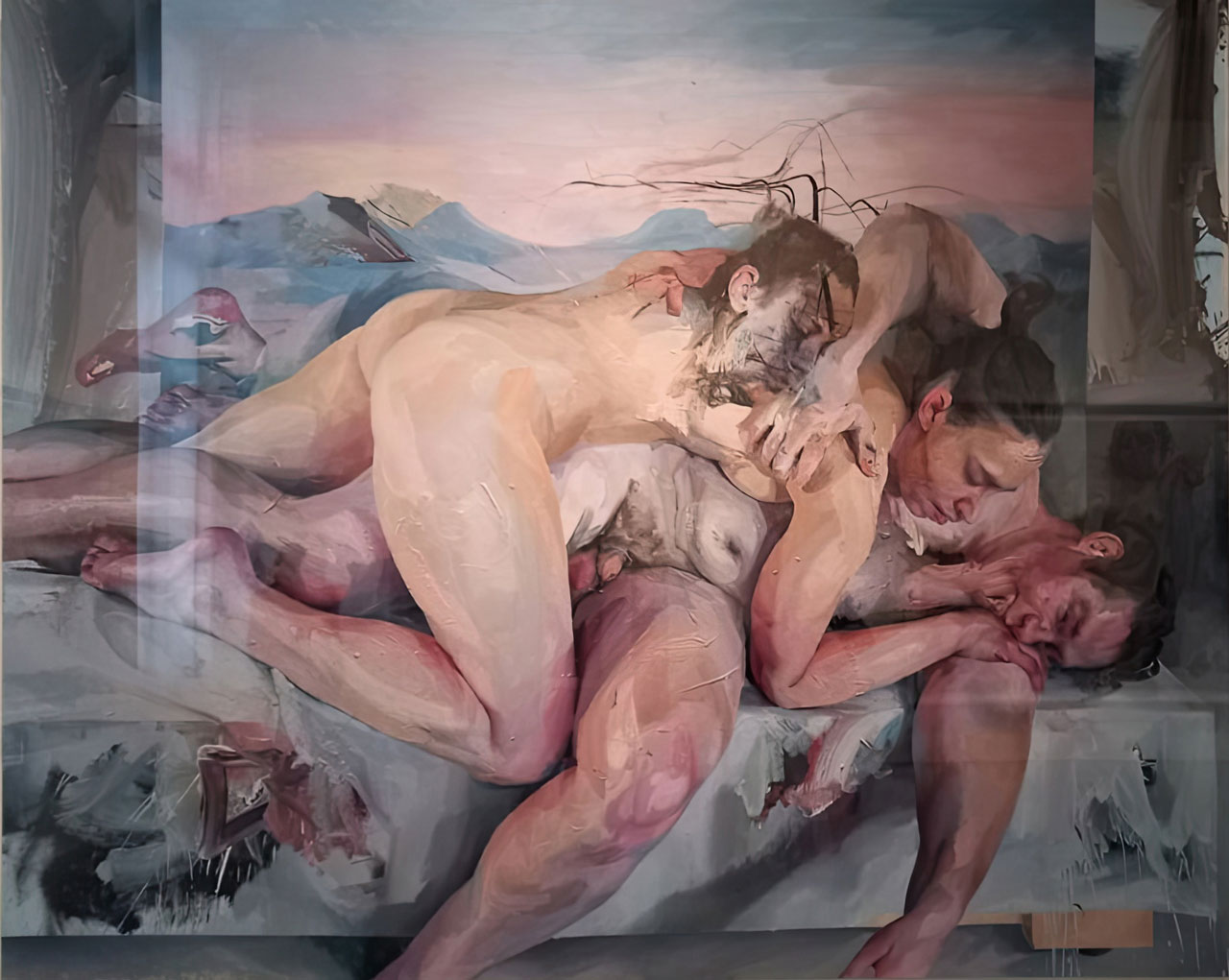
Every room contained works that made me stop and look again. In fact, I moved through the exhibition twice. More than once, I found myself returning to the same paintings, wanting to see how they operated from a distance and then up close. From across the room, the figures appear almost monumental in their certainty. A few steps away, they begin to dissolve into brushstrokes, smears, scratches, charcoal lines, and passages of colour that seem – speaking in art terms – to hover between realism and expressionism.The paintings operate within both languages simultaneously.
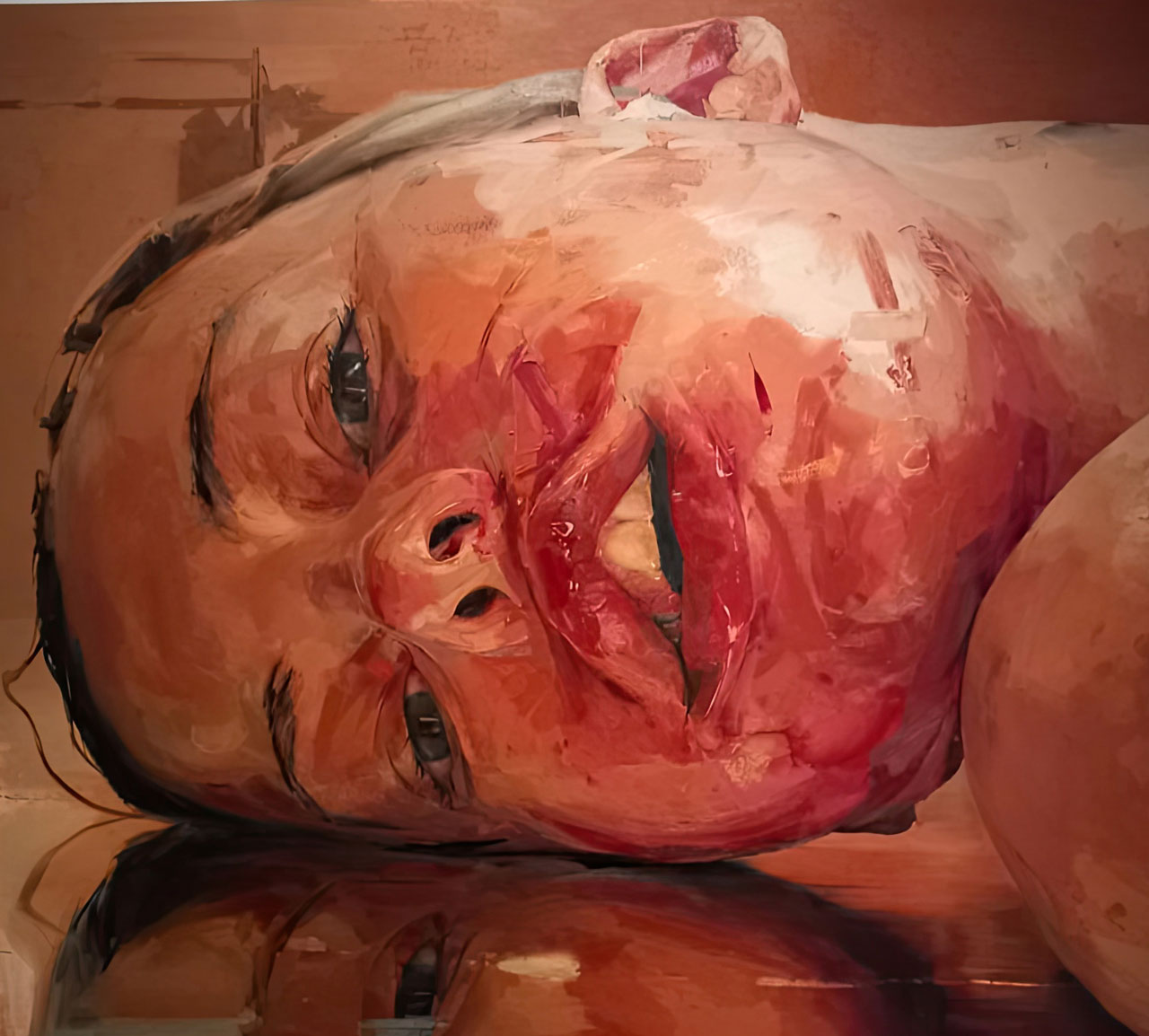
Works such as Hybrid and Rupture confront the viewer with heads and bodies of extraordinary physical presence in their fragility and resilience. Yet what was fascinating was not simply the scale of these figures but the way they are constructed. Saville once remarked that human perception of the body is so acute that even the slightest suggestion of a figure can trigger recognition. Standing before these paintings, that observation feels entirely convincing. She allows paint to remain visible as paint. She does not smooth over the process and in some cases the way that the color drips on the end of the painting gives us the feeling of an “non-finito” work .
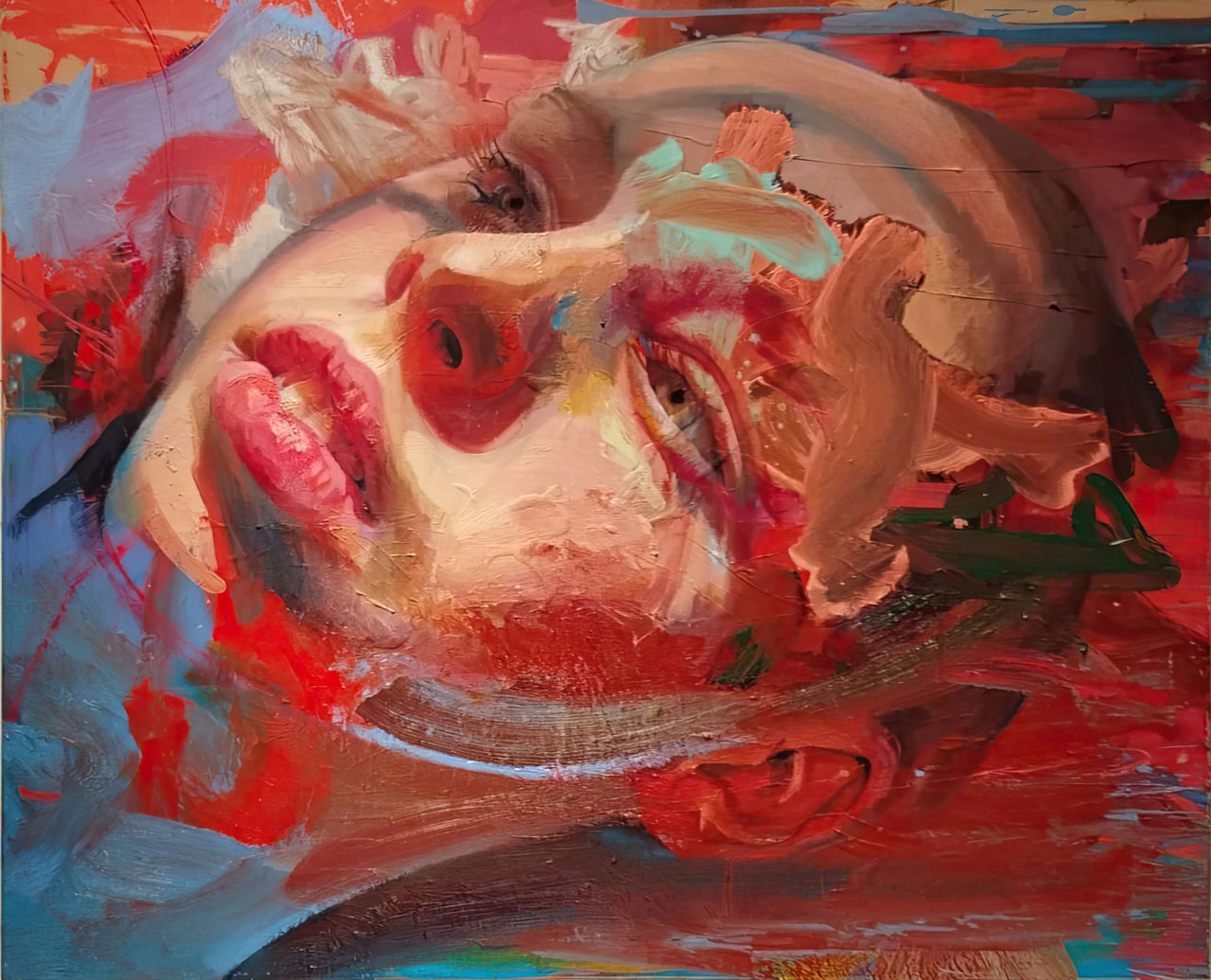
This became particularly evident in Rosetta II, one of the works that stood out most strongly for me, depicting a young blind Napolitan Woman. The painting possesses an extraordinary psychological intensity. The figure appears caught between emergence and dissolution, as though Saville is allowing us to witness the process of becoming rather than presenting a finished conclusion. A similar experience occurred with Drift, a floating figure that immediately brought Ophelia to mind, where the image balances between presence and disappearance.
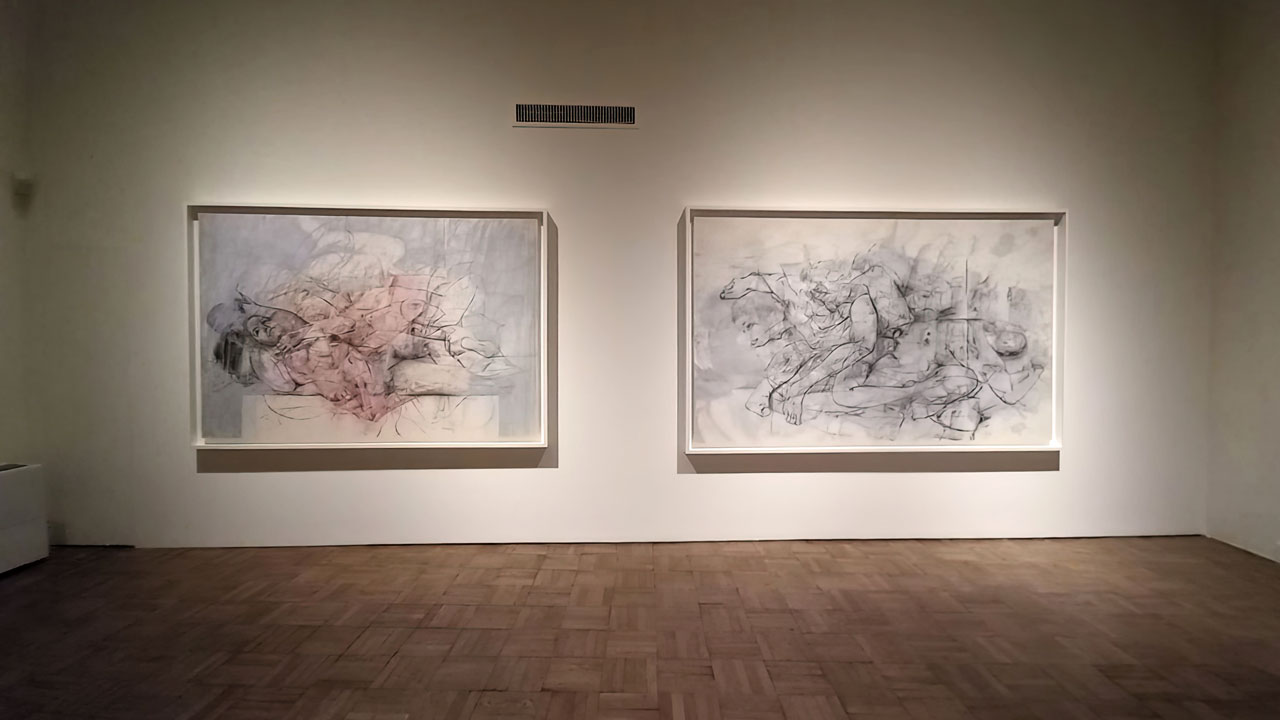
The room devoted to drawings and studies offered an important insight into this aspect of her practice. Here, the process becomes completely visible and one can trace earlier attempts (Muse on stool study). Rather than concealing uncertainty, the artist incorporates it into the work itself.
Saville has often spoken about her admiration for Titian and Tintoretto, and their presence can be felt in the final rooms of the exhibition. Works such as Venus and Adonis and Danaë engage directly with Titian while remaining unmistakably contemporary. Rather than quoting historical compositions, Saville absorbs their underlying principles and translates them into her own visual language. The result feels less like homage and more like conversation across centuries.
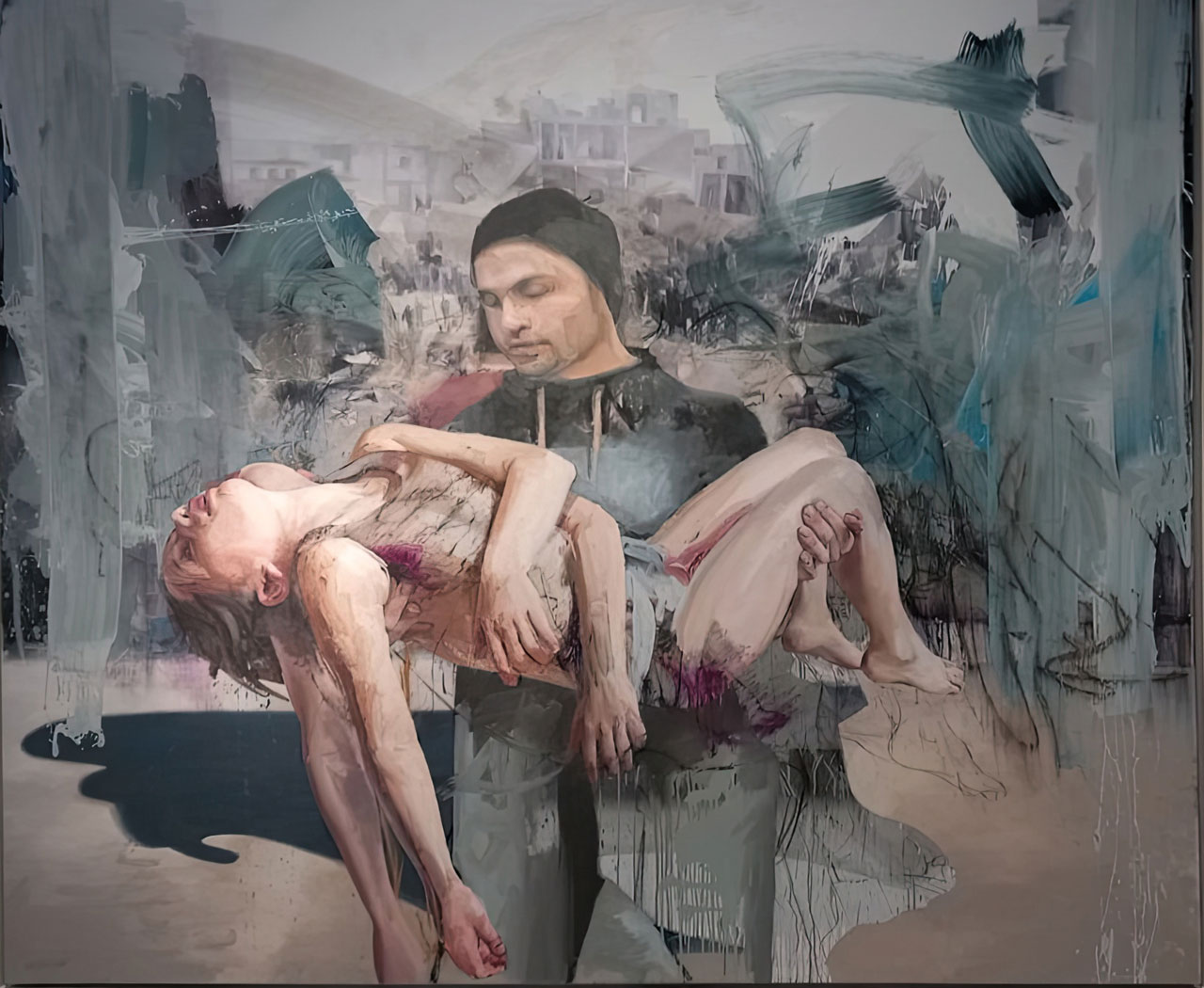
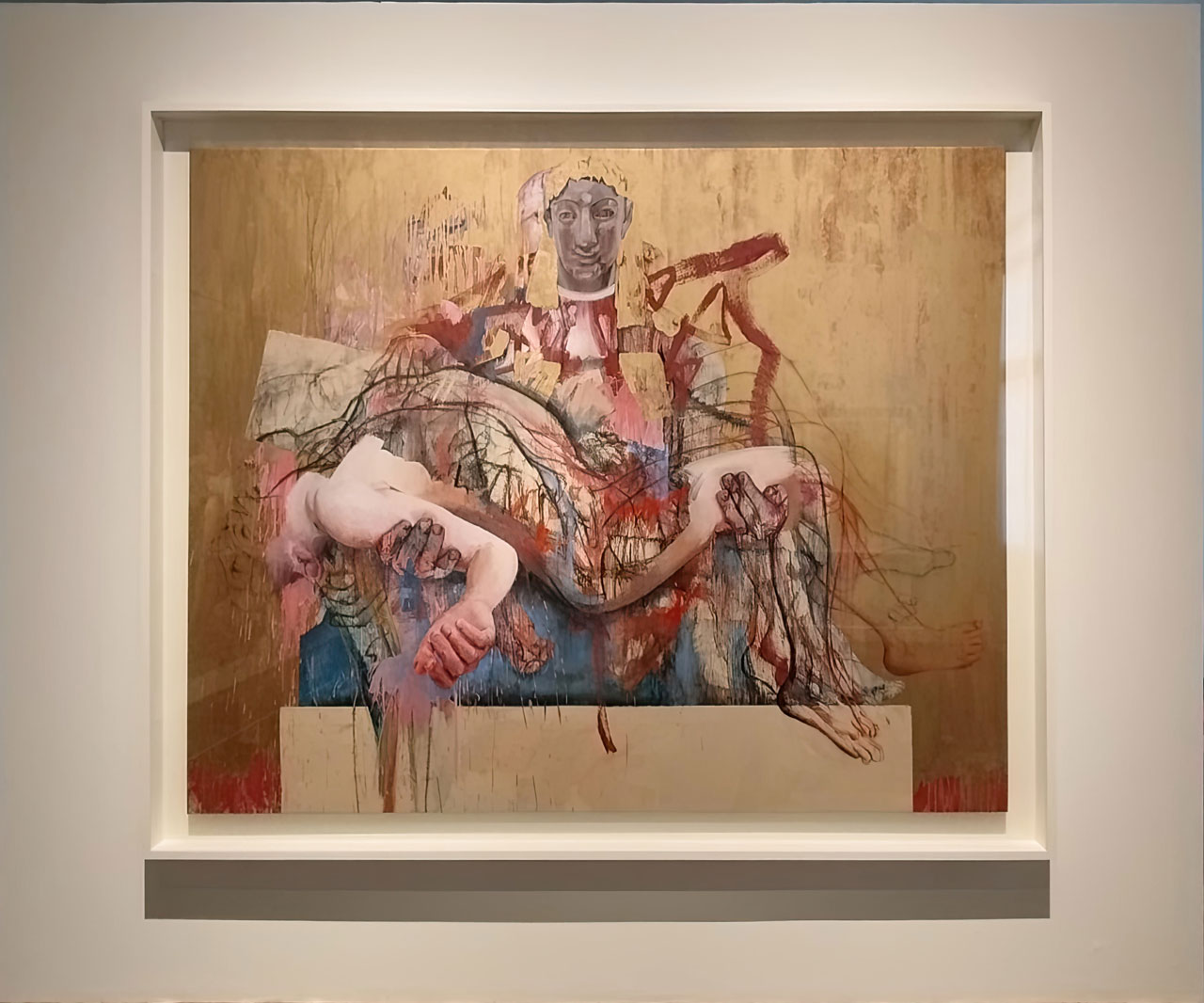
One of the most memorable sections of the exhibition was the room devoted to the Pietà paintings that communicate grief , suffering and the effects of war. Among these works, Byzantium stood out as particularly significant. Saville has explained that the title refers to the Byzantine presence in Venice, especially in places such as Torcello, where artists and mosaicists arriving from Constantinople left a lasting imprint on the city’s visual culture. Seen in Venice, the painting acquires additional resonance. It becomes part of a larger conversation about artistic continuity, transformation, and cultural exchange.
What I found most compelling throughout the exhibition, was the sense of freedom that runs through Saville’s work, its remarkable materiality, and the vitality of her gestural figurative painting. Together with the exhibition’s thoughtful curation and the way the works engage with the architecture of Ca’ Pesaro, this creates a truly compelling experience. Saville reminds us that figurative painting not only remains as vital as ever, but still has the power to move and challenge us emotionally.
Photo: Jenny Saville, Drift, 2020-22, oil on canvas, © Jenny Saville, Photo: © & Courtesy Vicky Trochidou
Info: Cirator: Elisabetta Barisoni, Ca’ Pesaro, C. del Tentor, 2076, Venice, Italy, Duration: 28/3-22/11/2026, Days & Hours: Tue-Thu & Sun 10:00-18:00, Fri 10:00-20:00, Sat 10:00-22:00, https://capesaro.visitmuve.it/