ART CITIES:London, Mandy El Sayeg
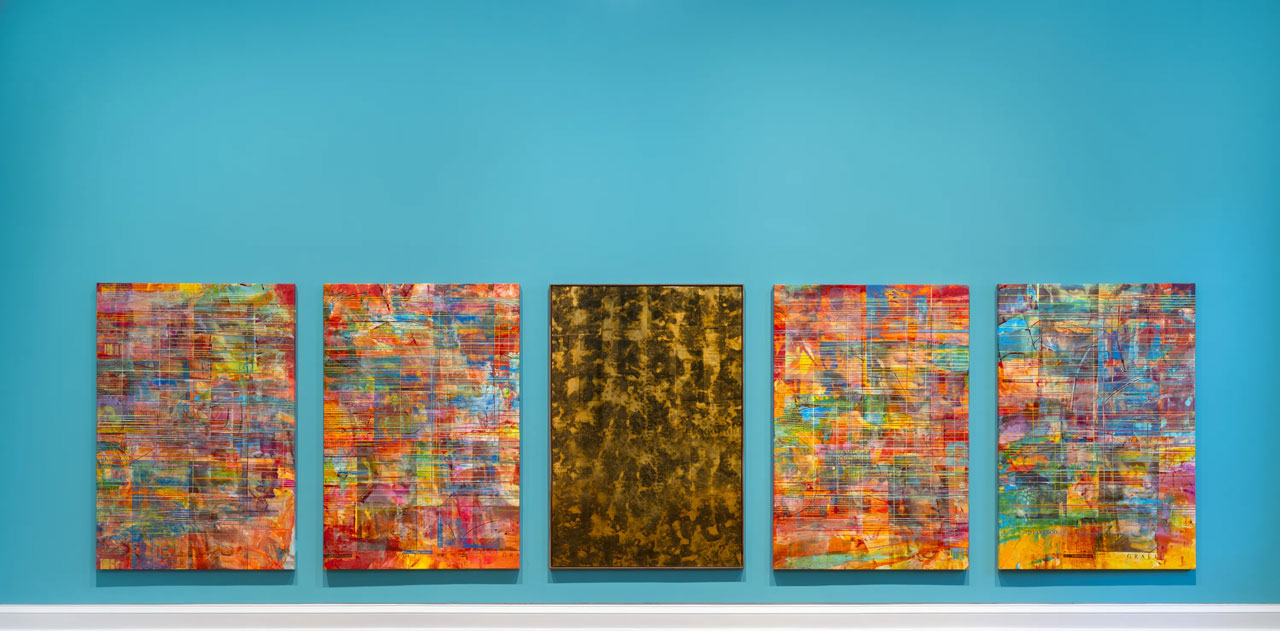
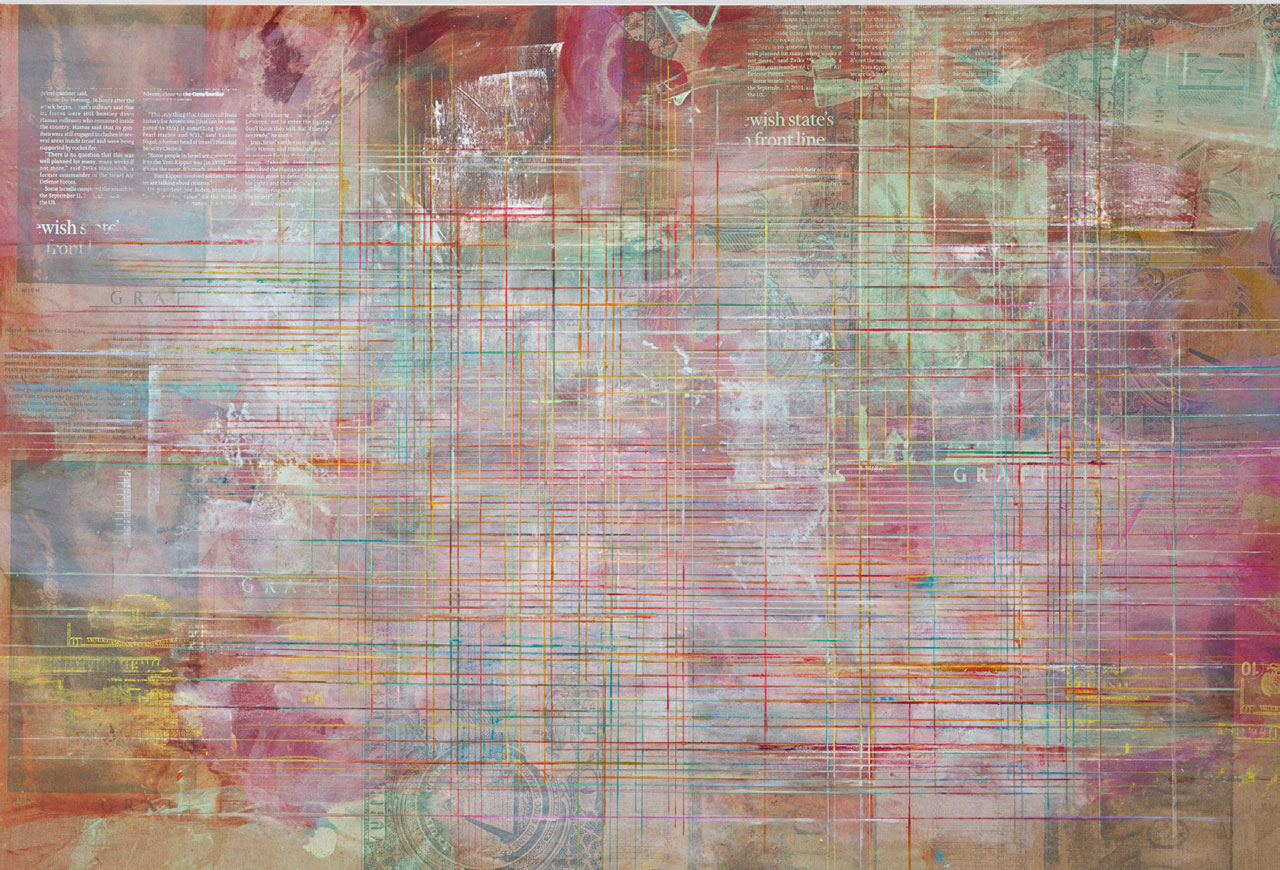
By emphasising the boundaries of her chosen medium, Mandy El-Sayegh draws attention to the systems that determine how information is categorised, contained and understood. She creates ‘quasi-archives’ in her table vitrines, suggesting associations and references through the objects’ placement in a shared, delineated space. In her “Net-Grid” canvases, overpainted grids simultaneously structure and obscure the detritus of popular culture. These paintings also reference the primacy of the grid in Modernist art, which El-Sayegh found alienating. In response, she creates ‘forms [that] bring about questions of legitimate and illegitimate readings of culture and context’, as well as the implicit power structures that determine who legitimises such readings.
By Efi Michalarou
Photo: Thaddaeus Ropac Gallery Archive
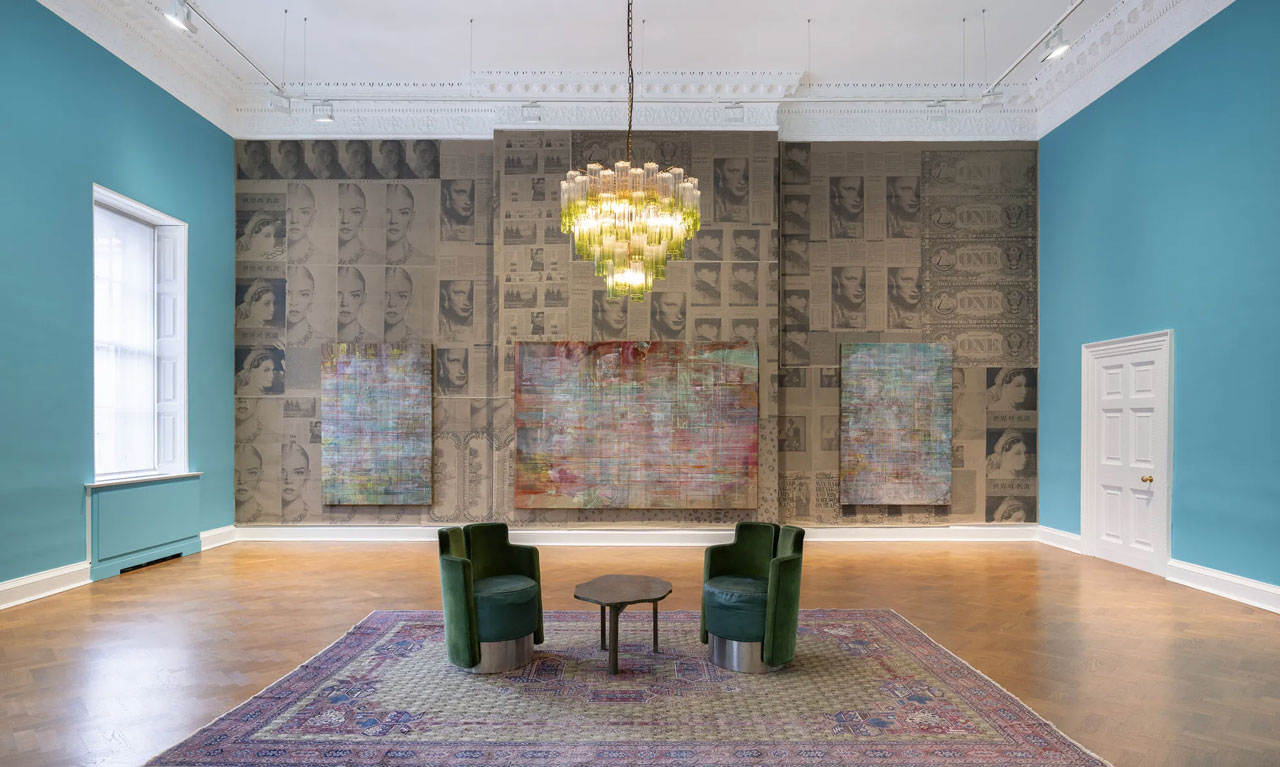
Coinciding with London Gallery Weekend 2026, Mandy El-Sayegh presents “Jewel Tones”, an immersive site-specific that transforms the gallery into a seductive landscape of opulence, unease and political contradiction. The exhibition brings together a new body of paintings, installation works and performance, continuing El-Sayegh’s sustained investigation into the circulation of images, capital and power in contemporary culture.
Over the past decade, El-Sayegh has established herself as one of the most incisive voices examining the visual economy of the information age. Drawing from newspapers, advertisements, medical illustrations, financial reports and digital media, her works expose the uneasy coexistence of global crises and consumer desire. In her layered compositions, headlines documenting war, displacement and humanitarian catastrophe appear alongside luxury advertisements for diamonds, perfumes and high-end commodities. These collisions are not accidental; they reveal the structures through which information, attention and capital circulate in contemporary society.
In “Jewel Tones”, El-Sayegh shifts her focus toward luxury itself, treating it not merely as a category of consumption but as an aesthetic and psychological condition. The exhibition appropriates the visual language of wealth and exclusivity—glass chandeliers, antique rugs, mirrors, upholstered furniture and Tiffany-blue walls—to create an environment reminiscent of private members’ clubs and luxury retail spaces. Yet beneath these alluring surfaces lies a persistent tension. Luxury becomes a vehicle for smuggling political realities into spaces designed to suppress discomfort and cultivate aspiration. Through this strategy, El-Sayegh exposes how systems of consumption often function as mechanisms of distraction, obscuring violence and instability behind spectacles of beauty.
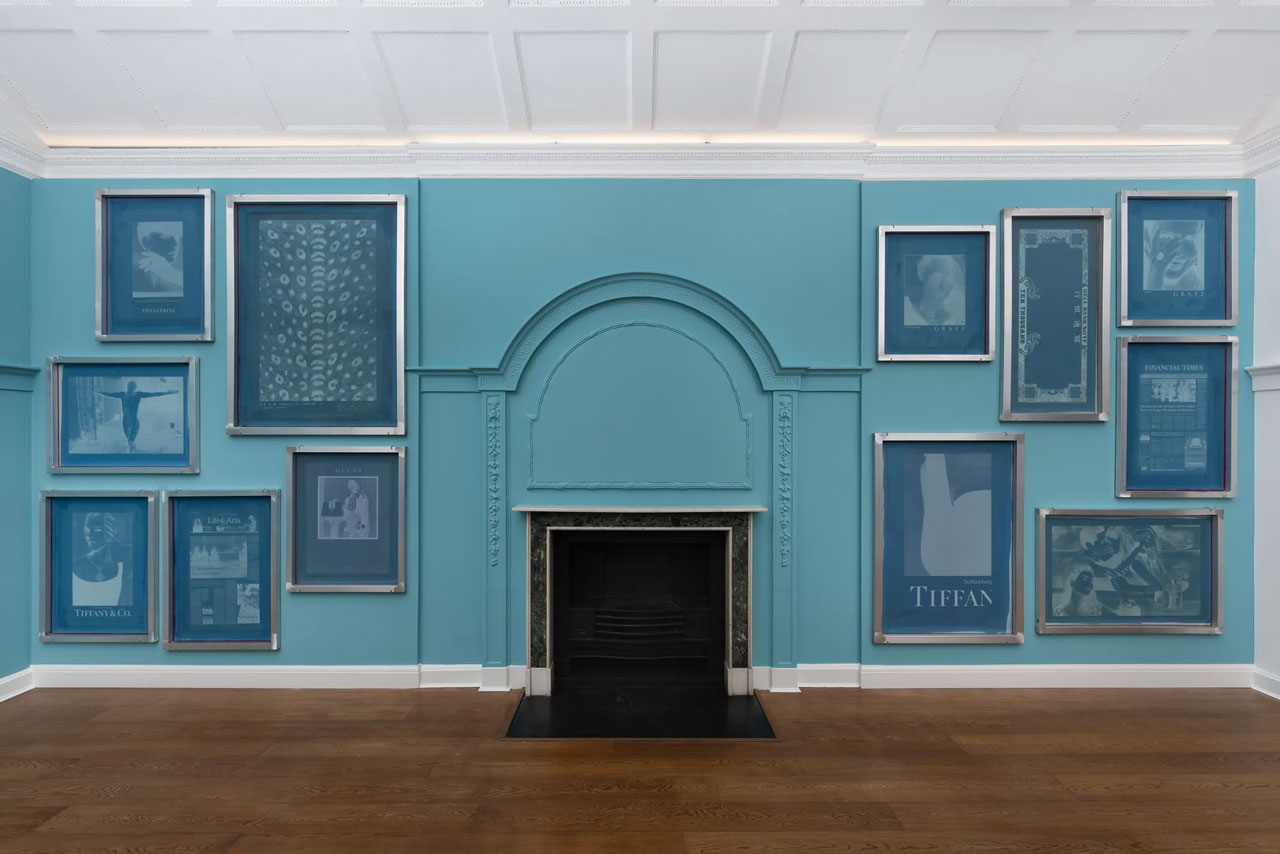
The exhibition unfolds across two distinct zones: the gallery interior and the adjacent hallway. Visitors first encounter a presentation of the artist’s production process. On the first-floor landing, printing screens used in the creation of the exhibition’s paintings are displayed salon-style, foregrounding the mechanics of image-making itself. By exposing the tools behind her practice, El-Sayegh invites viewers to consider how images acquire meaning and how systems of reproduction can simultaneously disseminate and diminish emotional impact. The screens function as both artworks and evidence, revealing the material infrastructure that underpins visual culture.
Inside the main gallery, a series of luminous “Net-Grid” paintings dominate the space. Inspired by transparency studies of opals, these works employ multiple layers of paint, silkscreen and collage to generate iridescent surfaces that shift with the viewer’s movement. Initially, the paintings appear harmonious and seductive, radiating cool jewel-like hues. However, closer inspection reveals embedded fragments of conflict, unrest and political turmoil concealed within their shimmering compositions. El-Sayegh’s paintings operate as visual traps: they attract through beauty while gradually exposing unsettling content. This duality mirrors the broader contradictions of contemporary media, where catastrophic events are consumed alongside luxury marketing within the same visual field.
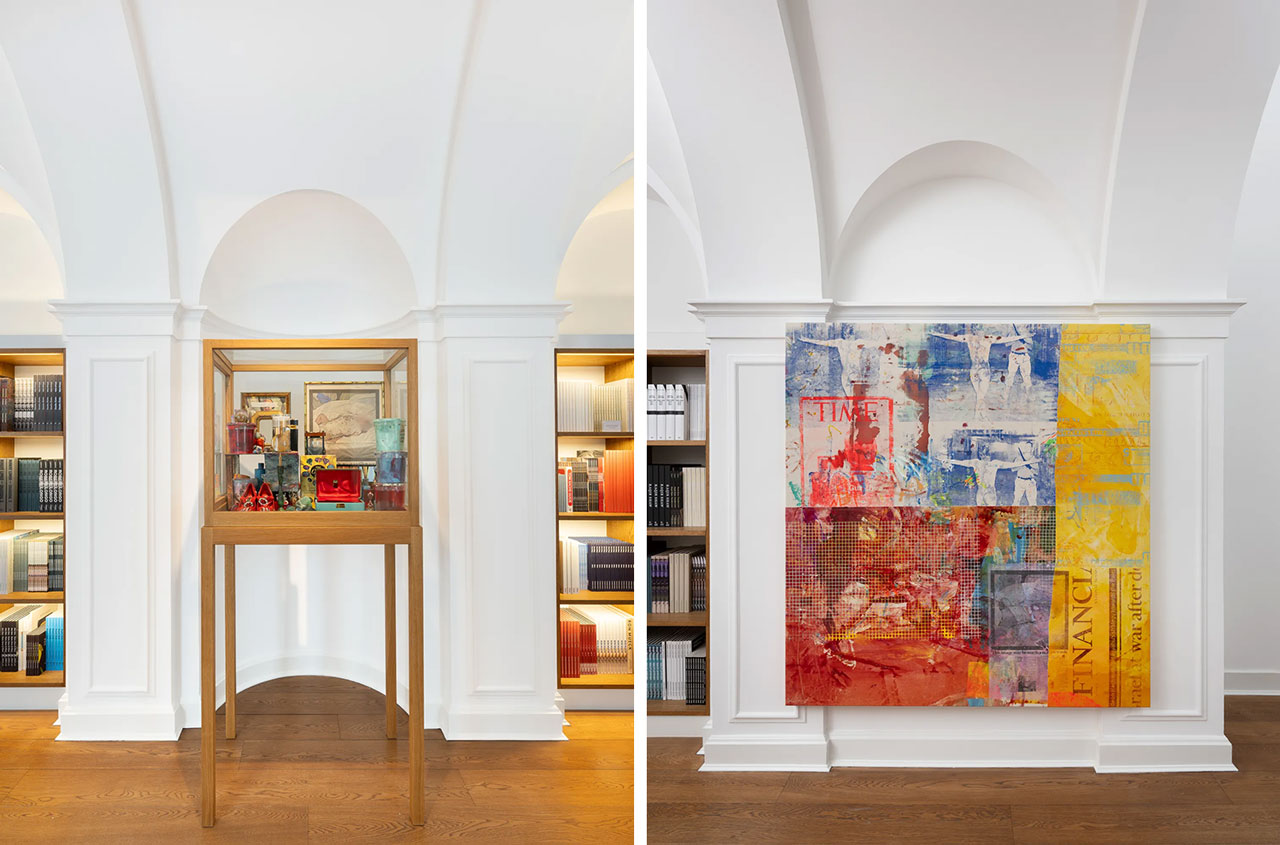
A complementary series titled “Metabolism” extends these concerns into three-dimensional form. Installed in vitrines throughout the hallway, the assemblages gather remnants of the artist’s studio practice—paintbrushes, vodka bottles, rags and candles—alongside perfume bottles, gold decorative objects and imagery sourced from forensic pathology textbooks. The resulting works blur distinctions between ritual offering, museum display and luxury merchandising. By adopting strategies associated with both commercial presentation and institutional collecting, El-Sayegh interrogates the processes through which objects acquire value, desirability and symbolic power.
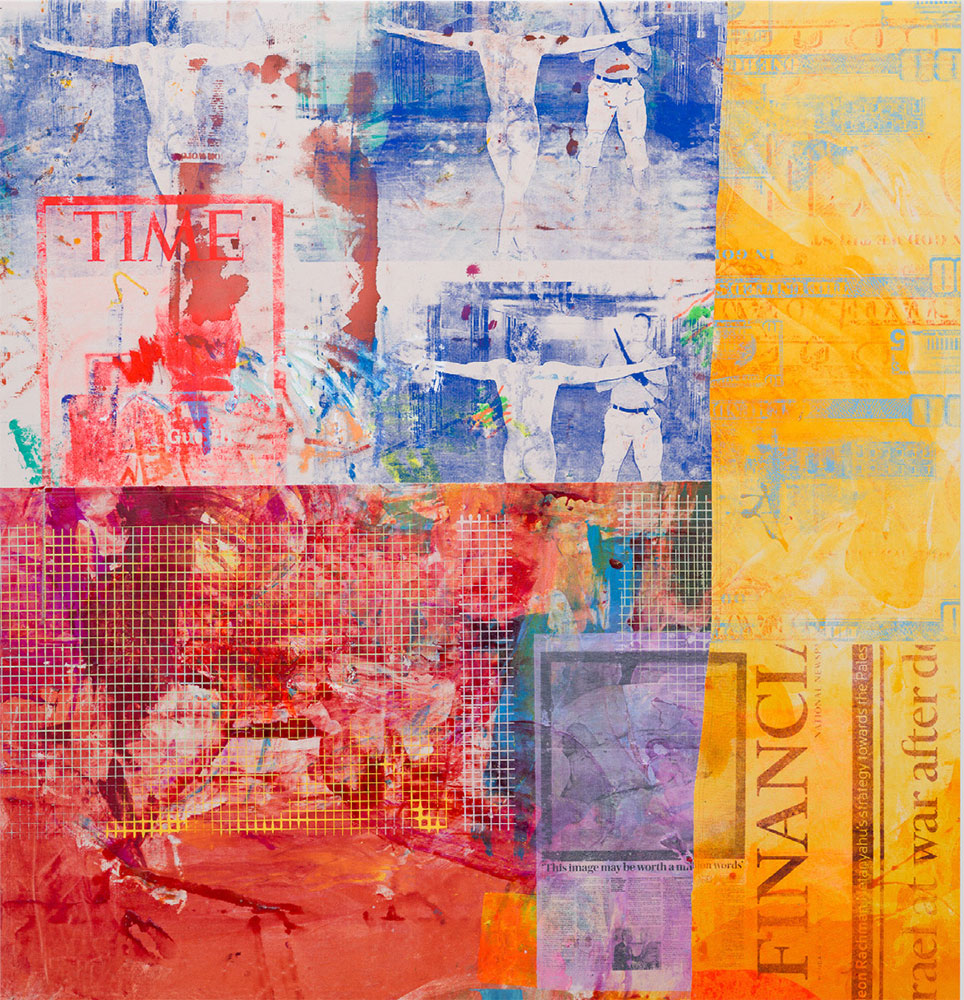
Among the exhibition’s most striking works is “Compositional” (2026), a collage-based painting that assembles fragments from earlier projects into a single composite image. Within its layered surface, viewers encounter some of the defining media images of recent decades: documentation of torture at Abu Ghraib, a magazine cover featuring Donald Trump, and newspaper coverage of Gaza from October 2023. These politically charged references are juxtaposed against warm yellow tones associated simultaneously with canary diamonds and bodily waste. The work encapsulates the exhibition’s central thesis: that systems of luxury and systems of violence are often more closely intertwined than appearances suggest.
The immersive atmosphere is further intensified by a sound work created by Lily Oakes, composed from intimate recordings of leather and other luxury materials. The audio environment heightens the exhibition’s sensory appeal while reinforcing its underlying sense of unease. Visitors are encouraged to navigate a space that feels at once inviting and deeply unsettling—a realm where pleasure and paranoia coexist.
This tension reaches its culmination in “Red Lady”, a collaborative performance developed with artist and medium Alice Walter. Structured as an interruption within the format of an artist talk, the performance draws on cinematic references, fashion editorials and post-war theatre. Through exaggerated gestures, unsolicited intimacy and disruptive dialogue, language gradually fragments into crisis. Audiences are placed in a state of uncertain participation, mirroring the exhibition’s broader exploration of dissociation, seduction and instability. Like El-Sayegh’s visual works, “Red Lady” employs collage as both method and metaphor, assembling disparate cultural fragments into a disorienting yet compelling whole.
In “Jewel Tones”, luxury is neither celebrated nor condemned. Instead, it becomes a lens through which to examine the contradictions of contemporary life: a world in which beauty and violence, consumption and catastrophe, aspiration and anxiety coexist within the same visual and psychological space. Through painting, installation and performance, El-Sayegh transforms the gallery into a site where these contradictions can no longer remain comfortably hidden.
Photo: Mandy El-Sayeg, Jewel Tones, Exhibition view Thaddaeus Ropac Gallery-London, 2026, Photo: Damian Griffiths, Courtesy the artist and Thaddaeus Ropac Gallery
Info: Thaddaeus Ropac Gallery, 37 Dover Street, London, United Kingdom, Duration: 5/3-31/7/2026, Days & Hours: Tue-Sat 10:00-18:00, https://ropac.net/