ART CITIES:London-Kenjiro Okazaki
With a unifying emphasis on form, Kenjiro Okazaki explores themes related to time, space, and the human experience through a postmodernist lens. His work is rooted in an investigation of the perception and reconstruction of time. In addition to his artistic practice, he is a critic renowned for his efforts in redefining abstraction, also, he has authored and co-authored several books.
By Efi Michalarou
Photo: Pace Gallery Archive
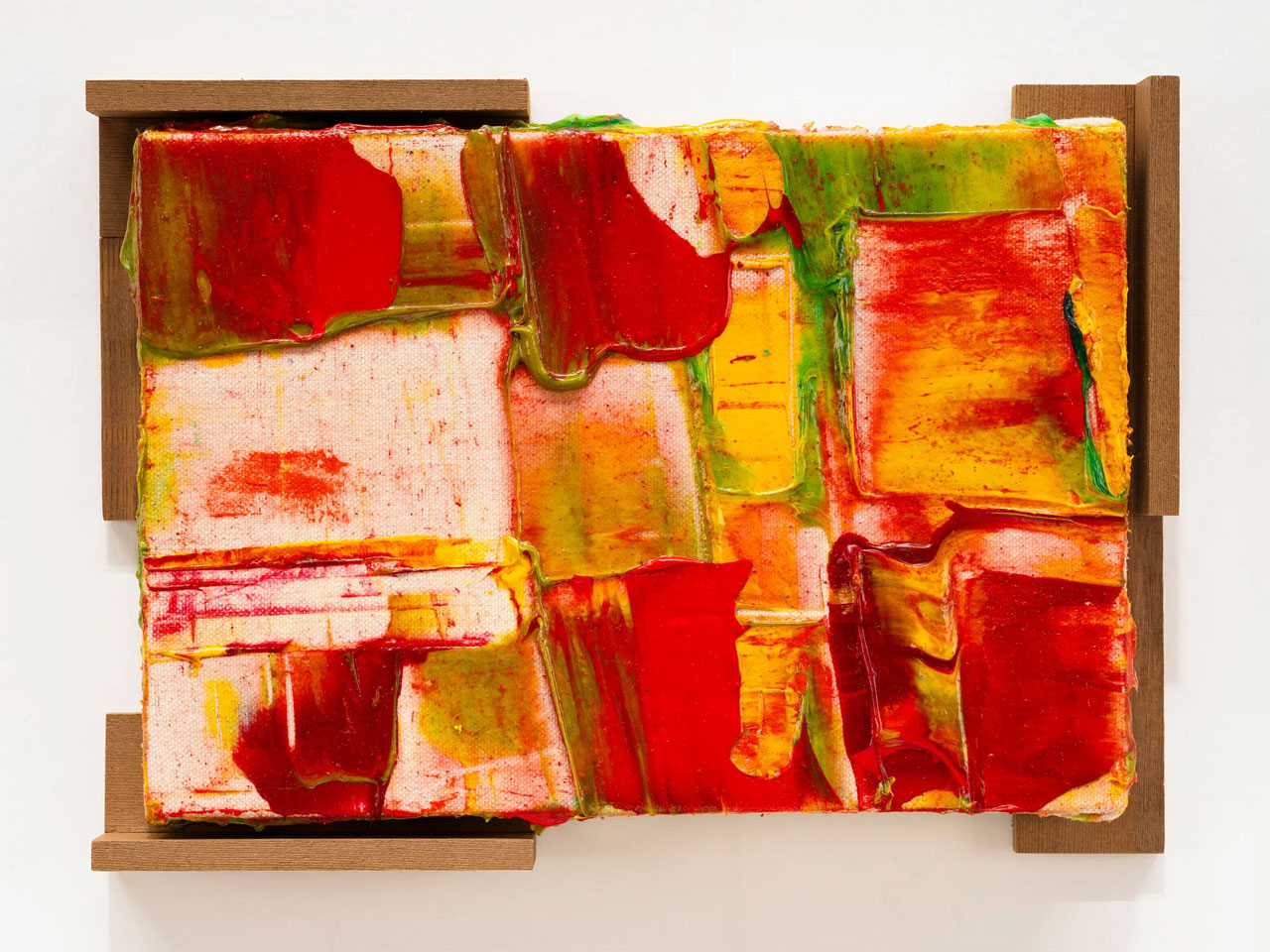
Kenjiro Okazaki’s first-ever solo exhibition in the UK, titled “Never could be any other way — anagnorisis”, brings together sculptures, large-scale paintings, and a selection of the artist’s delicately framed “Zero Thumbnail “series.
The first part of the exhibition’s title, “Never could be any other way”, is the phrase inscribed in the run-out groove of The Beatles’ “Sgt. Pepper’s Lonely Hearts Club Band” (1967), buried in the infinite loop after “A Day in the Life.” The second part, “anagnorisis” (ἀναγνώρισις), is Aristotle’s term from the Poetics for the moment of tragic recognition—the retroactive discovery that what has happened could only have happened this way. Both name the same structure, which is the central thesis of Okazaki’s forthcoming book “The Discovery of Art: Conditions for Living in the AI Era” (June 2026).
Okazaki is an acclaimed artist, architect, and theorist whose multifarious practice spans painting, sculpture, robotics, costume and set design, and architecture. One of Japan’s leading contemporary artists, he examines the relationship between temporality and human perception. Central to his practice is the concept of zōkei (plastic arts): the making of form from substance. Asserting that our engagement with the universe is as malleable as the materials that constitute it, Okazaki positions zōkei as a practice through which perception and the world itself are brought into relation.
The artist’s theoretical project draws on mathematics, quantum physics, art history, poetry, music, and literature. At its center is a conception of time as a constraint—one that art makes visible in order to overcome it. This idea was already central to Okazaki’s practice well before his stroke in 2021 and the six months of rehabilitation that followed; that experience gave it new concreteness. For Okazaki, rehabilitation is not the recovery of lost movement, but the discovery, after the fact, that the movement was there all along.
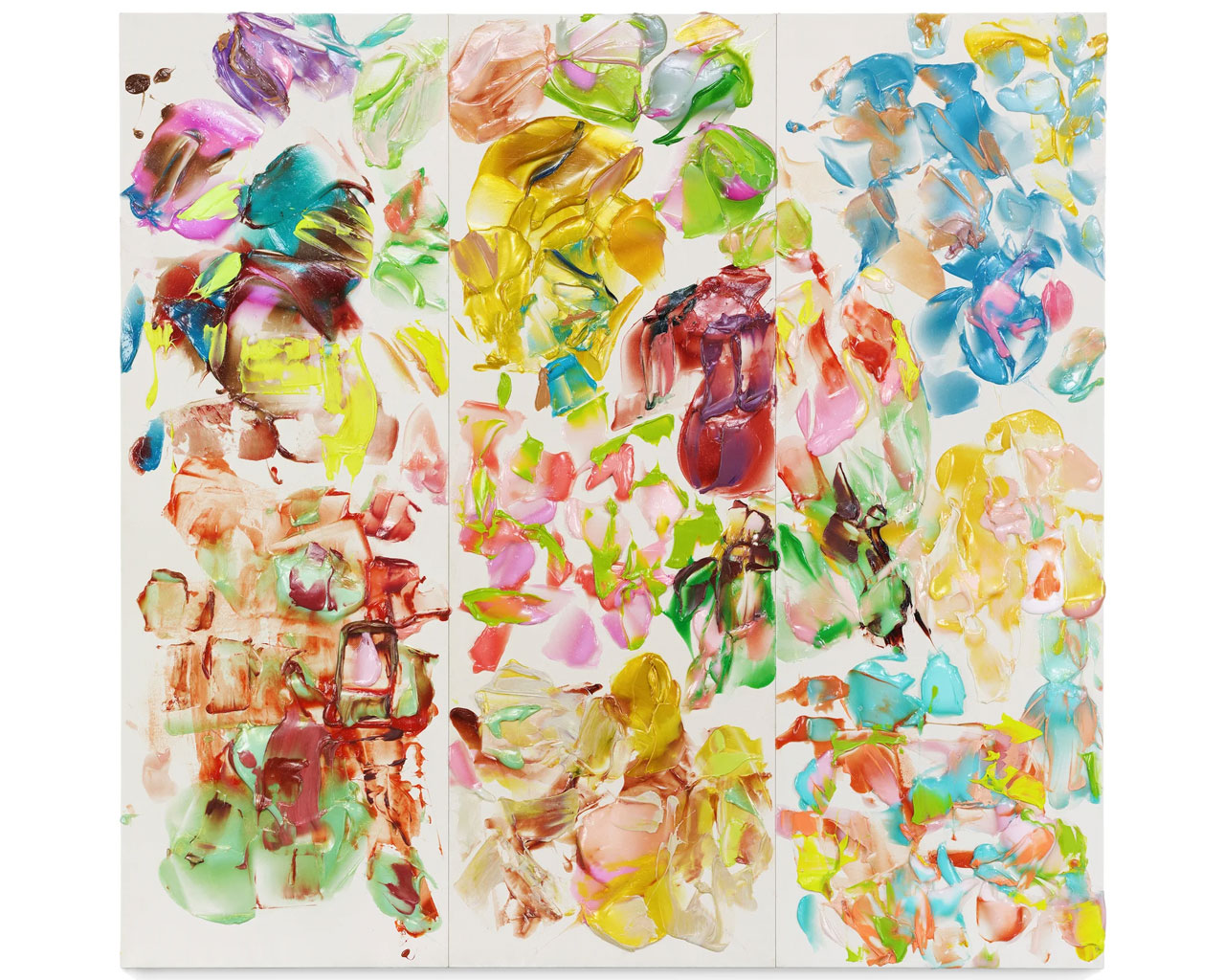
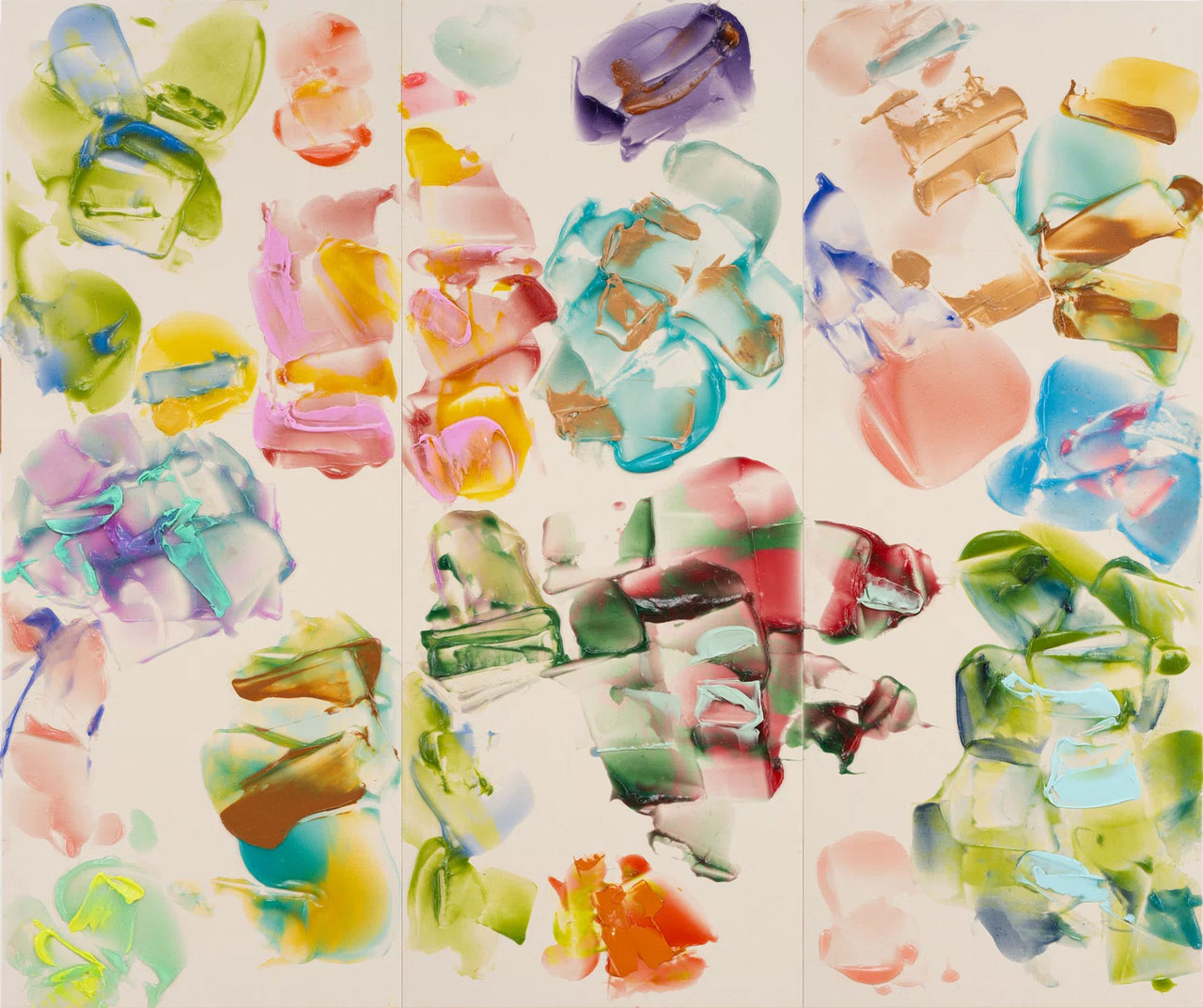
Okazaki produces his multi-panel abstract paintings—figuring in this exhibition as diptychs and quadriptychs—using richly hued acrylic paints, thickly daubed onto the surface. As with the work of Paul Cézanne, a key source of inspiration for the artist, the gaps between brushstrokes emphasize that their proximity is contingent and open. Each island-like block of color is created within a single unit of continuous time, while the intervals between their making can vary from half a day to several months. Okazaki calls these units of color “giornata” (a day’s work), borrowing the Italian term used in buon fresco painting to describe how much work can be completed in a single day.
At first glance, the paintings’ clusters of color, texture, and shape appear distinct and independent. Through sustained looking, mirrored gestures and complementary or analogous color combinations map relationships across the panels, unfolding into an ever-expanding set of possibilities.
This relational logic extends beyond the visual field and into language. Okazaki’s long, narrative titles—often assuming poetic or fragmentary literary form—further expand the paintings’ potential for meaning. As the artist has explained, the titles belong to an “expressive sequence distinct from that of the work itself, functioning to subject the visual to the order of language.” For Okazaki, the encounter between two autonomous sequences—the visual and the textual—interrupts their internal logic and, in doing so, produces a “network structure” of meaning.
A selection of small-scale paintings from Okazaki’s “Zero Thumbnail” body of work, begun in 2005, are also included in the exhibition. Working within a fixed scale and format, these condensed compositions allow for a wide range of painterly decisions. In some works, thin coats of paint create a near-translucent effect; in others, the acrylic’s jelly-like viscosity evokes a tactile sensation, as if the viewer’s own hands were implicated in the painting’s creation. The wooden frames Okazaki makes for the Zero Thumbnail works—marked by cut apertures and pronounced variations in grain—are conceived in direct relation to the compositions they enclose. In dialogue with the paintings, the frames both extend and compress the artist’s gestures. At an intimate scale, the works articulate the visual intensity of Okazaki’s practice.
Three sculptures, including one made this year, also feature in the exhibition. These large, resin and synthetic marble forms possess an organic, almost fleshy sense of motion. Bearing the marks of manipulation—compression, expansion, contraction, and fracture—the sculptures give material form to a foundational principle of Okazaki’s work: the making of form from substance.
“The Discovery of Art: Conditions for Living in the AI Era”, Okazaki’s forthcoming book examining art through the lens of AI and the Socratic method, will be published by Film Art-sha on June 26.
Photo: Kenjiro Okazaki, Et egredietur virga de radice Iesse, et flos de radice eius ascendet. And for all this, nature is never spent. Generations have trod, have trod, have trod. I got old. Landscape plotted and pieced — Off side of my thought? fold, fallow, and plough.
For skies of couple-colour as a brinded cow. The world is charged with the grandeur of God. Whatever is fickle, freckled — And still — it blooms. who knows how? The light is calm. We were struck by the sudden appearance of yucca trees
The blossoms are not. Ring-a-ring o’ roses, come again another day. Praise him. The blossoms that remain are falling blossoms. That day, sunset seeing a butterfly fall. Nothing is so beautiful as Spring — when weeds, in wheels, shoot long and lovely and lush. (2026) © Kenjiro Okazaki
Info: Pace Gallery, 5 Hanover Square, London, United Kingdom, Duration: 5/6-9/8/2026, Days & Hours: Tue-Sat 10:00-18:00, www.pacegallery.com/
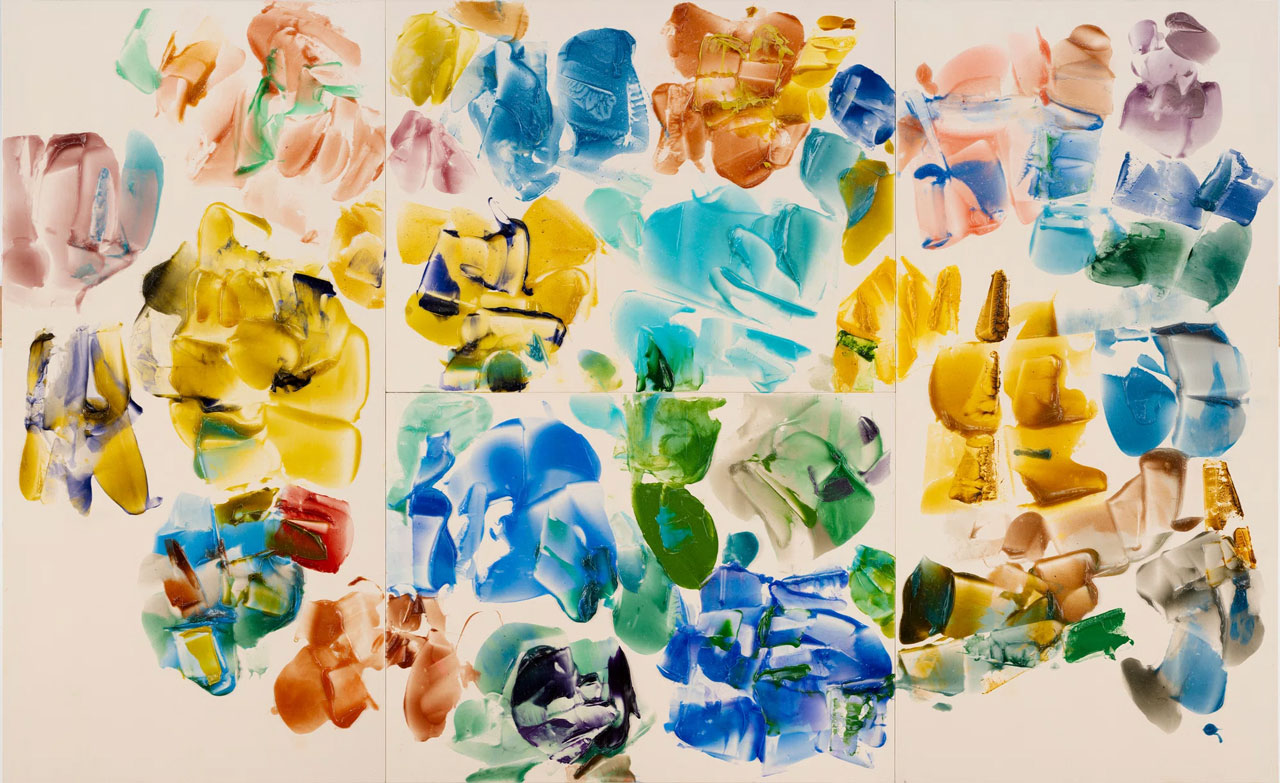
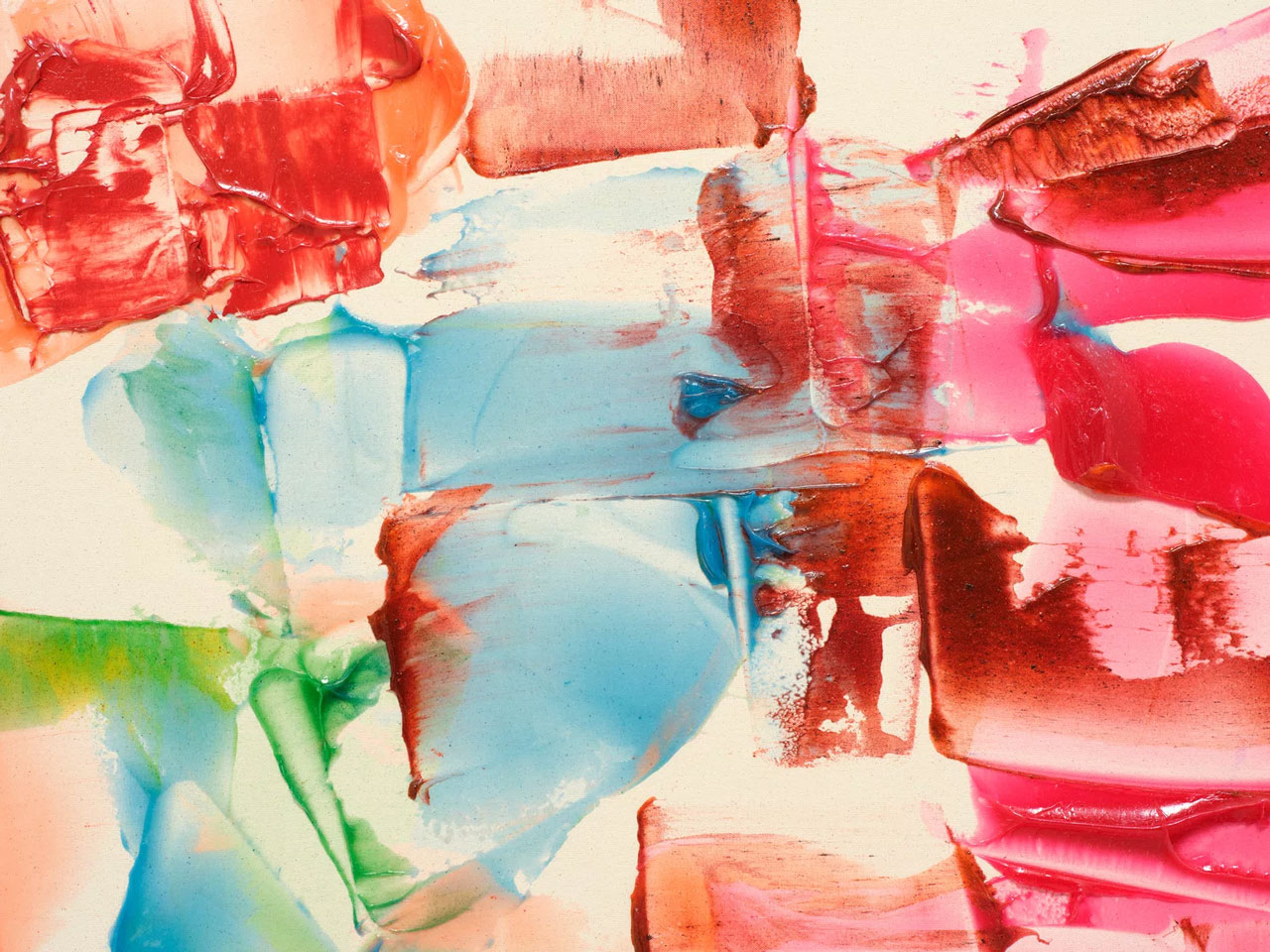
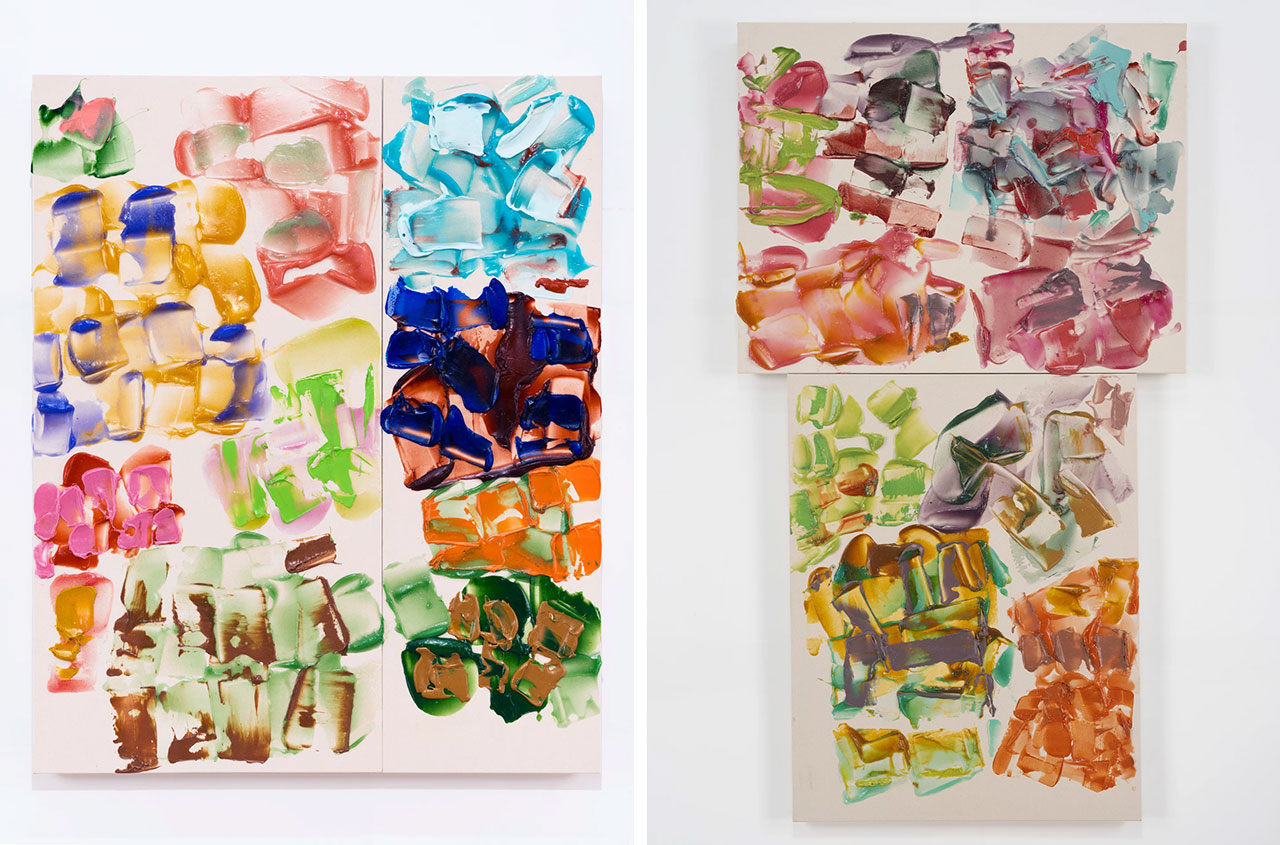
Right: Kenjiro Okazaki, Her first thought was that perhaps the Virgin made miracle. But when she look again, the house wherein had faded her childhood dreams and her maiden illusions. There was nothing to do but go, so, began to prepare breakfast. Strange, she was calm, she even had a desire to laugh! There was no miracle—the sun was rising and promised a magnificent morning, the breeze was delightfully cool, the stars were paling in the east, and the cocks were crowing as if to see who could crow best and loudest. She went out with as little noise as possible. / 彼女は最初、聖母が奇跡を起こしたと思いました。けれど再び見ると子供の頃の夢と乙女の幻が満ちた家はもう色褪せています。もう何もやることはない、だから朝食を準備しました。奇妙ですが、彼女は静かで、そして笑い出したかった。 奇跡はなかった。お日さまが昇り、素晴らしい朝を約束していました。そよ風が心地よく 涼しい。東の空では星が消えかかっていた。雄鶏たちが一番大きく美しく鳴けるかを競いあって鳴 いている。彼女はできるだけ静かに出かけました。, 2023, acrylic on canvas, 209.7 cm × 116.7 cm × 6.5 cm (82-9/16″ × 45-15/16″ × 2-9/16″) © Kenjiro Okazaki