TRIBUTE: Jasper Johns-Night Driver
Far from Expressionist rhetoric, Jasper Johns’s oeuvre is defined by an ironic, restrained approach that nonetheless carries emotional weight and is widely regarded as a forerunner of Minimalism and Conceptual Art. Although often interpreted allegorically, his work is rich in biographical references, though not always immediately apparent, as well as philosophical ideas and metalinguistic reflections. Despite this intellectual, at times hermetic dimension, the artist does not renounce the power of images or of painting itself.
By Dimitris Lempesis
Photo: Guggenheim Museum Bilbao Archive
“Night Driver” is an ambitious retrospective dedicated to one of the most celebrated artists of our time, Jasper Johns. “Night Driver” takes is entitled after a 1960 drawing by Johns, described by the artist as his first work based on a personal feeling. The exhibition features nearly 140 works, including paintings, sculptures, drawings, prints, an artist’s book, and a stage design. The pieces are organized chronologically, reflecting Johns’s repeated return to certain themes. In this presentation, paintings and sculptures are shown separately from works on paper.
Jasper Johns was born in Augusta, Georgia, in 1930 and grew up in South Carolina, where he was raised before continuing his studies in New York. In 1953, he moved to New York, where he soon formed close friendships with figures such as artist Robert Rauschenberg, composer John Cage, and choreographer Merce Cunningham. Together, they would reshape the artistic landscape of their country.
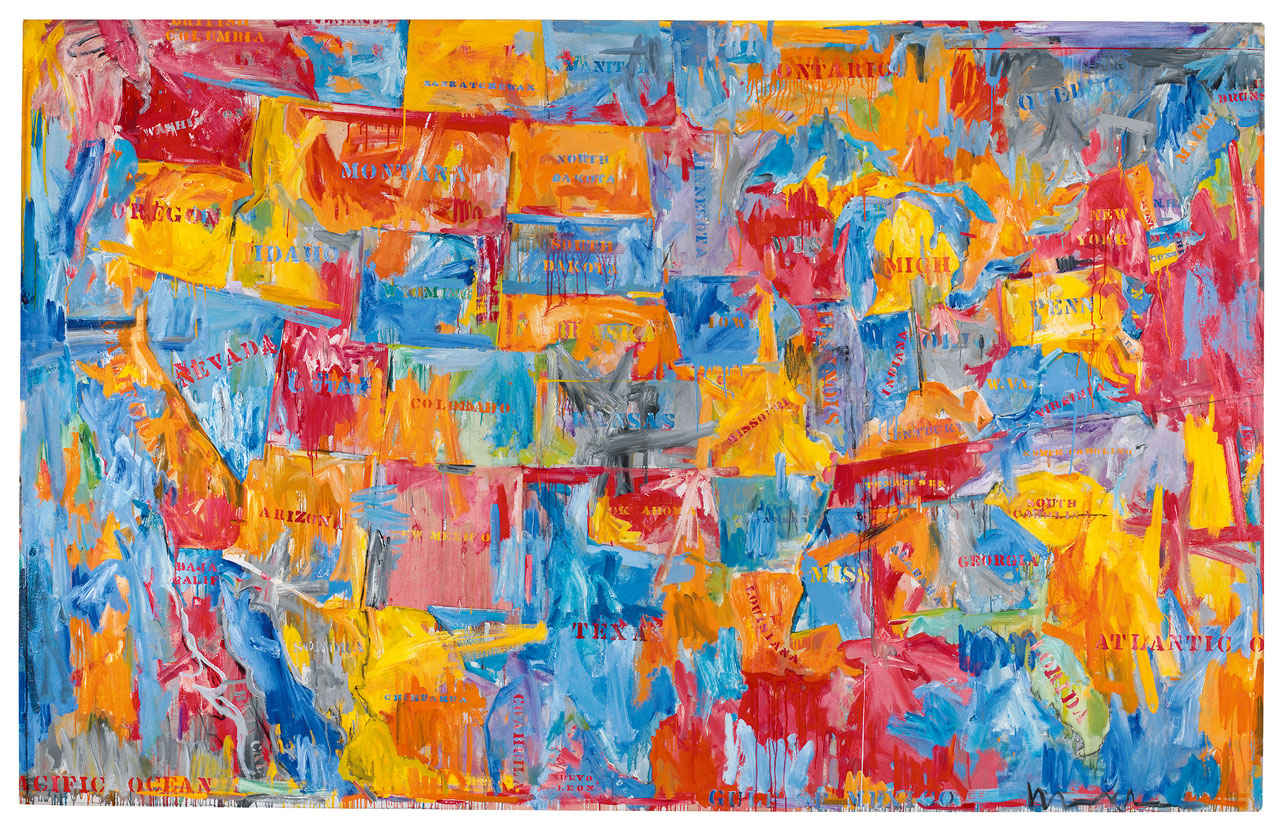
Between 1954 and 1955, Johns destroyed his earlier work and painted his first American flag, marking the beginning of a series of iconic works that feature signs and flat elements-numbers, letters, targets, and maps-drawn from everyday, recognizable imagery and widely regarded as precursors to Pop Art. When these works were exhibited at the Leo Castelli Gallery in 1958, they brought him immediate recognition, and the Museum of Modern Art acquired three of the works on view.
Between 1950s and 1960s, Johns was also in contact with Marcel Duchamp, whose work and thinking would have a defining influence on his practice. The exhibition then moves into the 1970s and 1980s. Here, Johns develops abstract compositions built from crosshatched patterns of strokes, alongside pieces rich in visual references to artists of different periods. Also included are the series devoted to the four seasons, as well as a group of images in which Johns depicts a woman’s face, with eyes, nose, and lips drifting toward the edge of a rectangular field. The exhibition concludes with a selection from the 1990s and 2000s, where the artist returns to some of his best-known themes while continuing to explore new ideas.
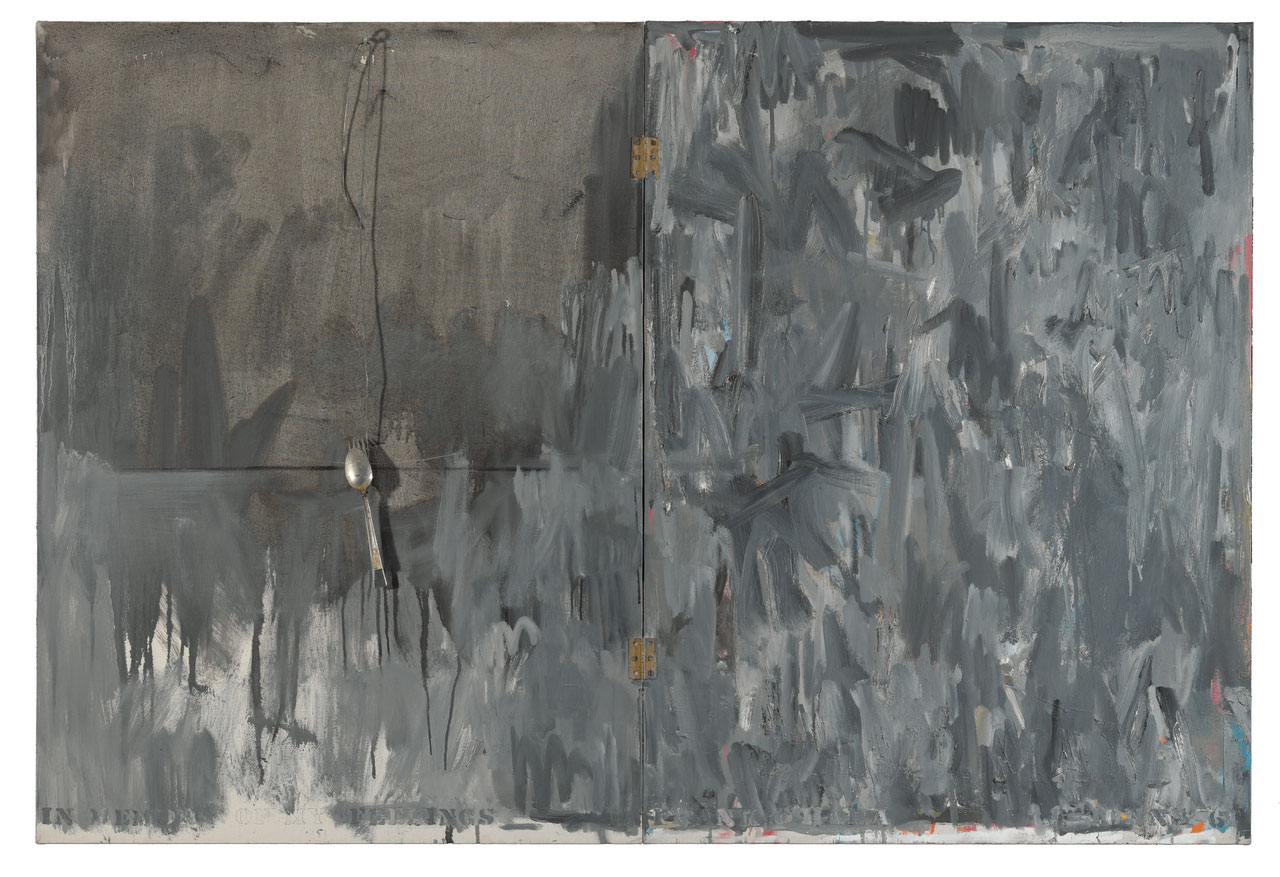
The exhibition opens with examples of Johns’s celebrated paintings of flat motifs, including such well known works as “Flag on Orange Field” and “Drawer”(both 1957), “False Start” (l959), and “Target Map”, and “In Memory of My Feelings – Frank O’Hara” (all 1961), the last work marks a moment, between 1961 and 1964, when the impersonal subject matter of Johns’s work begins to shift, giving way to more emotional concerns. The dominant gray palette of these paintings lends them a melancholic tone.
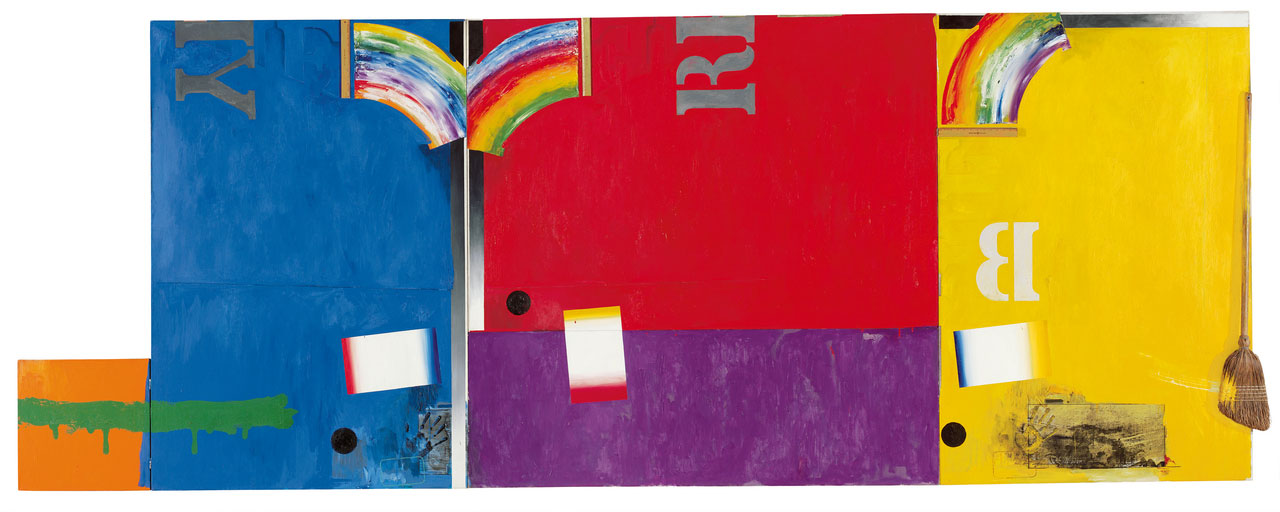
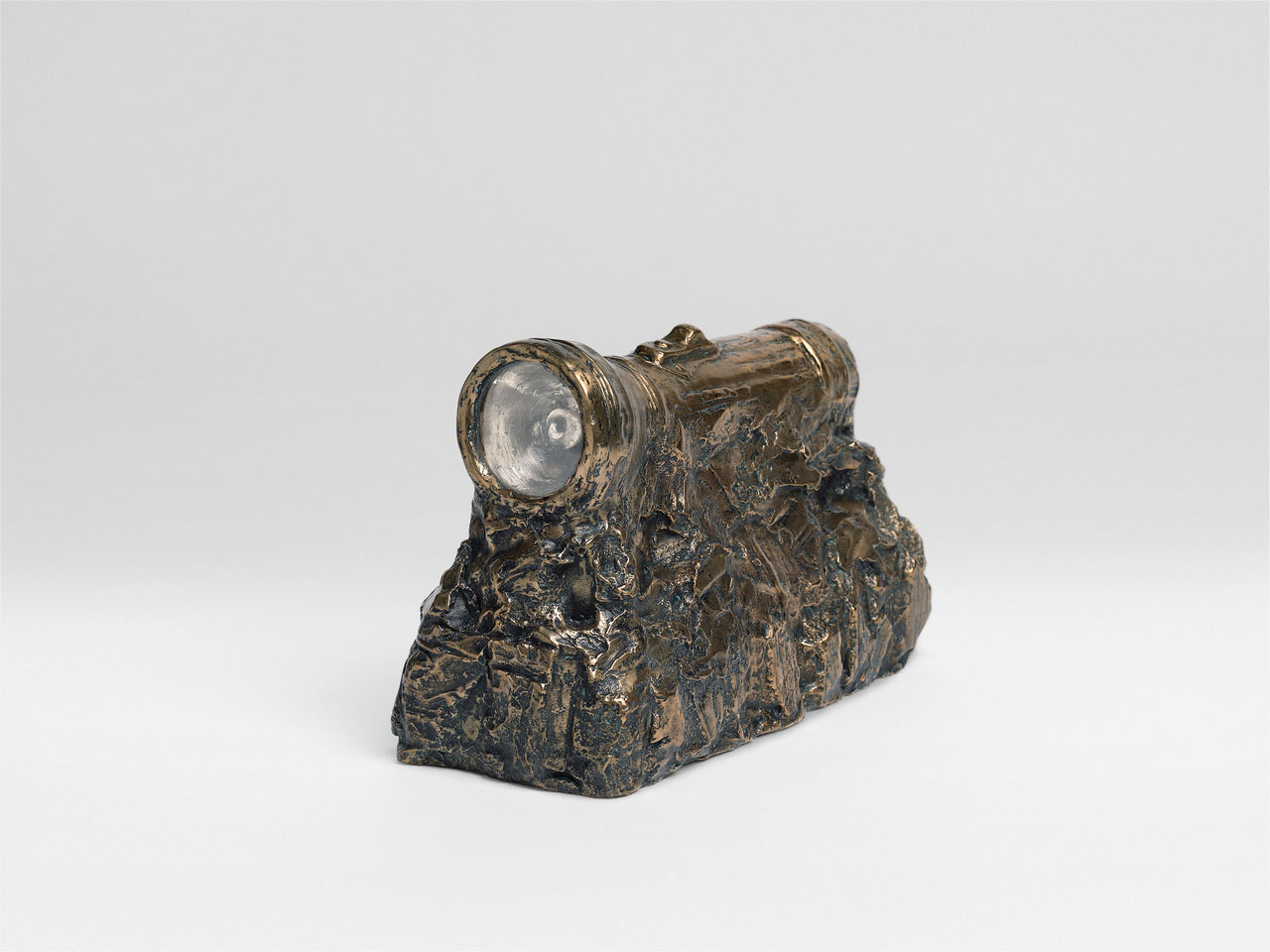
The second gallery presents a number of Johns’s early sculptures, most of which were produced between 1958 and 1961. These are small-scale pieces based on everyday objects, such as light bulbs or flashlights. Rather than casting light on other objects, they become the object of vision itself. Also on view are three large-scale works, “Studio” (1964), “Untitled” (1964-65), and “Studio II” (1966), centered on the theme of the artist’s studio. Although abstract in appearance, they are made using impressions of doors or windows and incorporate a range of objects such as cups, brooms, brushes, cutlery, and measuring tools, evoking the atmosphere of the studio. Between 1964 and 1972, Johns introduces numerous new subjects, including a renewed presence of the human figure, among them self-portraits, imagery related to his studio and tiled walls. In “Souvenir” (l964), a self-portrait created after a trip to Japan with composer Toru Takemitsu, Johns printed a photobooth portrait onto a ceramic plate purchased in a souvenir store.
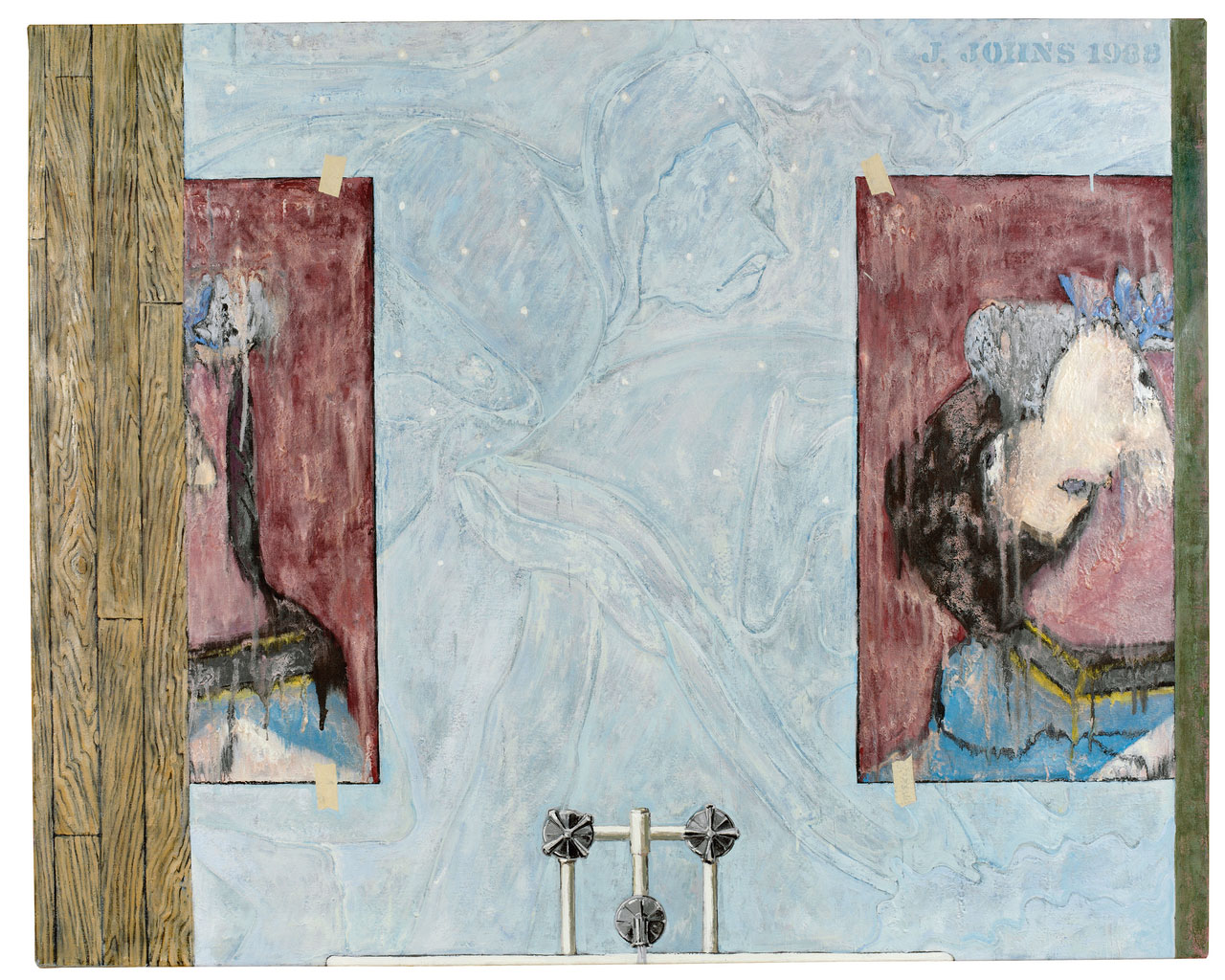
The third gallery brings together a significant group of abstract works from the Crosshatch series, produced by Johns between 1973 and 1984. These include “Corpse and Mirror” (l974-75), “Cicada” (1979), and “Dancers on a Plane” (1980-81). In these works, Johns explores simple variations in the organization of the pictorial space using strategies such as repetition, cropping, inversion, and displacement. From the mid-1980s onward, Johns continued to explore new directions, including the autobiographical Seasons series, with works such as “Summer” (1985) and “Fall” (1986), characterized by dense, complex compositions and an allegorical dimension. During this period, his practice also reflects an ongoing engagement with other artists, including Edvard Munch in “Between the Clock and the Bed” (1983), Pablo Picasso in “After Picasso” (1998), and Frida Kahlo in “The Bath” (1988).
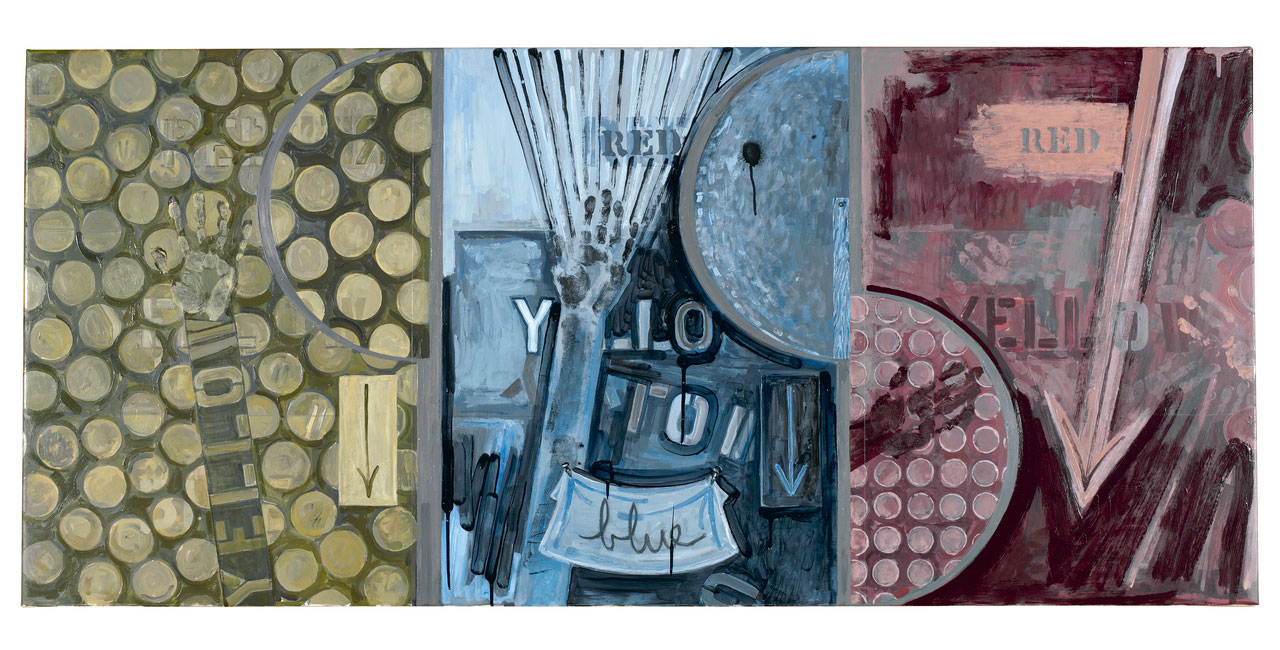
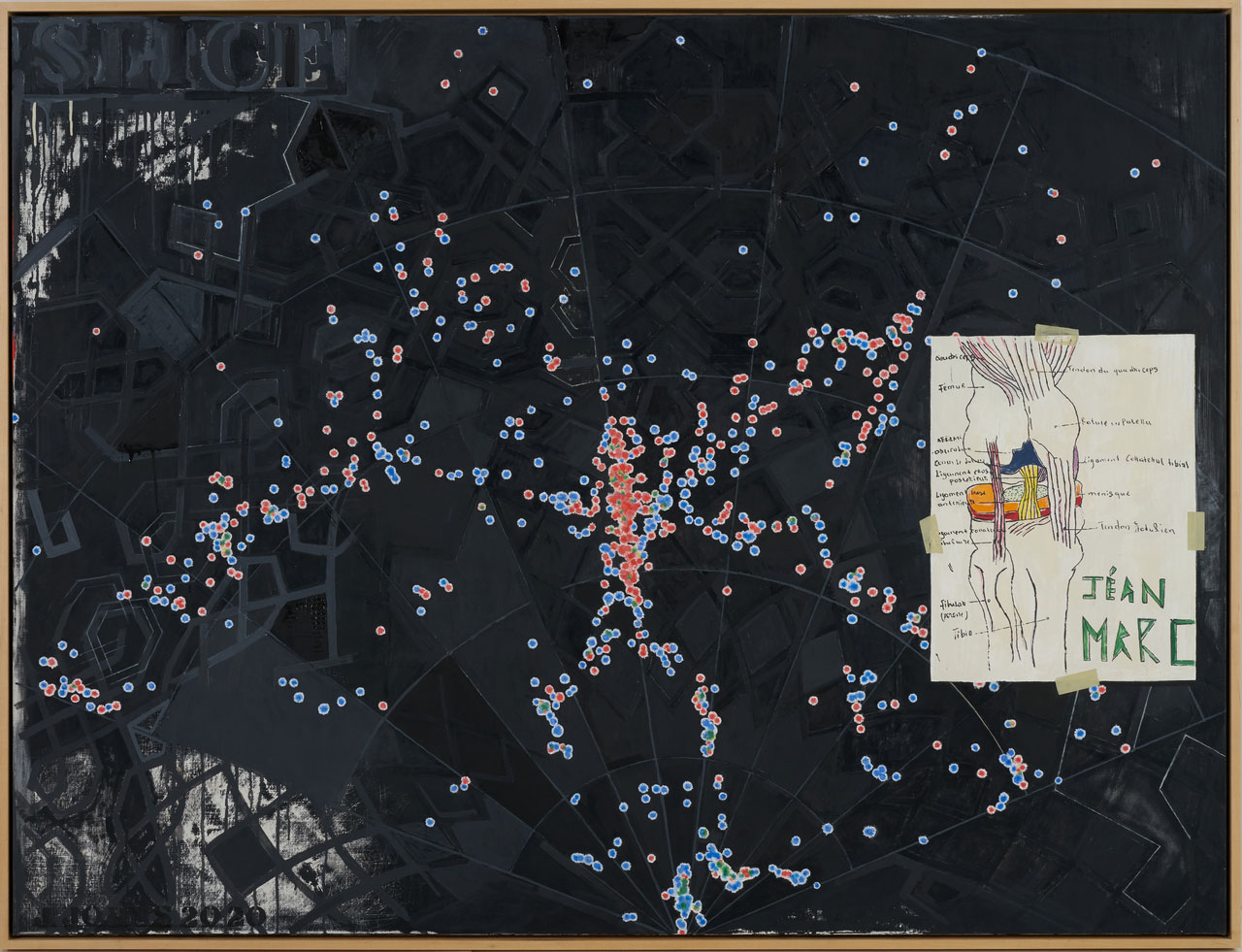
The fourth gallery presents works from the 1990s onward, including two from the “Catenary” series, created by Johns between 1997 and 2003 and once again marked by the gray tones and a play on language. From this period is “Untitled” (1992-94), a work of complex composition that introduces new imagery, including floor plans of his grandparents’ house, where Johns grew up, as well as images of galaxies and references to other artists. The gallery also features a large-scale bronze work, “Numbers (0-9)” (2007-11), composed of twelve units, along with a video of a collaboration between Jasper Johns, Marcel Duchamp, and choreographer Merce Cunningham, titled “Walkaround Time” (1968). Johns designed the costumes and the set based on a work by Duchamp, which is shown alongside the film.
The fifth gallery features a large selection of works on paper. Johns’s drawings are not preparatory studies but rather variations on earlier paintings, and they form an essential part of his practice. In addition to demonstrating his technical skill, they also reveal the reflective nature of his approach. Johns works with a wide range of m/aterials and mediums, often combining them, including pencil, charcoal, pastel, encaustic, ink, ballpoint pen, watercolor, collage with paper and objects, and metallic pigments. Beyond paper, Johns has also drawn on plastic, exploiting its transparency and varying degrees of absorbency. Printmaking likewise allows the artist to alter the colors of earlier images and to reproduce details or fragments rearranged in different ways and configurations. For decades, Johns has worked with Gemini and ULAE, two of the most important print workshops in the United States.
Alongside additional works on paper and a group of monotypes, the final gallery presents “Foirades!Fizzles” (1976), an artist’s book produced in Paris with Irish writer Samuel Beckett that includes five texts by Beckett alongside some thirty prints by Johns. The gallery also highlights works connected to Johns’s friendships with other artists, including several very small drawings he gave to Robert Rauschenberg, reinterpretations of other artists’ works, a drawing he gifted to Richard Serra in exchange for one of Serra’s, and a rare portrait of Marcel Duchamp, “M.O”. (1964). Also on view are tracings after works by artists such as Paul Cezanne and Willem de Koening, which serve as points of departure for Johns’s reflections on the image and artistic tradition.
Photo: Jasper Johns, Untitled, 1964-65, Oil and charcoal on canvas with objects (4 panels), 182.9 x 426.7 cm, Stedelijk Museum Amsterdam, © Jasper Johns, VEGAP, Bilbao, 2026
Info: Curator: Enrique Juncosa, Guggenheim Museum Bilbao, Abandoibarra Etorbidea, 2, Bilbao, Bizkaia, Spain, Duration: 29/5-12/10/2026, Days & Hours: Tue-Sun 10:00-19:00, www.guggenheim-bilbao.eus/
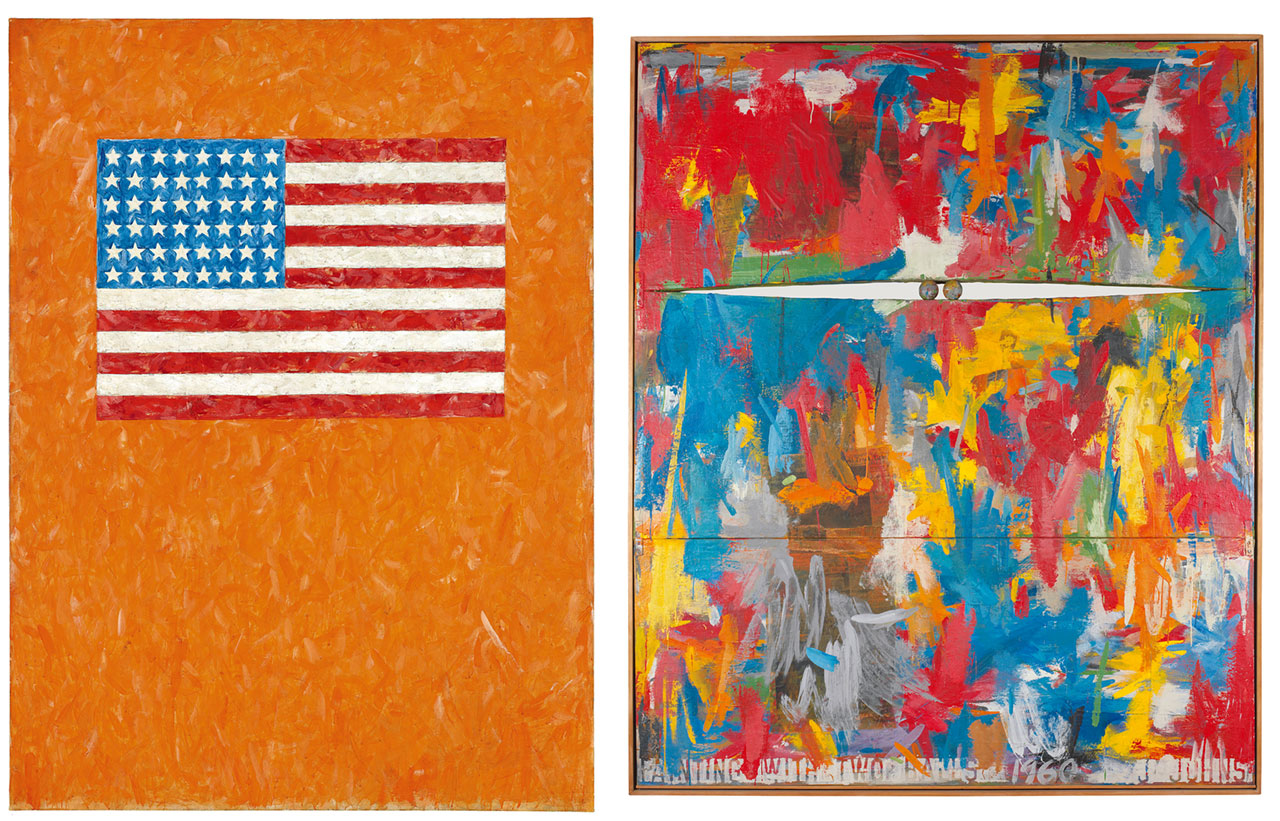
Right: Jasper Johns, Painting with Two Balls, 1960, Encaustic and collage on canvas with objects (3 panels), 165.1 x 137.5 cm, Collection of the artist, © Jasper Johns, VEGAP, Bilbao, 2026
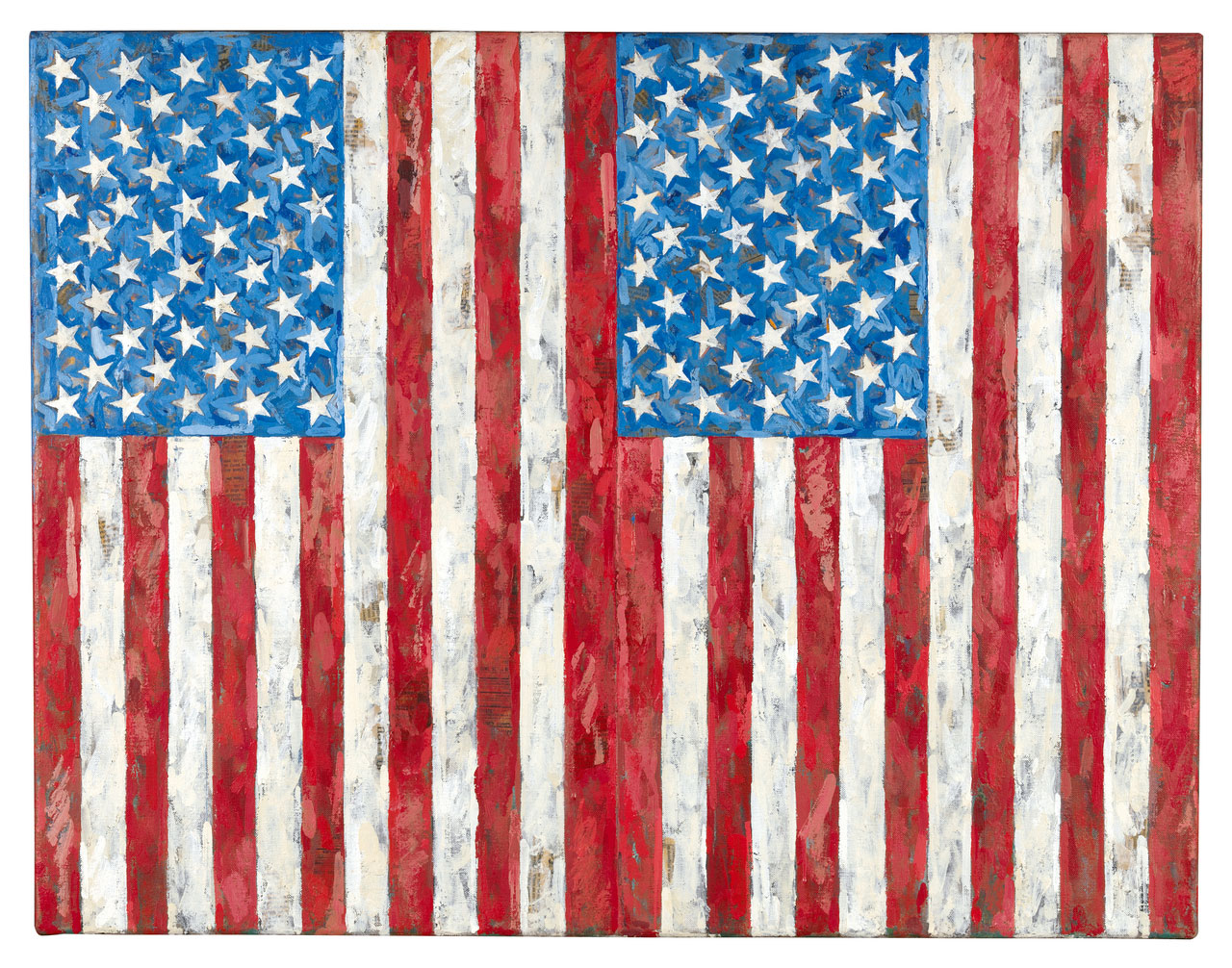
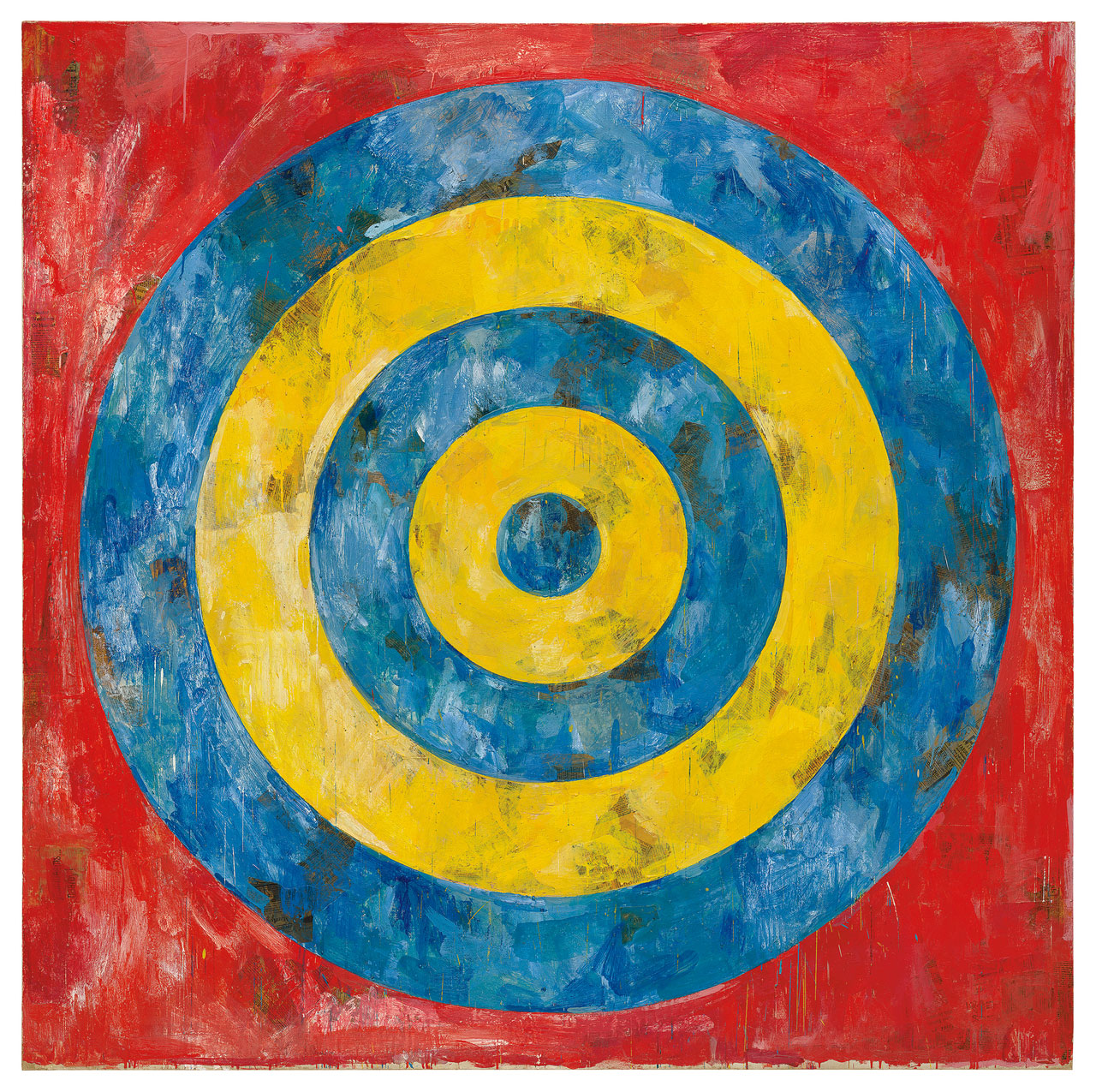
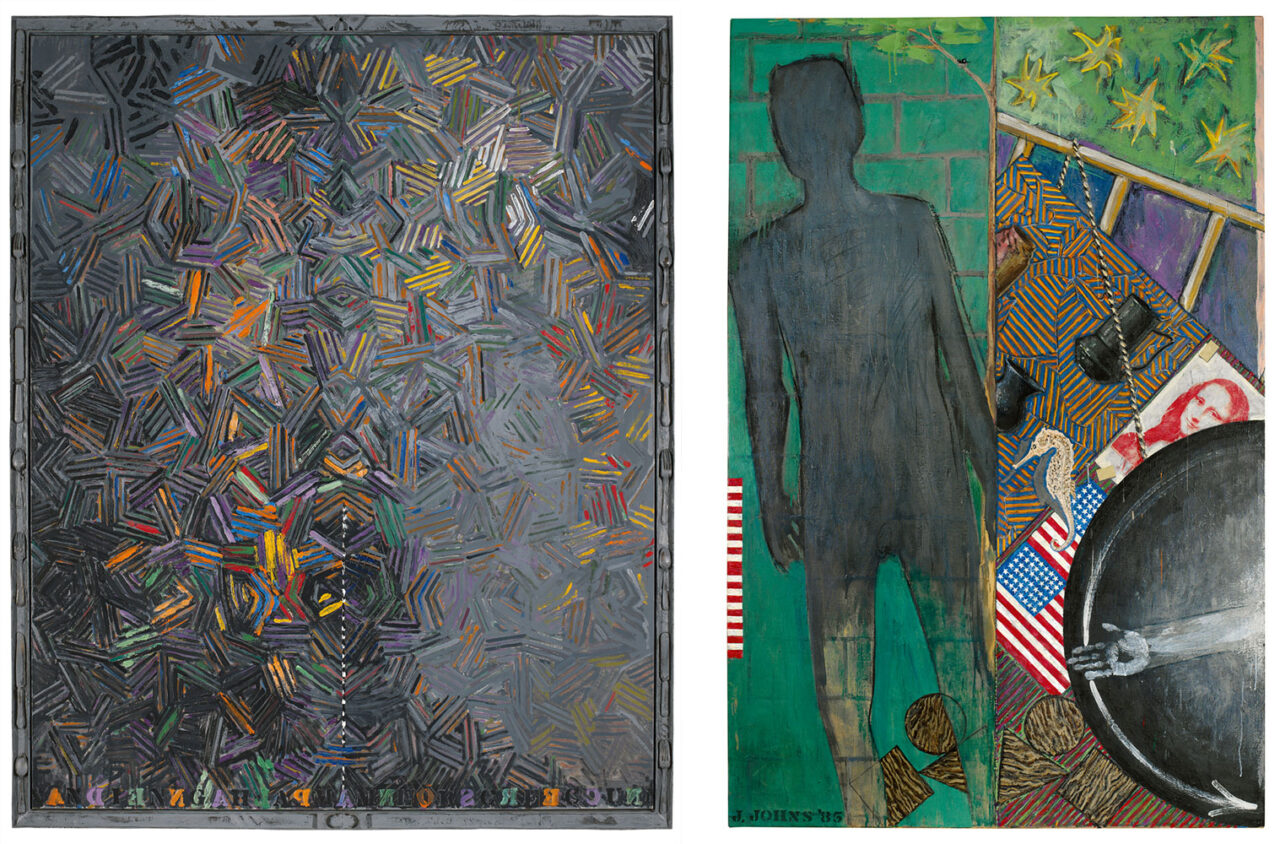
Right: Jasper Johns, Summer, 1985, Encaustic on canvas, 190.5 x 127 cm, The Museum of Modern Art, New York, Gift of Philip Johnson, 1998, © Jasper Johns, VEGAP, Bilbao, 2026